
1
2
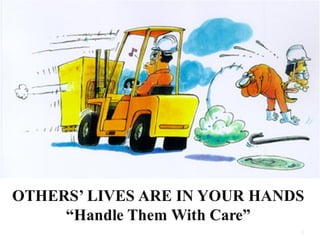
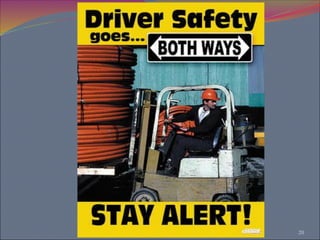
 Forklift accidents cause serious injuries, disabilities or death
 They also cause costly damage to equipment and property
 Forklift accidents can be prevented by:-
 knowing your equipment
 staying alert
 watching out for fellow workers
 learn & follow safe operating procedures
3
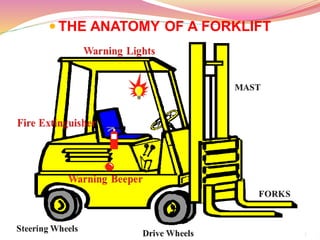
 THE ANATOMY OF A FORKLIFT
4
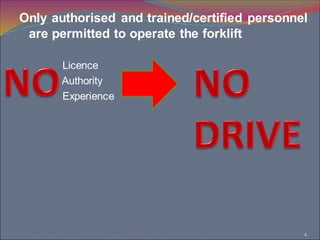
Only authorised and trained/certified personnel
are permitted to operate the forklift
Licence
Authority
Experience
5
6
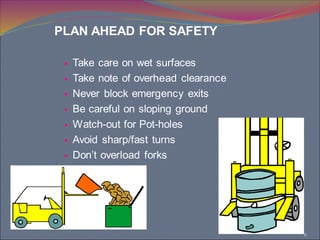
PLAN AHEAD FOR SAFETY
 Take care on wet surfaces
 Take note of overhead clearance
 Never block emergency exits
 Be careful on sloping ground
 Watch-out for Pot-holes
 Avoid sharp/fast turns
 Don’t overload forks
DRIVE SLOWLY
7
 Obey speed limit
 Slow down at blind corners, doorways etc.
 Always Start / Stop Gradually
 Watch-out for Pedestrians
 Sound the horn if somebody approaches
8
9
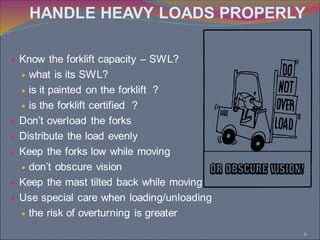
 Know the forklift capacity – SWL?
 what is its SWL?
 is it painted on the forklift ?
 is the forklift certified ?
 Don’t overload the forks
 Distribute the load evenly
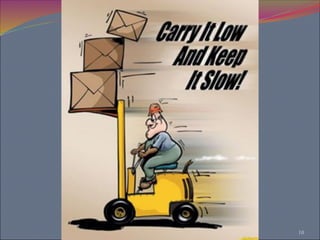
 Keep the forks low while moving
 don’t obscure vision
 Keep the mast tilted back while moving
 Use special care when loading/unloading
 the risk of overturning is greater
HANDLE HEAVY LOADS PROPERLY
10
11
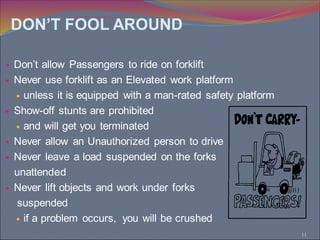
 Don’t allow Passengers to ride on forklift
 Never use forklift as an Elevated work platform
 unless it is equipped with a man-rated safety platform
 Show-off stunts are prohibited
 and will get you terminated
 Never allow an Unauthorized person to drive
 Never leave a load suspended on the forks
unattended
 Never lift objects and work under forks
suspended
 if a problem occurs, you will be crushed
DON’T FOOL AROUND
12
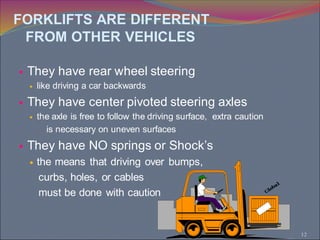
 They have rear wheel steering
 like driving a car backwards
 They have center pivoted steering axles
 the axle is free to follow the driving surface, extra caution
is necessary on uneven surfaces
 They have NO springs or Shock’s
 the means that driving over bumps,
curbs, holes, or cables
must be done with caution
FORKLIFTS ARE DIFFERENT
FROM OTHER VEHICLES
13
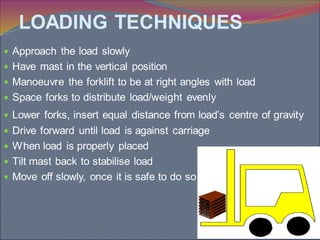
 Approach the load slowly
 Have mast in the vertical position
 Manoeuvre the forklift to be at right angles with load
 Space forks to distribute load/weight evenly
 Lower forks, insert equal distance from load’s centre of gravity
 Drive forward until load is against carriage
 When load is properly placed
 Tilt mast back to stabilise load
 Move off slowly, once it is safe to do so
LOADING TECHNIQUES
14
 Keep forks as low as possible at all times
 this will ensure that the centre of gravity is low
 Never
 drive forward with the load obscuring your view
 leave the vehicle running & unattended with a
load on the suspended forks
 use the forklift as a hydraulic hoist to service
vehicles
 exceed the SWL of the forklift
 if the rear wheels come off the ground when lifting a load,
place it down, remove some weight or use a bigger capacity
forklift
 use the forklift for other than what is was
designed for
 Always lower the forks to the ground when
forklift is parked
DRIVING WITH LOAD
15
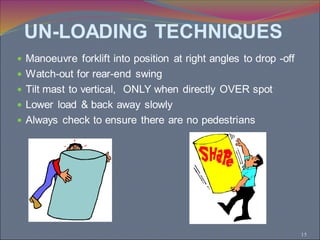
 Manoeuvre forklift into position at right angles to drop -off
 Watch-out for rear-end swing
 Tilt mast to vertical, ONLY when directly OVER spot
 Lower load & back away slowly
 Always check to ensure there are no pedestrians
UN-LOADING TECHNIQUES
16
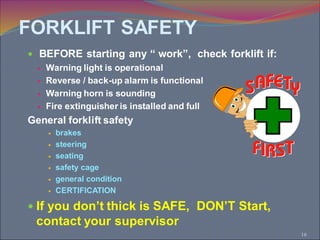
 BEFORE starting any “ work”, check forklift if:
 Warning light is operational
 Reverse / back-up alarm is functional
 Warning horn is sounding
 Fire extinguisher is installed and full
General forklift safety
 brakes
 steering
 seating
 safety cage
 general condition
 CERTIFICATION
 If you don’t thick is SAFE, DON’T Start,
contact your supervisor
FORKLIFT SAFETY
17
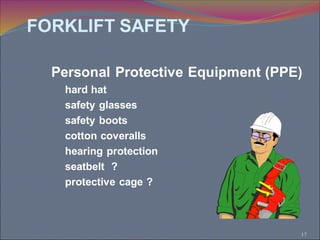
Personal Protective Equipment (PPE)
hard hat
safety glasses
safety boots
cotton coveralls
hearing protection
seatbelt ?
protective cage ?
FORKLIFT SAFETY
18
If it is a heavy load, use the forklift, save your back
 No Authorisation - NO DRIVE
 Don’t Exceed the SWL of Vehicle
 Don’t Carry Passengers
 Don’t Lift Personnel on Forks or On Pallet on forks
 use man-basket only
 Ensure all Warning devices are working
 Ensure Safety Devices are available
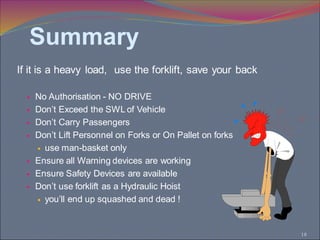
 Don’t use forklift as a Hydraulic Hoist
 you’ll end up squashed and dead !
Summary
19
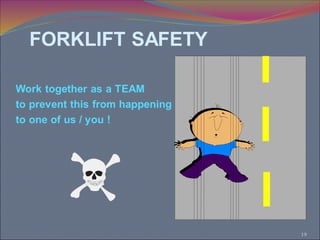
Work together as a TEAM
to prevent this from happening
to one of us / you !
FORKLIFT SAFETY
Forklift SafetyTraining Course 20
Thank you…
21

Forklift Safety | Gaurav Singh Rajput

  • 1.
  • 2.
    2  Forklift accidentscause serious injuries, disabilities or death  They also cause costly damage to equipment and property  Forklift accidents can be prevented by:-  knowing your equipment  staying alert  watching out for fellow workers  learn & follow safe operating procedures
  • 3.
    3  THE ANATOMYOF A FORKLIFT
  • 4.
    4 Only authorised andtrained/certified personnel are permitted to operate the forklift Licence Authority Experience
  • 5.
  • 6.
    6 PLAN AHEAD FORSAFETY  Take care on wet surfaces  Take note of overhead clearance  Never block emergency exits  Be careful on sloping ground  Watch-out for Pot-holes  Avoid sharp/fast turns  Don’t overload forks
  • 7.
    DRIVE SLOWLY 7  Obeyspeed limit  Slow down at blind corners, doorways etc.  Always Start / Stop Gradually  Watch-out for Pedestrians  Sound the horn if somebody approaches
  • 8.
  • 9.
    9  Know theforklift capacity – SWL?  what is its SWL?  is it painted on the forklift ?  is the forklift certified ?  Don’t overload the forks  Distribute the load evenly  Keep the forks low while moving  don’t obscure vision  Keep the mast tilted back while moving  Use special care when loading/unloading  the risk of overturning is greater HANDLE HEAVY LOADS PROPERLY
  • 10.
  • 11.
    11  Don’t allowPassengers to ride on forklift  Never use forklift as an Elevated work platform  unless it is equipped with a man-rated safety platform  Show-off stunts are prohibited  and will get you terminated  Never allow an Unauthorized person to drive  Never leave a load suspended on the forks unattended  Never lift objects and work under forks suspended  if a problem occurs, you will be crushed DON’T FOOL AROUND
  • 12.
    12  They haverear wheel steering  like driving a car backwards  They have center pivoted steering axles  the axle is free to follow the driving surface, extra caution is necessary on uneven surfaces  They have NO springs or Shock’s  the means that driving over bumps, curbs, holes, or cables must be done with caution FORKLIFTS ARE DIFFERENT FROM OTHER VEHICLES
  • 13.
    13  Approach theload slowly  Have mast in the vertical position  Manoeuvre the forklift to be at right angles with load  Space forks to distribute load/weight evenly  Lower forks, insert equal distance from load’s centre of gravity  Drive forward until load is against carriage  When load is properly placed  Tilt mast back to stabilise load  Move off slowly, once it is safe to do so LOADING TECHNIQUES
  • 14.
    14  Keep forksas low as possible at all times  this will ensure that the centre of gravity is low  Never  drive forward with the load obscuring your view  leave the vehicle running & unattended with a load on the suspended forks  use the forklift as a hydraulic hoist to service vehicles  exceed the SWL of the forklift  if the rear wheels come off the ground when lifting a load, place it down, remove some weight or use a bigger capacity forklift  use the forklift for other than what is was designed for  Always lower the forks to the ground when forklift is parked DRIVING WITH LOAD
  • 15.
    15  Manoeuvre forkliftinto position at right angles to drop -off  Watch-out for rear-end swing  Tilt mast to vertical, ONLY when directly OVER spot  Lower load & back away slowly  Always check to ensure there are no pedestrians UN-LOADING TECHNIQUES
  • 16.
    16  BEFORE startingany “ work”, check forklift if:  Warning light is operational  Reverse / back-up alarm is functional  Warning horn is sounding  Fire extinguisher is installed and full General forklift safety  brakes  steering  seating  safety cage  general condition  CERTIFICATION  If you don’t thick is SAFE, DON’T Start, contact your supervisor FORKLIFT SAFETY
  • 17.
    17 Personal Protective Equipment(PPE) hard hat safety glasses safety boots cotton coveralls hearing protection seatbelt ? protective cage ? FORKLIFT SAFETY
  • 18.
    18 If it isa heavy load, use the forklift, save your back  No Authorisation - NO DRIVE  Don’t Exceed the SWL of Vehicle  Don’t Carry Passengers  Don’t Lift Personnel on Forks or On Pallet on forks  use man-basket only  Ensure all Warning devices are working  Ensure Safety Devices are available  Don’t use forklift as a Hydraulic Hoist  you’ll end up squashed and dead ! Summary
  • 19.
    19 Work together asa TEAM to prevent this from happening to one of us / you ! FORKLIFT SAFETY
  • 20.
  • 21.