

CLASSIFIED HAZARD LOCATIONS
HAZARD AREA CLASSIFIED TO:
CLASS 1 :
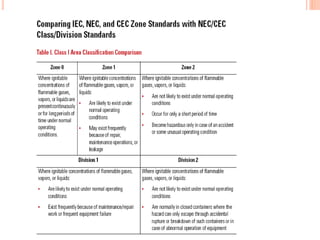
locations are those in which flammable vapors
and gases may be present
CLASS 2 :
locations are those in which combustible dust
may be found
NOTE : THESE CONCEPTS ONLY USE IN
USA
ZONE AREA CLASSIFIED TO:
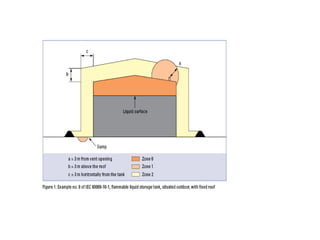
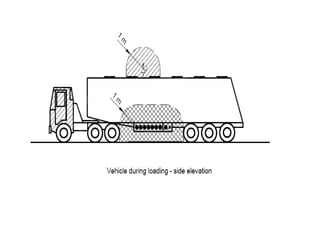
• Zone 0, Zone 1, and Zone 2 are zones
where hazardous vapors and gases are
present
• Zone 20, Zone 21, and Zone 22 are zones
where hazardous dusts or fibers are
present
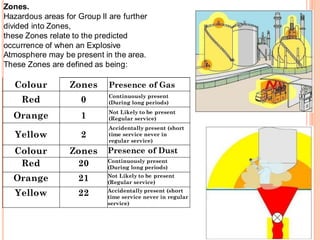
Colour Zones Presence of Gas
Red 0 Continuously present
(During long periods)
Orange 1 Not Likely to be present
(Regular service)
Yellow 2
Accidentally present (short
time service never in
regular service)
Colour Zones Presence of Dust
Red 20 Continuously present
(During long periods)
Orange 21 Not Likely to be present
(Regular service)
Yellow 22 Accidentally present (short
time service never in regular
service)
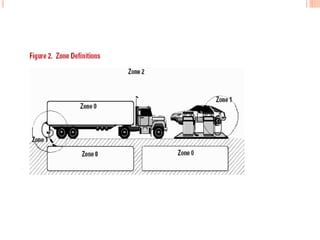
Zones.
Hazardous areas for Group II are further
divided into Zones,
these Zones relate to the predicted
occurrence of when an Explosive
Atmosphere may be present in the area.
These Zones are defined as being:
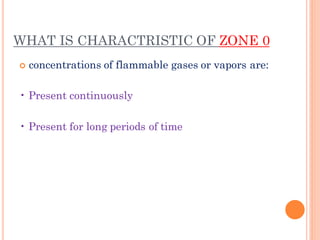
WHAT IS CHARACTRISTIC OF ZONE 0
 concentrations of flammable gases or vapors are:
• Present continuously
• Present for long periods of time
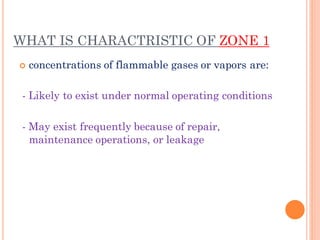
WHAT IS CHARACTRISTIC OF ZONE 1
 concentrations of flammable gases or vapors are:
- Likely to exist under normal operating conditions
- May exist frequently because of repair,
maintenance operations, or leakage
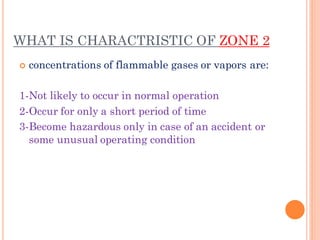
WHAT IS CHARACTRISTIC OF ZONE 2
 concentrations of flammable gases or vapors are:
1-Not likely to occur in normal operation
2-Occur for only a short period of time
3-Become hazardous only in case of an accident or
some unusual operating condition
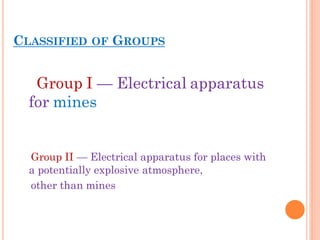
CLASSIFIED OF GROUPS
Group I — Electrical apparatus
for mines
Group II — Electrical apparatus for places with
a potentially explosive atmosphere,
other than mines
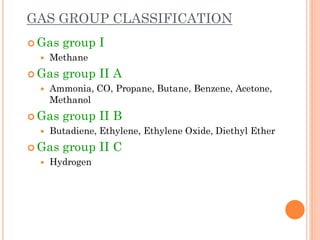
GAS GROUP CLASSIFICATION
 Gas group I
 Methane
 Gas group II A
 Ammonia, CO, Propane, Butane, Benzene, Acetone,
Methanol
 Gas group II B
 Butadiene, Ethylene, Ethylene Oxide, Diethyl Ether
 Gas group II C
 Hydrogen
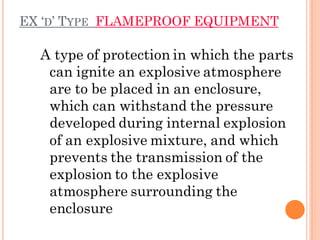
EX ‘D’ TYPE FLAMEPROOF EQUIPMENT
A type of protection in which the parts
can ignite an explosive atmosphere
are to be placed in an enclosure,
which can withstand the pressure
developed during internal explosion
of an explosive mixture, and which
prevents the transmission of the
explosion to the explosive
atmosphere surrounding the
enclosure
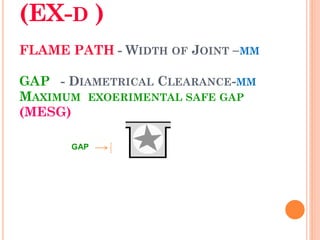
(EX-D )
FLAME PATH - WIDTH OF JOINT –MM
GAP - DIAMETRICAL CLEARANCE-MM
MAXIMUM EXOERIMENTAL SAFE GAP
(MESG)
GAP
FLAMPROOF PROTECTION (EX ‘D’)
 Maximum gaps and flame path for gas groups depends
on ignition energies of the gas / vapour and the volume
of the enclosure
 For example, for IIB gas group, for 100 Cubic cm
volume, for flanged joints: ethylene-butadiene-ethylene
oxide….
 Flame Path - 6 mm
 Maximum Gap - 0.3 mm
 For II C Hydrogen, 100 cubic cm volume, for flanged
joints:
 Flame path - 9.5 mm
 Maximum Gap - 0.1 mm
EQUIPMENTEXPLOSION-PROTECTION
METHODS
 Flameproof (EX d )
 Intrinsically Safe (Ex i )
 Non-Sparking (Ex n )
 Pressurization (Ex p )
Non popular method include of:
 Powder filled Ex ‘q’ type
 Oil immersed Ex ‘o’ type
INTRINSICALLY SAFE EQUIPMENT &
CIRCUITS (EX ‘I’ )
 Only electrical protective measure protection
technology by way of power limitation, the other
protective techniques use mechanical means to
prevent ignition from electrical faults (max. 30 volts
or 50 mA)
 Ex ‘i’ circuit is the one which has intrinsically safe
barriers with Zenner diodes for power limitation
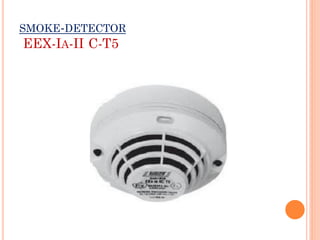
SMOKE-DETECTOR
EEX-IA-II C-T5
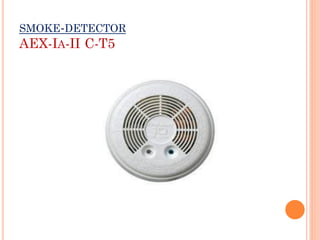
SMOKE-DETECTOR
AEX-IA-II C-T5
NON-SPARKING TYPE EQUIPMENT
(EX ‘N’ )
 A type of protection applied to electrical
apparatus such that , in normal operation it is
not capable of igniting a surrounding
atmosphere and a fault capable of causing
ignition is not likely to occur
 EX n typical marking: EEx n II T5
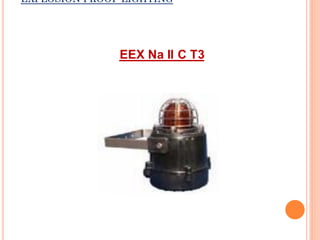
EXPLOSION PROOF LIGHTING
EEX Na II C T3
PRESSURIZATION TYPE (EX ‘P’
)
A type of protection by
which the entry of
surrounding atmosphere
into the enclosure of the
electrical apparatus is
prevented by a protective
gas at a higher than that of
the surrounding
atmosphere
PRESSURIZATION TYPE (EX ‘P’ )
1- Dynamic Pressurization
DP is a method of maintaining pressure in an enclosure
in which after purging the protective gas is passed
continiously through the enclosure at a pressure above
that of the specified minimum and discharged to the
outside atmosphere
2- Static Pressurization
Example :purging N2 in distance room
of compressor
RECOMMENDED PROTECTION
METHODS FOR ZONE O
No electrical equipment should be allowed. Only
Ex ‘ i ‘ (ia or ib) apparatus or circuits to be
used
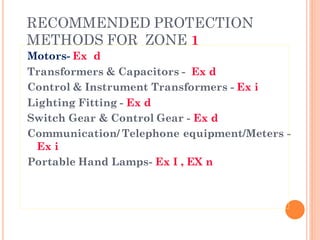
RECOMMENDED PROTECTION
METHODS FOR ZONE 1
Motors- Ex d
Transformers & Capacitors - Ex d
Control & Instrument Transformers - Ex i
Lighting Fitting - Ex d
Switch Gear & Control Gear - Ex d
Communication/ Telephone equipment/Meters -
Ex i
Portable Hand Lamps- Ex I , EX n
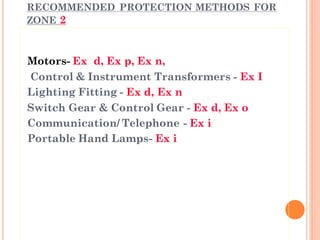
RECOMMENDED PROTECTION METHODS FOR
ZONE 2
Motors- Ex d, Ex p, Ex n,
Control & Instrument Transformers - Ex I
Lighting Fitting - Ex d, Ex n
Switch Gear & Control Gear - Ex d, Ex o
Communication/ Telephone - Ex i
Portable Hand Lamps- Ex i
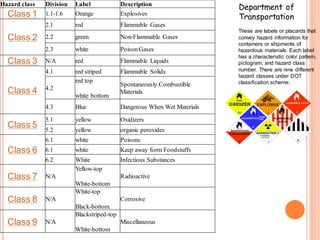
Hazard class Division Label Description
Class 1 1.1-1.6 Orange Explosives
Class 2
2.1 red Flammable Gases
2.2 green Non-Flammable Gases
2.3 white PoisonGases
Class 3 N/A red Flammable Liquids
Class 4
4.1 red striped Flammable Solids
4.2
red top
white bottom
Spontaneously Combustible
Materials
4.3 Blue Dangerous When Wet Materials
Class 5
5.1 yellow Oxidizers
5.2 yellow organic peroxides
Class 6
6.1 white Poisons
6.1 white Keep away form Foodstuffs
6.2 White Infectious Substances
Class 7 N/A
Yellow-top
White-bottom
Radioactive
Class 8 N/A
White-top
Black-bottom
Corrosive
Class 9 N/A
Blackstriped-top
White-bottom
Miscellaneous
Department of
Transportation
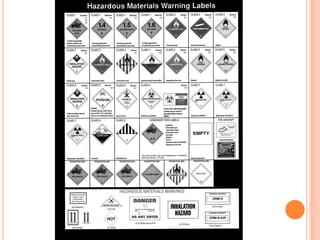
These are labels or placards that
convey hazard information for
containers or shipments of
hazardous materials. Each label
has a characteristic color pattern,
pictogram, and hazard class
number. There are nine different
hazard classes under DOT
classification scheme.
THANK YOU
FOR YOUR
KIND
ATTENTION
Hazardous Area Classification | Gaurav Singh Rajput

Hazardous Area Classification | Gaurav Singh Rajput

  • 1.
  • 2.
    HAZARD AREA CLASSIFIEDTO: CLASS 1 : locations are those in which flammable vapors and gases may be present CLASS 2 : locations are those in which combustible dust may be found NOTE : THESE CONCEPTS ONLY USE IN USA
  • 3.
    ZONE AREA CLASSIFIEDTO: • Zone 0, Zone 1, and Zone 2 are zones where hazardous vapors and gases are present • Zone 20, Zone 21, and Zone 22 are zones where hazardous dusts or fibers are present
  • 4.
    Colour Zones Presenceof Gas Red 0 Continuously present (During long periods) Orange 1 Not Likely to be present (Regular service) Yellow 2 Accidentally present (short time service never in regular service) Colour Zones Presence of Dust Red 20 Continuously present (During long periods) Orange 21 Not Likely to be present (Regular service) Yellow 22 Accidentally present (short time service never in regular service) Zones. Hazardous areas for Group II are further divided into Zones, these Zones relate to the predicted occurrence of when an Explosive Atmosphere may be present in the area. These Zones are defined as being:
  • 5.
    WHAT IS CHARACTRISTICOF ZONE 0  concentrations of flammable gases or vapors are: • Present continuously • Present for long periods of time
  • 6.
    WHAT IS CHARACTRISTICOF ZONE 1  concentrations of flammable gases or vapors are: - Likely to exist under normal operating conditions - May exist frequently because of repair, maintenance operations, or leakage
  • 7.
    WHAT IS CHARACTRISTICOF ZONE 2  concentrations of flammable gases or vapors are: 1-Not likely to occur in normal operation 2-Occur for only a short period of time 3-Become hazardous only in case of an accident or some unusual operating condition
  • 11.
    CLASSIFIED OF GROUPS GroupI — Electrical apparatus for mines Group II — Electrical apparatus for places with a potentially explosive atmosphere, other than mines
  • 12.
    GAS GROUP CLASSIFICATION Gas group I  Methane  Gas group II A  Ammonia, CO, Propane, Butane, Benzene, Acetone, Methanol  Gas group II B  Butadiene, Ethylene, Ethylene Oxide, Diethyl Ether  Gas group II C  Hydrogen
  • 16.
    EX ‘D’ TYPEFLAMEPROOF EQUIPMENT A type of protection in which the parts can ignite an explosive atmosphere are to be placed in an enclosure, which can withstand the pressure developed during internal explosion of an explosive mixture, and which prevents the transmission of the explosion to the explosive atmosphere surrounding the enclosure
  • 17.
    (EX-D ) FLAME PATH- WIDTH OF JOINT –MM GAP - DIAMETRICAL CLEARANCE-MM MAXIMUM EXOERIMENTAL SAFE GAP (MESG) GAP
  • 18.
    FLAMPROOF PROTECTION (EX‘D’)  Maximum gaps and flame path for gas groups depends on ignition energies of the gas / vapour and the volume of the enclosure  For example, for IIB gas group, for 100 Cubic cm volume, for flanged joints: ethylene-butadiene-ethylene oxide….  Flame Path - 6 mm  Maximum Gap - 0.3 mm  For II C Hydrogen, 100 cubic cm volume, for flanged joints:  Flame path - 9.5 mm  Maximum Gap - 0.1 mm
  • 20.
    EQUIPMENTEXPLOSION-PROTECTION METHODS  Flameproof (EXd )  Intrinsically Safe (Ex i )  Non-Sparking (Ex n )  Pressurization (Ex p ) Non popular method include of:  Powder filled Ex ‘q’ type  Oil immersed Ex ‘o’ type
  • 21.
    INTRINSICALLY SAFE EQUIPMENT& CIRCUITS (EX ‘I’ )  Only electrical protective measure protection technology by way of power limitation, the other protective techniques use mechanical means to prevent ignition from electrical faults (max. 30 volts or 50 mA)  Ex ‘i’ circuit is the one which has intrinsically safe barriers with Zenner diodes for power limitation
  • 22.
  • 23.
  • 24.
    NON-SPARKING TYPE EQUIPMENT (EX‘N’ )  A type of protection applied to electrical apparatus such that , in normal operation it is not capable of igniting a surrounding atmosphere and a fault capable of causing ignition is not likely to occur  EX n typical marking: EEx n II T5
  • 25.
  • 26.
    PRESSURIZATION TYPE (EX‘P’ ) A type of protection by which the entry of surrounding atmosphere into the enclosure of the electrical apparatus is prevented by a protective gas at a higher than that of the surrounding atmosphere
  • 27.
    PRESSURIZATION TYPE (EX‘P’ ) 1- Dynamic Pressurization DP is a method of maintaining pressure in an enclosure in which after purging the protective gas is passed continiously through the enclosure at a pressure above that of the specified minimum and discharged to the outside atmosphere 2- Static Pressurization Example :purging N2 in distance room of compressor
  • 28.
    RECOMMENDED PROTECTION METHODS FORZONE O No electrical equipment should be allowed. Only Ex ‘ i ‘ (ia or ib) apparatus or circuits to be used
  • 29.
    RECOMMENDED PROTECTION METHODS FORZONE 1 Motors- Ex d Transformers & Capacitors - Ex d Control & Instrument Transformers - Ex i Lighting Fitting - Ex d Switch Gear & Control Gear - Ex d Communication/ Telephone equipment/Meters - Ex i Portable Hand Lamps- Ex I , EX n
  • 30.
    RECOMMENDED PROTECTION METHODSFOR ZONE 2 Motors- Ex d, Ex p, Ex n, Control & Instrument Transformers - Ex I Lighting Fitting - Ex d, Ex n Switch Gear & Control Gear - Ex d, Ex o Communication/ Telephone - Ex i Portable Hand Lamps- Ex i
  • 31.
    Hazard class DivisionLabel Description Class 1 1.1-1.6 Orange Explosives Class 2 2.1 red Flammable Gases 2.2 green Non-Flammable Gases 2.3 white PoisonGases Class 3 N/A red Flammable Liquids Class 4 4.1 red striped Flammable Solids 4.2 red top white bottom Spontaneously Combustible Materials 4.3 Blue Dangerous When Wet Materials Class 5 5.1 yellow Oxidizers 5.2 yellow organic peroxides Class 6 6.1 white Poisons 6.1 white Keep away form Foodstuffs 6.2 White Infectious Substances Class 7 N/A Yellow-top White-bottom Radioactive Class 8 N/A White-top Black-bottom Corrosive Class 9 N/A Blackstriped-top White-bottom Miscellaneous Department of Transportation These are labels or placards that convey hazard information for containers or shipments of hazardous materials. Each label has a characteristic color pattern, pictogram, and hazard class number. There are nine different hazard classes under DOT classification scheme.
  • 33.