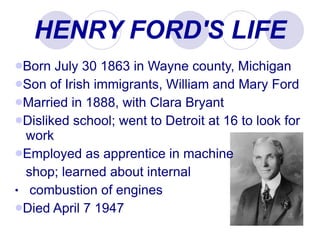
Henry Ford introduced a new economic model called Fordism in the early 1900s. Fordism involved using assembly line production methods to enable mass production and consumption. It organized workers into a highly efficient production process and also aimed to increase wages to boost mass consumption. Fordism spread widely after World War I as companies adopted assembly line production and countries sought to emulate the US economic model to recover from the Depression. It transformed industries and cities as large factories concentrated production and people migrated to urban areas for jobs.