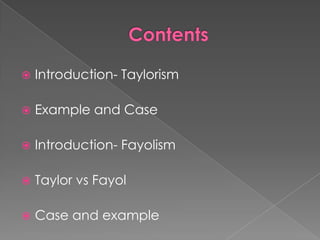
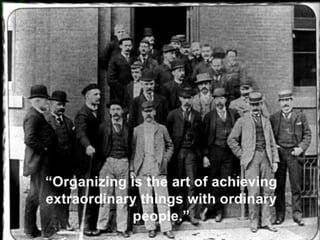
   Introduction- Taylorism

   Example and Case

   Introduction- Fayolism

   Taylor vs Fayol

   Case and example
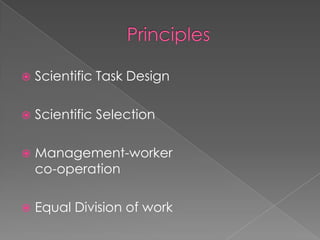
   Scientific Task Design

   Scientific Selection

   Management-worker
    co-operation

   Equal Division of work
   Increased monotony at work

   Uses of stop watch

   Ignores individual differences

   Interest of management and workers not
    identical.
   Pig tail experiment

   The Science of Shoveling

   Brick laying
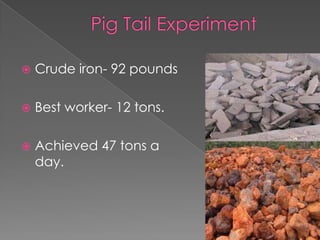
   Crude iron- 92 pounds

   Best worker- 12 tons.

   Achieved 47 tons a
    day.
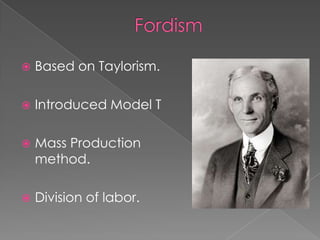
   Based on Taylorism.

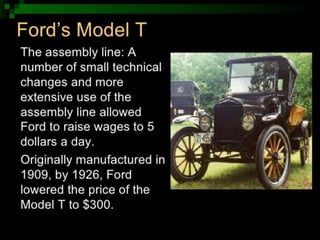
   Introduced Model T

   Mass Production
    method.

   Division of labor.
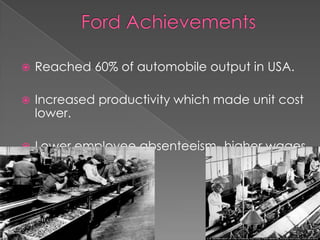
   Reached 60% of automobile output in USA.

   Increased productivity which made unit cost
    lower.

   Lower employee absenteeism- higher wages
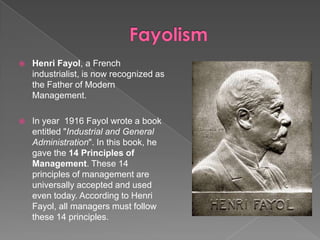
   Henri Fayol, a French
    industrialist, is now recognized as
    the Father of Modern
    Management.

   In year 1916 Fayol wrote a book
    entitled "Industrial and General
    Administration". In this book, he
    gave the 14 Principles of
    Management. These 14
    principles of management are
    universally accepted and used
    even today. According to Henri
    Fayol, all managers must follow
    these 14 principles.
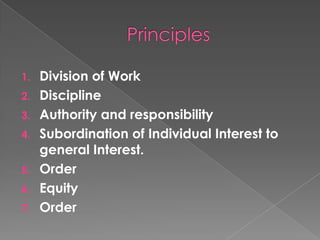
1. Division of Work
2. Discipline
3. Authority and responsibility
4. Subordination of Individual Interest to
   general Interest.
5. Order
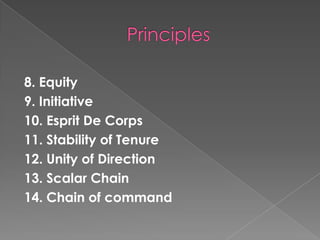
6. Equity
7. Order
8. Equity
9. Initiative
10. Esprit De Corps
11. Stability of Tenure
12. Unity of Direction
13. Scalar Chain
14. Chain of command
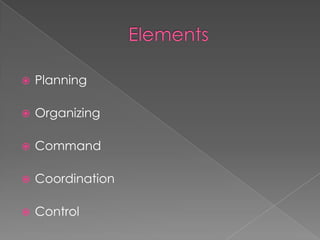
   Planning

   Organizing

   Command

   Coordination

   Control
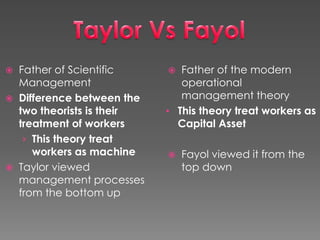
   Father of Scientific       Father of the modern
    Management                  operational
   Difference between the      management theory
    two theorists is their   • This theory treat workers as
    treatment of workers       Capital Asset
     › This theory treat
       workers as machine       Fayol viewed it from the
   Taylor viewed                top down
    management processes
    from the bottom up
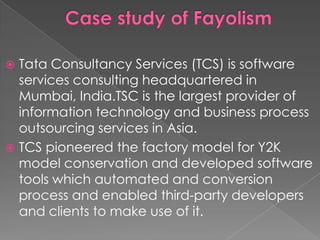
 Tata Consultancy Services (TCS) is software
  services consulting headquartered in
  Mumbai, India.TSC is the largest provider of
  information technology and business process
  outsourcing services in Asia.
 TCS pioneered the factory model for Y2K
  model conservation and developed software
  tools which automated and conversion
  process and enabled third-party developers
  and clients to make use of it.
 Made in Scalar chain
 Unity of command
 Unity of direction
 Made the Centralization system of
  management
 Start treating people as capital assets
    › Through motivation and rewards .
    › They gave life time award to Mr Kamlesh
     Mhashilkar who played key role to uplift the
     organization position
› Increased the remuneration of all level of
  organization.
› Subordination of Individual and Equity
› Maintained Discipline


› So last it was listed in Fortune 500 company in 2010
Taylorism and Fayolism

Taylorism and Fayolism

  • 2.
    Introduction- Taylorism  Example and Case  Introduction- Fayolism  Taylor vs Fayol  Case and example
  • 4.
    Scientific Task Design  Scientific Selection  Management-worker co-operation  Equal Division of work
  • 5.
    Increased monotony at work  Uses of stop watch  Ignores individual differences  Interest of management and workers not identical.
  • 6.
    Pig tail experiment  The Science of Shoveling  Brick laying
  • 9.
    Crude iron- 92 pounds  Best worker- 12 tons.  Achieved 47 tons a day.
  • 12.
    Based on Taylorism.  Introduced Model T  Mass Production method.  Division of labor.
  • 14.
    Reached 60% of automobile output in USA.  Increased productivity which made unit cost lower.  Lower employee absenteeism- higher wages
  • 16.
    Henri Fayol, a French industrialist, is now recognized as the Father of Modern Management.  In year 1916 Fayol wrote a book entitled "Industrial and General Administration". In this book, he gave the 14 Principles of Management. These 14 principles of management are universally accepted and used even today. According to Henri Fayol, all managers must follow these 14 principles.
  • 17.
    1. Division ofWork 2. Discipline 3. Authority and responsibility 4. Subordination of Individual Interest to general Interest. 5. Order 6. Equity 7. Order
  • 18.
    8. Equity 9. Initiative 10.Esprit De Corps 11. Stability of Tenure 12. Unity of Direction 13. Scalar Chain 14. Chain of command
  • 19.
    Planning  Organizing  Command  Coordination  Control
  • 20.
    Father of Scientific  Father of the modern Management operational  Difference between the management theory two theorists is their • This theory treat workers as treatment of workers Capital Asset › This theory treat workers as machine  Fayol viewed it from the  Taylor viewed top down management processes from the bottom up
  • 21.
     Tata ConsultancyServices (TCS) is software services consulting headquartered in Mumbai, India.TSC is the largest provider of information technology and business process outsourcing services in Asia.  TCS pioneered the factory model for Y2K model conservation and developed software tools which automated and conversion process and enabled third-party developers and clients to make use of it.
  • 22.
     Made inScalar chain  Unity of command  Unity of direction  Made the Centralization system of management  Start treating people as capital assets › Through motivation and rewards . › They gave life time award to Mr Kamlesh Mhashilkar who played key role to uplift the organization position
  • 23.
    › Increased theremuneration of all level of organization. › Subordination of Individual and Equity › Maintained Discipline › So last it was listed in Fortune 500 company in 2010