Social Psychology 
/ PSY30203 
Group members: Claudwie Tan Wan Sien / 0317997 
Nhat Dinh / 0313309 
Ang Wei Yi / 0317885
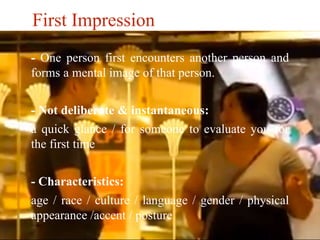
First Impression 
- One person first encounters another person and 
forms a mental image of that person. 
- Not deliberate & instantaneous: 
a quick glance / for someone to evaluate you for 
the first time 
- Characteristics: 
age / race / culture / language / gender / physical 
appearance /accent / posture
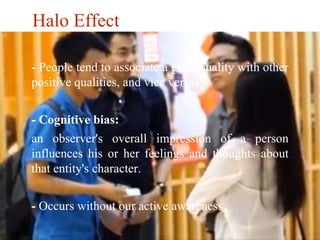
Halo Effect 
- People tend to associate a good quality with other 
positive qualities, and vice versa. 
- Cognitive bias: 
an observer's overall impression of a person 
influences his or her feelings and thoughts about 
that entity's character. 
- Occurs without our active awareness
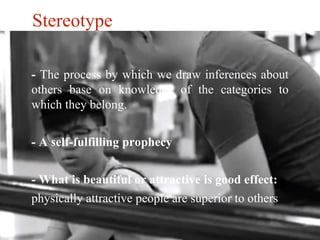
Stereotype 
- The process by which we draw inferences about 
others base on knowledge of the categories to 
which they belong. 
- A self-fulfilling prophecy 
- What is beautiful or attractive is good effect: 
physically attractive people are superior to others
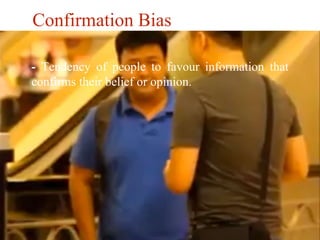
Confirmation Bias 
- Tendency of people to favour information that 
confirms their belief or opinion.
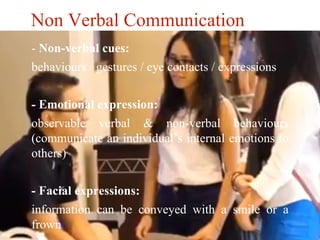
Non Verbal Communication 
- Non-verbal cues: 
behaviours / gestures / eye contacts / expressions 
- Emotional expression: 
observable verbal & non-verbal behaviours 
(communicate an individual’s internal emotions to 
others) 
- Facial expressions: 
information can be conveyed with a smile or a 
frown
References 
1. Robby K. (2012). Don't Judge Foreign English Speakers by 
Their Mistakes. English Harmony. Retrieved December 7, 2014. 
From http://englishharmony.com/don’t-judge-by-mistakes/. 
2. Rob Capps. (2012). First Impressions: The Science of Meeting 
People. WIRED. Retrieved December 7, 2014. From 
http://www.wired.com/2012/11/amy-cuddy-first-impressions/. 
3. Chia, Y.P. (2014). Conformity and Group Behaviour 
[PowerPoint]. Retrieved December 7, 2014. From 
http://goo.gl/0pSKzQ.
The End 
/ 
Thank You.

FNBE0214_PSY_Final Project_Video Presentation

  • 1.
    Social Psychology /PSY30203 Group members: Claudwie Tan Wan Sien / 0317997 Nhat Dinh / 0313309 Ang Wei Yi / 0317885
  • 2.
    First Impression -One person first encounters another person and forms a mental image of that person. - Not deliberate & instantaneous: a quick glance / for someone to evaluate you for the first time - Characteristics: age / race / culture / language / gender / physical appearance /accent / posture
  • 3.
    Halo Effect -People tend to associate a good quality with other positive qualities, and vice versa. - Cognitive bias: an observer's overall impression of a person influences his or her feelings and thoughts about that entity's character. - Occurs without our active awareness
  • 4.
    Stereotype - Theprocess by which we draw inferences about others base on knowledge of the categories to which they belong. - A self-fulfilling prophecy - What is beautiful or attractive is good effect: physically attractive people are superior to others
  • 5.
    Confirmation Bias -Tendency of people to favour information that confirms their belief or opinion.
  • 6.
    Non Verbal Communication - Non-verbal cues: behaviours / gestures / eye contacts / expressions - Emotional expression: observable verbal & non-verbal behaviours (communicate an individual’s internal emotions to others) - Facial expressions: information can be conveyed with a smile or a frown
  • 7.
    References 1. RobbyK. (2012). Don't Judge Foreign English Speakers by Their Mistakes. English Harmony. Retrieved December 7, 2014. From http://englishharmony.com/don’t-judge-by-mistakes/. 2. Rob Capps. (2012). First Impressions: The Science of Meeting People. WIRED. Retrieved December 7, 2014. From http://www.wired.com/2012/11/amy-cuddy-first-impressions/. 3. Chia, Y.P. (2014). Conformity and Group Behaviour [PowerPoint]. Retrieved December 7, 2014. From http://goo.gl/0pSKzQ.
  • 8.
    The End / Thank You.