User Study “ the System” Laura Brunetti Kshitiz Anand Vignesh Ramesh
Overview Study type and Rationale Goal Strategies and Methods Who? Why? How? What? Observations Insights Reflections
Study Type: Fly-on-the-wall Insights from our focus group Varying points of view on the topic. Addressing any one or a combination of the core issues will help alleviate the symptom of homelessness. The current support system is flawed Homelessness is a topic that makes some people uncomfortable. Homelessness is not my problem.
“ The System” Official  – services and organizations. Visible, tangible, defined missions and goals, statistics. Social  – general “everyday” social interactions, public/societal view Intangible, not well defined Study Type: Fly-on-the-wall
Goal “ What is the system’s role in homelessness?”   Specifically the unspoken public view and interaction. What people actually do  vs . what they think they do/would do.
Strategies and Methods Who? General population and homeless around city Why? Hardest to define.  Organizations have defined mission and goals. How? Where? Environments Major downtown areas (streets & parks), homeless aid centers. Activities (interactions) General population & homeless Aid center workers & homeless Homeless & homeless
What? Non-verbal communication body language Reaction Verbal communication Strategies and Methods
Observations (Results) General population & homeless People did not approach the homeless.  Interactions were initiated by a homeless person. No physical touch.  Eye contact established. Conversation limited to homeless asking for something (mainly money), homeless were rejected.
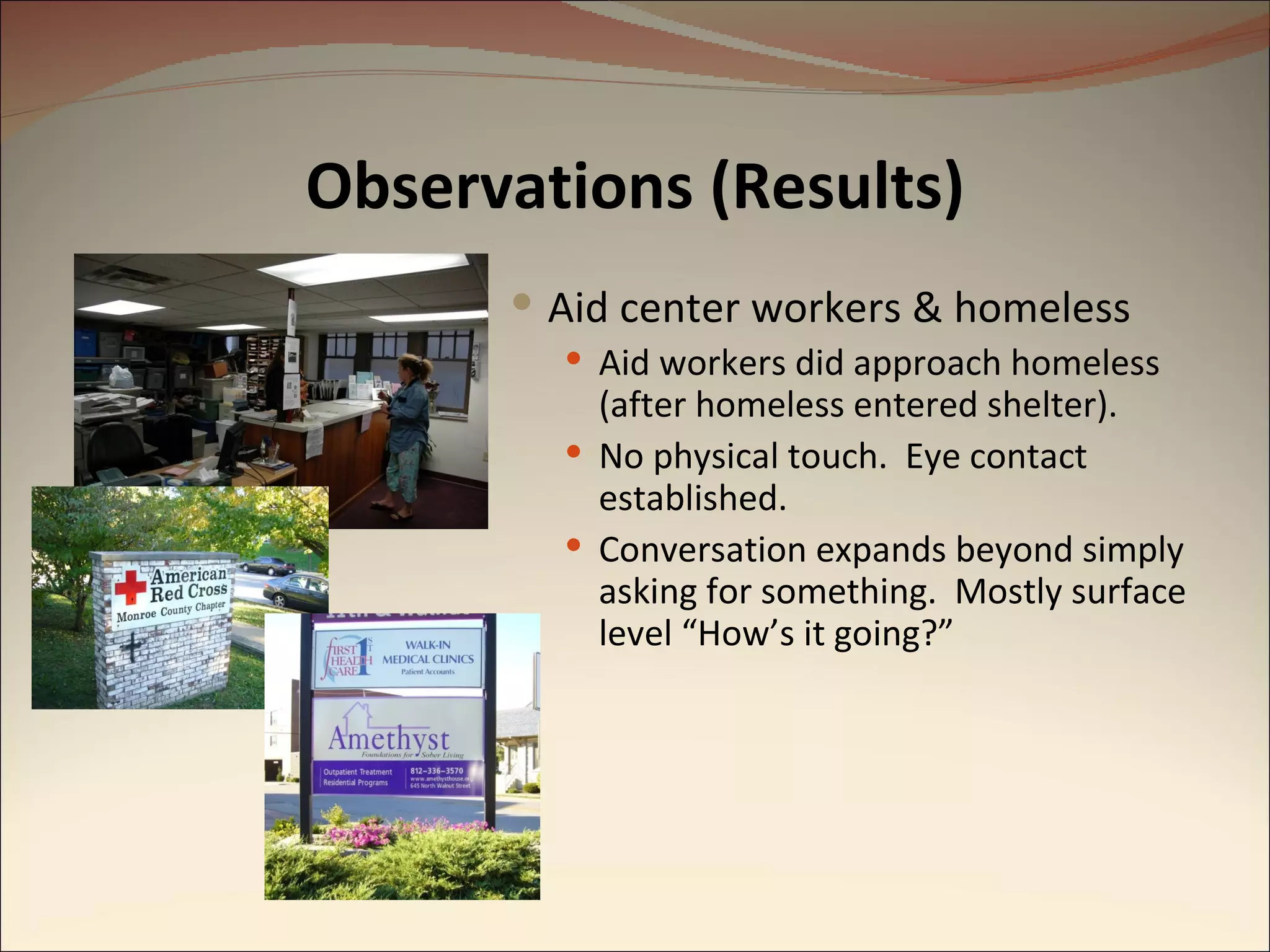
Observations (Results) Aid center workers & homeless Aid workers did approach homeless (after homeless entered shelter). No physical touch.  Eye contact established. Conversation expands beyond simply asking for something.  Mostly surface level “How’s it going?”
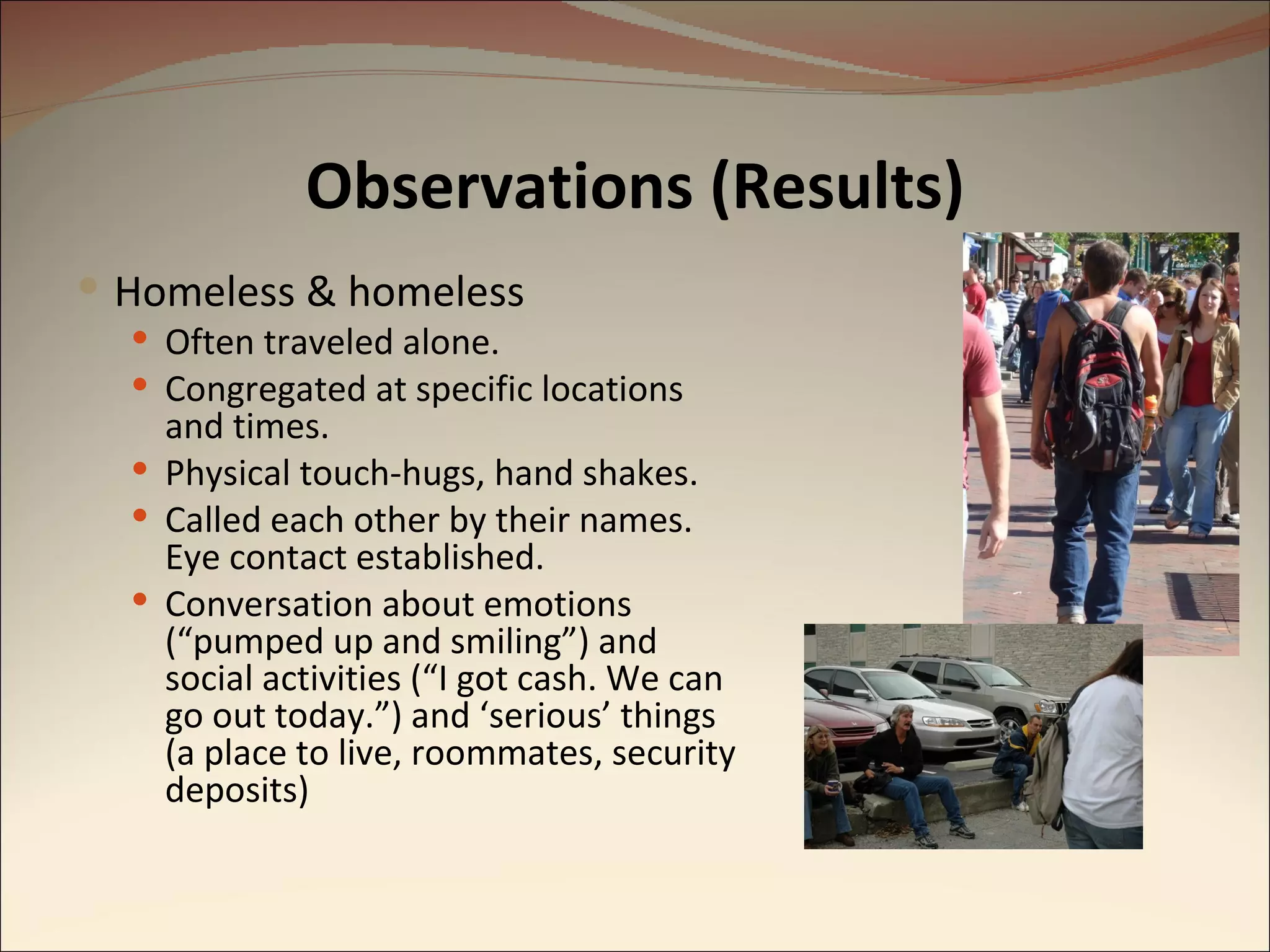
Observations (Results) Homeless & homeless Often traveled alone. Congregated at specific locations and times. Physical touch-hugs, hand shakes. Called each other by their names.  Eye contact established. Conversation about emotions (“pumped up and smiling”) and social activities (“I got cash. We can go out today.”) and ‘serious’ things (a place to live, roommates, security deposits)
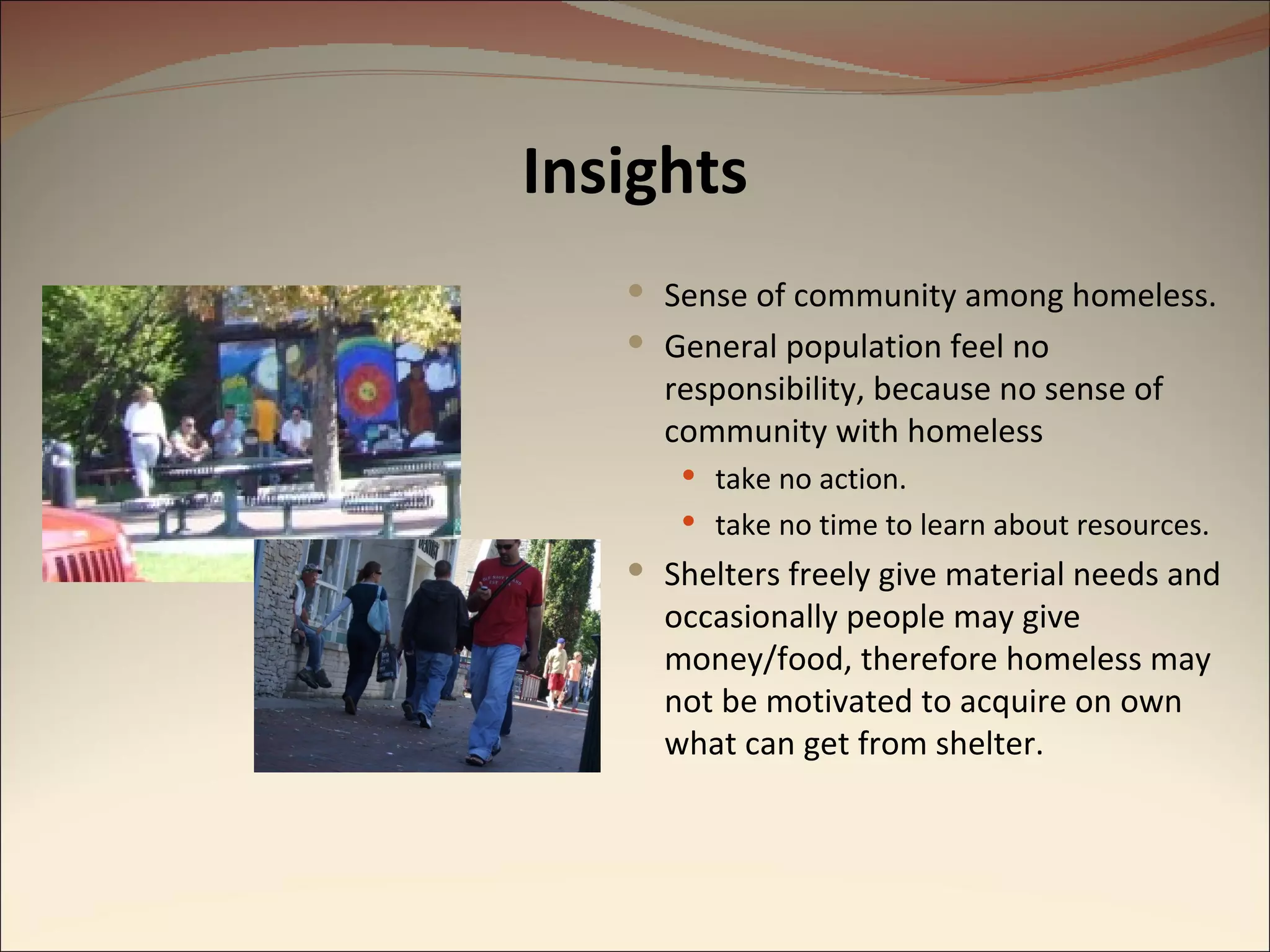
Insights Sense of community among homeless. General population feel no responsibility, because no sense of community with homeless take no action. take no time to learn about resources. Shelters freely give material needs and occasionally people may give money/food, therefore homeless may not be motivated to acquire on own what can get from shelter.
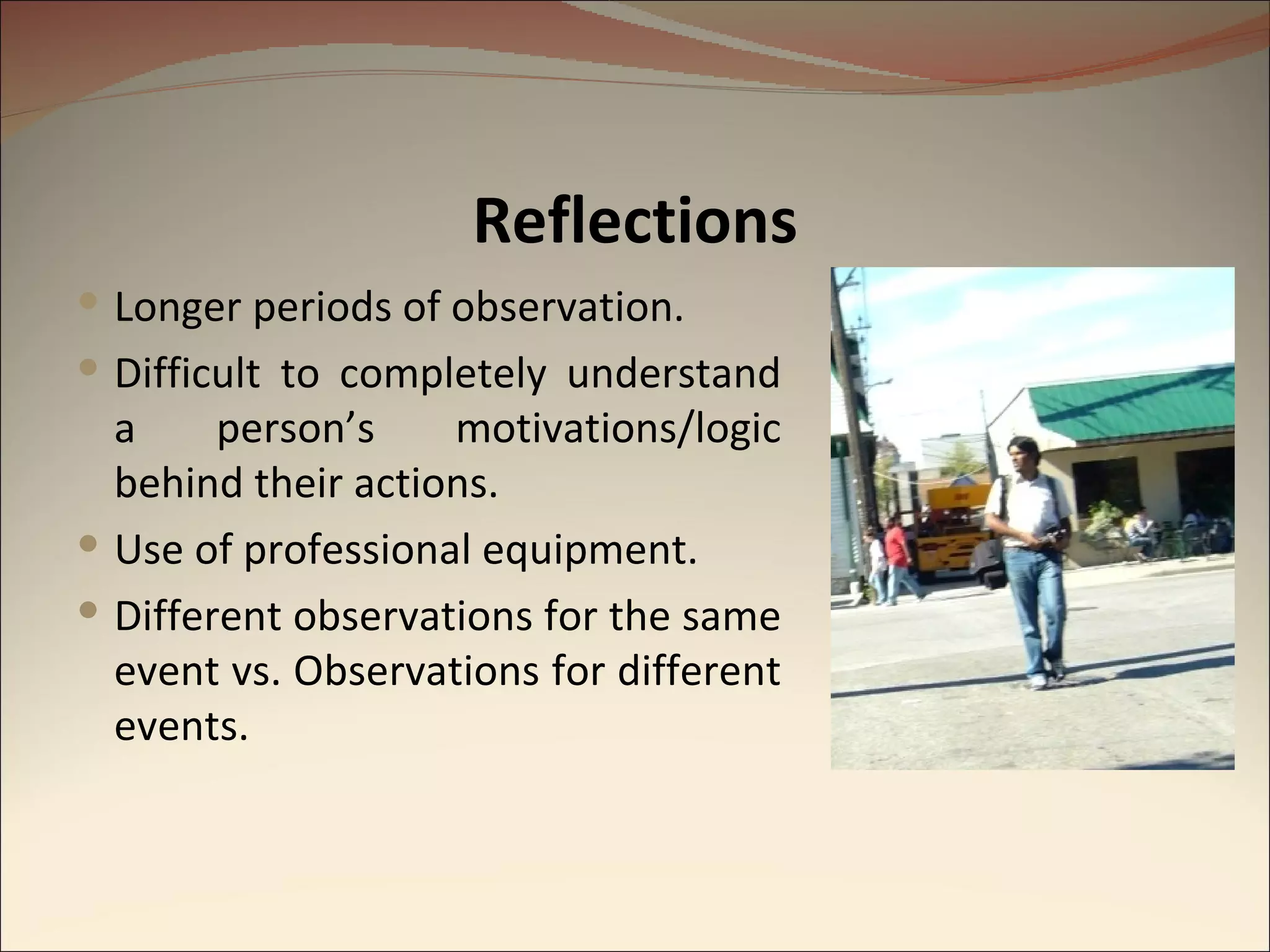
Reflections Longer periods of observation. Difficult to completely understand a person’s motivations/logic behind their actions.  Use of professional equipment. Different observations for the same event vs. Observations for different events.

User Study of Homeless

  • 1.
    User Study “the System” Laura Brunetti Kshitiz Anand Vignesh Ramesh
  • 2.
    Overview Study typeand Rationale Goal Strategies and Methods Who? Why? How? What? Observations Insights Reflections
  • 3.
    Study Type: Fly-on-the-wallInsights from our focus group Varying points of view on the topic. Addressing any one or a combination of the core issues will help alleviate the symptom of homelessness. The current support system is flawed Homelessness is a topic that makes some people uncomfortable. Homelessness is not my problem.
  • 4.
    “ The System”Official – services and organizations. Visible, tangible, defined missions and goals, statistics. Social – general “everyday” social interactions, public/societal view Intangible, not well defined Study Type: Fly-on-the-wall
  • 5.
    Goal “ Whatis the system’s role in homelessness?” Specifically the unspoken public view and interaction. What people actually do vs . what they think they do/would do.
  • 6.
    Strategies and MethodsWho? General population and homeless around city Why? Hardest to define. Organizations have defined mission and goals. How? Where? Environments Major downtown areas (streets & parks), homeless aid centers. Activities (interactions) General population & homeless Aid center workers & homeless Homeless & homeless
  • 7.
    What? Non-verbal communicationbody language Reaction Verbal communication Strategies and Methods
  • 8.
    Observations (Results) Generalpopulation & homeless People did not approach the homeless. Interactions were initiated by a homeless person. No physical touch. Eye contact established. Conversation limited to homeless asking for something (mainly money), homeless were rejected.
  • 9.
    Observations (Results) Aidcenter workers & homeless Aid workers did approach homeless (after homeless entered shelter). No physical touch. Eye contact established. Conversation expands beyond simply asking for something. Mostly surface level “How’s it going?”
  • 10.
    Observations (Results) Homeless& homeless Often traveled alone. Congregated at specific locations and times. Physical touch-hugs, hand shakes. Called each other by their names. Eye contact established. Conversation about emotions (“pumped up and smiling”) and social activities (“I got cash. We can go out today.”) and ‘serious’ things (a place to live, roommates, security deposits)
  • 11.
    Insights Sense ofcommunity among homeless. General population feel no responsibility, because no sense of community with homeless take no action. take no time to learn about resources. Shelters freely give material needs and occasionally people may give money/food, therefore homeless may not be motivated to acquire on own what can get from shelter.
  • 12.
    Reflections Longer periodsof observation. Difficult to completely understand a person’s motivations/logic behind their actions. Use of professional equipment. Different observations for the same event vs. Observations for different events.