Ms Asma Akbar Ali
October 2020
River Floods
1Ms Asma Akbar Ali
What are Floods ?
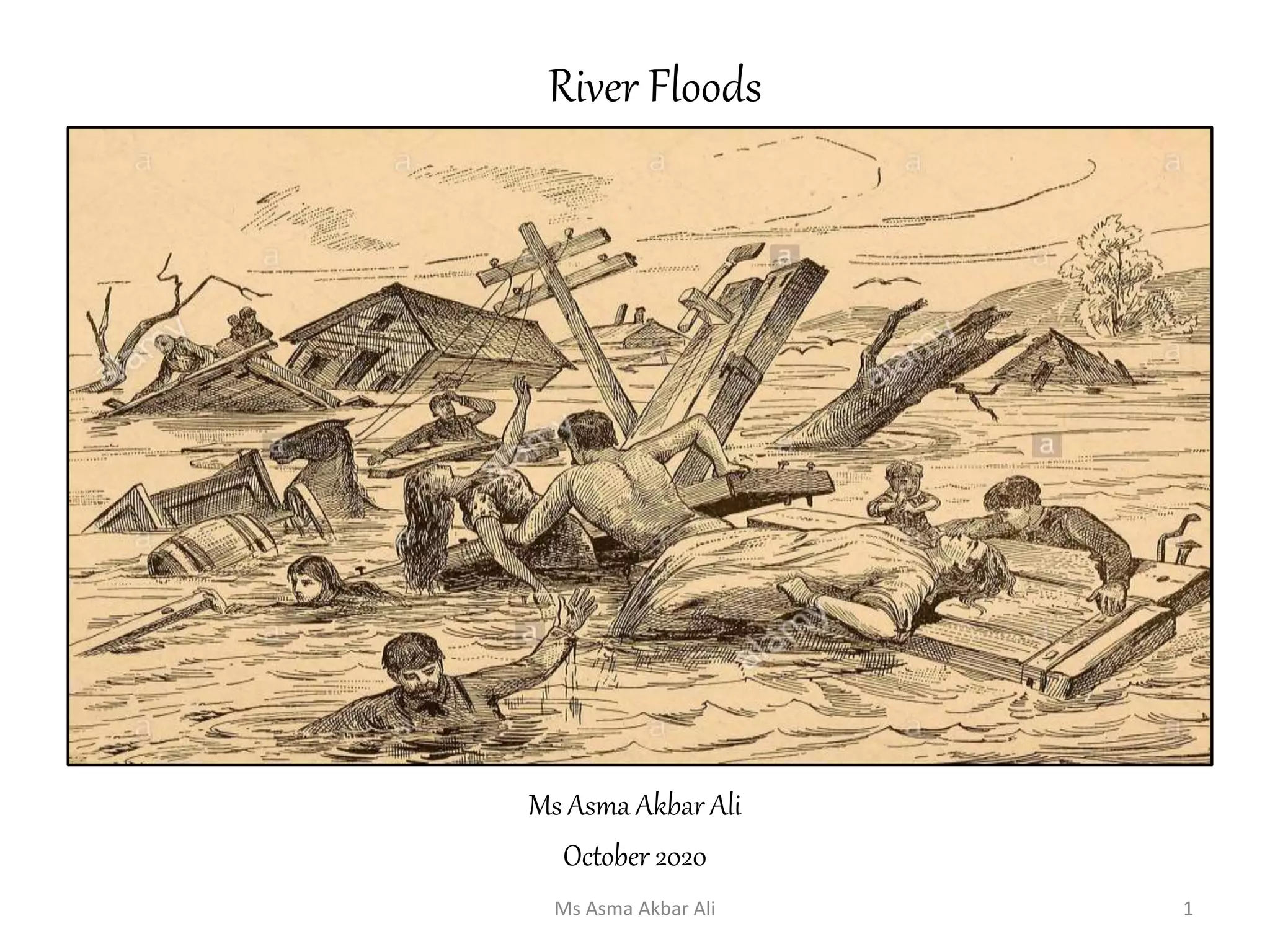
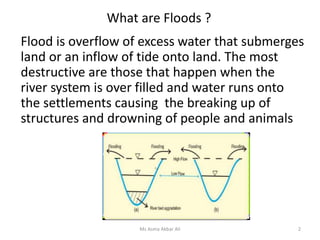
Flood is overflow of excess water that submerges
land or an inflow of tide onto land. The most
destructive are those that happen when the
river system is over filled and water runs onto
the settlements causing the breaking up of
structures and drowning of people and animals
2Ms Asma Akbar Ali
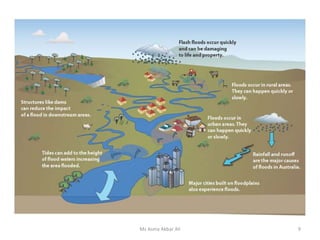
Urban Floods & Rural Floods
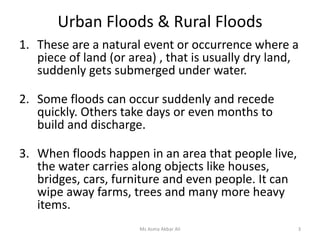
1. These are a natural event or occurrence where a
piece of land (or area) , that is usually dry land,
suddenly gets submerged under water.
2. Some floods can occur suddenly and recede
quickly. Others take days or even months to
build and discharge.
3. When floods happen in an area that people live,
the water carries along objects like houses,
bridges, cars, furniture and even people. It can
wipe away farms, trees and many more heavy
items.
Ms Asma Akbar Ali 3
Ms Asma Akbar Ali 4
Pluvial floods (flash floods and surface water)
Fluvial floods (riverfloods)
NORMAL RIVER
LEVEL
OVERFLOWING WATER
SNOWFALL
HIGH WINDS
STORM SURGE
Coastal flood (stormsurge)
STRAIN O N
URBAN DRAINAGE
SYSTEM
WATER IS
FORCED ASHORE
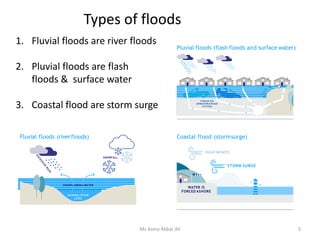
1. Fluvial floods are river floods
2. Pluvial floods are flash
floods & surface water
3. Coastal flood are storm surge
Types of floods
5Ms Asma Akbar Ali
Fluvial are River Floods
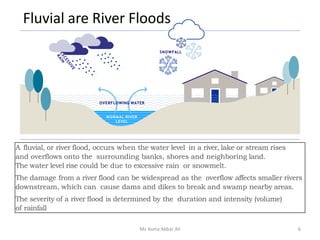
A fluvial, or river flood, occurs when the water level in a river, lake or stream rises
and overflows onto the surrounding banks, shores and neighboring land.
The water level rise could be due to excessive rain or snowmelt.
The damage from a river flood can be widespread as the overflow affects smaller rivers
downstream, which can cause dams and dikes to break and swamp nearby areas.
The severity of a river flood is determined by the duration and intensity (volume)
of rainfall
SNOWFALL
NORMAL RIVER
LEVEL
OVERFLOWING WATER
6Ms Asma Akbar Ali
Pluvial floods are flash floods & surface water
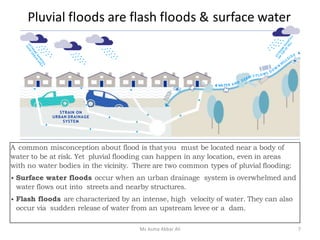
A common misconception about flood is that you must be located near a body of
water to be at risk. Yet pluvial flooding can happen in any location, even in areas
with no water bodies in the vicinity. There are two common types of pluvial flooding:
• Surface water floods occur when an urban drainage system is overwhelmed and
water flows out into streets and nearby structures.
• Flash floods are characterized by an intense, high velocity of water. They can also
occur via sudden release of water from an upstream levee or a dam.
STRAIN ON
URBAN DRAINAGE
SYSTEM
W
7Ms Asma Akbar Ali
Coastal flood are storm surge
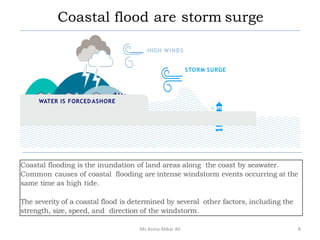
Coastal flooding is the inundation of land areas along the coast by seawater.
Common causes of coastal flooding are intense windstorm events occurring at the
same time as high tide.
The severity of a coastal flood is determined by several other factors, including the
strength, size, speed, and direction of the windstorm.
HIGH WINDS
STORM SURGE
WATER IS FORCED ASHORE
8Ms Asma Akbar Ali
Ms Asma Akbar Ali 9
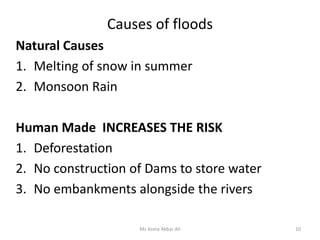
Causes of floods
Natural Causes
1. Melting of snow in summer
2. Monsoon Rain
Human Made INCREASES THE RISK
1. Deforestation
2. No construction of Dams to store water
3. No embankments alongside the rivers
10Ms Asma Akbar Ali
Effects of floods
Ms Asma Akbar Ali 11
1. Primary – Physical damage due to the direct
force of water
2. Secondary – disruption of services due to the
primary damage
3. Tertiary – Long term social, emotional
economical damage
Effects of floods
Ms Asma Akbar Ali 12
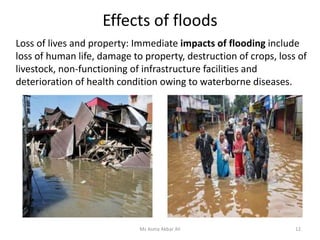
Loss of lives and property: Immediate impacts of flooding include
loss of human life, damage to property, destruction of crops, loss of
livestock, non-functioning of infrastructure facilities and
deterioration of health condition owing to waterborne diseases.
Flood Reduction & Management
1. Planting trees
2. Enlarging the water Channel
3. Building embankments
4. Building extra channels to spread out the
water
5. Build reservoirs e.g. dams
6. Reduce settlements and building structures
at high risk areas
7. Evacuation & Rehabilitation
Ms Asma Akbar Ali 13
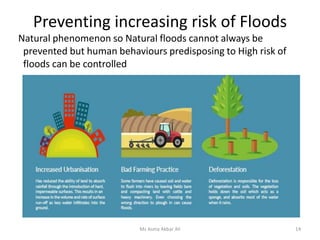
Preventing increasing risk of Floods
Natural phenomenon so Natural floods cannot always be
prevented but human behaviours predisposing to High risk of
floods can be controlled
Ms Asma Akbar Ali 14
Mitigation: What can be done to reduce
the flood risk
1. Flood warning
2. Evacuation plan
3. Training
4. Preparedness for First response (first Aid)
5. CPR
Ms Asma Akbar Ali 15
Positive Impact of floods
1. Return nutrients by washing out the top
layers and spreading a newer layer of
alluvium
2. Flooded field is use able for rice cultivation
3. Fish production is increased by fresh and
newer fishes brought into the delta
4. Inland fish reproduction and breading is
enhanced (AQUA LIFE)
5. Ground water is filled up
Ms Asma Akbar Ali 16

Floods in Pakistan for 0 level students

  • 1.
    Ms Asma AkbarAli October 2020 River Floods 1Ms Asma Akbar Ali
  • 2.
    What are Floods? Flood is overflow of excess water that submerges land or an inflow of tide onto land. The most destructive are those that happen when the river system is over filled and water runs onto the settlements causing the breaking up of structures and drowning of people and animals 2Ms Asma Akbar Ali
  • 3.
    Urban Floods &Rural Floods 1. These are a natural event or occurrence where a piece of land (or area) , that is usually dry land, suddenly gets submerged under water. 2. Some floods can occur suddenly and recede quickly. Others take days or even months to build and discharge. 3. When floods happen in an area that people live, the water carries along objects like houses, bridges, cars, furniture and even people. It can wipe away farms, trees and many more heavy items. Ms Asma Akbar Ali 3
  • 4.
  • 5.
    Pluvial floods (flashfloods and surface water) Fluvial floods (riverfloods) NORMAL RIVER LEVEL OVERFLOWING WATER SNOWFALL HIGH WINDS STORM SURGE Coastal flood (stormsurge) STRAIN O N URBAN DRAINAGE SYSTEM WATER IS FORCED ASHORE 1. Fluvial floods are river floods 2. Pluvial floods are flash floods & surface water 3. Coastal flood are storm surge Types of floods 5Ms Asma Akbar Ali
  • 6.
    Fluvial are RiverFloods A fluvial, or river flood, occurs when the water level in a river, lake or stream rises and overflows onto the surrounding banks, shores and neighboring land. The water level rise could be due to excessive rain or snowmelt. The damage from a river flood can be widespread as the overflow affects smaller rivers downstream, which can cause dams and dikes to break and swamp nearby areas. The severity of a river flood is determined by the duration and intensity (volume) of rainfall SNOWFALL NORMAL RIVER LEVEL OVERFLOWING WATER 6Ms Asma Akbar Ali
  • 7.
    Pluvial floods areflash floods & surface water A common misconception about flood is that you must be located near a body of water to be at risk. Yet pluvial flooding can happen in any location, even in areas with no water bodies in the vicinity. There are two common types of pluvial flooding: • Surface water floods occur when an urban drainage system is overwhelmed and water flows out into streets and nearby structures. • Flash floods are characterized by an intense, high velocity of water. They can also occur via sudden release of water from an upstream levee or a dam. STRAIN ON URBAN DRAINAGE SYSTEM W 7Ms Asma Akbar Ali
  • 8.
    Coastal flood arestorm surge Coastal flooding is the inundation of land areas along the coast by seawater. Common causes of coastal flooding are intense windstorm events occurring at the same time as high tide. The severity of a coastal flood is determined by several other factors, including the strength, size, speed, and direction of the windstorm. HIGH WINDS STORM SURGE WATER IS FORCED ASHORE 8Ms Asma Akbar Ali
  • 9.
  • 10.
    Causes of floods NaturalCauses 1. Melting of snow in summer 2. Monsoon Rain Human Made INCREASES THE RISK 1. Deforestation 2. No construction of Dams to store water 3. No embankments alongside the rivers 10Ms Asma Akbar Ali
  • 11.
    Effects of floods MsAsma Akbar Ali 11 1. Primary – Physical damage due to the direct force of water 2. Secondary – disruption of services due to the primary damage 3. Tertiary – Long term social, emotional economical damage
  • 12.
    Effects of floods MsAsma Akbar Ali 12 Loss of lives and property: Immediate impacts of flooding include loss of human life, damage to property, destruction of crops, loss of livestock, non-functioning of infrastructure facilities and deterioration of health condition owing to waterborne diseases.
  • 13.
    Flood Reduction &Management 1. Planting trees 2. Enlarging the water Channel 3. Building embankments 4. Building extra channels to spread out the water 5. Build reservoirs e.g. dams 6. Reduce settlements and building structures at high risk areas 7. Evacuation & Rehabilitation Ms Asma Akbar Ali 13
  • 14.
    Preventing increasing riskof Floods Natural phenomenon so Natural floods cannot always be prevented but human behaviours predisposing to High risk of floods can be controlled Ms Asma Akbar Ali 14
  • 15.
    Mitigation: What canbe done to reduce the flood risk 1. Flood warning 2. Evacuation plan 3. Training 4. Preparedness for First response (first Aid) 5. CPR Ms Asma Akbar Ali 15
  • 16.
    Positive Impact offloods 1. Return nutrients by washing out the top layers and spreading a newer layer of alluvium 2. Flooded field is use able for rice cultivation 3. Fish production is increased by fresh and newer fishes brought into the delta 4. Inland fish reproduction and breading is enhanced (AQUA LIFE) 5. Ground water is filled up Ms Asma Akbar Ali 16