>> 0 >> 1 >> 2 >> 3 >> 4 >>
Flipping The Math Classroom
with Edusmart Math
Kelli Mallory
kelli@edusmart.com
RGVCTM
Nov 7, 2015
>> 0 >> 1 >> 2 >> 3 >> 4 >>
>> 0 >> 1 >> 2 >> 3 >> 4 >>
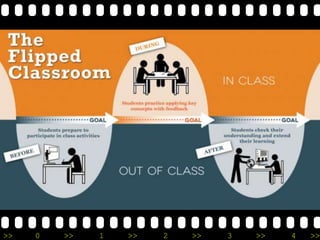
What is Flipped Instruction?
• Students watch a video lesson or do
something to learn the material at home
before class
• Apply learning and work problems in class
the next day where the teacher and other
students are available to help answer
questions
>> 0 >> 1 >> 2 >> 3 >> 4 >>
>> 0 >> 1 >> 2 >> 3 >> 4 >>
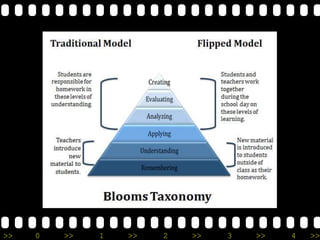
Flipped vs. Traditional Class
Flipped Classroom
• Teacher as “Guide on the
Side”
• Teacher records and shares
lessons or lectures outside of
class
• Students watch/listen before
coming to class and take notes
• Class time devoted to applied
learning activities and higher
order thinking tasks
• Students receive support from
teacher and peers
Traditional Classroom
• Teacher as ”Sage on the
Stage”
• Teacher prepares materials to
be delivered in class
• Students listen to lectures and
other guided instruction in
class and take notes
• Homework is assigned to
demonstrate understanding
and apply learning
>> 0 >> 1 >> 2 >> 3 >> 4 >>
>> 0 >> 1 >> 2 >> 3 >> 4 >>
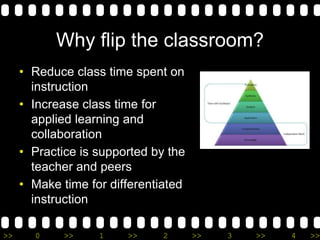
Why flip the classroom?
• Reduce class time spent on
instruction
• Increase class time for
applied learning and
collaboration
• Practice is supported by the
teacher and peers
• Make time for differentiated
instruction
>> 0 >> 1 >> 2 >> 3 >> 4 >>
>> 0 >> 1 >> 2 >> 3 >> 4 >>
Pros and Cons
Students no longer struggle with concepts
alone outside of class time
Making sure every student has a computer
and internet access
Students can skip parts of the lesson they
already understand and re-watch new or
challenging ideas.
Students cannot ask questions for
clarification during a recorded lesson.
Applied learning in the classroom Technology issues
Differentiated Instruction Designing and grading frequent
assessment
Students are given ownership and
responsibility for their own learning.
Students have trouble “buying in” to
instruction, especially when it is not created
by the instructor.
Students come to class prepped and ready
to learn. No down time.
Determining how to handle students who
do not complete the homework video.
Videos include links for deeper thinking and
further learning.
Creating or finding quality videos for each
lesson.
Teacher can spend class time working one-
on-one or in small groups with students.
>> 0 >> 1 >> 2 >> 3 >> 4 >>
Getting Started
>> 0 >> 1 >> 2 >> 3 >> 4 >>
Planning to Flip
What can students do
without you?
• Videos
• Lectures
• Readings
• Reflections
• Quizzes/formative
assessment
• Non-active things
What do students need to
do with you?
• Discussions
• Active learning
• Group activities
• Project work time
• Shared reflections
• Applied practice
>> 0 >> 1 >> 2 >> 3 >> 4 >>
Where/How do I get the video
content?
• Make your own
– Screen cast-o-matic
– Camtasia/CamStudio
– Powerpoint with
voiceover
• Use one already
created
– Edusmart
– TeacherTube
– Ed.ted.com
– Khan Academy
>> 0 >> 1 >> 2 >> 3 >> 4 >>
What do we do in class?
• Questions and Discussions
• Review the concepts & student notes
• Hands-on group activities
• Guided and Independent practice
• Formative Assessment
>> 0 >> 1 >> 2 >> 3 >> 4 >>
Common Hurdles
• What if students can’t access the internet
at home?
• What if students don’t watch the video?
• What if students don’t know how to focus
on a video lesson?
http://www.edutopia.org/blog/flipped-
learning-toolkit-common-hurdles-jon-
bergmann
>> 0 >> 1 >> 2 >> 3 >> 4 >>
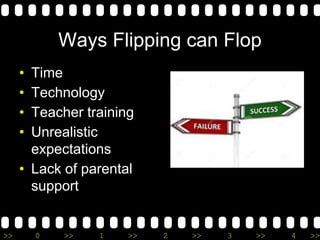
Ways Flipping can Flop
• Time
• Technology
• Teacher training
• Unrealistic
expectations
• Lack of parental
support
>> 0 >> 1 >> 2 >> 3 >> 4 >>
Flipped Classroom Challenges
• Line up and fold the line in half.
• With the person across from you
– Partner A share one challenge you would face if you
decide to “flip” your classroom
– Partner B share a suggestion to overcome the
presented challenge
• Rotate one line.
– Partner B share one challenge
– Partner A share a suggestion to overcome the
presented challenge

Flipping the Math Classroom

  • 1.
    >> 0 >>1 >> 2 >> 3 >> 4 >> Flipping The Math Classroom with Edusmart Math Kelli Mallory kelli@edusmart.com RGVCTM Nov 7, 2015
  • 2.
    >> 0 >>1 >> 2 >> 3 >> 4 >>
  • 3.
    >> 0 >>1 >> 2 >> 3 >> 4 >> What is Flipped Instruction? • Students watch a video lesson or do something to learn the material at home before class • Apply learning and work problems in class the next day where the teacher and other students are available to help answer questions
  • 4.
    >> 0 >>1 >> 2 >> 3 >> 4 >>
  • 5.
    >> 0 >>1 >> 2 >> 3 >> 4 >> Flipped vs. Traditional Class Flipped Classroom • Teacher as “Guide on the Side” • Teacher records and shares lessons or lectures outside of class • Students watch/listen before coming to class and take notes • Class time devoted to applied learning activities and higher order thinking tasks • Students receive support from teacher and peers Traditional Classroom • Teacher as ”Sage on the Stage” • Teacher prepares materials to be delivered in class • Students listen to lectures and other guided instruction in class and take notes • Homework is assigned to demonstrate understanding and apply learning
  • 6.
    >> 0 >>1 >> 2 >> 3 >> 4 >>
  • 7.
    >> 0 >>1 >> 2 >> 3 >> 4 >> Why flip the classroom? • Reduce class time spent on instruction • Increase class time for applied learning and collaboration • Practice is supported by the teacher and peers • Make time for differentiated instruction
  • 8.
    >> 0 >>1 >> 2 >> 3 >> 4 >>
  • 9.
    >> 0 >>1 >> 2 >> 3 >> 4 >> Pros and Cons Students no longer struggle with concepts alone outside of class time Making sure every student has a computer and internet access Students can skip parts of the lesson they already understand and re-watch new or challenging ideas. Students cannot ask questions for clarification during a recorded lesson. Applied learning in the classroom Technology issues Differentiated Instruction Designing and grading frequent assessment Students are given ownership and responsibility for their own learning. Students have trouble “buying in” to instruction, especially when it is not created by the instructor. Students come to class prepped and ready to learn. No down time. Determining how to handle students who do not complete the homework video. Videos include links for deeper thinking and further learning. Creating or finding quality videos for each lesson. Teacher can spend class time working one- on-one or in small groups with students.
  • 10.
    >> 0 >>1 >> 2 >> 3 >> 4 >> Getting Started
  • 11.
    >> 0 >>1 >> 2 >> 3 >> 4 >> Planning to Flip What can students do without you? • Videos • Lectures • Readings • Reflections • Quizzes/formative assessment • Non-active things What do students need to do with you? • Discussions • Active learning • Group activities • Project work time • Shared reflections • Applied practice
  • 12.
    >> 0 >>1 >> 2 >> 3 >> 4 >> Where/How do I get the video content? • Make your own – Screen cast-o-matic – Camtasia/CamStudio – Powerpoint with voiceover • Use one already created – Edusmart – TeacherTube – Ed.ted.com – Khan Academy
  • 13.
    >> 0 >>1 >> 2 >> 3 >> 4 >> What do we do in class? • Questions and Discussions • Review the concepts & student notes • Hands-on group activities • Guided and Independent practice • Formative Assessment
  • 14.
    >> 0 >>1 >> 2 >> 3 >> 4 >> Common Hurdles • What if students can’t access the internet at home? • What if students don’t watch the video? • What if students don’t know how to focus on a video lesson? http://www.edutopia.org/blog/flipped- learning-toolkit-common-hurdles-jon- bergmann
  • 15.
    >> 0 >>1 >> 2 >> 3 >> 4 >> Ways Flipping can Flop • Time • Technology • Teacher training • Unrealistic expectations • Lack of parental support
  • 16.
    >> 0 >>1 >> 2 >> 3 >> 4 >> Flipped Classroom Challenges • Line up and fold the line in half. • With the person across from you – Partner A share one challenge you would face if you decide to “flip” your classroom – Partner B share a suggestion to overcome the presented challenge • Rotate one line. – Partner B share one challenge – Partner A share a suggestion to overcome the presented challenge