Topic : Fracture
Lecturer: Dr. Jalloh
Fractures, Sprains, and
Dislocations
Fractures
 A break or a crack in a bone is called a fracture.
 Many types of fractures are difficult to determine.
 If a fracture is suspected, it’s wise to get it checked out
Fracture Categories
 All fractures are one of two types
1) Closed – skin over fracture is not broken
2) Open/Compound – where the
skin over the fracture is broken.
The bone may be visible.
Types of Fractures
 Hairline
 Stress
 Complete
 Greenstick
 Comminuted
 Depression
 Complicated
 Transverse
 Oblique
 Spiral
Hairline Fracture
 A very thin crack or break in the bone
Hairline fracture of the foot
Stress Fracture
 Fracture caused by repetitive stress to a bone
Complete Fracture
 When a bone breaks into two separate pieces
 (intracapsular, femoral neck fracture)
Greenstick Fracture
 When the bone cracks on one side only, not all the way
through
Ulnar greenstick fracture
Comminuted Fracture
 When the bone is broken into more than two
pieces or is crushed
Spiral Fracture
 Bone is broken by twisting
Spiral fracture of femur
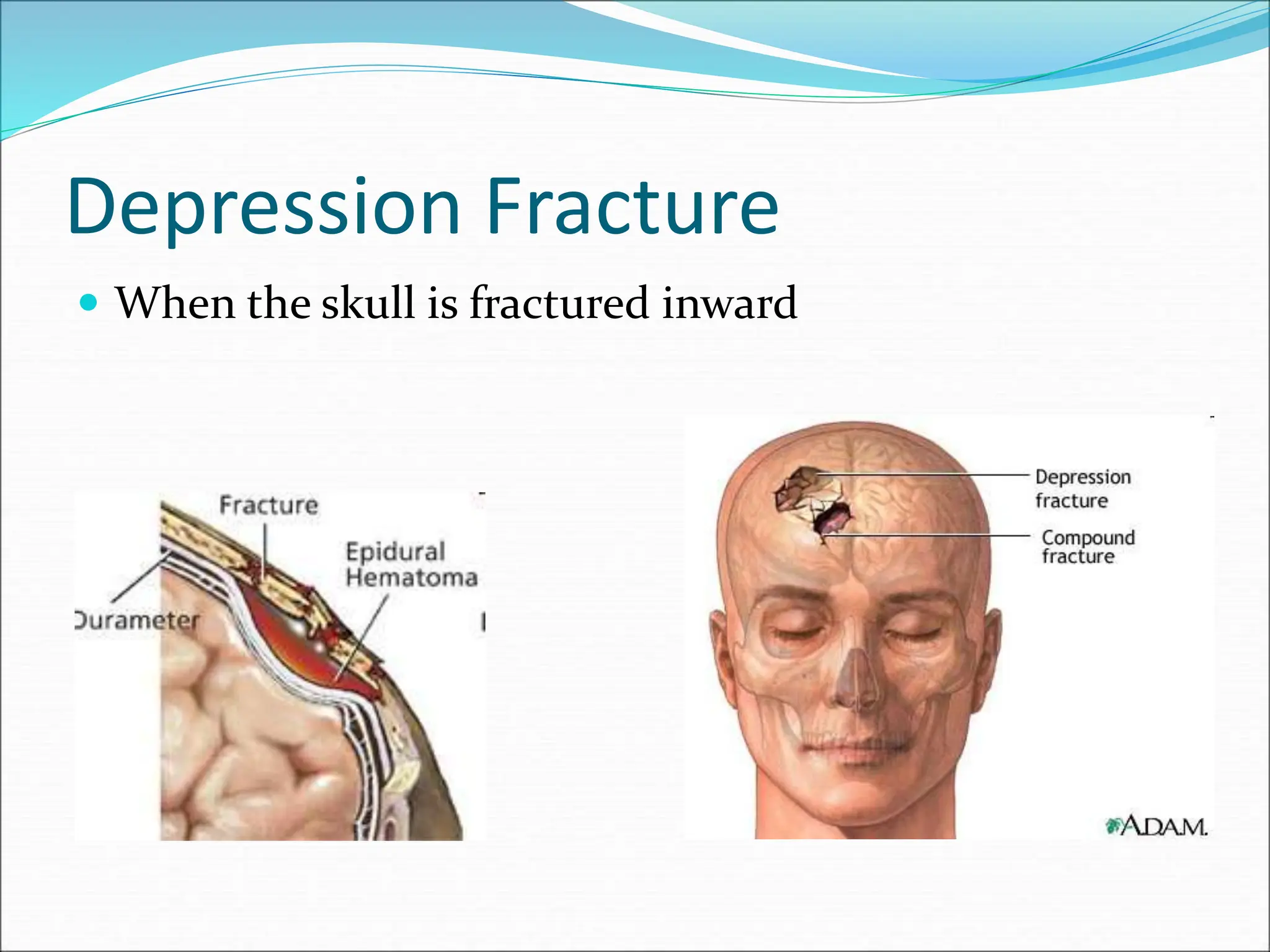
Depression Fracture
 When the skull is fractured inward
Complicated Fracture
 When a broken bone may have caused damage to
internal organs
 There is more concern than the fracture itself
Transverse Fracture
 When the bone is broken straight across
Oblique Fracture
 When the bone is broken on a steep angle
fibula
Signs or Symptoms of a Fracture
 Pain and tenderness
 Loss of function
 A wound (with bone sticking out)
 Deformity
 Unnatural movement
 Shock
 Crepitus (grinding) (don’t test for this)
 Swelling and bruising
What is sprain?
 The bones at a joint are held together by tough bands
called ligaments.
A sprain is an injury to a ligament
 1st degree – stretched
 2nd degree – partially torn
 3rd degree – completely torn
 Most common are the fingers, wrist, ankle, and knee
Signs and Symptoms of a Sprain
 Pain that may be severe and increase with the
movement of the joint
 Loss of function
 Swelling and discoloration
What is a dislocation?
 When the bones at a joint are no longer in proper contact.
 Can be caused by severe twisting or indirect force, or even a
muscular contraction
 Most frequently dislocated joints
 Shoulder
 Elbow
 Thumb
 Finger
 Jaw
 Knee
Signs and Symptoms of a
Dislocation
 Deformity or abnormal appearance
 Pain and tenderness aggravated by movement
 Loss of normal function
 Joint may be locked in one position
 Swelling of the joint
General Treatment Principles
 Stop the activity.
 Survey the injured area.
 First Aid if qualified.
 Get help if not.
 Determine if additional medical attention is
necessary.
RICE
 R - Rest
 I - Immobilize
 C - Cold
 E - Elevate
IMTC - UNMIL 23
QUESTIONS

First aid FRACTURE.ppt4444444444444444444

  • 1.
  • 2.
  • 3.
    Fractures  A breakor a crack in a bone is called a fracture.  Many types of fractures are difficult to determine.  If a fracture is suspected, it’s wise to get it checked out
  • 4.
    Fracture Categories  Allfractures are one of two types 1) Closed – skin over fracture is not broken 2) Open/Compound – where the skin over the fracture is broken. The bone may be visible.
  • 5.
    Types of Fractures Hairline  Stress  Complete  Greenstick  Comminuted  Depression  Complicated  Transverse  Oblique  Spiral
  • 6.
    Hairline Fracture  Avery thin crack or break in the bone Hairline fracture of the foot
  • 7.
    Stress Fracture  Fracturecaused by repetitive stress to a bone
  • 8.
    Complete Fracture  Whena bone breaks into two separate pieces  (intracapsular, femoral neck fracture)
  • 9.
    Greenstick Fracture  Whenthe bone cracks on one side only, not all the way through Ulnar greenstick fracture
  • 10.
    Comminuted Fracture  Whenthe bone is broken into more than two pieces or is crushed
  • 11.
    Spiral Fracture  Boneis broken by twisting Spiral fracture of femur
  • 12.
    Depression Fracture  Whenthe skull is fractured inward
  • 13.
    Complicated Fracture  Whena broken bone may have caused damage to internal organs  There is more concern than the fracture itself
  • 14.
    Transverse Fracture  Whenthe bone is broken straight across
  • 15.
    Oblique Fracture  Whenthe bone is broken on a steep angle fibula
  • 16.
    Signs or Symptomsof a Fracture  Pain and tenderness  Loss of function  A wound (with bone sticking out)  Deformity  Unnatural movement  Shock  Crepitus (grinding) (don’t test for this)  Swelling and bruising
  • 17.
    What is sprain? The bones at a joint are held together by tough bands called ligaments. A sprain is an injury to a ligament  1st degree – stretched  2nd degree – partially torn  3rd degree – completely torn  Most common are the fingers, wrist, ankle, and knee
  • 18.
    Signs and Symptomsof a Sprain  Pain that may be severe and increase with the movement of the joint  Loss of function  Swelling and discoloration
  • 19.
    What is adislocation?  When the bones at a joint are no longer in proper contact.  Can be caused by severe twisting or indirect force, or even a muscular contraction  Most frequently dislocated joints  Shoulder  Elbow  Thumb  Finger  Jaw  Knee
  • 20.
    Signs and Symptomsof a Dislocation  Deformity or abnormal appearance  Pain and tenderness aggravated by movement  Loss of normal function  Joint may be locked in one position  Swelling of the joint
  • 21.
    General Treatment Principles Stop the activity.  Survey the injured area.  First Aid if qualified.  Get help if not.  Determine if additional medical attention is necessary.
  • 22.
    RICE  R -Rest  I - Immobilize  C - Cold  E - Elevate
  • 23.
    IMTC - UNMIL23 QUESTIONS