


Firmware
Reverse Engineering
Hi!
I am Satria Ady Pradana
Community Leader
of
Reversing.ID
xathrya
@xathrya
Reversing.ID
Revealing the Truth through Breaking Things
https://xathrya.id
Disclaimer
 This presentation is intended for educational purposes only.
 Reverse engineering of copyrighted material is illegal an might cause you a
direct or indirect consequence. We have no responsibility of anything you do
after learning this.
What is Firmware?
 Software that provides low-level control for the device’s specific hardware.
 Single or collection of specialized software
 Mostly embedded on hardware, stored on specific region (ex: ROM), and
executed on closed environment (only on that hardware).
What do you think of
Reverse Engineering?
Explaining Reversing
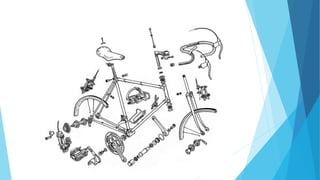
 Originally used in the context of mechanical engineering
 Breaks down an existing object or system to its construction
and then rebuild it based on new demand.
 Extracting knowledge or design information from anything man-
made and reproducing it or reproduce anything based on the
extracted information.
Reversing = Solving Puzzles
Type of Firmware
 Bare-metal firmware
 A single program, single layer.
 No operating system.
 Direct access and full control of low-level hardware.
 Primitive operations (ex: spin the disk for X degree clockwise).
 Typically used for specific hardware, such as hard disk, motherboard, etc.
 Full firmware
 One or more application, multiple layer.
 Include an embedded operating system (ex: linux)
 Higher level of operations (ex: handle routing protocol)
 Typically used for appliance, such as router, IoT hardware, etc.
This session will be limited to Full
Firmware.
Reversing bare-metal firmware will
require more knowledge about
hardware.
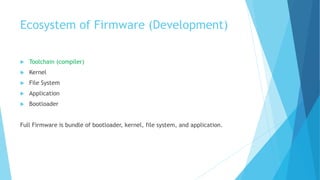
Ecosystem of Firmware (Development)
 Toolchain (compiler)
 Kernel
 File System
 Application
 Bootloader
Full Firmware is bundle of bootloader, kernel, file system, and application.
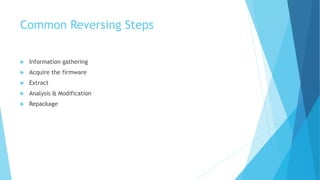
Common Reversing Steps
 Information gathering
 Acquire the firmware
 Extract
 Analysis & Modification
 Repackage
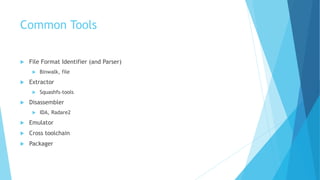
Common Tools
 File Format Identifier (and Parser)
 Binwalk, file
 Extractor
 Squashfs-tools
 Disassembler
 IDA, Radare2
 Emulator
 Cross toolchain
 Packager
1. Information Gathering
 What to search?
 File format
 Architecture
 Hardware feature
 Some information source
 Datasheet
 FCC specification
Common Architecture
 x86 / x86_64
 ARM
 MIPS
Different processor architecture leads to different machine code and thus
different tools.
2. Firmware Acquisition
 Dump from hardware
 Sniff the firmware-update mechanism
 Download the firmware
Remember to analyze the firmware
3. Firmware Extraction
 Extraction means unpack the firmware and get all the contents of firmware.
 Remember that full firmware consists of many components!
 Different format / structure has different strategy.
 Need to preserve the content, no loss and no noise.
4. Analysis & Modification
 Search for this and that
 Backdoor from manufacturer.
 Vulnerability?
 Patch here and there
 Create backdoor
 Hidden operation
 Nullify some features
5. Repackage
 Put the content back to a package
 Different structure has different tools.
DEMO !!!

Firmware Reverse Engineering

  • 1.
  • 2.
    Hi! I am SatriaAdy Pradana Community Leader of Reversing.ID xathrya @xathrya Reversing.ID Revealing the Truth through Breaking Things https://xathrya.id
  • 3.
    Disclaimer  This presentationis intended for educational purposes only.  Reverse engineering of copyrighted material is illegal an might cause you a direct or indirect consequence. We have no responsibility of anything you do after learning this.
  • 4.
    What is Firmware? Software that provides low-level control for the device’s specific hardware.  Single or collection of specialized software  Mostly embedded on hardware, stored on specific region (ex: ROM), and executed on closed environment (only on that hardware).
  • 5.
    What do youthink of Reverse Engineering?
  • 6.
    Explaining Reversing  Originallyused in the context of mechanical engineering  Breaks down an existing object or system to its construction and then rebuild it based on new demand.  Extracting knowledge or design information from anything man- made and reproducing it or reproduce anything based on the extracted information.
  • 7.
  • 9.
    Type of Firmware Bare-metal firmware  A single program, single layer.  No operating system.  Direct access and full control of low-level hardware.  Primitive operations (ex: spin the disk for X degree clockwise).  Typically used for specific hardware, such as hard disk, motherboard, etc.  Full firmware  One or more application, multiple layer.  Include an embedded operating system (ex: linux)  Higher level of operations (ex: handle routing protocol)  Typically used for appliance, such as router, IoT hardware, etc.
  • 10.
    This session willbe limited to Full Firmware. Reversing bare-metal firmware will require more knowledge about hardware.
  • 11.
    Ecosystem of Firmware(Development)  Toolchain (compiler)  Kernel  File System  Application  Bootloader Full Firmware is bundle of bootloader, kernel, file system, and application.
  • 12.
    Common Reversing Steps Information gathering  Acquire the firmware  Extract  Analysis & Modification  Repackage
  • 13.
    Common Tools  FileFormat Identifier (and Parser)  Binwalk, file  Extractor  Squashfs-tools  Disassembler  IDA, Radare2  Emulator  Cross toolchain  Packager
  • 14.
    1. Information Gathering What to search?  File format  Architecture  Hardware feature  Some information source  Datasheet  FCC specification
  • 15.
    Common Architecture  x86/ x86_64  ARM  MIPS Different processor architecture leads to different machine code and thus different tools.
  • 16.
    2. Firmware Acquisition Dump from hardware  Sniff the firmware-update mechanism  Download the firmware Remember to analyze the firmware
  • 17.
    3. Firmware Extraction Extraction means unpack the firmware and get all the contents of firmware.  Remember that full firmware consists of many components!  Different format / structure has different strategy.  Need to preserve the content, no loss and no noise.
  • 18.
    4. Analysis &Modification  Search for this and that  Backdoor from manufacturer.  Vulnerability?  Patch here and there  Create backdoor  Hidden operation  Nullify some features
  • 19.
    5. Repackage  Putthe content back to a package  Different structure has different tools.
  • 20.