-S.Y.TSAD.
HEATSETTING
EMBOSSING SURFACE
NAPPING
FLOCKING
SOFTENING FINISH
DELUSTERING
BRIGHTENING
Textile Finishing is a process used in
manufacturing of fiber, fabric, or clothing. In order to
impart the required functional properties to the fiber or
fabric, it is customary to subject the material to different
type of physical and chemical treatments.
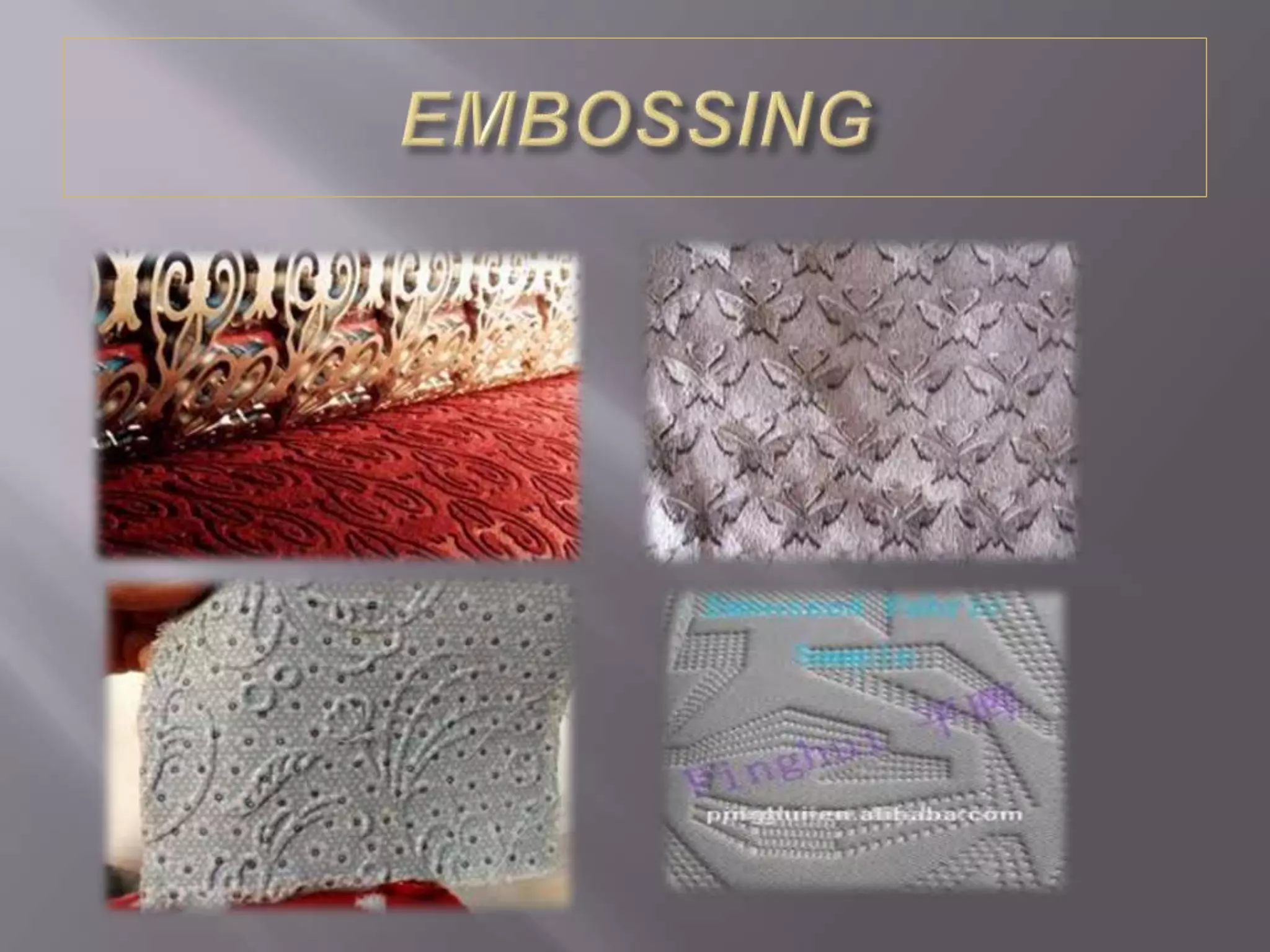
 The process of producing raised figures or designs in relief on
surfaces of fabrics by passing the cloth between heated engraved
rollers is known as embossing.
•Fabric is cut in 2.
•2 selvedges running together side by side.
•To produce moiré, ribbed rollers are used, and the ribs
produce the watermark effect.
 A mechanical treatment that uses beetlers or fallers to give
fabric surfaces a flattened appearance.
 The spaces between warp and filling are covered up and tend to
produce a high gloss to the material.
 The image/printed area is raised to just one flat level.
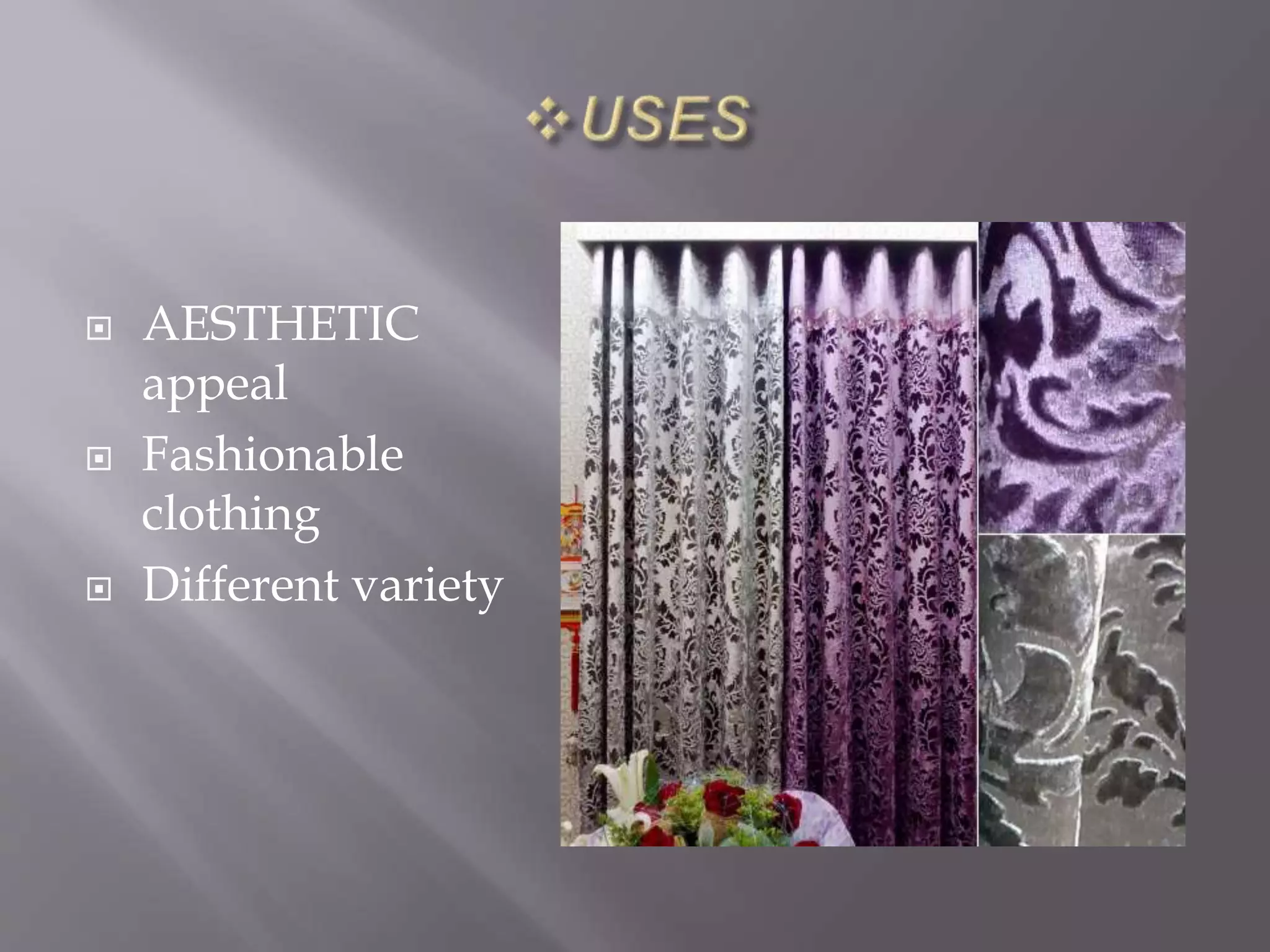
 AESTHETIC
appeal
 Fashionable
clothing
 Different variety
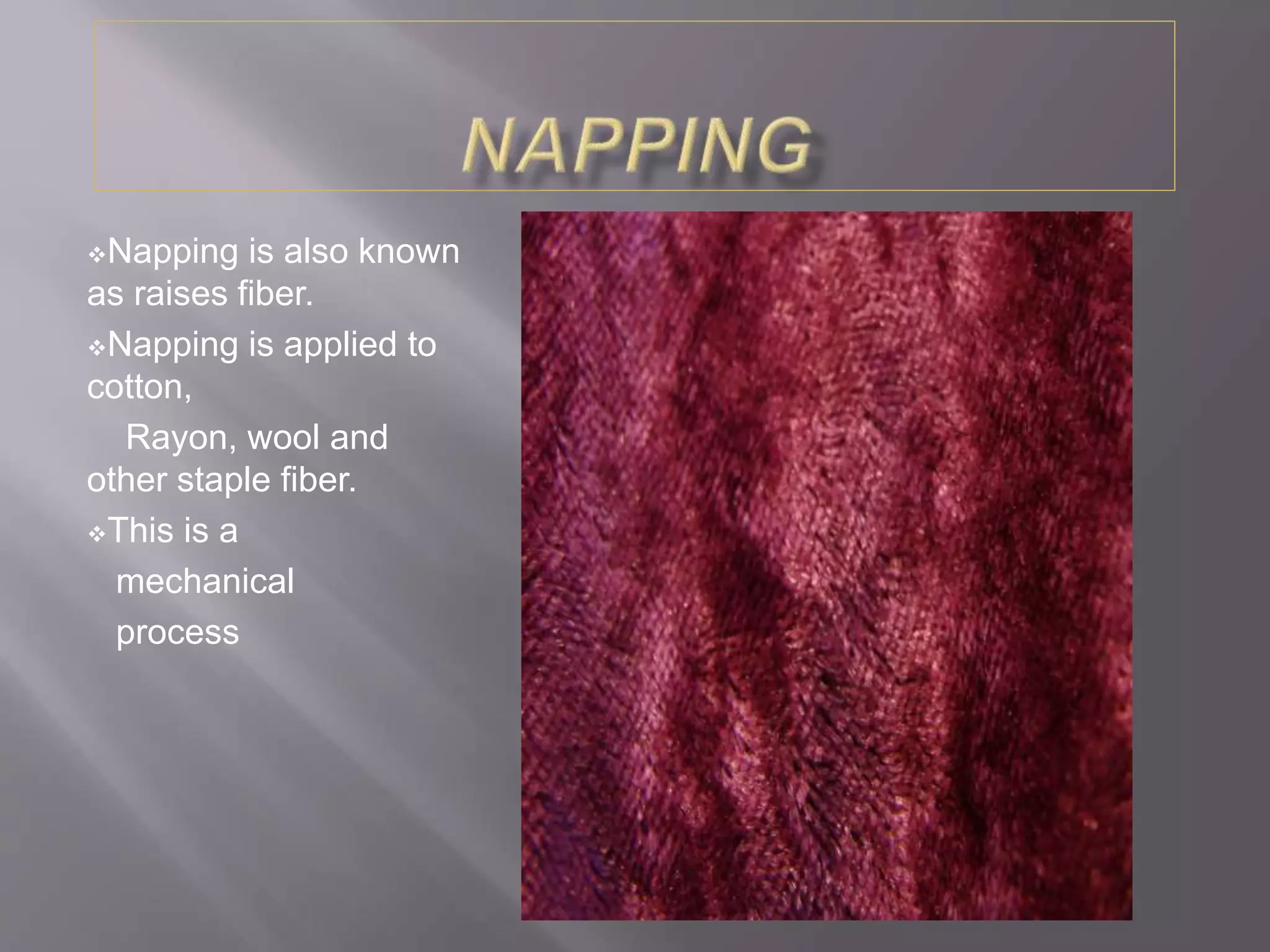
Napping is also known
as raises fiber.
Napping is applied to
cotton,
Rayon, wool and
other staple fiber.
This is a
mechanical
process
 The fuzzy surface is created by pulling the fiber end out of yarns.
 The ends of the needles protruding from the rollers are 45°-hooks; their
thickness and length can vary and they are fitted in a special rubber belt
spiral-wound on the raising rollers.
 These rollers are generally alternated with a roller with hooks directed
toward the fabric feed direction, and a roller with the hooks fitted in the
opposite direction
 Napping is used for certain knit goods, blankets and other fabric
with a raised surface.
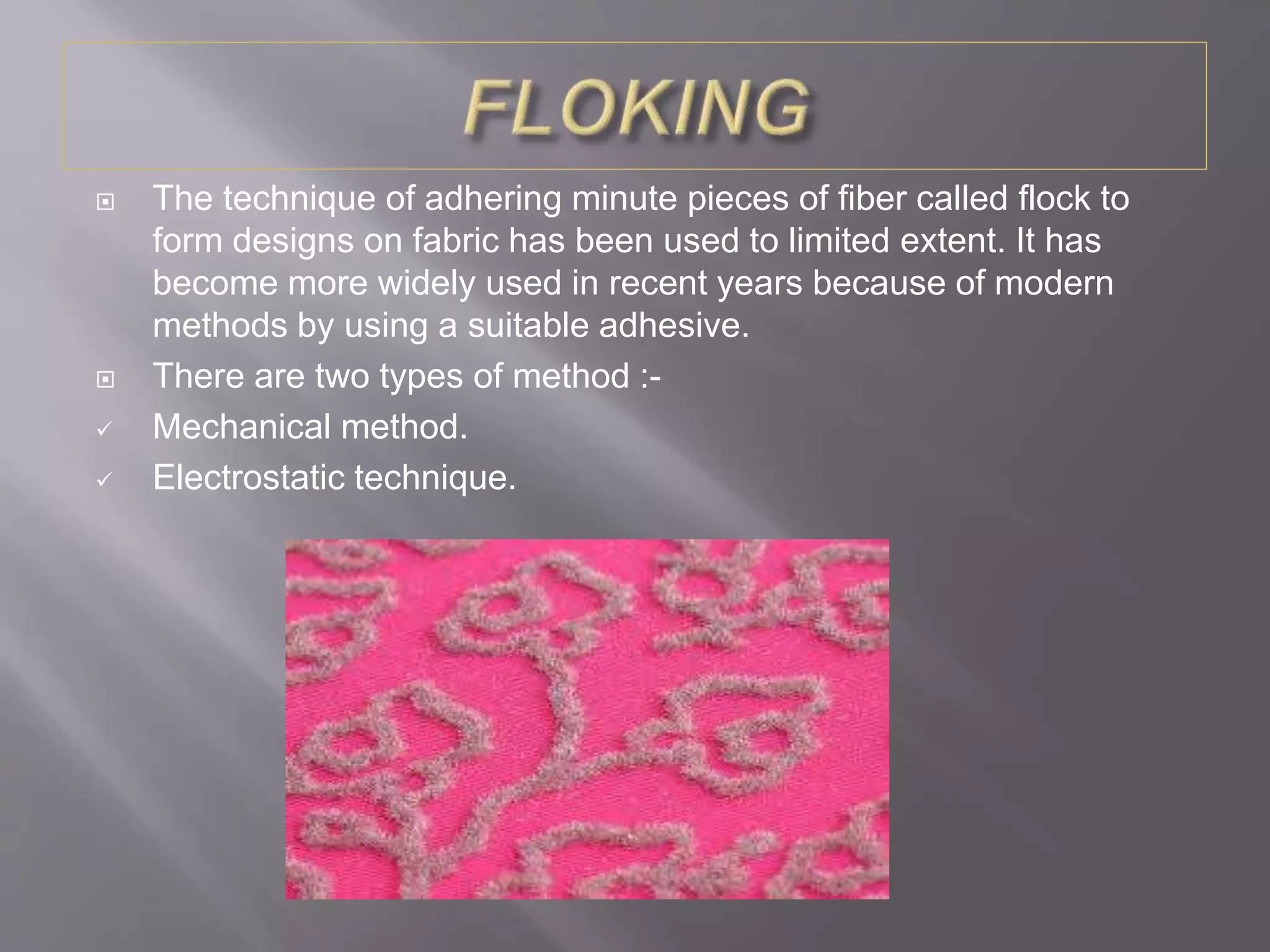
 The technique of adhering minute pieces of fiber called flock to
form designs on fabric has been used to limited extent. It has
become more widely used in recent years because of modern
methods by using a suitable adhesive.
 There are two types of method :-
 Mechanical method.
 Electrostatic technique.
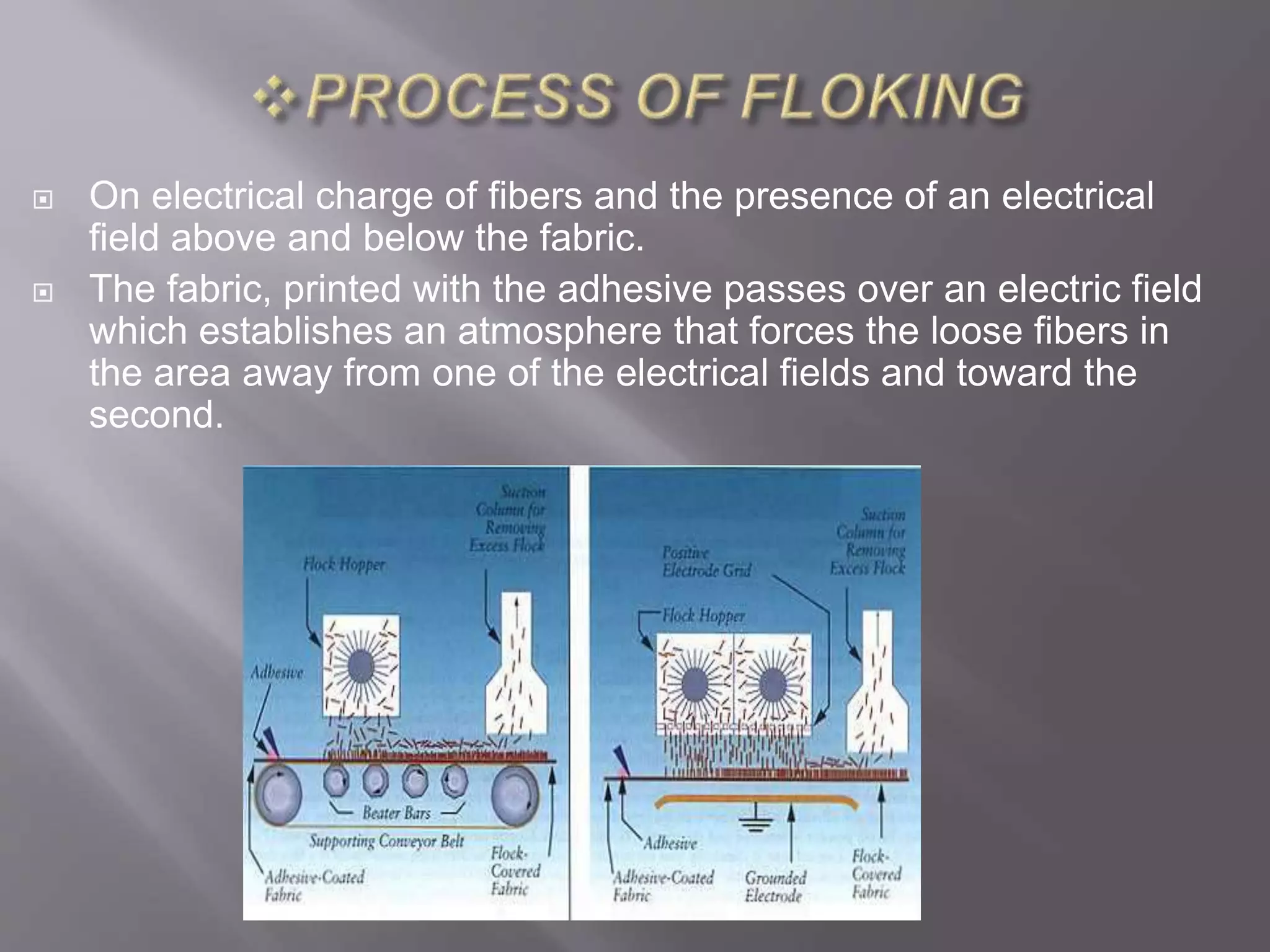
 On electrical charge of fibers and the presence of an electrical
field above and below the fabric.
 The fabric, printed with the adhesive passes over an electric field
which establishes an atmosphere that forces the loose fibers in
the area away from one of the electrical fields and toward the
second.
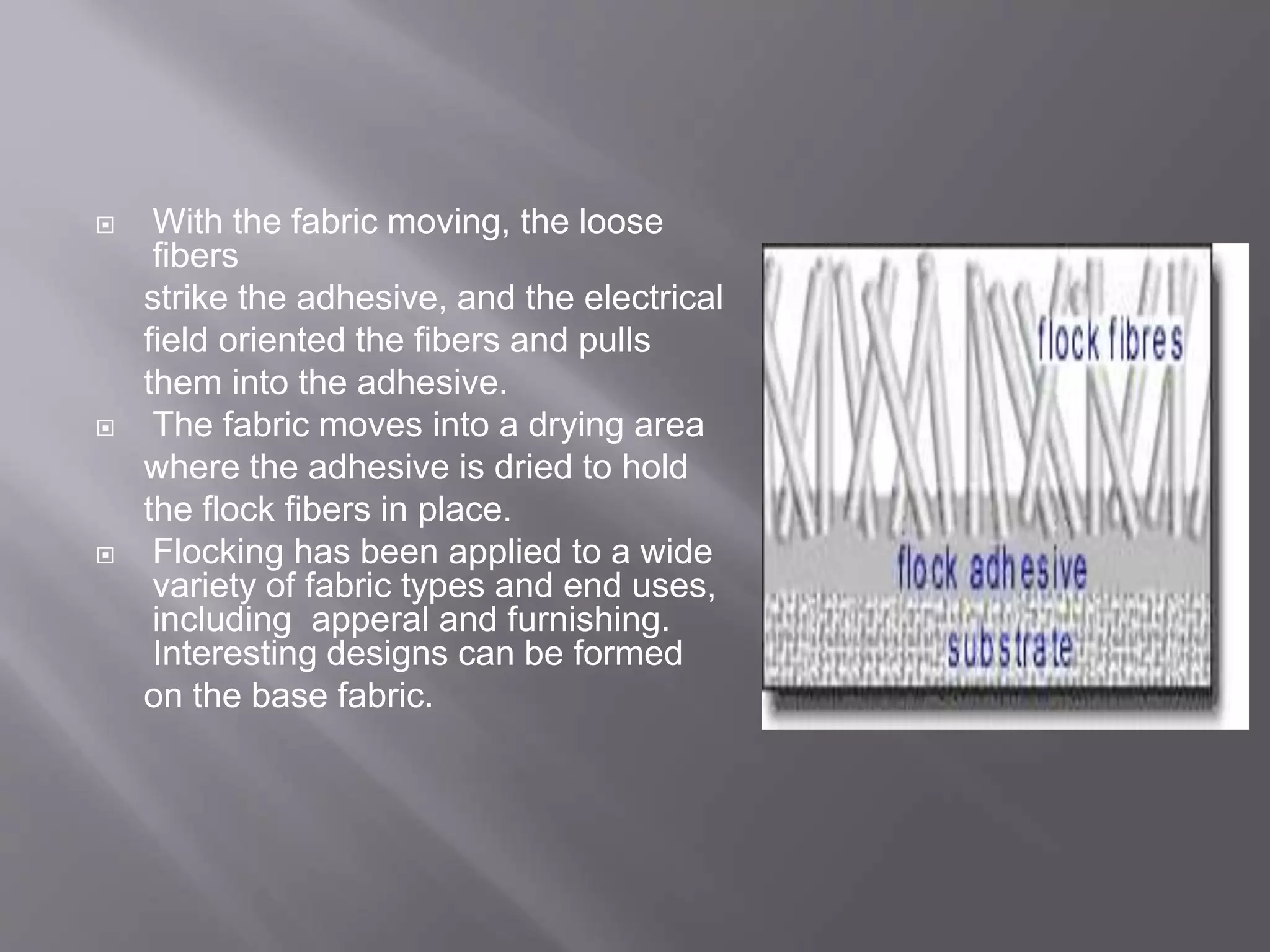
 With the fabric moving, the loose
fibers
strike the adhesive, and the electrical
field oriented the fibers and pulls
them into the adhesive.
 The fabric moves into a drying area
where the adhesive is dried to hold
the flock fibers in place.
 Flocking has been applied to a wide
variety of fabric types and end uses,
including apperal and furnishing.
Interesting designs can be formed
on the base fabric.
 Textile softener is a conditioner used to prevent static cling and
make fabric softer. This is used in textile finish drape, cutting and
sewing qualities of the materials.
o Anionic
softeners
Anionic softeners are used to
modify stiffness or hardness,
pliable finish. Many of these
compounds are excellent
scouring agents.
Cationic Softeners
Cationic softeners are used for natural and man made fibres.
Cationic softener are applied to textile to improve hard, drop,
cutting & sewing qualities.
Nonionic softeners
These softening agents are generally less efficient than anionic
and cationic ones but they withstand the effects of hard waters,
acid or basic environment and also in presence of cations and
anions, therefore the normal fabric care conditions.
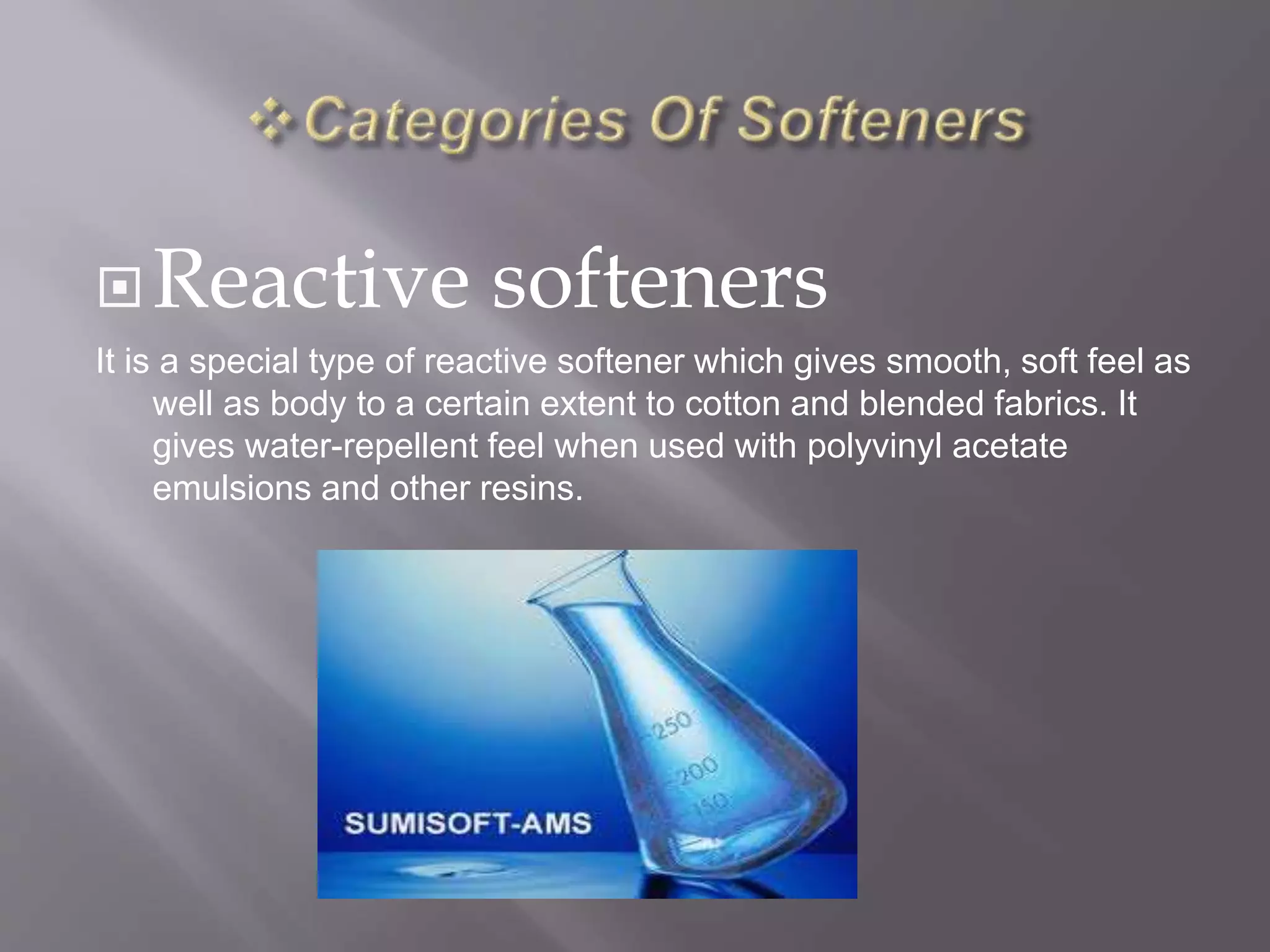
Reactive softeners
It is a special type of reactive softener which gives smooth, soft feel as
well as body to a certain extent to cotton and blended fabrics. It
gives water-repellent feel when used with polyvinyl acetate
emulsions and other resins.
 Nonionic softeners are perfect for finishing optically brightened
high white article.
 Cationic softeners are mainly used for colored textile.
 Non-ionic softeners are also used for removing stains.
•A delustrant is a substance
that reduces
the lustre (sheen)
of synthetic fibres.
•It is a chemical finish.
•Its mainly done in
manufacturing process of
synthetic fibers.
•Synthetic fibres such as nylon, rayon, acetate and polyester are normally
extremely shiny and transparent when extruded.
•Delusterants causes the surface of the fibres to be rougher, reducing the
sheen, at the same time, being opaque, it reduces the transparency of the fibre.
•A recent innovation is a finish applied to tricot knits called ‘chavacete’, which
softens the luster of acetate fabric and produces a silk like appearance.
•It also develops a pleasing hand.
•barium salts.
•china clay.
•aluminum oxide.
•zinc oxide.
•methylene urea.
•titanium dioxide.
1. Many fabrics lose their brightness, whiteness and clearness during
processing and maintenance.
2. In an attempt to prevent this and to maintain white and bright fabrics optical
brightness have been introduced these ate sometimes called as “Optical Bleachers”.
The term in this case is in appropriate since no bleaching occurs.
3. The substance attach themselves to the fabric and create an appearance
of whiteness and brightness by the way they reflect light.
4. When exposed to sunlight they absorb invisible ultraviolet light and
reflect it as visible blue light they act like a bluing agent but add the
fluorescent effect.
5. There are many brands available but generally called as optical fabric
brightness.
Before selecting an optical brightness for textile application we
must look for following properties.
1. It should have good solubility, should not have its own colour and
good substantiveity for the textile substrate under OBA application.
2. OBA’s should have good light as well as wet fastness
properties
3. Requirement of electrolytes and its sensitivity forward different
exhausting and build up properties
4. Effect of water
hardness
5.It should have good leveling and penetrating properties.
Common uses
Brighteners are commonly added to laundry detergents to replace
whitening agents removed during washing and to make the clothes
appear cleaner.
End uses of optical
brighteners includes
1. Detergents whiteness (instead of blueing agents )
2. Paper brightening (Internal or in a coating)
3. Fiber whitening (Internal, added to polymer
melt)
4. Textile whitening (External, added to fabric finishes )
Dr BMN - Finishes for appearance__hand_and_performance

Dr BMN - Finishes for appearance__hand_and_performance

  • 1.
  • 2.
  • 3.
    Textile Finishing isa process used in manufacturing of fiber, fabric, or clothing. In order to impart the required functional properties to the fiber or fabric, it is customary to subject the material to different type of physical and chemical treatments.
  • 5.
     The processof producing raised figures or designs in relief on surfaces of fabrics by passing the cloth between heated engraved rollers is known as embossing.
  • 6.
    •Fabric is cutin 2. •2 selvedges running together side by side. •To produce moiré, ribbed rollers are used, and the ribs produce the watermark effect.
  • 7.
     A mechanicaltreatment that uses beetlers or fallers to give fabric surfaces a flattened appearance.  The spaces between warp and filling are covered up and tend to produce a high gloss to the material.
  • 8.
     The image/printedarea is raised to just one flat level.
  • 9.
  • 10.
    Napping is alsoknown as raises fiber. Napping is applied to cotton, Rayon, wool and other staple fiber. This is a mechanical process
  • 11.
     The fuzzysurface is created by pulling the fiber end out of yarns.  The ends of the needles protruding from the rollers are 45°-hooks; their thickness and length can vary and they are fitted in a special rubber belt spiral-wound on the raising rollers.  These rollers are generally alternated with a roller with hooks directed toward the fabric feed direction, and a roller with the hooks fitted in the opposite direction
  • 12.
     Napping isused for certain knit goods, blankets and other fabric with a raised surface.
  • 13.
     The techniqueof adhering minute pieces of fiber called flock to form designs on fabric has been used to limited extent. It has become more widely used in recent years because of modern methods by using a suitable adhesive.  There are two types of method :-  Mechanical method.  Electrostatic technique.
  • 14.
     On electricalcharge of fibers and the presence of an electrical field above and below the fabric.  The fabric, printed with the adhesive passes over an electric field which establishes an atmosphere that forces the loose fibers in the area away from one of the electrical fields and toward the second.
  • 15.
     With thefabric moving, the loose fibers strike the adhesive, and the electrical field oriented the fibers and pulls them into the adhesive.  The fabric moves into a drying area where the adhesive is dried to hold the flock fibers in place.  Flocking has been applied to a wide variety of fabric types and end uses, including apperal and furnishing. Interesting designs can be formed on the base fabric.
  • 16.
     Textile softeneris a conditioner used to prevent static cling and make fabric softer. This is used in textile finish drape, cutting and sewing qualities of the materials.
  • 17.
    o Anionic softeners Anionic softenersare used to modify stiffness or hardness, pliable finish. Many of these compounds are excellent scouring agents.
  • 18.
    Cationic Softeners Cationic softenersare used for natural and man made fibres. Cationic softener are applied to textile to improve hard, drop, cutting & sewing qualities.
  • 19.
    Nonionic softeners These softeningagents are generally less efficient than anionic and cationic ones but they withstand the effects of hard waters, acid or basic environment and also in presence of cations and anions, therefore the normal fabric care conditions.
  • 20.
    Reactive softeners It isa special type of reactive softener which gives smooth, soft feel as well as body to a certain extent to cotton and blended fabrics. It gives water-repellent feel when used with polyvinyl acetate emulsions and other resins.
  • 21.
     Nonionic softenersare perfect for finishing optically brightened high white article.  Cationic softeners are mainly used for colored textile.  Non-ionic softeners are also used for removing stains.
  • 22.
    •A delustrant isa substance that reduces the lustre (sheen) of synthetic fibres. •It is a chemical finish. •Its mainly done in manufacturing process of synthetic fibers.
  • 23.
    •Synthetic fibres suchas nylon, rayon, acetate and polyester are normally extremely shiny and transparent when extruded. •Delusterants causes the surface of the fibres to be rougher, reducing the sheen, at the same time, being opaque, it reduces the transparency of the fibre. •A recent innovation is a finish applied to tricot knits called ‘chavacete’, which softens the luster of acetate fabric and produces a silk like appearance. •It also develops a pleasing hand.
  • 24.
    •barium salts. •china clay. •aluminumoxide. •zinc oxide. •methylene urea. •titanium dioxide.
  • 25.
    1. Many fabricslose their brightness, whiteness and clearness during processing and maintenance. 2. In an attempt to prevent this and to maintain white and bright fabrics optical brightness have been introduced these ate sometimes called as “Optical Bleachers”. The term in this case is in appropriate since no bleaching occurs. 3. The substance attach themselves to the fabric and create an appearance of whiteness and brightness by the way they reflect light. 4. When exposed to sunlight they absorb invisible ultraviolet light and reflect it as visible blue light they act like a bluing agent but add the fluorescent effect. 5. There are many brands available but generally called as optical fabric brightness.
  • 26.
    Before selecting anoptical brightness for textile application we must look for following properties. 1. It should have good solubility, should not have its own colour and good substantiveity for the textile substrate under OBA application. 2. OBA’s should have good light as well as wet fastness properties 3. Requirement of electrolytes and its sensitivity forward different exhausting and build up properties 4. Effect of water hardness 5.It should have good leveling and penetrating properties.
  • 27.
    Common uses Brighteners arecommonly added to laundry detergents to replace whitening agents removed during washing and to make the clothes appear cleaner.
  • 28.
    End uses ofoptical brighteners includes 1. Detergents whiteness (instead of blueing agents ) 2. Paper brightening (Internal or in a coating) 3. Fiber whitening (Internal, added to polymer melt) 4. Textile whitening (External, added to fabric finishes )