Where is the deepest known spot in the world oceans found? How deep is it?

 The deepest part of the Ocean is the Challenger Deep, in the Pacific Ocean's Mariana Trench, located
just east of the Philippines. The Challenger Deep is 6,201 feet (11,034 meters) below sea level.

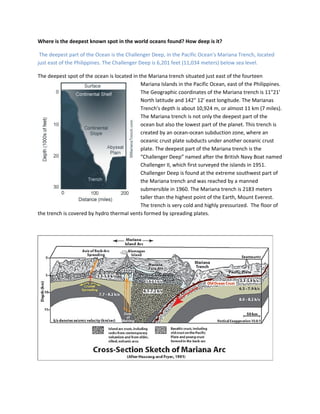
The deepest spot of the ocean is located in the Mariana trench situated just east of the fourteen
                                             Mariana Islands in the Pacific Ocean, east of the Philippines.
                                             The Geographic coordinates of the Mariana trench is 11"21'
                                             North latitude and 142" 12' east longitude. The Marianas
                                             Trench's depth is about 10,924 m, or almost 11 km (7 miles).
                                             The Mariana trench is not only the deepest part of the
                                             ocean but also the lowest part of the planet. This trench is
                                             created by an ocean-ocean subduction zone, where an
                                             oceanic crust plate subducts under another oceanic crust
                                             plate. The deepest part of the Mariana trench is the
                                             “Challenger Deep” named after the British Navy Boat named
                                             Challenger II, which first surveyed the islands in 1951.
                                             Challenger Deep is found at the extreme southwest part of
                                             the Mariana trench and was reached by a manned
                                             submersible in 1960. The Mariana trench is 2183 meters
                                             taller than the highest point of the Earth, Mount Everest.
                                             The trench is very cold and highly pressurized. The floor of
the trench is covered by hydro thermal vents formed by spreading plates.
Referring to Plate 2 at your text book (Fowler, 2005), why do you think that the oldest ocean floor is
only about 200 million years old, whereas the Earth is about 4.6 billion years old?

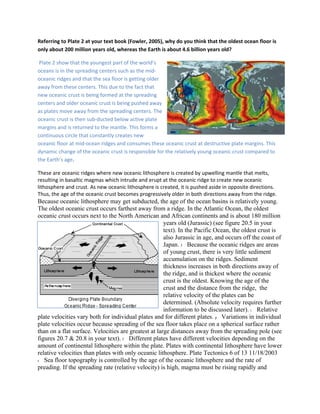
 Plate 2 show that the youngest part of the world’s
oceans is in the spreading centers such as the mid-
oceanic ridges and that the sea floor is getting older
away from these centers. This due to the fact that
new oceanic crust is being formed at the spreading
centers and older oceanic crust is being pushed away
as plates move away from the spreading centers. The
oceanic crust is then sub-ducted below active plate
margins and is returned to the mantle. This forms a
continuous circle that constantly creates new
oceanic floor at mid-ocean ridges and consumes these oceanic crust at destructive plate margins. This
dynamic change of the oceanic crust is responsible for the relatively young oceanic crust compared to
the Earth’s age.

These are oceanic ridges where new oceanic lithosphere is created by upwelling mantle that melts,
resulting in basaltic magmas which intrude and erupt at the oceanic ridge to create new oceanic
lithosphere and crust. As new oceanic lithosphere is created, it is pushed aside in opposite directions.
Thus, the age of the oceanic crust becomes progressively older in both directions away from the ridge.
Because oceanic lithosphere may get subducted, the age of the ocean basins is relatively young.
The oldest oceanic crust occurs farthest away from a ridge. In the Atlantic Ocean, the oldest
oceanic crust occurs next to the North American and African continents and is about 180 million
                                                      years old (Jurassic) (see figure 20.5 in your
                                                      text). In the Pacific Ocean, the oldest crust is
                                                      also Jurassic in age, and occurs off the coast of
                                                      Japan. J Because the oceanic ridges are areas
                                                      of young crust, there is very little sediment
                                                      accumulation on the ridges. Sediment
                                                      thickness increases in both directions away of
                                                      the ridge, and is thickest where the oceanic
                                                      crust is the oldest. Knowing the age of the
                                                      crust and the distance from the ridge, the
                                                      relative velocity of the plates can be
                                                      determined. (Absolute velocity requires further
                                                      information to be discussed later). i Relative
plate velocities vary both for individual plates and for different plates. p Variations in individual
plate velocities occur because spreading of the sea floor takes place on a spherical surface rather
than on a flat surface. Velocities are greatest at large distances away from the spreading pole (see
figures 20.7 & 20.8 in your text). f Different plates have different velocities depending on the
amount of continental lithosphere within the plate. Plates with continental lithosphere have lower
relative velocities than plates with only oceanic lithosphere. Plate Tectonics 6 of 13 11/18/2003
r Sea floor topography is controlled by the age of the oceanic lithosphere and the rate of
preading. If the spreading rate (relative velocity) is high, magma must be rising rapidly and
the lithosphere is relatively hot beneath the ridge. Thus for fast spreading centers the ridge stands
at higher elevations than for slow spreading centers. The rift valley at fast spreading centers is
narrower than at slow spreading centers. As oceanic lithosphere moves away from the ridge, it
cools and sinks deeper into the asthenosphere. Thus, the depth to the sea floor increases with
increasing age away from the ridge.

Final Exam Extra Answers Chap9

  • 1.
    Where is thedeepest known spot in the world oceans found? How deep is it? The deepest part of the Ocean is the Challenger Deep, in the Pacific Ocean's Mariana Trench, located just east of the Philippines. The Challenger Deep is 6,201 feet (11,034 meters) below sea level. The deepest spot of the ocean is located in the Mariana trench situated just east of the fourteen Mariana Islands in the Pacific Ocean, east of the Philippines. The Geographic coordinates of the Mariana trench is 11"21' North latitude and 142" 12' east longitude. The Marianas Trench's depth is about 10,924 m, or almost 11 km (7 miles). The Mariana trench is not only the deepest part of the ocean but also the lowest part of the planet. This trench is created by an ocean-ocean subduction zone, where an oceanic crust plate subducts under another oceanic crust plate. The deepest part of the Mariana trench is the “Challenger Deep” named after the British Navy Boat named Challenger II, which first surveyed the islands in 1951. Challenger Deep is found at the extreme southwest part of the Mariana trench and was reached by a manned submersible in 1960. The Mariana trench is 2183 meters taller than the highest point of the Earth, Mount Everest. The trench is very cold and highly pressurized. The floor of the trench is covered by hydro thermal vents formed by spreading plates.
  • 2.
    Referring to Plate2 at your text book (Fowler, 2005), why do you think that the oldest ocean floor is only about 200 million years old, whereas the Earth is about 4.6 billion years old? Plate 2 show that the youngest part of the world’s oceans is in the spreading centers such as the mid- oceanic ridges and that the sea floor is getting older away from these centers. This due to the fact that new oceanic crust is being formed at the spreading centers and older oceanic crust is being pushed away as plates move away from the spreading centers. The oceanic crust is then sub-ducted below active plate margins and is returned to the mantle. This forms a continuous circle that constantly creates new oceanic floor at mid-ocean ridges and consumes these oceanic crust at destructive plate margins. This dynamic change of the oceanic crust is responsible for the relatively young oceanic crust compared to the Earth’s age. These are oceanic ridges where new oceanic lithosphere is created by upwelling mantle that melts, resulting in basaltic magmas which intrude and erupt at the oceanic ridge to create new oceanic lithosphere and crust. As new oceanic lithosphere is created, it is pushed aside in opposite directions. Thus, the age of the oceanic crust becomes progressively older in both directions away from the ridge. Because oceanic lithosphere may get subducted, the age of the ocean basins is relatively young. The oldest oceanic crust occurs farthest away from a ridge. In the Atlantic Ocean, the oldest oceanic crust occurs next to the North American and African continents and is about 180 million years old (Jurassic) (see figure 20.5 in your text). In the Pacific Ocean, the oldest crust is also Jurassic in age, and occurs off the coast of Japan. J Because the oceanic ridges are areas of young crust, there is very little sediment accumulation on the ridges. Sediment thickness increases in both directions away of the ridge, and is thickest where the oceanic crust is the oldest. Knowing the age of the crust and the distance from the ridge, the relative velocity of the plates can be determined. (Absolute velocity requires further information to be discussed later). i Relative plate velocities vary both for individual plates and for different plates. p Variations in individual plate velocities occur because spreading of the sea floor takes place on a spherical surface rather than on a flat surface. Velocities are greatest at large distances away from the spreading pole (see figures 20.7 & 20.8 in your text). f Different plates have different velocities depending on the amount of continental lithosphere within the plate. Plates with continental lithosphere have lower relative velocities than plates with only oceanic lithosphere. Plate Tectonics 6 of 13 11/18/2003 r Sea floor topography is controlled by the age of the oceanic lithosphere and the rate of preading. If the spreading rate (relative velocity) is high, magma must be rising rapidly and
  • 3.
    the lithosphere isrelatively hot beneath the ridge. Thus for fast spreading centers the ridge stands at higher elevations than for slow spreading centers. The rift valley at fast spreading centers is narrower than at slow spreading centers. As oceanic lithosphere moves away from the ridge, it cools and sinks deeper into the asthenosphere. Thus, the depth to the sea floor increases with increasing age away from the ridge.