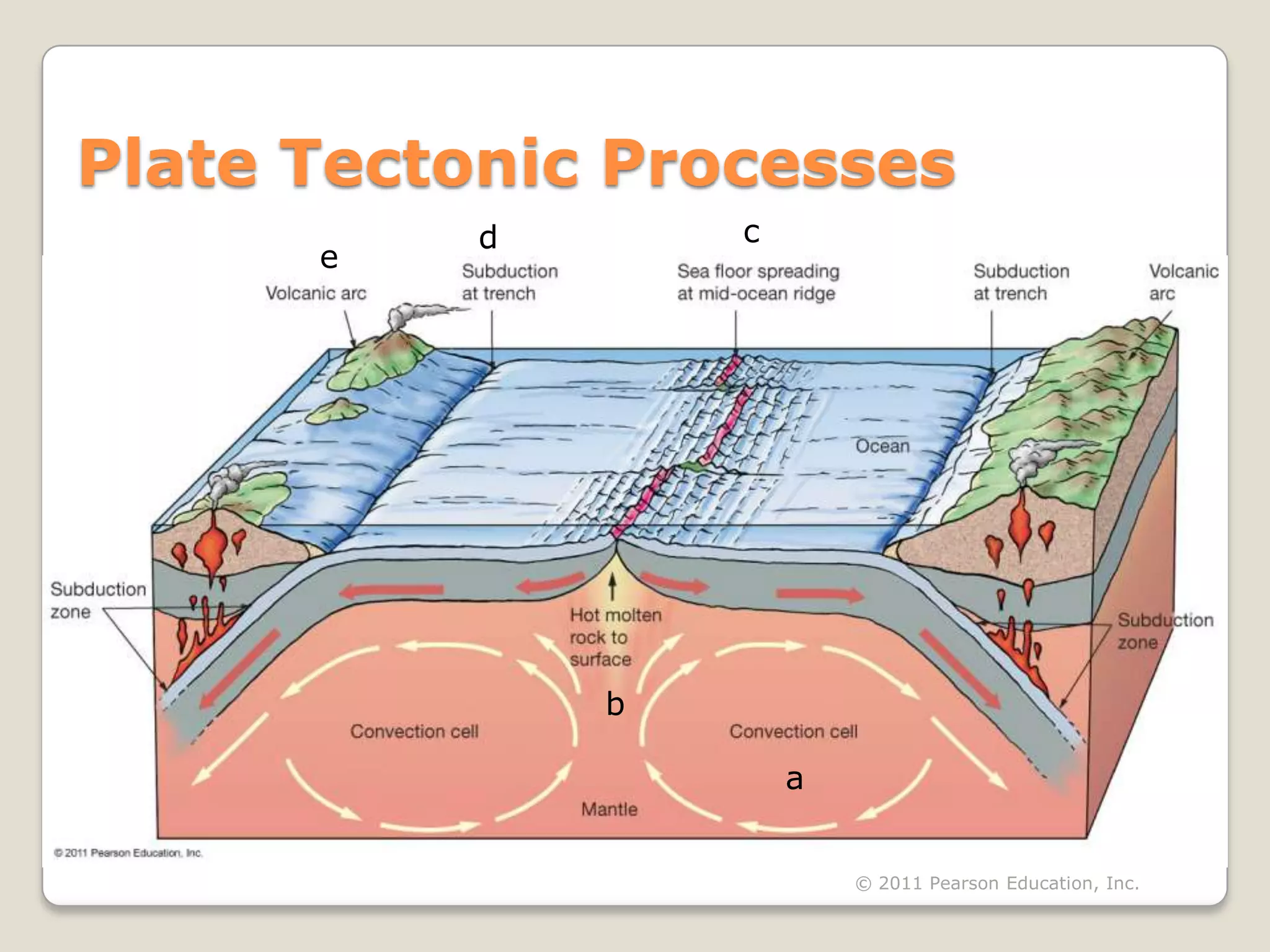
Plate Tectonic Processes
          d       c
      e


              b

                      a


                          © 2011 Pearson Education, Inc.
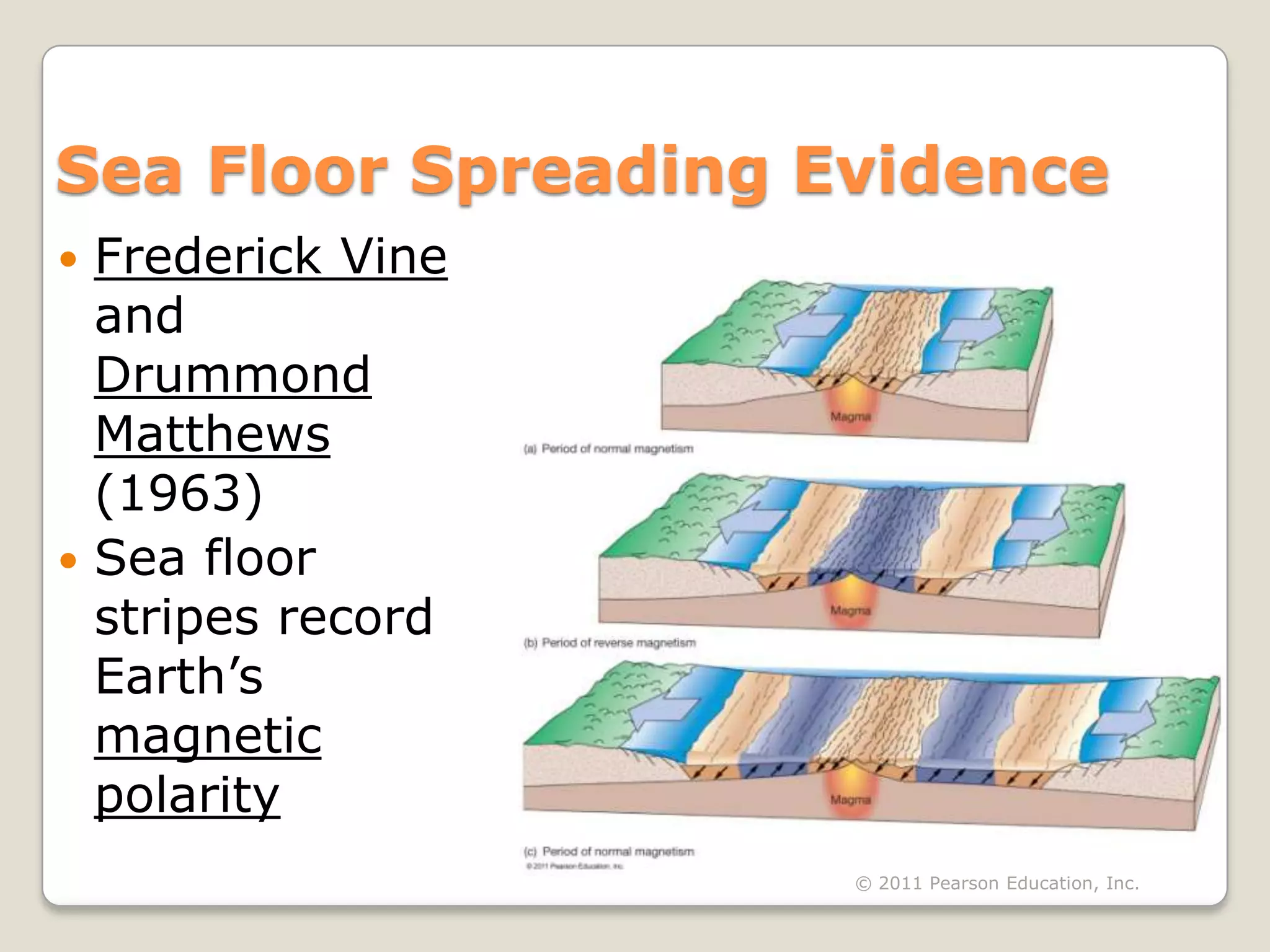
Sea Floor Spreading Evidence
 Frederick Vine
  and
  Drummond
  Matthews
  (1963)
 Sea floor
  stripes record
  Earth’s
  magnetic
  polarity
                     © 2011 Pearson Education, Inc.
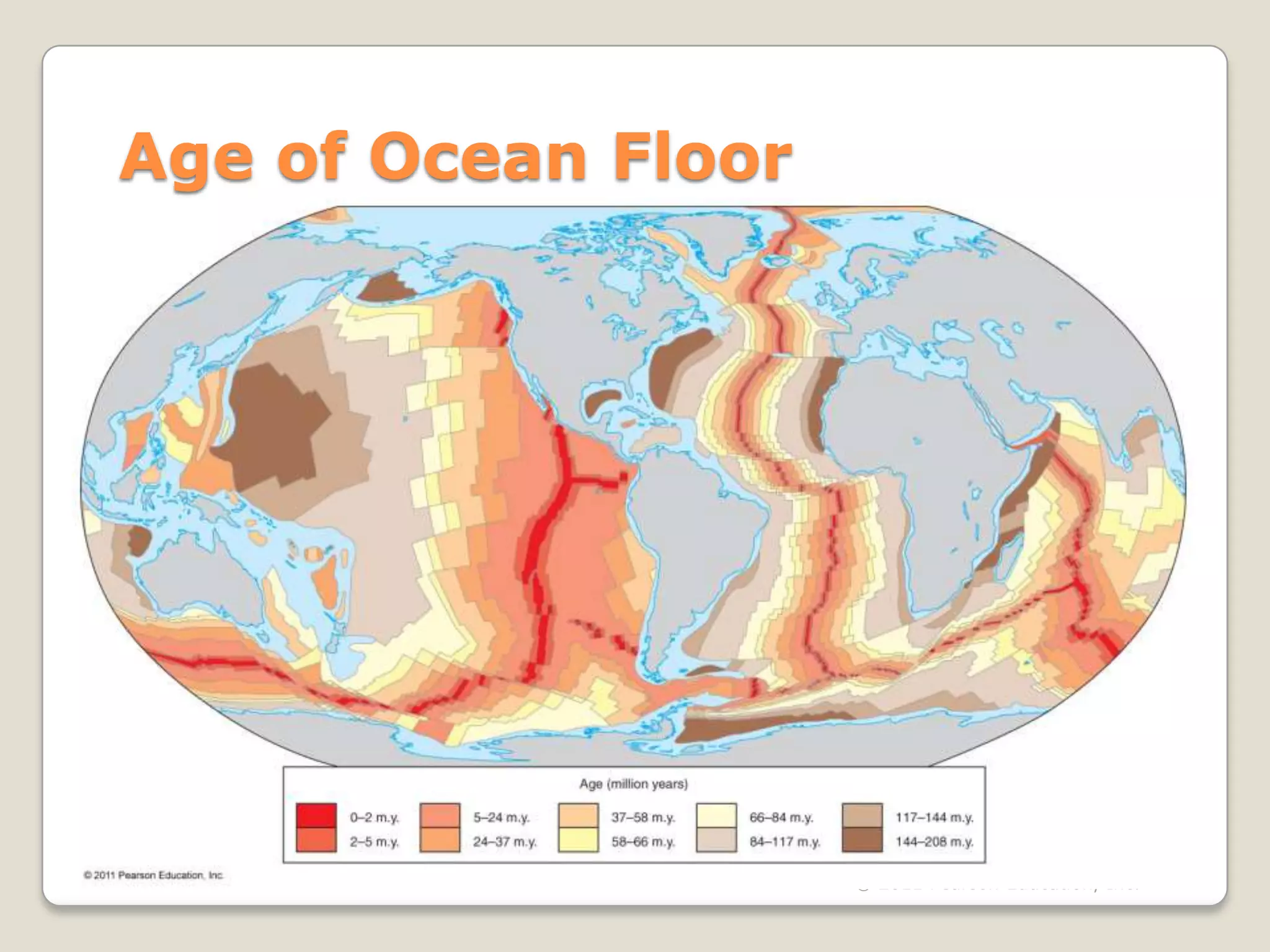
Age of Ocean Floor
 Late 1960s deep-sea drilling.
 Radiometric dating of ocean rocks.
 Symmetric pattern of age distribution
  about mid-ocean ridges.
 Oldest ocean floor only 180 million
  years old.


                              © 2011 Pearson Education, Inc.
Age of Ocean Floor


                     © 2011 Pearson Education, Inc.
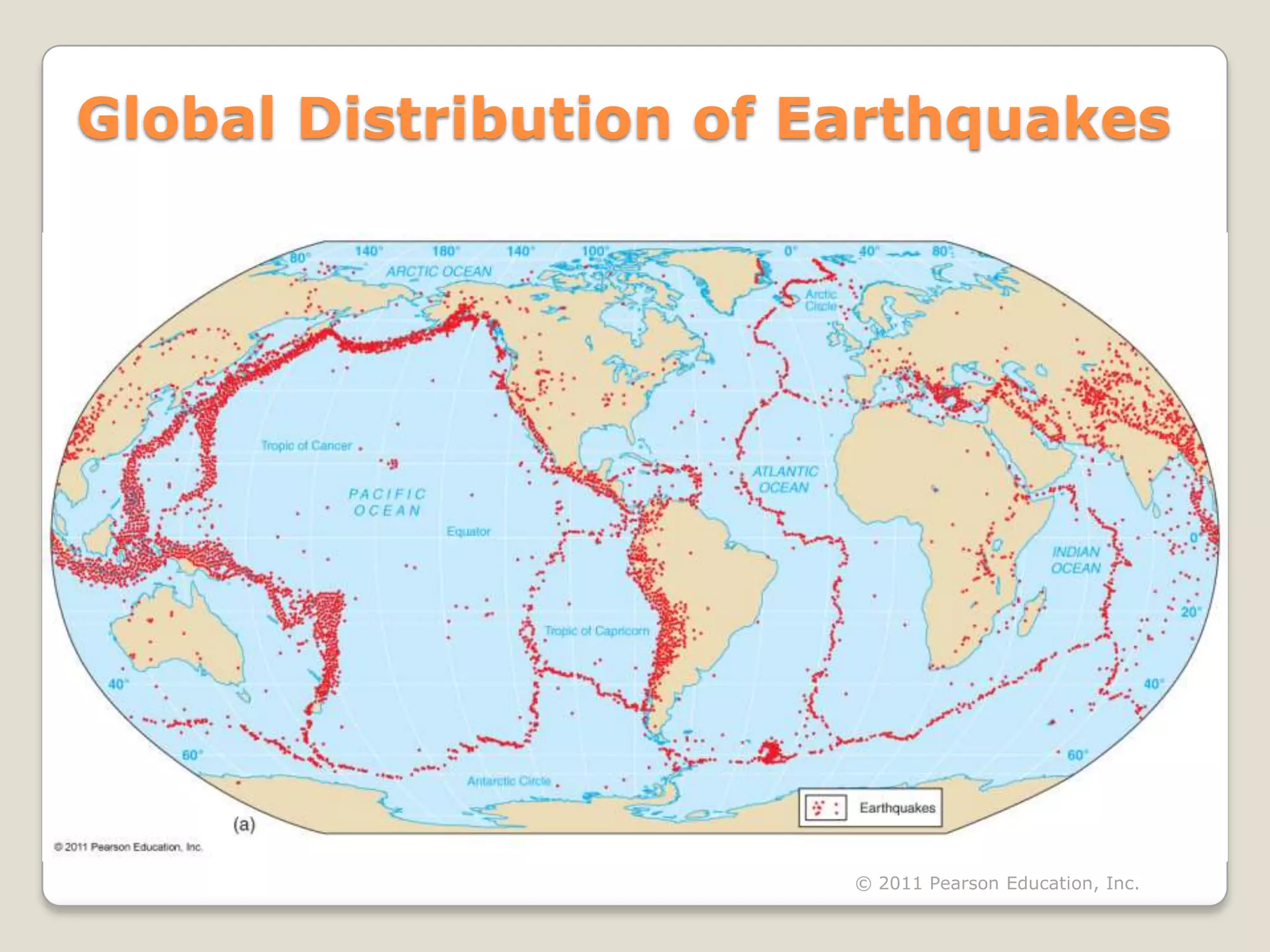
Earthquakes As Evidence

 Most large earthquakes occur at
  subduction zones.
 Earthquake activity mirrors tectonic
  plate boundaries.


                              © 2011 Pearson Education, Inc.
Global Distribution of Earthquakes


                        © 2011 Pearson Education, Inc.
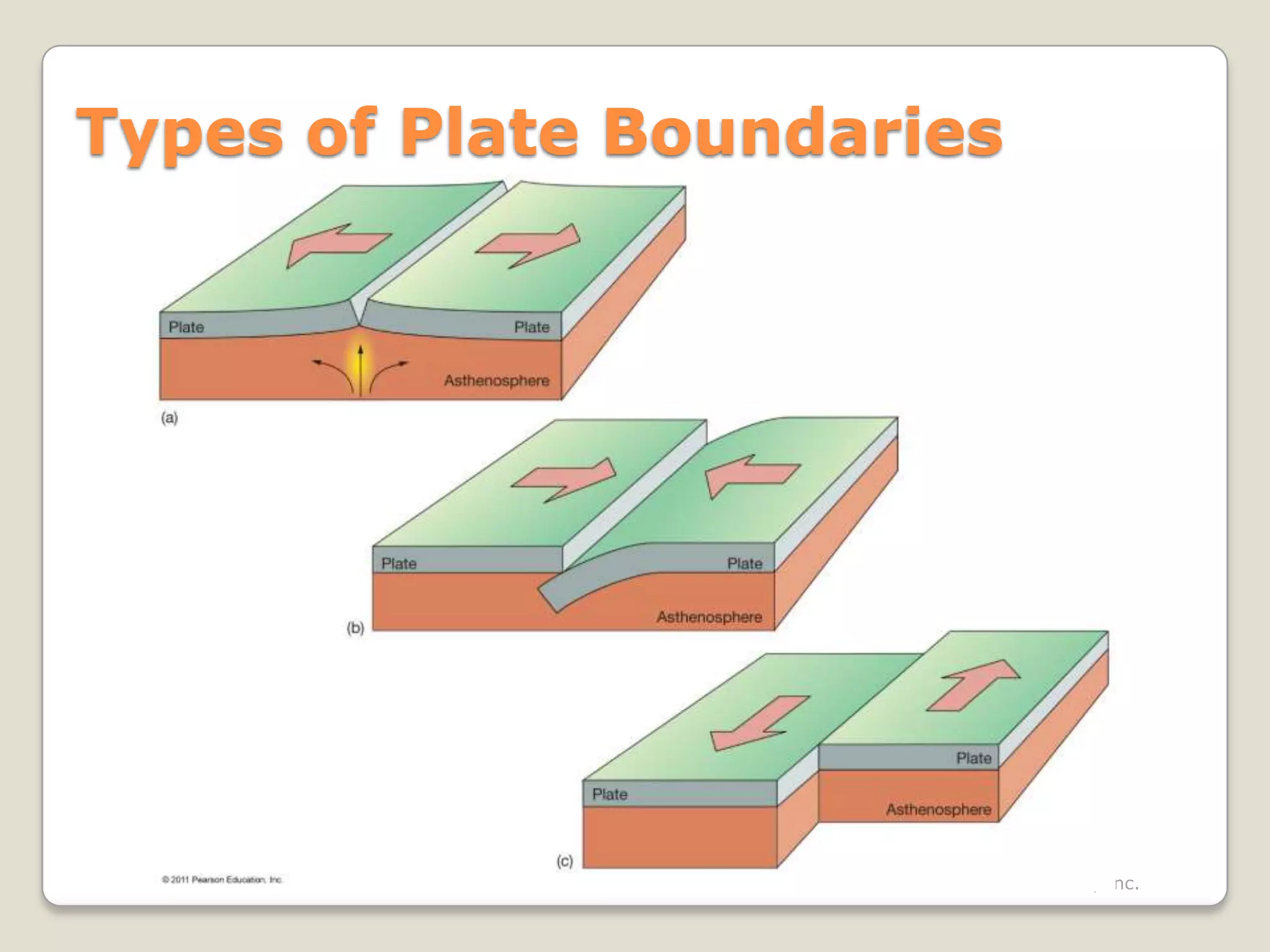
Types of Plate Boundaries


                    © 2011 Pearson Education, Inc.
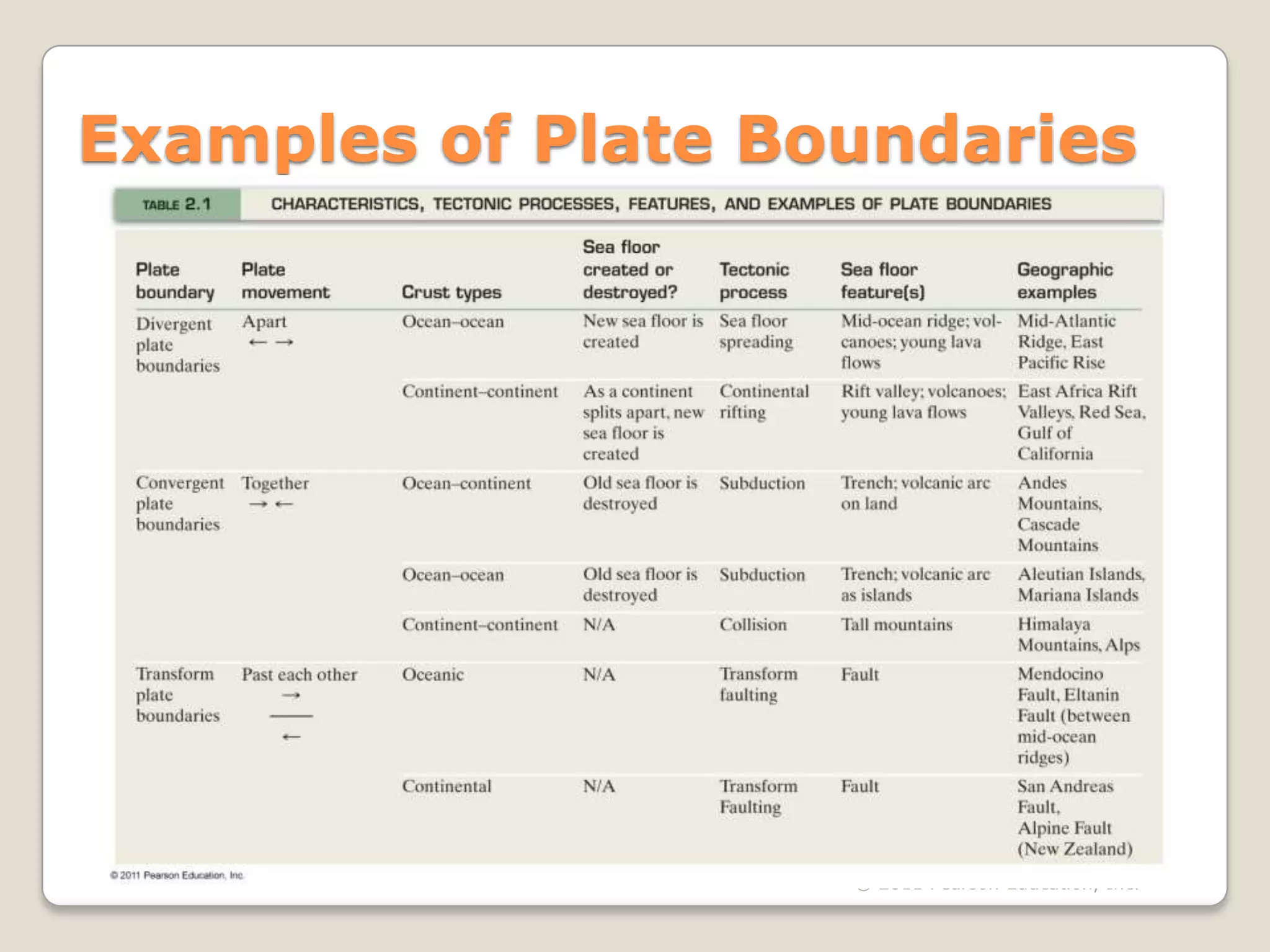
Examples of Plate Boundaries


                    © 2011 Pearson Education, Inc.
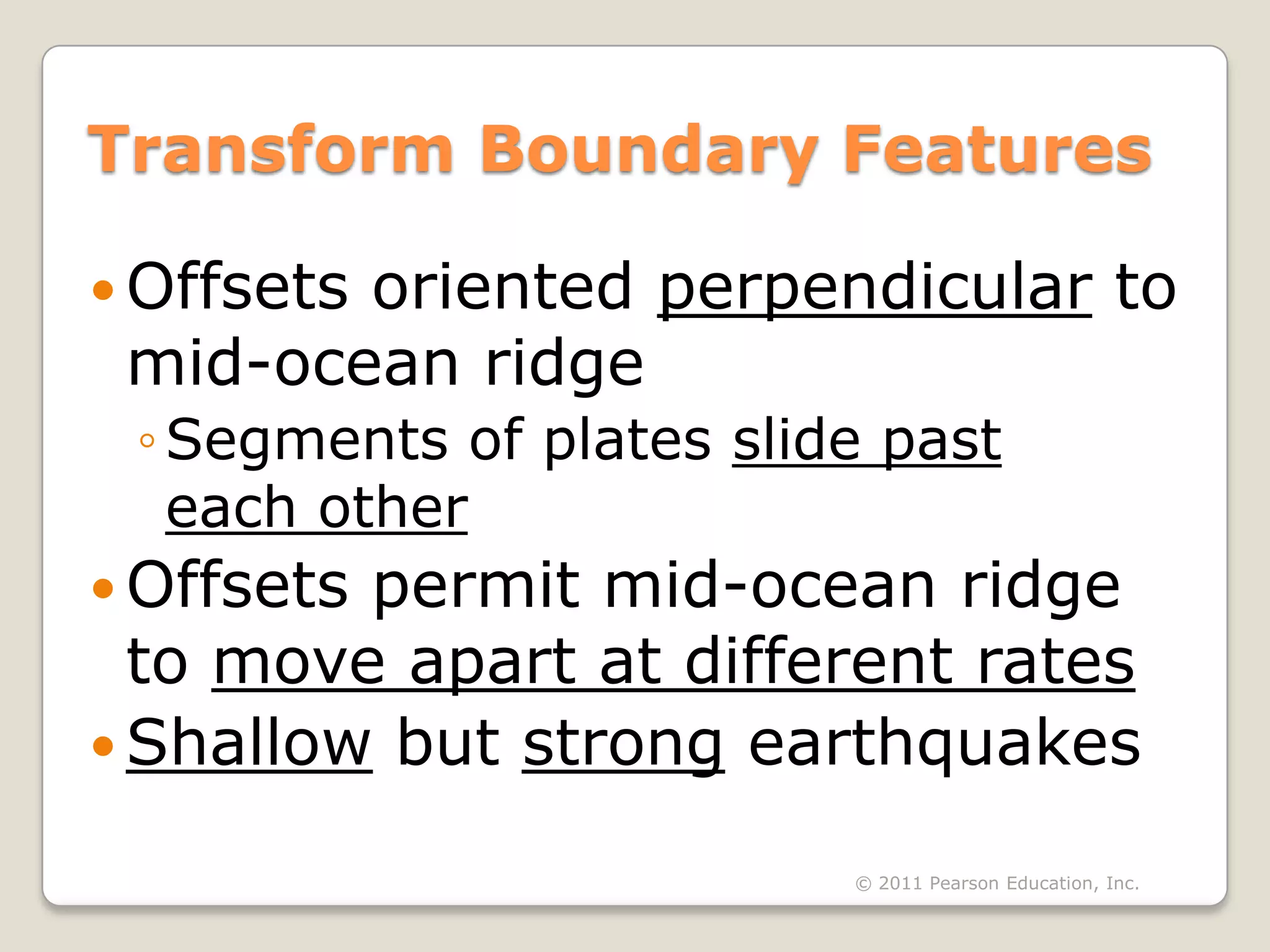
Transform Boundary Features

 Offsets
        oriented perpendicular to
 mid-ocean ridge
 ◦ Segments of plates slide past
   each other
 Offsetspermit mid-ocean ridge
  to move apart at different rates
 Shallow but strong earthquakes

                          © 2011 Pearson Education, Inc.
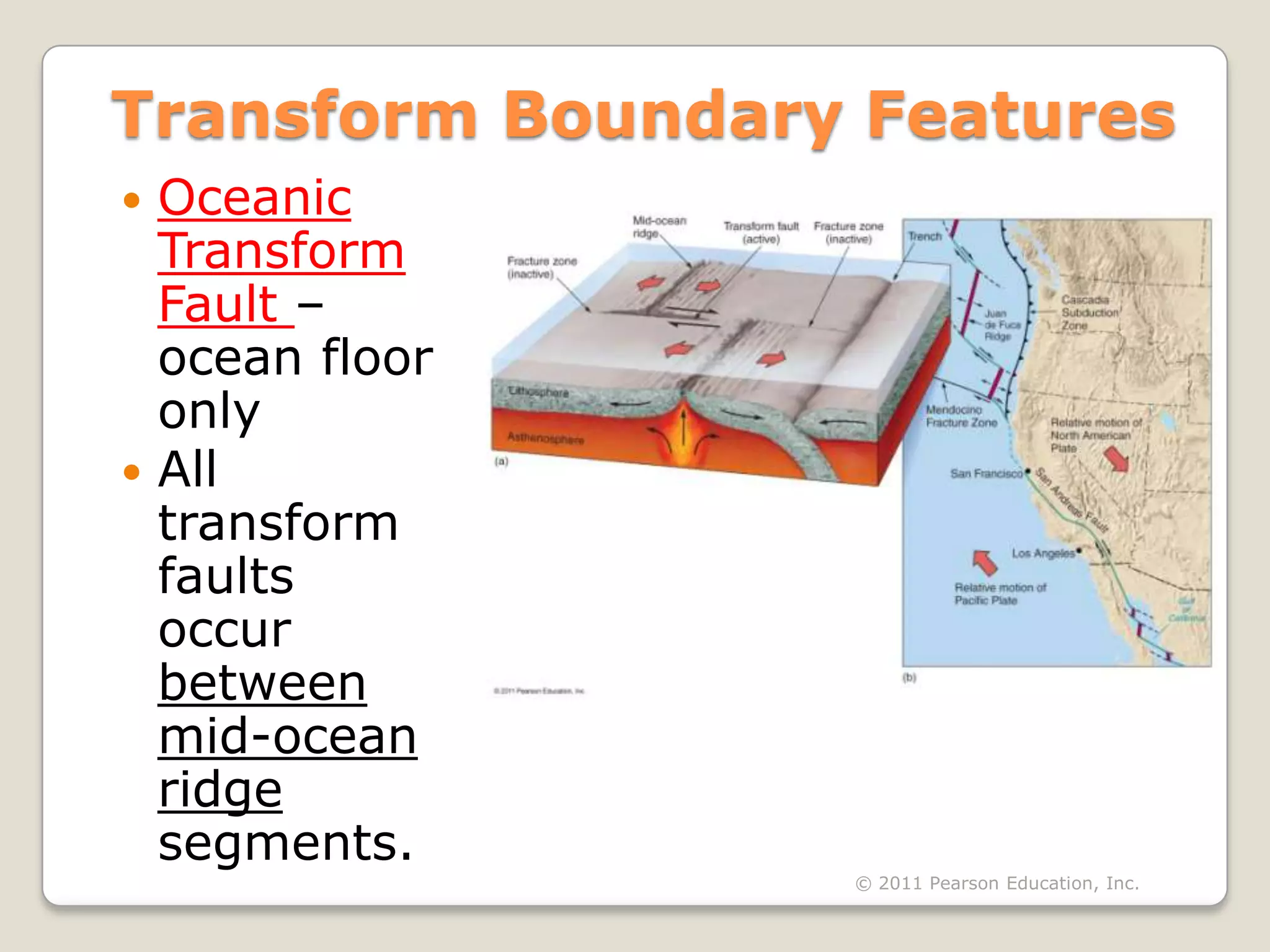
Transform Boundary Features
 Oceanic
  Transform
  Fault –
  ocean floor
  only
 All
  transform
  faults
  occur
  between
  mid-ocean
  ridge
  segments.
                  © 2011 Pearson Education, Inc.
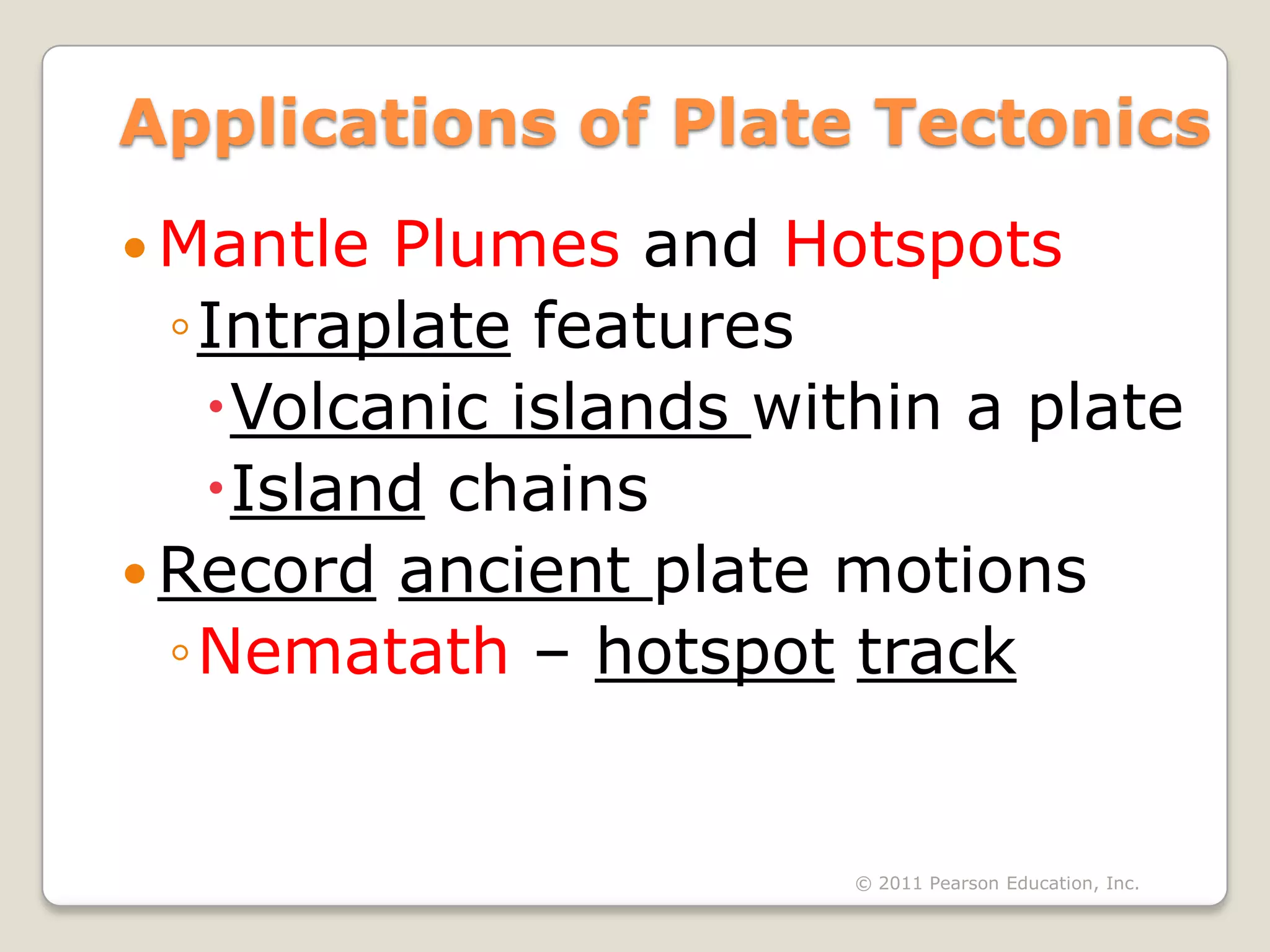
Applications of Plate Tectonics
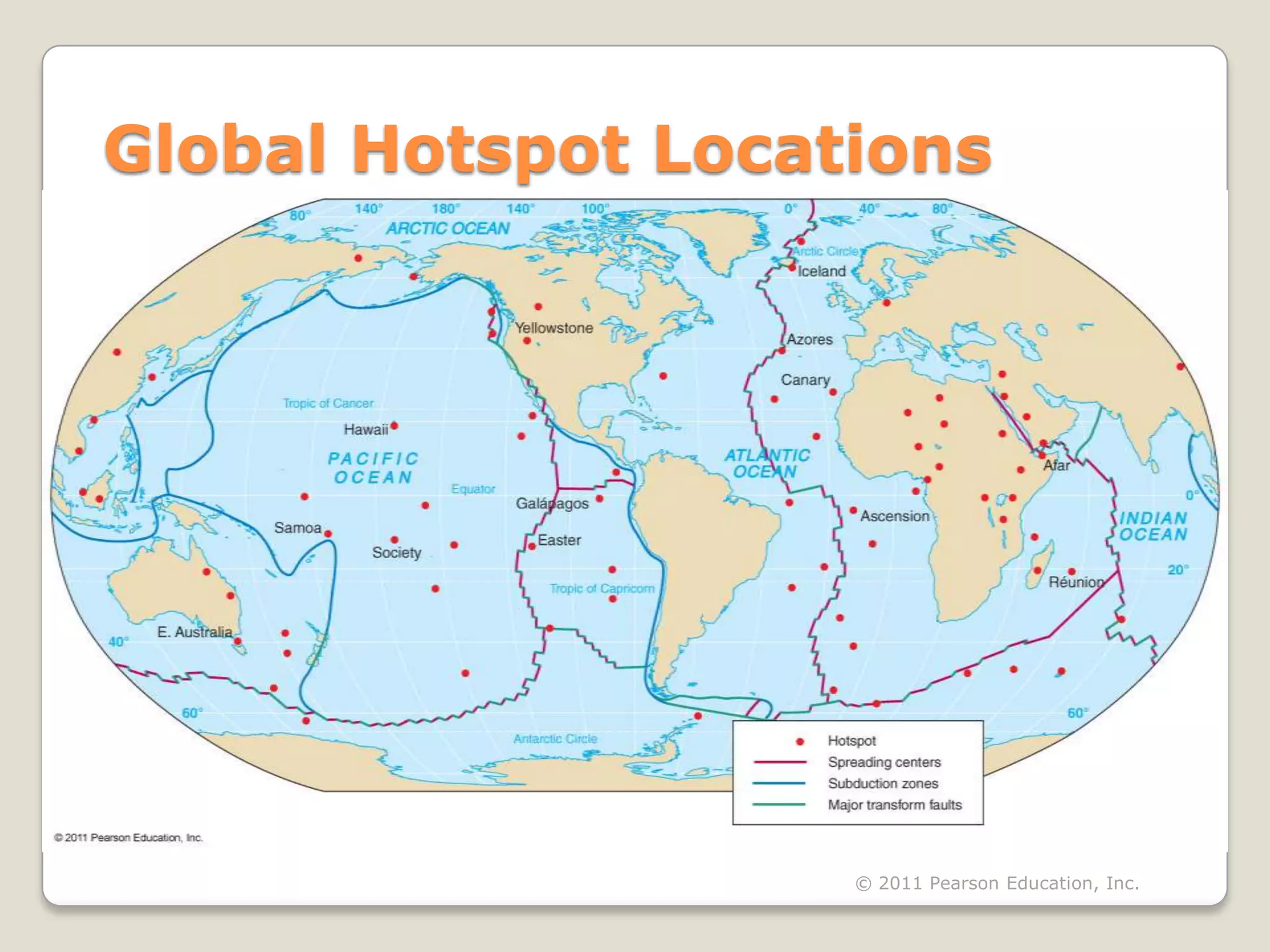
 Mantle Plumes and Hotspots
  ◦Intraplate features
   Volcanic islands within a plate
   Island chains
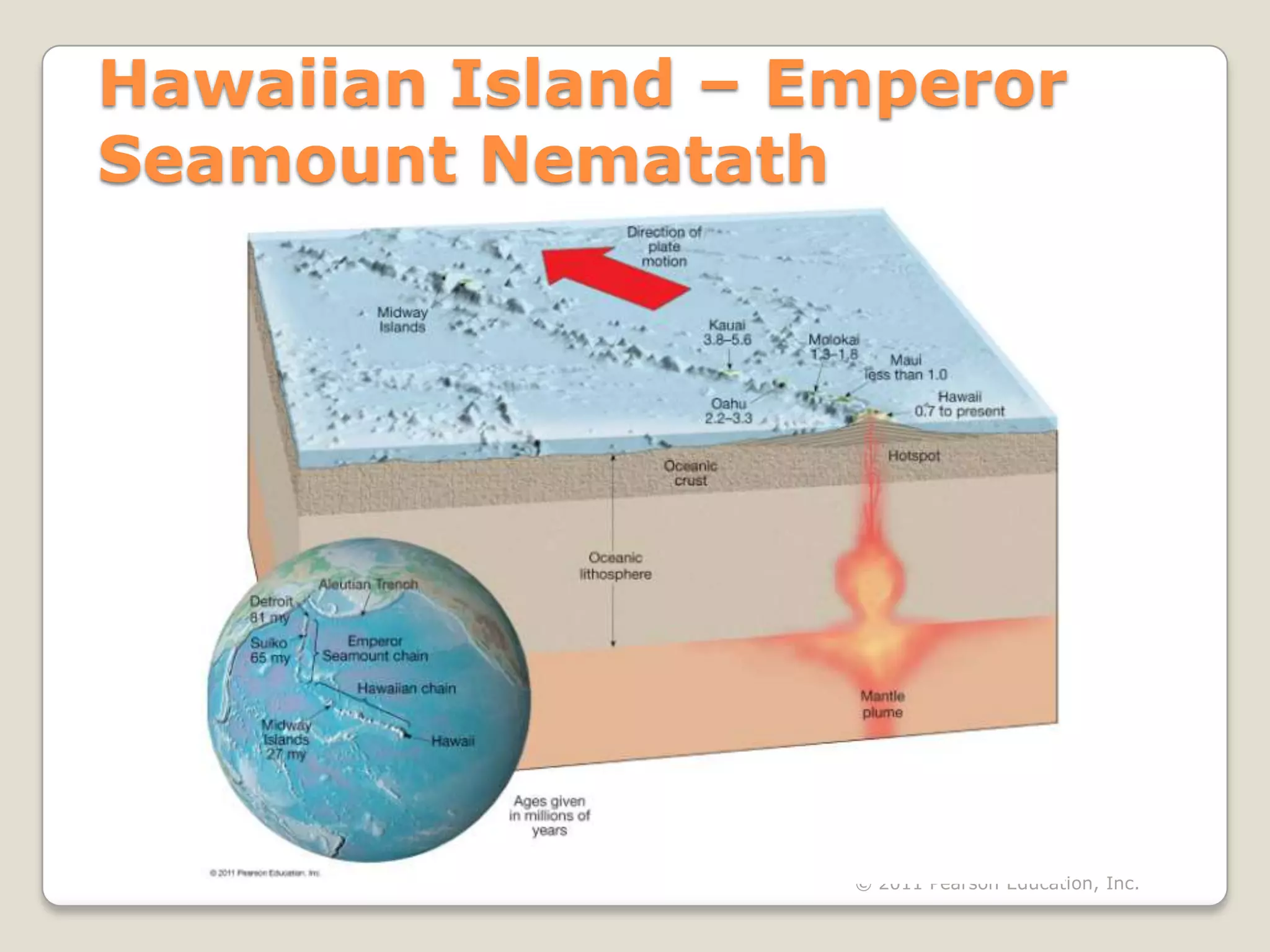
 Record ancient plate motions
  ◦Nematath – hotspot track


                        © 2011 Pearson Education, Inc.
Global Hotspot Locations


                    © 2011 Pearson Education, Inc.
Hawaiian Island – Emperor
Seamount Nematath


                   © 2011 Pearson Education, Inc.
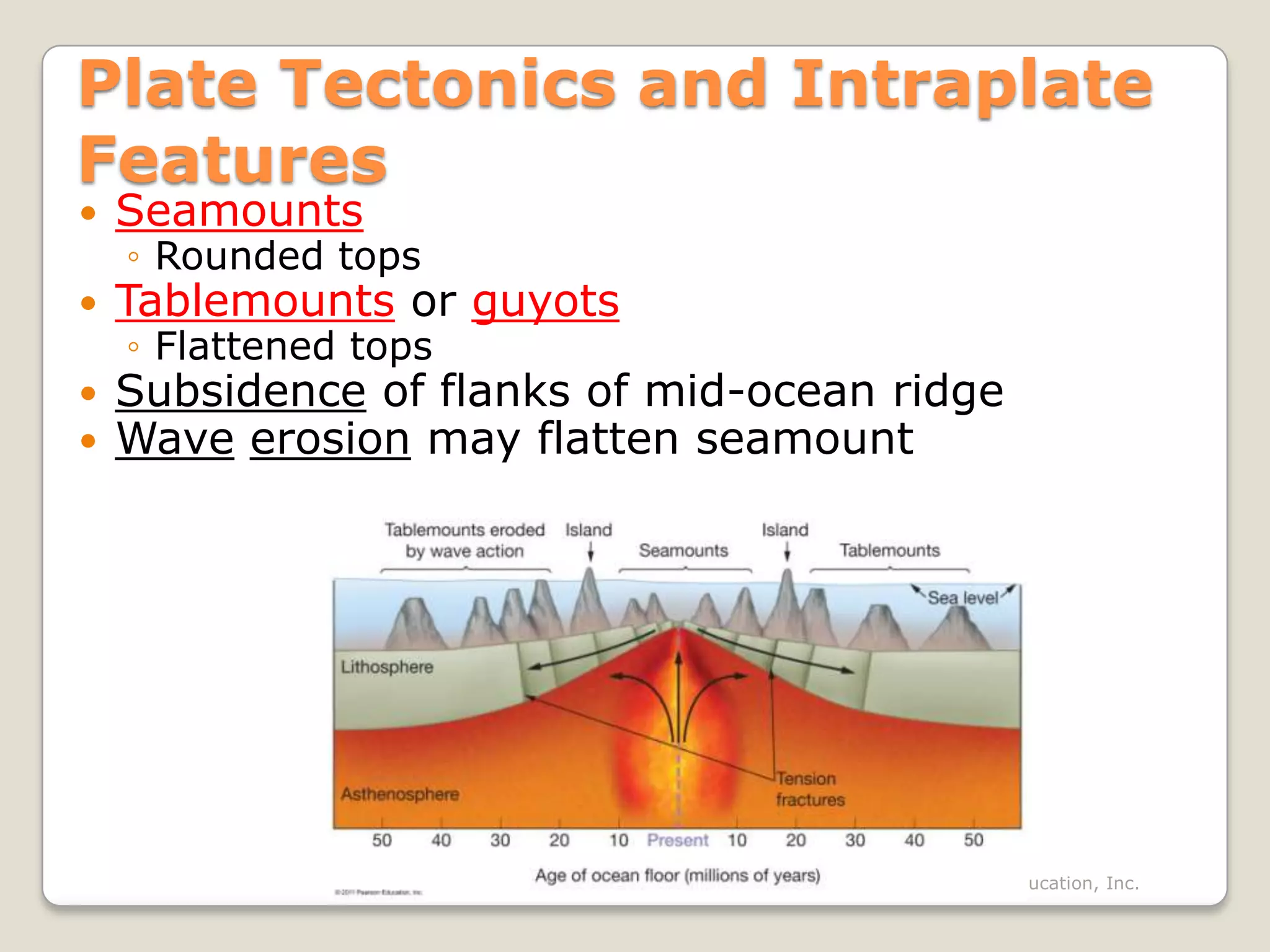
Plate Tectonics and Intraplate
Features
   Seamounts
    ◦ Rounded tops
   Tablemounts or guyots
    ◦ Flattened tops
   Subsidence of flanks of mid-ocean ridge
   Wave erosion may flatten seamount


                                    © 2011 Pearson Education, Inc.
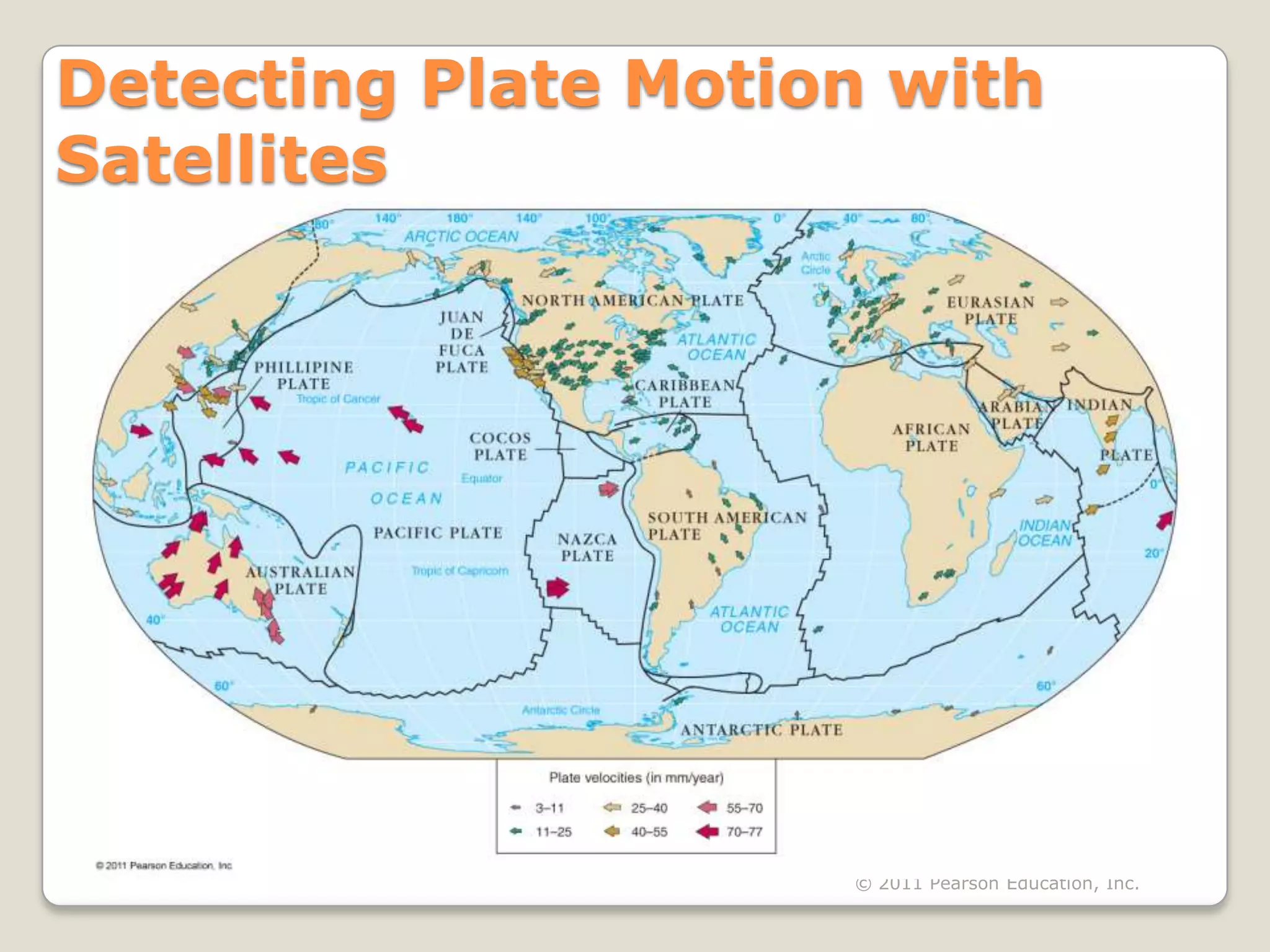
Detecting Plate Motion with
Satellites


                     © 2011 Pearson Education, Inc.
Paleogeography
 Paleogeography  – study of
  ancient continents
 Continental accretion
 ◦ Continental material added to
   edges of continents through plate
   motion


                          © 2011 Pearson Education, Inc.
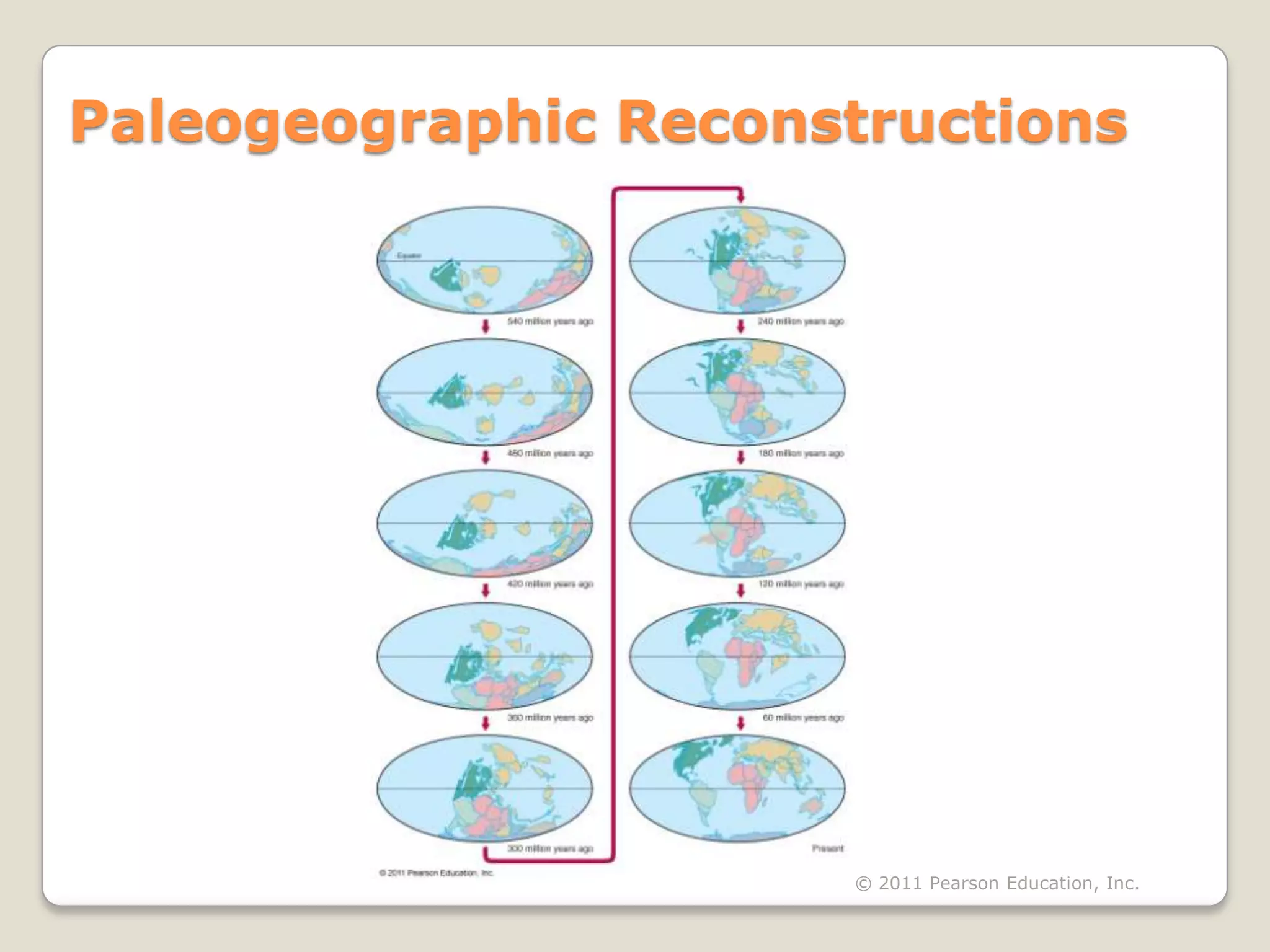
Paleogeographic Reconstructions


                       © 2011 Pearson Education, Inc.
Future Predictions

 Future
       positions of continents
 and oceans
 ◦ Assume same direction and rate of
   plate motions as now.


                          © 2011 Pearson Education, Inc.
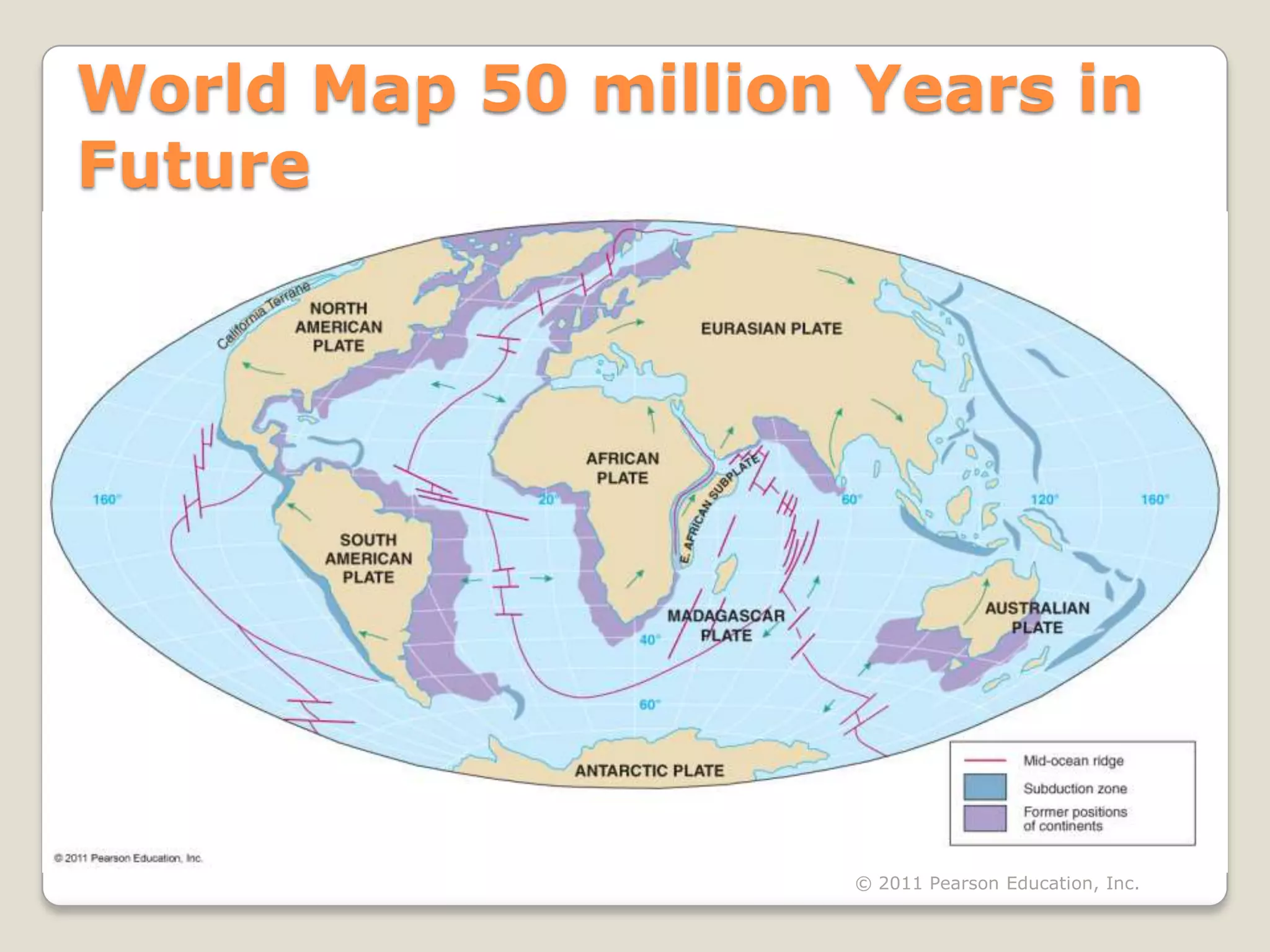
World Map 50 million Years in
Future


                     © 2011 Pearson Education, Inc.
Wilson cycle

 John  Tuzo Wilson
 Life cycle of ocean basins
 ◦Formation
 ◦Growth
 ◦Destruction


                      © 2011 Pearson Education, Inc.
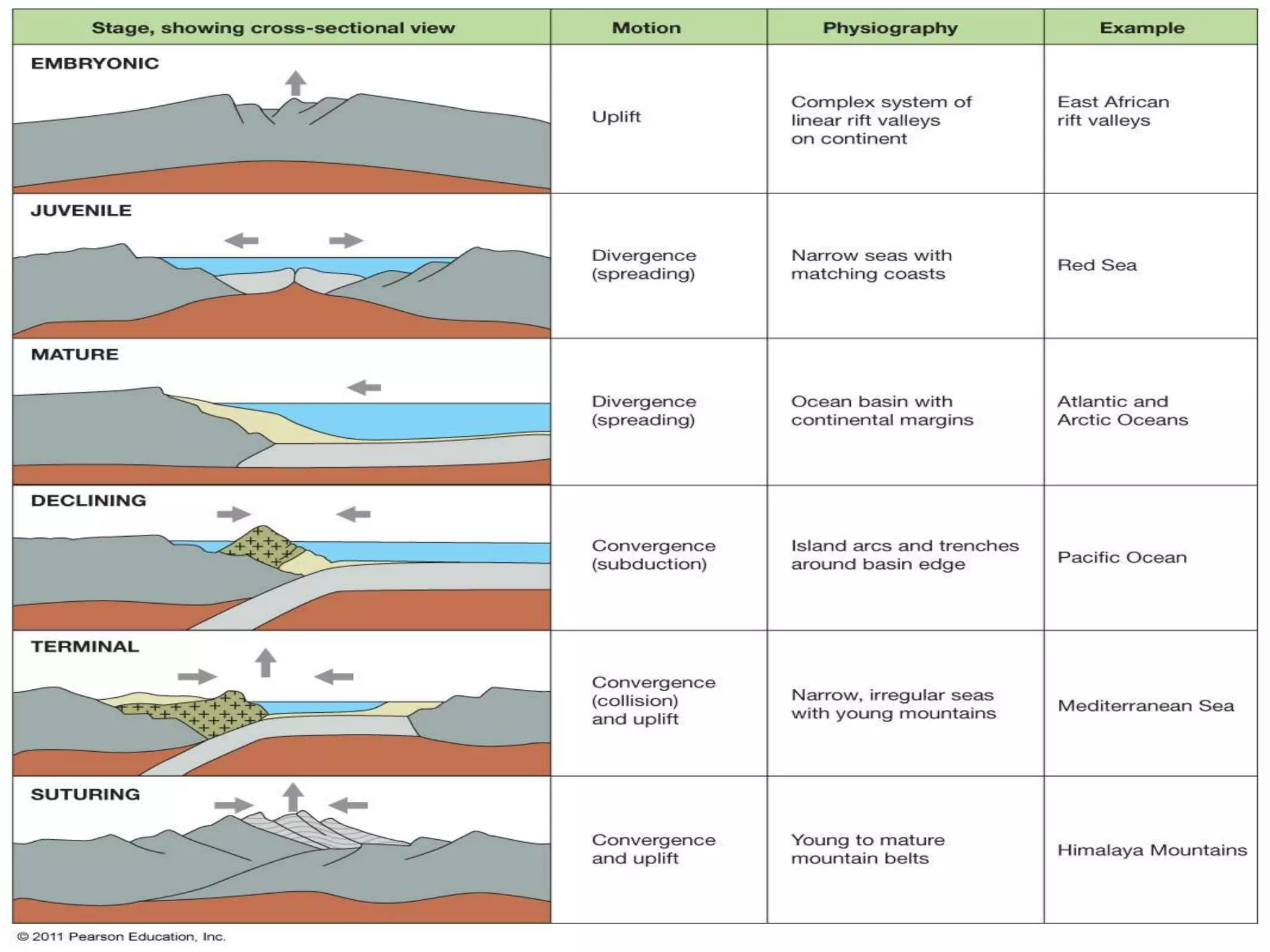
Wilson
cycle


         © 2011 Pearson Education, Inc.

Evidence of Plate Tectonic Processes

  • 1.
    Plate Tectonic Processes d c e b a © 2011 Pearson Education, Inc.
  • 3.
    Sea Floor SpreadingEvidence  Frederick Vine and Drummond Matthews (1963)  Sea floor stripes record Earth’s magnetic polarity © 2011 Pearson Education, Inc.
  • 4.
    Age of OceanFloor  Late 1960s deep-sea drilling.  Radiometric dating of ocean rocks.  Symmetric pattern of age distribution about mid-ocean ridges.  Oldest ocean floor only 180 million years old. © 2011 Pearson Education, Inc.
  • 5.
    Age of OceanFloor © 2011 Pearson Education, Inc.
  • 6.
    Earthquakes As Evidence Most large earthquakes occur at subduction zones.  Earthquake activity mirrors tectonic plate boundaries. © 2011 Pearson Education, Inc.
  • 7.
    Global Distribution ofEarthquakes © 2011 Pearson Education, Inc.
  • 8.
    Types of PlateBoundaries © 2011 Pearson Education, Inc.
  • 9.
    Examples of PlateBoundaries © 2011 Pearson Education, Inc.
  • 10.
    Transform Boundary Features Offsets oriented perpendicular to mid-ocean ridge ◦ Segments of plates slide past each other  Offsetspermit mid-ocean ridge to move apart at different rates  Shallow but strong earthquakes © 2011 Pearson Education, Inc.
  • 11.
    Transform Boundary Features Oceanic Transform Fault – ocean floor only  All transform faults occur between mid-ocean ridge segments. © 2011 Pearson Education, Inc.
  • 12.
    Applications of PlateTectonics  Mantle Plumes and Hotspots ◦Intraplate features Volcanic islands within a plate Island chains  Record ancient plate motions ◦Nematath – hotspot track © 2011 Pearson Education, Inc.
  • 13.
    Global Hotspot Locations © 2011 Pearson Education, Inc.
  • 14.
    Hawaiian Island –Emperor Seamount Nematath © 2011 Pearson Education, Inc.
  • 15.
    Plate Tectonics andIntraplate Features  Seamounts ◦ Rounded tops  Tablemounts or guyots ◦ Flattened tops  Subsidence of flanks of mid-ocean ridge  Wave erosion may flatten seamount © 2011 Pearson Education, Inc.
  • 16.
    Detecting Plate Motionwith Satellites © 2011 Pearson Education, Inc.
  • 17.
    Paleogeography  Paleogeography – study of ancient continents  Continental accretion ◦ Continental material added to edges of continents through plate motion © 2011 Pearson Education, Inc.
  • 18.
    Paleogeographic Reconstructions © 2011 Pearson Education, Inc.
  • 19.
    Future Predictions  Future positions of continents and oceans ◦ Assume same direction and rate of plate motions as now. © 2011 Pearson Education, Inc.
  • 20.
    World Map 50million Years in Future © 2011 Pearson Education, Inc.
  • 21.
    Wilson cycle  John Tuzo Wilson  Life cycle of ocean basins ◦Formation ◦Growth ◦Destruction © 2011 Pearson Education, Inc.
  • 22.
    Wilson cycle © 2011 Pearson Education, Inc.