Association for Eradication of Heart Attack
www.VP.org
#1 killer of
human beingsin
the21st
century?
Fatal Heart
Attack!
What causesheart attack?
Vulnerable
Plaque
Theshort answer is:
What are
vulnerable plaques?
Dangerous forms of
atherosclerotic
plaques that can
rupture or induce
thrombosis and lead
to critical disruption
of blood flow.
Theshort answer is:
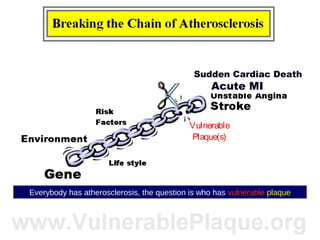
Everybody has atherosclerosis, the question is who has vulnerable plaque
Sudden Cardiac Death
Acute MI
Vulnerable
Plaque(s)
Vulnerable Plaque and Vulnerable
Patient, The Challenge of
Cardiovascular Medicine in 21st
Century
An introductory tutorial from
VP.org
In conjunction with
The Center for Vulnerable Plaque Research
University of Texas Houston and
Texas Heart Institute
What Do We Know About
Vulnerable Plaque?
Center for Vulnerable Plaque Research
University of Texas at Houston
Texas Heart Institute
October 2001
Morteza Naghavi, MD
Mohammad Madjid, MD Silvio Litovsky, MD AlirezaZarrabi, MD
Maziar Azadpour, MD ParsaMirhaji, MD CorneliusNwora, MD
Ward Casscells, MD James Willerson, MD
Salute to Pioneers
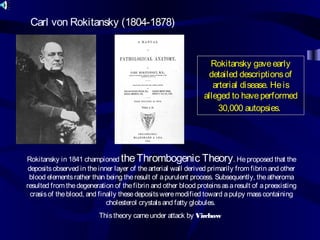
Carl von Rokitansky (1804-1878)
Rokitansky gaveearly
detailed descriptionsof
arterial disease. Heis
alleged to haveperformed
30,000 autopsies.
Rokitansky in 1841 championed theThrombogenic Theory. Heproposed that the
depositsobserved in theinner layer of thearterial wall derived primarily from fibrin and other
blood elementsrather than being theresult of apurulent process. Subsequently, theatheroma
resulted from thedegeneration of thefibrin and other blood proteinsasaresult of apreexisting
crasisof theblood, and finally thesedepositsweremodified toward apulpy masscontaining
cholesterol crystalsand fatty globules.
Thistheory cameunder attack by Virchow
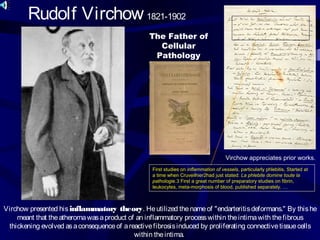
First studies on inflammation of vessels, particularly phlebitis, Started at
a time when Cruveilhier2had just stated: La phlebite domine toute la
pathologie.3 First a great number of preparatory studies on fibrin,
leukocytes, meta-morphosis of blood, published separately. …
Rudolf Virchow 1821-1902
The Father of
Cellular
Pathology
Virchow appreciates prior works.
Virchow presented hisinflammatory theory. Heutilized thenameof "endarteritisdeformans." By thishe
meant that theatheromawasaproduct of an inflammatory processwithin theintimawith thefibrous
thickening evolved asaconsequenceof areactivefibrosisinduced by proliferating connectivetissuecells
within theintima.
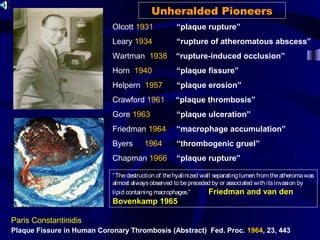
Olcott 1931 “plaque rupture”
Leary 1934 “rupture of atheromatous abscess”
Wartman 1938 “rupture-induced occlusion”
Horn 1940 “plaque fissure”
Helpern 1957 “plaque erosion”
Crawford 1961 “plaque thrombosis”
Gore 1963 “plaque ulceration”
Friedman 1964 “macrophage accumulation”
Byers 1964 “thrombogenic gruel”
Chapman 1966 “plaque rupture”
Plaque Fissure in Human Coronary Thrombosis (Abstract) Fed. Proc. 1964, 23, 443
Paris Constantinidis
“Thedestruction of thehyalinized wall separating lumen from theatheromawas
almost alwaysobserved to bepreceded by or associated with itsinvasion by
lipid containing macrophages.” Friedman and van den
Bovenkamp 1965
Unheralded Pioneers
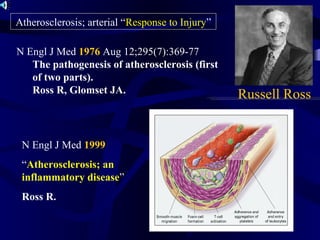
N Engl J Med 1999
“Atherosclerosis; an
inflammatory disease”
Ross R.
Russell Ross
Atherosclerosis; arterial “Response to Injury”
N Engl J Med 1976 Aug 12;295(7):369-77
The pathogenesis of atherosclerosis (first
of two parts).
Ross R, Glomset JA.
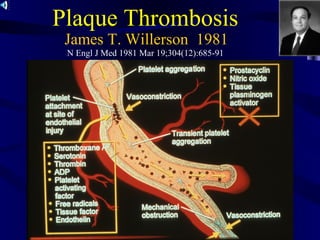
James T. Willerson 1981
N Engl J Med 1981 Mar 19;304(12):685-91
Plaque Thrombosis
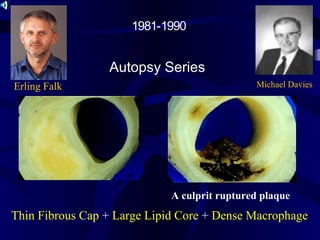
Erling Falk Michael Davies
Autopsy Series
Thin Fibrous Cap + Large Lipid Core + Dense Macrophage
A culprit ruptured plaque
1981-1990
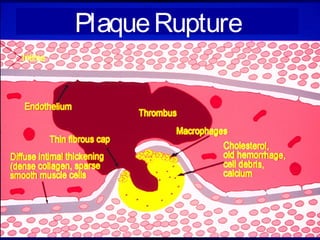
PlaqueRupture
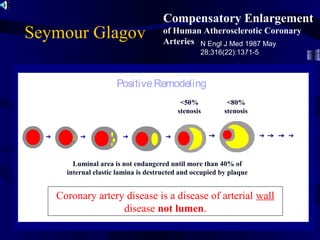
Seymour Glagov
Compensatory Enlargement
of Human Atherosclerotic Coronary
Arteries N Engl J Med 1987 May
28;316(22):1371-5
<50%
stenosis
Luminal area is not endangered until more than 40% of
internal elastic lamina is destructed and occupied by plaque
Coronary artery disease is a disease of arterial wall
disease not lumen.
PositiveRemodeling
<80%
stenosis
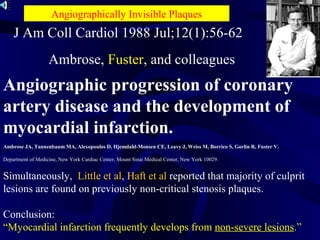
Angiographic progression of coronary
artery disease and the development of
myocardial infarction.
Ambrose JA, Tannenbaum MA, Alexopoulos D, Hjemdahl-Monsen CE, Leavy J, Weiss M, Borrico S, Gorlin R, Fuster V.
Department of Medicine, New York Cardiac Center, Mount Sinai Medical Center, New York 10029.
Simultaneously, Little et al, Haft et al reported that majority of culprit
lesions are found on previously non-critical stenosis plaques.
Conclusion:
“Myocardial infarction frequently develops from non-severe lesions.”
J Am Coll Cardiol 1988 Jul;12(1):56-62
Ambrose, Fuster, and colleagues
Angiographically Invisible Plaques
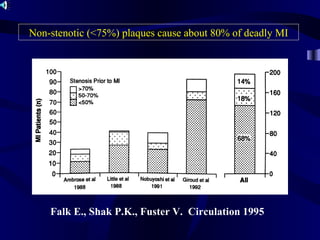
Falk E., Shak P.K., Fuster V. Circulation 1995
Non-stenotic (<75%) plaques cause about 80% of deadly MI
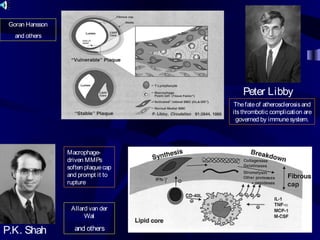
Macrophage-
driven MMPs
soften plaquecap
and prompt it to
rupture
P.K. Shah
Peter Libby
Thefateof atherosclerosisand
itsthrombotic complication are
governed by immunesystem.
Goran Hansson
and others
Allard van der
Wal
and others
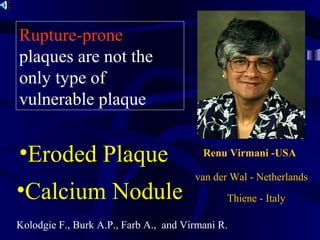
•Eroded Plaque
Rupture-prone
plaques are not the
only type of
vulnerable plaque
•Calcium Nodule
van der Wal - Netherlands
Renu Virmani -USA
Thiene - Italy
Kolodgie F., Burk A.P., Farb A., and Virmani R.
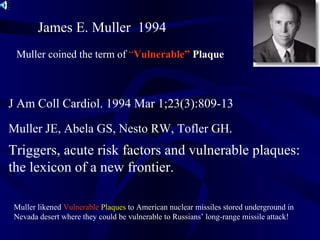
Muller JE, Abela GS, Nesto RW, Tofler GH.
Triggers, acute risk factors and vulnerable plaques:
the lexicon of a new frontier.
J Am Coll Cardiol. 1994 Mar 1;23(3):809-13
James E. Muller 1994
Muller coined the term of “Vulnerable” Plaque
Muller likened Vulnerable Plaques to American nuclear missiles stored underground in
Nevada desert where they could be vulnerable to Russians’ long-range missile attack!
“Who is Who”
on
www.VP.org
Thefield of vulnerableplaqueisbest owed to
many known and unknown scientistswho have
worked hard to shed light on our way to prevent
and eradicateheart attacksin thefuture.
To seeamorecompletelist pleasevisit:
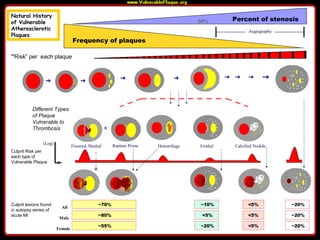
Natural History of
Vulnerable Plaques
Illustrated:
~70%
Percent of stenosis
Frequency of plaques
“Risk” per each plaque
Culprit Risk per
each type of
Vulnerable Plaque
(Log)
Culprit lesions found
in autopsy series of
acute MI
Different Types
of Plaque
Vulnerable to
Thrombosis
All
Male
Female
~10% <5% ~20%
50%
Angiography
~80% <5% ~20%
~55% ~20%
<5%
<5% ~20%
Rupture Prone Eroded Calcified NoduleHemorrhage
Positive Remodeling
Fissured /Healed
Natural History
of Vulnerable
Atherosclerotic
Plaques
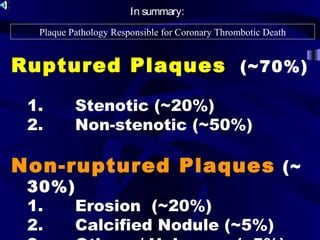
Ruptured Plaques (~70%)
1. Stenotic (~20%)
2. Non-stenotic (~50%)
Non-ruptured Plaques (~
30%)
1. Erosion (~20%)
2. Calcified Nodule (~5%)
Plaque Pathology Responsible for Coronary Thrombotic Death
In summary:
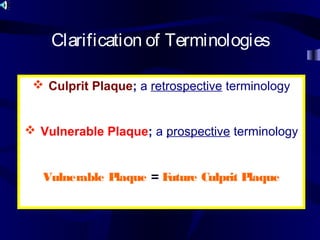
 Culprit Plaque; a retrospective terminology
 Vulnerable Plaque; a prospective terminology
Vulnerable Plaque = Future Culprit Plaque
Clarification of Terminologies
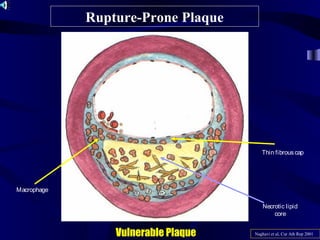
Rupture-Prone Plaque
Vulnerable Plaque Naghavi et al, Cur Ath Rep 2001
Macrophage
Necrotic lipid
core
Thin fibrouscap
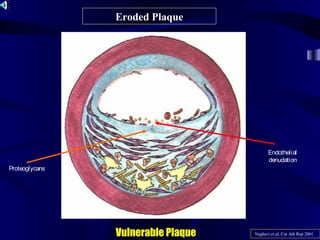
Eroded Plaque
Vulnerable Plaque Naghavi et al, Cur Ath Rep 2001
Endothelial
denudation
Proteoglycans
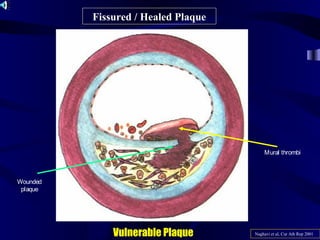
Fissured / Healed Plaque
Vulnerable Plaque Naghavi et al, Cur Ath Rep 2001
Mural thrombi
Wounded
plaque
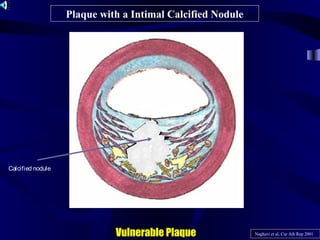
Plaque with a Intimal Calcified Nodule
Vulnerable Plaque Naghavi et al, Cur Ath Rep 2001
Calcified nodule
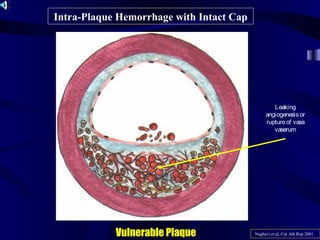
Intra-Plaque Hemorrhage with Intact Cap
Vulnerable Plaque Naghavi et al, Cur Ath Rep 2001
Leaking
angiogenesisor
ruptureof vasa
vaserum
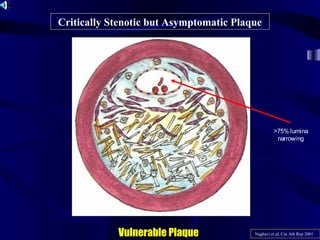
Critically Stenotic but Asymptomatic Plaque
Naghavi et al, Cur Ath Rep 2001Vulnerable Plaque
>75% lumina
narrowing
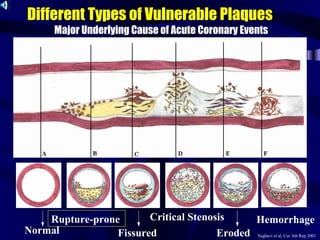
Different Types of Vulnerable Plaques
Major Underlying Cause of Acute Coronary Events
Normal
Rupture-prone
Fissured Eroded
Critical Stenosis Hemorrhage
Naghavi et al, Cur Ath Rep 2001
Emerging
Techniques for
Detection of
Vulnerable Plaque
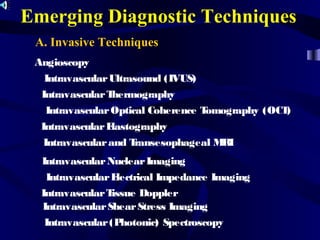
Emerging Diagnostic Techniques
A. Invasive Techniques
Angioscopy
IntravascularUltrasound (IVUS)
IntravascularThermography
IntravascularOptical Coherence Tomography (OCT)
IntravascularElastography
Intravascularand Transesophageal MRI
IntravascularNuclearImaging
IntravascularElectrical Impedance Imaging
IntravascularTissue Doppler
IntravascularShearStress Imaging
Intravascular(Photonic) Spectroscopy
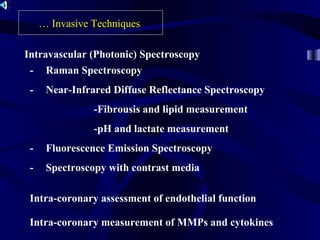
- Raman Spectroscopy
- Near-Infrared Diffuse Reflectance Spectroscopy
-Fibrousis and lipid measurement
-pH and lactate measurement
- Fluorescence Emission Spectroscopy
- Spectroscopy with contrast media
… Invasive Techniques
Intravascular (Photonic) Spectroscopy
Intra-coronary assessment of endothelial function
Intra-coronary measurement of MMPs and cytokines
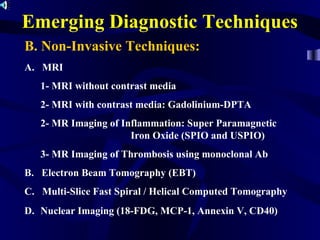
Emerging Diagnostic Techniques
B. Non-Invasive Techniques:
A. MRI
1- MRI without contrast media
2- MRI with contrast media: Gadolinium-DPTA
2- MR Imaging of Inflammation: Super Paramagnetic
Iron Oxide (SPIO and USPIO)
3- MR Imaging of Thrombosis using monoclonal Ab
B. Electron Beam Tomography (EBT)
C. Multi-Slice Fast Spiral / Helical Computed Tomography
D. Nuclear Imaging (18-FDG, MCP-1, Annexin V, CD40)
Emerging Diagnostic Techniques
C. Blood Tests / Serum Markers
- CRP
- ICAM-1, VCAM, p-Selectin, sCD40-L
- Proinflamatory cytokines
- Lp-PLA2
- Ox-LDL Ab
- PAPP-A
D. Endothelial Function Test
-Intra coronary acethylcholine test
-Noninvasive flow mediated dilatation of
brachial artery
- Anti-body against endothelial cells
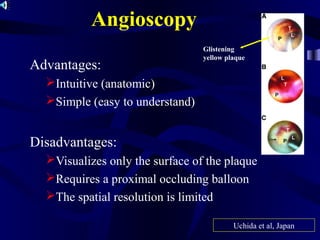
Angioscopy
Advantages:
Intuitive (anatomic)
Simple (easy to understand)
Disadvantages:
Visualizes only the surface of the plaque
Requires a proximal occluding balloon
The spatial resolution is limited
Glistening
yellow plaque
Uchida et al, Japan
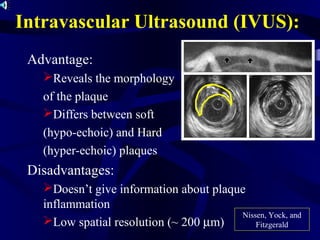
Intravascular Ultrasound (IVUS):
Advantage:
Reveals the morphology
of the plaque
Differs between soft
(hypo-echoic) and Hard
(hyper-echoic) plaques
Disadvantages:
Doesn’t give information about plaque
inflammation
Low spatial resolution (~ 200 µm)
Nissen, Yock, and
Fitzgerald
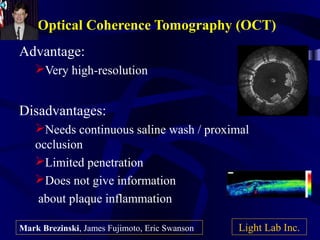
Optical Coherence Tomography (OCT)
Advantage:
Very high-resolution
Disadvantages:
Needs continuous saline wash / proximal
occlusion
Limited penetration
Does not give information
about plaque inflammation
Light Lab Inc.Mark Brezinski, James Fujimoto, Eric Swanson
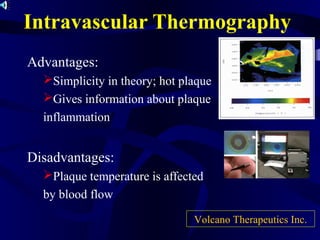
Intravascular Thermography
Advantages:
Simplicity in theory; hot plaque
Gives information about plaque
inflammation
Disadvantages:
Plaque temperature is affected
by blood flow
Volcano Therapeutics Inc.
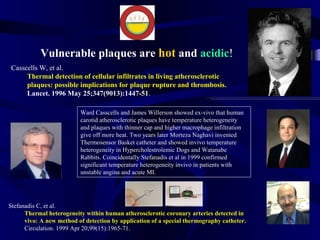
Casscells W, et al.
Thermal detection of cellular infiltrates in living atherosclerotic
plaques: possible implications for plaque rupture and thrombosis.
Lancet. 1996 May 25;347(9013):1447-51.
Vulnerable plaques are hot and acidic!
Ward Casscells and James Willerson showed ex-vivo that human
carotid atherosclerotic plaques have temperature heterogeneity
and plaques with thinner cap and higher macrophage infiltration
give off more heat. Two years later Morteza Naghavi invented
Thermosensor Basket catheter and showed invivo temperature
heterogeneity in Hypercholestrolemic Dogs and Watanabe
Rabbits. Coincidentally Stefanadis et al in 1999 confirmed
significant temperature heterogeneity invivo in patients with
unstable angina and acute MI.
Stefanadis C, et al.
Thermal heterogeneity within human atherosclerotic coronary arteries detected in
vivo: A new method of detection by application of a special thermography catheter.
Circulation. 1999 Apr 20;99(15):1965-71.
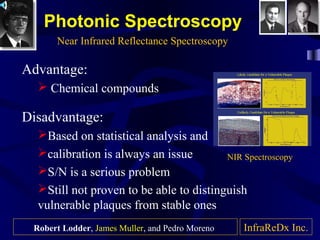
Photonic Spectroscopy
Advantage:
 Chemical compounds
Disadvantage:
Based on statistical analysis and
calibration is always an issue
S/N is a serious problem
Still not proven to be able to distinguish
vulnerable plaques from stable ones
Near Infrared Reflectance Spectroscopy
InfraReDx Inc.
NIR Spectroscopy
Robert Lodder, James Muller, and Pedro Moreno
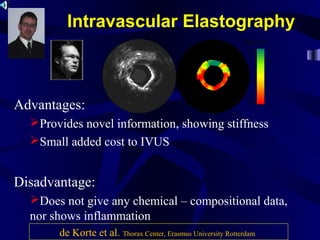
Intravascular Elastography
Advantages:
Provides novel information, showing stiffness
Small added cost to IVUS
Disadvantage:
Does not give any chemical – compositional data,
nor shows inflammation
de Korte et al. Thorax Center, Erasmus University Rotterdam
Intravascular Nuclear Imaging
Immuno-scintigraphy
Advantage:
One may use radio-labeled antibodies to detect
specific antigens in plaque like MCP-1
Disadvantages:
Radiation and safety problems
Poor resolution and flow artifacts
Lack of specificity
ImetrX Inc.William Strauss and Vartan Ghazarossian
Magnetic Resonance Imaging
Plaque Characterization and Angiography
Advantages:
Lack of ionizing radiation
Non-invasive
Provides enormous information about flow as
well as plaque
Enhancement by contrast agents and NMR
spectroscopy
Disadvantages:
Ineligibility of patients with metal prostheses
High cost
Longer time for adoption by cardiologists
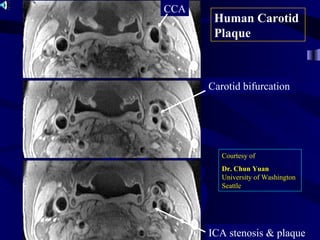
Human Carotid
Plaque
CCA
Carotid bifurcation
ICA stenosis & plaque
Courtesy of
Dr. Chun Yuan
University of Washington
Seattle
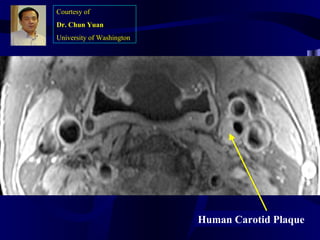
Human Carotid Plaque
Courtesy of
Dr. Chun Yuan
University of Washington
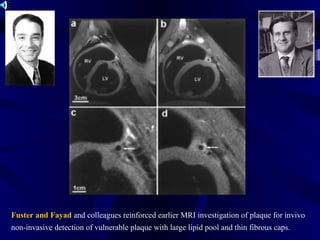
Fuster and Fayad and colleagues reinforced earlier MRI investigation of plaque for invivo
non-invasive detection of vulnerable plaque with large lipid pool and thin fibrous caps.
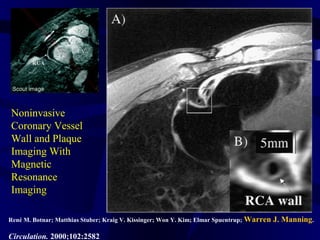
Noninvasive
Coronary Vessel
Wall and Plaque
Imaging With
Magnetic
Resonance
Imaging
René M. Botnar; Matthias Stuber; Kraig V. Kissinger; Won Y. Kim; Elmar Spuentrup; Warren J. Manning.
Circulation. 2000;102:2582
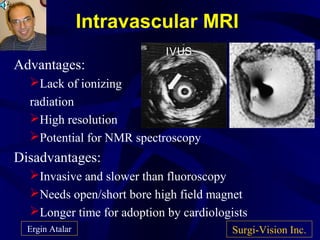
Intravascular MRI
Advantages:
Lack of ionizing
radiation
High resolution
Potential for NMR spectroscopy
Disadvantages:
Invasive and slower than fluoroscopy
Needs open/short bore high field magnet
Longer time for adoption by cardiologists
Surgi-Vision Inc.Ergin Atalar
IVUS
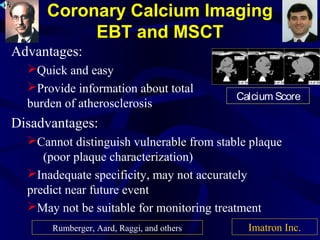
Coronary Calcium Imaging
EBT and MSCT
Advantages:
Quick and easy
Provide information about total
burden of atherosclerosis
Disadvantages:
Cannot distinguish vulnerable from stable plaque
(poor plaque characterization)
Inadequate specificity, may not accurately
predict near future event
May not be suitable for monitoring treatment
Calcium Score
Imatron Inc.Rumberger, Aard, Raggi, and others
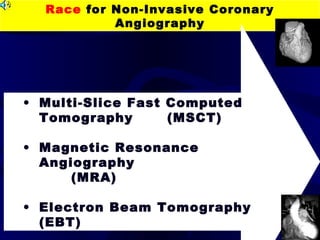
Race for Non-Invasive Coronary
Angiography
• Multi-Slice Fast Computed
Tomography (MSCT)
• Magnetic Resonance
Angiography
(MRA)
• Electron Beam Tomography
(EBT)
Plaque Morphology
vs.
Plaque Activity
Why do we need both?
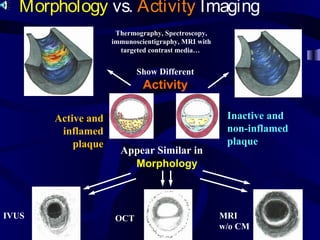
Morphology vs. Activity Imaging
Inactive and
non-inflamed
plaque
Active and
inflamed
plaque
Appear Similar in
IVUS OCT MRI
w/o CM
Morphology
Show Different
Activity
Thermography, Spectroscopy,
immunoscientigraphy, MRI with
targeted contrast media…
High Level of Sensitivity and Specificity
Needed
• Knowing the extensive prevalence of
atherosclerosis, in order to accurately
detect vulnerable plaques and
vulnerable patients, it is imperative to
obtain information about both structure
and activity of plaque assuring a
minimum of false positive and false
negative results.
NO MORE TREADMILL TEST!
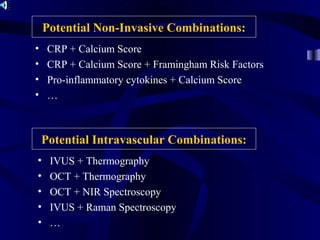
Potential Intravascular Combinations:
• IVUS + Thermography
• OCT + Thermography
• OCT + NIR Spectroscopy
• IVUS + Raman Spectroscopy
• …
Potential Non-Invasive Combinations:
• CRP + Calcium Score
• CRP + Calcium Score + Framingham Risk Factors
• Pro-inflammatory cytokines + Calcium Score
• …
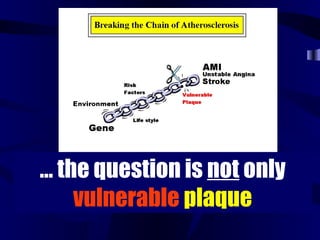
… the question is not only
vulnerable plaque
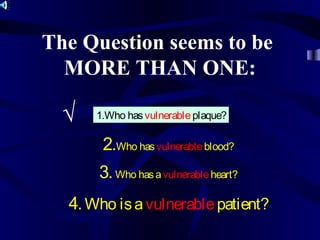
The Question seems to be
MORE THAN ONE:
2.Who hasvulnerableblood?
3.Who hasavulnerableheart?
4.Who isavulnerablepatient?
1.Who hasvulnerableplaque?√
Who Has Vulnerable Blood?
• Patients whose blood tends to create an
occlusive thrombus on a vulnerable
plaque, thereby resulting in an acute
clinical syndrome.
• In other words:
Who has hyper-coagulable or “vulnerable blood”?
Who Has A Vulnerable Heart?
• Those patients whose heart is more
sensitive to an acute ischemic episode due
thereby resulting in a fatal arrhythmia
and sudden out-of-hospital cardiac
arrest?
• In other words:
Who has arhytmogenic or “vulnerable heart”?
Who Is
A Vulnerable Patient?
A patient with a high likelihood of plaque, blood, and
heart vulnerability
What is patient’s total
Vulnerability Score (VP Score)
An index of having coronary event in the next 12
months (1 year)
Prevention of unheralded acute coronary
events by early detection and treatment
of vulnerable plaques/patients.
The Grand Goal:
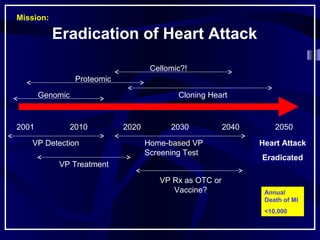
2001 2050
Genomic
Proteomic
2010 2020 2030 2040
Cellomic?!
VP Treatment
Home-based VP
Screening Test
Heart Attack
Eradicated
Annual
Death of MI
<10,000
Cloning Heart
VP Rx as OTC or
Vaccine?
Eradication of Heart Attack
VP Detection
Mission:
Association for Eradication of Heart Attack
www.VP.org
With
SPECIAL THANKSTO:
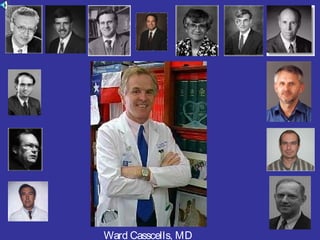
Ward Casscells, MD
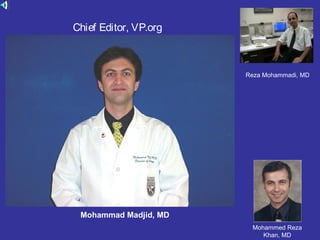
Mohammad Madjid, MD
Reza Mohammadi, MD
Mohammed Reza
Khan, MD
Chief Editor, VP.org
Eric Jarvis, ExecutiveDirector, VP.org
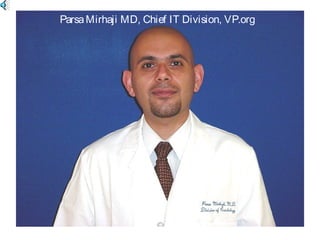
ParsaMirhaji MD, Chief IT Division, VP.org
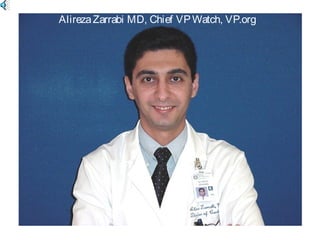
AlirezaZarrabi MD, Chief VPWatch, VP.org
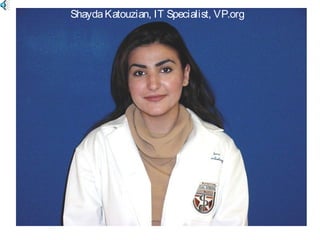
ShaydaKatouzian, IT Specialist, VP.org
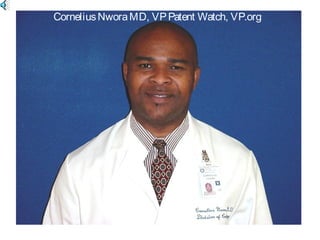
CorneliusNworaMD, VPPatent Watch, VP.org
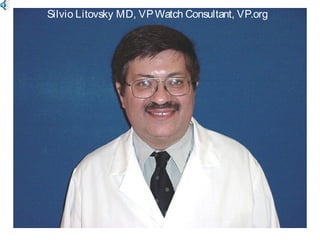
Silvio Litovsky MD, VPWatch Consultant, VP.org
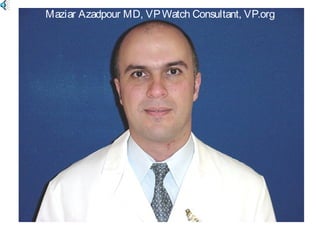
Maziar Azadpour MD, VPWatch Consultant, VP.org
Paul Cherukuri, Medical Student, VP.org
Marilyn Sander, ExecutiveAssistant, VP.org
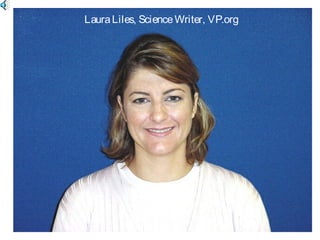
LauraLiles, ScienceWriter, VP.org
Dot Jarvis, Graphic Designer & Artist, VP.org
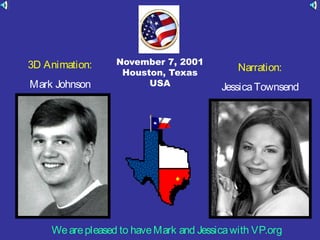
November 7, 2001
Houston, Texas
USA
3D Animation:
Mark Johnson
Narration:
JessicaTownsend
Wearepleased to haveMark and Jessicawith VP.org
Business @theSpeedof Thought
William H. Gates
Chairman and Chief Software Architect
Microsoft Corporation
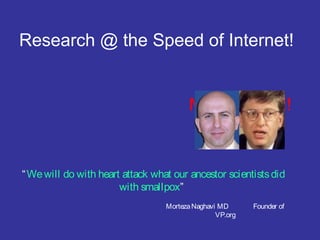
Research @ the Speed of Internet!
Mort Gates!!!
MortezaNaghavi MD Founder of
VP.org
“Wewill do with heart attack what our ancestor scientistsdid
with smallpox”
Final clickable pps for vp s ymposium @aha 2001

Final clickable pps for vp s ymposium @aha 2001

  • 1.
    Association for Eradicationof Heart Attack www.VP.org
  • 2.
    #1 killer of humanbeingsin the21st century?
  • 3.
  • 4.
  • 5.
  • 6.
  • 7.
    Dangerous forms of atherosclerotic plaquesthat can rupture or induce thrombosis and lead to critical disruption of blood flow. Theshort answer is:
  • 8.
    Everybody has atherosclerosis,the question is who has vulnerable plaque Sudden Cardiac Death Acute MI Vulnerable Plaque(s)
  • 9.
    Vulnerable Plaque andVulnerable Patient, The Challenge of Cardiovascular Medicine in 21st Century An introductory tutorial from VP.org In conjunction with The Center for Vulnerable Plaque Research University of Texas Houston and Texas Heart Institute
  • 10.
    What Do WeKnow About Vulnerable Plaque? Center for Vulnerable Plaque Research University of Texas at Houston Texas Heart Institute October 2001 Morteza Naghavi, MD Mohammad Madjid, MD Silvio Litovsky, MD AlirezaZarrabi, MD Maziar Azadpour, MD ParsaMirhaji, MD CorneliusNwora, MD Ward Casscells, MD James Willerson, MD
  • 11.
  • 12.
    Carl von Rokitansky(1804-1878) Rokitansky gaveearly detailed descriptionsof arterial disease. Heis alleged to haveperformed 30,000 autopsies. Rokitansky in 1841 championed theThrombogenic Theory. Heproposed that the depositsobserved in theinner layer of thearterial wall derived primarily from fibrin and other blood elementsrather than being theresult of apurulent process. Subsequently, theatheroma resulted from thedegeneration of thefibrin and other blood proteinsasaresult of apreexisting crasisof theblood, and finally thesedepositsweremodified toward apulpy masscontaining cholesterol crystalsand fatty globules. Thistheory cameunder attack by Virchow
  • 13.
    First studies oninflammation of vessels, particularly phlebitis, Started at a time when Cruveilhier2had just stated: La phlebite domine toute la pathologie.3 First a great number of preparatory studies on fibrin, leukocytes, meta-morphosis of blood, published separately. … Rudolf Virchow 1821-1902 The Father of Cellular Pathology Virchow appreciates prior works. Virchow presented hisinflammatory theory. Heutilized thenameof "endarteritisdeformans." By thishe meant that theatheromawasaproduct of an inflammatory processwithin theintimawith thefibrous thickening evolved asaconsequenceof areactivefibrosisinduced by proliferating connectivetissuecells within theintima.
  • 14.
    Olcott 1931 “plaquerupture” Leary 1934 “rupture of atheromatous abscess” Wartman 1938 “rupture-induced occlusion” Horn 1940 “plaque fissure” Helpern 1957 “plaque erosion” Crawford 1961 “plaque thrombosis” Gore 1963 “plaque ulceration” Friedman 1964 “macrophage accumulation” Byers 1964 “thrombogenic gruel” Chapman 1966 “plaque rupture” Plaque Fissure in Human Coronary Thrombosis (Abstract) Fed. Proc. 1964, 23, 443 Paris Constantinidis “Thedestruction of thehyalinized wall separating lumen from theatheromawas almost alwaysobserved to bepreceded by or associated with itsinvasion by lipid containing macrophages.” Friedman and van den Bovenkamp 1965 Unheralded Pioneers
  • 15.
    N Engl JMed 1999 “Atherosclerosis; an inflammatory disease” Ross R. Russell Ross Atherosclerosis; arterial “Response to Injury” N Engl J Med 1976 Aug 12;295(7):369-77 The pathogenesis of atherosclerosis (first of two parts). Ross R, Glomset JA.
  • 16.
    James T. Willerson1981 N Engl J Med 1981 Mar 19;304(12):685-91 Plaque Thrombosis
  • 17.
    Erling Falk MichaelDavies Autopsy Series Thin Fibrous Cap + Large Lipid Core + Dense Macrophage A culprit ruptured plaque 1981-1990
  • 18.
  • 19.
    Seymour Glagov Compensatory Enlargement ofHuman Atherosclerotic Coronary Arteries N Engl J Med 1987 May 28;316(22):1371-5 <50% stenosis Luminal area is not endangered until more than 40% of internal elastic lamina is destructed and occupied by plaque Coronary artery disease is a disease of arterial wall disease not lumen. PositiveRemodeling <80% stenosis
  • 20.
    Angiographic progression ofcoronary artery disease and the development of myocardial infarction. Ambrose JA, Tannenbaum MA, Alexopoulos D, Hjemdahl-Monsen CE, Leavy J, Weiss M, Borrico S, Gorlin R, Fuster V. Department of Medicine, New York Cardiac Center, Mount Sinai Medical Center, New York 10029. Simultaneously, Little et al, Haft et al reported that majority of culprit lesions are found on previously non-critical stenosis plaques. Conclusion: “Myocardial infarction frequently develops from non-severe lesions.” J Am Coll Cardiol 1988 Jul;12(1):56-62 Ambrose, Fuster, and colleagues Angiographically Invisible Plaques
  • 21.
    Falk E., ShakP.K., Fuster V. Circulation 1995 Non-stenotic (<75%) plaques cause about 80% of deadly MI
  • 22.
    Macrophage- driven MMPs soften plaquecap andprompt it to rupture P.K. Shah Peter Libby Thefateof atherosclerosisand itsthrombotic complication are governed by immunesystem. Goran Hansson and others Allard van der Wal and others
  • 23.
    •Eroded Plaque Rupture-prone plaques arenot the only type of vulnerable plaque •Calcium Nodule van der Wal - Netherlands Renu Virmani -USA Thiene - Italy Kolodgie F., Burk A.P., Farb A., and Virmani R.
  • 24.
    Muller JE, AbelaGS, Nesto RW, Tofler GH. Triggers, acute risk factors and vulnerable plaques: the lexicon of a new frontier. J Am Coll Cardiol. 1994 Mar 1;23(3):809-13 James E. Muller 1994 Muller coined the term of “Vulnerable” Plaque Muller likened Vulnerable Plaques to American nuclear missiles stored underground in Nevada desert where they could be vulnerable to Russians’ long-range missile attack!
  • 25.
    “Who is Who” on www.VP.org Thefieldof vulnerableplaqueisbest owed to many known and unknown scientistswho have worked hard to shed light on our way to prevent and eradicateheart attacksin thefuture. To seeamorecompletelist pleasevisit:
  • 26.
    Natural History of VulnerablePlaques Illustrated:
  • 27.
    ~70% Percent of stenosis Frequencyof plaques “Risk” per each plaque Culprit Risk per each type of Vulnerable Plaque (Log) Culprit lesions found in autopsy series of acute MI Different Types of Plaque Vulnerable to Thrombosis All Male Female ~10% <5% ~20% 50% Angiography ~80% <5% ~20% ~55% ~20% <5% <5% ~20% Rupture Prone Eroded Calcified NoduleHemorrhage Positive Remodeling Fissured /Healed Natural History of Vulnerable Atherosclerotic Plaques
  • 28.
    Ruptured Plaques (~70%) 1.Stenotic (~20%) 2. Non-stenotic (~50%) Non-ruptured Plaques (~ 30%) 1. Erosion (~20%) 2. Calcified Nodule (~5%) Plaque Pathology Responsible for Coronary Thrombotic Death In summary:
  • 29.
     Culprit Plaque;a retrospective terminology  Vulnerable Plaque; a prospective terminology Vulnerable Plaque = Future Culprit Plaque Clarification of Terminologies
  • 30.
    Rupture-Prone Plaque Vulnerable PlaqueNaghavi et al, Cur Ath Rep 2001 Macrophage Necrotic lipid core Thin fibrouscap
  • 31.
    Eroded Plaque Vulnerable PlaqueNaghavi et al, Cur Ath Rep 2001 Endothelial denudation Proteoglycans
  • 32.
    Fissured / HealedPlaque Vulnerable Plaque Naghavi et al, Cur Ath Rep 2001 Mural thrombi Wounded plaque
  • 33.
    Plaque with aIntimal Calcified Nodule Vulnerable Plaque Naghavi et al, Cur Ath Rep 2001 Calcified nodule
  • 34.
    Intra-Plaque Hemorrhage withIntact Cap Vulnerable Plaque Naghavi et al, Cur Ath Rep 2001 Leaking angiogenesisor ruptureof vasa vaserum
  • 35.
    Critically Stenotic butAsymptomatic Plaque Naghavi et al, Cur Ath Rep 2001Vulnerable Plaque >75% lumina narrowing
  • 36.
    Different Types ofVulnerable Plaques Major Underlying Cause of Acute Coronary Events Normal Rupture-prone Fissured Eroded Critical Stenosis Hemorrhage Naghavi et al, Cur Ath Rep 2001
  • 38.
  • 39.
    Emerging Diagnostic Techniques A.Invasive Techniques Angioscopy IntravascularUltrasound (IVUS) IntravascularThermography IntravascularOptical Coherence Tomography (OCT) IntravascularElastography Intravascularand Transesophageal MRI IntravascularNuclearImaging IntravascularElectrical Impedance Imaging IntravascularTissue Doppler IntravascularShearStress Imaging Intravascular(Photonic) Spectroscopy
  • 40.
    - Raman Spectroscopy -Near-Infrared Diffuse Reflectance Spectroscopy -Fibrousis and lipid measurement -pH and lactate measurement - Fluorescence Emission Spectroscopy - Spectroscopy with contrast media … Invasive Techniques Intravascular (Photonic) Spectroscopy Intra-coronary assessment of endothelial function Intra-coronary measurement of MMPs and cytokines
  • 41.
    Emerging Diagnostic Techniques B.Non-Invasive Techniques: A. MRI 1- MRI without contrast media 2- MRI with contrast media: Gadolinium-DPTA 2- MR Imaging of Inflammation: Super Paramagnetic Iron Oxide (SPIO and USPIO) 3- MR Imaging of Thrombosis using monoclonal Ab B. Electron Beam Tomography (EBT) C. Multi-Slice Fast Spiral / Helical Computed Tomography D. Nuclear Imaging (18-FDG, MCP-1, Annexin V, CD40)
  • 42.
    Emerging Diagnostic Techniques C.Blood Tests / Serum Markers - CRP - ICAM-1, VCAM, p-Selectin, sCD40-L - Proinflamatory cytokines - Lp-PLA2 - Ox-LDL Ab - PAPP-A D. Endothelial Function Test -Intra coronary acethylcholine test -Noninvasive flow mediated dilatation of brachial artery - Anti-body against endothelial cells
  • 43.
    Angioscopy Advantages: Intuitive (anatomic) Simple (easyto understand) Disadvantages: Visualizes only the surface of the plaque Requires a proximal occluding balloon The spatial resolution is limited Glistening yellow plaque Uchida et al, Japan
  • 44.
    Intravascular Ultrasound (IVUS): Advantage: Revealsthe morphology of the plaque Differs between soft (hypo-echoic) and Hard (hyper-echoic) plaques Disadvantages: Doesn’t give information about plaque inflammation Low spatial resolution (~ 200 µm) Nissen, Yock, and Fitzgerald
  • 45.
    Optical Coherence Tomography(OCT) Advantage: Very high-resolution Disadvantages: Needs continuous saline wash / proximal occlusion Limited penetration Does not give information about plaque inflammation Light Lab Inc.Mark Brezinski, James Fujimoto, Eric Swanson
  • 46.
    Intravascular Thermography Advantages: Simplicity intheory; hot plaque Gives information about plaque inflammation Disadvantages: Plaque temperature is affected by blood flow Volcano Therapeutics Inc.
  • 47.
    Casscells W, etal. Thermal detection of cellular infiltrates in living atherosclerotic plaques: possible implications for plaque rupture and thrombosis. Lancet. 1996 May 25;347(9013):1447-51. Vulnerable plaques are hot and acidic! Ward Casscells and James Willerson showed ex-vivo that human carotid atherosclerotic plaques have temperature heterogeneity and plaques with thinner cap and higher macrophage infiltration give off more heat. Two years later Morteza Naghavi invented Thermosensor Basket catheter and showed invivo temperature heterogeneity in Hypercholestrolemic Dogs and Watanabe Rabbits. Coincidentally Stefanadis et al in 1999 confirmed significant temperature heterogeneity invivo in patients with unstable angina and acute MI. Stefanadis C, et al. Thermal heterogeneity within human atherosclerotic coronary arteries detected in vivo: A new method of detection by application of a special thermography catheter. Circulation. 1999 Apr 20;99(15):1965-71.
  • 48.
    Photonic Spectroscopy Advantage:  Chemicalcompounds Disadvantage: Based on statistical analysis and calibration is always an issue S/N is a serious problem Still not proven to be able to distinguish vulnerable plaques from stable ones Near Infrared Reflectance Spectroscopy InfraReDx Inc. NIR Spectroscopy Robert Lodder, James Muller, and Pedro Moreno
  • 49.
    Intravascular Elastography Advantages: Provides novelinformation, showing stiffness Small added cost to IVUS Disadvantage: Does not give any chemical – compositional data, nor shows inflammation de Korte et al. Thorax Center, Erasmus University Rotterdam
  • 50.
    Intravascular Nuclear Imaging Immuno-scintigraphy Advantage: Onemay use radio-labeled antibodies to detect specific antigens in plaque like MCP-1 Disadvantages: Radiation and safety problems Poor resolution and flow artifacts Lack of specificity ImetrX Inc.William Strauss and Vartan Ghazarossian
  • 51.
    Magnetic Resonance Imaging PlaqueCharacterization and Angiography Advantages: Lack of ionizing radiation Non-invasive Provides enormous information about flow as well as plaque Enhancement by contrast agents and NMR spectroscopy Disadvantages: Ineligibility of patients with metal prostheses High cost Longer time for adoption by cardiologists
  • 52.
    Human Carotid Plaque CCA Carotid bifurcation ICAstenosis & plaque Courtesy of Dr. Chun Yuan University of Washington Seattle
  • 53.
    Human Carotid Plaque Courtesyof Dr. Chun Yuan University of Washington
  • 54.
    Fuster and Fayadand colleagues reinforced earlier MRI investigation of plaque for invivo non-invasive detection of vulnerable plaque with large lipid pool and thin fibrous caps.
  • 55.
    Noninvasive Coronary Vessel Wall andPlaque Imaging With Magnetic Resonance Imaging René M. Botnar; Matthias Stuber; Kraig V. Kissinger; Won Y. Kim; Elmar Spuentrup; Warren J. Manning. Circulation. 2000;102:2582
  • 56.
    Intravascular MRI Advantages: Lack ofionizing radiation High resolution Potential for NMR spectroscopy Disadvantages: Invasive and slower than fluoroscopy Needs open/short bore high field magnet Longer time for adoption by cardiologists Surgi-Vision Inc.Ergin Atalar IVUS
  • 57.
    Coronary Calcium Imaging EBTand MSCT Advantages: Quick and easy Provide information about total burden of atherosclerosis Disadvantages: Cannot distinguish vulnerable from stable plaque (poor plaque characterization) Inadequate specificity, may not accurately predict near future event May not be suitable for monitoring treatment Calcium Score Imatron Inc.Rumberger, Aard, Raggi, and others
  • 58.
    Race for Non-InvasiveCoronary Angiography • Multi-Slice Fast Computed Tomography (MSCT) • Magnetic Resonance Angiography (MRA) • Electron Beam Tomography (EBT)
  • 59.
  • 60.
    Morphology vs. ActivityImaging Inactive and non-inflamed plaque Active and inflamed plaque Appear Similar in IVUS OCT MRI w/o CM Morphology Show Different Activity Thermography, Spectroscopy, immunoscientigraphy, MRI with targeted contrast media…
  • 61.
    High Level ofSensitivity and Specificity Needed • Knowing the extensive prevalence of atherosclerosis, in order to accurately detect vulnerable plaques and vulnerable patients, it is imperative to obtain information about both structure and activity of plaque assuring a minimum of false positive and false negative results. NO MORE TREADMILL TEST!
  • 62.
    Potential Intravascular Combinations: •IVUS + Thermography • OCT + Thermography • OCT + NIR Spectroscopy • IVUS + Raman Spectroscopy • … Potential Non-Invasive Combinations: • CRP + Calcium Score • CRP + Calcium Score + Framingham Risk Factors • Pro-inflammatory cytokines + Calcium Score • …
  • 63.
    … the questionis not only vulnerable plaque
  • 64.
    The Question seemsto be MORE THAN ONE: 2.Who hasvulnerableblood? 3.Who hasavulnerableheart? 4.Who isavulnerablepatient? 1.Who hasvulnerableplaque?√
  • 65.
    Who Has VulnerableBlood? • Patients whose blood tends to create an occlusive thrombus on a vulnerable plaque, thereby resulting in an acute clinical syndrome. • In other words: Who has hyper-coagulable or “vulnerable blood”?
  • 66.
    Who Has AVulnerable Heart? • Those patients whose heart is more sensitive to an acute ischemic episode due thereby resulting in a fatal arrhythmia and sudden out-of-hospital cardiac arrest? • In other words: Who has arhytmogenic or “vulnerable heart”?
  • 67.
    Who Is A VulnerablePatient? A patient with a high likelihood of plaque, blood, and heart vulnerability What is patient’s total Vulnerability Score (VP Score) An index of having coronary event in the next 12 months (1 year)
  • 68.
    Prevention of unheraldedacute coronary events by early detection and treatment of vulnerable plaques/patients. The Grand Goal:
  • 69.
    2001 2050 Genomic Proteomic 2010 20202030 2040 Cellomic?! VP Treatment Home-based VP Screening Test Heart Attack Eradicated Annual Death of MI <10,000 Cloning Heart VP Rx as OTC or Vaccine? Eradication of Heart Attack VP Detection Mission:
  • 70.
    Association for Eradicationof Heart Attack www.VP.org
  • 71.
  • 72.
  • 73.
    Mohammad Madjid, MD RezaMohammadi, MD Mohammed Reza Khan, MD Chief Editor, VP.org
  • 74.
  • 75.
    ParsaMirhaji MD, ChiefIT Division, VP.org
  • 76.
    AlirezaZarrabi MD, ChiefVPWatch, VP.org
  • 77.
  • 78.
  • 79.
    Silvio Litovsky MD,VPWatch Consultant, VP.org
  • 80.
    Maziar Azadpour MD,VPWatch Consultant, VP.org
  • 81.
    Paul Cherukuri, MedicalStudent, VP.org
  • 82.
  • 83.
  • 84.
    Dot Jarvis, GraphicDesigner & Artist, VP.org
  • 85.
    November 7, 2001 Houston,Texas USA 3D Animation: Mark Johnson Narration: JessicaTownsend Wearepleased to haveMark and Jessicawith VP.org
  • 86.
    Business @theSpeedof Thought WilliamH. Gates Chairman and Chief Software Architect Microsoft Corporation
  • 87.
    Research @ theSpeed of Internet! Mort Gates!!! MortezaNaghavi MD Founder of VP.org “Wewill do with heart attack what our ancestor scientistsdid with smallpox”