DR.AMIT GULATI
FROM VULNERABLE PLAQUE TO
VULNERABLE PATIENT
What are Plaques?
3
Plaque is a combination of cholesterol, other
fatty materials, calcium, and blood components
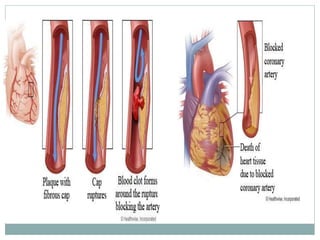
that stick to the artery wall lining. A hard shell or
scar covers the plaque.
 Research has provided valuable insight into biology of atherosclerosis and, in particular,
plaque rupture. This research is driving a re-evaluation of the approach to investigation
and management of the patient with atherosclerosis.
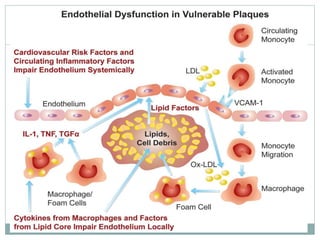
 Endothelial cell dysfunction is the earliest detectable physiologic manifestation of
atherosclerosis . The major atherogenic risk factors, such as smoking, high low-density
lipoprotein (LDL) levels, hypertension, and diabetes, have all been shown to impair
endothelial function.
 Normal endothelium has antithrombotic, antiinflammatory, and vasomodulatory functions
through secretion of substances, such as prostacyclin and nitric oxide (NO), which inhibit
platelet activation and promote vasodilatation. NO inhibits expression of the adhesion
molecules responsible for inflammatory cell recruitment. Both the barrier function and
secretory capacity of the endothelium are disrupted in atherosclerosis.
 This manifests as an increase in permeability to lipids and inflammatory cells (mainly
monocytes and T lymphocytes) derived from the blood.
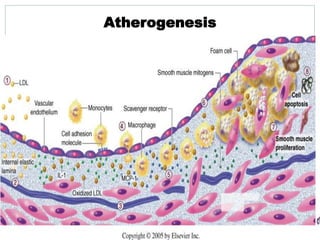
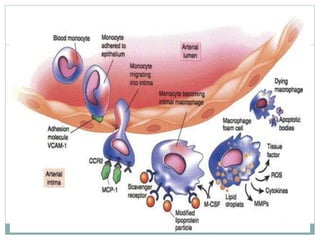
 The combination of endothelial dysfunction and high circulating levels of
atherogenic lipoproteins leads to the accumulation of lipid-laden, monocyte-
derived foam cells in the subendothelial layer, forming the early atherosclerotic
lesion.
 Accumulation of foam cells and their subsequent death produces an acellular
core of cholesterol esters and cell debris.
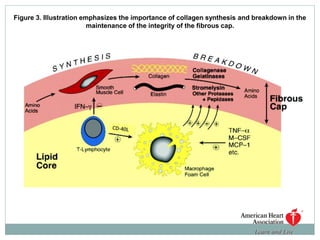
 Vascular smooth muscle cells (VSMCs) migrate from the medial layer of the
vessel and synthesize extracellular matrix components, such as elastin and
collagen, to form the fibrous cap.
 The fibrous cap contains inflammatory cells, predominantly macrophages, but
also some T lymphocytes and mast cells.
 Intimal thickening is the first and most common clinically detectable manifestation of
atherosclerosis in humans.
 Unique to these lesions is the presence of lipid pools located in the deeper intima in
areas rich in proteoglycans with speckled calcification and a generalized loss of smooth
muscle cells.
 The loss of these cells in lipid pools occurs from cell death, including apoptosis.
 Macrophage infiltration is variable and mostly confined to the luminal aspect of the plaque
outside the lipid pool.
 The development of advanced atheromatous plaques with necrotic cores is believed to
occur due to invasion of lipid pools by macrophages.
Atherogenesis
7
Vascular Cell Adhesion Molecule 1
(VCAM-1)
 Binds monocytes and lymphocytes
- Cells found in atheroma
 Expressed by endothelium over nascent fatty streaks
 Expressed by microvessels of the mature atheroma
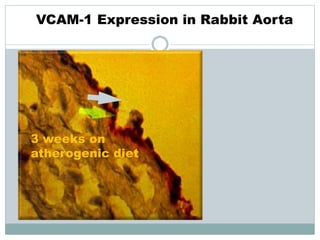
VCAM-1 Expression in Rabbit Aorta
3 weeks on
atherogenic diet
Monocyte Chemoattractant Protein 1
(MCP-1)
 A potent mononuclear cell chemo attractant
 Produced by endothelial and smooth muscle cells
 Localizes in human and experimental atheroma
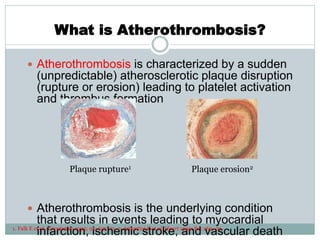
What is Atherothrombosis?
 Atherothrombosis is characterized by a sudden
(unpredictable) atherosclerotic plaque disruption
(rupture or erosion) leading to platelet activation
and thrombus formation
 Atherothrombosis is the underlying condition
that results in events leading to myocardial
infarction, ischemic stroke, and vascular death
Plaque rupture1 Plaque erosion2
1. Falk E et al. Circulation 1995; 92: 657–71. 2. Arbustini E et al. Heart 1999; 82: 269–72.
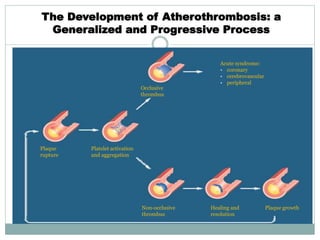
Plaque
rupture
Platelet activation
and aggregation
Non-occlusive
thrombus
Acute syndrome:
• coronary
• cerebrovascular
• peripheral
Occlusive
thrombus
Healing and
resolution
Plaque growth
The Development of Atherothrombosis: a
Generalized and Progressive Process
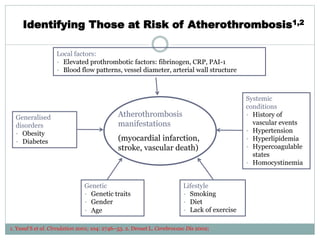
Identifying Those at Risk of Atherothrombosis1,2
1. Yusuf S et al. Circulation 2001; 104: 2746–53. 2. Drouet L. Cerebrovasc Dis 2002;
Lifestyle
• Smoking
• Diet
• Lack of exercise
Genetic
• Genetic traits
• Gender
• Age
Generalised
disorders
• Obesity
• Diabetes
Systemic
conditions
• History of
vascular events
• Hypertension
• Hyperlipidemia
• Hypercoagulable
states
• Homocystinemia
Local factors:
• Elevated prothrombotic factors: fibrinogen, CRP, PAI-1
• Blood flow patterns, vessel diameter, arterial wall structure
Atherothrombosis
manifestations
(myocardial infarction,
stroke, vascular death)
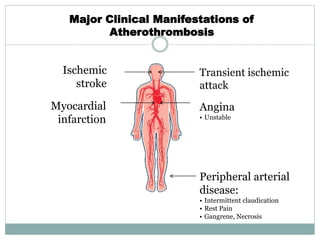
Major Clinical Manifestations of
Atherothrombosis
Transient ischemic
attack
Angina
• Unstable
Ischemic
stroke
Myocardial
infarction
Peripheral arterial
disease:
• Intermittent claudication
• Rest Pain
• Gangrene, Necrosis
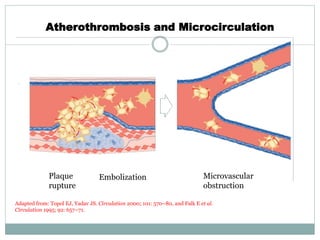
Atherothrombosis and Microcirculation
Adapted from: Topol EJ, Yadav JS. Circulation 2000; 101: 570–80, and Falk E et al.
Circulation 1995; 92: 657–71.
Plaque
rupture
Microvascular
obstruction
Embolization
PATHOPHYSIOLOGY
 Early prospective angiographic studies, such as the randomized CASS
(Coronary Artery Surgery Study) of medical therapy versus coronary
artery bypass graft surgery, seemed to support this hypothesis,
demonstrating that severely stenotic angiographic lesions were more
likely to result in future coronary occlusion and MI than milder stenosis.
 Recent Studies reported that the lesions most likely to cause future MI
arise from angiographically mild lesions.
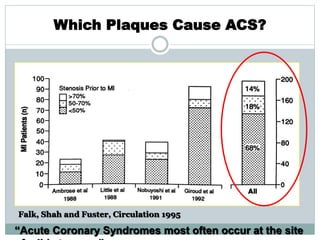
Which Plaques Cause ACS?
Falk, Shah and Fuster, Circulation 1995
“Acute Coronary Syndromes most often occur at the site
PROSPECT TRIAL
 In PROSPECT, 697 patients presenting with ACS underwent PCI
followed by quantitative angiography of each millimeter of the entire
coronary tree. In addition, the proximal 6 to 8 cm of all 3 major
coronary arteries were imaged using IVUS.
 By angiography, 1,814 untreated lesions (diameter stenosis of 30%)
were prospectively identified in the entire coronary tree, and 3,160
untreated lesions were identified by IVUS.
 Patients were followed prospectively to determine which patient and
lesion characteristics would correlate with future events.
 By 3 years, a new event had occurred in 20.4% of patients, nearly
equally divided between those caused by untreated nonculprit
lesions and those arising from the original ACS culprit lesions that
were previously treated by PCI.
 Most lesions causing nonculprit lesion events arose from
angiographically mild (50%) stenoses; the mean angiographic
diameter stenosis of the 106 nonculprit lesions subsequently
responsible for MACE increased from 32.3 at baseline to 65.4% at
follow-up), often with new plaque rupture and/or thrombus.
 Significant independent predictors of nonculprit lesion related MACE
were plaque burden >70%, presence of a TCFA by RF-IVUS and a
minimal lumen area 4.0 mm2. The presence of 2 or 3 of these 3
characteristics identified lesions with a 10% and 18% likelihood,
respectively, of an event arising from that site within 3 years.
 This prospective study therefore demonstrated that the plaques
likely to cause future coronary events are indeed typically severe,
either with a large plaque burden and/or a small minimal lumen
area.
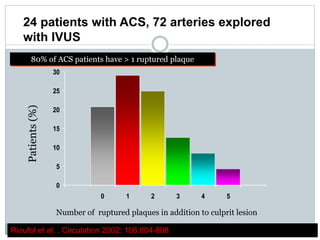
Rioufol et al. , Circulation 2002; 106:804-808
0
5
10
15
20
25
30
0 1 2 3 4 5
Number of ruptured plaques in addition to culprit lesion
Patients(%)
80% of ACS patients have > 1 ruptured plaque
24 patients with ACS, 72 arteries explored
with IVUS
Vulnerable plaque is a term that represents “the
susceptibility of a plaque to rupture.” Term coined by MULLER
et al.
Studies in patients who had died of cardiac causes, the
most common underlying plaque morphology was a ruptured
thin-cap fibroatheroma (TCFA), with superimposed
thrombosis.
The goal emerged to identify such vulnerable plaques in
stable patients, with the ultimate goal of preventing plaque
rupture, thereby averting myocardial infarction (MI) and
sudden cardiac death.
Thin cap fibroatheroma (TCFA)
 Retrospective pathologic studies of plaque rupture with thrombosis
suggest – most common type of vulnerable plaque is inflamed, thin-cap
fibroatheroma (TCFA). (Arbustini 1999) (Falk 1999) (Davies 2000)
(Virmani 2000) (Varmana 2002) (Ambrose 1991)
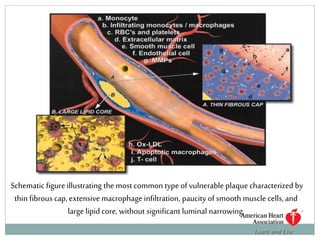
 The major components of such TCFA :
• A lipid-rich, atheromatous core
• A thin fibrous cap, with macrophage and lymphocyte infiltration and
decreased smooth muscle cell content
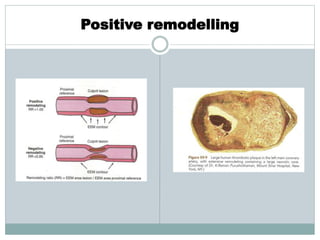
• Expansive remodelling
 The ability of imaging techniques to detect intact TCFA before rupture
depends on their ability to detect the typical morphological and
biological/functional characteristics of these lesions.
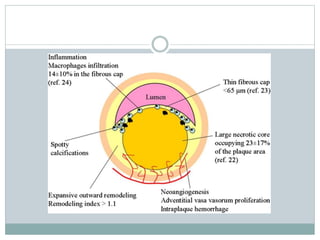
 TCFA contains a large necrotic core of lipid and cellular debris, covered
by a thin fibrous cap, usually 65 µm in thickness. The fibrous cap is
heavily infiltrated by inflammatory cells and macrophages, indicating
the important role of inflammation in plaque instability.
 Spotty calcifications are often present in the fibrous cap.
 Neovascularization of the arterial wall, caused by the proliferation of
adventitial vasa vasorum in response to hypoxia-induced thickening of
the arterial wall, may result in intraplaque hemorrhage.
 Expansive remodeling of the arterial wall occurs, presumably due to the
large plaque burden and limited room for inward growth.
 The free cholesterol content of necrotic cores in high-risk plaques is
markedly greater than in lower-risk plaques.
 Free cholesterol is prominently deposited by the extravasation of
erythrocytes from the intimal neovascularization; the new vessels are
leaky, and red blood cell membranes are rich in free cholesterol.
 The vulnerable plaque is typically proximal in location, except in the
right coronary artery, and more likely to occur near branch points
because its occurrence is directed by biomechanical flow disturbances.
Vulnerable plaque:
non obstructive, silent coronary lesion that
suddenly becomes obstructive and
symptomatic
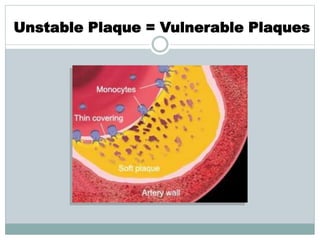
Unstable Plaque = Vulnerable Plaques
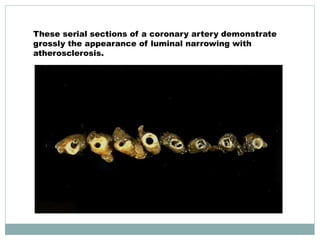
These serial sections of a coronary artery demonstrate
grossly the appearance of luminal narrowing with
atherosclerosis.
Schematic figure illustrating the most common type of vulnerable plaque characterizedby
thin fibrous cap, extensive macrophage infiltration, paucity of smooth muscle cells, and
large lipid core, without significant luminal narrowing.
Culprit plaque
 Plaque responsible for coronary occlusion and death, regardless of its
histopathologic features
Pathologies of “Culprit” CoronaryLesions:
 Ruptured plaques (70%)
 Stenotic (20%)
 Nonstenotic (50%)
 Nonruptured plaques (30%)
 Erosion
 Others/Unknown
Vulnerableplaque – future culprit plaque.
Positive remodelling
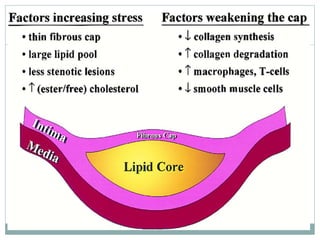
Figure 3. Illustration emphasizes the importance of collagen synthesis and breakdown in the
maintenance of the integrity of the fibrous cap.
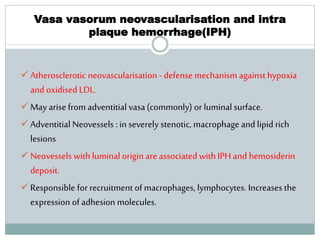
Vasa vasorum neovascularisation and intra
plaque hemorrhage(IPH)
 Atherosclerotic neovascularisation -defense mechanism against hypoxia
and oxidised LDL.
 May arise from adventitial vasa(commonly) or luminal surface.
 Adventitial Neovessels : in severely stenotic, macrophage and lipid rich
lesions
 Neovessels with luminal origin are associated with IPH and hemosiderin
deposit.
 Responsible for recruitment of macrophages, lymphocytes. Increases the
expression of adhesion molecules.
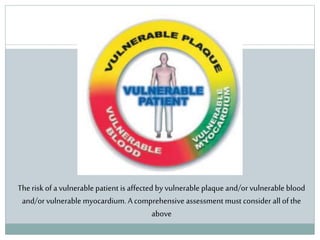
Therisk of a vulnerable patient is affected by vulnerable plaque and/or vulnerable blood
and/or vulnerable myocardium. A comprehensive assessment must consider all of the
above
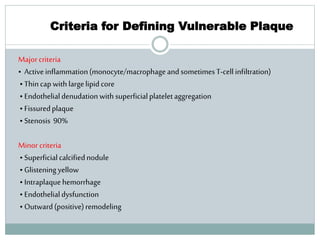
Criteria for Defining Vulnerable Plaque
Majorcriteria
• Activeinflammation(monocyte/macrophageand sometimesT-cell infiltration)
• Thincap with largelipid core
• Endothelialdenudation with superficialplateletaggregation
• Fissuredplaque
• Stenosis 90%
Minor criteria
• Superficialcalcifiednodule
• Glisteningyellow
• Intraplaquehemorrhage
• Endothelialdysfunction
• Outward(positive)remodeling
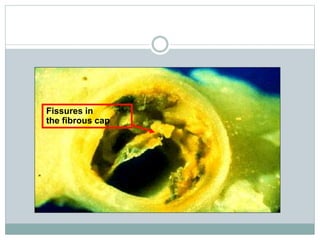
Fissures in
the fibrous cap
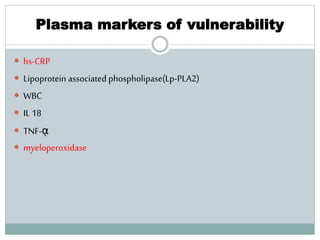
Plasma markers of vulnerability
 hs-CRP
 Lipoprotein associated phospholipase(Lp-PLA2)
 WBC
 IL 18
 TNF-ᾳ
 myeloperoxidase
Some Techniques for detection of Plaques
 Angioscopy
 Angiogram
 Intravascular Ultrasound (IVUS)
 Intravascular Thermography
 Intravascular Optical Coherence Tomography (OCT)
 Intravascular Elastography
 Intravascular MRI
 Intravascular Nuclear Imaging
 Intravascular Electrical Impedance Imaging
 Intravascular (Photonic) Spectroscopy
 Intravascular Tissue Doppler
 Electron Beam Tomography (EBT)
 Multi-slice Fast Spiral Computed Tomography
46
Main factors for evaluation of techniques
 Safety
 Invasive or non-invasive
 Kind of information that gives
 Resolution
 Cost
 Acquisition time
 Localization
 Simplicity
 Easinessto apply
47
Angioscopy
Based on fiber-optic transmission of visible light .
-Advantage:
-anatomic
-simple
-Disadvantage:
-subjective
-just surface of plaque is visualized
-limited spatialresolution
-needs a proximal occluding balloon
48
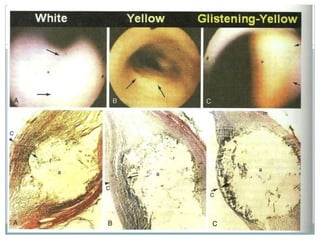
 Permits direct visualization of plaque surface.
 Plaque colour is graded as:
 White-thickcaps(400 mic)
 Lightyellow
 Yellow :thinnercaps(80 mics)
 Glistening yellow: thinnestcaps(10-20mics)
 Glistening yellow plaques are strong predictors of TCFAs and ACS (68% -
Uchida et al)
 Requires removal of blood
Angiogram
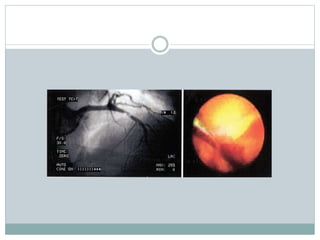
 Coronary angiogram delineate the coronary lumen but
does not provide any information about the vessel
wall.
 The finding of multiple complex lesions in an
angiogram- sign of an active systemic inflammatory
process, may produce numerous vulnerable plaques in
the future.
 Complex lesions have some peculiar angiographic
features: intra-luminal filling defects (consisting with
thrombus), presence of contrast and hazy contour
beyond the vessel lumen (consisting with plaque
ulceration), irregular margins and overhanging edges
(consisting with plaque irregularity and, possibly,
IVUS
Provides real-time , cross-sectional and high-resolution
images with 3-D reconstruction capabilities
-Advantages:
- Shows morphology of plaque, Plaque burden, calcification
- Differs between stable and unstable plaques
-Disadvantages:
- Doesn’t give information about inflammation
- Low spatial resolution ( ~ 200 µm )
- Deeper plaque is not imaged
53
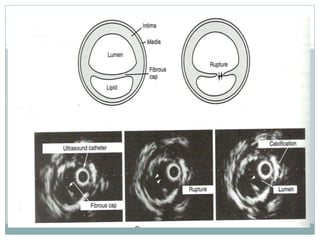
IVUS to identify TCFAs
 Overestimates cap thicknessdue to poor axial resolution.
 Necroticcore: sensitivity of 46% and specificity of 97%. Looks as
a echolucentarea.
 Plaqueinflammation:detectionof macrophages not possible
due to poor resolution.
 Positiveremodelling: gold standard method.
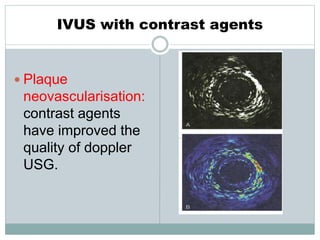
IVUS with contrast agents
 Plaque
neovascularisation:
contrast agents
have improved the
quality of doppler
USG.
IVUS – radiofrequency analysis (RF)
 To overcome the limitationsof grey scale IVUS
 TYPES: 1.) Virtual histology (VH)
2.) Integratedbackscatter(IB)- IVUS
3.) Wavelet analysis
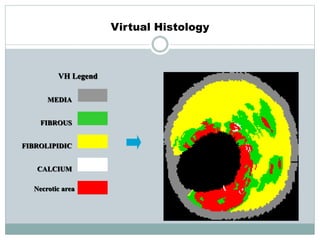
IVUS - virtual histology
 To improve tissue characterization
 The frequency spectrum is calculated in the region of interest and averaged
over the width of the region. The results of this analysis are displayed as a
color-coded map superimposed over conventional gray-scale IVUS images
Virtual Histology
FIBROUS
FIBROLIPIDIC
CALCIUM
Necrotic area
MEDIA
VH Legend
M-OA
 Recently, the PROSPECT(Providing Regional Observations to Study
Predictors of Events in the Coronary Tree) study has provided important data
about the accuracy of VH.
 The presence of TCFAs assessed by VH correlated well with subsequent risk
of major adverse cardiacevents . But it was found to have low specificity.
Intravascular Thermography
Twokinds:
contact-based(thermistor)and non-contactbased (side-viewing
based(side-viewinginfraredfiber-optic)
- Advantages:
- Simplicity in theory
- Gives information about inflammation
- Disadvantages:
-Plaque temperature is affected by blood flow
-Needs a proximal occluding balloon to provide blood - free field
-Does not give information about eroded but non-inflamed plaques
61
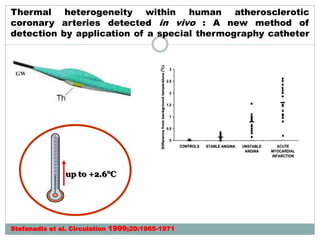
Thermal heterogeneity within human atherosclerotic
coronary arteries detected in vivo : A new method of
detection by application of a special thermography catheter
Stefanadis et al. Circulation 1999;20:1965-1971
up to +2.6°C
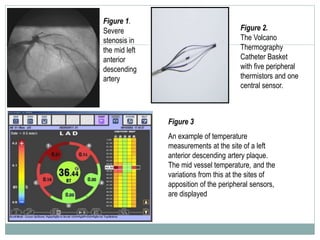
Figure 1.
Severe
stenosis in
the mid left
anterior
descending
artery
Figure 2.
The Volcano
Thermography
Catheter Basket
with five peripheral
thermistors and one
central sensor.
Figure 3
An example of temperature
measurements at the site of a left
anterior descending artery plaque.
The mid vessel temperature, and the
variations from this at the sites of
apposition of the peripheral sensors,
are displayed
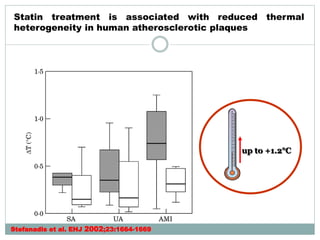
Stefanadis et al. EHJ 2002;23:1664-1669
Statin treatment is associated with reduced thermal
heterogeneity in human atherosclerotic plaques
up to +1.2°C
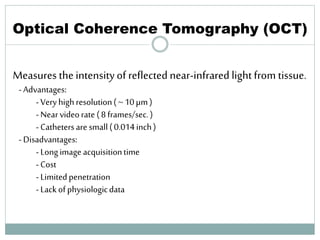
Optical Coherence Tomography (OCT)
Measures theintensityof reflected near-infrared light from tissue.
-Advantages:
-Veryhighresolution(~ 10µm)
-Nearvideorate (8frames/sec.)
-Cathetersare small(0.014inch)
-Disadvantages:
-Longimage acquisitiontime
-Cost
-Limitedpenetration
-Lackofphysiologicdata
65
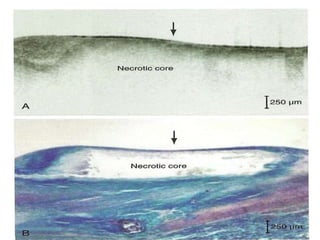
 Fibrous cap thickness: gold standard method, also the only method for
detecting erosions.
 Necrotic core area: moderately correlates with IVUS-VH. Needs further
validation
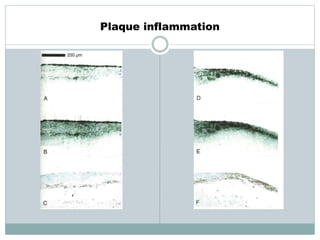
 Plaque inflammation: allows proper identification of macrophages in
plaques.(Tearney et al.)
 Positive remodelling: limited ability
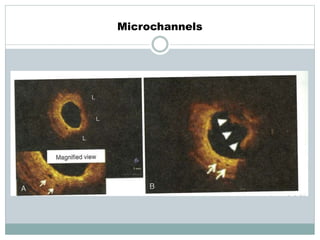
 Neovascularisation: limited studies. Recently Kitabataet al proposed
that ‘microchannels’ may represent neovessels.
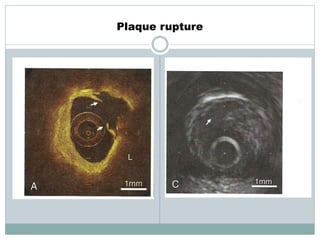
Plaque rupture
Plaque inflammation
Microchannels
Intravascular Ultrasound Elastography
Assesses the elasticitylevel of tissue based on cross-correlating the IVUS
images acquired at different intra-arterialpressures applied to the arterial wall
-Advantages:
- little cost added to IVUS
- Provides novel information, Showing stiffness
-Disadvantages:
- Lackof chemical inferences
71
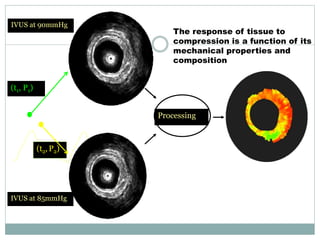
Processing
IVUS at 85mmHg
IVUS at 90mmHg
(t1, P1)
(t2, P2)
The response of tissue to
compression is a function of its
mechanical properties and
composition
 Green colour: low strain (hard, stiff)
 Yellow colour: high strain (soft, deformable)
 Rotterdam classification(ROC):
 low strain spots (ROC I: 0.0–<0.6%)
 moderate strain spots (ROC II: 0.6–<0.9%)
 medium strain spots (ROC III: 0.9– <1.2%)
 high strain spots (ROC IV: >1.2%).
 High sensitivity and specificity of ROC III/IV to detect VP
74
Intravascular MRI
An internal receiver coil is implanted at the tip of a catheter
- Advantages:
- high resolution (~ 50 µm)
- lack of ionizing radiation
- Disadvantages:
- Long image acquisition time
- High cost
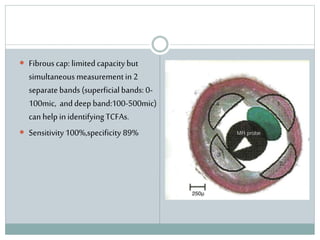
 Fibrouscap: limitedcapacity but
simultaneous measurementin 2
separate bands (superficialbands: 0-
100mic, anddeep band:100-500mic)
can help inidentifying TCFAs.
 Sensitivity100%,specificity 89%
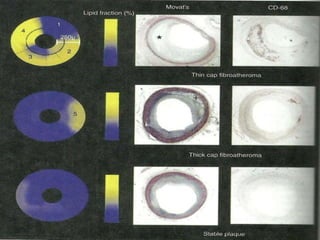
 Water diffusion coefficient is less in lipid rich than in fibrous plaques. Exvivo
studies have found a sensitivity of 95 % andspecificity of 100%.
 Contrast agents for target specific MRI is under study: can determine the
components of a plaque, degree of inflammation, neoangiogenesis.
 Cannot quantify vessel remodelling.
78
Electron Beam Tomography (EBT)
Calcium imaging:
- Advantages:
- Quick and easy
- Provides information about total burden of atherosclerosis
- Disadvantages:
-Cannot distinguish unstable from stable plaque
- Not accurate
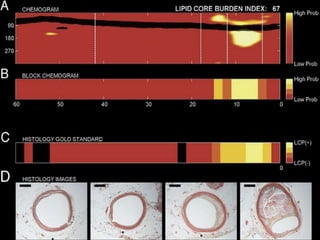
Spectroscopy
 Near infrared spectroscopy (NIR) is based on differential absorbance of light
by organic molecule
 A colour coded chemogram is created.
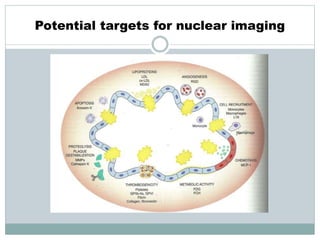
Potential targets for nuclear imaging
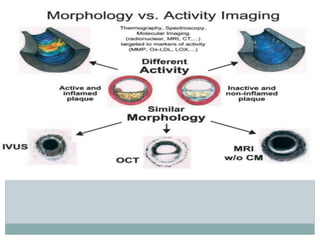
Plaques with nearly similar morphology in terms of lipid core and fibrous
cap (middle panel) may look similar with diagnostic imaging aimed at
morphology only (bottom panel).
 However, they might look very different using diagnostic methods
capable of detecting activity and physiology of the plaques. The top left
plaque is hot (as evidenced in a thermography image), whereas the top
right plaque is inactive anddetected relatively asa cool plaque.
Good Idea !
84
Using Combination of
Morphological and Functional imaging
e.g. : IVUS + Doppler velocity measurements
Therapy
 Systemic therapy: intensive statin therapy has demonstrated significant
reduction in coronary events in patients of stable angina (TNTand IDEAL
trials) and in ACS (PROVE-ITTIMI22 trial)
 ASTEROIDtrial shows absolute reduction in atheroma volume with
rosuvastatin
 Fibrates have also demontrated plaque stabilisation
Proposed Mechanisms of Event Reduction by
Lipid-Lowering Therapy
Improved endothelium-dependent vasodilation
Stabilization of atherosclerotic lesions
 especially nonobstructive, vulnerable
plaques
Reduction in inflammatory stimuli
 lipoproteins and modified lipoproteins
Prevention, slowed progression, or regression of
atherosclerotic lesions
 Despite improvement in outcome of VP with systemic therapy, patient still
comes back withrecurrent events (22% recurrent event rate within2 years)
and therefore prove to be resistant to systemic therapy, as shown in PROVE
IT trial.
 Need for newer therapies as coadjuvants.
 Research work is going on regarding Newer potential targets for systemic
therapy like:
 Lp-PLA2
 VCAM
 Reverse cholesterol transport system
Local Therapy
 Defined as intravascular treatment of VPs with pharmacologic agents and
physico-chemical therapies
 Photo dynamic therapy (Waksmanet al in rabbits)
 Endoluminal phototherapy
 Cryotherapy
 Lack of validation in RCTs
Role of PTCA and stents
 Plaque sealing (Meier et al)for vulnerable intermediate stenosis
 Stenting for non flow limiting intermediate coronary artery stenosis was
compared with medical therapy in DEFER trail -no significant difference.
 In animal models use of DES in VPs showed encouraging results but needs to
be proven in RCT
Conclusion
 Currently there is little evidence that the presence of vulnerable plaques are
associated with an increased risk of subsequent acute ischemic events.
 Diagnostic and predictive accuracyof imaging methods need to be
evaluated in large groups of patients, in multicenter RCTs
 We also need to learn which of the different morphological, molecular,
biological (temperature, glucose metabolism), or mechanical features of
vulnerable plaques are clinicallyrelevant to the outcome of patients. In this
regard, combined imaging will be necessary.
 Studies willalso be needed to determine how the information provided by
plaque imaging can be used.
 The question of how often testing must be repeated needs to be addressed
 Many of the trials required to test the hypothesis that diagnosis and therapy
of vulnerability are beneficial are planned or in progress.
THANK YOU

Vulnerable plaque

  • 1.
    DR.AMIT GULATI FROM VULNERABLEPLAQUE TO VULNERABLE PATIENT
  • 2.
  • 3.
    3 Plaque is acombination of cholesterol, other fatty materials, calcium, and blood components that stick to the artery wall lining. A hard shell or scar covers the plaque.
  • 4.
     Research hasprovided valuable insight into biology of atherosclerosis and, in particular, plaque rupture. This research is driving a re-evaluation of the approach to investigation and management of the patient with atherosclerosis.  Endothelial cell dysfunction is the earliest detectable physiologic manifestation of atherosclerosis . The major atherogenic risk factors, such as smoking, high low-density lipoprotein (LDL) levels, hypertension, and diabetes, have all been shown to impair endothelial function.  Normal endothelium has antithrombotic, antiinflammatory, and vasomodulatory functions through secretion of substances, such as prostacyclin and nitric oxide (NO), which inhibit platelet activation and promote vasodilatation. NO inhibits expression of the adhesion molecules responsible for inflammatory cell recruitment. Both the barrier function and secretory capacity of the endothelium are disrupted in atherosclerosis.  This manifests as an increase in permeability to lipids and inflammatory cells (mainly monocytes and T lymphocytes) derived from the blood.
  • 5.
     The combinationof endothelial dysfunction and high circulating levels of atherogenic lipoproteins leads to the accumulation of lipid-laden, monocyte- derived foam cells in the subendothelial layer, forming the early atherosclerotic lesion.  Accumulation of foam cells and their subsequent death produces an acellular core of cholesterol esters and cell debris.  Vascular smooth muscle cells (VSMCs) migrate from the medial layer of the vessel and synthesize extracellular matrix components, such as elastin and collagen, to form the fibrous cap.  The fibrous cap contains inflammatory cells, predominantly macrophages, but also some T lymphocytes and mast cells.
  • 6.
     Intimal thickeningis the first and most common clinically detectable manifestation of atherosclerosis in humans.  Unique to these lesions is the presence of lipid pools located in the deeper intima in areas rich in proteoglycans with speckled calcification and a generalized loss of smooth muscle cells.  The loss of these cells in lipid pools occurs from cell death, including apoptosis.  Macrophage infiltration is variable and mostly confined to the luminal aspect of the plaque outside the lipid pool.  The development of advanced atheromatous plaques with necrotic cores is believed to occur due to invasion of lipid pools by macrophages.
  • 7.
  • 9.
    Vascular Cell AdhesionMolecule 1 (VCAM-1)  Binds monocytes and lymphocytes - Cells found in atheroma  Expressed by endothelium over nascent fatty streaks  Expressed by microvessels of the mature atheroma
  • 10.
    VCAM-1 Expression inRabbit Aorta 3 weeks on atherogenic diet
  • 11.
    Monocyte Chemoattractant Protein1 (MCP-1)  A potent mononuclear cell chemo attractant  Produced by endothelial and smooth muscle cells  Localizes in human and experimental atheroma
  • 13.
    What is Atherothrombosis? Atherothrombosis is characterized by a sudden (unpredictable) atherosclerotic plaque disruption (rupture or erosion) leading to platelet activation and thrombus formation  Atherothrombosis is the underlying condition that results in events leading to myocardial infarction, ischemic stroke, and vascular death Plaque rupture1 Plaque erosion2 1. Falk E et al. Circulation 1995; 92: 657–71. 2. Arbustini E et al. Heart 1999; 82: 269–72.
  • 14.
    Plaque rupture Platelet activation and aggregation Non-occlusive thrombus Acutesyndrome: • coronary • cerebrovascular • peripheral Occlusive thrombus Healing and resolution Plaque growth The Development of Atherothrombosis: a Generalized and Progressive Process
  • 15.
    Identifying Those atRisk of Atherothrombosis1,2 1. Yusuf S et al. Circulation 2001; 104: 2746–53. 2. Drouet L. Cerebrovasc Dis 2002; Lifestyle • Smoking • Diet • Lack of exercise Genetic • Genetic traits • Gender • Age Generalised disorders • Obesity • Diabetes Systemic conditions • History of vascular events • Hypertension • Hyperlipidemia • Hypercoagulable states • Homocystinemia Local factors: • Elevated prothrombotic factors: fibrinogen, CRP, PAI-1 • Blood flow patterns, vessel diameter, arterial wall structure Atherothrombosis manifestations (myocardial infarction, stroke, vascular death)
  • 18.
    Major Clinical Manifestationsof Atherothrombosis Transient ischemic attack Angina • Unstable Ischemic stroke Myocardial infarction Peripheral arterial disease: • Intermittent claudication • Rest Pain • Gangrene, Necrosis
  • 19.
    Atherothrombosis and Microcirculation Adaptedfrom: Topol EJ, Yadav JS. Circulation 2000; 101: 570–80, and Falk E et al. Circulation 1995; 92: 657–71. Plaque rupture Microvascular obstruction Embolization
  • 20.
  • 21.
     Early prospectiveangiographic studies, such as the randomized CASS (Coronary Artery Surgery Study) of medical therapy versus coronary artery bypass graft surgery, seemed to support this hypothesis, demonstrating that severely stenotic angiographic lesions were more likely to result in future coronary occlusion and MI than milder stenosis.  Recent Studies reported that the lesions most likely to cause future MI arise from angiographically mild lesions.
  • 22.
    Which Plaques CauseACS? Falk, Shah and Fuster, Circulation 1995 “Acute Coronary Syndromes most often occur at the site
  • 23.
    PROSPECT TRIAL  InPROSPECT, 697 patients presenting with ACS underwent PCI followed by quantitative angiography of each millimeter of the entire coronary tree. In addition, the proximal 6 to 8 cm of all 3 major coronary arteries were imaged using IVUS.  By angiography, 1,814 untreated lesions (diameter stenosis of 30%) were prospectively identified in the entire coronary tree, and 3,160 untreated lesions were identified by IVUS.  Patients were followed prospectively to determine which patient and lesion characteristics would correlate with future events.  By 3 years, a new event had occurred in 20.4% of patients, nearly equally divided between those caused by untreated nonculprit lesions and those arising from the original ACS culprit lesions that were previously treated by PCI.
  • 24.
     Most lesionscausing nonculprit lesion events arose from angiographically mild (50%) stenoses; the mean angiographic diameter stenosis of the 106 nonculprit lesions subsequently responsible for MACE increased from 32.3 at baseline to 65.4% at follow-up), often with new plaque rupture and/or thrombus.  Significant independent predictors of nonculprit lesion related MACE were plaque burden >70%, presence of a TCFA by RF-IVUS and a minimal lumen area 4.0 mm2. The presence of 2 or 3 of these 3 characteristics identified lesions with a 10% and 18% likelihood, respectively, of an event arising from that site within 3 years.  This prospective study therefore demonstrated that the plaques likely to cause future coronary events are indeed typically severe, either with a large plaque burden and/or a small minimal lumen area.
  • 25.
    Rioufol et al., Circulation 2002; 106:804-808 0 5 10 15 20 25 30 0 1 2 3 4 5 Number of ruptured plaques in addition to culprit lesion Patients(%) 80% of ACS patients have > 1 ruptured plaque 24 patients with ACS, 72 arteries explored with IVUS
  • 26.
    Vulnerable plaque isa term that represents “the susceptibility of a plaque to rupture.” Term coined by MULLER et al. Studies in patients who had died of cardiac causes, the most common underlying plaque morphology was a ruptured thin-cap fibroatheroma (TCFA), with superimposed thrombosis. The goal emerged to identify such vulnerable plaques in stable patients, with the ultimate goal of preventing plaque rupture, thereby averting myocardial infarction (MI) and sudden cardiac death.
  • 27.
    Thin cap fibroatheroma(TCFA)  Retrospective pathologic studies of plaque rupture with thrombosis suggest – most common type of vulnerable plaque is inflamed, thin-cap fibroatheroma (TCFA). (Arbustini 1999) (Falk 1999) (Davies 2000) (Virmani 2000) (Varmana 2002) (Ambrose 1991)  The major components of such TCFA : • A lipid-rich, atheromatous core • A thin fibrous cap, with macrophage and lymphocyte infiltration and decreased smooth muscle cell content • Expansive remodelling
  • 28.
     The abilityof imaging techniques to detect intact TCFA before rupture depends on their ability to detect the typical morphological and biological/functional characteristics of these lesions.  TCFA contains a large necrotic core of lipid and cellular debris, covered by a thin fibrous cap, usually 65 µm in thickness. The fibrous cap is heavily infiltrated by inflammatory cells and macrophages, indicating the important role of inflammation in plaque instability.  Spotty calcifications are often present in the fibrous cap.  Neovascularization of the arterial wall, caused by the proliferation of adventitial vasa vasorum in response to hypoxia-induced thickening of the arterial wall, may result in intraplaque hemorrhage.
  • 29.
     Expansive remodelingof the arterial wall occurs, presumably due to the large plaque burden and limited room for inward growth.  The free cholesterol content of necrotic cores in high-risk plaques is markedly greater than in lower-risk plaques.  Free cholesterol is prominently deposited by the extravasation of erythrocytes from the intimal neovascularization; the new vessels are leaky, and red blood cell membranes are rich in free cholesterol.  The vulnerable plaque is typically proximal in location, except in the right coronary artery, and more likely to occur near branch points because its occurrence is directed by biomechanical flow disturbances.
  • 31.
    Vulnerable plaque: non obstructive,silent coronary lesion that suddenly becomes obstructive and symptomatic
  • 32.
    Unstable Plaque =Vulnerable Plaques
  • 34.
    These serial sectionsof a coronary artery demonstrate grossly the appearance of luminal narrowing with atherosclerosis.
  • 35.
    Schematic figure illustratingthe most common type of vulnerable plaque characterizedby thin fibrous cap, extensive macrophage infiltration, paucity of smooth muscle cells, and large lipid core, without significant luminal narrowing.
  • 36.
    Culprit plaque  Plaqueresponsible for coronary occlusion and death, regardless of its histopathologic features Pathologies of “Culprit” CoronaryLesions:  Ruptured plaques (70%)  Stenotic (20%)  Nonstenotic (50%)  Nonruptured plaques (30%)  Erosion  Others/Unknown Vulnerableplaque – future culprit plaque.
  • 37.
  • 39.
    Figure 3. Illustrationemphasizes the importance of collagen synthesis and breakdown in the maintenance of the integrity of the fibrous cap.
  • 40.
    Vasa vasorum neovascularisationand intra plaque hemorrhage(IPH)  Atherosclerotic neovascularisation -defense mechanism against hypoxia and oxidised LDL.  May arise from adventitial vasa(commonly) or luminal surface.  Adventitial Neovessels : in severely stenotic, macrophage and lipid rich lesions  Neovessels with luminal origin are associated with IPH and hemosiderin deposit.  Responsible for recruitment of macrophages, lymphocytes. Increases the expression of adhesion molecules.
  • 41.
    Therisk of avulnerable patient is affected by vulnerable plaque and/or vulnerable blood and/or vulnerable myocardium. A comprehensive assessment must consider all of the above
  • 42.
    Criteria for DefiningVulnerable Plaque Majorcriteria • Activeinflammation(monocyte/macrophageand sometimesT-cell infiltration) • Thincap with largelipid core • Endothelialdenudation with superficialplateletaggregation • Fissuredplaque • Stenosis 90% Minor criteria • Superficialcalcifiednodule • Glisteningyellow • Intraplaquehemorrhage • Endothelialdysfunction • Outward(positive)remodeling
  • 43.
  • 44.
    Plasma markers ofvulnerability  hs-CRP  Lipoprotein associated phospholipase(Lp-PLA2)  WBC  IL 18  TNF-ᾳ  myeloperoxidase
  • 46.
    Some Techniques fordetection of Plaques  Angioscopy  Angiogram  Intravascular Ultrasound (IVUS)  Intravascular Thermography  Intravascular Optical Coherence Tomography (OCT)  Intravascular Elastography  Intravascular MRI  Intravascular Nuclear Imaging  Intravascular Electrical Impedance Imaging  Intravascular (Photonic) Spectroscopy  Intravascular Tissue Doppler  Electron Beam Tomography (EBT)  Multi-slice Fast Spiral Computed Tomography 46
  • 47.
    Main factors forevaluation of techniques  Safety  Invasive or non-invasive  Kind of information that gives  Resolution  Cost  Acquisition time  Localization  Simplicity  Easinessto apply 47
  • 48.
    Angioscopy Based on fiber-optictransmission of visible light . -Advantage: -anatomic -simple -Disadvantage: -subjective -just surface of plaque is visualized -limited spatialresolution -needs a proximal occluding balloon 48
  • 49.
     Permits directvisualization of plaque surface.  Plaque colour is graded as:  White-thickcaps(400 mic)  Lightyellow  Yellow :thinnercaps(80 mics)  Glistening yellow: thinnestcaps(10-20mics)  Glistening yellow plaques are strong predictors of TCFAs and ACS (68% - Uchida et al)  Requires removal of blood
  • 51.
    Angiogram  Coronary angiogramdelineate the coronary lumen but does not provide any information about the vessel wall.  The finding of multiple complex lesions in an angiogram- sign of an active systemic inflammatory process, may produce numerous vulnerable plaques in the future.  Complex lesions have some peculiar angiographic features: intra-luminal filling defects (consisting with thrombus), presence of contrast and hazy contour beyond the vessel lumen (consisting with plaque ulceration), irregular margins and overhanging edges (consisting with plaque irregularity and, possibly,
  • 53.
    IVUS Provides real-time ,cross-sectional and high-resolution images with 3-D reconstruction capabilities -Advantages: - Shows morphology of plaque, Plaque burden, calcification - Differs between stable and unstable plaques -Disadvantages: - Doesn’t give information about inflammation - Low spatial resolution ( ~ 200 µm ) - Deeper plaque is not imaged 53
  • 54.
    IVUS to identifyTCFAs  Overestimates cap thicknessdue to poor axial resolution.  Necroticcore: sensitivity of 46% and specificity of 97%. Looks as a echolucentarea.  Plaqueinflammation:detectionof macrophages not possible due to poor resolution.  Positiveremodelling: gold standard method.
  • 56.
    IVUS with contrastagents  Plaque neovascularisation: contrast agents have improved the quality of doppler USG.
  • 57.
    IVUS – radiofrequencyanalysis (RF)  To overcome the limitationsof grey scale IVUS  TYPES: 1.) Virtual histology (VH) 2.) Integratedbackscatter(IB)- IVUS 3.) Wavelet analysis
  • 58.
    IVUS - virtualhistology  To improve tissue characterization  The frequency spectrum is calculated in the region of interest and averaged over the width of the region. The results of this analysis are displayed as a color-coded map superimposed over conventional gray-scale IVUS images
  • 59.
  • 60.
     Recently, thePROSPECT(Providing Regional Observations to Study Predictors of Events in the Coronary Tree) study has provided important data about the accuracy of VH.  The presence of TCFAs assessed by VH correlated well with subsequent risk of major adverse cardiacevents . But it was found to have low specificity.
  • 61.
    Intravascular Thermography Twokinds: contact-based(thermistor)and non-contactbased(side-viewing based(side-viewinginfraredfiber-optic) - Advantages: - Simplicity in theory - Gives information about inflammation - Disadvantages: -Plaque temperature is affected by blood flow -Needs a proximal occluding balloon to provide blood - free field -Does not give information about eroded but non-inflamed plaques 61
  • 62.
    Thermal heterogeneity withinhuman atherosclerotic coronary arteries detected in vivo : A new method of detection by application of a special thermography catheter Stefanadis et al. Circulation 1999;20:1965-1971 up to +2.6°C
  • 63.
    Figure 1. Severe stenosis in themid left anterior descending artery Figure 2. The Volcano Thermography Catheter Basket with five peripheral thermistors and one central sensor. Figure 3 An example of temperature measurements at the site of a left anterior descending artery plaque. The mid vessel temperature, and the variations from this at the sites of apposition of the peripheral sensors, are displayed
  • 64.
    Stefanadis et al.EHJ 2002;23:1664-1669 Statin treatment is associated with reduced thermal heterogeneity in human atherosclerotic plaques up to +1.2°C
  • 65.
    Optical Coherence Tomography(OCT) Measures theintensityof reflected near-infrared light from tissue. -Advantages: -Veryhighresolution(~ 10µm) -Nearvideorate (8frames/sec.) -Cathetersare small(0.014inch) -Disadvantages: -Longimage acquisitiontime -Cost -Limitedpenetration -Lackofphysiologicdata 65
  • 66.
     Fibrous capthickness: gold standard method, also the only method for detecting erosions.  Necrotic core area: moderately correlates with IVUS-VH. Needs further validation  Plaque inflammation: allows proper identification of macrophages in plaques.(Tearney et al.)  Positive remodelling: limited ability  Neovascularisation: limited studies. Recently Kitabataet al proposed that ‘microchannels’ may represent neovessels.
  • 68.
  • 69.
  • 70.
  • 71.
    Intravascular Ultrasound Elastography Assessesthe elasticitylevel of tissue based on cross-correlating the IVUS images acquired at different intra-arterialpressures applied to the arterial wall -Advantages: - little cost added to IVUS - Provides novel information, Showing stiffness -Disadvantages: - Lackof chemical inferences 71
  • 72.
    Processing IVUS at 85mmHg IVUSat 90mmHg (t1, P1) (t2, P2) The response of tissue to compression is a function of its mechanical properties and composition
  • 73.
     Green colour:low strain (hard, stiff)  Yellow colour: high strain (soft, deformable)  Rotterdam classification(ROC):  low strain spots (ROC I: 0.0–<0.6%)  moderate strain spots (ROC II: 0.6–<0.9%)  medium strain spots (ROC III: 0.9– <1.2%)  high strain spots (ROC IV: >1.2%).  High sensitivity and specificity of ROC III/IV to detect VP
  • 74.
    74 Intravascular MRI An internalreceiver coil is implanted at the tip of a catheter - Advantages: - high resolution (~ 50 µm) - lack of ionizing radiation - Disadvantages: - Long image acquisition time - High cost
  • 75.
     Fibrouscap: limitedcapacitybut simultaneous measurementin 2 separate bands (superficialbands: 0- 100mic, anddeep band:100-500mic) can help inidentifying TCFAs.  Sensitivity100%,specificity 89%
  • 77.
     Water diffusioncoefficient is less in lipid rich than in fibrous plaques. Exvivo studies have found a sensitivity of 95 % andspecificity of 100%.  Contrast agents for target specific MRI is under study: can determine the components of a plaque, degree of inflammation, neoangiogenesis.  Cannot quantify vessel remodelling.
  • 78.
    78 Electron Beam Tomography(EBT) Calcium imaging: - Advantages: - Quick and easy - Provides information about total burden of atherosclerosis - Disadvantages: -Cannot distinguish unstable from stable plaque - Not accurate
  • 79.
    Spectroscopy  Near infraredspectroscopy (NIR) is based on differential absorbance of light by organic molecule  A colour coded chemogram is created.
  • 81.
    Potential targets fornuclear imaging
  • 82.
    Plaques with nearlysimilar morphology in terms of lipid core and fibrous cap (middle panel) may look similar with diagnostic imaging aimed at morphology only (bottom panel).  However, they might look very different using diagnostic methods capable of detecting activity and physiology of the plaques. The top left plaque is hot (as evidenced in a thermography image), whereas the top right plaque is inactive anddetected relatively asa cool plaque.
  • 84.
    Good Idea ! 84 UsingCombination of Morphological and Functional imaging e.g. : IVUS + Doppler velocity measurements
  • 85.
    Therapy  Systemic therapy:intensive statin therapy has demonstrated significant reduction in coronary events in patients of stable angina (TNTand IDEAL trials) and in ACS (PROVE-ITTIMI22 trial)  ASTEROIDtrial shows absolute reduction in atheroma volume with rosuvastatin  Fibrates have also demontrated plaque stabilisation
  • 86.
    Proposed Mechanisms ofEvent Reduction by Lipid-Lowering Therapy Improved endothelium-dependent vasodilation Stabilization of atherosclerotic lesions  especially nonobstructive, vulnerable plaques Reduction in inflammatory stimuli  lipoproteins and modified lipoproteins Prevention, slowed progression, or regression of atherosclerotic lesions
  • 87.
     Despite improvementin outcome of VP with systemic therapy, patient still comes back withrecurrent events (22% recurrent event rate within2 years) and therefore prove to be resistant to systemic therapy, as shown in PROVE IT trial.  Need for newer therapies as coadjuvants.
  • 88.
     Research workis going on regarding Newer potential targets for systemic therapy like:  Lp-PLA2  VCAM  Reverse cholesterol transport system
  • 89.
    Local Therapy  Definedas intravascular treatment of VPs with pharmacologic agents and physico-chemical therapies  Photo dynamic therapy (Waksmanet al in rabbits)  Endoluminal phototherapy  Cryotherapy  Lack of validation in RCTs
  • 90.
    Role of PTCAand stents  Plaque sealing (Meier et al)for vulnerable intermediate stenosis  Stenting for non flow limiting intermediate coronary artery stenosis was compared with medical therapy in DEFER trail -no significant difference.  In animal models use of DES in VPs showed encouraging results but needs to be proven in RCT
  • 91.
    Conclusion  Currently thereis little evidence that the presence of vulnerable plaques are associated with an increased risk of subsequent acute ischemic events.  Diagnostic and predictive accuracyof imaging methods need to be evaluated in large groups of patients, in multicenter RCTs
  • 92.
     We alsoneed to learn which of the different morphological, molecular, biological (temperature, glucose metabolism), or mechanical features of vulnerable plaques are clinicallyrelevant to the outcome of patients. In this regard, combined imaging will be necessary.  Studies willalso be needed to determine how the information provided by plaque imaging can be used.
  • 93.
     The questionof how often testing must be repeated needs to be addressed  Many of the trials required to test the hypothesis that diagnosis and therapy of vulnerability are beneficial are planned or in progress.
  • 94.