• word or group of words used to give
  particular emphasis to an idea or
  sentiment
• Help explain abstract ideas by
  creating comparisons or other
  relationships between the
  abstraction and concrete realities
• A directly stated comparison
  between two unlike person or
  thing that uses expressions like,
  as and as ....... as

Example:
    His mind is like a sponge.
• An implied
  comparison
  between two unlike
  things that are alike
  in the way they are
  identified
• Unlike simile, no
  expressions are used to
  show the comparison in
  metaphor
Example:
     In the dark night, the city
  lights are glimmering
  fireflies
• Leads human
  qualities to things
  that are not human –
  animals, plants, in
  animate objects and
  abstraction.
Example:
   “Will you walk
 into my parlor?”
 said the spider to
 the fly
• Addresses personified
  objects as real person,
  the absent as if they
  were present and the
  dead as if were alive
Example:
   Ambition you are
 a cruel master, I will
 serve you no more
• A subtle metaphor, it
  recalls and projects on the
  imagination memories of
  the past – a well known
  person, event, saying or
  incident – to compare with
  the present scene.
•The reader thus
 profits from the
 knowledge he
 gained
Example:
   Were I Midas, I
 would make
 nothing else but
 such golden days of
 memory
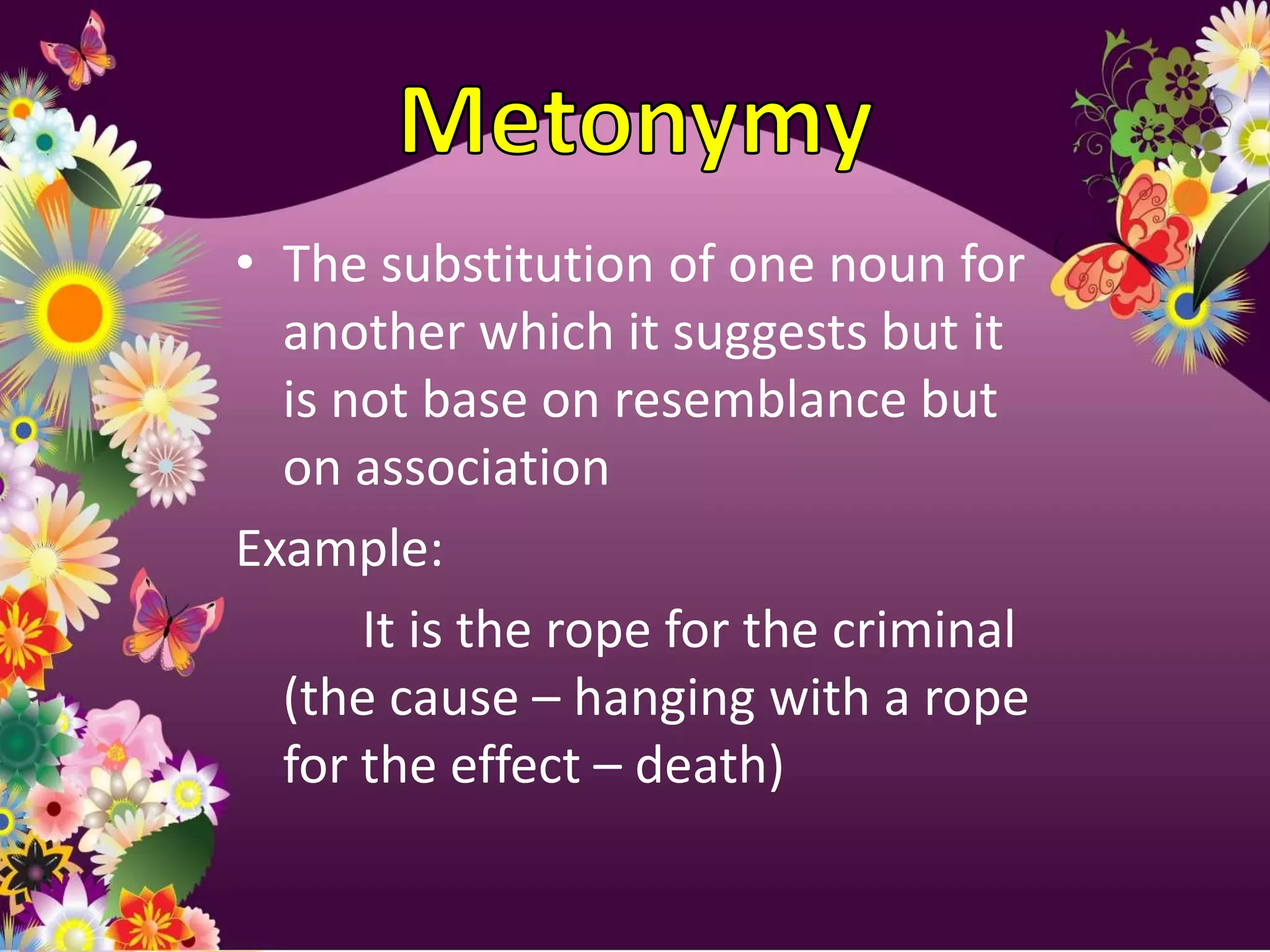
• The substitution of one noun for
  another which it suggests but it
  is not base on resemblance but
  on association
Example:
      It is the rope for the criminal
  (the cause – hanging with a rope
  for the effect – death)
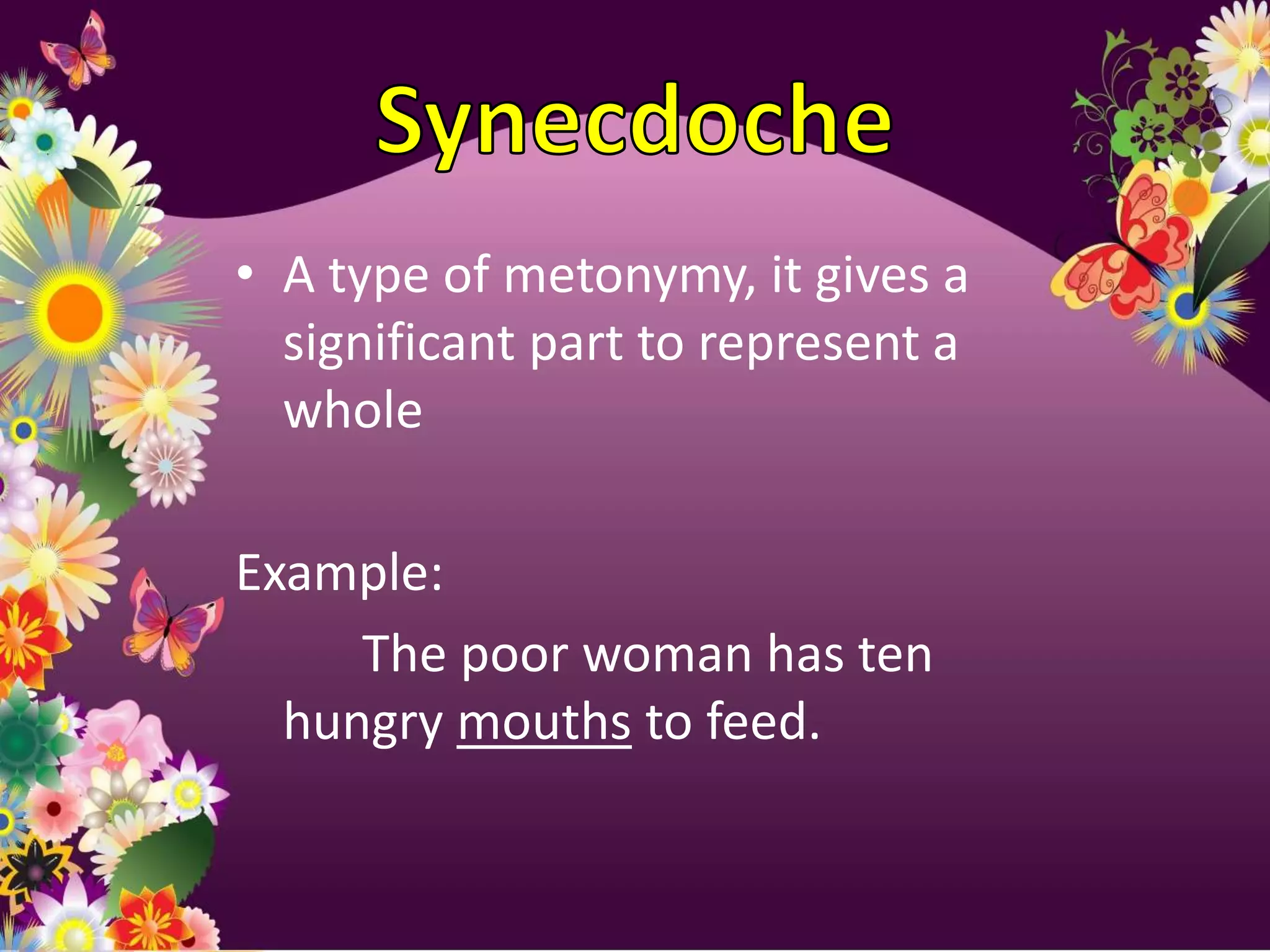
• A type of metonymy, it gives a
  significant part to represent a
  whole

Example:
     The poor woman has ten
  hungry mouths to feed.
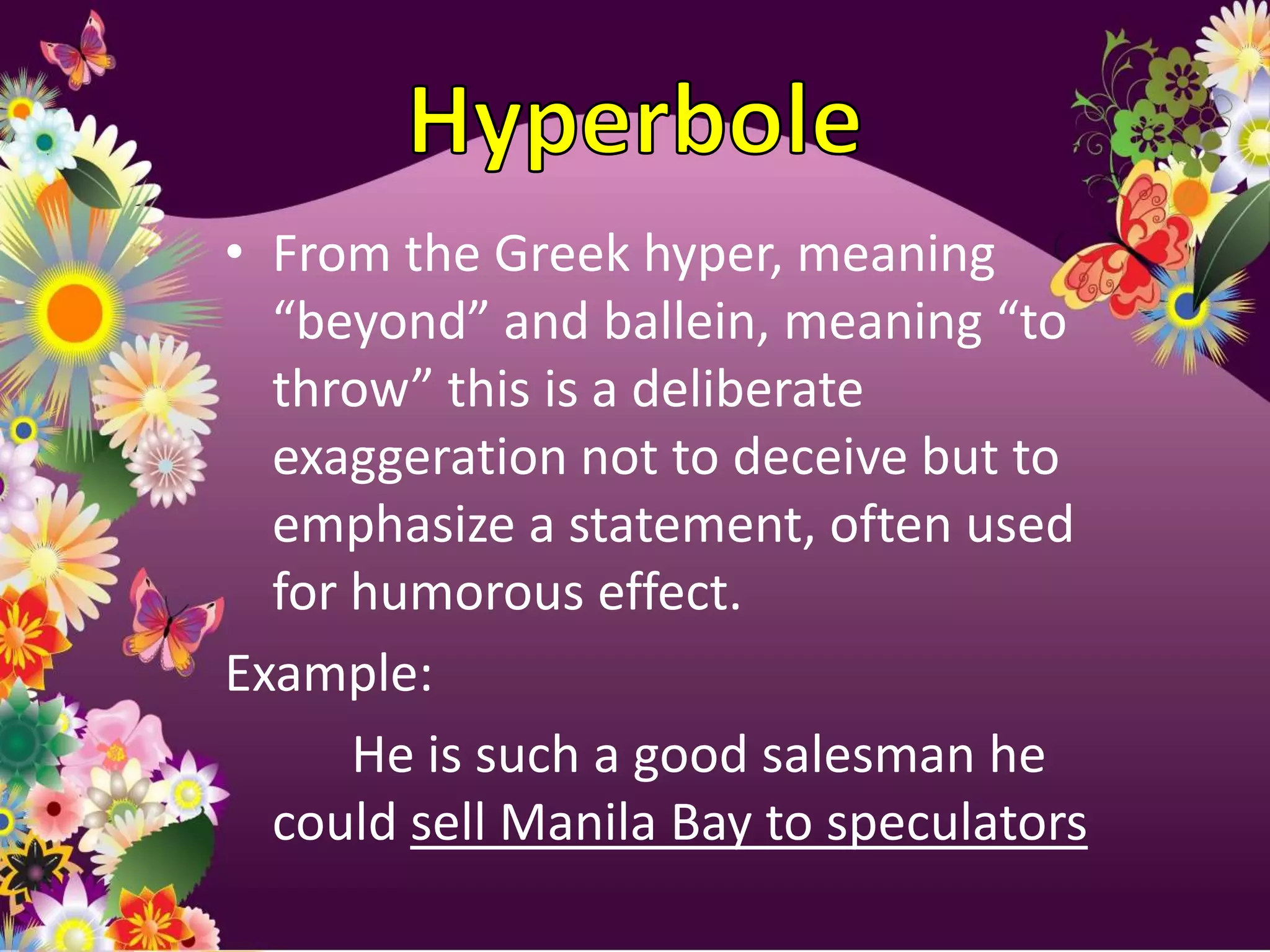
• From the Greek hyper, meaning
  “beyond” and ballein, meaning “to
  throw” this is a deliberate
  exaggeration not to deceive but to
  emphasize a statement, often used
  for humorous effect.
Example:
      He is such a good salesman he
  could sell Manila Bay to speculators
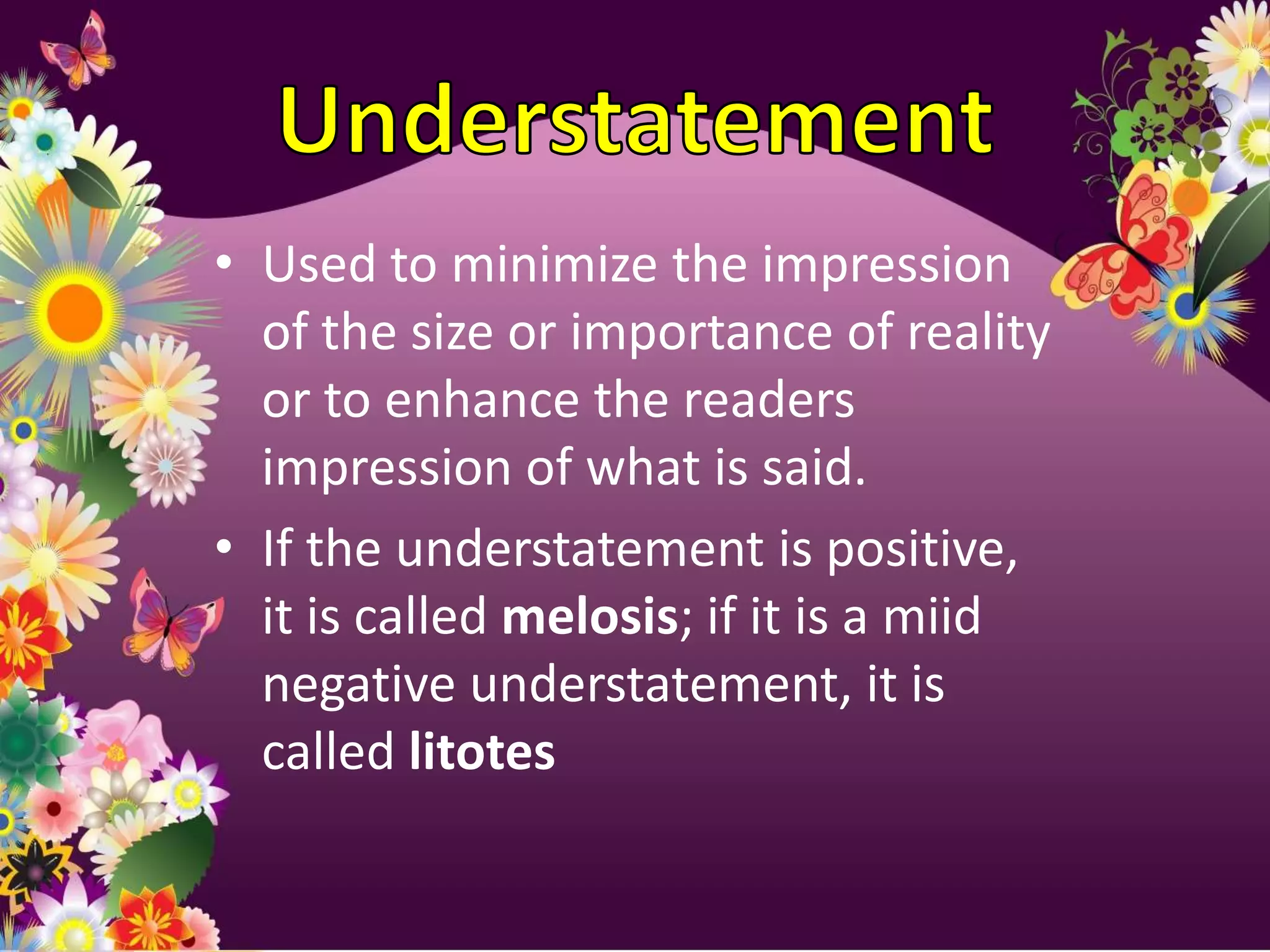
• Used to minimize the impression
  of the size or importance of reality
  or to enhance the readers
  impression of what is said.
• If the understatement is positive,
  it is called melosis; if it is a miid
  negative understatement, it is
  called litotes
Example:
      Nena told her friend, I am a
  bit hurt because I was not invited
  to your wedding. (melosis)
      A kinder garden pupil made a
  speech at his graduation and his
  proud grandfather said, “Not a
  bad accomplishment.” (litotes)
• The use of word to signify the
  opposite of what is said.
• The words used express approval or
  praise, but the author’s real
  intention is blame, criticism, scorn
  or ridicule
• In writing, the context of irony
  holds the clue; in speech, the tone
  of the voice or manner of the
  speaker indicates the irony
  intended.

Figures of speech

  • 2.
    • word orgroup of words used to give particular emphasis to an idea or sentiment • Help explain abstract ideas by creating comparisons or other relationships between the abstraction and concrete realities
  • 3.
    • A directlystated comparison between two unlike person or thing that uses expressions like, as and as ....... as Example: His mind is like a sponge.
  • 4.
    • An implied comparison between two unlike things that are alike in the way they are identified
  • 5.
    • Unlike simile,no expressions are used to show the comparison in metaphor Example: In the dark night, the city lights are glimmering fireflies
  • 6.
    • Leads human qualities to things that are not human – animals, plants, in animate objects and abstraction.
  • 7.
    Example: “Will you walk into my parlor?” said the spider to the fly
  • 8.
    • Addresses personified objects as real person, the absent as if they were present and the dead as if were alive
  • 9.
    Example: Ambition you are a cruel master, I will serve you no more
  • 10.
    • A subtlemetaphor, it recalls and projects on the imagination memories of the past – a well known person, event, saying or incident – to compare with the present scene.
  • 11.
    •The reader thus profits from the knowledge he gained
  • 12.
    Example: Were I Midas, I would make nothing else but such golden days of memory
  • 13.
    • The substitutionof one noun for another which it suggests but it is not base on resemblance but on association Example: It is the rope for the criminal (the cause – hanging with a rope for the effect – death)
  • 14.
    • A typeof metonymy, it gives a significant part to represent a whole Example: The poor woman has ten hungry mouths to feed.
  • 15.
    • From theGreek hyper, meaning “beyond” and ballein, meaning “to throw” this is a deliberate exaggeration not to deceive but to emphasize a statement, often used for humorous effect. Example: He is such a good salesman he could sell Manila Bay to speculators
  • 16.
    • Used tominimize the impression of the size or importance of reality or to enhance the readers impression of what is said. • If the understatement is positive, it is called melosis; if it is a miid negative understatement, it is called litotes
  • 17.
    Example: Nena told her friend, I am a bit hurt because I was not invited to your wedding. (melosis) A kinder garden pupil made a speech at his graduation and his proud grandfather said, “Not a bad accomplishment.” (litotes)
  • 18.
    • The useof word to signify the opposite of what is said. • The words used express approval or praise, but the author’s real intention is blame, criticism, scorn or ridicule • In writing, the context of irony holds the clue; in speech, the tone of the voice or manner of the speaker indicates the irony intended.