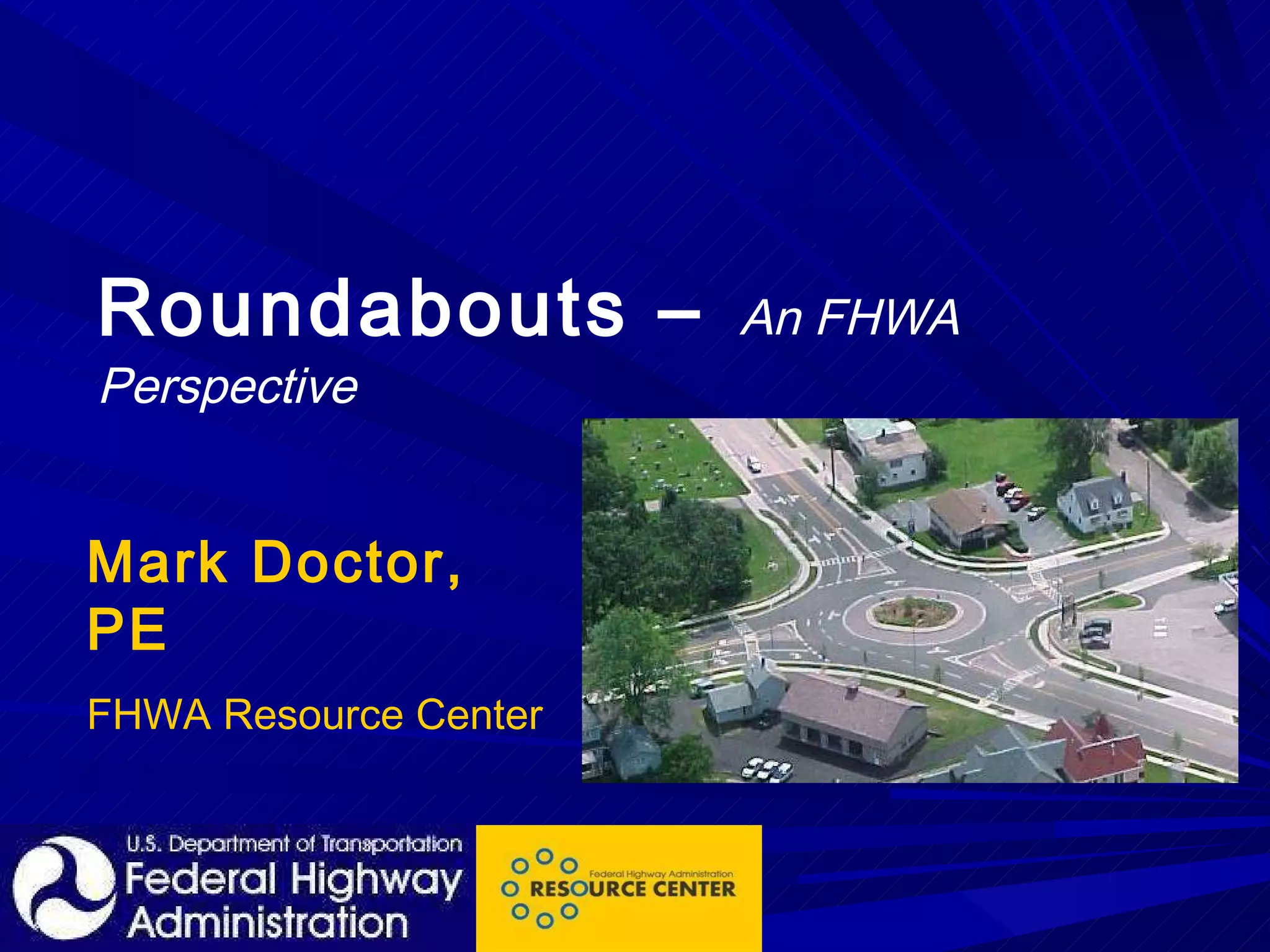
Roundabouts –   An FHWA Perspective Mark Doctor, PE FHWA Resource Center
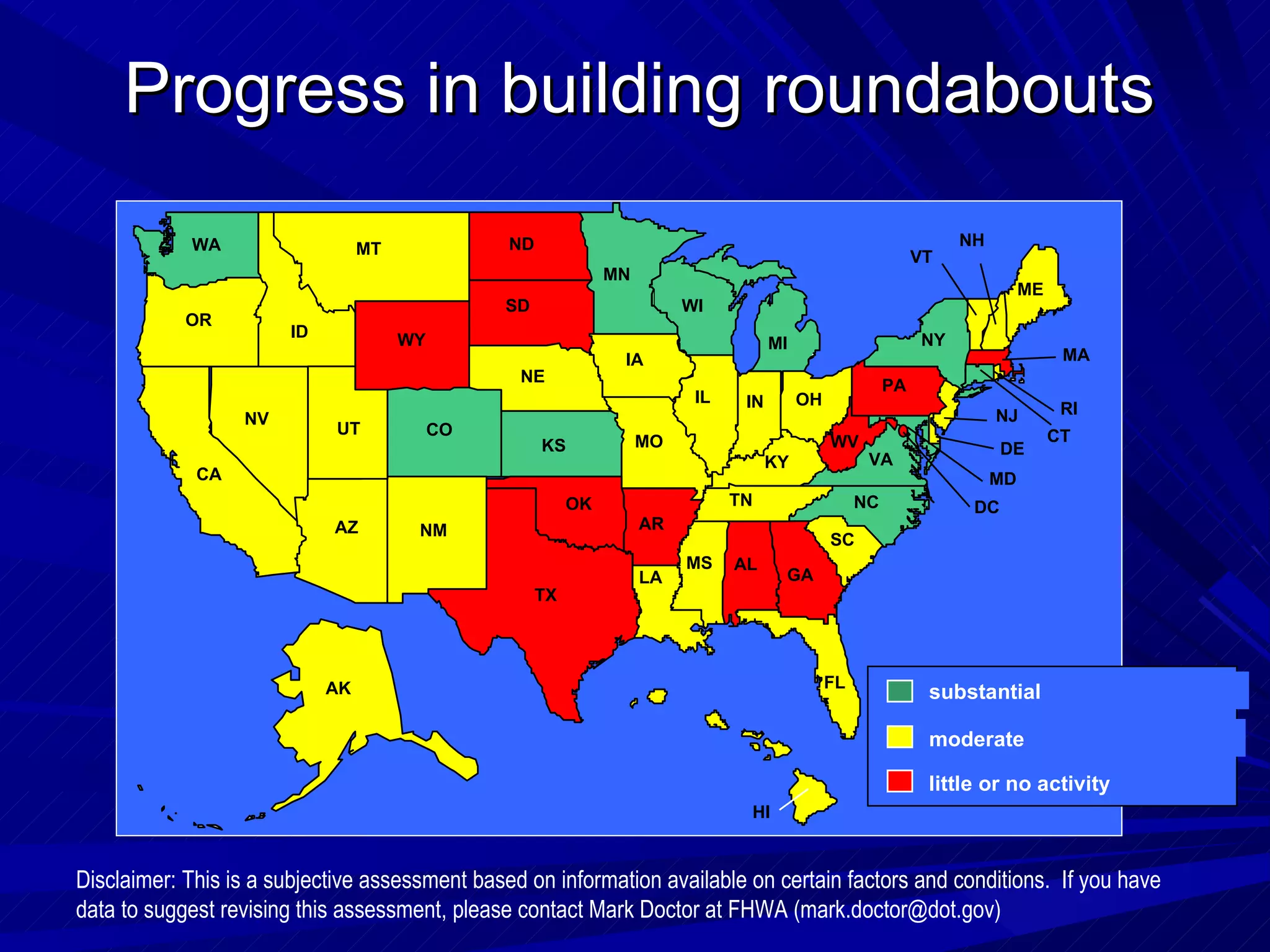
Progress in building roundabouts  MD DE DC MA OR RI NJ NH ME PA WV NC SC GA FL OH MI IN IL WI IA MO LA NM CO SD ID CA WA TN VT MS MT ND NV AZ UT WY NE KS OK TX AR MN AL KY VA NY CT AK HI Disclaimer: This is a subjective assessment based on information available on certain factors and conditions.  If you have data to suggest revising this assessment, please contact Mark Doctor at FHWA (mark.doctor@dot.gov) moderate  little or no activity substantial
So, why aren’t more agencies building roundabouts?
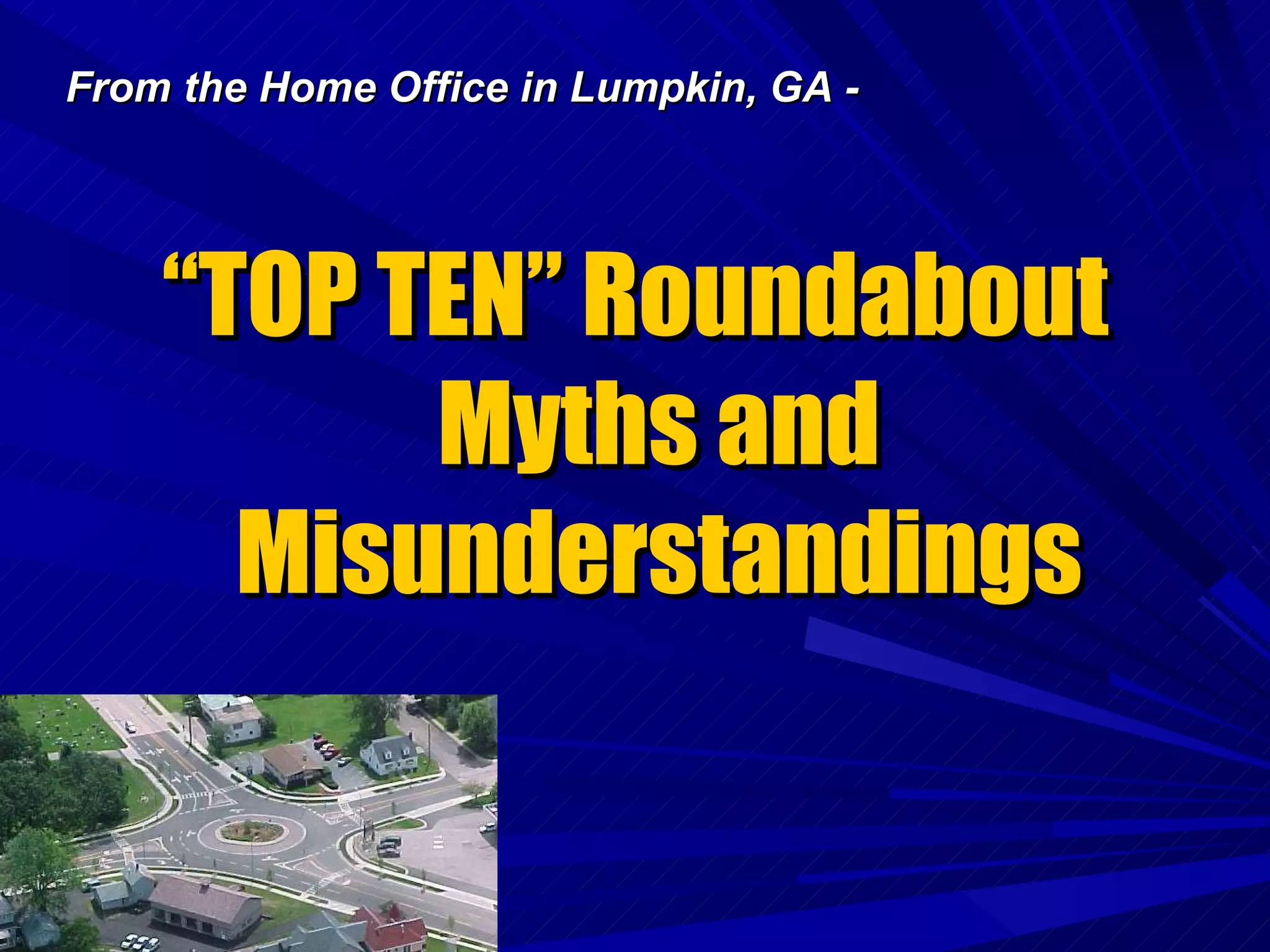
“ TOP TEN” Roundabout Myths and Misunderstandings From the Home Office in Lumpkin, GA -
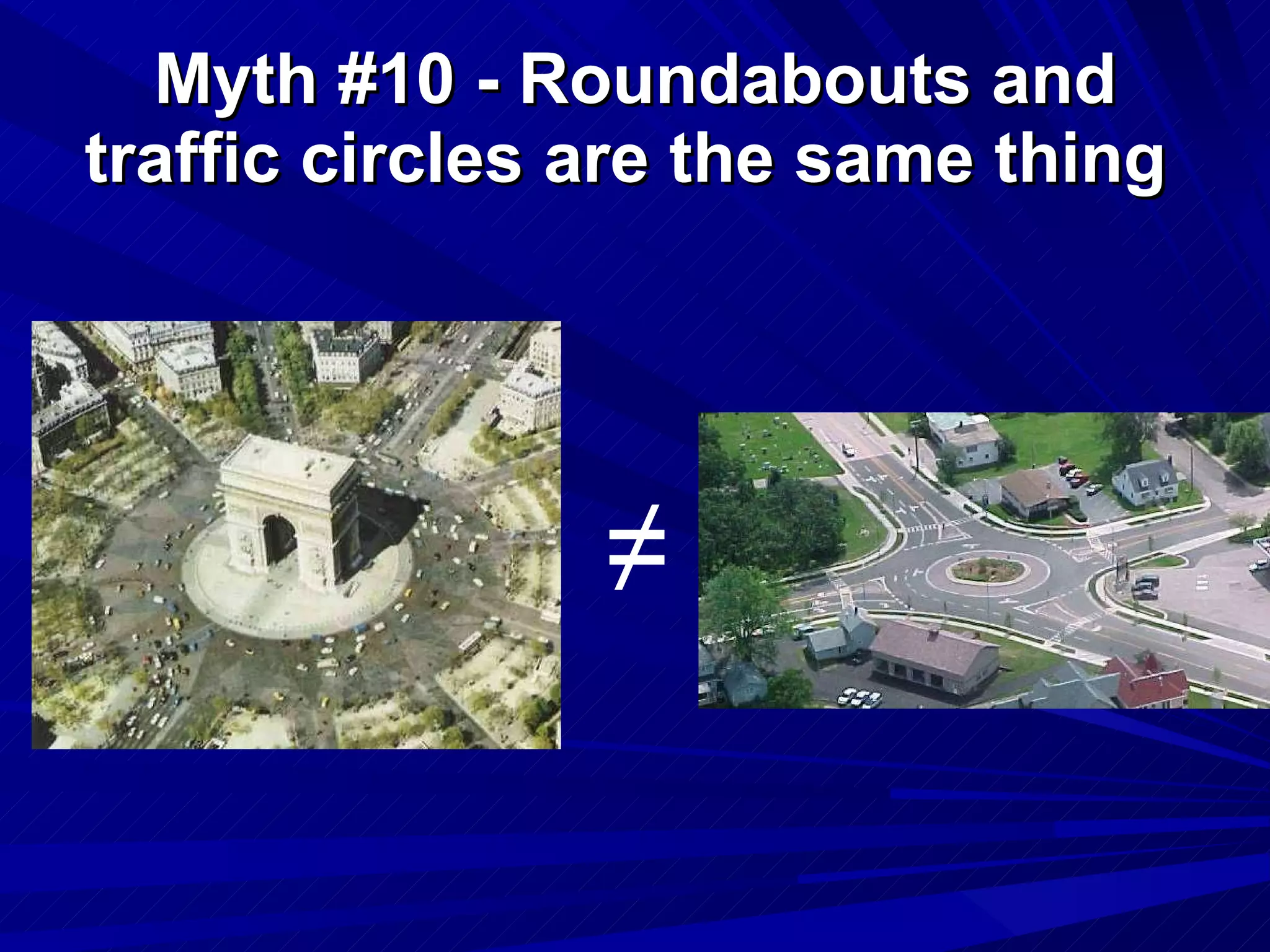
Myth #10 - Roundabouts and traffic circles are the same thing   ≠
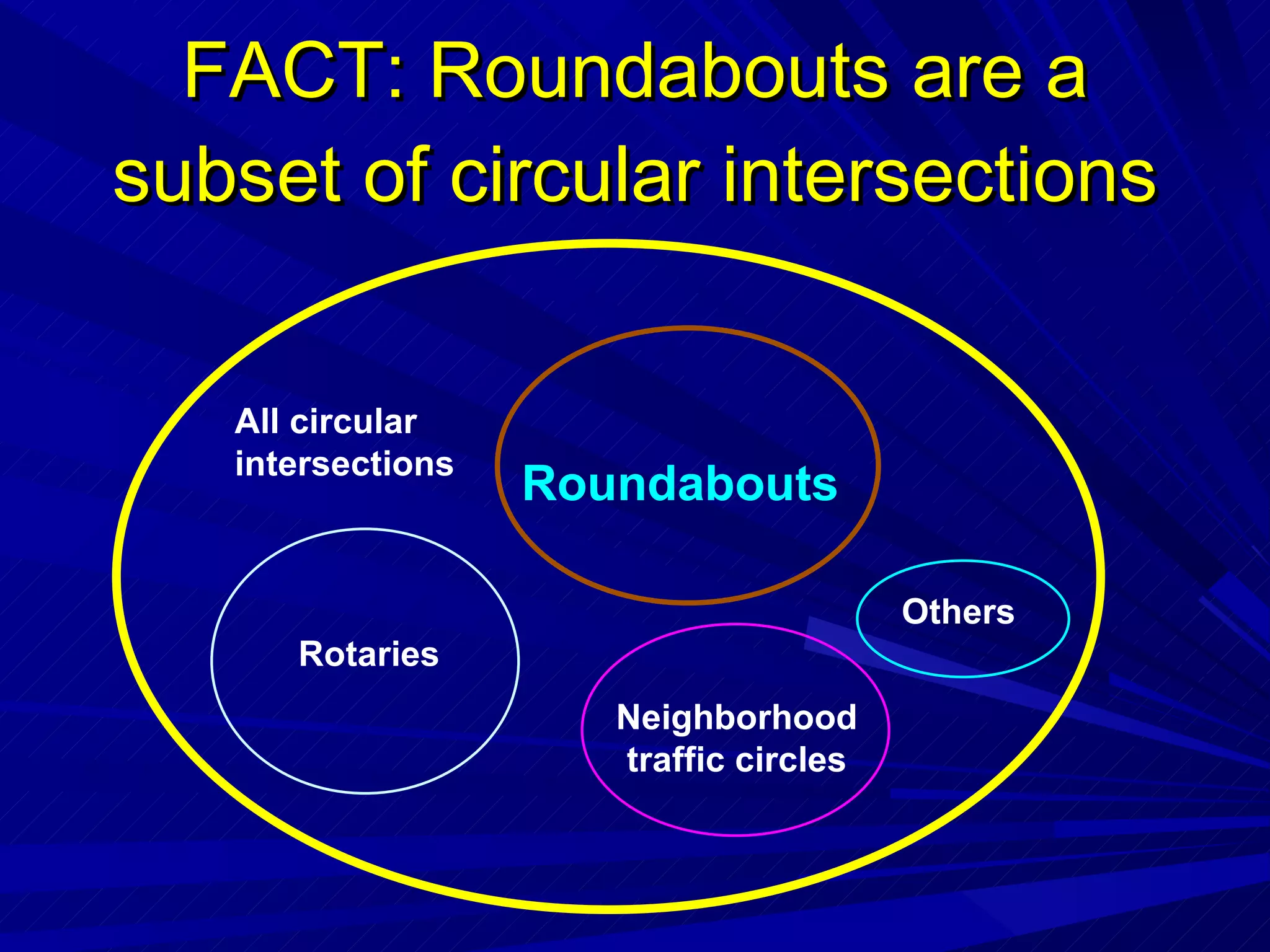
FACT: Roundabouts are a subset of circular intersections Roundabouts Rotaries Neighborhood traffic circles All circular intersections Others
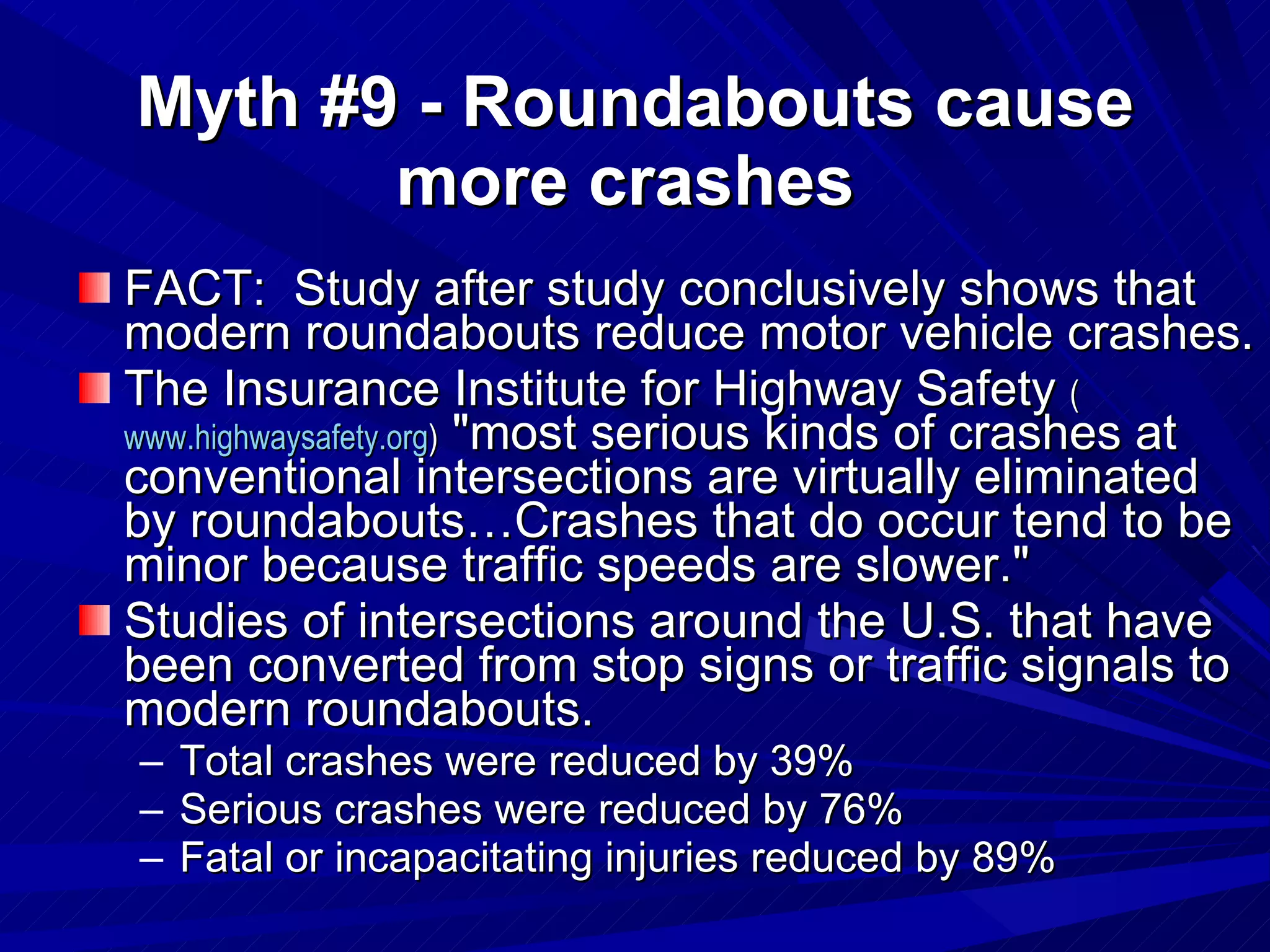
Myth #9 - Roundabouts cause more crashes   FACT:  Study after study conclusively shows that modern roundabouts reduce motor vehicle crashes. The Insurance Institute for Highway Safety  ( www.highwaysafety.org )  "most serious kinds of crashes at conventional intersections are virtually eliminated by roundabouts…Crashes that do occur tend to be minor because traffic speeds are slower."  Studies of intersections around the U.S. that have been converted from stop signs or traffic signals to modern roundabouts.  Total crashes were reduced by 39%  Serious crashes were reduced by 76%  Fatal or incapacitating injuries reduced by 89%
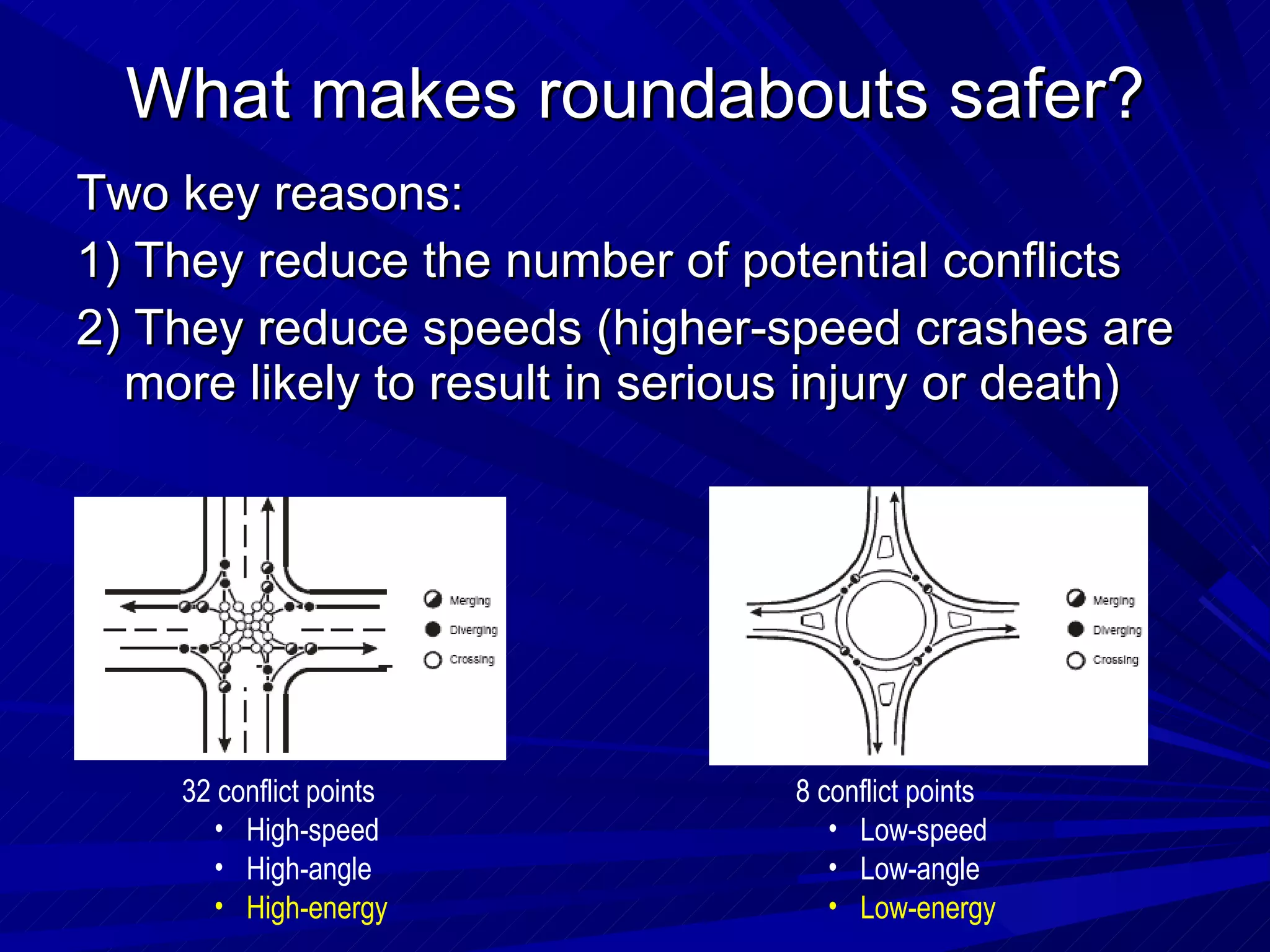
What makes roundabouts safer? Two key reasons: 1) They reduce the number of potential conflicts  2) They reduce speeds (higher-speed crashes are more likely to result in serious injury or death) 32 conflict points High-speed High-angle High-energy 8 conflict points Low-speed Low-angle Low-energy
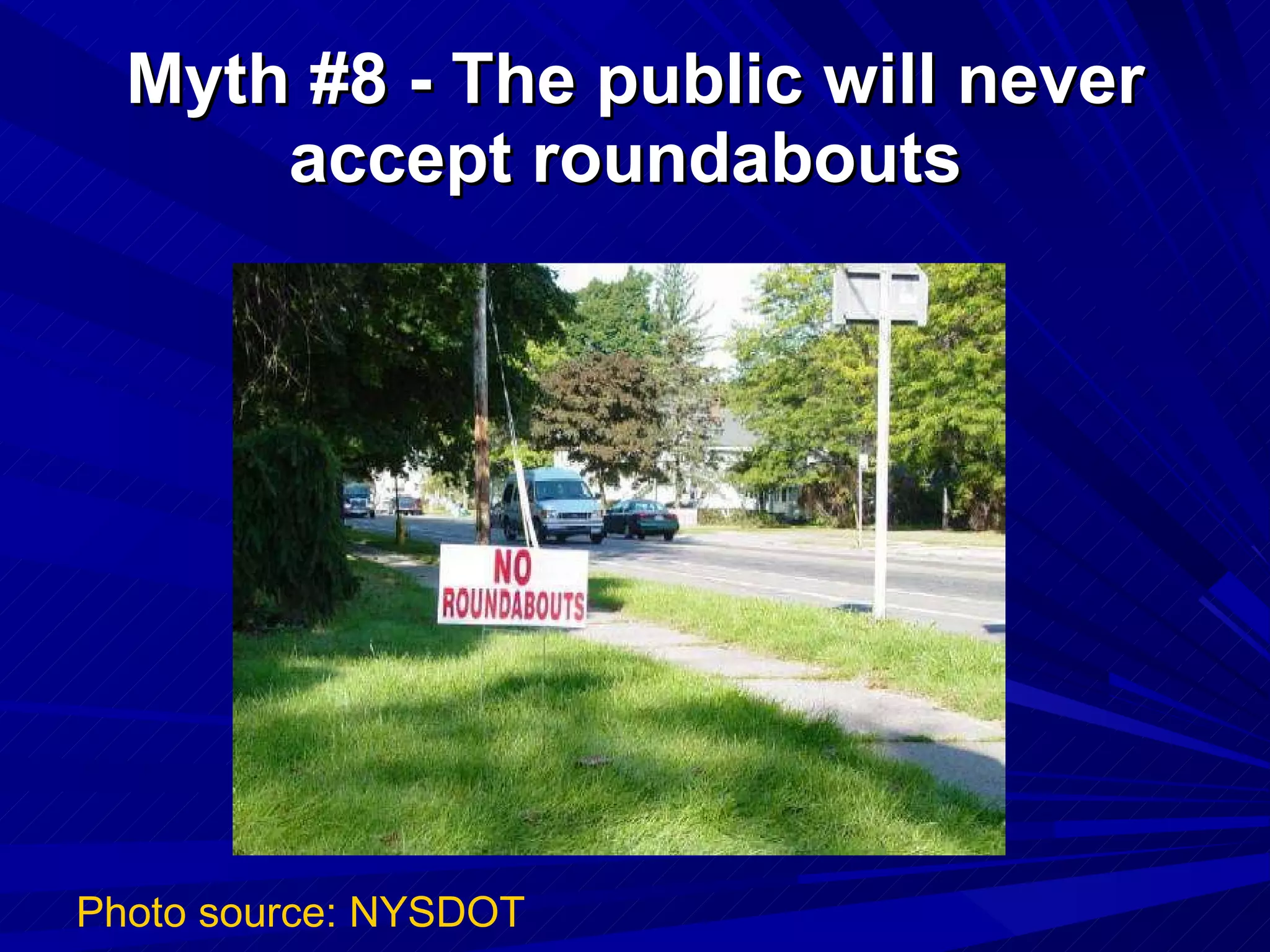
Myth #8 - The public will never accept roundabouts   Photo source: NYSDOT
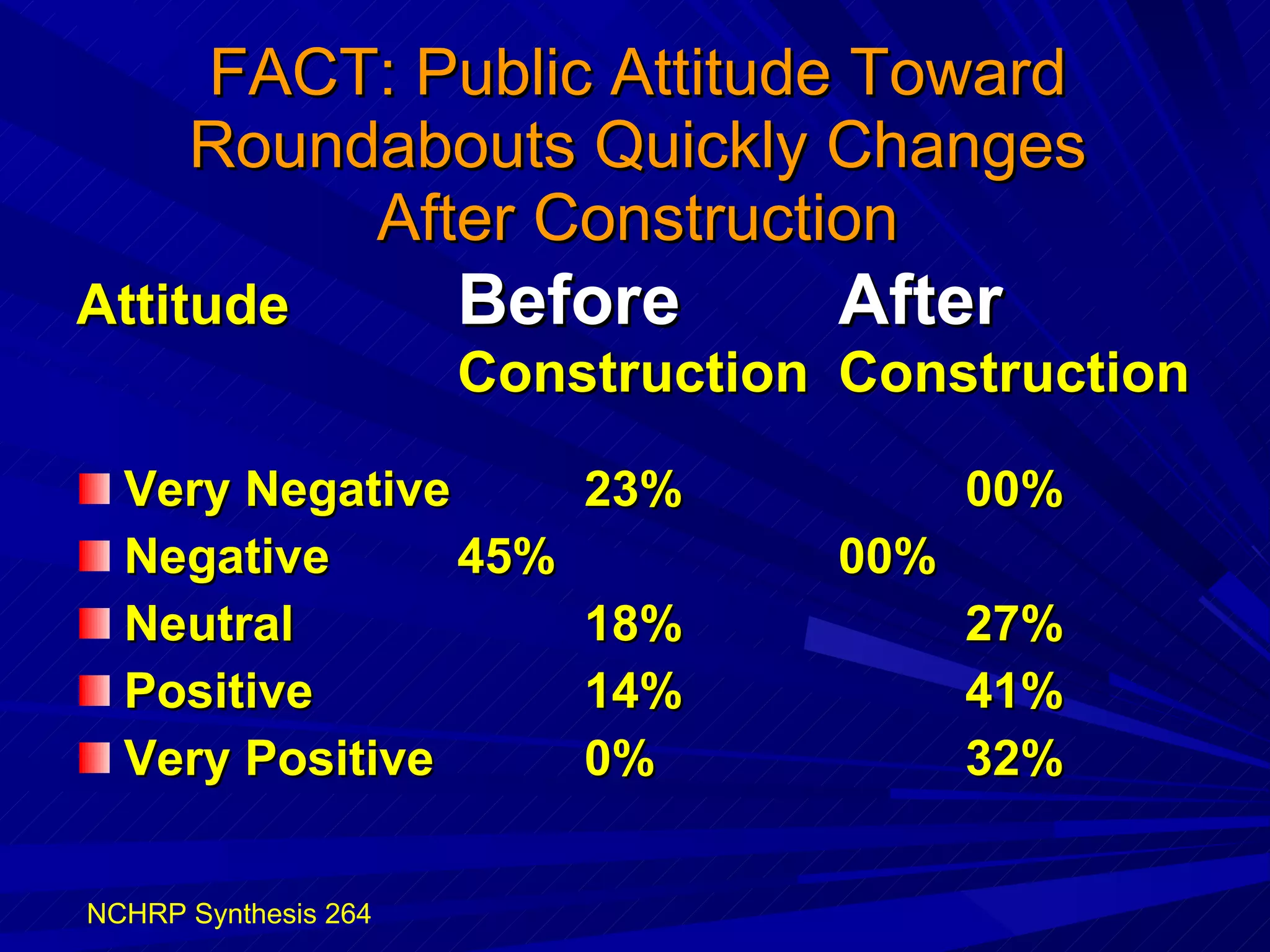
FACT: Public Attitude Toward Roundabouts Quickly Changes After Construction Attitude  Before After   Construction  Construction Very Negative   23% 00% Negative   45% 00% Neutral   18% 27% Positive   14% 41% Very Positive   0% 32% NCHRP Synthesis 264
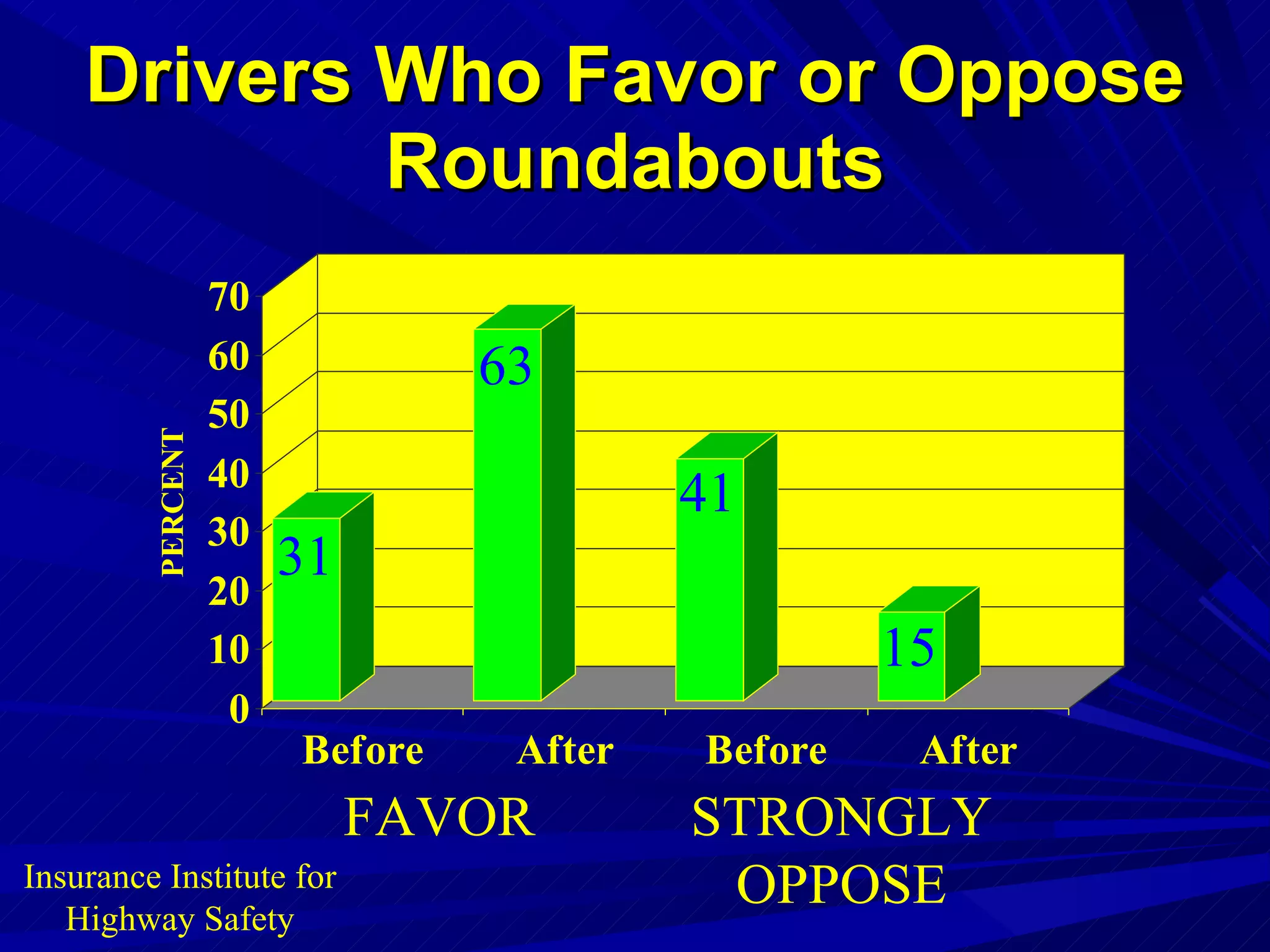
Drivers Who Favor or Oppose Roundabouts FAVOR STRONGLY OPPOSE Insurance Institute for Highway Safety 31 63 41 15
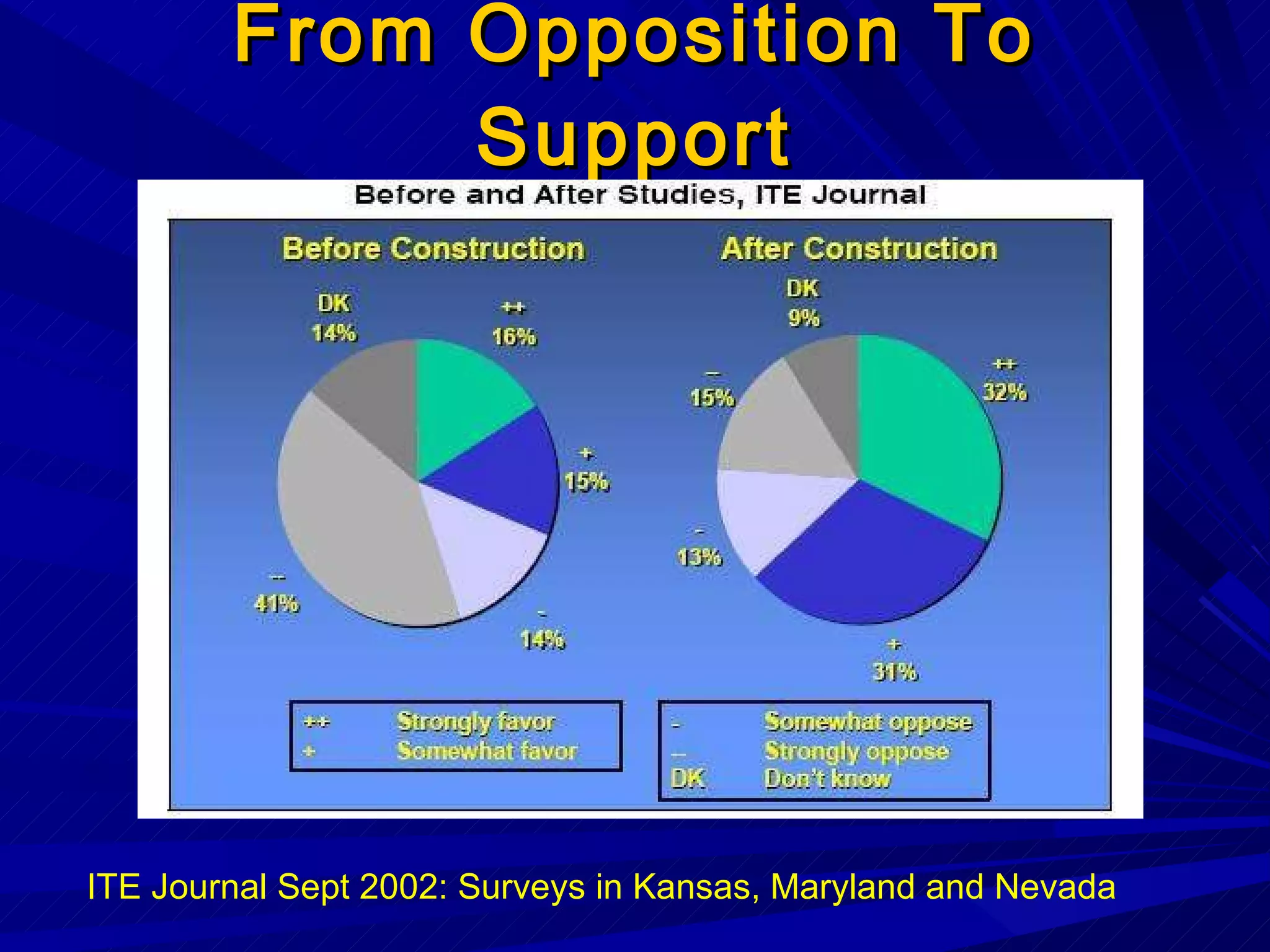
From Opposition To Support ITE Journal Sept 2002: Surveys in Kansas, Maryland and Nevada
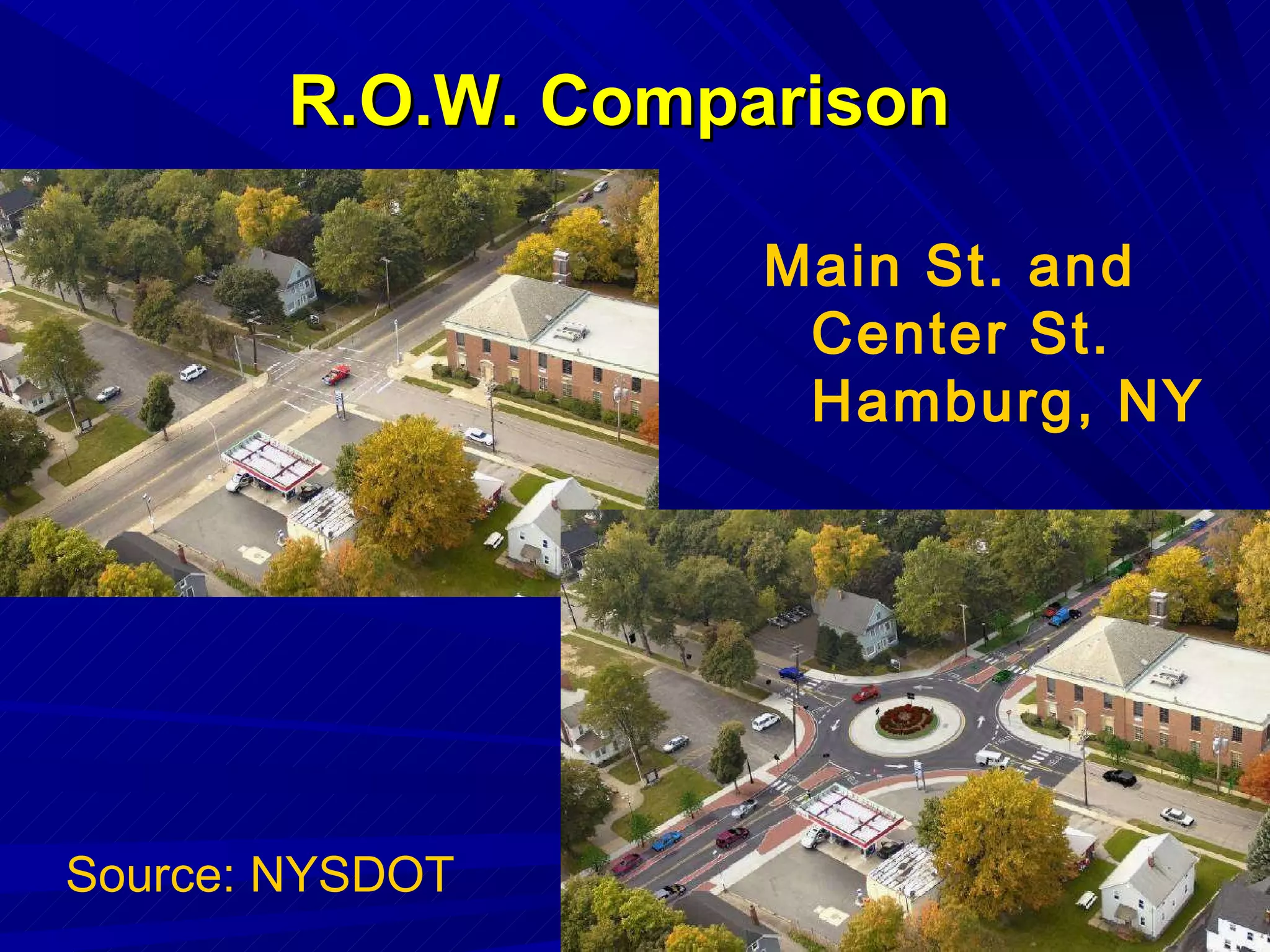
Myth #7 - Roundabouts cost more Actual costs depend on several site specific conditions Most agencies find the initial construction cost of a roundabout is comparable to the initial construction cost of a signal  A “life-cycle” cost comparison should be used since roundabouts do not require signal equipment maintenance ($15,000 + per year). Over the long run,  roundabouts are typically less expensive than signals In some instances a roundabout may cost less because fewer lanes may be needed than at a signalized intersection. Typically the number of turn lanes can be reduced and in some instances the improved efficiency at the intersection allows the number of through lanes to be reduced.
R.O.W. Comparison Main St. and Center St. Hamburg, NY Source: NYSDOT
Fact:  Roundabouts are very efficient from a traffic operations perspective and for a given volume will typically have less delay time than a signal or stop controlled intersection. Roundabouts must be designed to accommodate the proper demand volumes.  An oversaturated roundabout will operate poorly as will an oversaturated signalized intersection. Myth #6 – Roundabouts have less capacity than signalized intersections
Fact:  A well-designed modern roundabout includes a “truck apron” sized in accordance with the appropriate design vehicle for the highway type Myth #5 – Fire trucks and other large vehicles can’t make it through a roundabout
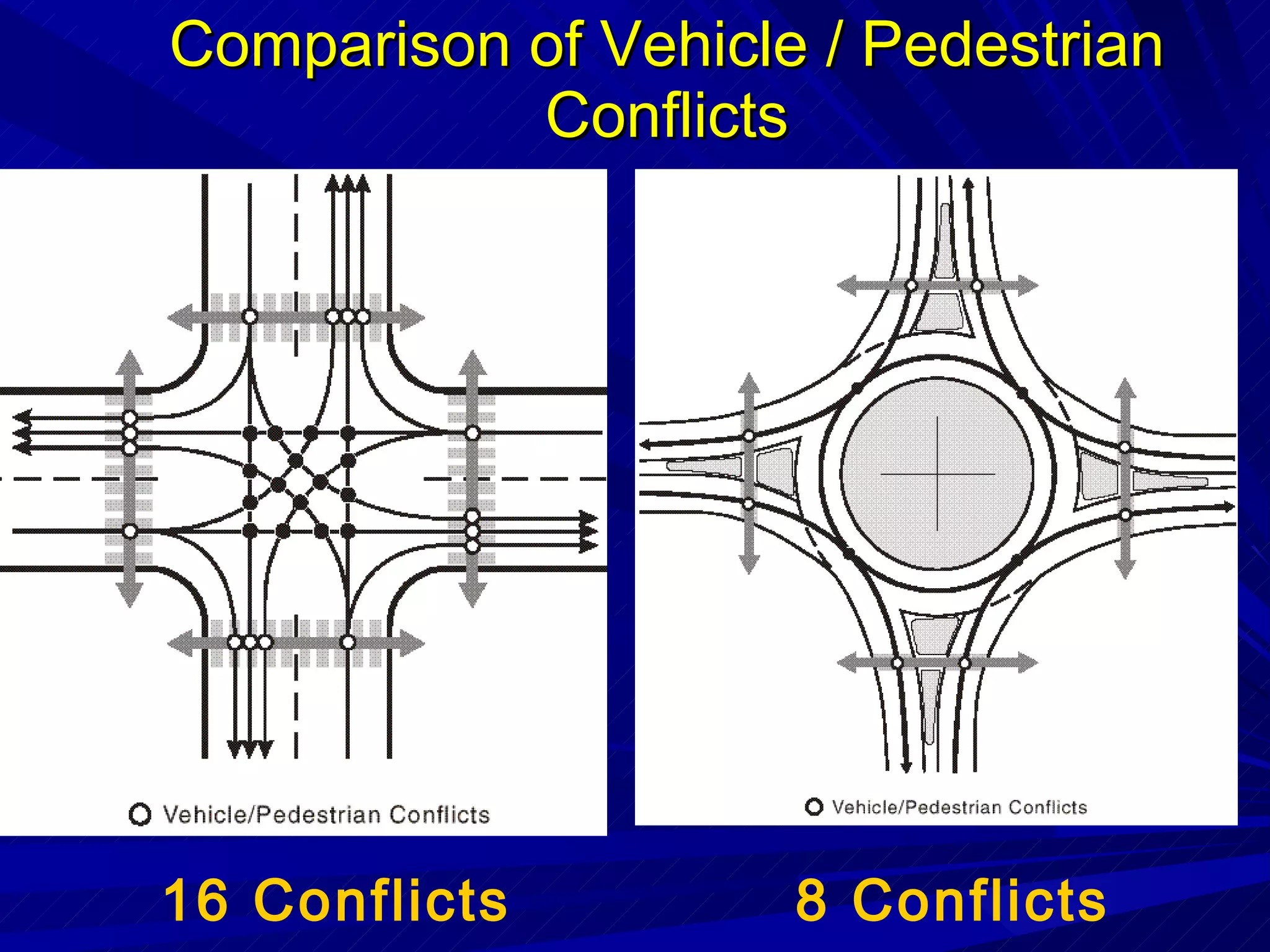
Myth #4 - Roundabouts are not good for pedestrians and bicyclists   Fact:  Roundabouts are very pedestrian friendly   - The splitter islands provide a space for pedestrians in the middle of each crossing. Therefore, pedestrians only need to cross one direction of traffic at a time.  - The pedestrian crosswalks are set at least one full car length back from the yield line. That way, pedestrians do not have to cross in front of drivers that are looking for their gap in traffic. Experience has shown that the stopped vehicle one car length back from the yield line is more aware of pedestrians.
Comparison of Vehicle / Pedestrian Conflicts 16 Conflicts 8 Conflicts
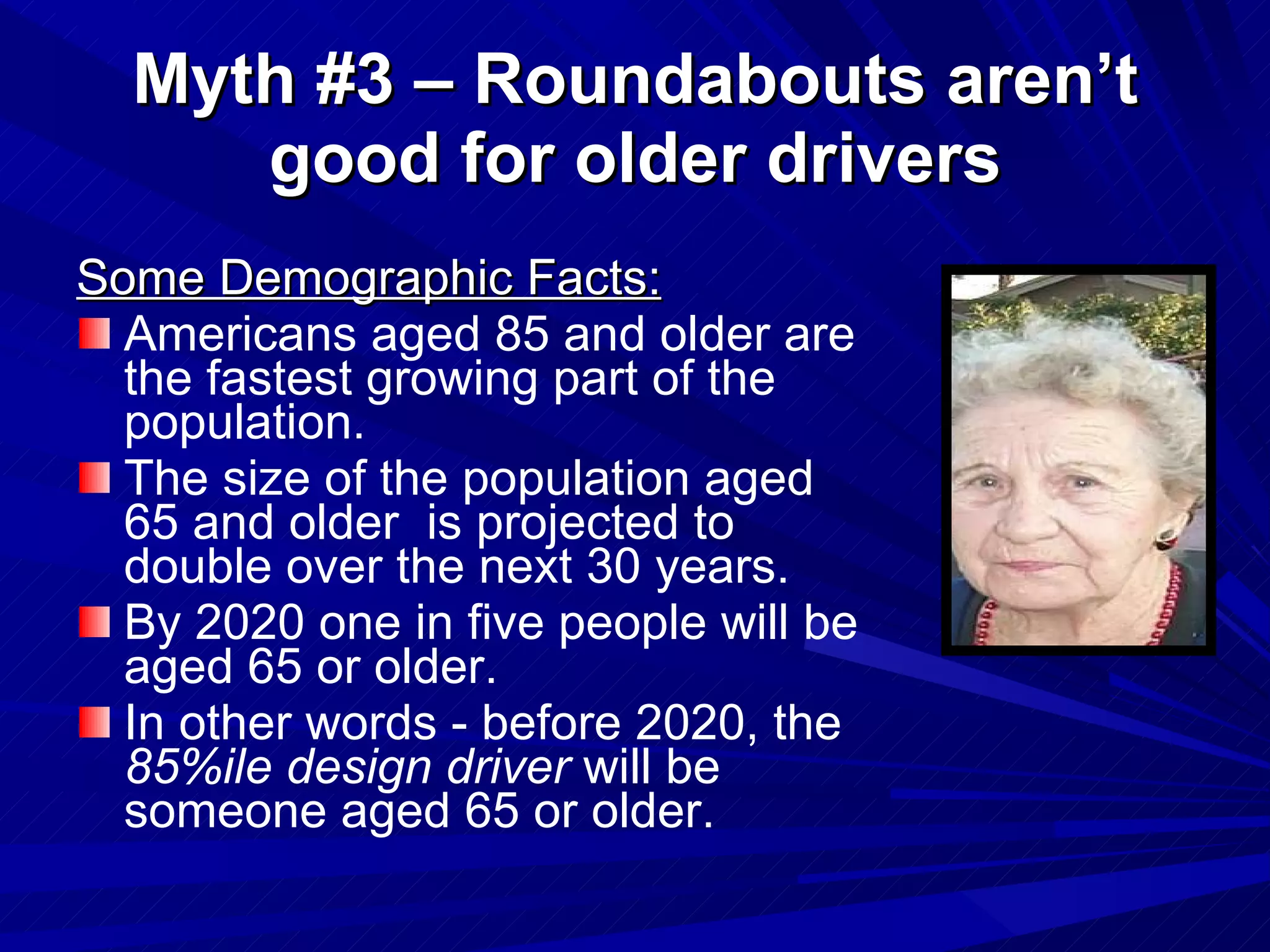
Myth #3 – Roundabouts aren’t good for older drivers Some Demographic Facts: Americans aged 85 and older are the fastest growing part of the population. The size of the population aged 65 and older  is projected to double over the next 30 years. By 2020 one in five people will be aged 65 or older. In other words - before 2020, the  85%ile design driver  will be someone aged 65 or older.
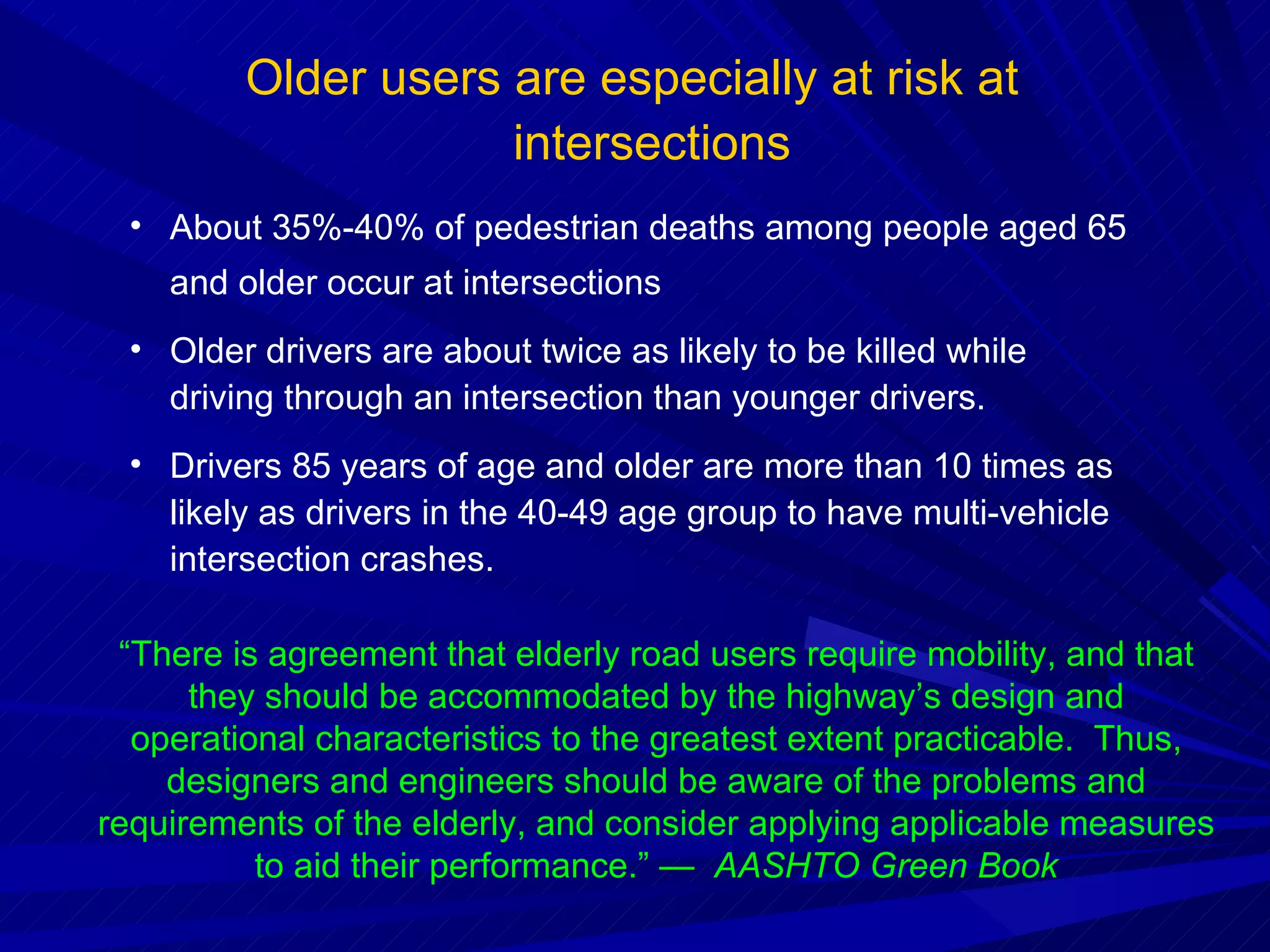
Older users are especially at risk at intersections About 35%-40% of pedestrian deaths among people aged 65 and older occur at intersections Older drivers are about twice as likely to be killed while driving through an intersection than younger drivers. Drivers 85 years of age and older are more than 10 times as likely as drivers in the 40-49 age group to have multi-vehicle intersection crashes.  “ There is agreement that elderly road users require mobility, and that they should be accommodated by the highway’s design and operational characteristics to the greatest extent practicable.  Thus, designers and engineers should be aware of the problems and requirements of the elderly, and consider applying applicable measures to aid their performance.” —  AASHTO Green Book
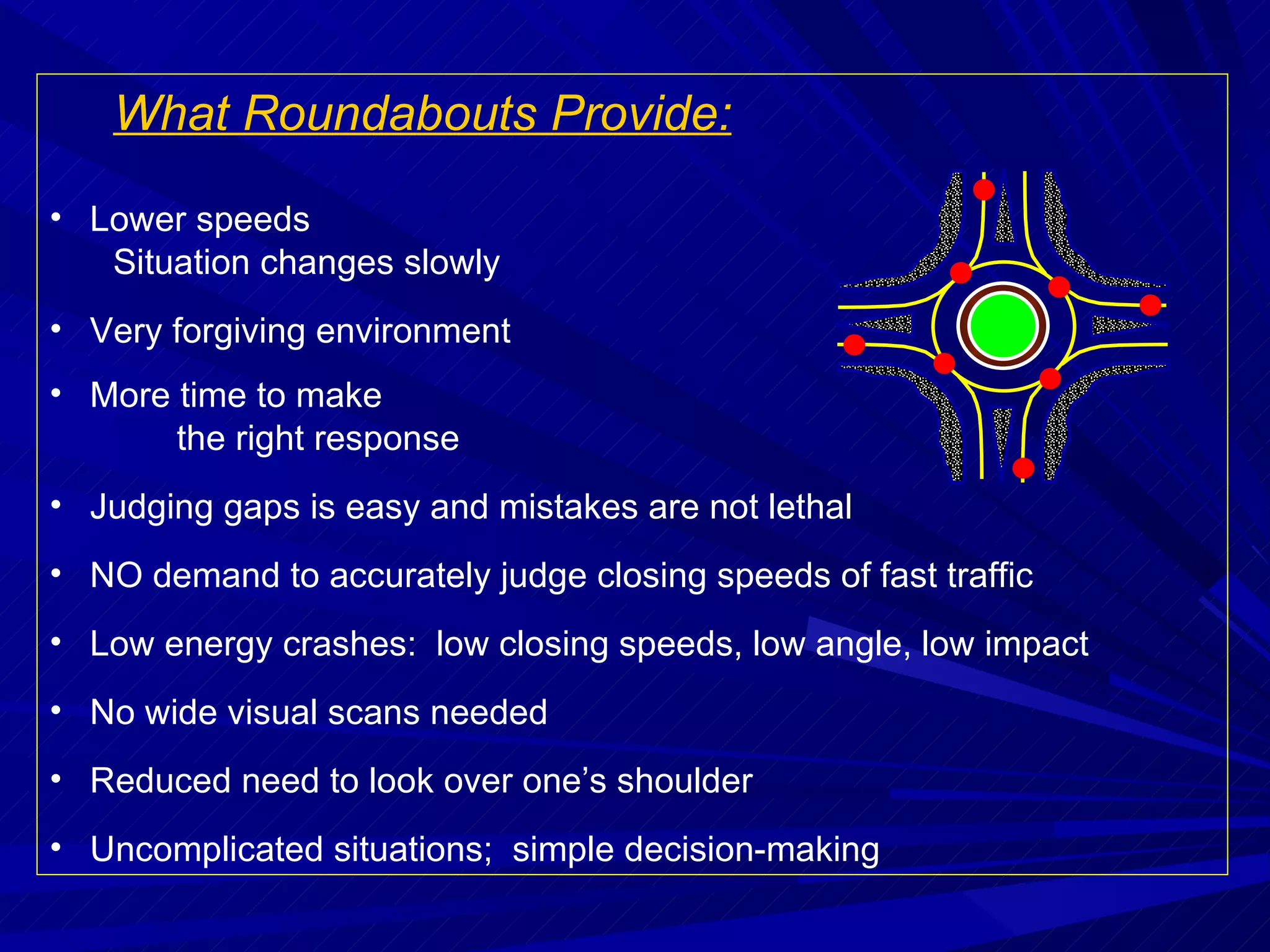
What Roundabouts Provide: Lower speeds  Situation changes slowly Very forgiving environment More time to make  the right response Judging gaps is easy and mistakes are not lethal NO demand to accurately judge closing speeds of fast traffic Low energy crashes:  low closing speeds, low angle, low impact No wide visual scans needed Reduced need to look over one’s shoulder Uncomplicated situations;  simple decision-making
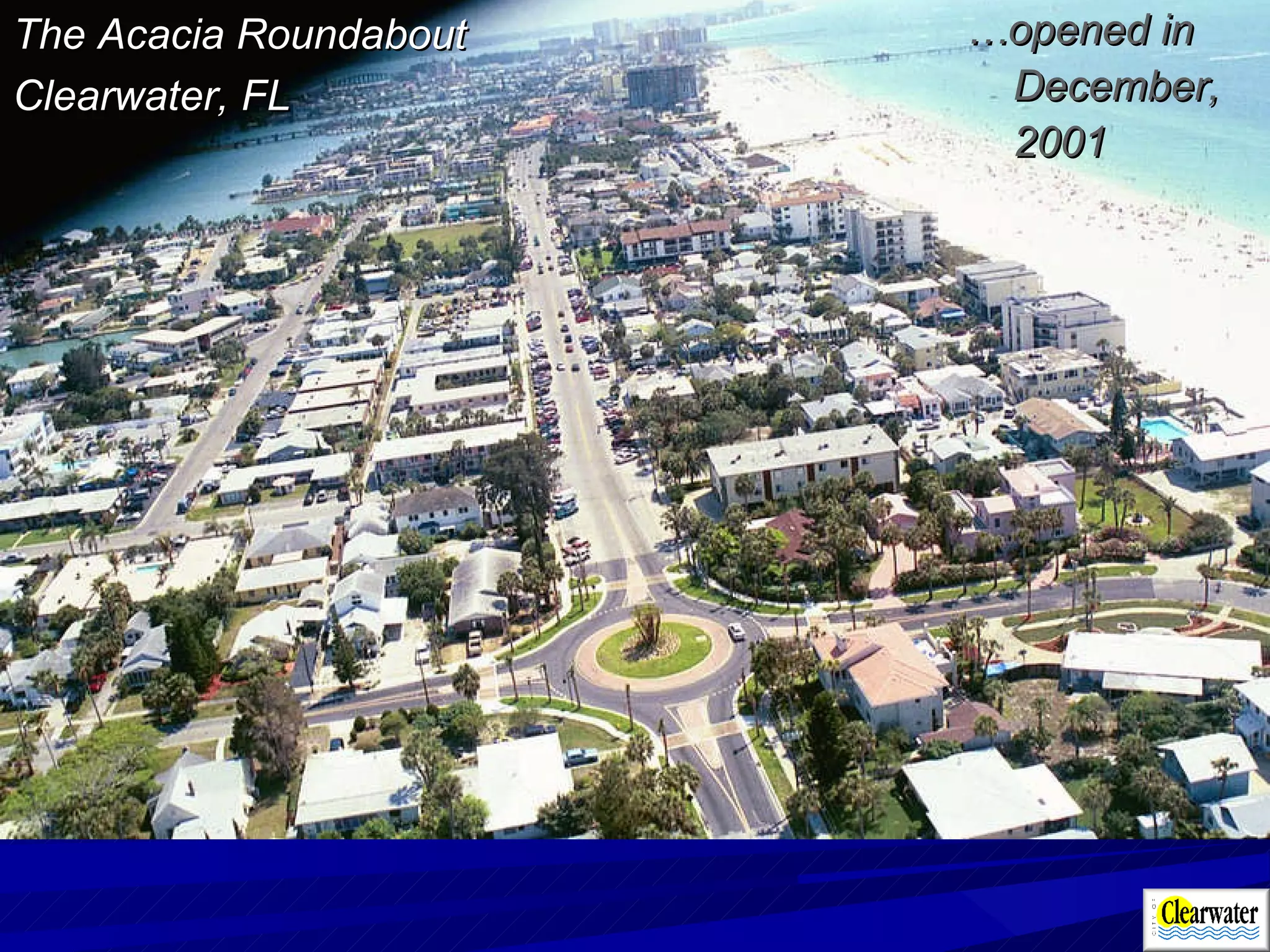
The Acacia Roundabout Clearwater, FL … opened in December, 2001
Fact:  Most business owners agree that slower speeds and safer travel enhance business along the corridor Fact:  Some “blighted” communities have actually experienced economic revitalization following roundabout projects  Myth #2 – Roundabouts are bad for the nearby businesses
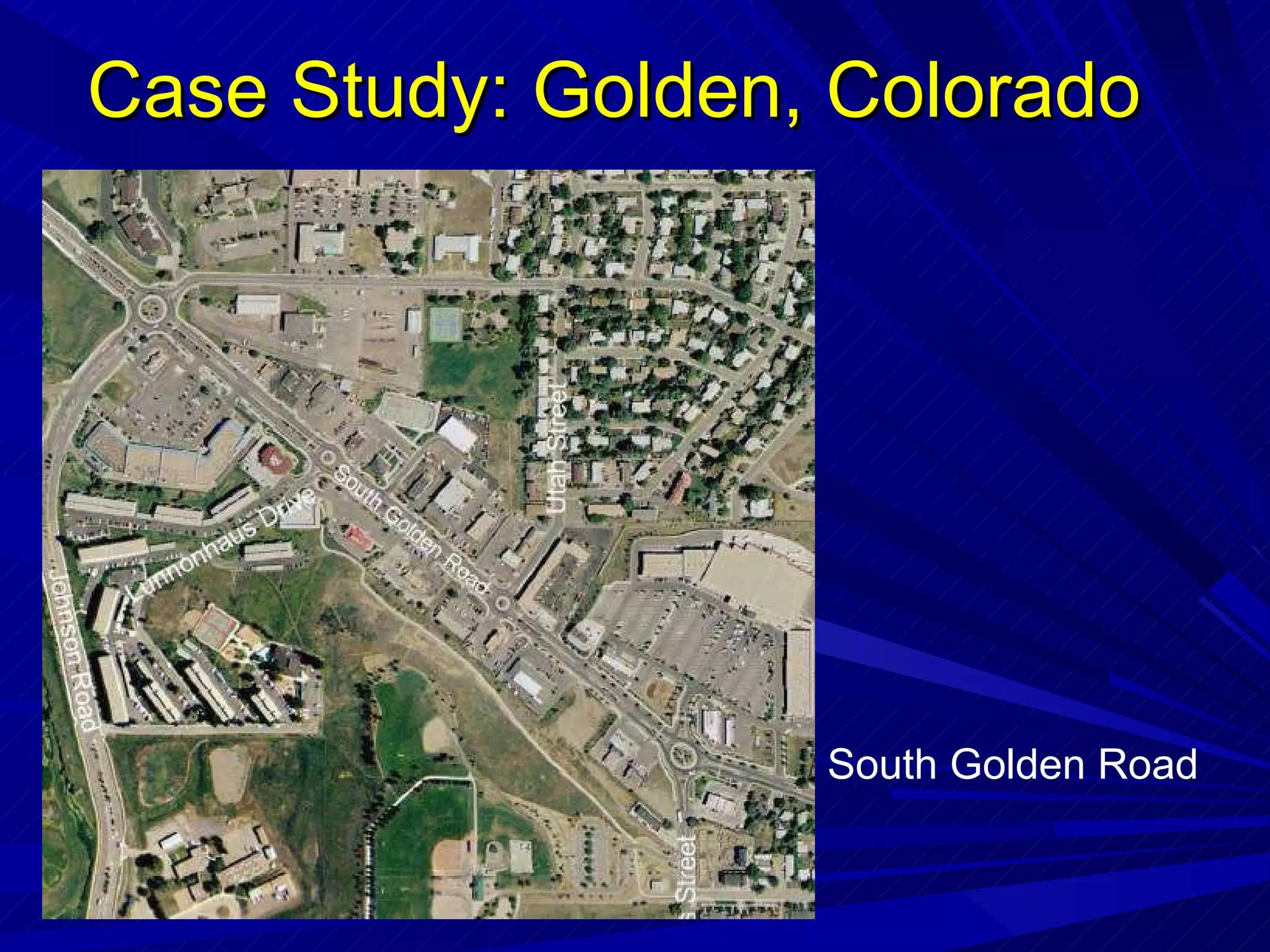
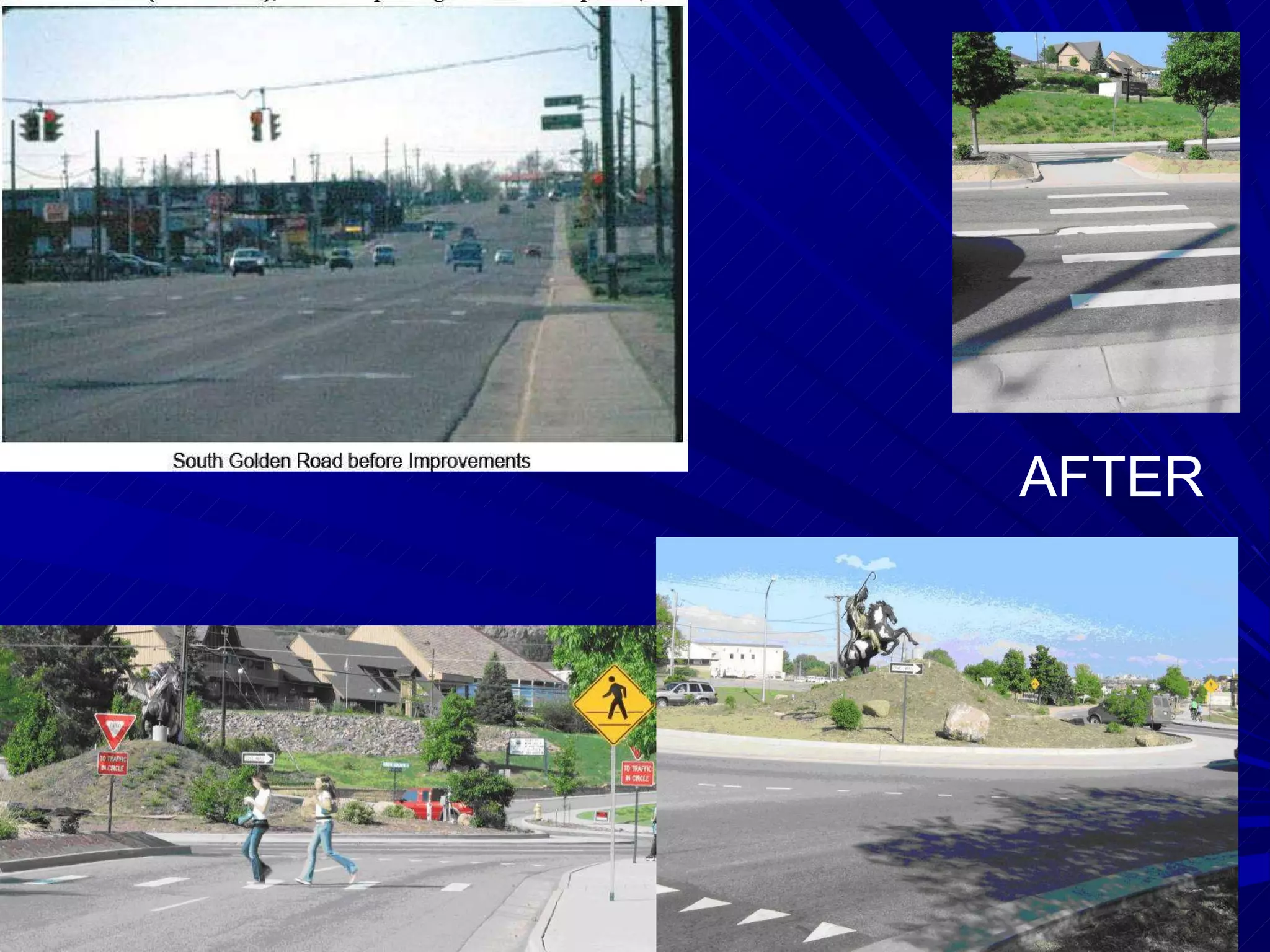
Case Study: Golden, Colorado South Golden Road
AFTER
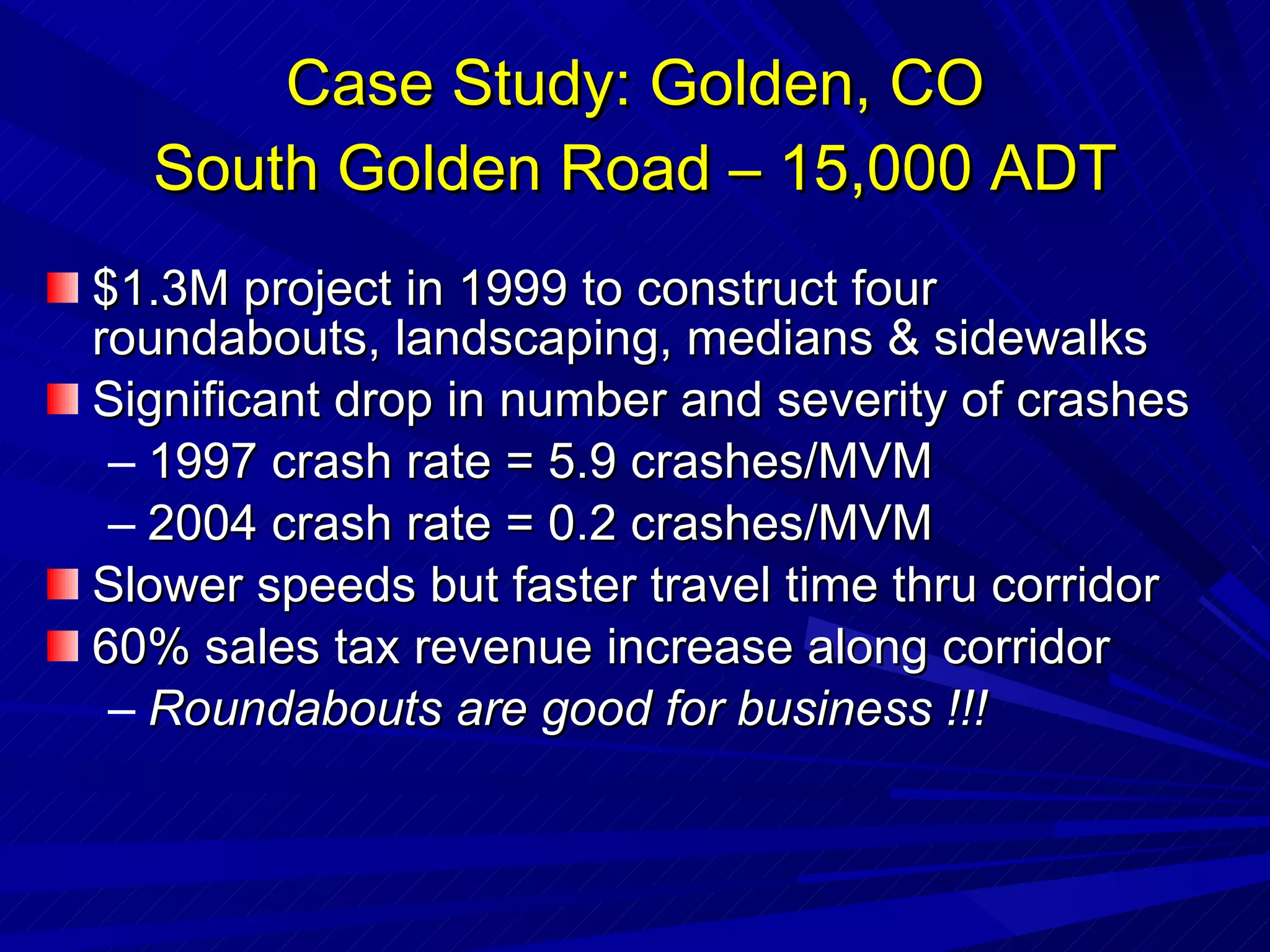
Case Study: Golden, CO South Golden Road – 15,000 ADT $1.3M project in 1999 to construct four roundabouts, landscaping, medians & sidewalks Significant drop in number and severity of crashes 1997 crash rate = 5.9 crashes/MVM 2004 crash rate = 0.2 crashes/MVM Slower speeds but faster travel time thru corridor 60% sales tax revenue increase along corridor Roundabouts are good for business !!!
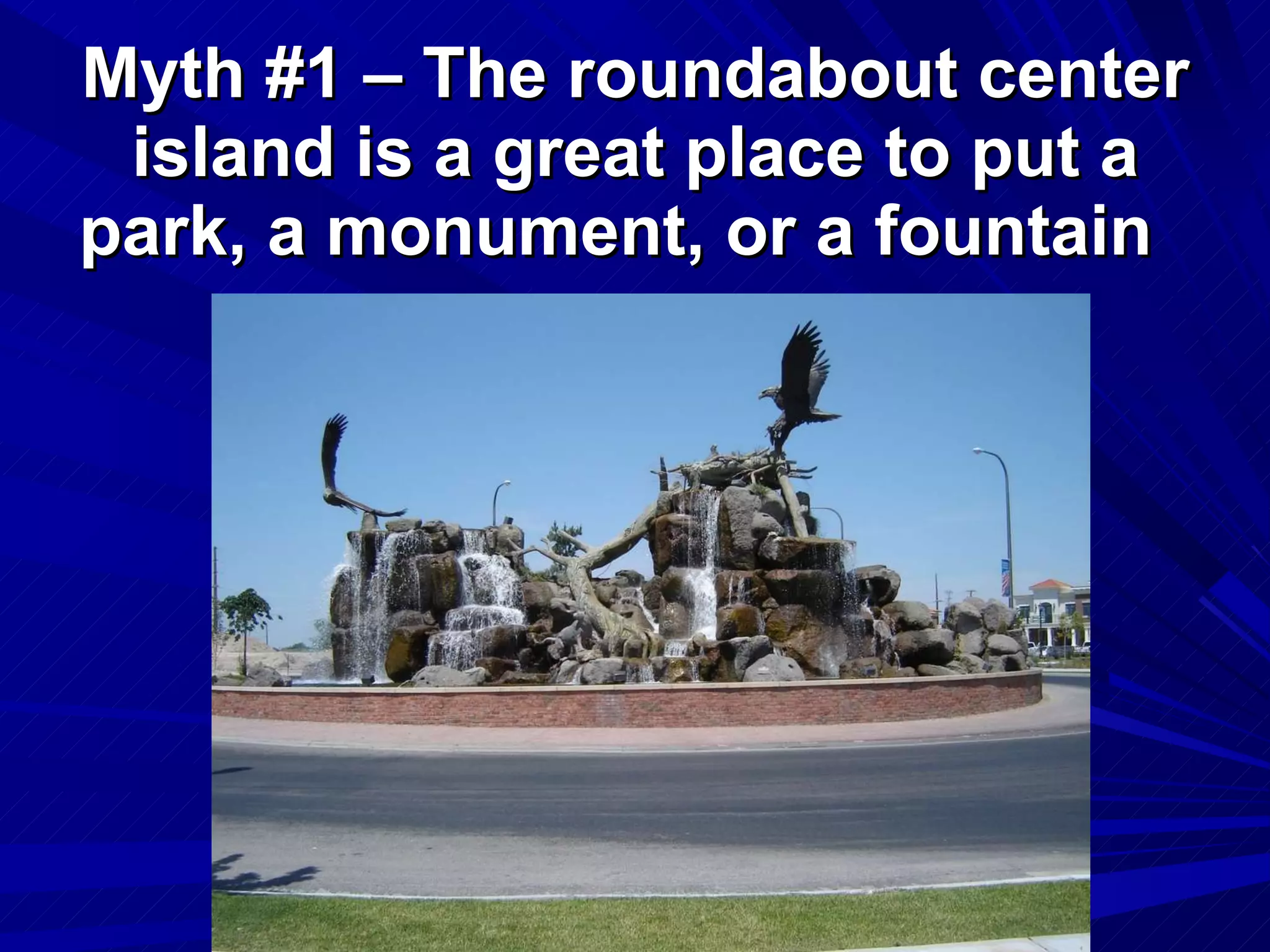
Myth #1 – The roundabout center island is a great place to put a park, a monument, or a fountain
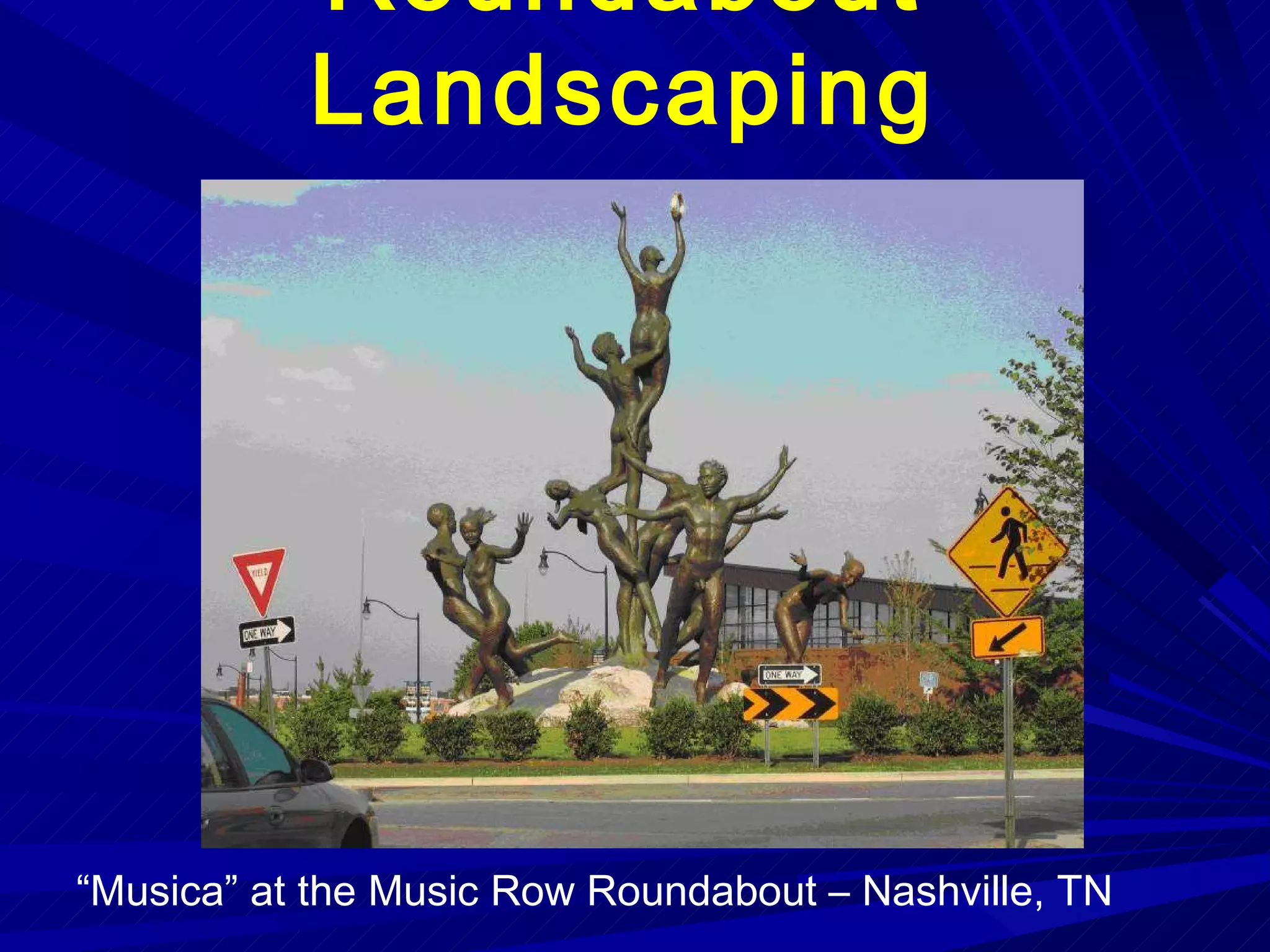
Roundabout Landscaping “ Musica” at the Music Row Roundabout – Nashville, TN
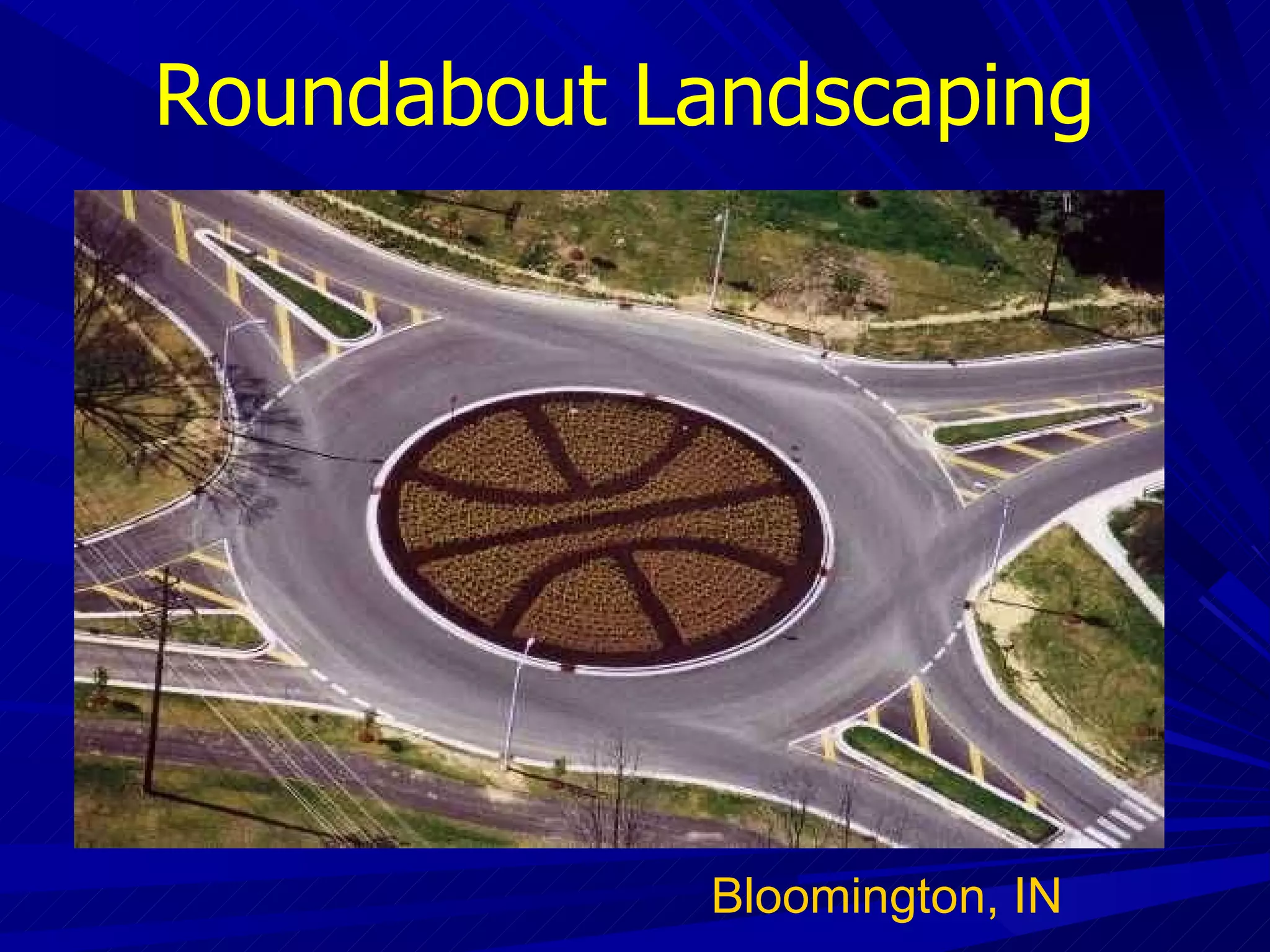
Roundabout Landscaping Bloomington, IN
Principles for Good Roundabout Landscaping Make the center island more conspicuous Minimize roadside hazards Maintain adequate sight distance Discourage pedestrian traffic through the center island Improve area aesthetics
For more information …. Contact: Mark Doctor FHWA Resource Center (404) 562-3732 [email_address]

FHWA roundabout presentation

  • 1.
    Roundabouts – An FHWA Perspective Mark Doctor, PE FHWA Resource Center
  • 2.
    Progress in buildingroundabouts MD DE DC MA OR RI NJ NH ME PA WV NC SC GA FL OH MI IN IL WI IA MO LA NM CO SD ID CA WA TN VT MS MT ND NV AZ UT WY NE KS OK TX AR MN AL KY VA NY CT AK HI Disclaimer: This is a subjective assessment based on information available on certain factors and conditions. If you have data to suggest revising this assessment, please contact Mark Doctor at FHWA (mark.doctor@dot.gov) moderate little or no activity substantial
  • 3.
    So, why aren’tmore agencies building roundabouts?
  • 4.
    “ TOP TEN”Roundabout Myths and Misunderstandings From the Home Office in Lumpkin, GA -
  • 5.
    Myth #10 -Roundabouts and traffic circles are the same thing ≠
  • 6.
    FACT: Roundabouts area subset of circular intersections Roundabouts Rotaries Neighborhood traffic circles All circular intersections Others
  • 7.
    Myth #9 -Roundabouts cause more crashes FACT: Study after study conclusively shows that modern roundabouts reduce motor vehicle crashes. The Insurance Institute for Highway Safety ( www.highwaysafety.org ) "most serious kinds of crashes at conventional intersections are virtually eliminated by roundabouts…Crashes that do occur tend to be minor because traffic speeds are slower." Studies of intersections around the U.S. that have been converted from stop signs or traffic signals to modern roundabouts. Total crashes were reduced by 39% Serious crashes were reduced by 76% Fatal or incapacitating injuries reduced by 89%
  • 8.
    What makes roundaboutssafer? Two key reasons: 1) They reduce the number of potential conflicts 2) They reduce speeds (higher-speed crashes are more likely to result in serious injury or death) 32 conflict points High-speed High-angle High-energy 8 conflict points Low-speed Low-angle Low-energy
  • 9.
    Myth #8 -The public will never accept roundabouts Photo source: NYSDOT
  • 10.
    FACT: Public AttitudeToward Roundabouts Quickly Changes After Construction Attitude Before After Construction Construction Very Negative 23% 00% Negative 45% 00% Neutral 18% 27% Positive 14% 41% Very Positive 0% 32% NCHRP Synthesis 264
  • 11.
    Drivers Who Favoror Oppose Roundabouts FAVOR STRONGLY OPPOSE Insurance Institute for Highway Safety 31 63 41 15
  • 12.
    From Opposition ToSupport ITE Journal Sept 2002: Surveys in Kansas, Maryland and Nevada
  • 13.
    Myth #7 -Roundabouts cost more Actual costs depend on several site specific conditions Most agencies find the initial construction cost of a roundabout is comparable to the initial construction cost of a signal A “life-cycle” cost comparison should be used since roundabouts do not require signal equipment maintenance ($15,000 + per year). Over the long run, roundabouts are typically less expensive than signals In some instances a roundabout may cost less because fewer lanes may be needed than at a signalized intersection. Typically the number of turn lanes can be reduced and in some instances the improved efficiency at the intersection allows the number of through lanes to be reduced.
  • 14.
    R.O.W. Comparison MainSt. and Center St. Hamburg, NY Source: NYSDOT
  • 15.
    Fact: Roundaboutsare very efficient from a traffic operations perspective and for a given volume will typically have less delay time than a signal or stop controlled intersection. Roundabouts must be designed to accommodate the proper demand volumes. An oversaturated roundabout will operate poorly as will an oversaturated signalized intersection. Myth #6 – Roundabouts have less capacity than signalized intersections
  • 16.
    Fact: Awell-designed modern roundabout includes a “truck apron” sized in accordance with the appropriate design vehicle for the highway type Myth #5 – Fire trucks and other large vehicles can’t make it through a roundabout
  • 17.
    Myth #4 -Roundabouts are not good for pedestrians and bicyclists Fact: Roundabouts are very pedestrian friendly - The splitter islands provide a space for pedestrians in the middle of each crossing. Therefore, pedestrians only need to cross one direction of traffic at a time. - The pedestrian crosswalks are set at least one full car length back from the yield line. That way, pedestrians do not have to cross in front of drivers that are looking for their gap in traffic. Experience has shown that the stopped vehicle one car length back from the yield line is more aware of pedestrians.
  • 18.
    Comparison of Vehicle/ Pedestrian Conflicts 16 Conflicts 8 Conflicts
  • 19.
    Myth #3 –Roundabouts aren’t good for older drivers Some Demographic Facts: Americans aged 85 and older are the fastest growing part of the population. The size of the population aged 65 and older is projected to double over the next 30 years. By 2020 one in five people will be aged 65 or older. In other words - before 2020, the 85%ile design driver will be someone aged 65 or older.
  • 20.
    Older users areespecially at risk at intersections About 35%-40% of pedestrian deaths among people aged 65 and older occur at intersections Older drivers are about twice as likely to be killed while driving through an intersection than younger drivers. Drivers 85 years of age and older are more than 10 times as likely as drivers in the 40-49 age group to have multi-vehicle intersection crashes. “ There is agreement that elderly road users require mobility, and that they should be accommodated by the highway’s design and operational characteristics to the greatest extent practicable. Thus, designers and engineers should be aware of the problems and requirements of the elderly, and consider applying applicable measures to aid their performance.” — AASHTO Green Book
  • 21.
    What Roundabouts Provide:Lower speeds Situation changes slowly Very forgiving environment More time to make the right response Judging gaps is easy and mistakes are not lethal NO demand to accurately judge closing speeds of fast traffic Low energy crashes: low closing speeds, low angle, low impact No wide visual scans needed Reduced need to look over one’s shoulder Uncomplicated situations; simple decision-making
  • 22.
    The Acacia RoundaboutClearwater, FL … opened in December, 2001
  • 23.
    Fact: Mostbusiness owners agree that slower speeds and safer travel enhance business along the corridor Fact: Some “blighted” communities have actually experienced economic revitalization following roundabout projects Myth #2 – Roundabouts are bad for the nearby businesses
  • 24.
    Case Study: Golden,Colorado South Golden Road
  • 25.
  • 26.
    Case Study: Golden,CO South Golden Road – 15,000 ADT $1.3M project in 1999 to construct four roundabouts, landscaping, medians & sidewalks Significant drop in number and severity of crashes 1997 crash rate = 5.9 crashes/MVM 2004 crash rate = 0.2 crashes/MVM Slower speeds but faster travel time thru corridor 60% sales tax revenue increase along corridor Roundabouts are good for business !!!
  • 27.
    Myth #1 –The roundabout center island is a great place to put a park, a monument, or a fountain
  • 28.
    Roundabout Landscaping “Musica” at the Music Row Roundabout – Nashville, TN
  • 29.
  • 30.
    Principles for GoodRoundabout Landscaping Make the center island more conspicuous Minimize roadside hazards Maintain adequate sight distance Discourage pedestrian traffic through the center island Improve area aesthetics
  • 31.
    For more information…. Contact: Mark Doctor FHWA Resource Center (404) 562-3732 [email_address]