1
Fermentation Technology
623311
Yalun Arifin
Chemical Engineering Dept.
University of Surabaya
2
Course content
I. Introduction
II. General aspects of fermentation processes
III. Quantification of microbial rates
IV. Stoichiometry of microbial growth and product
formation
V. Black box growth
VI. Growth and product formation
VII. Heat transfer in fermentation
VIII. Mass transfer in fermentation
IX. Unit operations in fermentation (introduction to
downstream processing)
X. Bioreactor
3
Chapter I
Introduction
4
What is fermentation?
• Pasteur’s definition: “life without air”, anaerobe
red ox reactions in organisms
• New definition: a form of metabolism in which the
end products could be further oxidized
For example: a yeast cell obtains 2 molecules of
ATP per molecule of glucose when it ferments it
to ethanol
5
What is fermentation techniques (1)?
Techniques for large-scale production of microbial products.
It must both provide an optimum environment for the
microbial synthesis of the desired product and be
economically feasible on a large scale. They can be divided
into surface (emersion) and submersion techniques. The latter
may be run in batch, fed batch, continuous reactors
In the surface techniques, the microorganisms are cultivated
on the surface of a liquid or solid substrate. These techniques
are very complicated and rarely used in industry
6
What is fermentation techniques (2)?
In the submersion processes, the microorganisms grow in a
liquid medium. Except in traditional beer and wine
fermentation, the medium is held in fermenters and stirred to
obtain a homogeneous distribution of cells and medium. Most
processes are aerobic, and for these the medium must be
vigorously aerated. All important industrial processes
(production of biomass and protein, antibiotics, enzymes and
sewage treatment) are carried out by submersion processes.
7
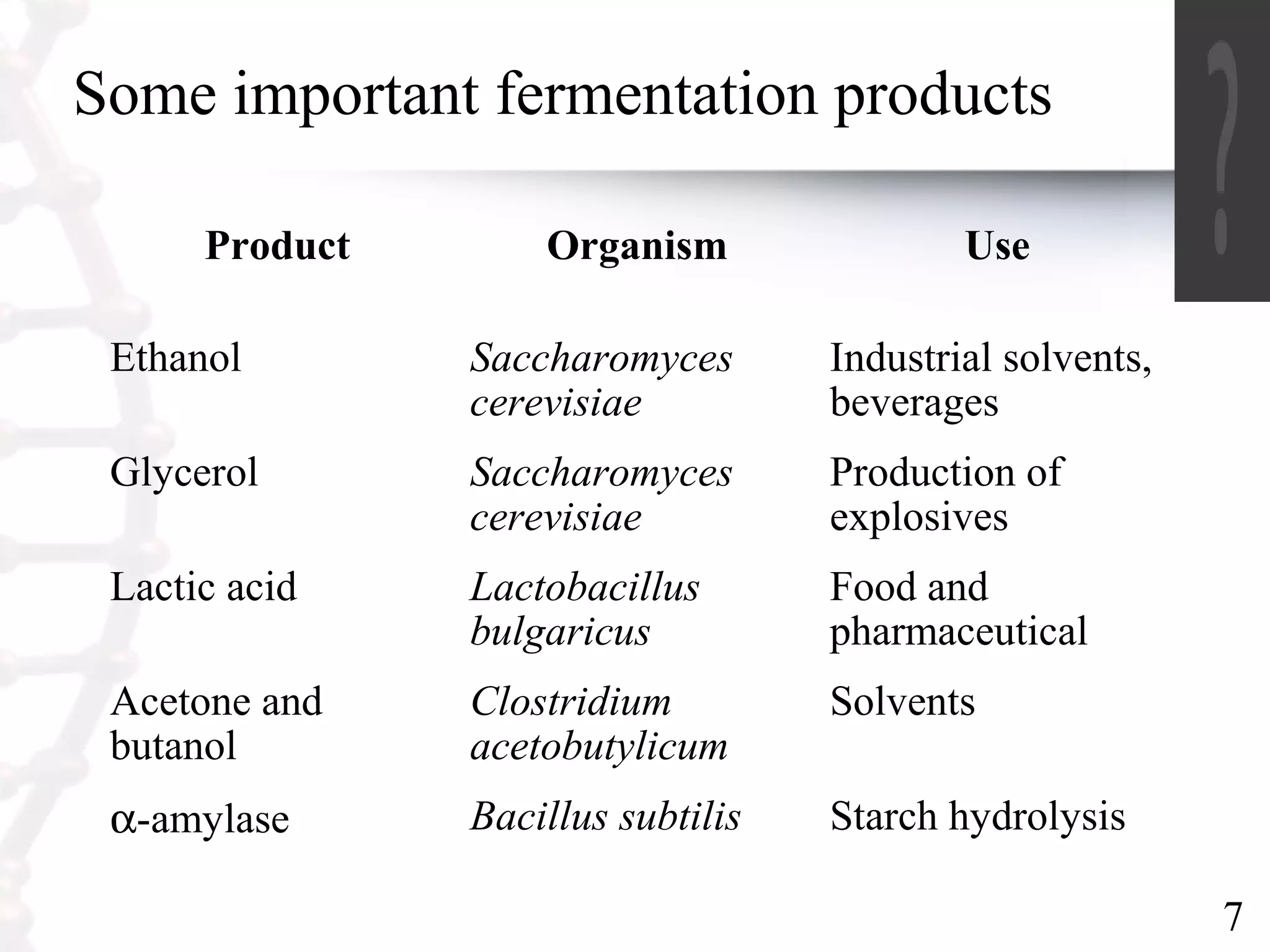
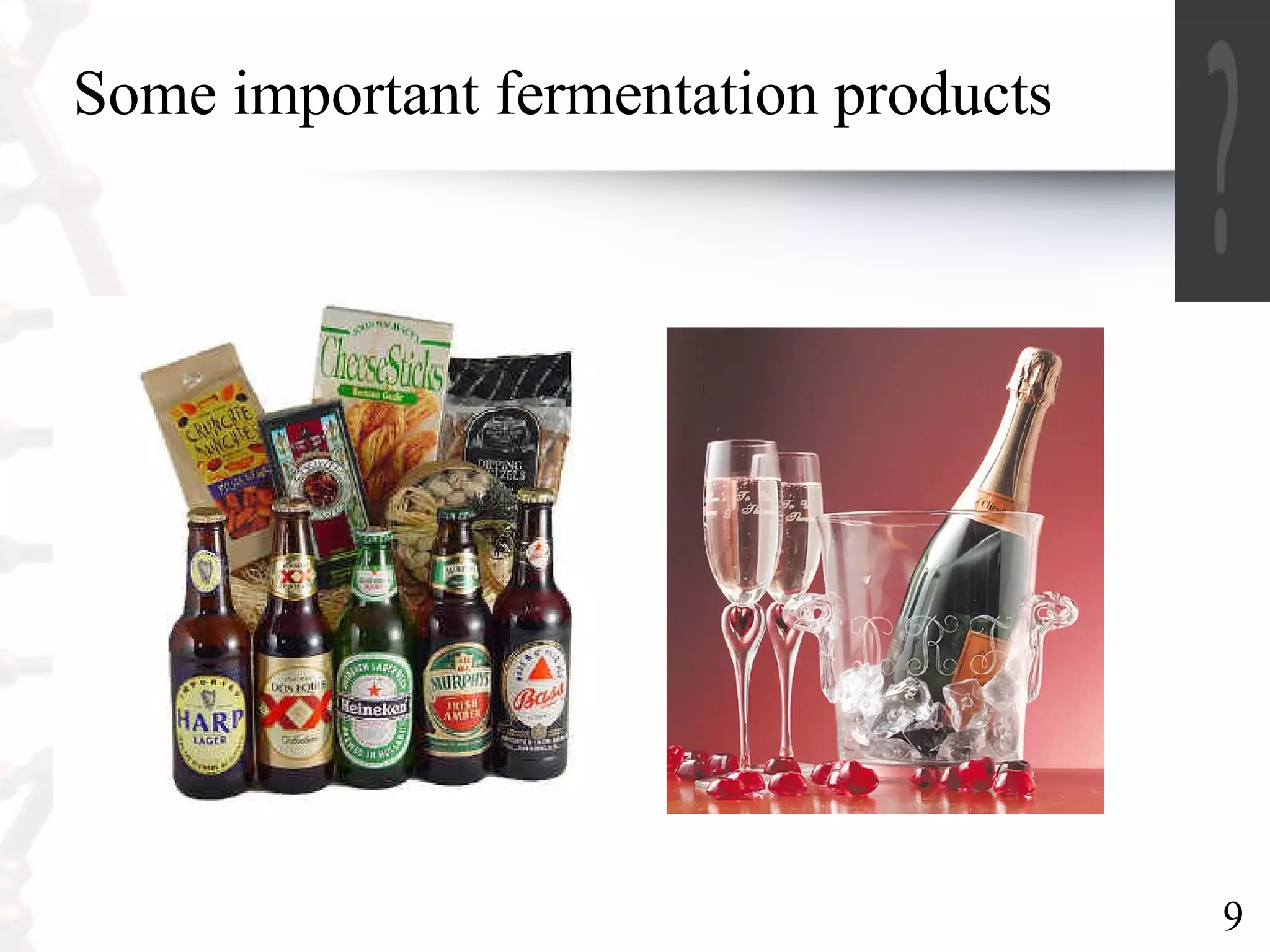
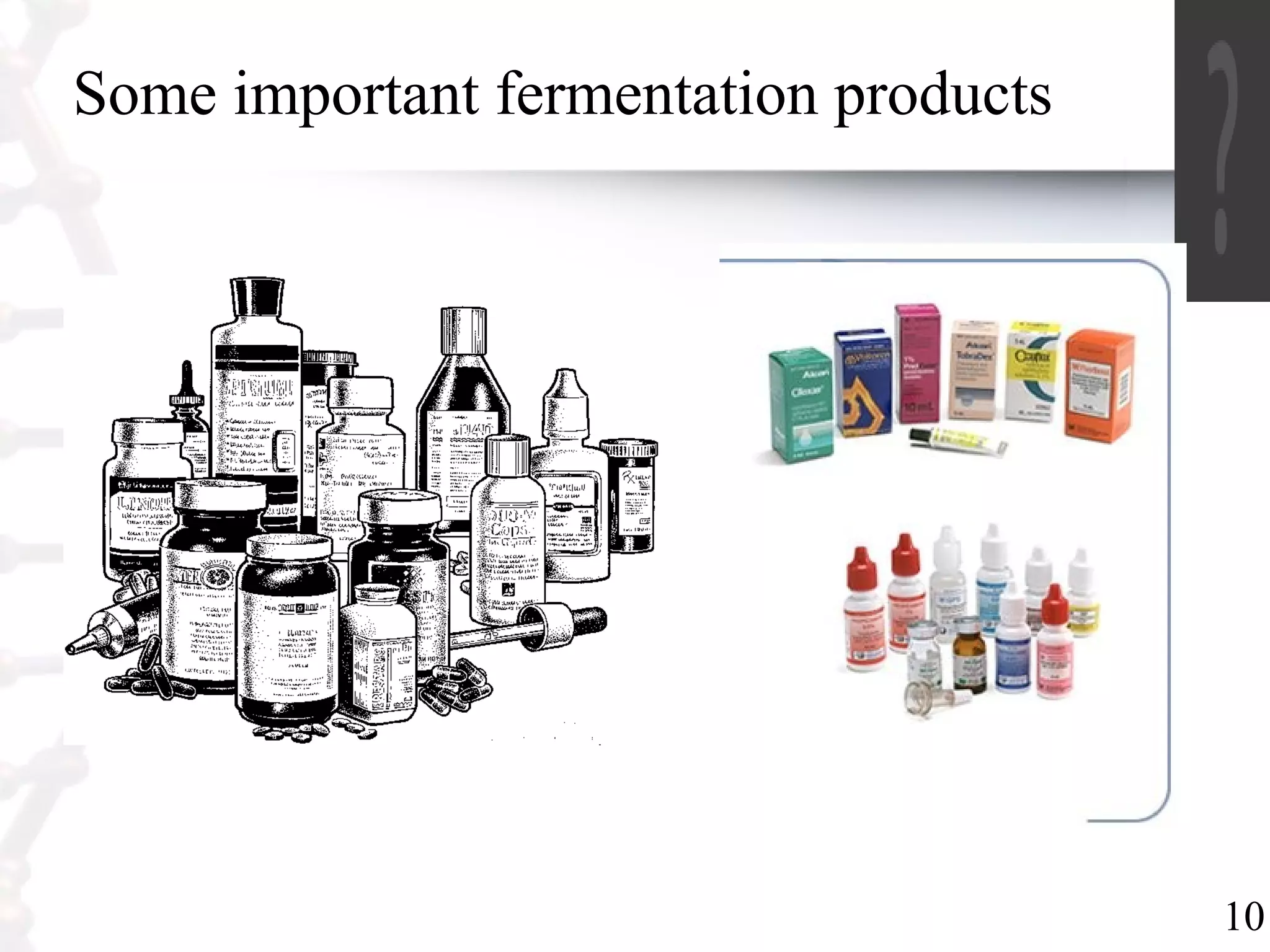
Some important fermentation products
Product Organism Use
Ethanol Saccharomyces
cerevisiae
Industrial solvents,
beverages
Glycerol Saccharomyces
cerevisiae
Production of
explosives
Lactic acid Lactobacillus
bulgaricus
Food and
pharmaceutical
Acetone and
butanol
Clostridium
acetobutylicum
Solvents
α-amylase Bacillus subtilis Starch hydrolysis
8
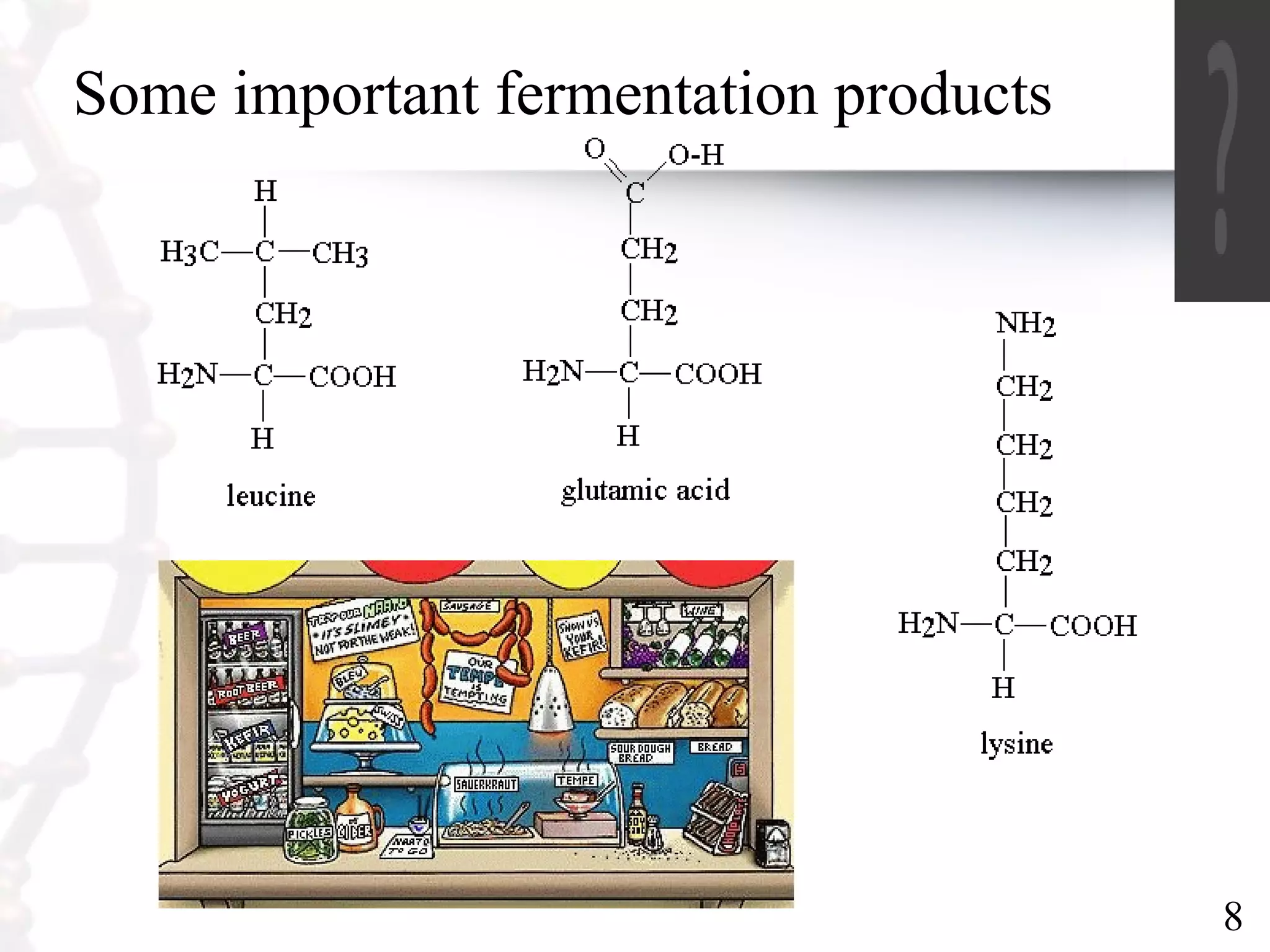
Some important fermentation products
9
Some important fermentation products
10
Some important fermentation products
11
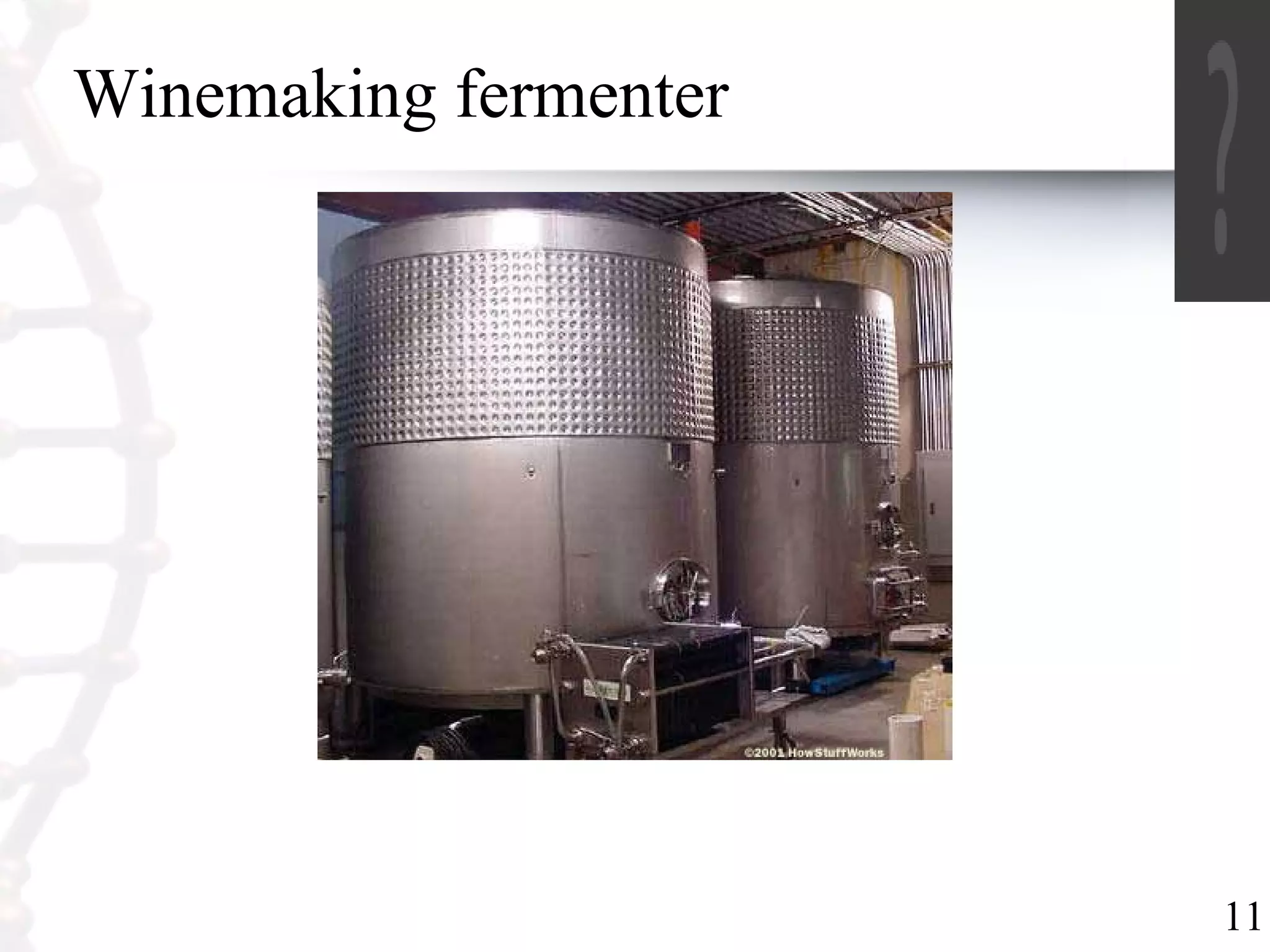
Winemaking fermenter
12
Chapter II
General Aspects of Fermentation
Processes
13
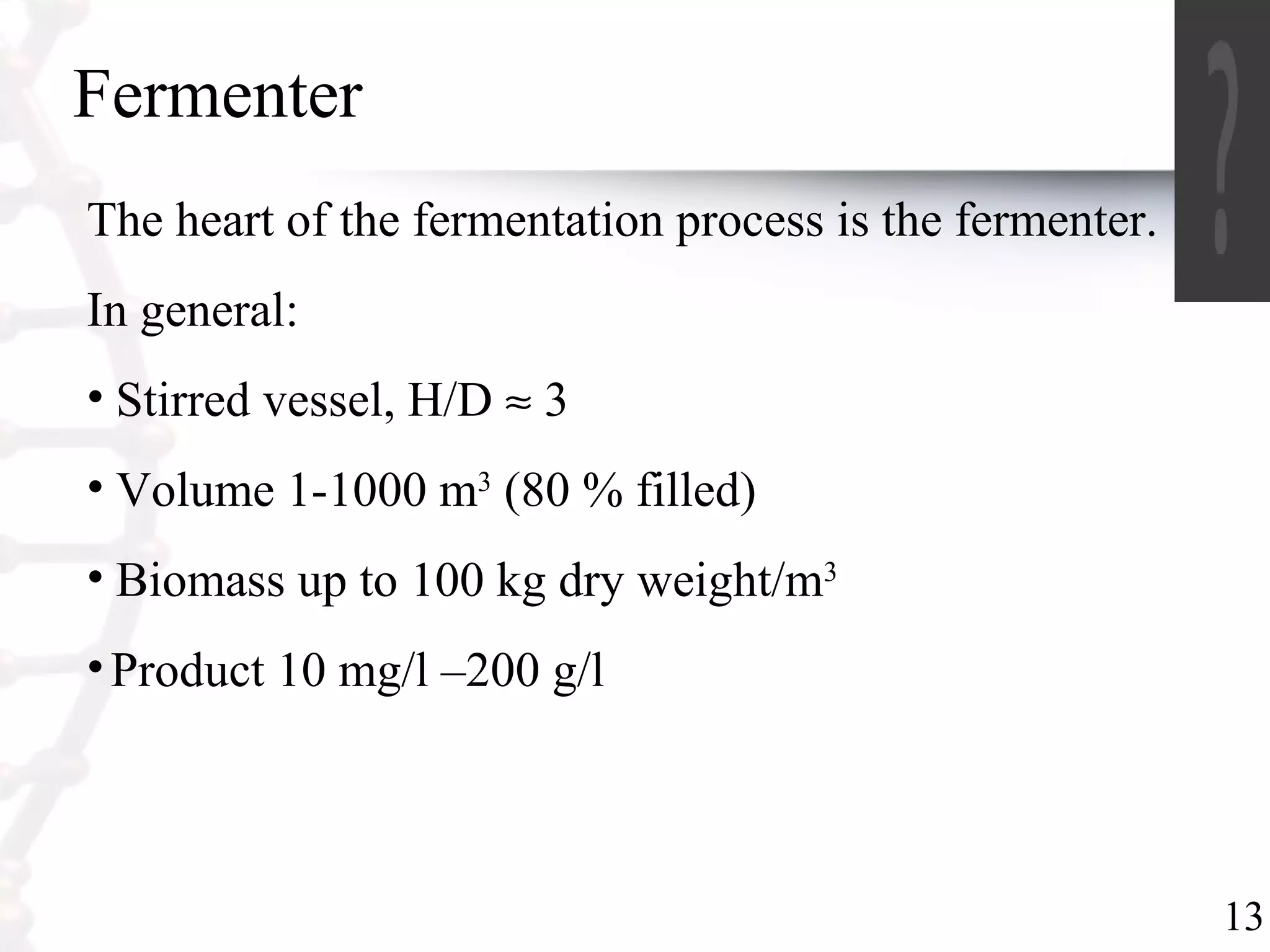
Fermenter
The heart of the fermentation process is the fermenter.
In general:
• Stirred vessel, H/D ≈ 3
• Volume 1-1000 m3
(80 % filled)
• Biomass up to 100 kg dry weight/m3
•Product 10 mg/l –200 g/l
14
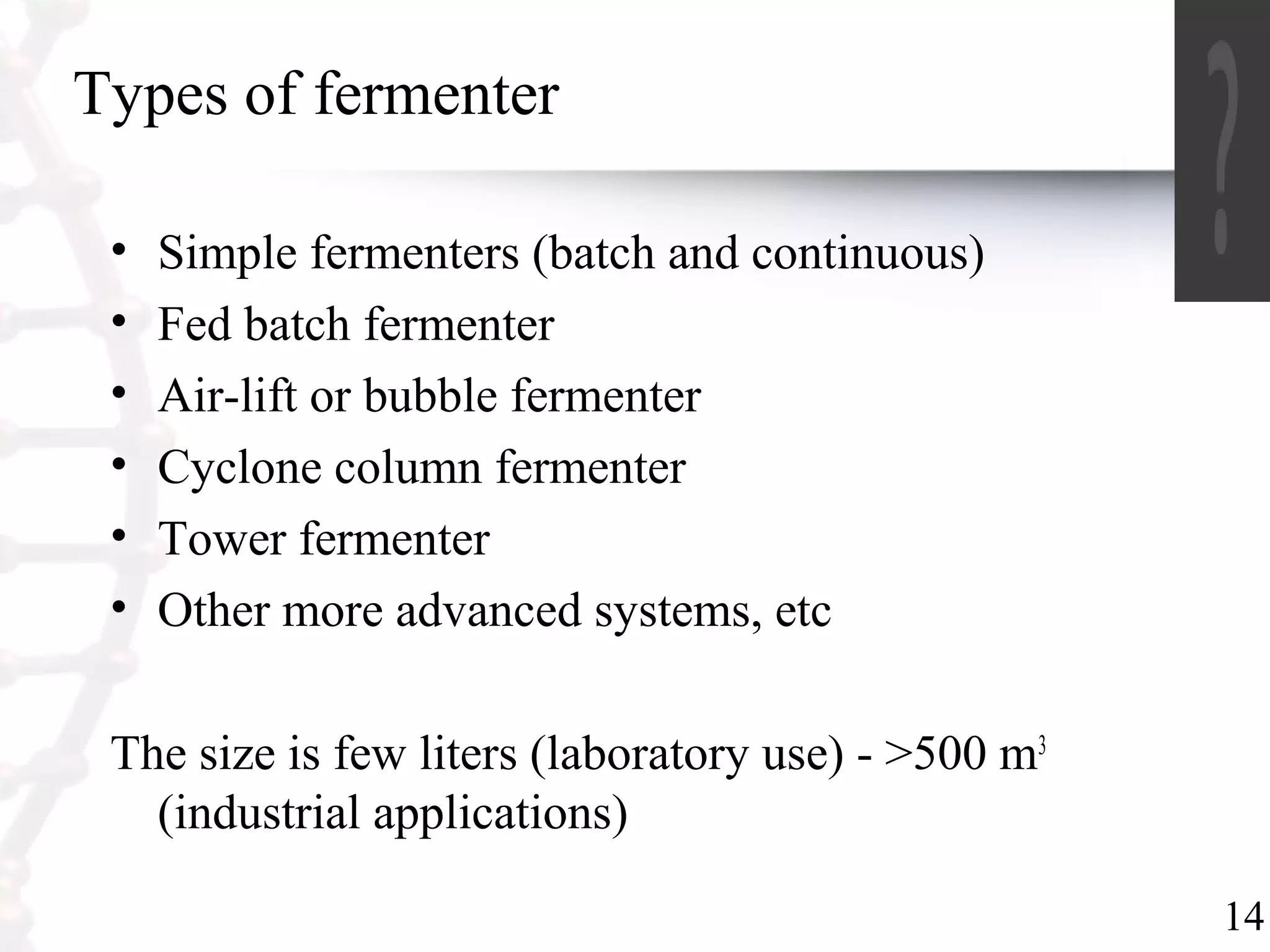
Types of fermenter
• Simple fermenters (batch and continuous)
• Fed batch fermenter
• Air-lift or bubble fermenter
• Cyclone column fermenter
• Tower fermenter
• Other more advanced systems, etc
The size is few liters (laboratory use) - >500 m3
(industrial applications)
15
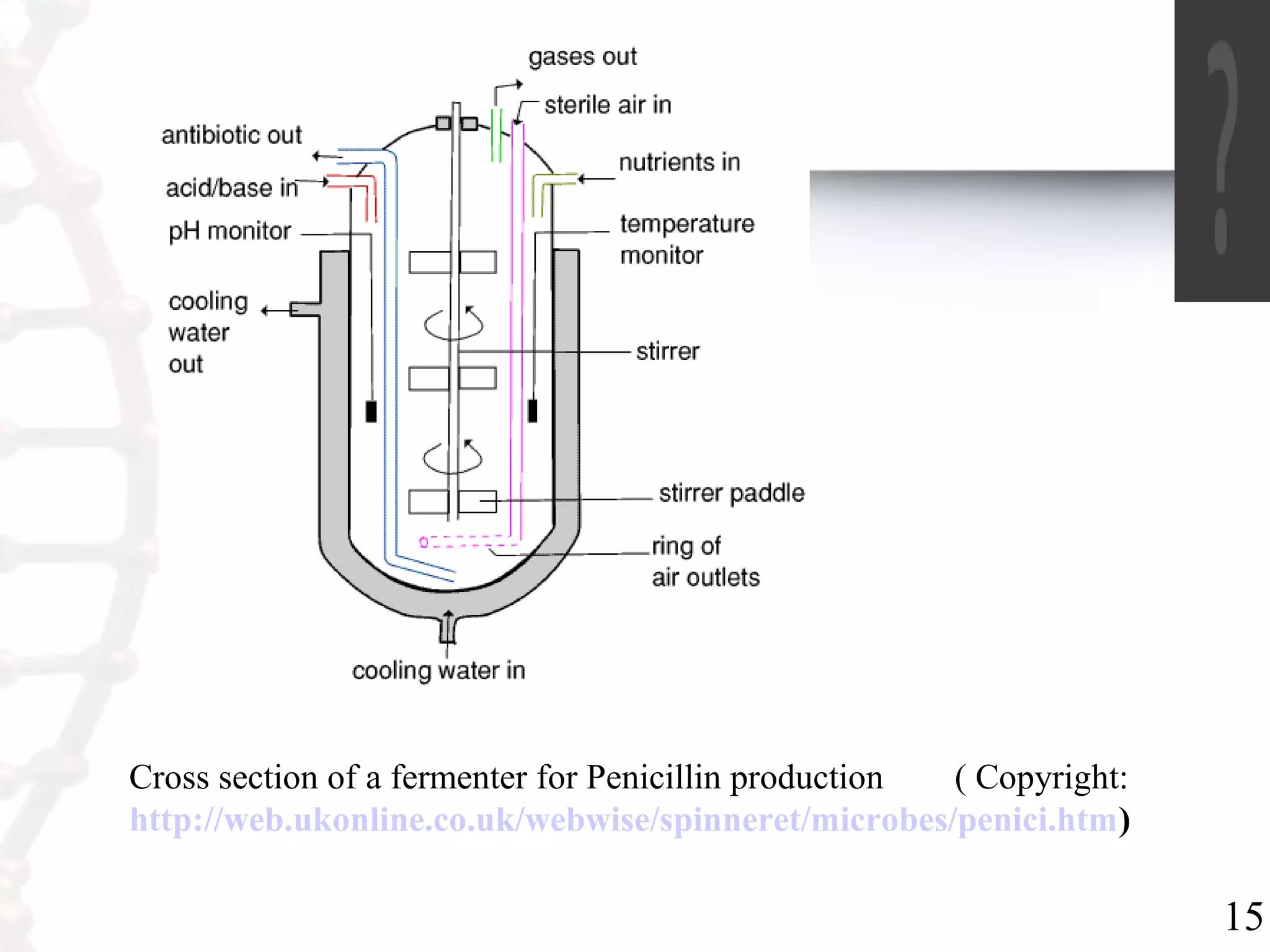
Cross section of a fermenter for Penicillin production ( Copyright:
http://web.ukonline.co.uk/webwise/spinneret/microbes/penici.htm)
16
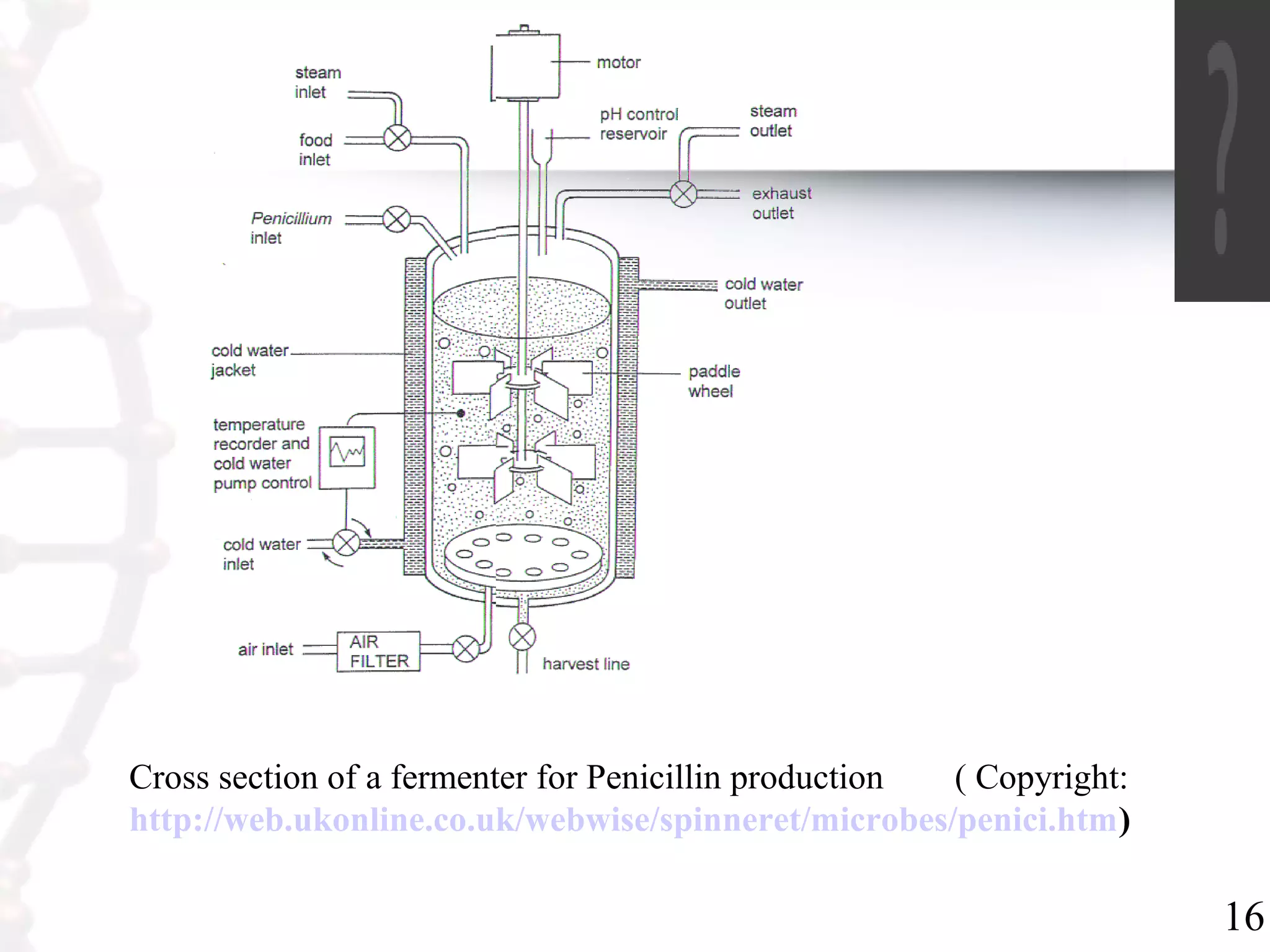
Cross section of a fermenter for Penicillin production ( Copyright:
http://web.ukonline.co.uk/webwise/spinneret/microbes/penici.htm)
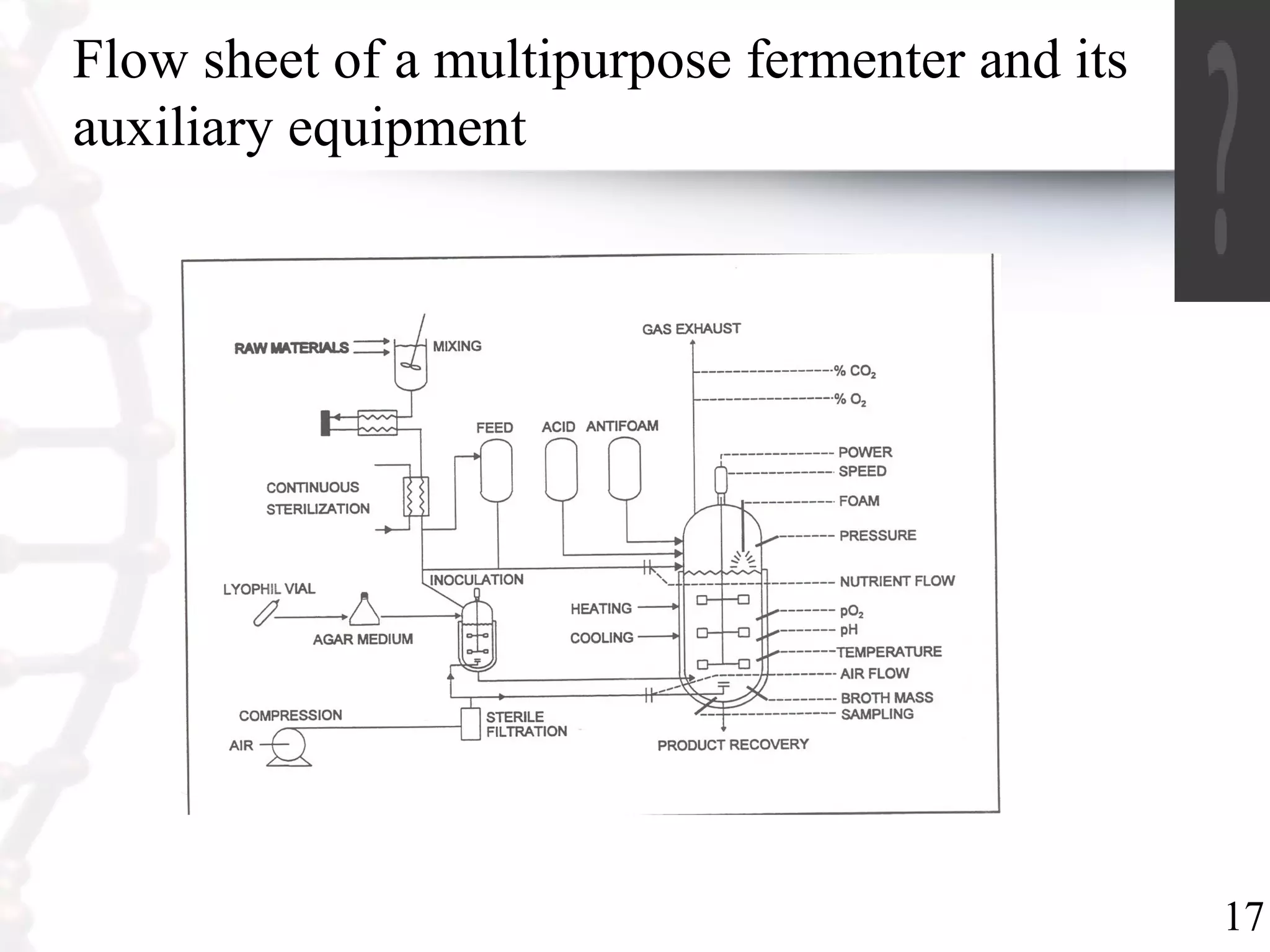
17
Flow sheet of a multipurpose fermenter and its
auxiliary equipment
18
Fermentation medium
• Define medium  nutritional, hormonal, and
substratum requirement of cells
• In most cases, the medium is independent of the
bioreactor design and process parameters
• The type: complex and synthetic medium (mineral
medium)
• Even small modifications in the medium could
change cell line stability, product quality, yield,
operational parameters, and downstream processing.
19
Medium composition
Fermentation medium consists of:
• Macronutrients (C, H, N, S, P, Mg sources  water,
sugars, lipid, amino acids, salt minerals)
• Micronutrients (trace elements/ metals, vitamins)
• Additional factors: growth factors, attachment
proteins, transport proteins, etc)
For aerobic culture, oxygen is sparged
20
Inoculums
Incoculum is the substance/ cell culture that is
introduced to the medium. The cell then grow in the
medium, conducting metabolisms.
Inoculum is prepared for the inoculation before the
fermentation starts.
It needs to be optimized for better performance:
• Adaptation in the medium
• Mutation (DNA recombinant, radiation, chemical
addition)
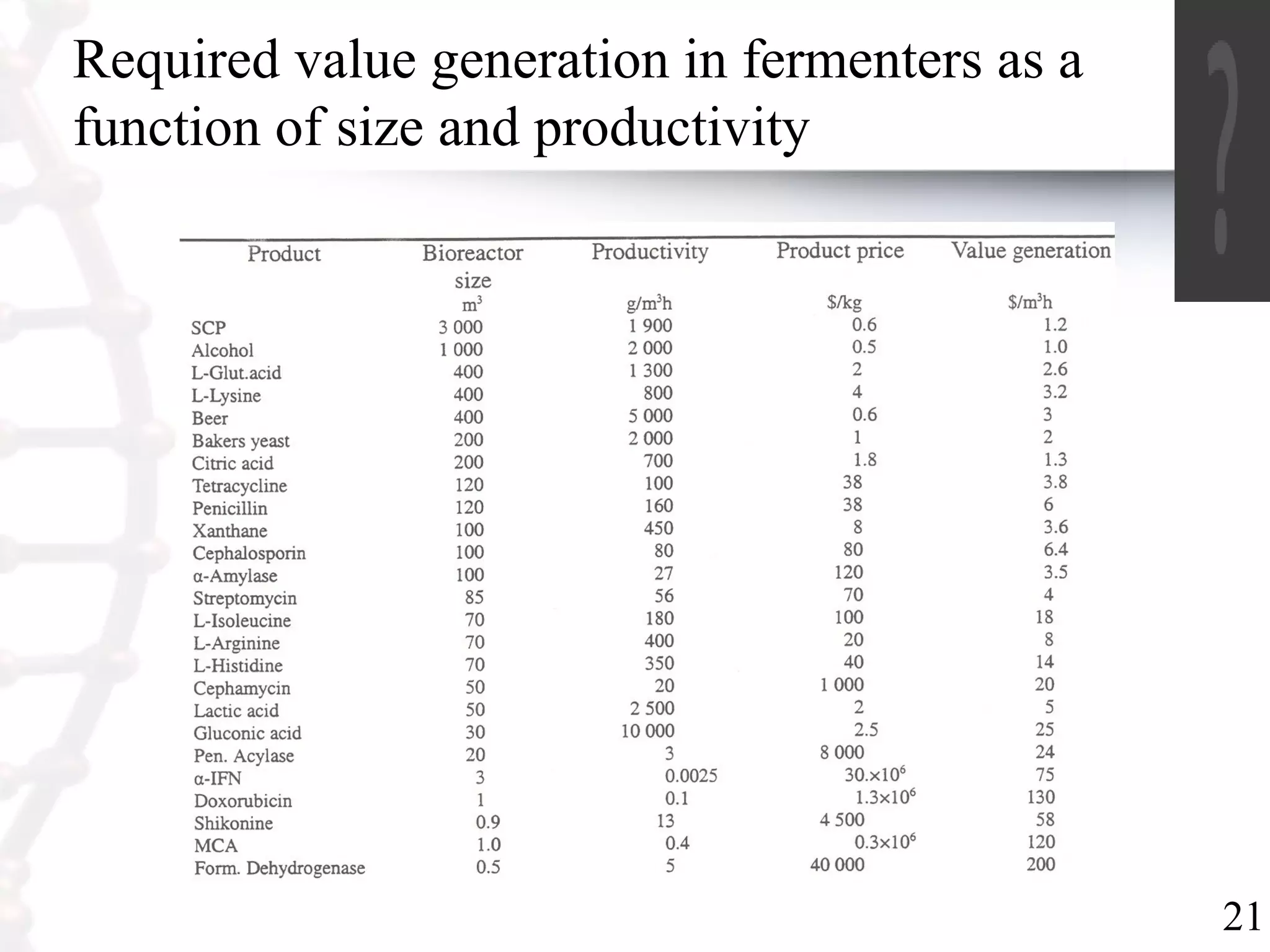
21
Required value generation in fermenters as a
function of size and productivity
22
Chapter III
Quantification of Microbial Rates
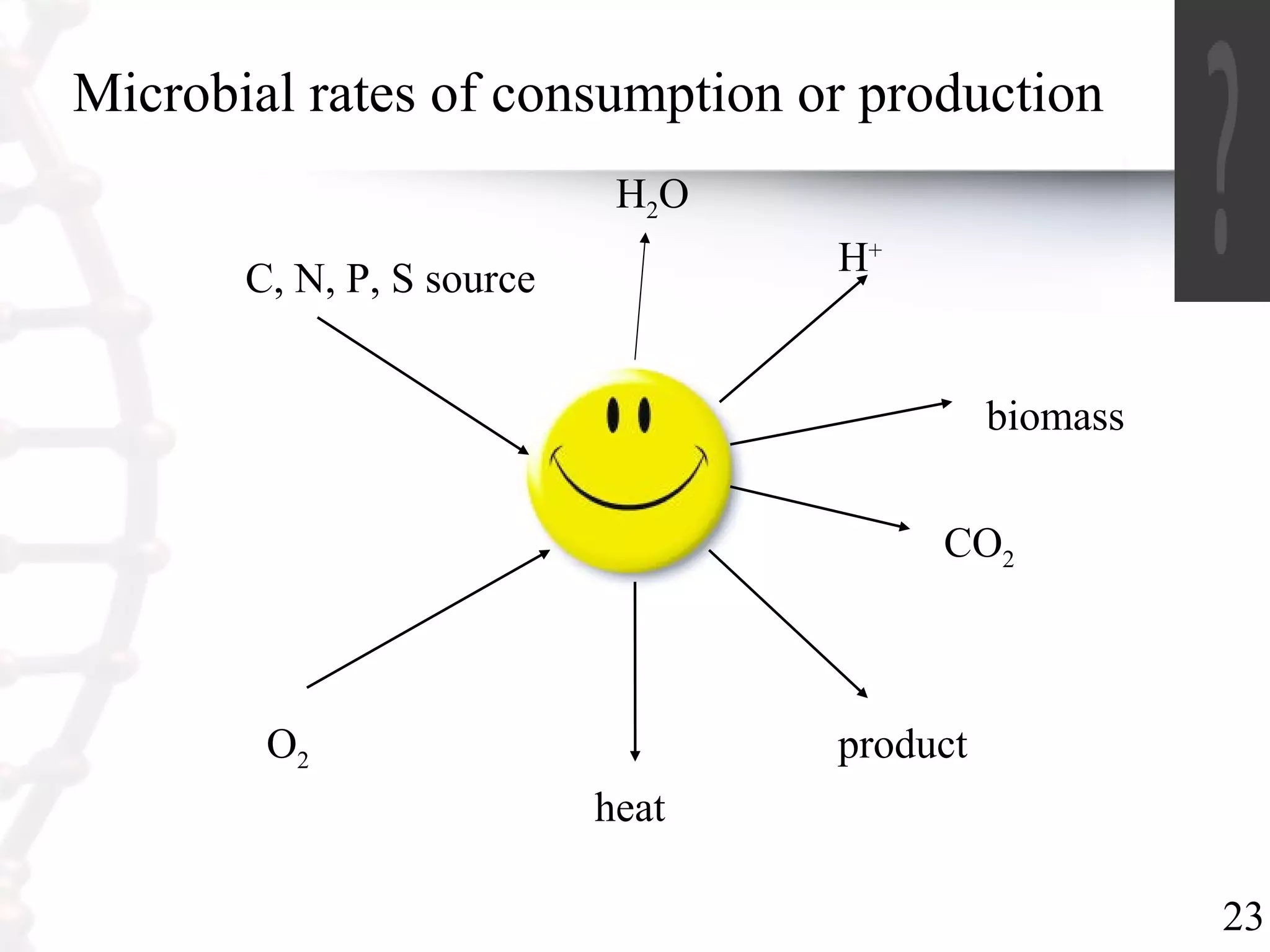
23
Microbial rates of consumption or production
C, N, P, S source
H2O
H+
O2
heat
product
CO2
biomass
24
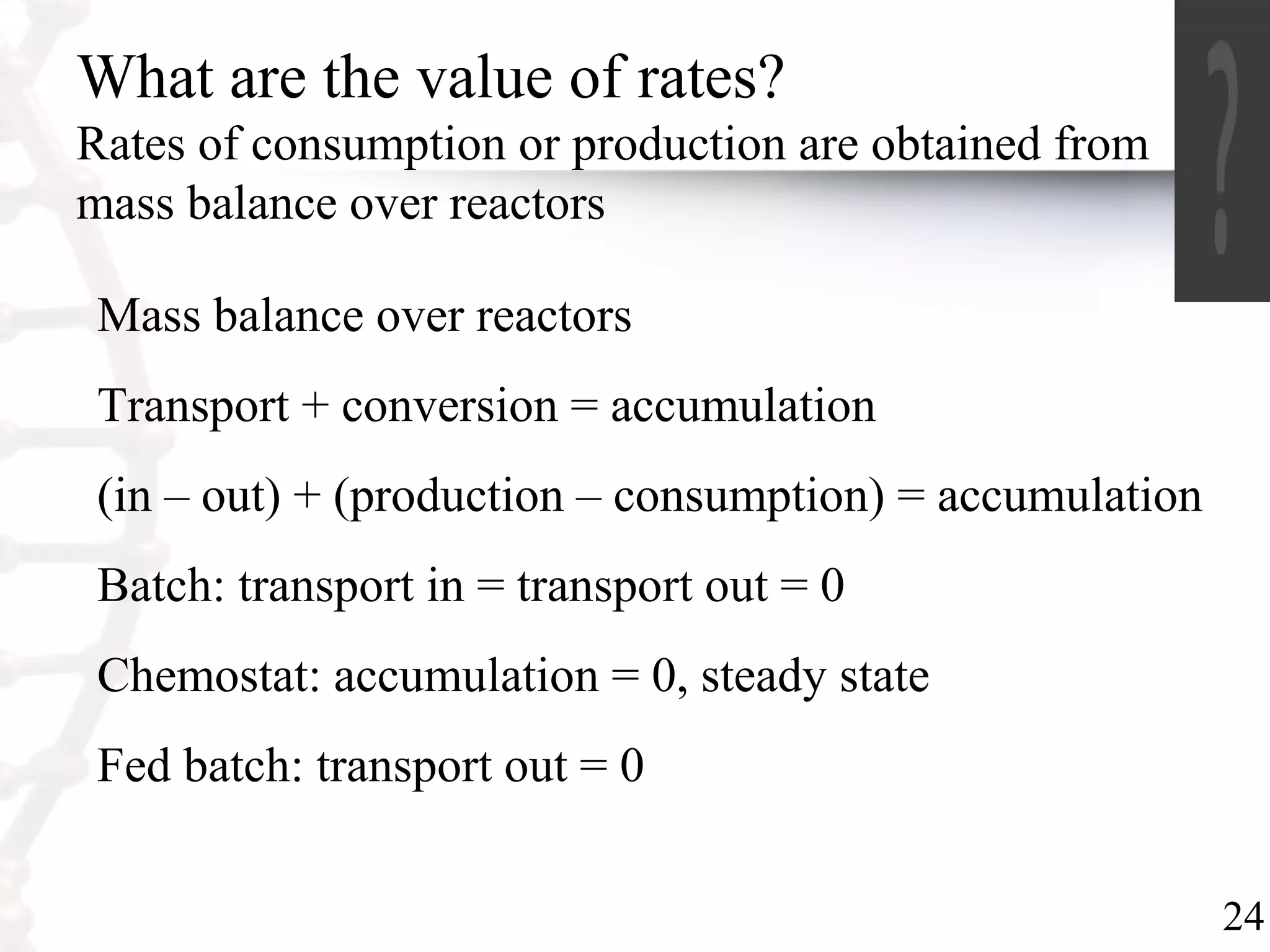
What are the value of rates?
Rates of consumption or production are obtained from
mass balance over reactors
Mass balance over reactors
Transport + conversion = accumulation
(in – out) + (production – consumption) = accumulation
Batch: transport in = transport out = 0
Chemostat: accumulation = 0, steady state
Fed batch: transport out = 0
25
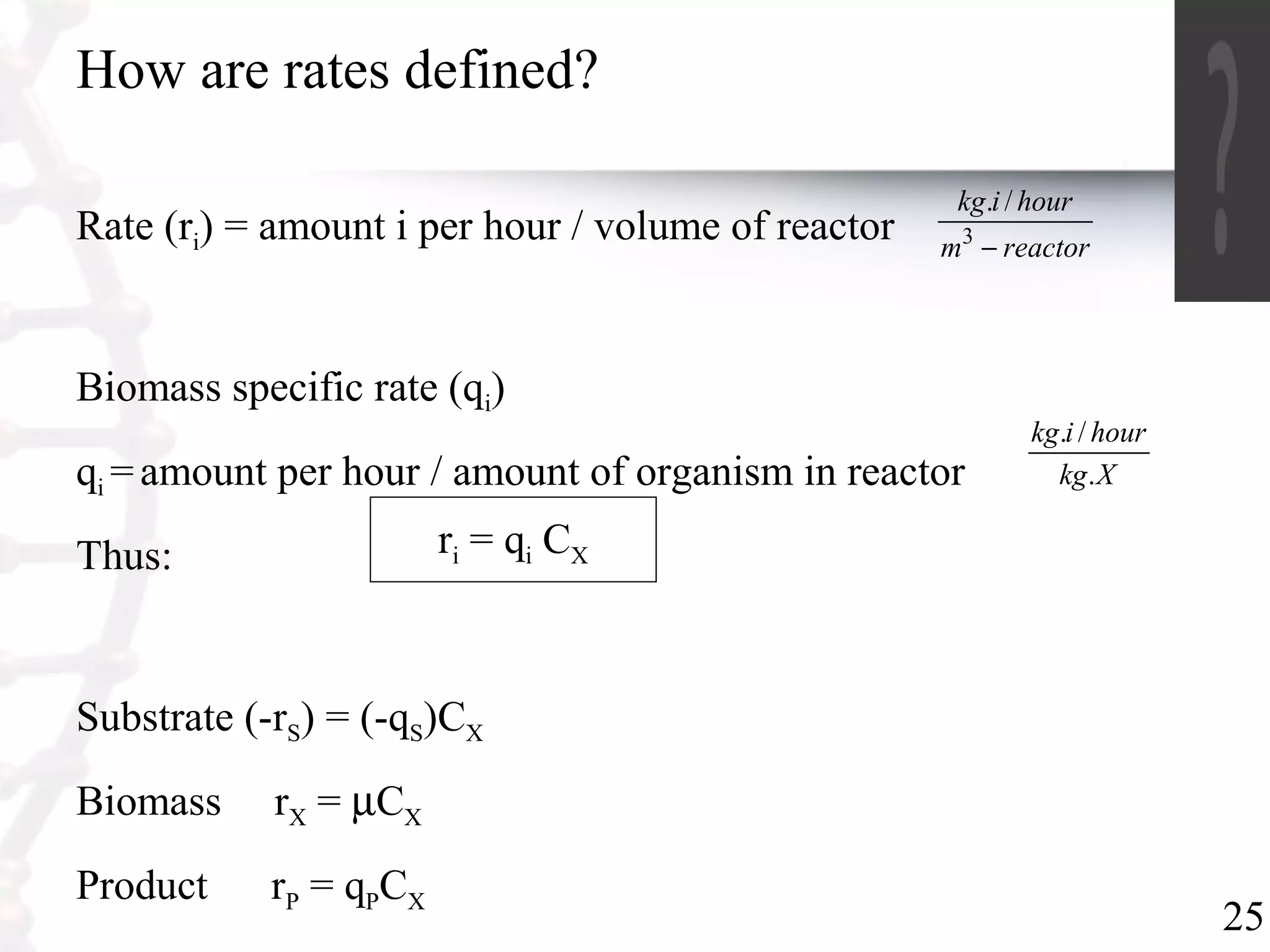
How are rates defined?
Rate (ri) = amount i per hour / volume of reactor
Biomass specific rate (qi)
qi =amount per hour / amount of organism in reactor
Thus:
Substrate (-rS) = (-qS)CX
Biomass rX = µCX
Product rP = qPCX
reactorm
hourikg
−3
/.
Xkg
hourikg
.
/.
ri = qi CX
26
Yield = ratio of rates
Yij = i
j
Xi
Xj
i
j
q
q
Cq
Cq
r
r
irate
jrate
===
.
.
YSX = rate of biomass production / rate of substrate
consumption [g biomass/g substrate]
YOX = rate of biomass production / rate of oxygen
consumption [g biomass/g oxygen]
27
Chapter IV
Stoichiometry of Microbial Growth and
Product Formation
28
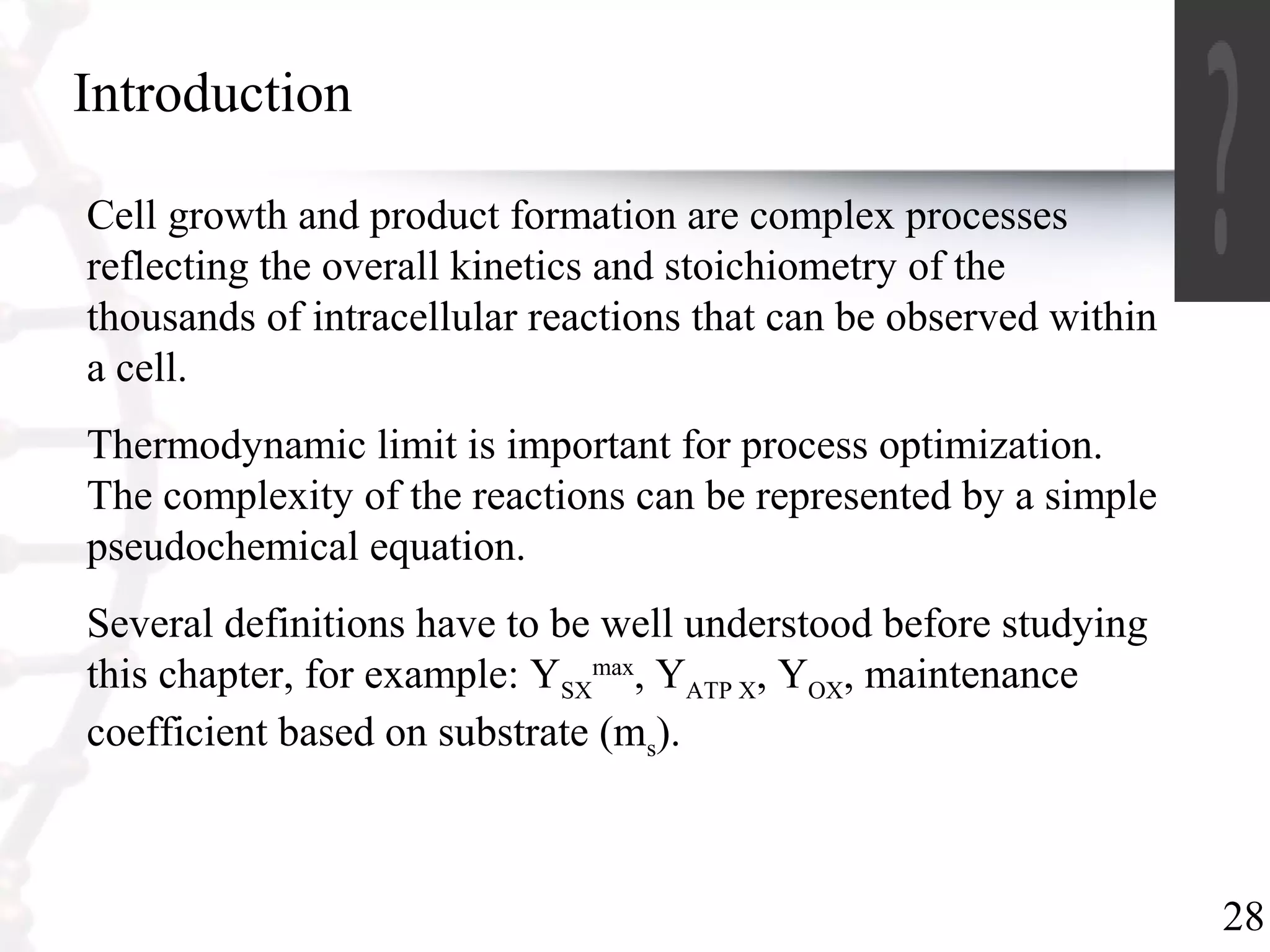
Introduction
Cell growth and product formation are complex processes
reflecting the overall kinetics and stoichiometry of the
thousands of intracellular reactions that can be observed within
a cell.
Thermodynamic limit is important for process optimization.
The complexity of the reactions can be represented by a simple
pseudochemical equation.
Several definitions have to be well understood before studying
this chapter, for example: YSX
max
, YATP X, YOX, maintenance
coefficient based on substrate (ms).
29
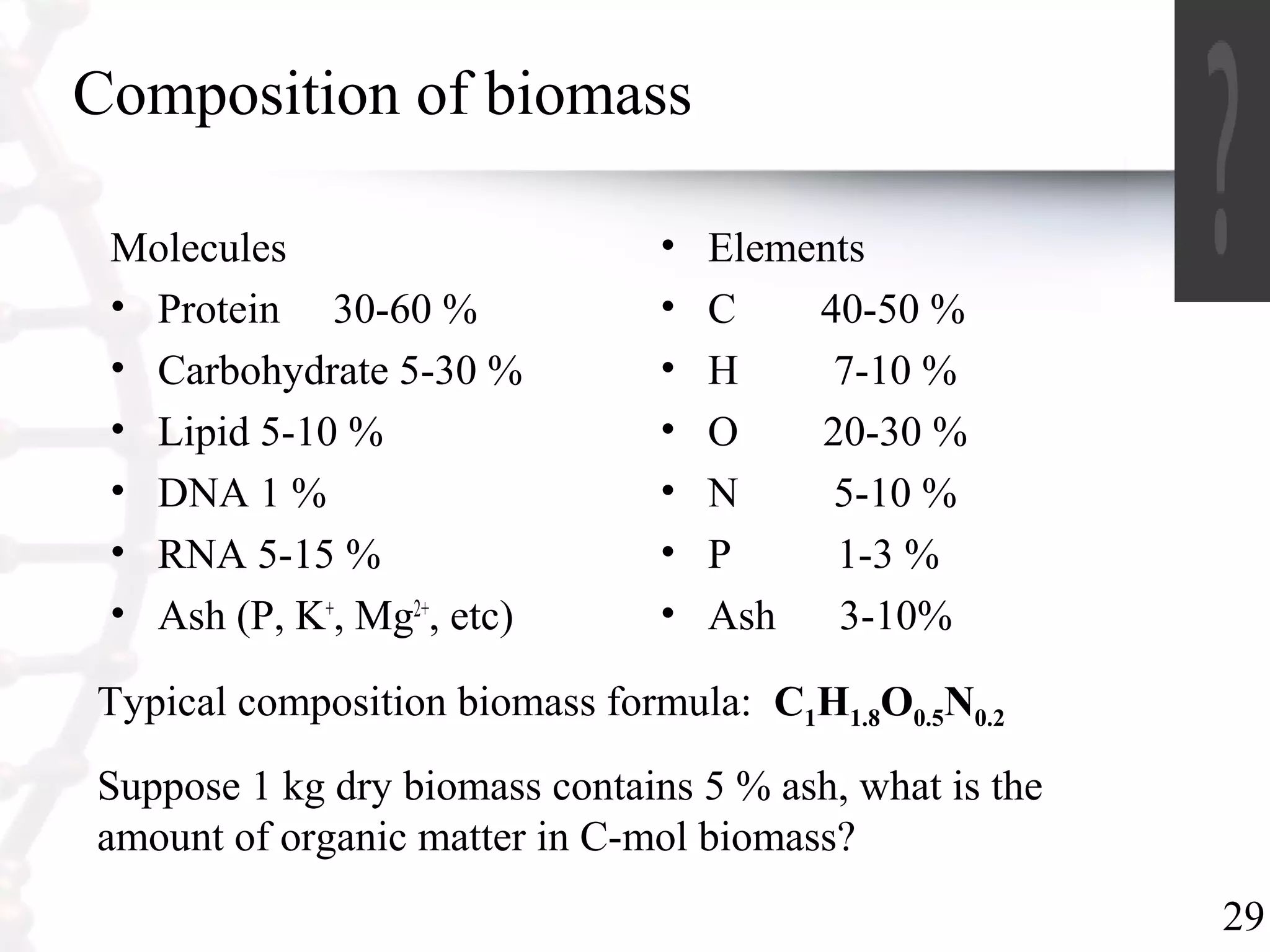
Composition of biomass
Molecules
• Protein 30-60 %
• Carbohydrate 5-30 %
• Lipid 5-10 %
• DNA 1 %
• RNA 5-15 %
• Ash (P, K+
, Mg2+
, etc)
• Elements
• C 40-50 %
• H 7-10 %
• O 20-30 %
• N 5-10 %
• P 1-3 %
• Ash 3-10%
Typical composition biomass formula: C1H1.8O0.5N0.2
Suppose 1 kg dry biomass contains 5 % ash, what is the
amount of organic matter in C-mol biomass?
30
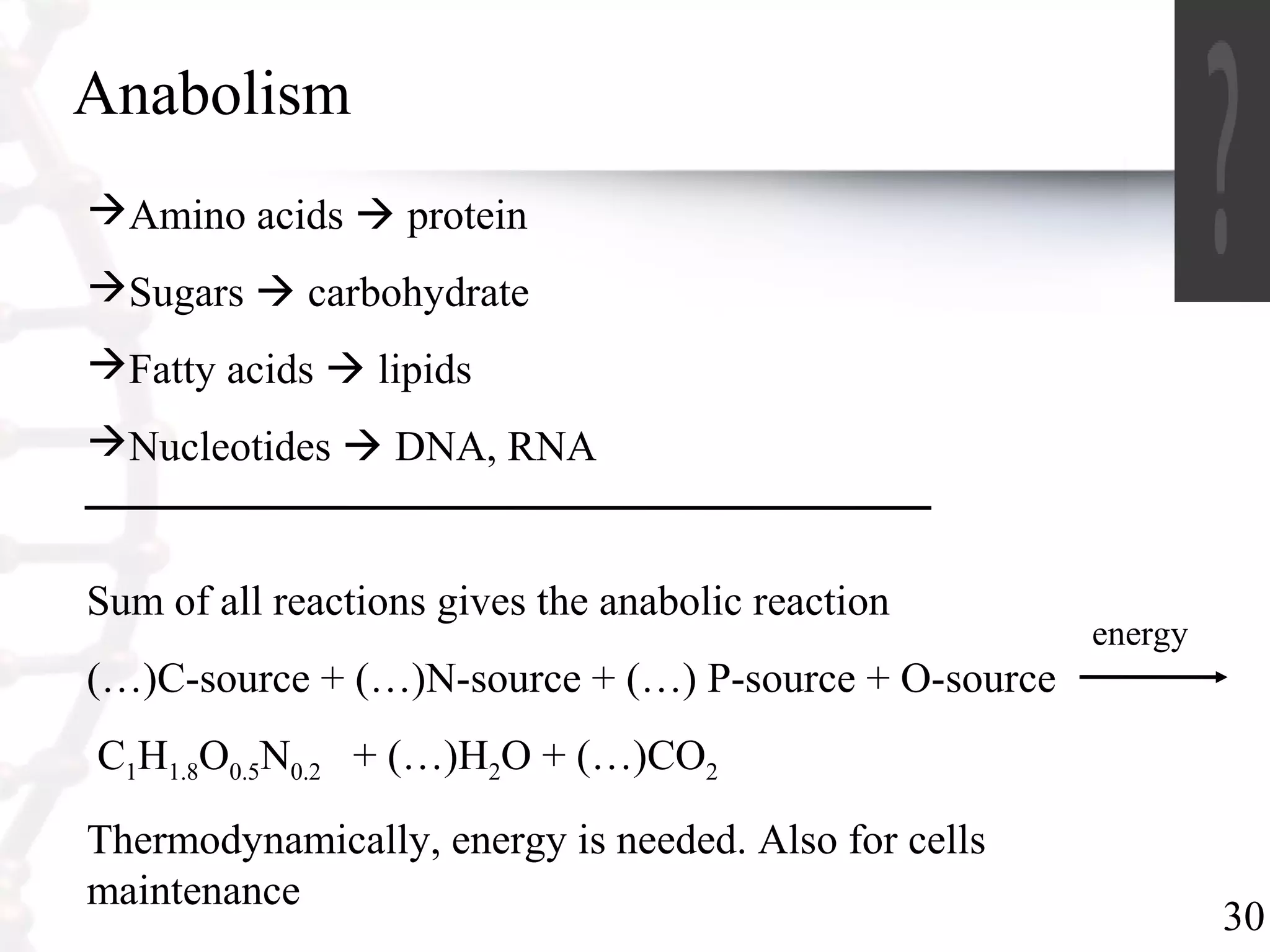
Anabolism
Amino acids  protein
Sugars  carbohydrate
Fatty acids  lipids
Nucleotides  DNA, RNA
Sum of all reactions gives the anabolic reaction
(…)C-source + (…)N-source + (…) P-source + O-source
C1H1.8O0.5N0.2 + (…)H2O + (…)CO2
Thermodynamically, energy is needed. Also for cells
maintenance
energy
31
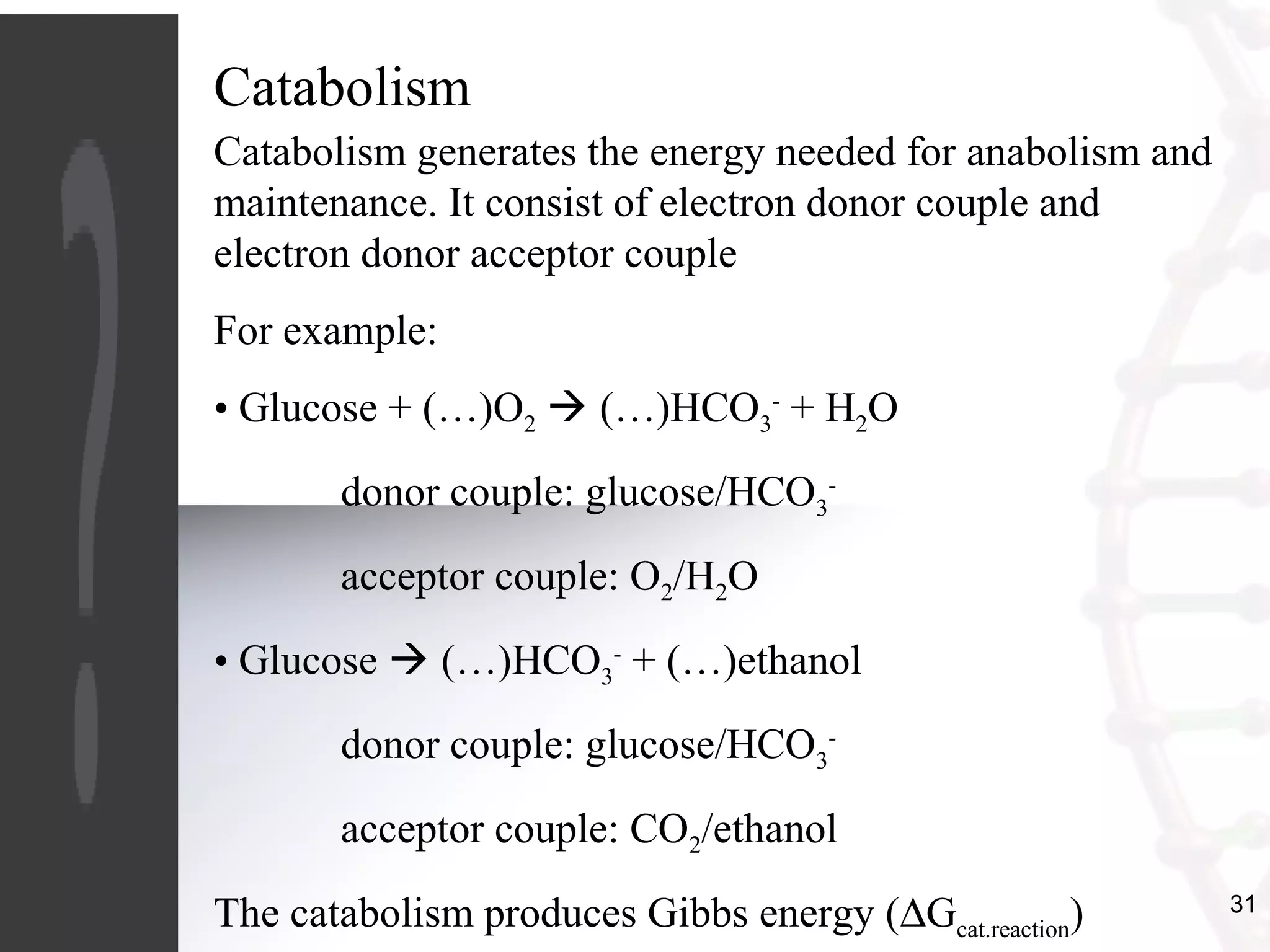
Catabolism
Catabolism generates the energy needed for anabolism and
maintenance. It consist of electron donor couple and
electron donor acceptor couple
For example:
• Glucose + (…)O2  (…)HCO3
-
+ H2O
donor couple: glucose/HCO3
-
acceptor couple: O2/H2O
• Glucose  (…)HCO3
-
+ (…)ethanol
donor couple: glucose/HCO3
-
acceptor couple: CO2/ethanol
The catabolism produces Gibbs energy (∆Gcat.reaction)
32
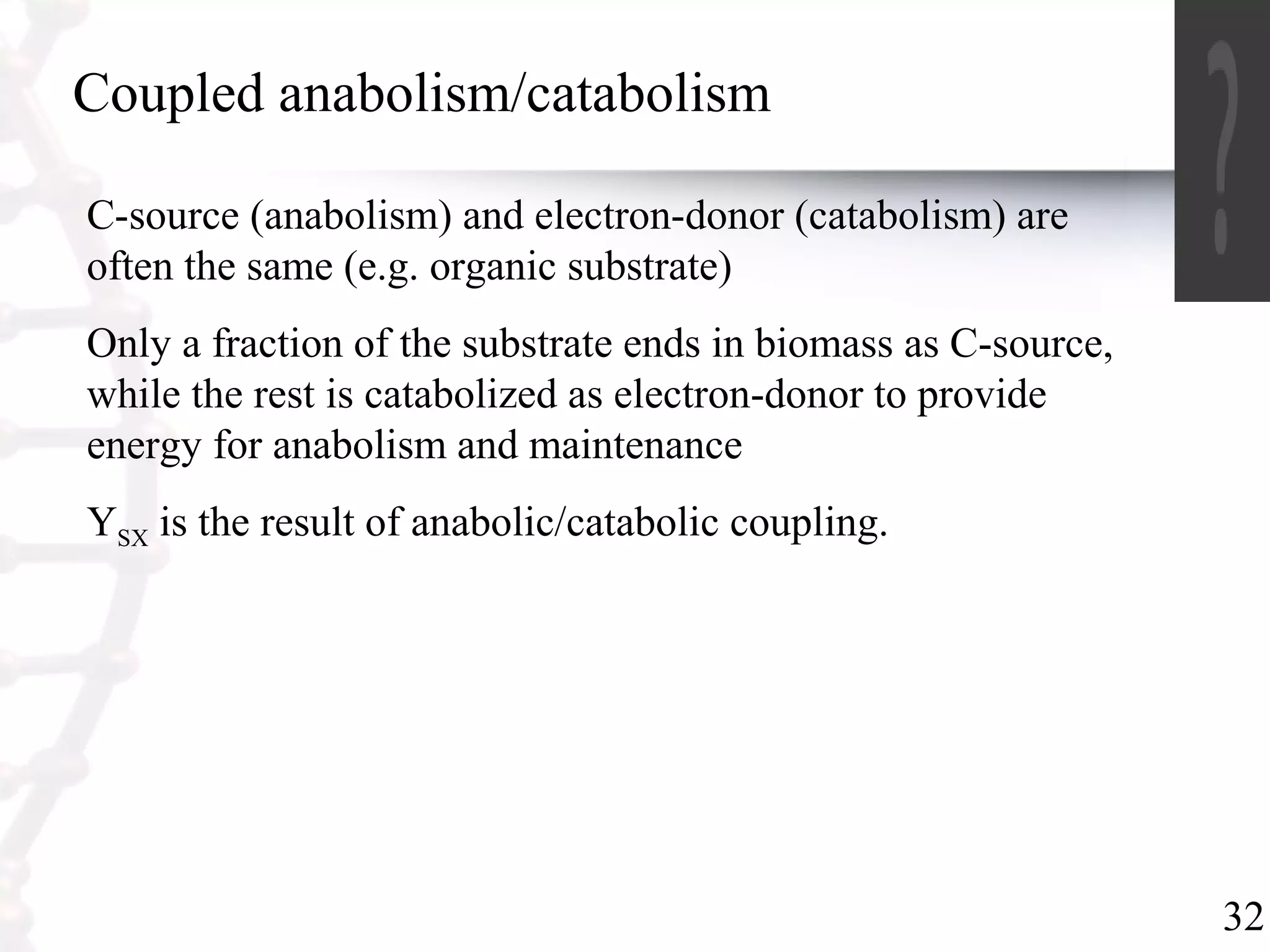
Coupled anabolism/catabolism
C-source (anabolism) and electron-donor (catabolism) are
often the same (e.g. organic substrate)
Only a fraction of the substrate ends in biomass as C-source,
while the rest is catabolized as electron-donor to provide
energy for anabolism and maintenance
YSX is the result of anabolic/catabolic coupling.
33
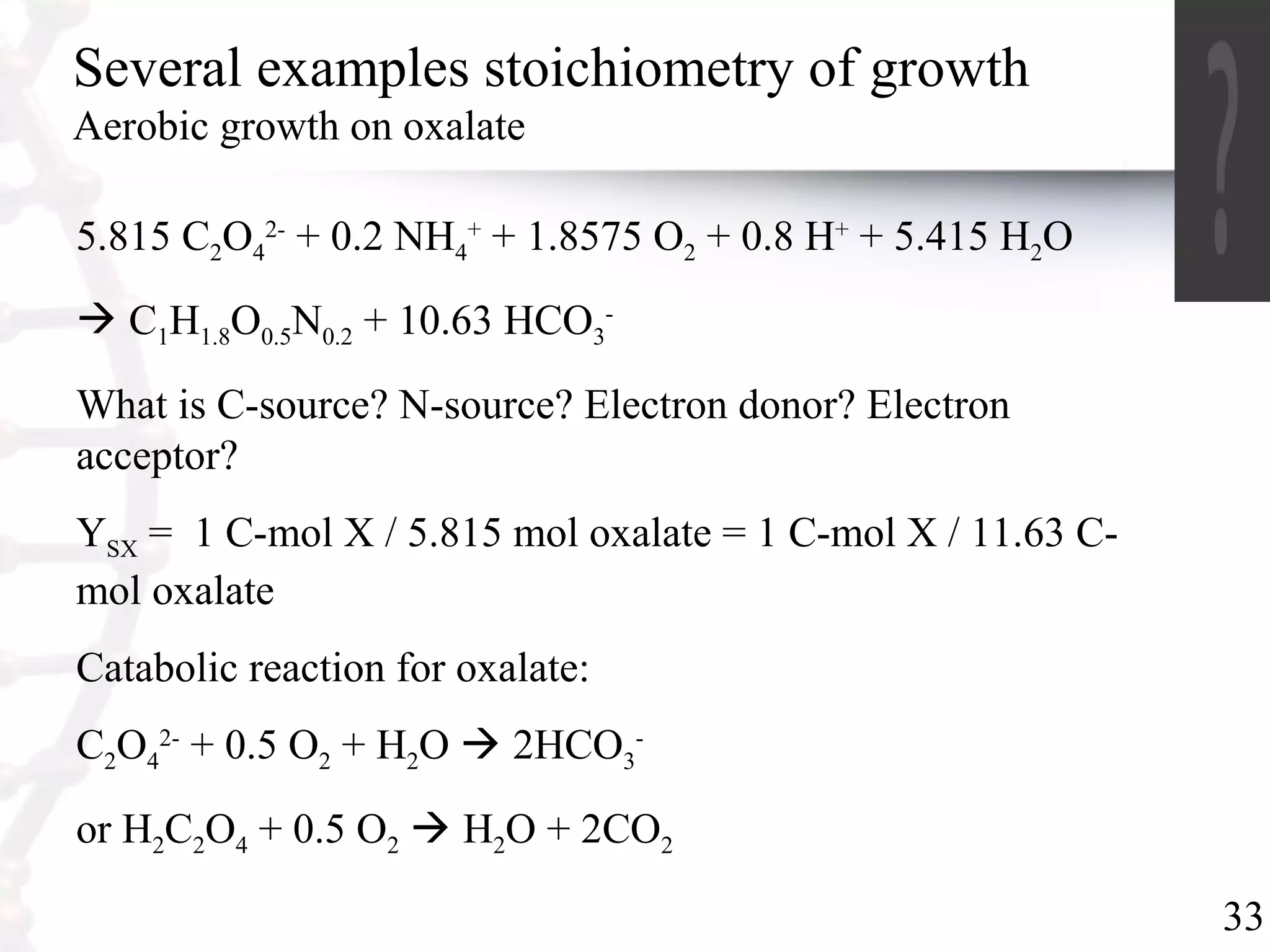
Several examples stoichiometry of growth
Aerobic growth on oxalate
5.815 C2O4
2-
+ 0.2 NH4
+
+ 1.8575 O2 + 0.8 H+
+ 5.415 H2O
 C1H1.8O0.5N0.2 + 10.63 HCO3
-
What is C-source? N-source? Electron donor? Electron
acceptor?
YSX = 1 C-mol X / 5.815 mol oxalate = 1 C-mol X / 11.63 C-
mol oxalate
Catabolic reaction for oxalate:
C2O4
2-
+ 0.5 O2 + H2O  2HCO3
-
or H2C2O4 + 0.5 O2  H2O + 2CO2
34
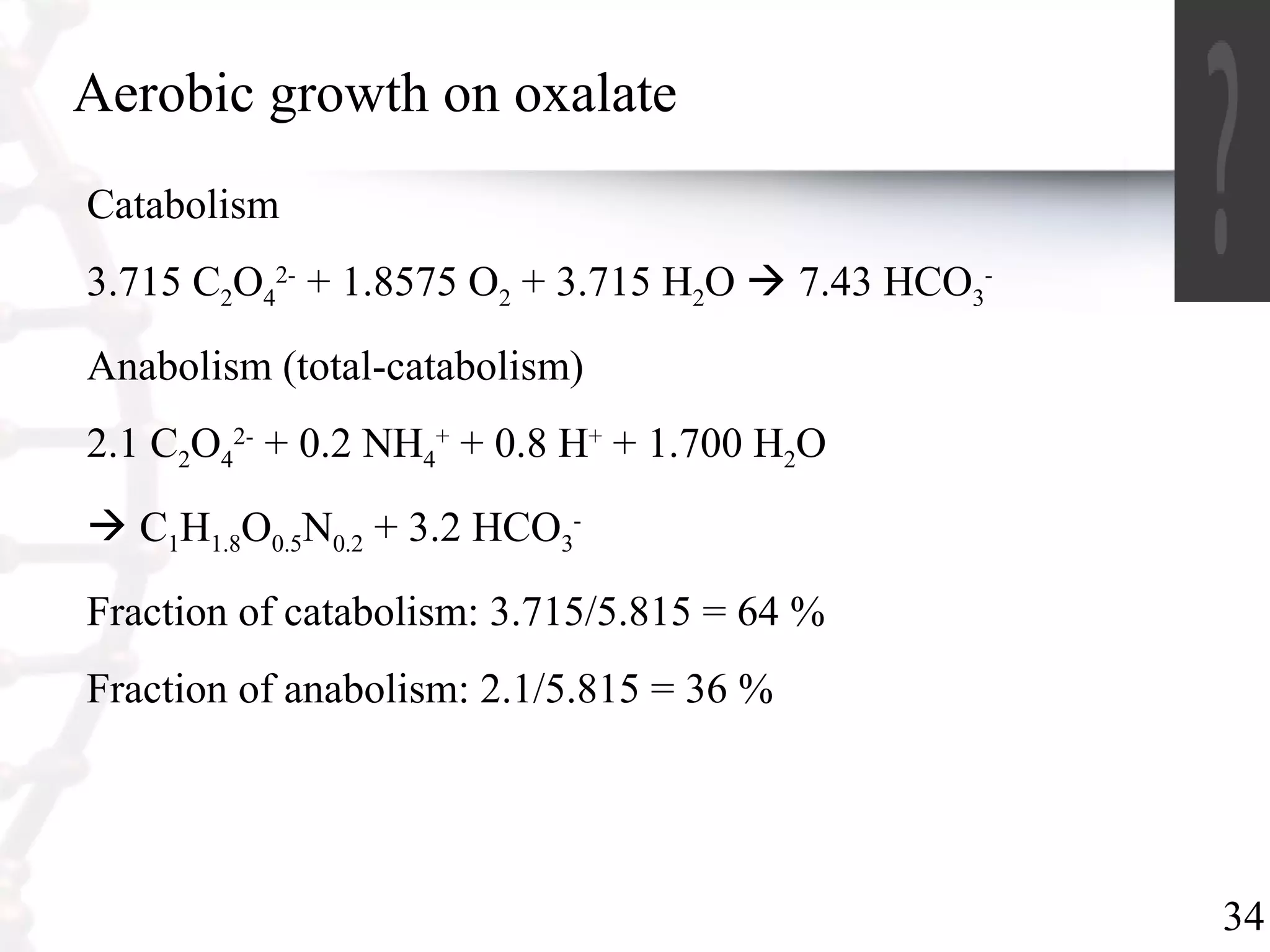
Aerobic growth on oxalate
Catabolism
3.715 C2O4
2-
+ 1.8575 O2 + 3.715 H2O  7.43 HCO3
-
Anabolism (total-catabolism)
2.1 C2O4
2-
+ 0.2 NH4
+
+ 0.8 H+
+ 1.700 H2O
 C1H1.8O0.5N0.2 + 3.2 HCO3
-
Fraction of catabolism: 3.715/5.815 = 64 %
Fraction of anabolism: 2.1/5.815 = 36 %
35
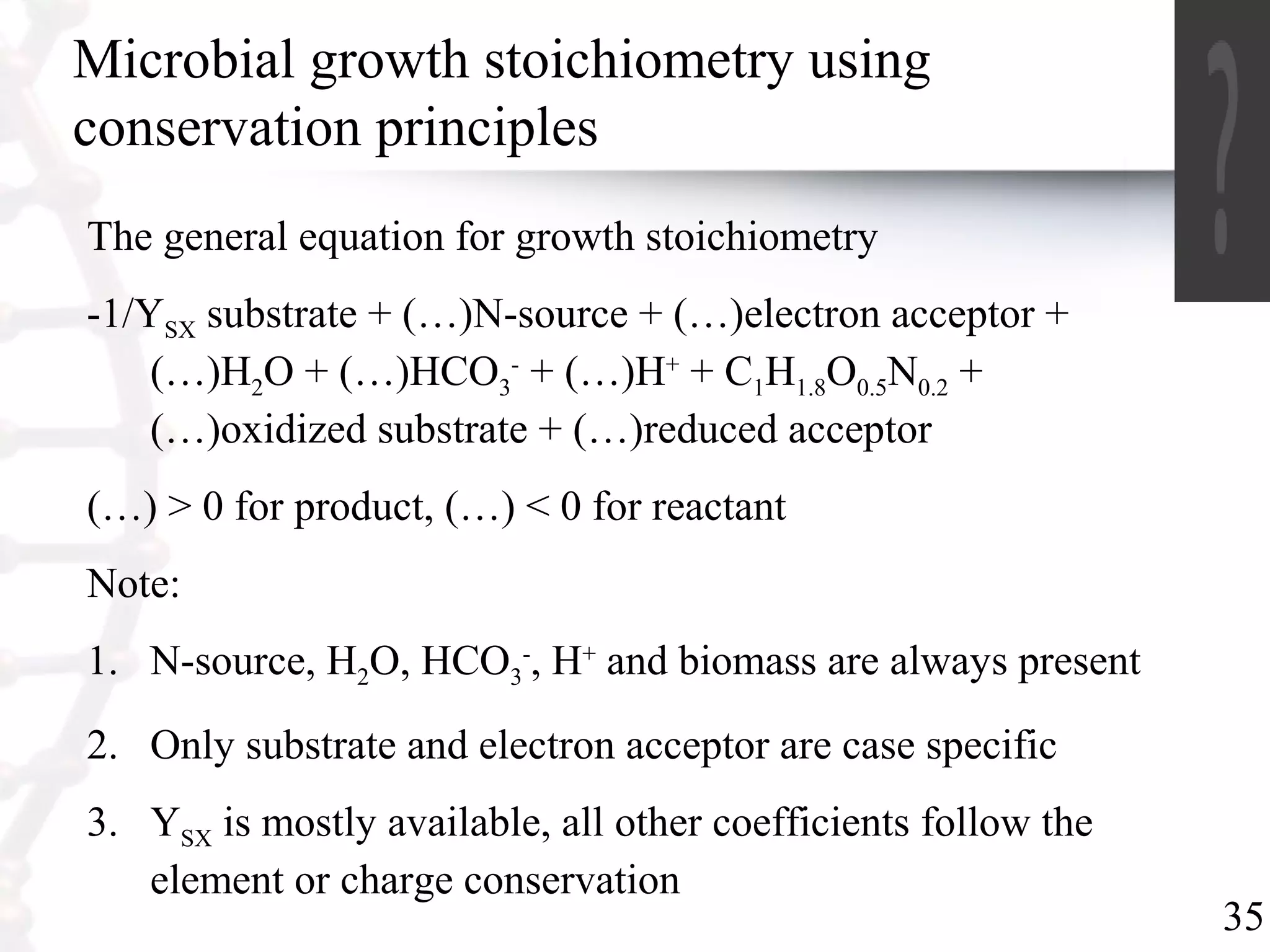
Microbial growth stoichiometry using
conservation principles
The general equation for growth stoichiometry
-1/YSX substrate + (…)N-source + (…)electron acceptor +
(…)H2O + (…)HCO3
-
+ (…)H+
+ C1H1.8O0.5N0.2 +
(…)oxidized substrate + (…)reduced acceptor
(…) > 0 for product, (…) < 0 for reactant
Note:
1. N-source, H2O, HCO3
-
, H+
and biomass are always present
2. Only substrate and electron acceptor are case specific
3. YSX is mostly available, all other coefficients follow the
element or charge conservation
36
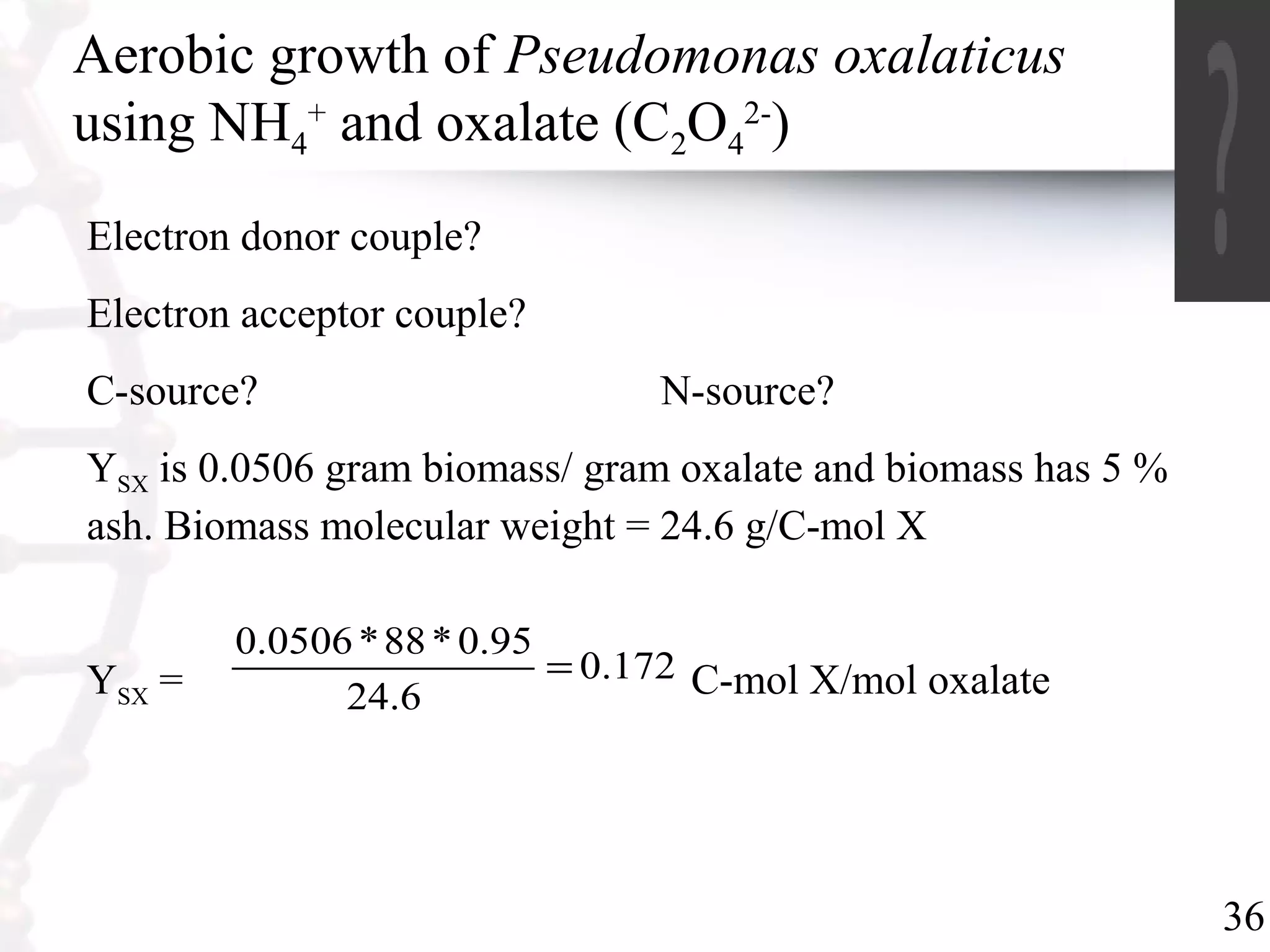
Aerobic growth of Pseudomonas oxalaticus
using NH4
+
and oxalate (C2O4
2-
)
Electron donor couple?
Electron acceptor couple?
C-source? N-source?
YSX is 0.0506 gram biomass/ gram oxalate and biomass has 5 %
ash. Biomass molecular weight = 24.6 g/C-mol X
YSX = C-mol X/mol oxalate172.0
6.24
95.0*88*0506.0
=
37
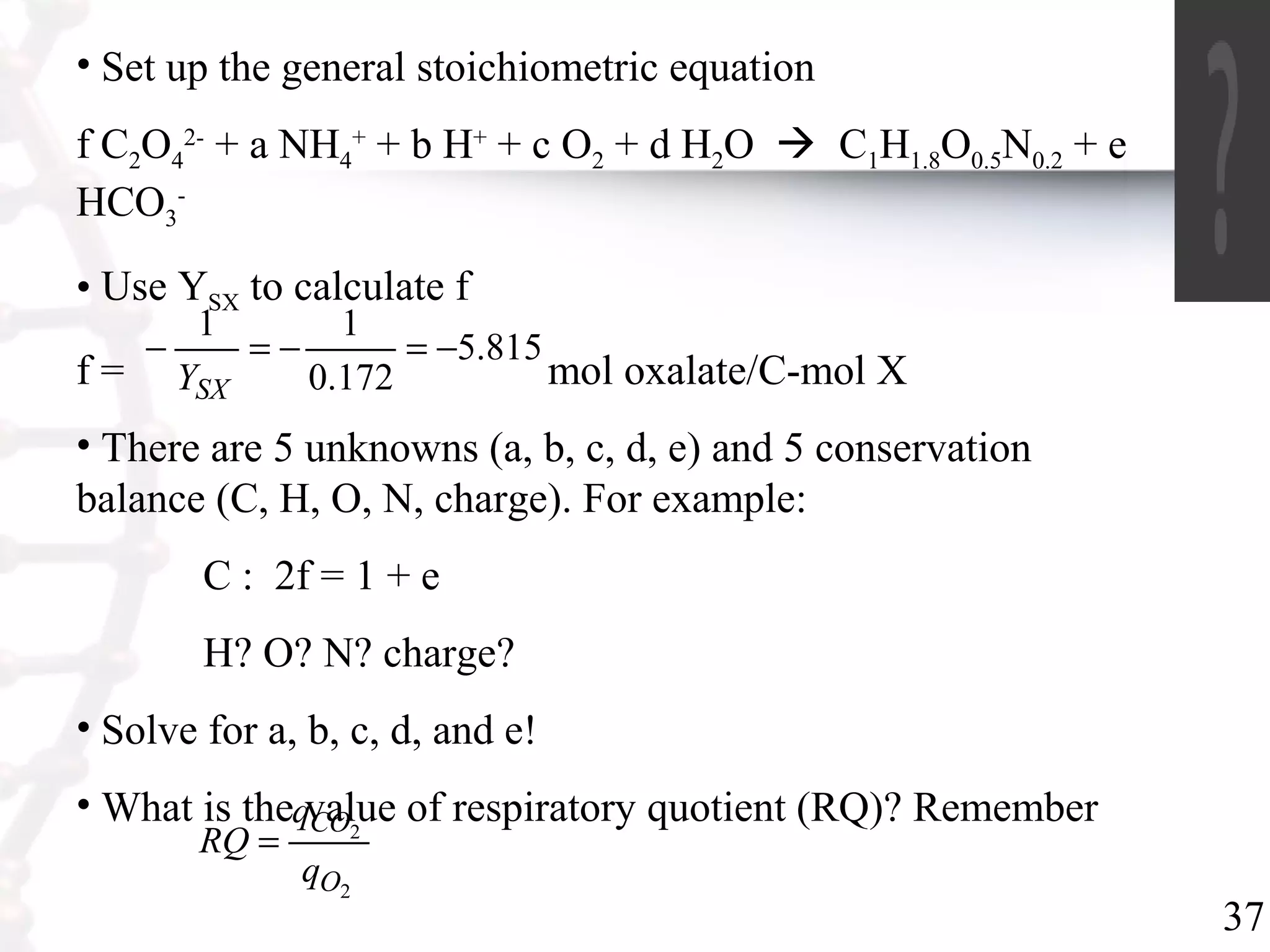
• Set up the general stoichiometric equation
f C2O4
2-
+ a NH4
+
+ b H+
+ c O2 + d H2O  C1H1.8O0.5N0.2 + e
HCO3
-
• Use YSX to calculate f
f = mol oxalate/C-mol X
• There are 5 unknowns (a, b, c, d, e) and 5 conservation
balance (C, H, O, N, charge). For example:
C : 2f = 1 + e
H? O? N? charge?
• Solve for a, b, c, d, and e!
• What is the value of respiratory quotient (RQ)? Remember
815.5
172.0
11
−=−=−
SXY
2
2
O
CO
q
q
RQ =
38
Microbial growth stoichiometry
Degree of reduction (γi)
39
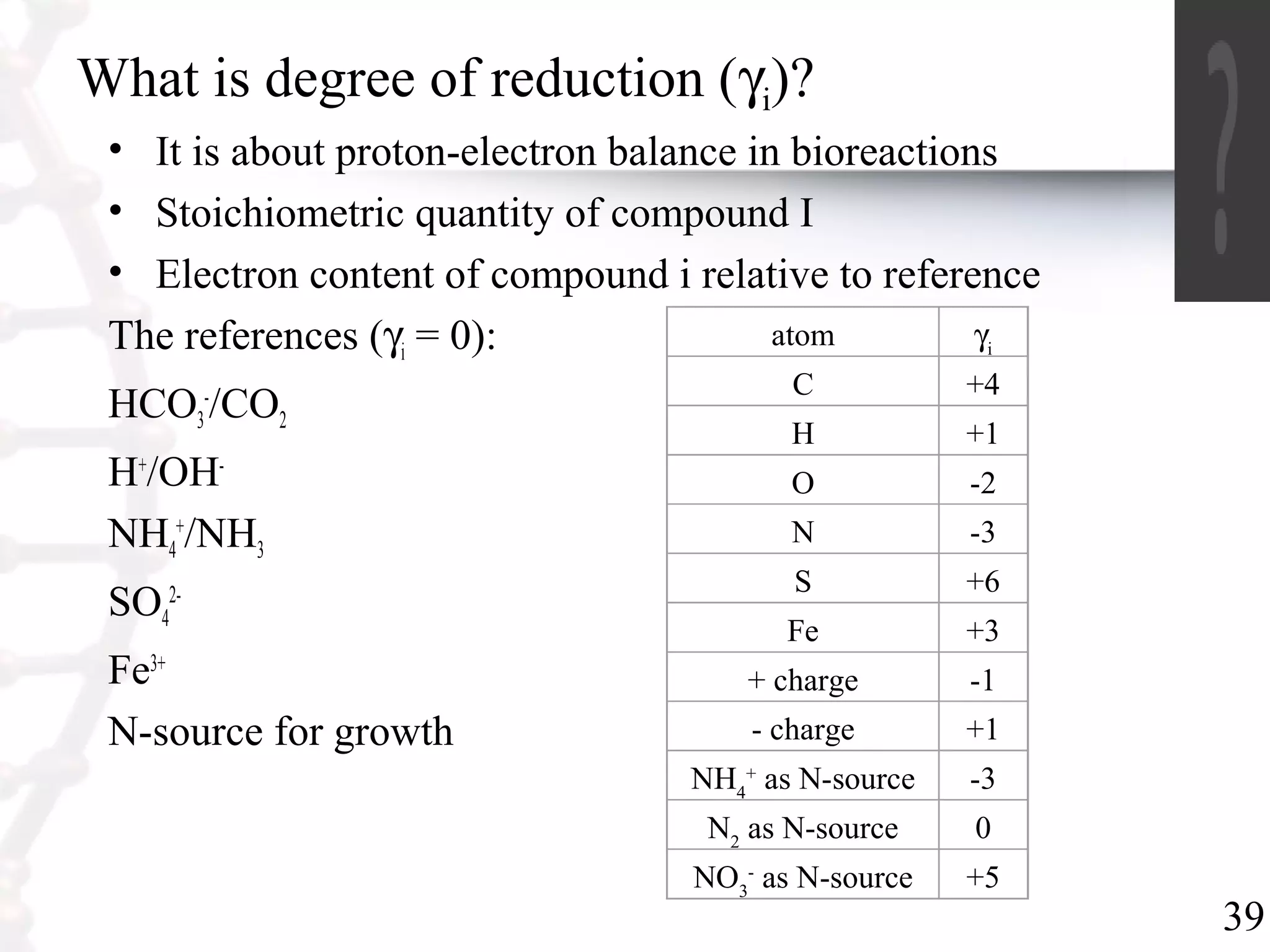
What is degree of reduction (γi)?
• It is about proton-electron balance in bioreactions
• Stoichiometric quantity of compound I
• Electron content of compound i relative to reference
The references (γi = 0):
HCO3
-
/CO2
H+
/OH-
NH4
+
/NH3
SO4
2-
Fe3+
N-source for growth
atom γi
C +4
H +1
O -2
N -3
S +6
Fe +3
+ charge -1
- charge +1
NH4
+
as N-source -3
N2
as N-source 0
NO3
-
as N-source +5
40
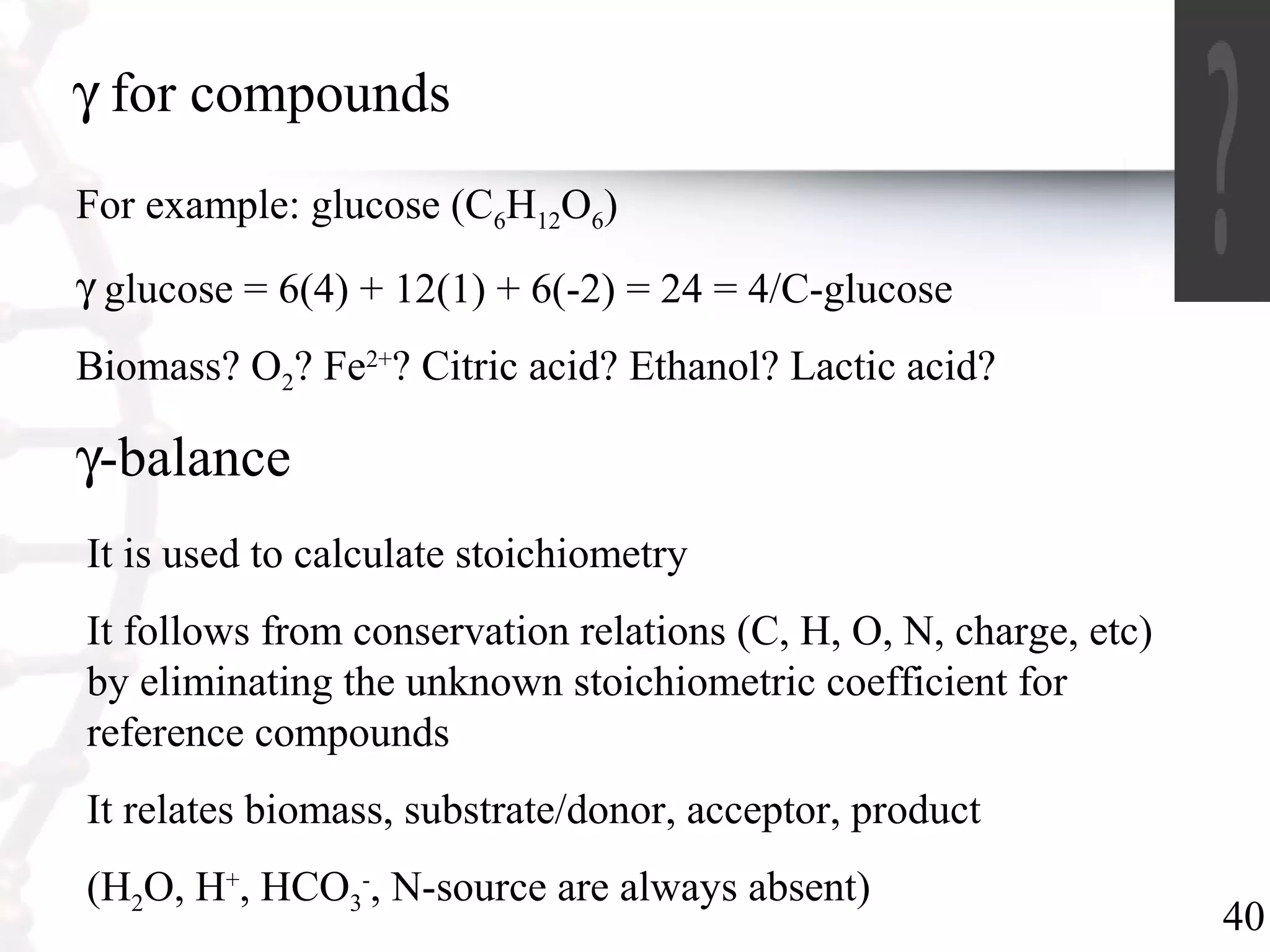
γ for compounds
For example: glucose (C6H12O6)
γ glucose = 6(4) + 12(1) + 6(-2) = 24 = 4/C-glucose
Biomass? O2? Fe2+
? Citric acid? Ethanol? Lactic acid?
γ-balance
It is used to calculate stoichiometry
It follows from conservation relations (C, H, O, N, charge, etc)
by eliminating the unknown stoichiometric coefficient for
reference compounds
It relates biomass, substrate/donor, acceptor, product
(H2O, H+
, HCO3
-
, N-source are always absent)
41
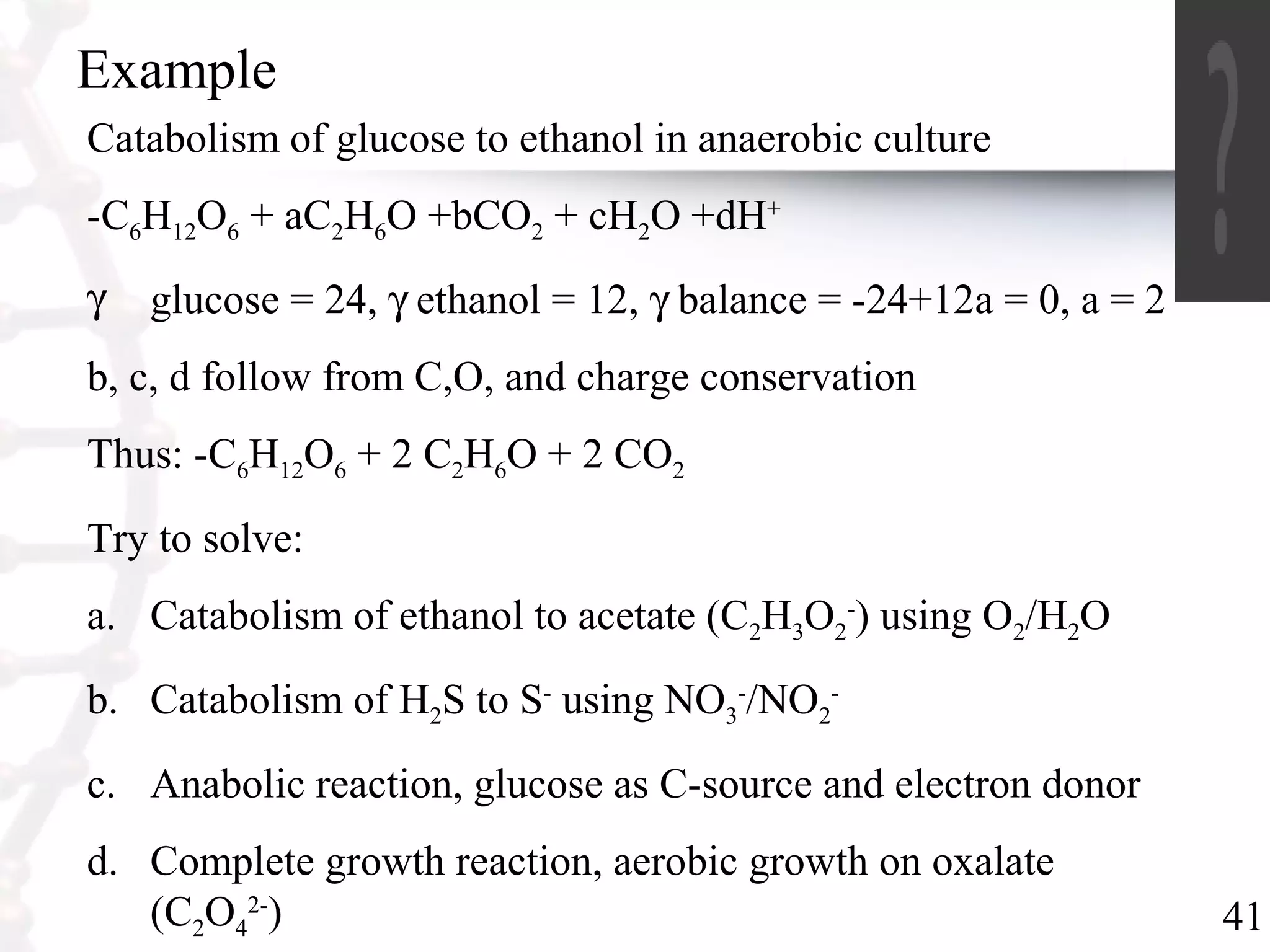
Example
Catabolism of glucose to ethanol in anaerobic culture
-C6H12O6 + aC2H6O +bCO2 + cH2O +dH+
γ glucose = 24, γ ethanol = 12, γ balance = -24+12a = 0, a = 2
b, c, d follow from C,O, and charge conservation
Thus: -C6H12O6 + 2 C2H6O + 2 CO2
Try to solve:
a. Catabolism of ethanol to acetate (C2H3O2
-
) using O2/H2O
b. Catabolism of H2S to S-
using NO3
-
/NO2
-
c. Anabolic reaction, glucose as C-source and electron donor
d. Complete growth reaction, aerobic growth on oxalate
(C2O4
2-
)
42
Further reading
Stoichiometry calculations in undefined chemical systems for
fermentation with complex medium, biological waste
water treatment, and soluble and non-soluble compounds
Measurements of lumped quantities:
1. TOC, Carbon balance
2. Kj-N, Kjeldahl-nitrogen for all reduced nitrogen (organic
bound and NH4
+
), N-balance
3. ThOD, COD balance (similar to γ balance)

Fermentation ppt

  • 1.
    1 Fermentation Technology 623311 Yalun Arifin ChemicalEngineering Dept. University of Surabaya
  • 2.
    2 Course content I. Introduction II.General aspects of fermentation processes III. Quantification of microbial rates IV. Stoichiometry of microbial growth and product formation V. Black box growth VI. Growth and product formation VII. Heat transfer in fermentation VIII. Mass transfer in fermentation IX. Unit operations in fermentation (introduction to downstream processing) X. Bioreactor
  • 3.
  • 4.
    4 What is fermentation? •Pasteur’s definition: “life without air”, anaerobe red ox reactions in organisms • New definition: a form of metabolism in which the end products could be further oxidized For example: a yeast cell obtains 2 molecules of ATP per molecule of glucose when it ferments it to ethanol
  • 5.
    5 What is fermentationtechniques (1)? Techniques for large-scale production of microbial products. It must both provide an optimum environment for the microbial synthesis of the desired product and be economically feasible on a large scale. They can be divided into surface (emersion) and submersion techniques. The latter may be run in batch, fed batch, continuous reactors In the surface techniques, the microorganisms are cultivated on the surface of a liquid or solid substrate. These techniques are very complicated and rarely used in industry
  • 6.
    6 What is fermentationtechniques (2)? In the submersion processes, the microorganisms grow in a liquid medium. Except in traditional beer and wine fermentation, the medium is held in fermenters and stirred to obtain a homogeneous distribution of cells and medium. Most processes are aerobic, and for these the medium must be vigorously aerated. All important industrial processes (production of biomass and protein, antibiotics, enzymes and sewage treatment) are carried out by submersion processes.
  • 7.
    7 Some important fermentationproducts Product Organism Use Ethanol Saccharomyces cerevisiae Industrial solvents, beverages Glycerol Saccharomyces cerevisiae Production of explosives Lactic acid Lactobacillus bulgaricus Food and pharmaceutical Acetone and butanol Clostridium acetobutylicum Solvents α-amylase Bacillus subtilis Starch hydrolysis
  • 8.
  • 9.
  • 10.
  • 11.
  • 12.
    12 Chapter II General Aspectsof Fermentation Processes
  • 13.
    13 Fermenter The heart ofthe fermentation process is the fermenter. In general: • Stirred vessel, H/D ≈ 3 • Volume 1-1000 m3 (80 % filled) • Biomass up to 100 kg dry weight/m3 •Product 10 mg/l –200 g/l
  • 14.
    14 Types of fermenter •Simple fermenters (batch and continuous) • Fed batch fermenter • Air-lift or bubble fermenter • Cyclone column fermenter • Tower fermenter • Other more advanced systems, etc The size is few liters (laboratory use) - >500 m3 (industrial applications)
  • 15.
    15 Cross section ofa fermenter for Penicillin production ( Copyright: http://web.ukonline.co.uk/webwise/spinneret/microbes/penici.htm)
  • 16.
    16 Cross section ofa fermenter for Penicillin production ( Copyright: http://web.ukonline.co.uk/webwise/spinneret/microbes/penici.htm)
  • 17.
    17 Flow sheet ofa multipurpose fermenter and its auxiliary equipment
  • 18.
    18 Fermentation medium • Definemedium  nutritional, hormonal, and substratum requirement of cells • In most cases, the medium is independent of the bioreactor design and process parameters • The type: complex and synthetic medium (mineral medium) • Even small modifications in the medium could change cell line stability, product quality, yield, operational parameters, and downstream processing.
  • 19.
    19 Medium composition Fermentation mediumconsists of: • Macronutrients (C, H, N, S, P, Mg sources  water, sugars, lipid, amino acids, salt minerals) • Micronutrients (trace elements/ metals, vitamins) • Additional factors: growth factors, attachment proteins, transport proteins, etc) For aerobic culture, oxygen is sparged
  • 20.
    20 Inoculums Incoculum is thesubstance/ cell culture that is introduced to the medium. The cell then grow in the medium, conducting metabolisms. Inoculum is prepared for the inoculation before the fermentation starts. It needs to be optimized for better performance: • Adaptation in the medium • Mutation (DNA recombinant, radiation, chemical addition)
  • 21.
    21 Required value generationin fermenters as a function of size and productivity
  • 22.
  • 23.
    23 Microbial rates ofconsumption or production C, N, P, S source H2O H+ O2 heat product CO2 biomass
  • 24.
    24 What are thevalue of rates? Rates of consumption or production are obtained from mass balance over reactors Mass balance over reactors Transport + conversion = accumulation (in – out) + (production – consumption) = accumulation Batch: transport in = transport out = 0 Chemostat: accumulation = 0, steady state Fed batch: transport out = 0
  • 25.
    25 How are ratesdefined? Rate (ri) = amount i per hour / volume of reactor Biomass specific rate (qi) qi =amount per hour / amount of organism in reactor Thus: Substrate (-rS) = (-qS)CX Biomass rX = µCX Product rP = qPCX reactorm hourikg −3 /. Xkg hourikg . /. ri = qi CX
  • 26.
    26 Yield = ratioof rates Yij = i j Xi Xj i j q q Cq Cq r r irate jrate === . . YSX = rate of biomass production / rate of substrate consumption [g biomass/g substrate] YOX = rate of biomass production / rate of oxygen consumption [g biomass/g oxygen]
  • 27.
    27 Chapter IV Stoichiometry ofMicrobial Growth and Product Formation
  • 28.
    28 Introduction Cell growth andproduct formation are complex processes reflecting the overall kinetics and stoichiometry of the thousands of intracellular reactions that can be observed within a cell. Thermodynamic limit is important for process optimization. The complexity of the reactions can be represented by a simple pseudochemical equation. Several definitions have to be well understood before studying this chapter, for example: YSX max , YATP X, YOX, maintenance coefficient based on substrate (ms).
  • 29.
    29 Composition of biomass Molecules •Protein 30-60 % • Carbohydrate 5-30 % • Lipid 5-10 % • DNA 1 % • RNA 5-15 % • Ash (P, K+ , Mg2+ , etc) • Elements • C 40-50 % • H 7-10 % • O 20-30 % • N 5-10 % • P 1-3 % • Ash 3-10% Typical composition biomass formula: C1H1.8O0.5N0.2 Suppose 1 kg dry biomass contains 5 % ash, what is the amount of organic matter in C-mol biomass?
  • 30.
    30 Anabolism Amino acids protein Sugars  carbohydrate Fatty acids  lipids Nucleotides  DNA, RNA Sum of all reactions gives the anabolic reaction (…)C-source + (…)N-source + (…) P-source + O-source C1H1.8O0.5N0.2 + (…)H2O + (…)CO2 Thermodynamically, energy is needed. Also for cells maintenance energy
  • 31.
    31 Catabolism Catabolism generates theenergy needed for anabolism and maintenance. It consist of electron donor couple and electron donor acceptor couple For example: • Glucose + (…)O2  (…)HCO3 - + H2O donor couple: glucose/HCO3 - acceptor couple: O2/H2O • Glucose  (…)HCO3 - + (…)ethanol donor couple: glucose/HCO3 - acceptor couple: CO2/ethanol The catabolism produces Gibbs energy (∆Gcat.reaction)
  • 32.
    32 Coupled anabolism/catabolism C-source (anabolism)and electron-donor (catabolism) are often the same (e.g. organic substrate) Only a fraction of the substrate ends in biomass as C-source, while the rest is catabolized as electron-donor to provide energy for anabolism and maintenance YSX is the result of anabolic/catabolic coupling.
  • 33.
    33 Several examples stoichiometryof growth Aerobic growth on oxalate 5.815 C2O4 2- + 0.2 NH4 + + 1.8575 O2 + 0.8 H+ + 5.415 H2O  C1H1.8O0.5N0.2 + 10.63 HCO3 - What is C-source? N-source? Electron donor? Electron acceptor? YSX = 1 C-mol X / 5.815 mol oxalate = 1 C-mol X / 11.63 C- mol oxalate Catabolic reaction for oxalate: C2O4 2- + 0.5 O2 + H2O  2HCO3 - or H2C2O4 + 0.5 O2  H2O + 2CO2
  • 34.
    34 Aerobic growth onoxalate Catabolism 3.715 C2O4 2- + 1.8575 O2 + 3.715 H2O  7.43 HCO3 - Anabolism (total-catabolism) 2.1 C2O4 2- + 0.2 NH4 + + 0.8 H+ + 1.700 H2O  C1H1.8O0.5N0.2 + 3.2 HCO3 - Fraction of catabolism: 3.715/5.815 = 64 % Fraction of anabolism: 2.1/5.815 = 36 %
  • 35.
    35 Microbial growth stoichiometryusing conservation principles The general equation for growth stoichiometry -1/YSX substrate + (…)N-source + (…)electron acceptor + (…)H2O + (…)HCO3 - + (…)H+ + C1H1.8O0.5N0.2 + (…)oxidized substrate + (…)reduced acceptor (…) > 0 for product, (…) < 0 for reactant Note: 1. N-source, H2O, HCO3 - , H+ and biomass are always present 2. Only substrate and electron acceptor are case specific 3. YSX is mostly available, all other coefficients follow the element or charge conservation
  • 36.
    36 Aerobic growth ofPseudomonas oxalaticus using NH4 + and oxalate (C2O4 2- ) Electron donor couple? Electron acceptor couple? C-source? N-source? YSX is 0.0506 gram biomass/ gram oxalate and biomass has 5 % ash. Biomass molecular weight = 24.6 g/C-mol X YSX = C-mol X/mol oxalate172.0 6.24 95.0*88*0506.0 =
  • 37.
    37 • Set upthe general stoichiometric equation f C2O4 2- + a NH4 + + b H+ + c O2 + d H2O  C1H1.8O0.5N0.2 + e HCO3 - • Use YSX to calculate f f = mol oxalate/C-mol X • There are 5 unknowns (a, b, c, d, e) and 5 conservation balance (C, H, O, N, charge). For example: C : 2f = 1 + e H? O? N? charge? • Solve for a, b, c, d, and e! • What is the value of respiratory quotient (RQ)? Remember 815.5 172.0 11 −=−=− SXY 2 2 O CO q q RQ =
  • 38.
  • 39.
    39 What is degreeof reduction (γi)? • It is about proton-electron balance in bioreactions • Stoichiometric quantity of compound I • Electron content of compound i relative to reference The references (γi = 0): HCO3 - /CO2 H+ /OH- NH4 + /NH3 SO4 2- Fe3+ N-source for growth atom γi C +4 H +1 O -2 N -3 S +6 Fe +3 + charge -1 - charge +1 NH4 + as N-source -3 N2 as N-source 0 NO3 - as N-source +5
  • 40.
    40 γ for compounds Forexample: glucose (C6H12O6) γ glucose = 6(4) + 12(1) + 6(-2) = 24 = 4/C-glucose Biomass? O2? Fe2+ ? Citric acid? Ethanol? Lactic acid? γ-balance It is used to calculate stoichiometry It follows from conservation relations (C, H, O, N, charge, etc) by eliminating the unknown stoichiometric coefficient for reference compounds It relates biomass, substrate/donor, acceptor, product (H2O, H+ , HCO3 - , N-source are always absent)
  • 41.
    41 Example Catabolism of glucoseto ethanol in anaerobic culture -C6H12O6 + aC2H6O +bCO2 + cH2O +dH+ γ glucose = 24, γ ethanol = 12, γ balance = -24+12a = 0, a = 2 b, c, d follow from C,O, and charge conservation Thus: -C6H12O6 + 2 C2H6O + 2 CO2 Try to solve: a. Catabolism of ethanol to acetate (C2H3O2 - ) using O2/H2O b. Catabolism of H2S to S- using NO3 - /NO2 - c. Anabolic reaction, glucose as C-source and electron donor d. Complete growth reaction, aerobic growth on oxalate (C2O4 2- )
  • 42.
    42 Further reading Stoichiometry calculationsin undefined chemical systems for fermentation with complex medium, biological waste water treatment, and soluble and non-soluble compounds Measurements of lumped quantities: 1. TOC, Carbon balance 2. Kj-N, Kjeldahl-nitrogen for all reduced nitrogen (organic bound and NH4 + ), N-balance 3. ThOD, COD balance (similar to γ balance)