Feeding Relationships,
Food Chains, Food Webs
IN 73 & 75
IN 73 & 75
Headings
Headings
Vocabulary
Vocabulary
Important Info
Important Info
Feeding Types
Feeding Types
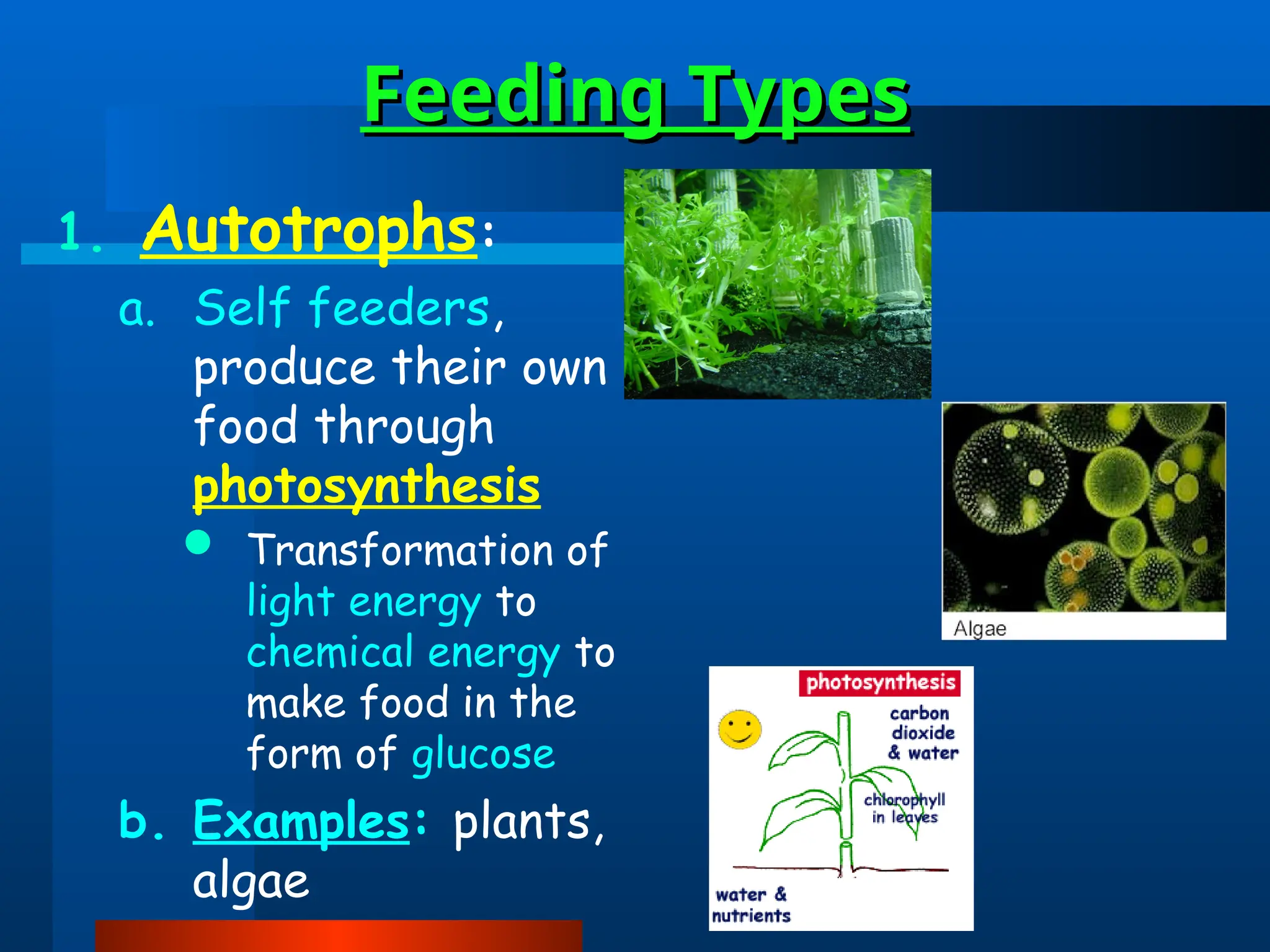
1. Autotrophs:
a. Self feeders,
produce their own
food through
photosynthesis
 Transformation of
light energy to
chemical energy to
make food in the
form of glucose
b. Examples: plants,
algae
2. Heterotrophs:
a. Depend on other organisms for their
food
1. Herbivore: Eats only plants
2. Carnivore: Eats only meat
3. Omnivore: Eats both plants and
meat
3. Decomposers:
a. Break down and absorb nutrients from
dead, decaying organisms
b. Examples: mushrooms and bacteria
Symbiosis
a. close, permanent relationship
between organisms
b. Three major types:
1. Commensalism
2. Mutualism
3. Parasitism
1) Mr. Fungus is ready to greet our friend the alga
2) Friend alga cell is prepared to
greet Mr. Fungus
3) The Lichen is created between the fungus and the alga
Commensalism:
a. A feeding relationship in which one organism benefits
and the other is not affected.
b. Example: Remoras that live on or around a shark’s
mouth.
*Remora benefits
from the scraps
of food that fall
from the shark’s
mouth and the
shark is not
affected.
Feeding Relationships
Mutualism:
a. Both organisms benefit from
the relationship
b. “you scratch my back and I
scratch yours”
c. Example: tickbirds eat
parasites off of the back of
zebras. The tickbirds get fed
and the zebra gets cleaned.
Parasitism:
a. One organism benefits and
the other is harmed
b. Example: tapeworm living
inside an organism’s intestine
(may cause death)
c. Example: flea living on a dog
Food Chains and Food Webs
1. Food Chain:
a. model showing the movement of energy through the
ecosystem
b. Consists of Producers, Consumers, and Decomposers
 Producer: living organisms that take non-living matter (like
minerals and gases) from the environment and use them to
support life (Example: plants). These are the first
organisms in the food chain.
 Consumer: living things
that need producers to
be their food.
– EX: (Herbivores,
carnivores, and omnivores)
 Decomposer: living things
which feed off of dead
plants and animals to reduce
their remains to minerals and
gases again
http://magma.nationalgeographic.com/ngexplorer/0309/quickflicks/index.htm
l
Food Chains and Food Webs
2. Food Web:
a. More complicated and more realistic than a
food chain
b. Shows more than one possible food source for
each organism
c. Steps in food chains or food webs are
called trophic levels.
d. Producers make up
the first trophic
level
e. Consumers
make up second,
third, or higher.
• When you read a food chain or food web,
the arrows point from what is being eaten
to what it is eaten by.
Ex.: mouse  hawk;
the mouse is
EATEN BY
the hawk

feedingrelationshipsfoodchainsfoodwe2.ppt

  • 1.
    Feeding Relationships, Feeding Relationships, FoodChains, Food Webs Food Chains, Food Webs IN 73 & 75 IN 73 & 75 Headings Headings Vocabulary Vocabulary Important Info Important Info
  • 2.
    Feeding Types Feeding Types 1.Autotrophs: a. Self feeders, produce their own food through photosynthesis  Transformation of light energy to chemical energy to make food in the form of glucose b. Examples: plants, algae
  • 3.
    2. Heterotrophs: a. Dependon other organisms for their food 1. Herbivore: Eats only plants 2. Carnivore: Eats only meat 3. Omnivore: Eats both plants and meat
  • 4.
    3. Decomposers: a. Breakdown and absorb nutrients from dead, decaying organisms b. Examples: mushrooms and bacteria
  • 5.
    Symbiosis a. close, permanentrelationship between organisms b. Three major types: 1. Commensalism 2. Mutualism 3. Parasitism 1) Mr. Fungus is ready to greet our friend the alga 2) Friend alga cell is prepared to greet Mr. Fungus 3) The Lichen is created between the fungus and the alga
  • 6.
    Commensalism: a. A feedingrelationship in which one organism benefits and the other is not affected. b. Example: Remoras that live on or around a shark’s mouth. *Remora benefits from the scraps of food that fall from the shark’s mouth and the shark is not affected. Feeding Relationships Feeding Relationships
  • 7.
    Mutualism: a. Both organismsbenefit from the relationship b. “you scratch my back and I scratch yours” c. Example: tickbirds eat parasites off of the back of zebras. The tickbirds get fed and the zebra gets cleaned. Parasitism: a. One organism benefits and the other is harmed b. Example: tapeworm living inside an organism’s intestine (may cause death) c. Example: flea living on a dog
  • 8.
    Food Chains andFood Webs Food Chains and Food Webs 1. Food Chain: a. model showing the movement of energy through the ecosystem b. Consists of Producers, Consumers, and Decomposers  Producer: living organisms that take non-living matter (like minerals and gases) from the environment and use them to support life (Example: plants). These are the first organisms in the food chain.  Consumer: living things that need producers to be their food. – EX: (Herbivores, carnivores, and omnivores)  Decomposer: living things which feed off of dead plants and animals to reduce their remains to minerals and gases again http://magma.nationalgeographic.com/ngexplorer/0309/quickflicks/index.htm l
  • 10.
    Food Chains andFood Webs Food Chains and Food Webs 2. Food Web: a. More complicated and more realistic than a food chain b. Shows more than one possible food source for each organism c. Steps in food chains or food webs are called trophic levels. d. Producers make up the first trophic level e. Consumers make up second, third, or higher.
  • 11.
    • When youread a food chain or food web, the arrows point from what is being eaten to what it is eaten by. Ex.: mouse  hawk; the mouse is EATEN BY the hawk