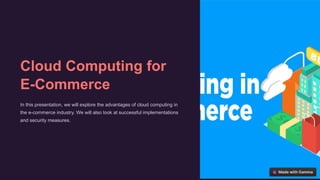
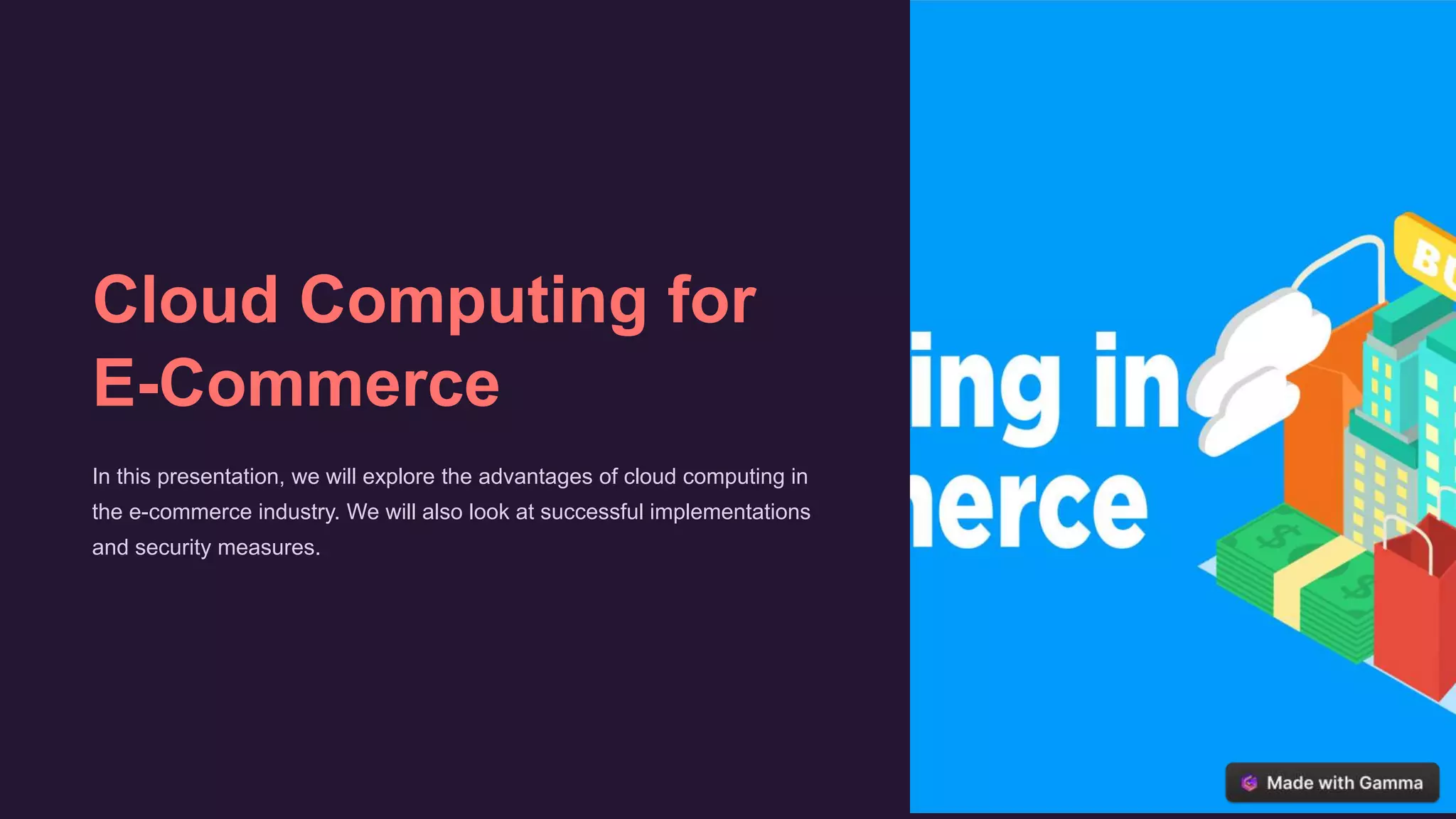
Cloud Computing for
E-Commerce
In this presentation, we will explore the advantages of cloud computing in
the e-commerce industry. We will also look at successful implementations
and security measures.
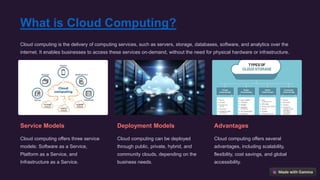
What is Cloud Computing?
Cloud computing is the delivery of computing services, such as servers, storage, databases, software, and analytics over the
internet. It enables businesses to access these services on-demand, without the need for physical hardware or infrastructure.
Service Models
Cloud computing offers three service
models: Software as a Service,
Platform as a Service, and
Infrastructure as a Service.
Deployment Models
Cloud computing can be deployed
through public, private, hybrid, and
community clouds, depending on the
business needs.
Advantages
Cloud computing offers several
advantages, including scalability,
flexibility, cost savings, and global
accessibility.
The Advantages of Cloud Computing for E-
Commerce
Cloud computing has transformed the e-commerce industry by enabling businesses to store, manage, and access data and
applications in a more efficient and cost-effective way. Here are some key advantages:
1 Scalability 📈
Cloud computing enables businesses to scale up or
down their resources as per demand, without the need
for additional hardware.
2 Flexibility 🤸🏻♂️
Cloud computing allows businesses to access their
data and applications from anywhere, using any device
with an internet connection.
3 Cost Savings 💰
Cloud computing eliminates the need for expensive
hardware and infrastructure, reducing costs and
increasing profitability.
4 Global Accessibility 🌍
Cloud computing allows businesses to operate globally,
without the need for physical offices or traditional
supply chains.
Types of Cloud Computing
There are several types of cloud computing services, each with its unique features and benefits. Here are some common types:
Public Cloud ☁️
Public cloud services are provided
by third-party vendors, and the
infrastructure is shared among
multiple users.
Private Cloud 🔒
Private cloud services are provided
by a single organization, and the
infrastructure is dedicated solely to
that organization's needs.
Hybrid Cloud 🌏
Hybrid cloud services combine the
benefits of public and private
clouds, allowing businesses to
leverage both in a single
infrastructure.
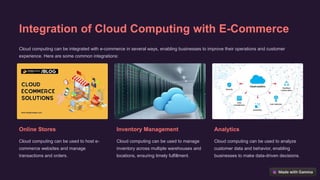
Integration of Cloud Computing with E-Commerce
Cloud computing can be integrated with e-commerce in several ways, enabling businesses to improve their operations and customer
experience. Here are some common integrations:
Online Stores
Cloud computing can be used to host e-
commerce websites and manage
transactions and orders.
Inventory Management
Cloud computing can be used to manage
inventory across multiple warehouses and
locations, ensuring timely fulfillment.
Analytics
Cloud computing can be used to analyze
customer data and behavior, enabling
businesses to make data-driven decisions.
Case Studies of Successful Implementation
Several businesses have successfully implemented cloud computing in their e-commerce operations, enabling them to improve
efficiency and customer experience. Here are some examples:
1
Amazon
Amazon uses cloud computing to store and manage
customer data and orders, enabling fast and reliable delivery.
2
Netflix
Netflix uses cloud computing to deliver on-demand video
streaming services to millions of customers globally, without
the need for a physical infrastructure.
3
Zara
Zara uses cloud computing to manage inventory and order
fulfillment across its global network of stores, enabling timely
and accurate deliveries.
Security Measures and Concerns
Although cloud computing offers several advantages, it also poses several security concerns. Here are
some measures businesses can take to ensure secure cloud computing:
1 Data Encryption 🔐
Businesses can use encryption to protect
sensitive data from unauthorized access.
2 Multi-factor Authentication 🤸
Businesses can require multiple
authentication factors, such as passwords
and biometrics, to access cloud services.
3 Regular Monitoring 🕵🏻♀️
Businesses must regularly monitor their
cloud services for any security breaches or
anomalies.
4 Compliance with Regulations 📜
Businesses must ensure compliance with
data protection and privacy regulations,
such as GDPR and CCPA.
Conclusion and Future Implications
Cloud computing has transformed the e-commerce industry, enabling businesses to improve their operations and customer
experience. As cloud computing continues to evolve, we can expect to see several future implications, including:
Artificial Intelligence 🤸
Cloud computing can enable the
integration of AI into e-commerce
operations, enabling businesses to
offer personalized
recommendations and chatbots.
Edge Computing 🔍
Edge computing can enable faster
processing of data and automation,
enabling businesses to respond to
customer needs in real-time.
Blockchain 🌐
Blockchain can enable secure and
transparent transactions and data
management in e-commerce,
enabling businesses to build trust
with customers.
Cloud Computing for
E-Commerce
Thank you for joining us on this journey to
explore the exciting world of cloud computing
and its implications for e-commerce.

Cloud-Computing-for-E-Commerce.pptx

  • 1.
    Cloud Computing for E-Commerce Inthis presentation, we will explore the advantages of cloud computing in the e-commerce industry. We will also look at successful implementations and security measures.
  • 2.
    What is CloudComputing? Cloud computing is the delivery of computing services, such as servers, storage, databases, software, and analytics over the internet. It enables businesses to access these services on-demand, without the need for physical hardware or infrastructure. Service Models Cloud computing offers three service models: Software as a Service, Platform as a Service, and Infrastructure as a Service. Deployment Models Cloud computing can be deployed through public, private, hybrid, and community clouds, depending on the business needs. Advantages Cloud computing offers several advantages, including scalability, flexibility, cost savings, and global accessibility.
  • 3.
    The Advantages ofCloud Computing for E- Commerce Cloud computing has transformed the e-commerce industry by enabling businesses to store, manage, and access data and applications in a more efficient and cost-effective way. Here are some key advantages: 1 Scalability 📈 Cloud computing enables businesses to scale up or down their resources as per demand, without the need for additional hardware. 2 Flexibility 🤸🏻♂️ Cloud computing allows businesses to access their data and applications from anywhere, using any device with an internet connection. 3 Cost Savings 💰 Cloud computing eliminates the need for expensive hardware and infrastructure, reducing costs and increasing profitability. 4 Global Accessibility 🌍 Cloud computing allows businesses to operate globally, without the need for physical offices or traditional supply chains.
  • 4.
    Types of CloudComputing There are several types of cloud computing services, each with its unique features and benefits. Here are some common types: Public Cloud ☁️ Public cloud services are provided by third-party vendors, and the infrastructure is shared among multiple users. Private Cloud 🔒 Private cloud services are provided by a single organization, and the infrastructure is dedicated solely to that organization's needs. Hybrid Cloud 🌏 Hybrid cloud services combine the benefits of public and private clouds, allowing businesses to leverage both in a single infrastructure.
  • 5.
    Integration of CloudComputing with E-Commerce Cloud computing can be integrated with e-commerce in several ways, enabling businesses to improve their operations and customer experience. Here are some common integrations: Online Stores Cloud computing can be used to host e- commerce websites and manage transactions and orders. Inventory Management Cloud computing can be used to manage inventory across multiple warehouses and locations, ensuring timely fulfillment. Analytics Cloud computing can be used to analyze customer data and behavior, enabling businesses to make data-driven decisions.
  • 6.
    Case Studies ofSuccessful Implementation Several businesses have successfully implemented cloud computing in their e-commerce operations, enabling them to improve efficiency and customer experience. Here are some examples: 1 Amazon Amazon uses cloud computing to store and manage customer data and orders, enabling fast and reliable delivery. 2 Netflix Netflix uses cloud computing to deliver on-demand video streaming services to millions of customers globally, without the need for a physical infrastructure. 3 Zara Zara uses cloud computing to manage inventory and order fulfillment across its global network of stores, enabling timely and accurate deliveries.
  • 7.
    Security Measures andConcerns Although cloud computing offers several advantages, it also poses several security concerns. Here are some measures businesses can take to ensure secure cloud computing: 1 Data Encryption 🔐 Businesses can use encryption to protect sensitive data from unauthorized access. 2 Multi-factor Authentication 🤸 Businesses can require multiple authentication factors, such as passwords and biometrics, to access cloud services. 3 Regular Monitoring 🕵🏻♀️ Businesses must regularly monitor their cloud services for any security breaches or anomalies. 4 Compliance with Regulations 📜 Businesses must ensure compliance with data protection and privacy regulations, such as GDPR and CCPA.
  • 8.
    Conclusion and FutureImplications Cloud computing has transformed the e-commerce industry, enabling businesses to improve their operations and customer experience. As cloud computing continues to evolve, we can expect to see several future implications, including: Artificial Intelligence 🤸 Cloud computing can enable the integration of AI into e-commerce operations, enabling businesses to offer personalized recommendations and chatbots. Edge Computing 🔍 Edge computing can enable faster processing of data and automation, enabling businesses to respond to customer needs in real-time. Blockchain 🌐 Blockchain can enable secure and transparent transactions and data management in e-commerce, enabling businesses to build trust with customers.
  • 9.
  • 10.
    Thank you forjoining us on this journey to explore the exciting world of cloud computing and its implications for e-commerce.