Microbial Production of
Oils and Fats
Course: Food Microbiology 2014
Lecturer: Dr. Vu Thi Lam An
Group 5: Nguyen Quynh Hai Yen BTFTIU11009
Ho Quang Loc BTFTIU12011
Contents
1. Introduction to Single Cell Oils (SCO)
2. SCO production process
3. Applications
4. The significance and safetyness of SCO
1. Introduction to Single Cell Oils.
» What is it?
» Condition for lipid accumulation
» Principles of lipid accumulation
• Single Cell Proteins?
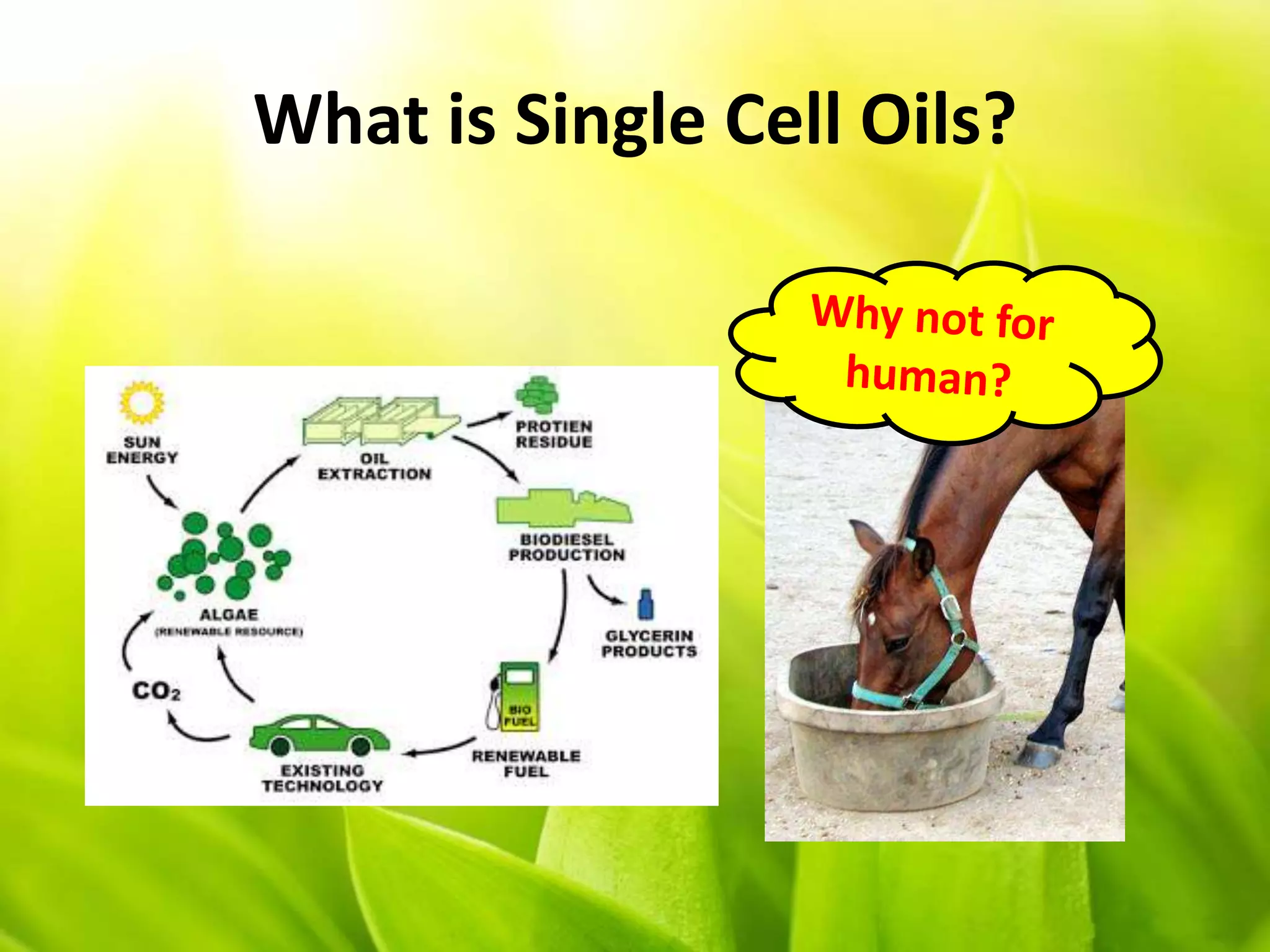
• Single Cell Oils (SCO): triglyceride fats generated by
microorganisms.
– Lipid components are similar to those found in plant and animal.
→ Applications: animal feeds, aqua feeds, biodiesel.
What is Single Cell Oils?
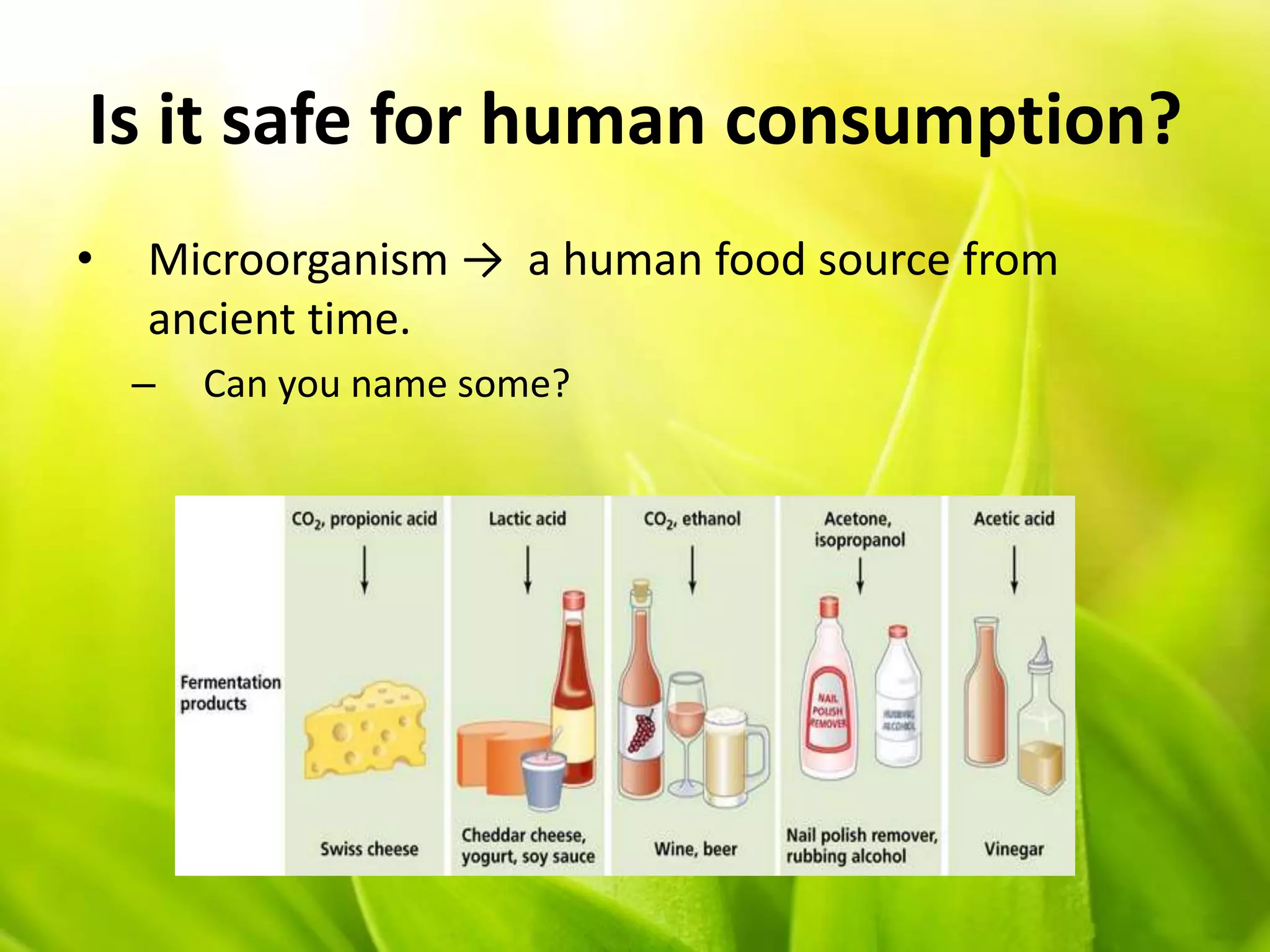
Is it safe for human consumption?
• Microorganism → a human food source from
ancient time.
– Can you name some?
Oleaginous microorganism
• Microorganism that gathers >20-25% of their
biomass as oil.
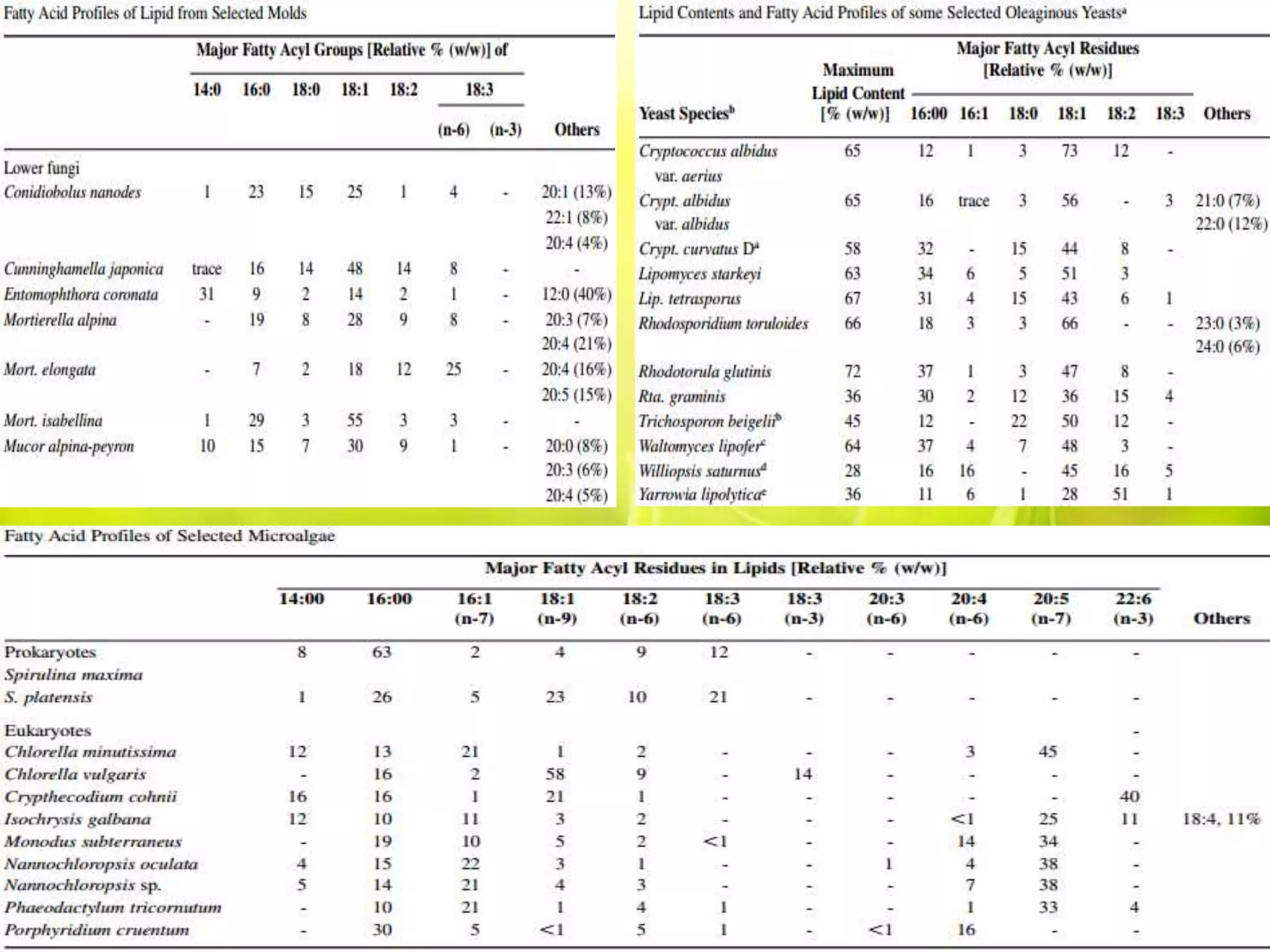
• Many yeast, fungi and several algae are maximum
producers.
– Algae → biodiesel
– Yeast and fungi → edible oil
• They are also capable of producing high levels of
nutritionally important polyunsaturated fatty acids
(PUFAs).
Advantages of Oleaginous
microorganism
• Growth on various substrates
→ utilizing by-product = reduce cost
• Ability to synthesize a divert
array of fatty products
→ many useful applications.
• Able to be genetic manipulation
→ selection for highest productivity.
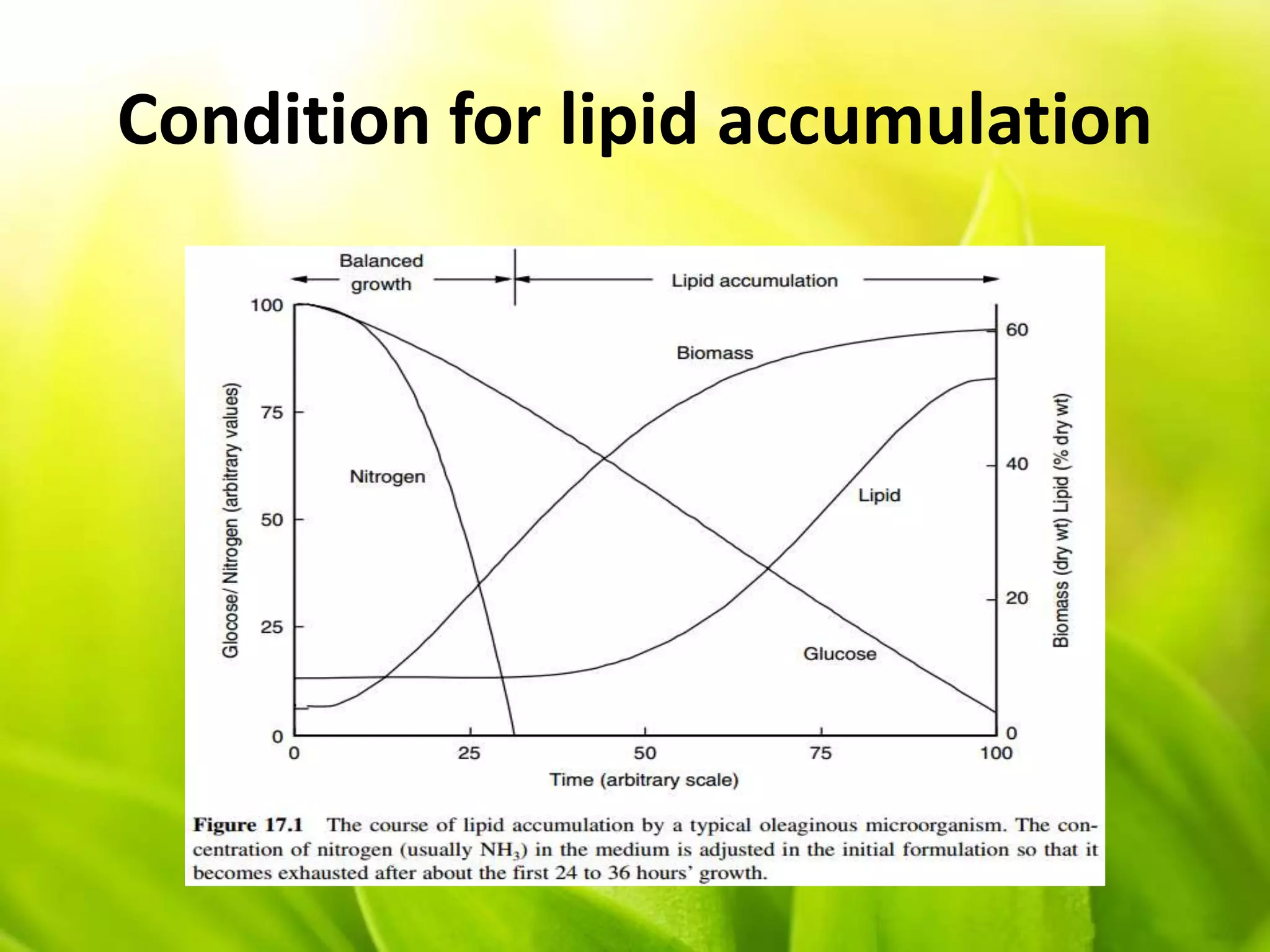
Condition for lipid accumulation
• Lipid accumulation is trigger when
– Nutrients in the growth medium (usually Nitrogen
source) is exhausted
– Surplus of Carbon source (usually glucose)
→ Cells stop multiplying.
→ Cells convert Carbon source to Storage oils or fats.
Condition for lipid accumulation
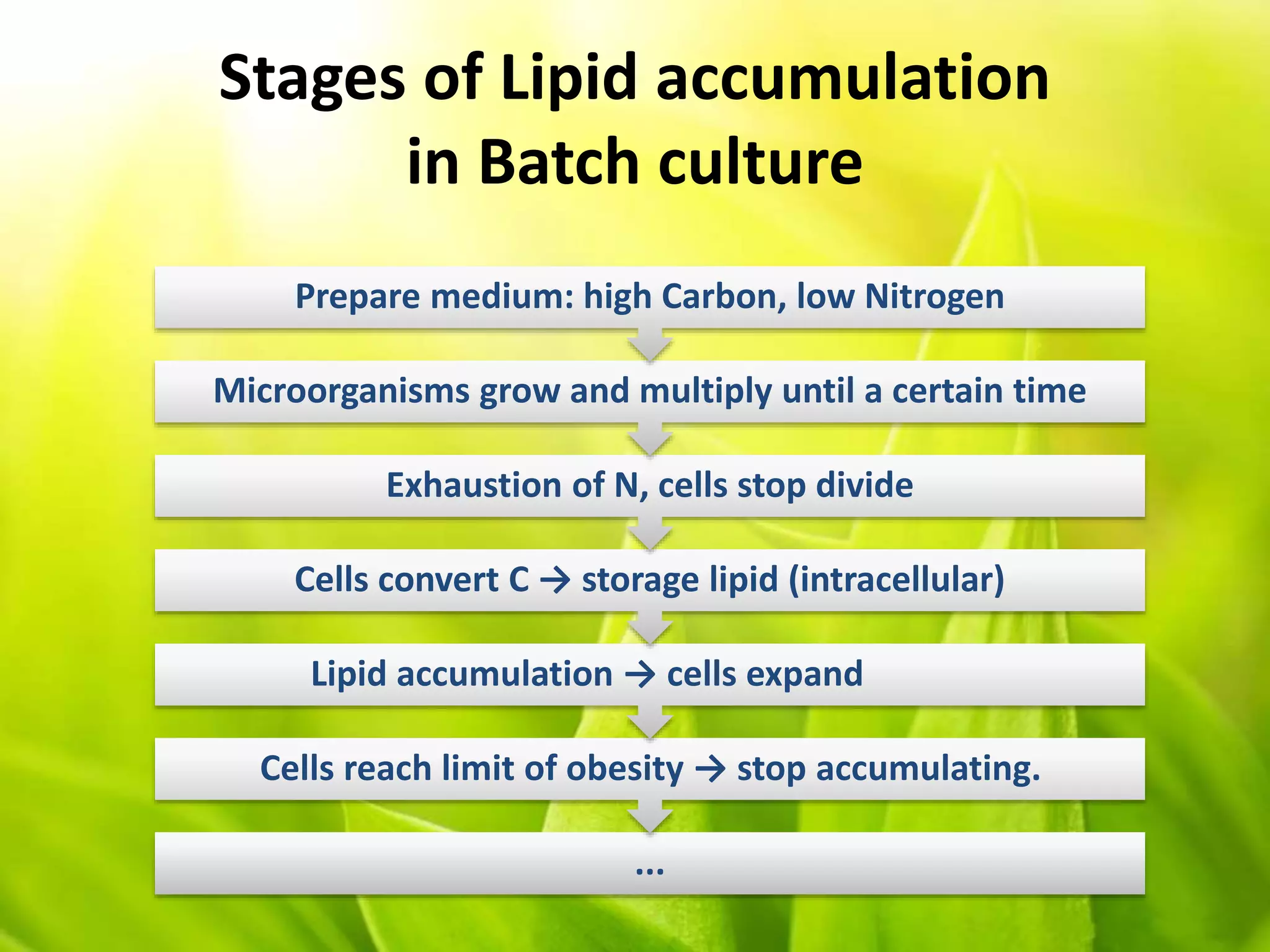
Stages of Lipid accumulation
in Batch culture
...
Cells reach limit of obesity → stop accumulating.
Lipid accumulation → cells expand
Cells convert C → storage lipid (intracellular)
Exhaustion of N, cells stop divide
Microorganisms grow and multiply until a certain time
Prepare medium: high Carbon, low Nitrogen
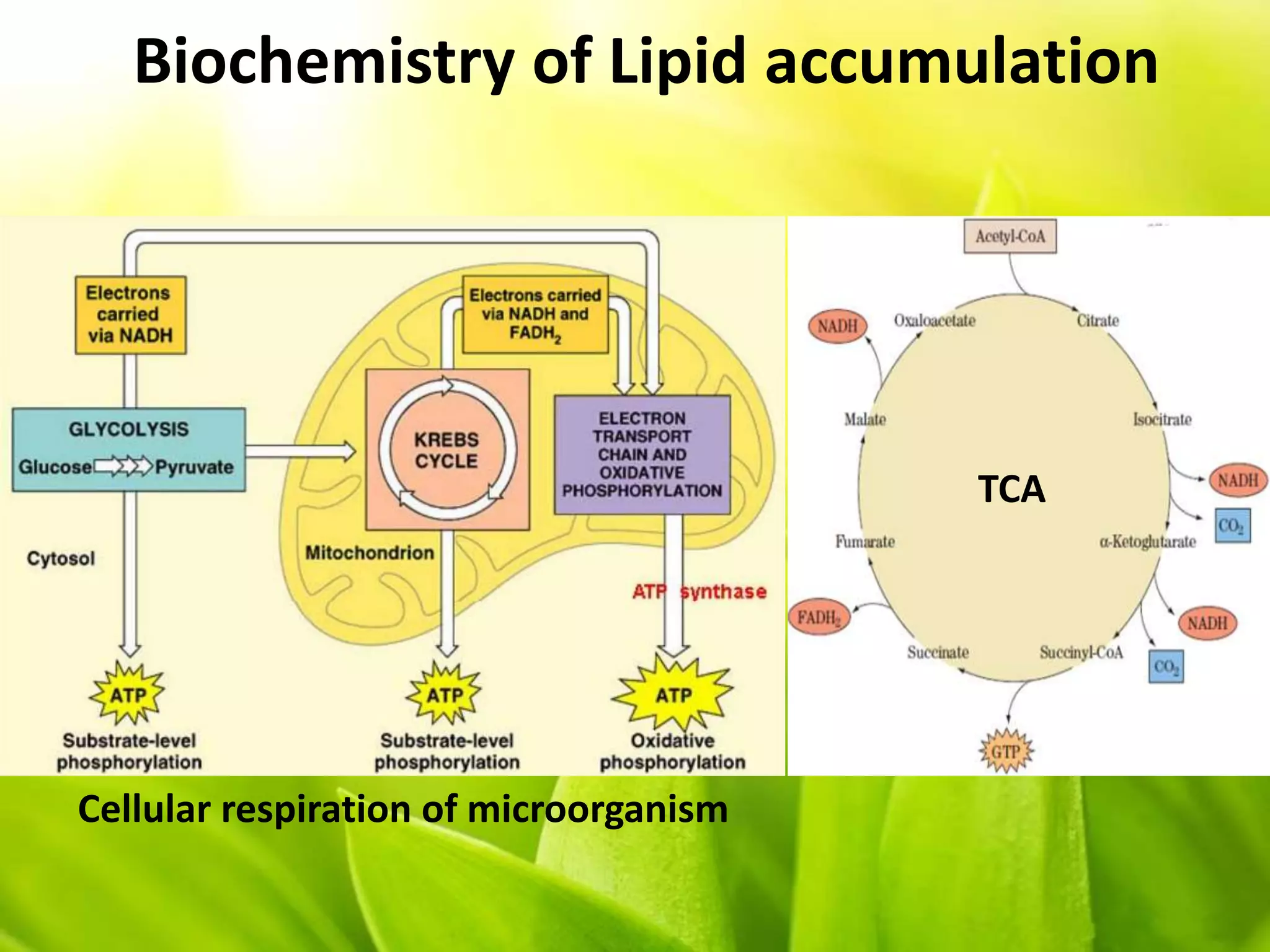
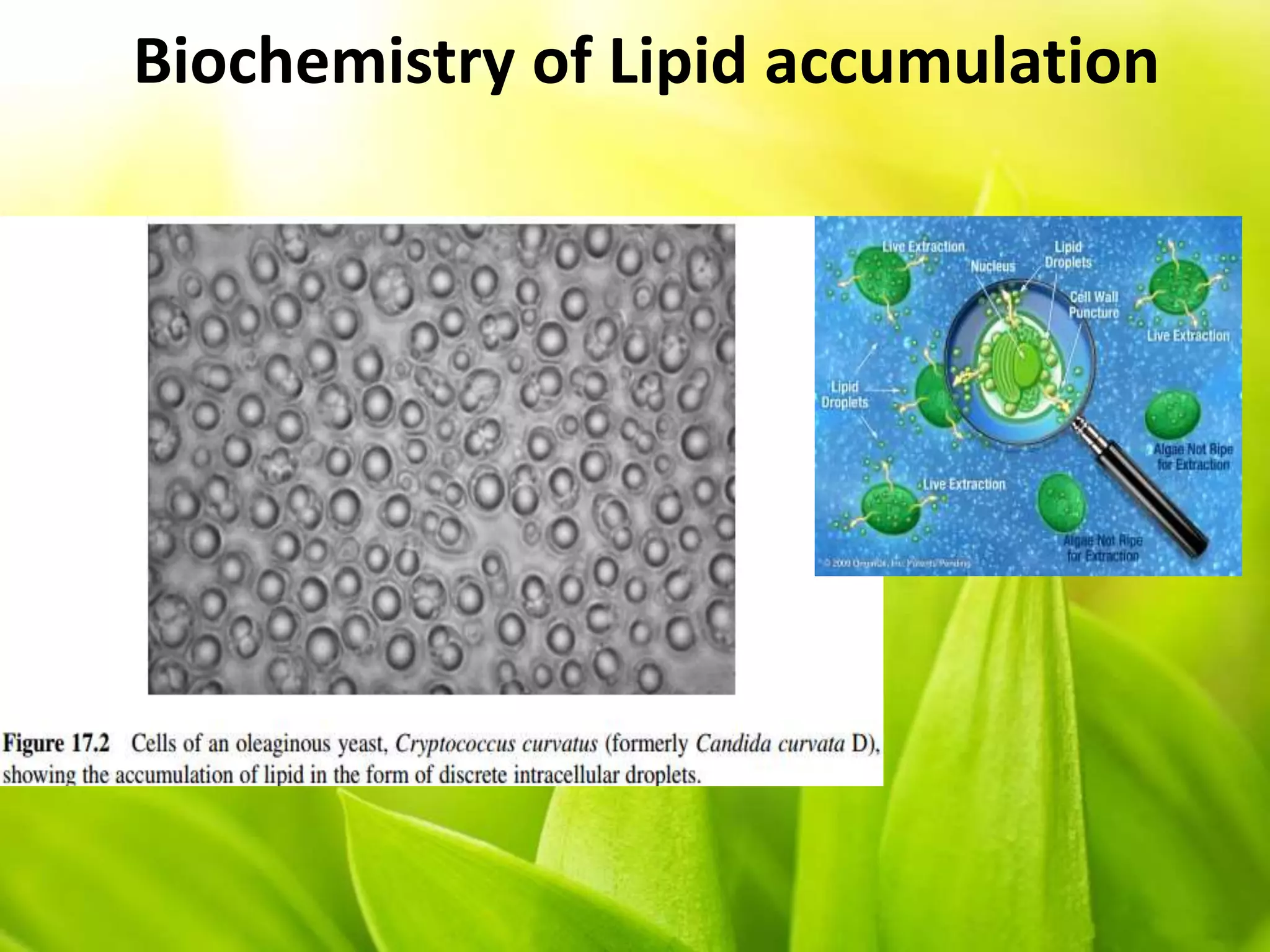
Biochemistry of Lipid accumulation
Cellular respiration of microorganism
TCA
Biochemistry of Lipid accumulation
Acetyl-CoA →(fatty acid biosynthesis)→ triacylglycerols
Enzyme ATP-citrate lyase: Citric acid → acetyl-CoA
(Oleaginous microorganisms only)
Citric acid in mitochondrion → cytosol
TCA is disrupted
[AMP] is diminished;
Isocitrate dehydrogenase in mitochondrion stop working
Exhaustion of N
Biochemistry of Lipid accumulation
2. Production of Commercial SCO.
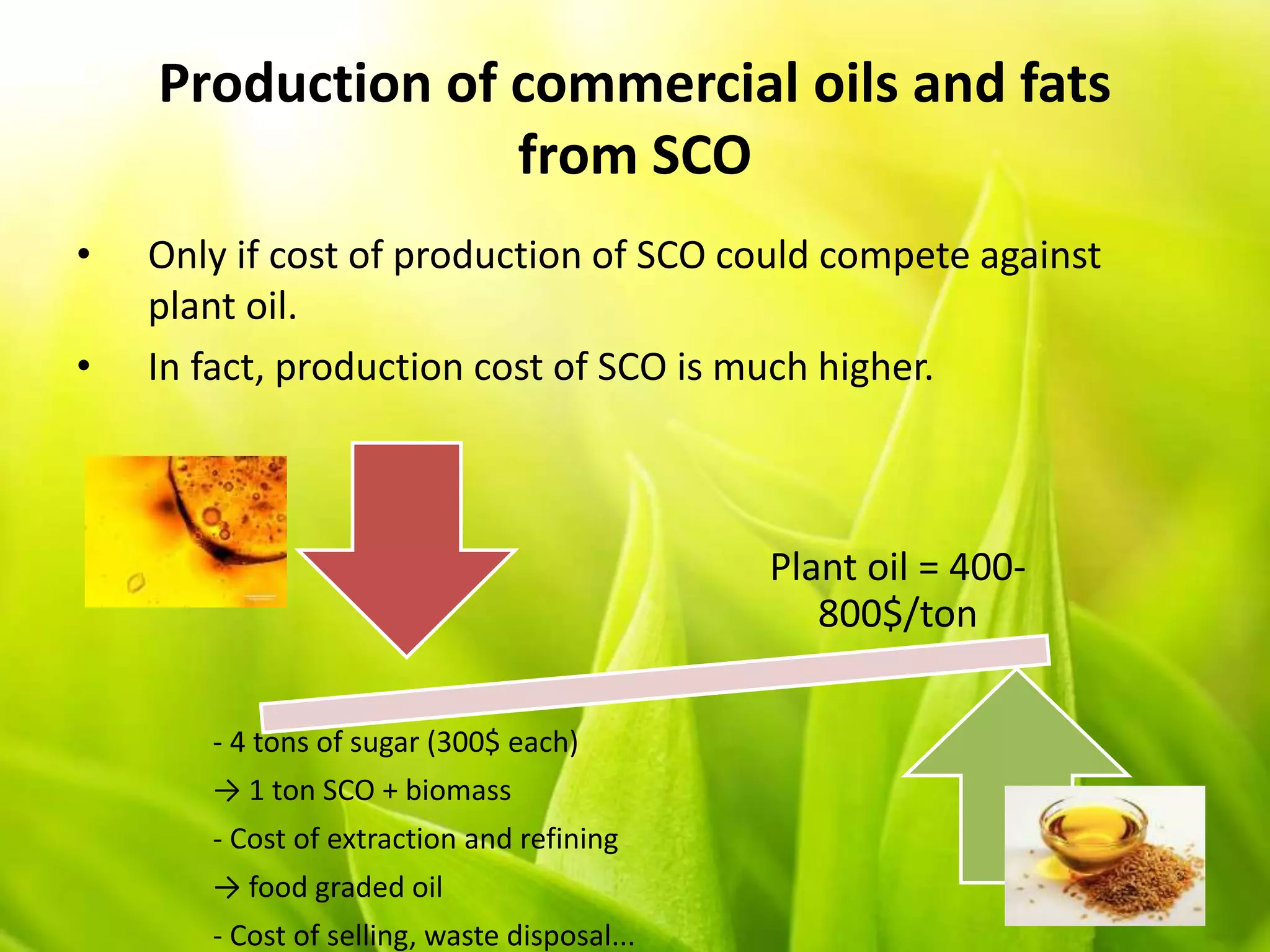
Production of commercial oils and fats
from SCO
• Only if cost of production of SCO could compete against
plant oil.
• In fact, production cost of SCO is much higher.
Plant oil = 400-
800$/ton
- 4 tons of sugar (300$ each)
→ 1 ton SCO + biomass
- Cost of extraction and refining
→ food graded oil
- Cost of selling, waste disposal...
Production of commercial oils and fats
from SCO
• High production cost
→ Apply for production of specialty oils and fats only.
→ Choose fast growing microorganisms, high oil yield, simple
growth requirements.
→ Focusing on the use of by-products of agriculture and industry
as substrates
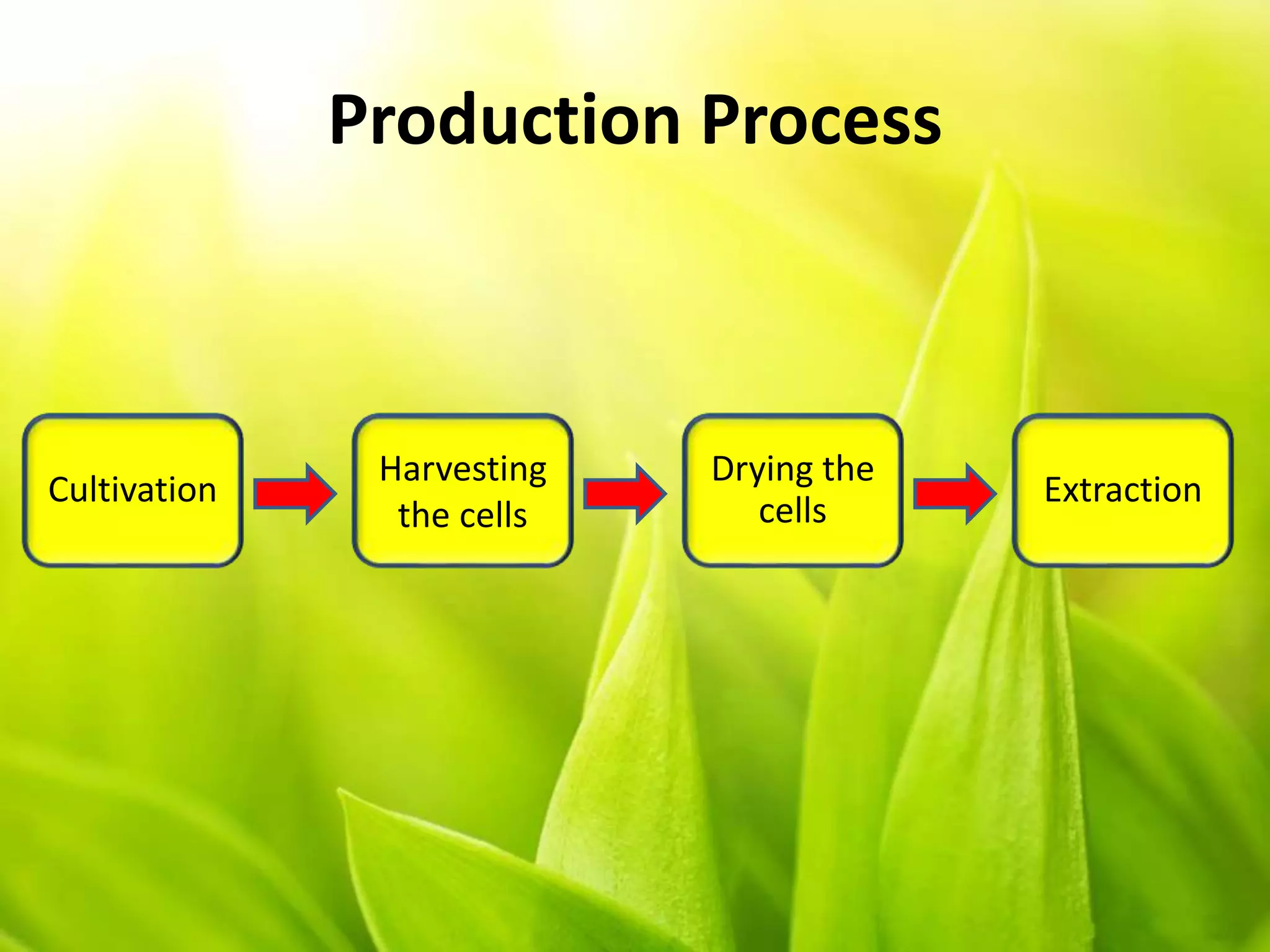
Production Process
Harvesting
the cells
Cultivation
Drying the
cells
Extraction
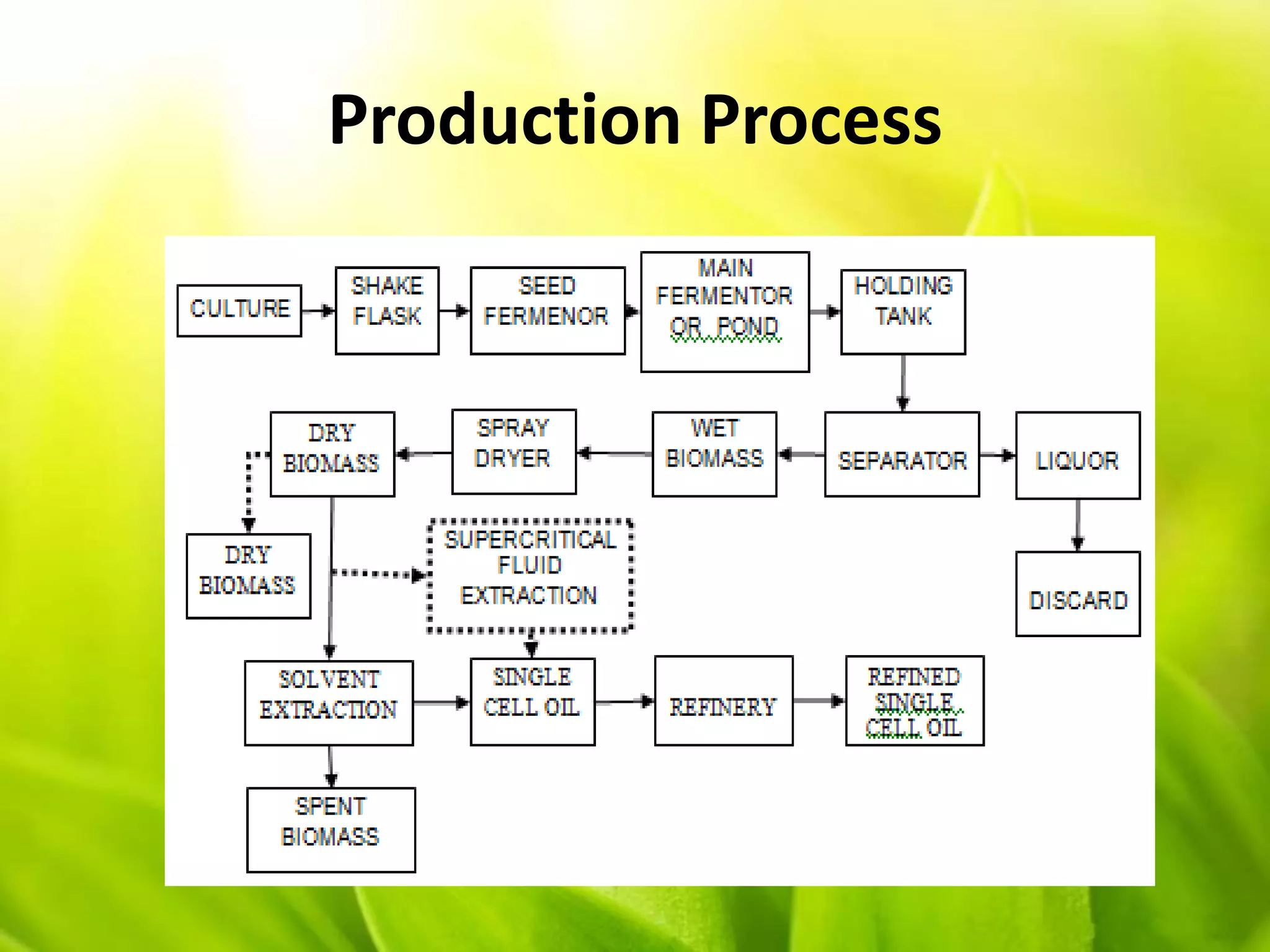
Production Process
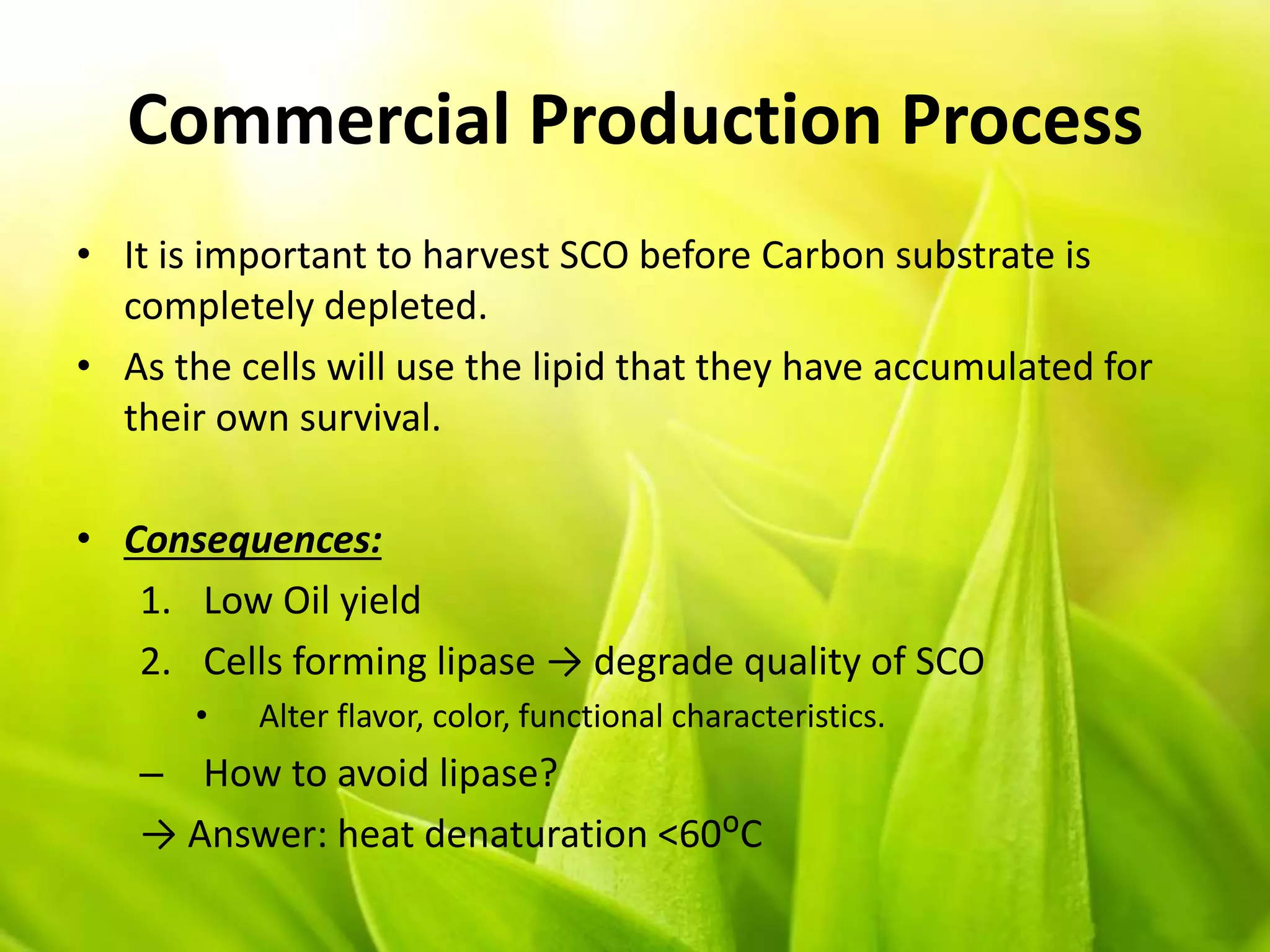
Commercial Production Process
• It is important to harvest SCO before Carbon substrate is
completely depleted.
• As the cells will use the lipid that they have accumulated for
their own survival.
• Consequences:
1. Low Oil yield
2. Cells forming lipase → degrade quality of SCO
• Alter flavor, color, functional characteristics.
– How to avoid lipase?
→ Answer: heat denaturation <60ᴼC
Commercial Production Process
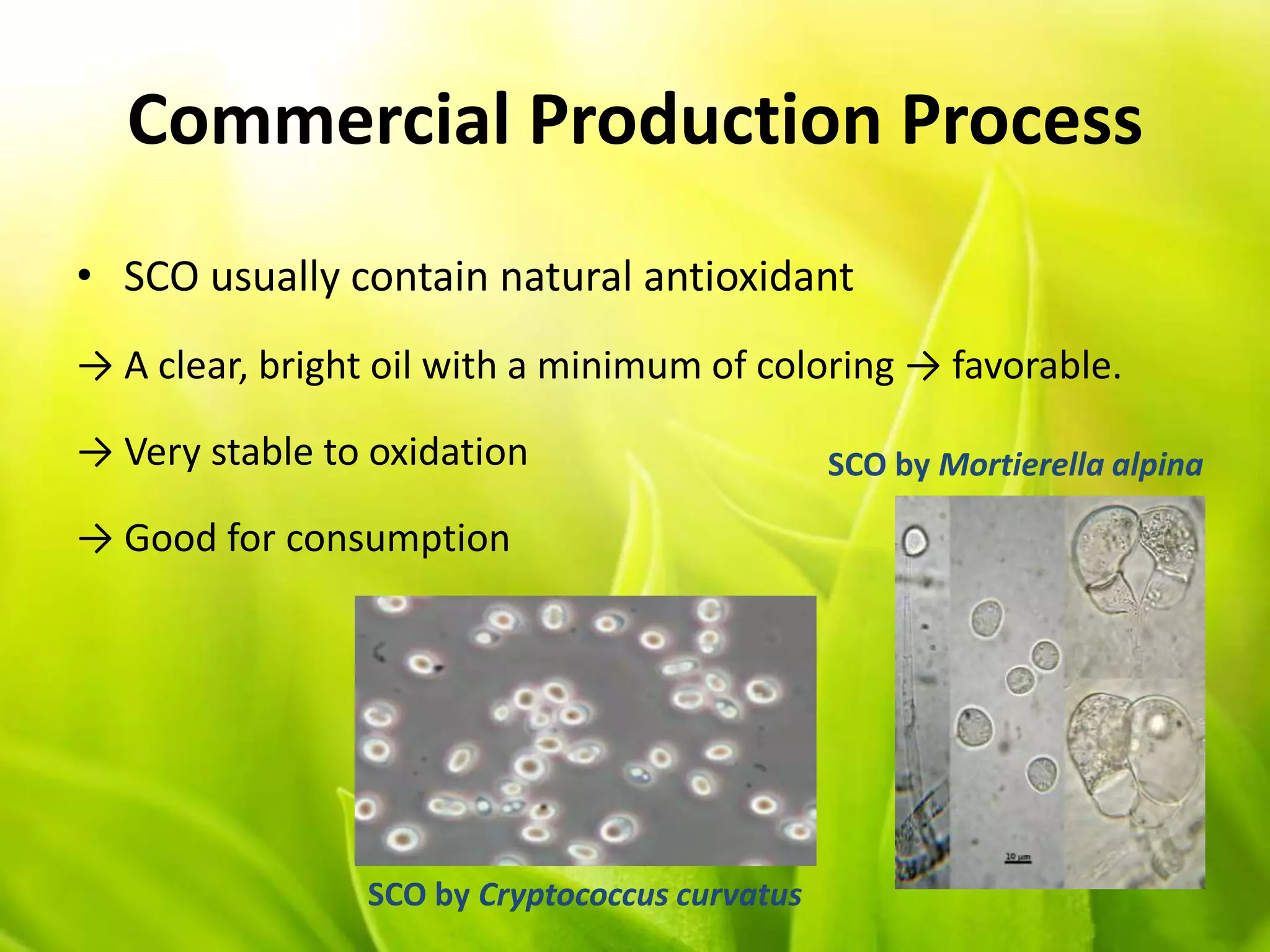
• SCO usually contain natural antioxidant
→ A clear, bright oil with a minimum of coloring → favorable.
→ Very stable to oxidation
→ Good for consumption
SCO by Cryptococcus curvatus
SCO by Mortierella alpina
3. Applications of Single Cell Oils.
» Cocoa butter equivalent fat
» Polyunsaturated fatty acids (PUFAs)
• DHA
• ARA
Cocoa Butter Equivalent Fat
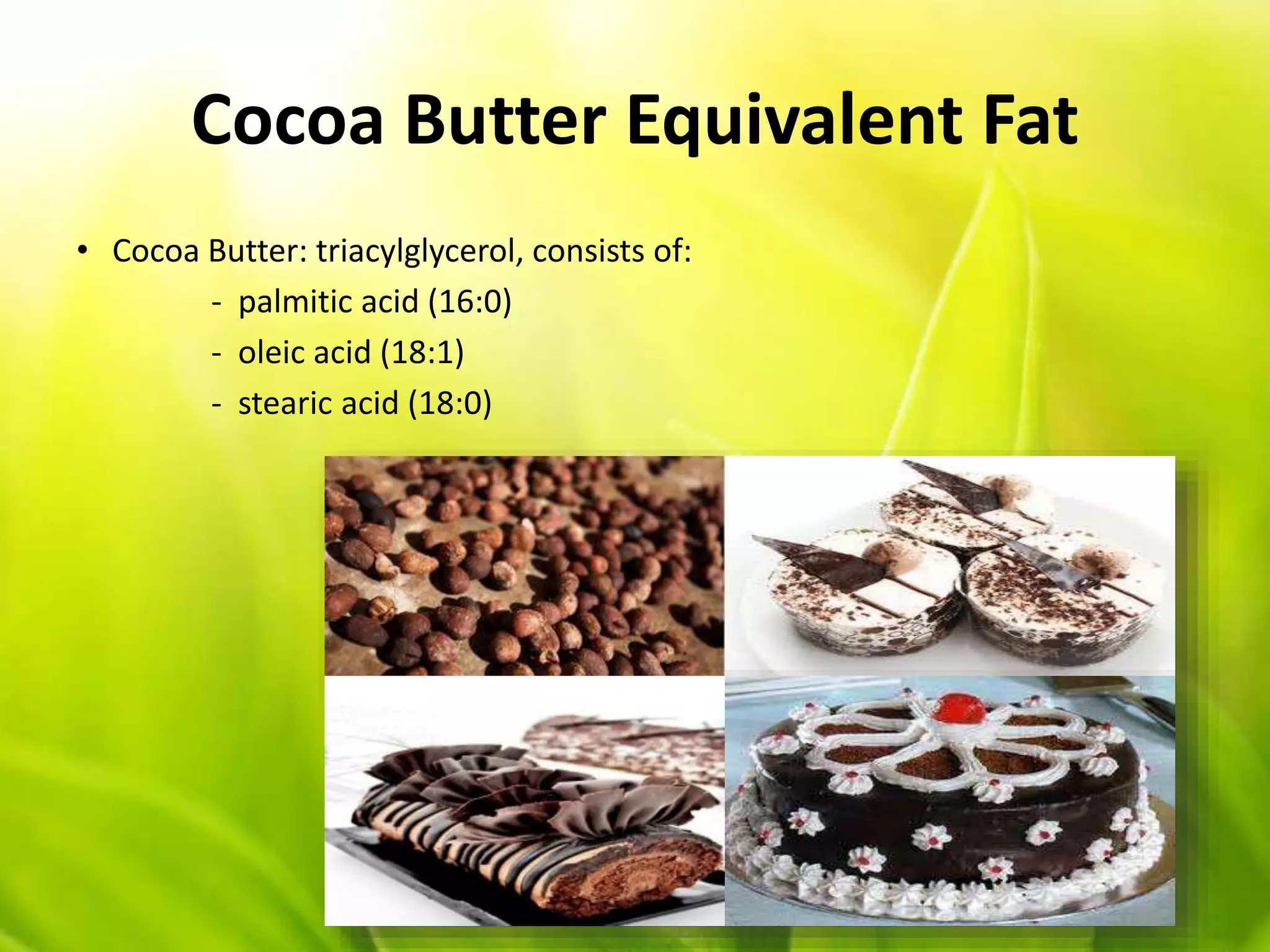
• Cocoa Butter: triacylglycerol, consists of:
- palmitic acid (16:0)
- oleic acid (18:1)
- stearic acid (18:0)
Cocoa Butter Equivalent Fat
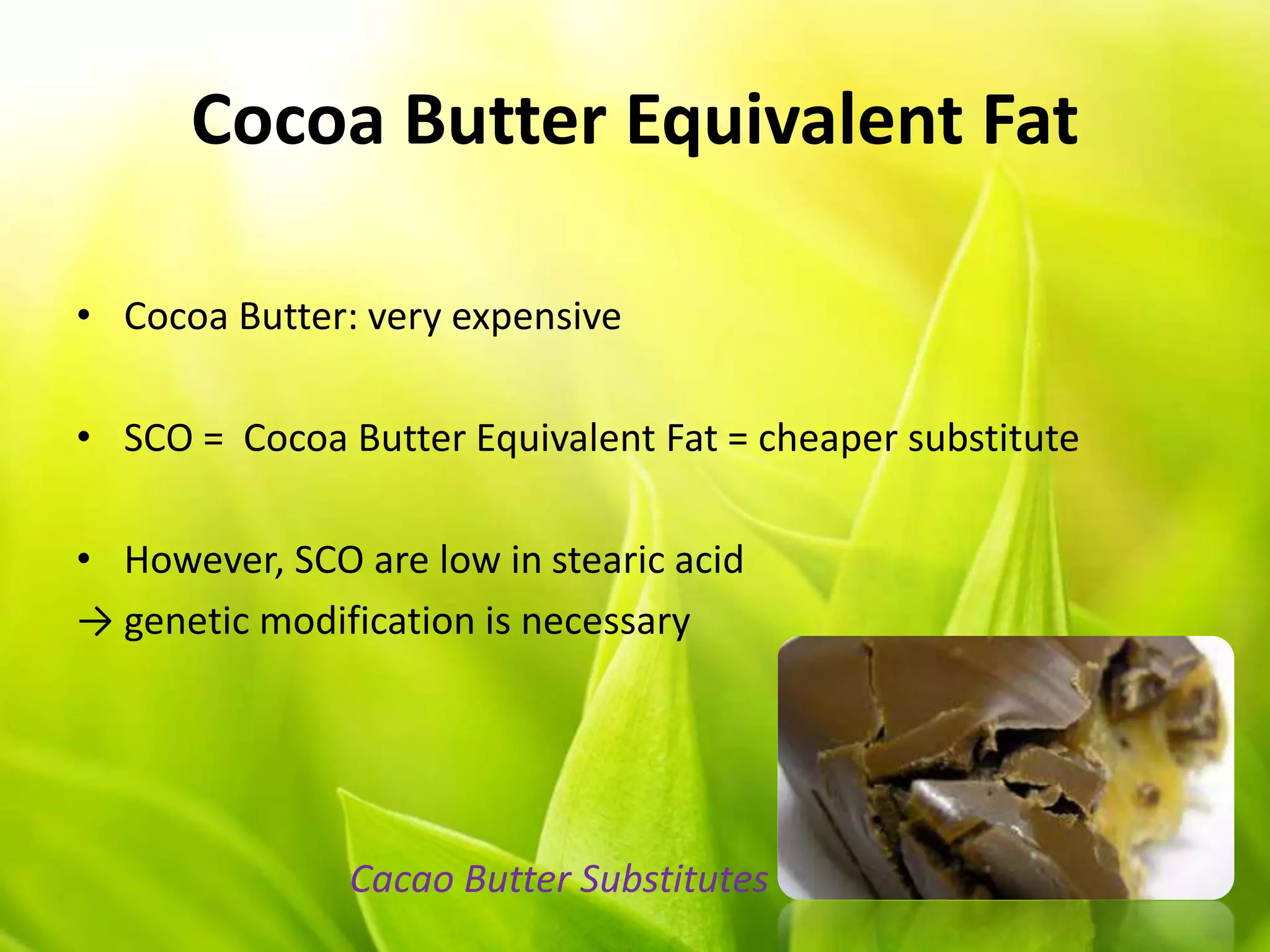
• Cocoa Butter: very expensive
• SCO = Cocoa Butter Equivalent Fat = cheaper substitute
• However, SCO are low in stearic acid
→ genetic modification is necessary
Cacao Butter Substitutes
Cocoa Butter Equivalent Fat
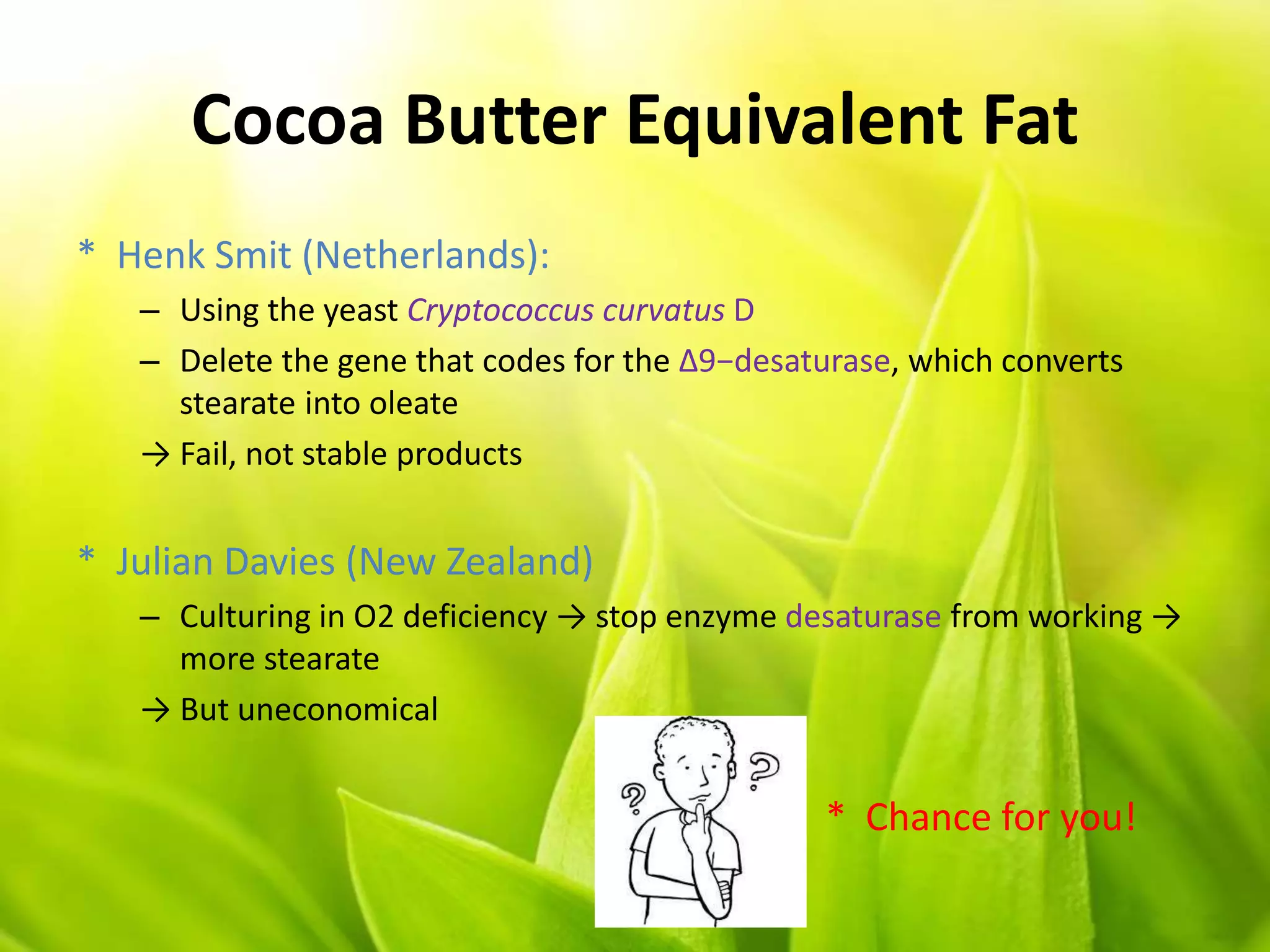
* Henk Smit (Netherlands):
– Using the yeast Cryptococcus curvatus D
– Delete the gene that codes for the Δ9−desaturase, which converts
stearate into oleate
→ Fail, not stable products
* Julian Davies (New Zealand)
– Culturing in O2 deficiency → stop enzyme desaturase from working →
more stearate
→ But uneconomical
* Chance for you!
Polyunsaturated fatty acids
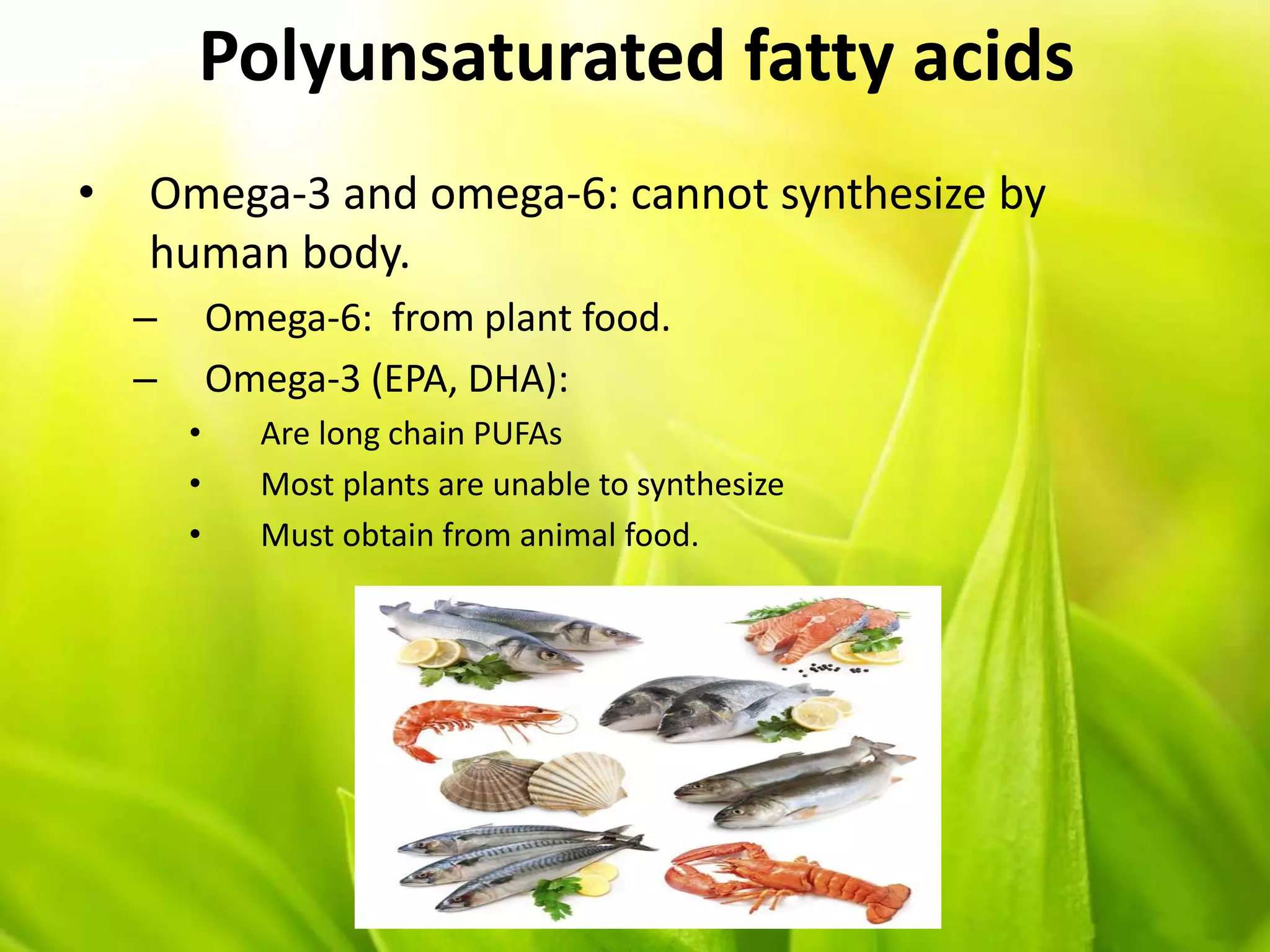
• Omega-3 and omega-6: cannot synthesize by
human body.
– Omega-6: from plant food.
– Omega-3 (EPA, DHA):
• Are long chain PUFAs
• Most plants are unable to synthesize
• Must obtain from animal food.
Dietetic significant of PUFAs
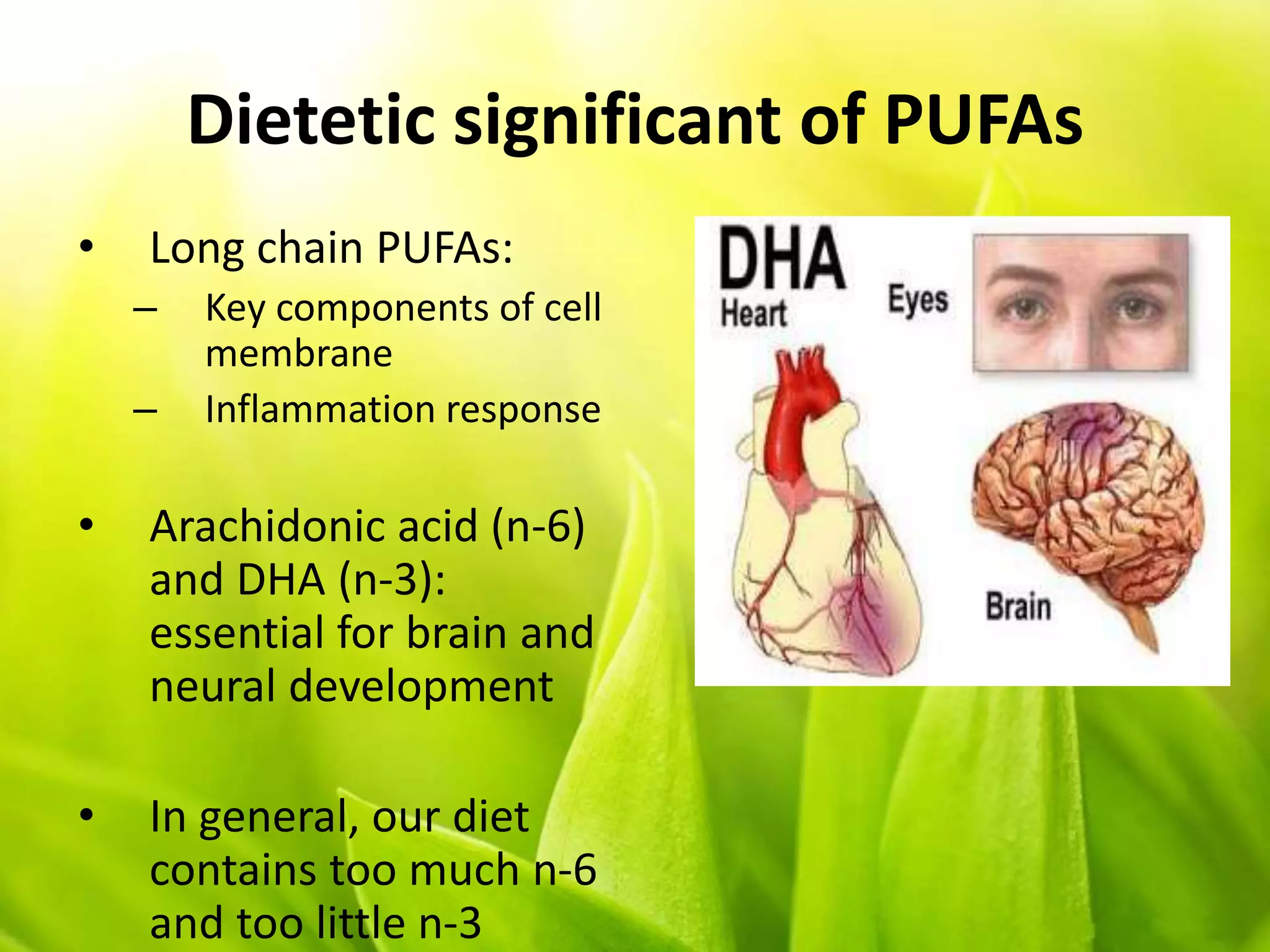
• Long chain PUFAs:
– Key components of cell
membrane
– Inflammation response
• Arachidonic acid (n-6)
and DHA (n-3):
essential for brain and
neural development
• In general, our diet
contains too much n-6
and too little n-3
SCO as source of Omega-3
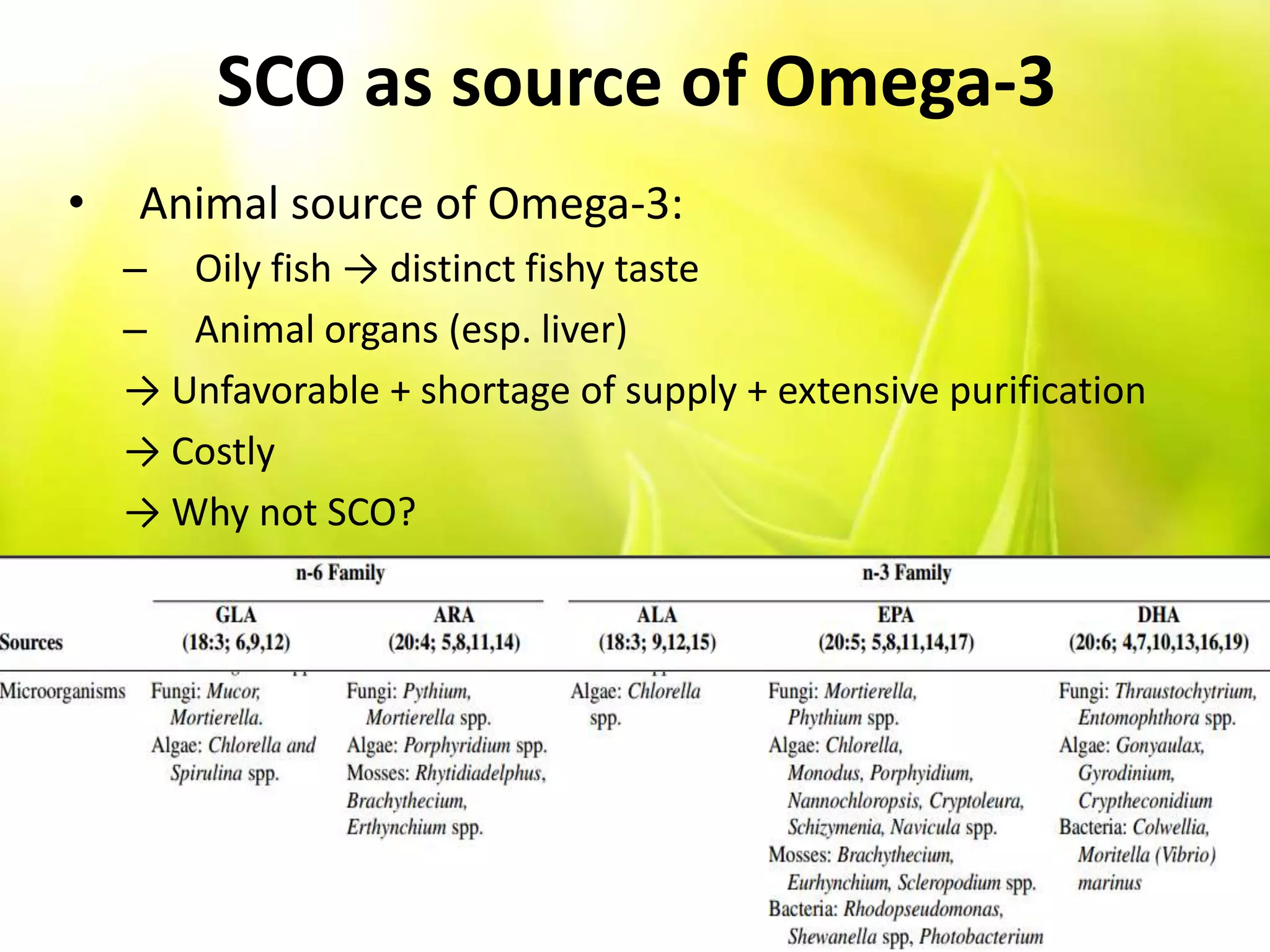
• Animal source of Omega-3:
– Oily fish → distinct fishy taste
– Animal organs (esp. liver)
→ Unfavorable + shortage of supply + extensive purification
→ Costly
→ Why not SCO?
• In this presentation, we will also briefly introduce to
you:
– Arachidonic Acid (ARA) production process.
– Docosahexaenoic acid (DHA) production process.
Arachidonic Acid (ARA)
Processes for the production of various PUFAs
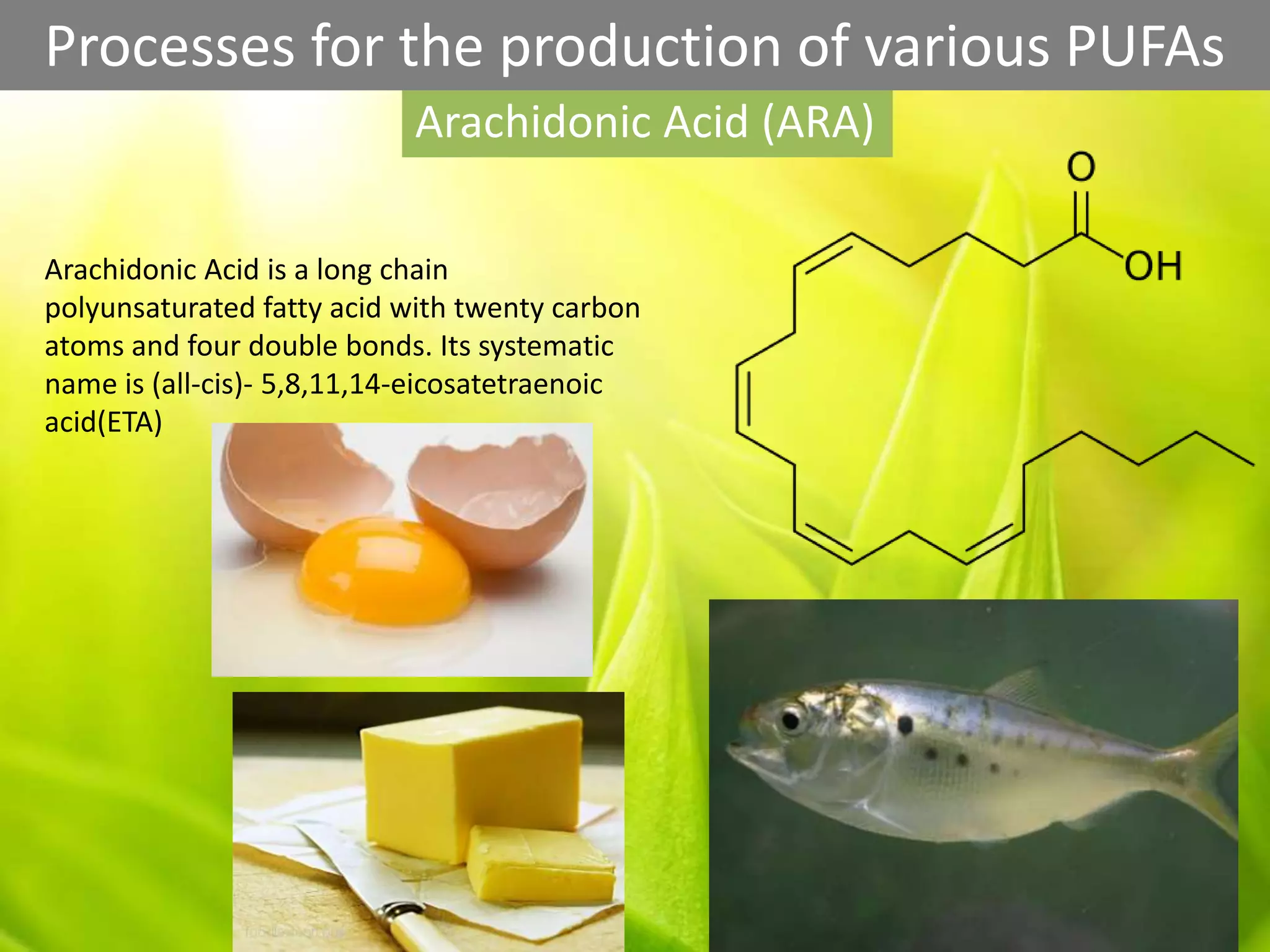
Arachidonic Acid is a long chain
polyunsaturated fatty acid with twenty carbon
atoms and four double bonds. Its systematic
name is (all-cis)- 5,8,11,14-eicosatetraenoic
acid(ETA)
Arachidonic Acid (ARA)
Processes for the production of various PUFAs
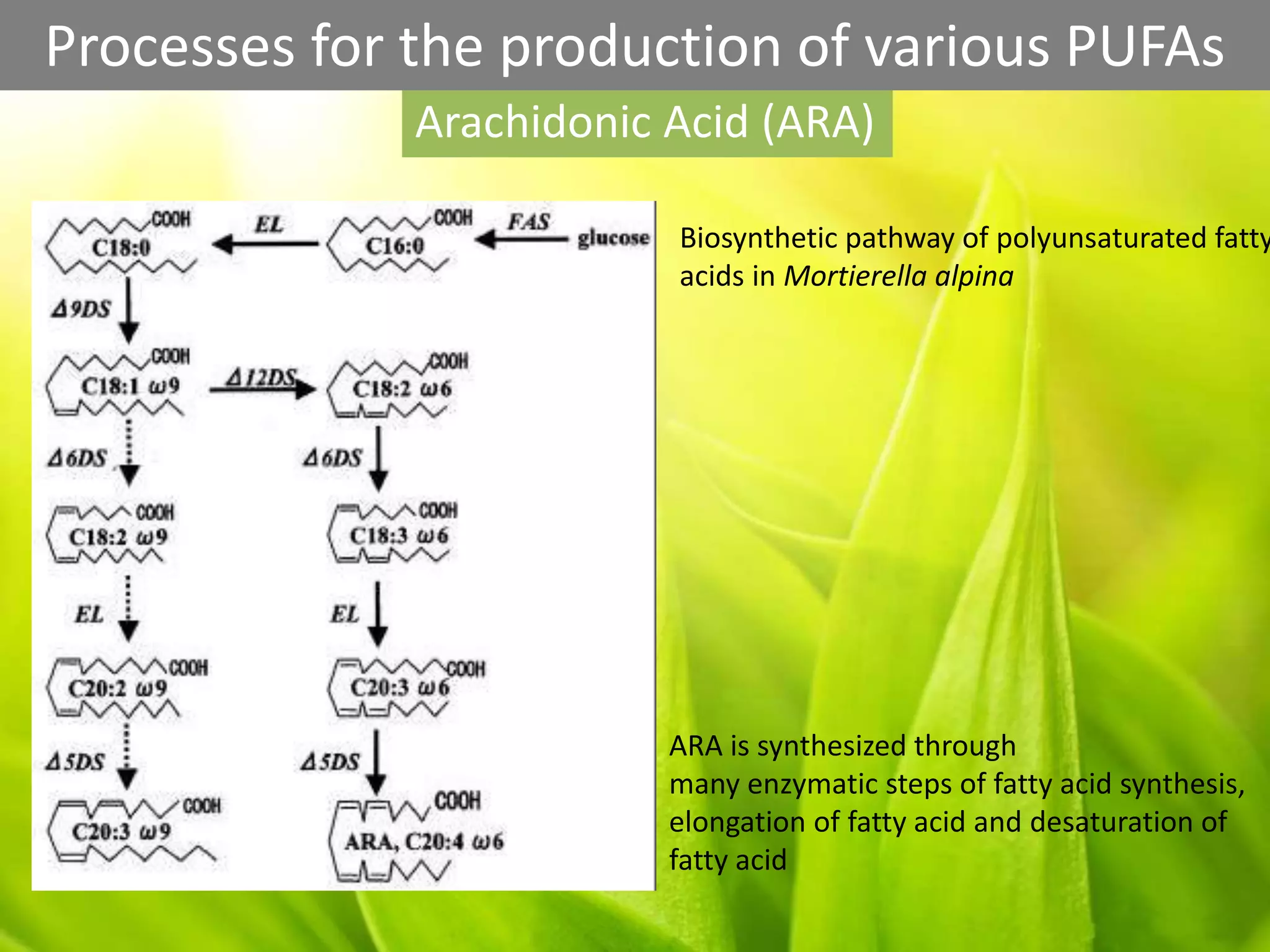
Biosynthetic pathway of polyunsaturated fatty
acids in Mortierella alpina
ARA is synthesized through
many enzymatic steps of fatty acid synthesis,
elongation of fatty acid and desaturation of
fatty acid
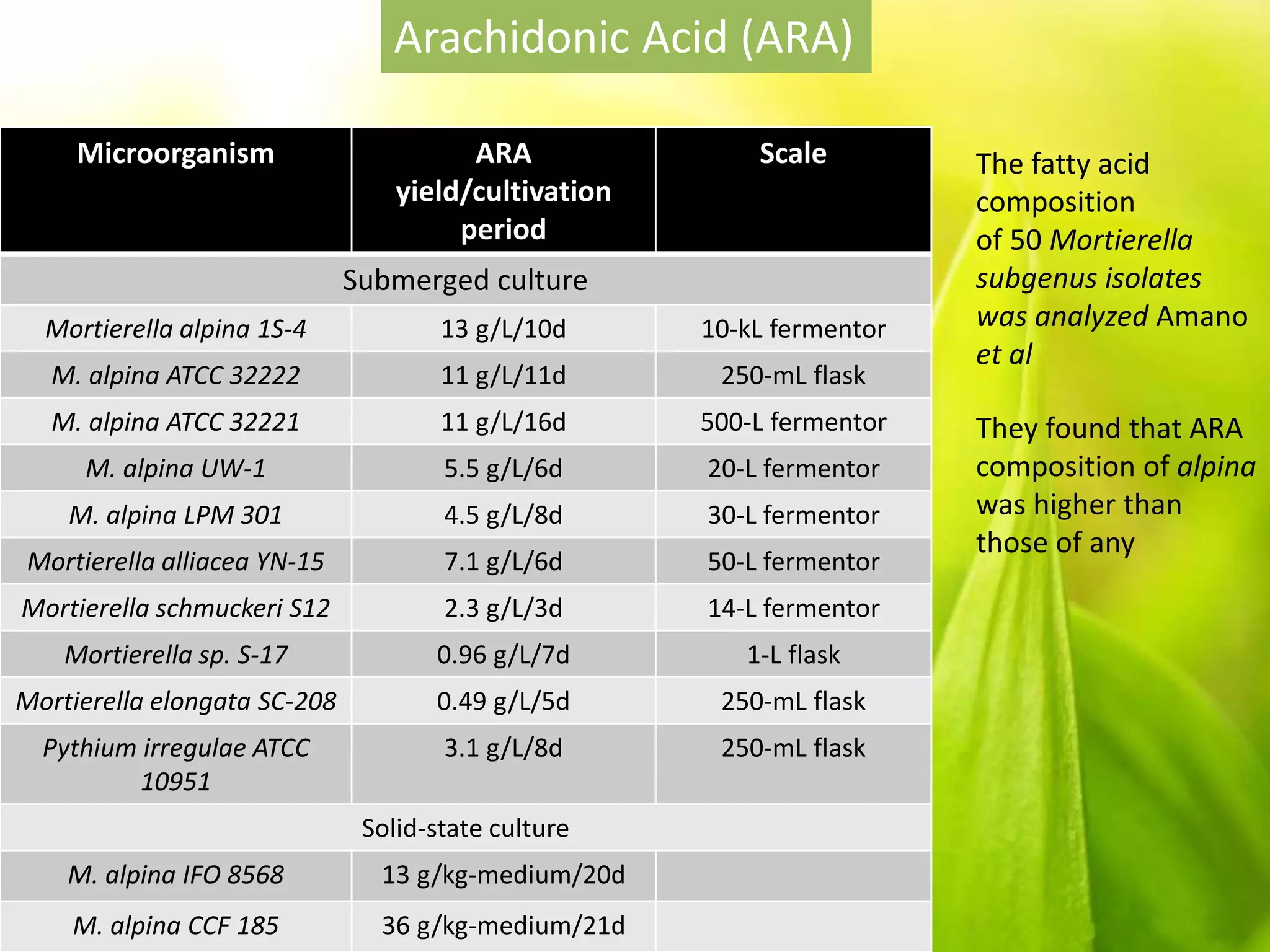
Microorganism ARA
yield/cultivation
period
Scale
Submerged culture
Mortierella alpina 1S-4 13 g/L/10d 10-kL fermentor
M. alpina ATCC 32222 11 g/L/11d 250-mL flask
M. alpina ATCC 32221 11 g/L/16d 500-L fermentor
M. alpina UW-1 5.5 g/L/6d 20-L fermentor
M. alpina LPM 301 4.5 g/L/8d 30-L fermentor
Mortierella alliacea YN-15 7.1 g/L/6d 50-L fermentor
Mortierella schmuckeri S12 2.3 g/L/3d 14-L fermentor
Mortierella sp. S-17 0.96 g/L/7d 1-L flask
Mortierella elongata SC-208 0.49 g/L/5d 250-mL flask
Pythium irregulae ATCC
10951
3.1 g/L/8d 250-mL flask
Solid-state culture
M. alpina IFO 8568 13 g/kg-medium/20d
M. alpina CCF 185 36 g/kg-medium/21d
Arachidonic Acid (ARA)
The fatty acid
composition
of 50 Mortierella
subgenus isolates
was analyzed Amano
et al
They found that ARA
composition of alpina
was higher than
those of any
Processes for the production of various PUFAs
Docosahexaenoic acid (DHA)
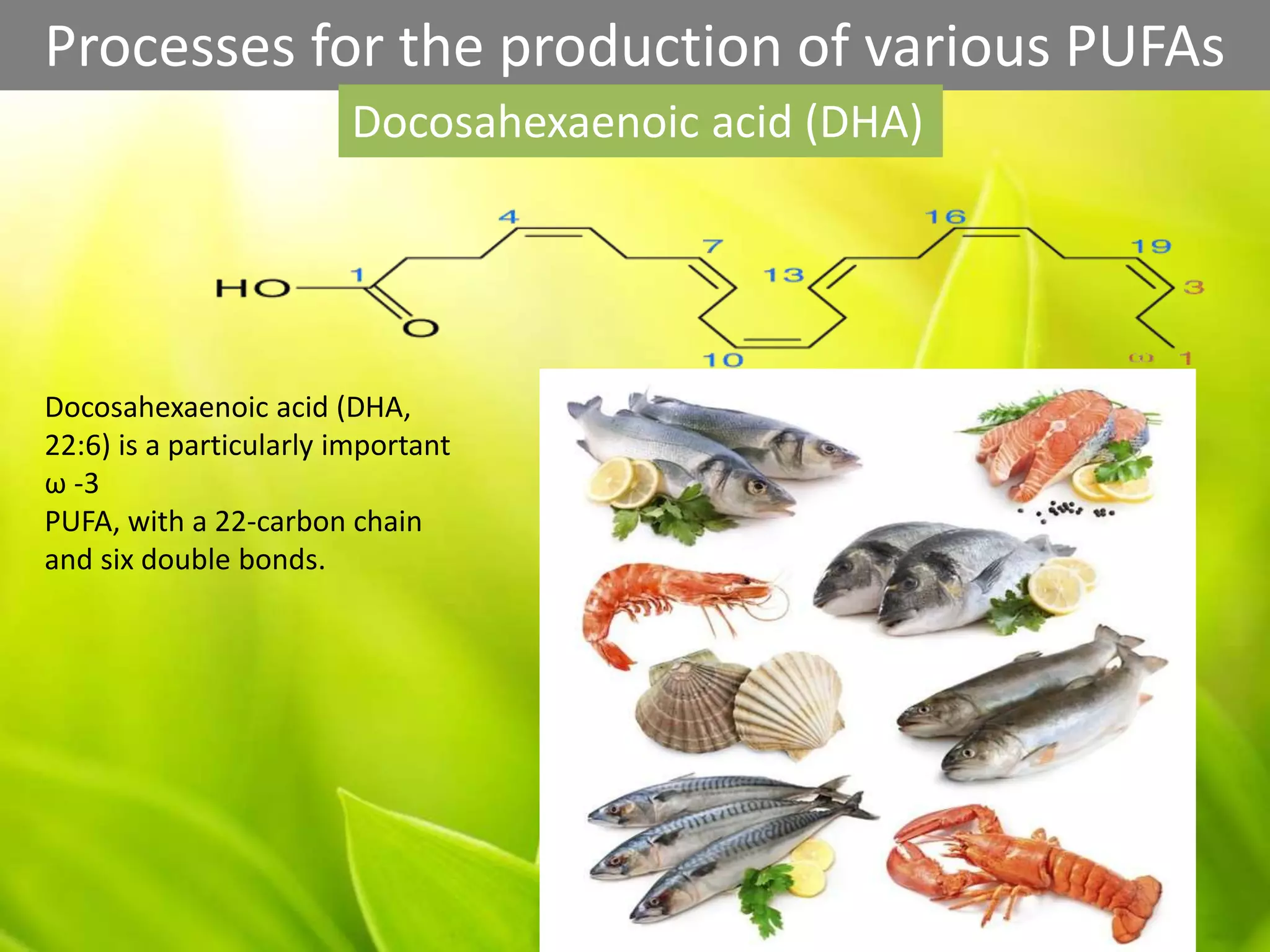
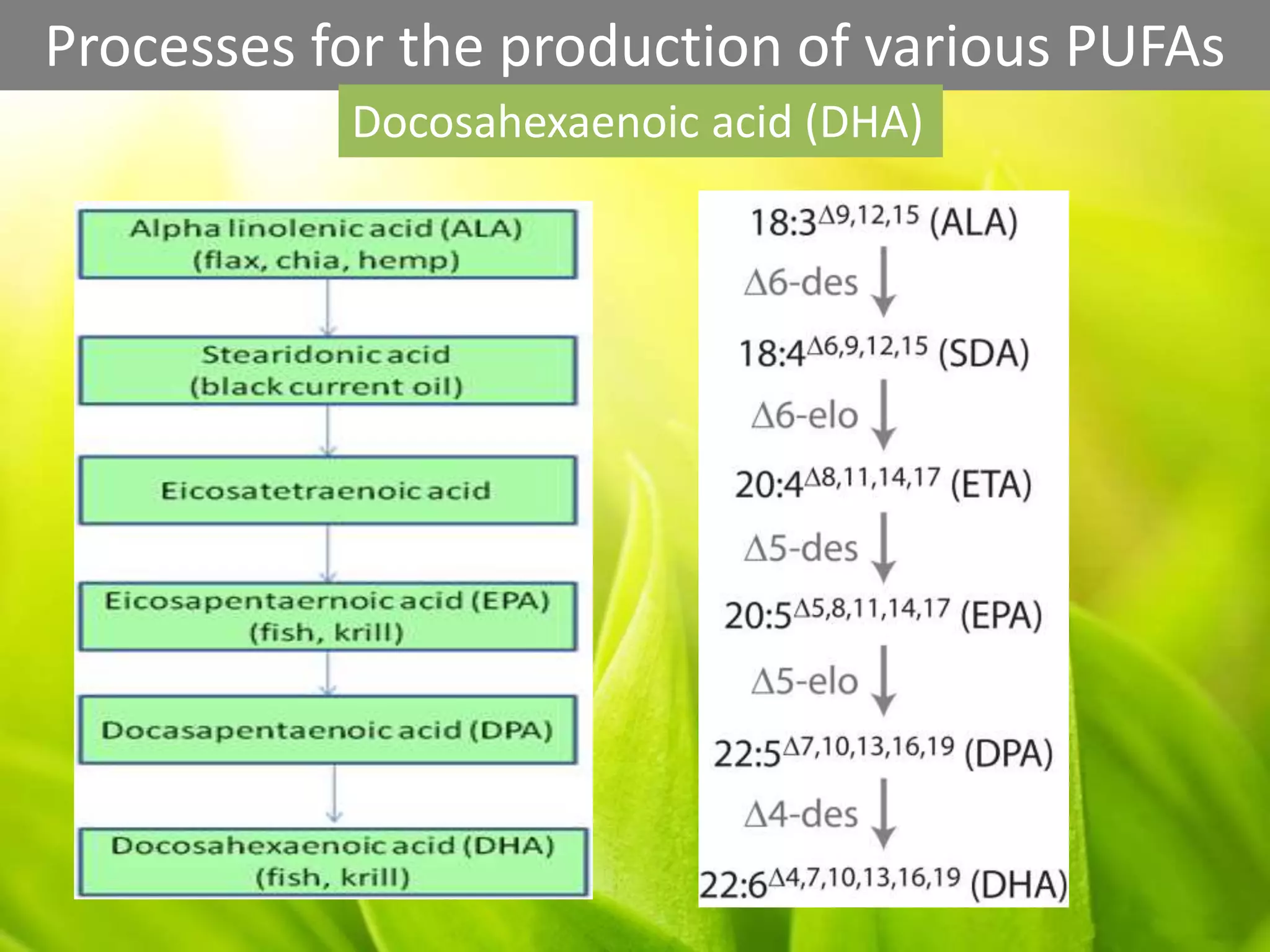
Docosahexaenoic acid (DHA,
22:6) is a particularly important
ω ‐3
PUFA, with a 22‐carbon chain
and six double bonds.
Processes for the production of various PUFAs
Docosahexaenoic acid (DHA)
Microbial PUFAs on market
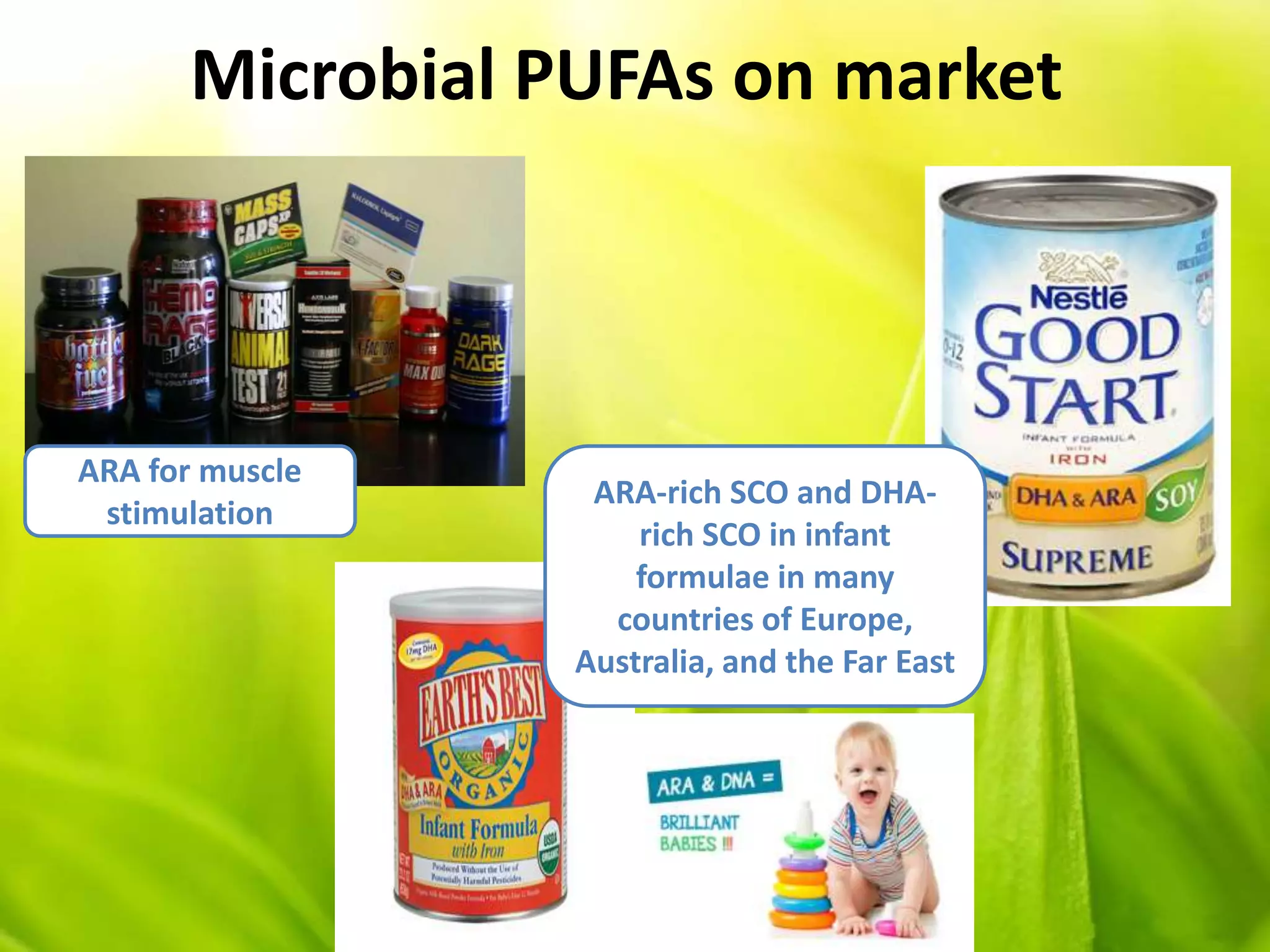
ARA for muscle
stimulation
ARA-rich SCO and DHA-
rich SCO in infant
formulae in many
countries of Europe,
Australia, and the Far East
Advantages and Disadvantages of SCO
ADVANTAGES:
1. Simple fatty acid profile → easy for extraction and
purification.
2. Both quality and quantity of the product can be guaranteed.
3. SCO is not affected by geographical or environmetal factors
(e.g pollution etc.)
4. Rapid production: increase cells in a short time and
independence from climatic conditions.
5. SCO act as a novel source of polyunsaturated fatty acids,
such as DHA and AA for nutritional supplementation.
Advantages and Disadvantages of SCO
DISADVANTAGES:
1. Limited production capacity.
2. Consumer acceptance.
3. DHA from fish oil are linked to growth retardation in infant
→ also DHA of SCO
Understanding 2 routes for safety
evaluation of a food ingredient
1. Petition for FDA approval as a food additive.
– FDA will review before products are available on the market.
– FDA is responsible for their decision.
2. Manufacturer can determine that a substance is GRAS if
there is scientific consensus among qualified experts
about its safety under the intended condition of use.
→ SCO is only FDA approval.
Safety of SCO
• SCO is only FDA approval. Why?
→ For some years, high level of SCO-ARA in the human diet was
thought to induce potential adverse effects on blood
clotting.
• However, later intensive and prolong studies demonstrate
the lack of evidence of toxicity in volunteers.
• Recently, microbial oils have been shown to be no more toxic
than oils from traditional sources.
• More researches are needed!
Summary
• SCO are now used to produce high value oils rich in
arachidonic acid (ARA) and docosahexaenoic acid
(DHA).
• These oils are used in infant nutrition and also as
nutriceuticals and food additives appropriate for adults.
• Potential therapeutic applications are very promising.
• Production of SCO:
– SCO can be produced in large scale.
– To ensure stabilization of SCO, must harvest the cells before
substrates are totally depleted.
– SCO extraction is much the same as used for plant seeds.
References
• James, P.W., Colin, R. Microbial production of fats and oils. Food Biotechnology.
2006, pp. 443-472
• http://www.ukessays.com/essays/education/microbial-production-of-fats-and-
oils.php

Fats and oils production by microorganisms

  • 1.
    Microbial Production of Oilsand Fats Course: Food Microbiology 2014 Lecturer: Dr. Vu Thi Lam An Group 5: Nguyen Quynh Hai Yen BTFTIU11009 Ho Quang Loc BTFTIU12011
  • 2.
    Contents 1. Introduction toSingle Cell Oils (SCO) 2. SCO production process 3. Applications 4. The significance and safetyness of SCO
  • 3.
    1. Introduction toSingle Cell Oils. » What is it? » Condition for lipid accumulation » Principles of lipid accumulation
  • 4.
    • Single CellProteins? • Single Cell Oils (SCO): triglyceride fats generated by microorganisms. – Lipid components are similar to those found in plant and animal. → Applications: animal feeds, aqua feeds, biodiesel. What is Single Cell Oils?
  • 5.
    What is SingleCell Oils?
  • 6.
    Is it safefor human consumption? • Microorganism → a human food source from ancient time. – Can you name some?
  • 7.
    Oleaginous microorganism • Microorganismthat gathers >20-25% of their biomass as oil. • Many yeast, fungi and several algae are maximum producers. – Algae → biodiesel – Yeast and fungi → edible oil • They are also capable of producing high levels of nutritionally important polyunsaturated fatty acids (PUFAs).
  • 9.
    Advantages of Oleaginous microorganism •Growth on various substrates → utilizing by-product = reduce cost • Ability to synthesize a divert array of fatty products → many useful applications. • Able to be genetic manipulation → selection for highest productivity.
  • 10.
    Condition for lipidaccumulation • Lipid accumulation is trigger when – Nutrients in the growth medium (usually Nitrogen source) is exhausted – Surplus of Carbon source (usually glucose) → Cells stop multiplying. → Cells convert Carbon source to Storage oils or fats.
  • 11.
    Condition for lipidaccumulation
  • 12.
    Stages of Lipidaccumulation in Batch culture ... Cells reach limit of obesity → stop accumulating. Lipid accumulation → cells expand Cells convert C → storage lipid (intracellular) Exhaustion of N, cells stop divide Microorganisms grow and multiply until a certain time Prepare medium: high Carbon, low Nitrogen
  • 13.
    Biochemistry of Lipidaccumulation Cellular respiration of microorganism TCA
  • 14.
    Biochemistry of Lipidaccumulation Acetyl-CoA →(fatty acid biosynthesis)→ triacylglycerols Enzyme ATP-citrate lyase: Citric acid → acetyl-CoA (Oleaginous microorganisms only) Citric acid in mitochondrion → cytosol TCA is disrupted [AMP] is diminished; Isocitrate dehydrogenase in mitochondrion stop working Exhaustion of N
  • 15.
  • 16.
    2. Production ofCommercial SCO.
  • 17.
    Production of commercialoils and fats from SCO • Only if cost of production of SCO could compete against plant oil. • In fact, production cost of SCO is much higher. Plant oil = 400- 800$/ton - 4 tons of sugar (300$ each) → 1 ton SCO + biomass - Cost of extraction and refining → food graded oil - Cost of selling, waste disposal...
  • 18.
    Production of commercialoils and fats from SCO • High production cost → Apply for production of specialty oils and fats only. → Choose fast growing microorganisms, high oil yield, simple growth requirements. → Focusing on the use of by-products of agriculture and industry as substrates
  • 19.
  • 20.
  • 21.
    Commercial Production Process •It is important to harvest SCO before Carbon substrate is completely depleted. • As the cells will use the lipid that they have accumulated for their own survival. • Consequences: 1. Low Oil yield 2. Cells forming lipase → degrade quality of SCO • Alter flavor, color, functional characteristics. – How to avoid lipase? → Answer: heat denaturation <60ᴼC
  • 22.
    Commercial Production Process •SCO usually contain natural antioxidant → A clear, bright oil with a minimum of coloring → favorable. → Very stable to oxidation → Good for consumption SCO by Cryptococcus curvatus SCO by Mortierella alpina
  • 23.
    3. Applications ofSingle Cell Oils. » Cocoa butter equivalent fat » Polyunsaturated fatty acids (PUFAs) • DHA • ARA
  • 24.
    Cocoa Butter EquivalentFat • Cocoa Butter: triacylglycerol, consists of: - palmitic acid (16:0) - oleic acid (18:1) - stearic acid (18:0)
  • 25.
    Cocoa Butter EquivalentFat • Cocoa Butter: very expensive • SCO = Cocoa Butter Equivalent Fat = cheaper substitute • However, SCO are low in stearic acid → genetic modification is necessary Cacao Butter Substitutes
  • 26.
    Cocoa Butter EquivalentFat * Henk Smit (Netherlands): – Using the yeast Cryptococcus curvatus D – Delete the gene that codes for the Δ9−desaturase, which converts stearate into oleate → Fail, not stable products * Julian Davies (New Zealand) – Culturing in O2 deficiency → stop enzyme desaturase from working → more stearate → But uneconomical * Chance for you!
  • 27.
    Polyunsaturated fatty acids •Omega-3 and omega-6: cannot synthesize by human body. – Omega-6: from plant food. – Omega-3 (EPA, DHA): • Are long chain PUFAs • Most plants are unable to synthesize • Must obtain from animal food.
  • 28.
    Dietetic significant ofPUFAs • Long chain PUFAs: – Key components of cell membrane – Inflammation response • Arachidonic acid (n-6) and DHA (n-3): essential for brain and neural development • In general, our diet contains too much n-6 and too little n-3
  • 29.
    SCO as sourceof Omega-3 • Animal source of Omega-3: – Oily fish → distinct fishy taste – Animal organs (esp. liver) → Unfavorable + shortage of supply + extensive purification → Costly → Why not SCO?
  • 30.
    • In thispresentation, we will also briefly introduce to you: – Arachidonic Acid (ARA) production process. – Docosahexaenoic acid (DHA) production process.
  • 31.
    Arachidonic Acid (ARA) Processesfor the production of various PUFAs Arachidonic Acid is a long chain polyunsaturated fatty acid with twenty carbon atoms and four double bonds. Its systematic name is (all-cis)- 5,8,11,14-eicosatetraenoic acid(ETA)
  • 32.
    Arachidonic Acid (ARA) Processesfor the production of various PUFAs Biosynthetic pathway of polyunsaturated fatty acids in Mortierella alpina ARA is synthesized through many enzymatic steps of fatty acid synthesis, elongation of fatty acid and desaturation of fatty acid
  • 33.
    Microorganism ARA yield/cultivation period Scale Submerged culture Mortierellaalpina 1S-4 13 g/L/10d 10-kL fermentor M. alpina ATCC 32222 11 g/L/11d 250-mL flask M. alpina ATCC 32221 11 g/L/16d 500-L fermentor M. alpina UW-1 5.5 g/L/6d 20-L fermentor M. alpina LPM 301 4.5 g/L/8d 30-L fermentor Mortierella alliacea YN-15 7.1 g/L/6d 50-L fermentor Mortierella schmuckeri S12 2.3 g/L/3d 14-L fermentor Mortierella sp. S-17 0.96 g/L/7d 1-L flask Mortierella elongata SC-208 0.49 g/L/5d 250-mL flask Pythium irregulae ATCC 10951 3.1 g/L/8d 250-mL flask Solid-state culture M. alpina IFO 8568 13 g/kg-medium/20d M. alpina CCF 185 36 g/kg-medium/21d Arachidonic Acid (ARA) The fatty acid composition of 50 Mortierella subgenus isolates was analyzed Amano et al They found that ARA composition of alpina was higher than those of any
  • 34.
    Processes for theproduction of various PUFAs Docosahexaenoic acid (DHA) Docosahexaenoic acid (DHA, 22:6) is a particularly important ω ‐3 PUFA, with a 22‐carbon chain and six double bonds.
  • 35.
    Processes for theproduction of various PUFAs Docosahexaenoic acid (DHA)
  • 36.
    Microbial PUFAs onmarket ARA for muscle stimulation ARA-rich SCO and DHA- rich SCO in infant formulae in many countries of Europe, Australia, and the Far East
  • 37.
    Advantages and Disadvantagesof SCO ADVANTAGES: 1. Simple fatty acid profile → easy for extraction and purification. 2. Both quality and quantity of the product can be guaranteed. 3. SCO is not affected by geographical or environmetal factors (e.g pollution etc.) 4. Rapid production: increase cells in a short time and independence from climatic conditions. 5. SCO act as a novel source of polyunsaturated fatty acids, such as DHA and AA for nutritional supplementation.
  • 38.
    Advantages and Disadvantagesof SCO DISADVANTAGES: 1. Limited production capacity. 2. Consumer acceptance. 3. DHA from fish oil are linked to growth retardation in infant → also DHA of SCO
  • 39.
    Understanding 2 routesfor safety evaluation of a food ingredient 1. Petition for FDA approval as a food additive. – FDA will review before products are available on the market. – FDA is responsible for their decision. 2. Manufacturer can determine that a substance is GRAS if there is scientific consensus among qualified experts about its safety under the intended condition of use. → SCO is only FDA approval.
  • 40.
    Safety of SCO •SCO is only FDA approval. Why? → For some years, high level of SCO-ARA in the human diet was thought to induce potential adverse effects on blood clotting. • However, later intensive and prolong studies demonstrate the lack of evidence of toxicity in volunteers. • Recently, microbial oils have been shown to be no more toxic than oils from traditional sources. • More researches are needed!
  • 41.
    Summary • SCO arenow used to produce high value oils rich in arachidonic acid (ARA) and docosahexaenoic acid (DHA). • These oils are used in infant nutrition and also as nutriceuticals and food additives appropriate for adults. • Potential therapeutic applications are very promising. • Production of SCO: – SCO can be produced in large scale. – To ensure stabilization of SCO, must harvest the cells before substrates are totally depleted. – SCO extraction is much the same as used for plant seeds.
  • 42.
    References • James, P.W.,Colin, R. Microbial production of fats and oils. Food Biotechnology. 2006, pp. 443-472 • http://www.ukessays.com/essays/education/microbial-production-of-fats-and- oils.php

Editor's Notes

  • #11 Other MO convert C → polysaccharide, citric acid
  • #20  Oil extraction using hexane The same as oil extraction from plant seeds
  • #21 Culturing microorganism in shake-flask. Then placing into small seed fermentor. Then transfer to final fermentor. Harvest cells are dried Oil extraction using hexane (The same as oil extraction from plant seeds) Deodorizing,refinement...
  • #30 Of particular importance are: gamma-linolenic acid (GLA), arachidonic acid (ARA), eicosapentaenoic acid (EPA) and docosahexaenoic acid (DHA) Of these four PUFAs, only GLA can be obtained from plant sources All the others must either be obtained from animal sources or by using SCO technology.