



PARTICIPATION AND
THE MANAGEMENT
OF DISASTERS
Overview
 The history of participation
 Participation and post-disaster reconstruction
The history of participation
FROM THE PARTICIPATIONMODES OF THE 1970S
TO
COMMUNICATIONSFORMS AT THE END OF THE 20TH
CENTURY IN ARCHITECTURE AND URBANISM
Construction of the concepts
 Communication
 Information
 Participation
 Coordination
 Cooperation
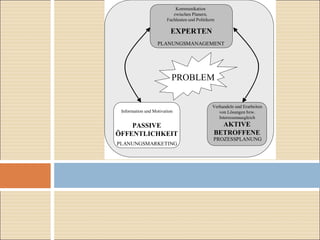
AKTIVE
BETROFFENE
PASSIVE
ÖFFENTLICHKEIT
EXPERTEN
PLANUNGSMANAGEMENT
PROZESSPLANUNG
PLANUNGSMARKETING
PROBLEM
Kommunikation
zwischen Planern,
Fachleuten und Politikern
Information und Motivation
Verhandeln und Erarbeiten
von Lösungen bzw.
Interessenausgleich
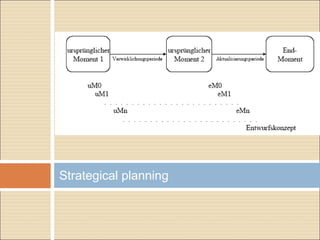
Strategical planning
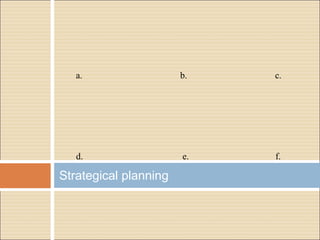
a. b. c.
d. e. f.
The first generation of participatism
The 1960s
 Image of planning
 Critique of functionalism
 Participative approaches
 Case studies
 Outgoing situation
 Concept
 Participative approach
 Effects
 Today
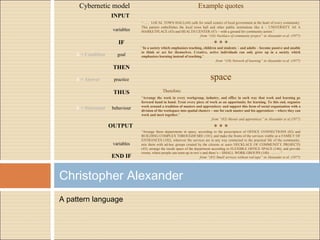
A pattern language
Christopher Alexander
“In a society which emphasizes teaching, children and students – and adults – become passive and unable
to think or act for themselves. Creative, active individuals can only grow up in a society which
emphasizes learning instead of teaching.”
from “(18) Network of learning” in Alexander et al. (1977)
INPUT
X = Condition
variables
THEN
Z = Answer space
IF
goal
practice
THUS
behaviourY = Statement
“Arrange these departments in space, according to the prescription of OFFICE CONNECTIONS (82) and
BUILDING COMPLEX THROUGHFARE (101), and make the fronts of the services visible as a FAMILY OF
ENTRANCES (102), wherever the services are in any way connected to the practical life of the community,
mix them with ad-hoc groups created by the citizens or users NECKLACE OF COMMUNITY PROJECTS
(45); arrange the inside space of the department according to FLEXIBLE OFFICE SPACE (146); and provide
rooms, where people can team up in two’s and three’s – SMALL WORK GROUPS (148) .... “
from “(81) Small services without red tape” in Alexander et al. (1977)
“... LOCAL TOWN HALL(44) calls for small centers of local government at the heart of every community.
This pattern embellishes the local town hall and other public institutions like it – UNIVERSITY AS A
MARKETPLACE (43) and HEALTH CENTER (47) – with a ground for community action.”
from “(45) Necklace of community project” in Alexander et al. (1977)
OUTPUT
variables
* * *
Therefore:
END IF
Cybernetic model Example quotes
“Arrange the work in every workgroup, industry, and office in such way that work and learning go
forward hand in hand. Treat every piece of work as an opportunity for learning. To this end, organize
work around a tradition of masters and apprentices: and support this form of social organization with a
division of the workspace into spatial clusters – one for each master and his apprentices – where they can
work and meet together.”
from “(83) Master and apprentices” in Alexander et al.(1977)
* * *
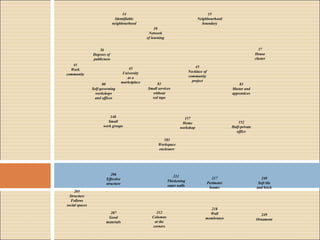
14
Identifiable
neighbourhood
15
Neighbourhood
boundary
18
Network
of learning
157
Home
workshop
43
University
as a
marketplace
83
Master and
apprentices
37
House
cluster
36
Degrees of
publicness
45
Necklace of
community
project
41
Work
community
80
Self-governing
workshops
and offices
148
Small
work groups
81
Small services
without
red tape
152
Half-private
office
183
Workspace
enclosure
205
Structure
Follows
social spaces
212
Columns
at the
corners
206
Effective
structure
207
Good
materials
211
Thickening
outer walls
217
Perimeter
beams
218
Wall
membranes
248
Soft tile
and brick
249
Ornament
Byker (Newcastle)
 Ralph Erskine
The 1970s
 Offer participation
 More democracy
 Autonomous Architecture
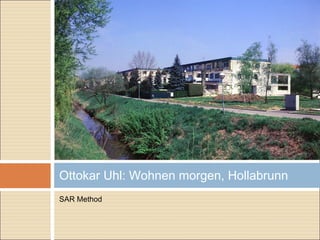
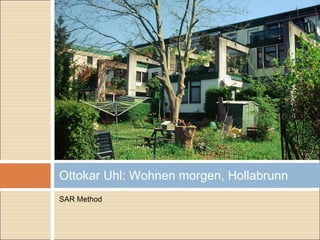
SAR Method
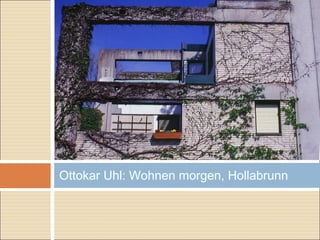
Ottokar Uhl: Wohnen morgen, Hollabrunn
SAR Method
Ottokar Uhl: Wohnen morgen, Hollabrunn
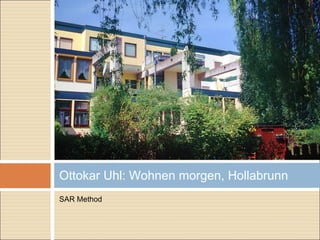
SAR Method
Ottokar Uhl: Wohnen morgen, Hollabrunn
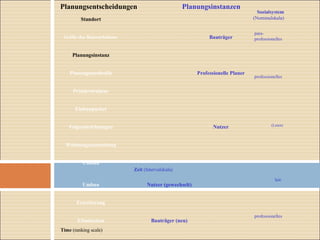
Standort
Größe des Bauvorhabens
Planungsinstanz
Planungsmethodik
Primärstruktur
Einbaupacket
Folgeeinrichtungen
Wohnungsausstattung
Umbau
Professionelle Planer
Nutzer
Planungsentscheidungen Planungsinstanzen
Bauträger
Umbau
Erweiterung
Elimination Bauträger (neu)
Nutzer (gewechselt)
Time (ranking scale)
Sozialsystem
(Nominalskala)
Zeit (Intervalskala)
para-
professionelles
professionelles
(Laien)
laic
professionelles
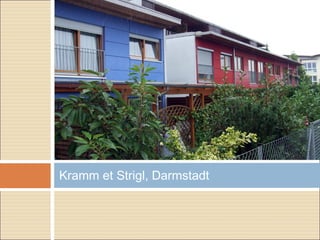
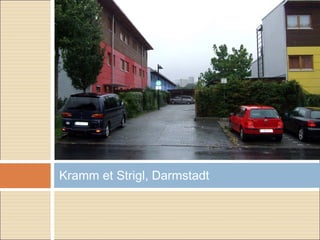
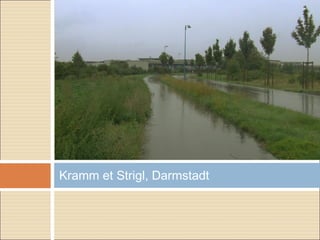
Kramm et Strigl, Darmstadt
The second Generation of
Participatism
The 1980s
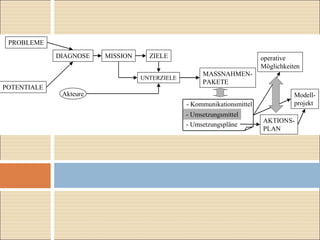
 Strategical planning
 Private-Public-Partnerships
 Local partnerships
MISSION ZIELE
UNTERZIELE
MASSNAHMEN-
PAKETE
AKTIONS-
PLAN
operative
Möglichkeiten
Akteure Modell-
projekt
DIAGNOSE
PROBLEME
POTENTIALE
- Kommunikationsmittel
- Umsetzungsmittel
- Umsetzungspläne
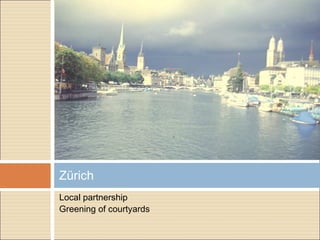
Local partnership
Greening of courtyards
Zürich
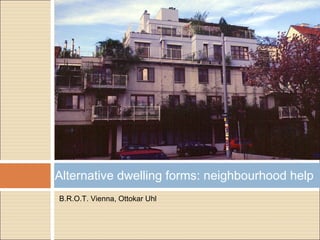
B.R.O.T. Vienna, Ottokar Uhl
Alternative dwelling forms: neighbourhood help
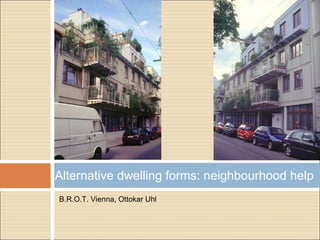
B.R.O.T. Vienna, Ottokar Uhl
Alternative dwelling forms: neighbourhood help
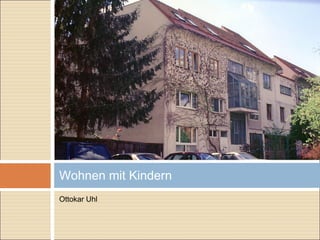
Ottokar Uhl
Wohnen mit Kindern
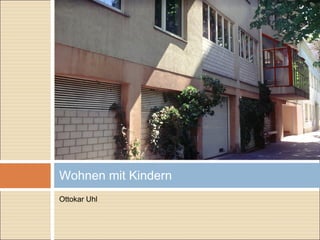
Ottokar Uhl
Wohnen mit Kindern
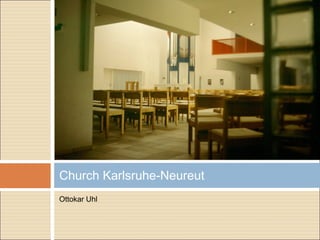
Ottokar Uhl
Church Karlsruhe-Neureut
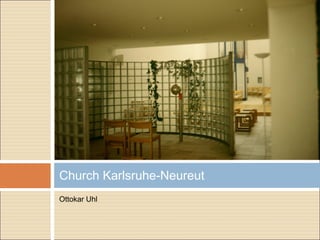
Ottokar Uhl
Church Karlsruhe-Neureut
Stabilisation and improvement of disadvantaged
districts through cooperation nets
 Bremen Osterholz-Tenever
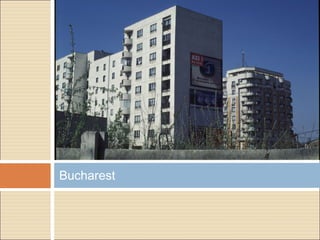
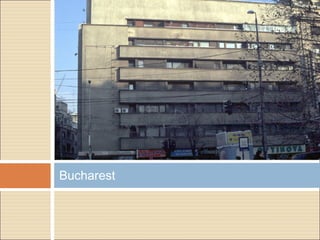
Bucharest
The 1990s
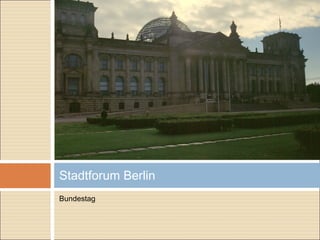
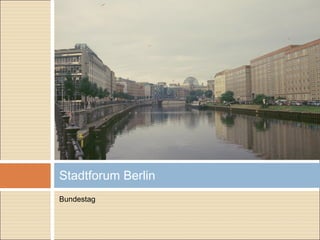
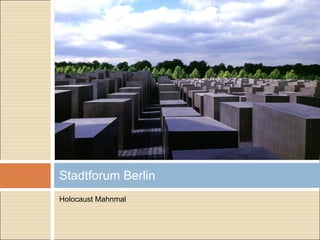
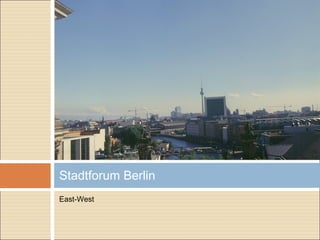
 The Stadtforum
 The new meaning of the free space
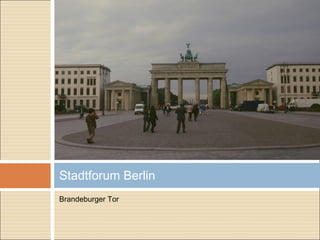
Brandeburger Tor
Stadtforum Berlin
Bundestag
Stadtforum Berlin
Bundestag
Stadtforum Berlin
Holocaust Mahnmal
Stadtforum Berlin
East-West
Stadtforum Berlin
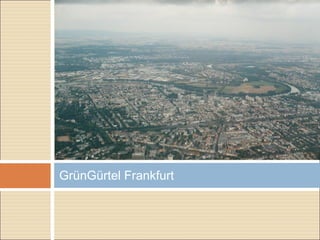
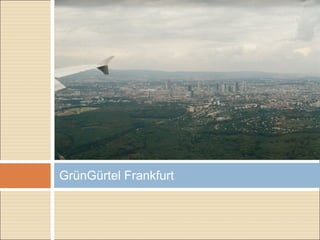
GrünGürtel Frankfurt
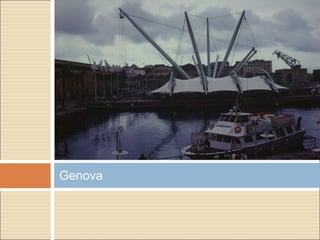
Genova
Genova
London
New communication forms
 From offer to activation
 Entstandardisation
 From process to problem
 From one-point-participation to communication
strategy
An interdependence
Communication-Participation
(a) (
Planungs-
schritte
als
Schichten
Information
Koordination
Kooperation
S.A.R.
Methode
strategische
Planung
PPP
empirische
Ansätze
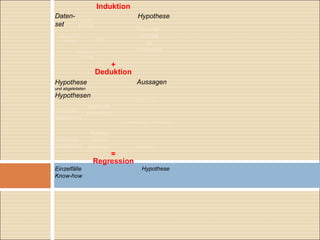
Induktion
+
Deduktion
=
Regression
Daten-
set
Hypothese
Hypothese
und abgeleiteten
Hypothesen
Aussagen
Einzelfälle
Know-how
Hypothese
planende
Verwaltung
Partner
urban
Manager
Eingriffs-
verwaltung
Leistungs-
verwaltung
Partizipation
Integration of communicative strategies
Case study: IBA Emscher Park
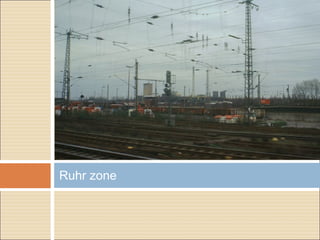
Ruhr zone
Perspective
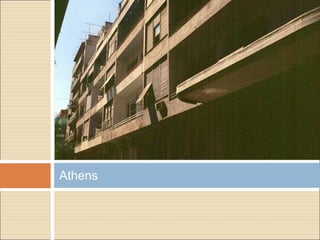
Athens
Bucharest
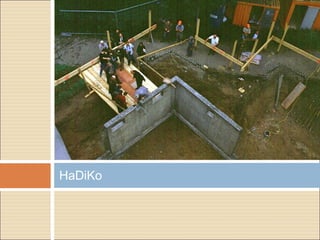
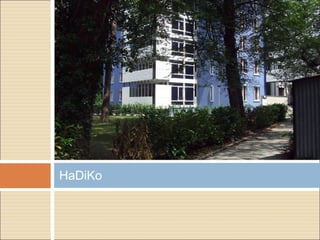
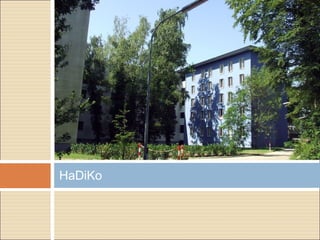
HaDiKo
HaDiKo
HaDiKo
HaDiKo
HaDiKo
HaDiKo
HaDiKo
HaDiKo
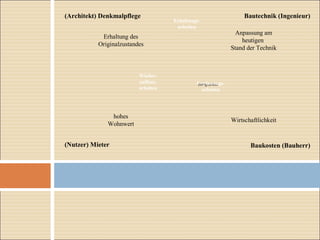
(Architekt) Denkmalpflege Bautechnik (Ingenieur)
(Nutzer) Mieter Baukosten (Bauherr)
Erhaltung des
Originalzustandes
Anpassung am
heutigen
Stand der Technik
hohes
Wohnwert
Wirtschaftlichkeit
Erhaltungs-
arbeiten
Wieder-
aufbau-
arbeiten
completionErgänzungs-
arbeiten
Summary
Conclusions
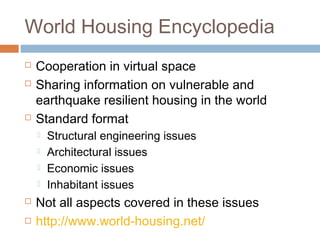
World Housing Encyclopedia
 Cooperation in virtual space
 Sharing information on vulnerable and
earthquake resilient housing in the world
 Standard format
 Structural engineering issues
 Architectural issues
 Economic issues
 Inhabitant issues
 Not all aspects covered in these issues
 http://www.world-housing.net/
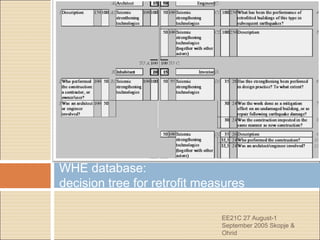
WHE database:
decision tree for retrofit measures
EE21C 27 August-1
September 2005 Skopje &
Ohrid
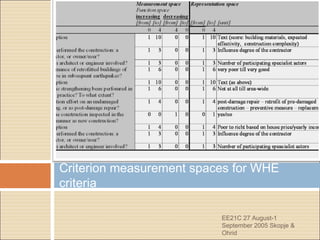
Criterion measurement spaces for WHE
criteria
EE21C 27 August-1
September 2005 Skopje &
Ohrid
EE21C 27 August-1 September 2005 Skopje & Ohrid
ATC 40 (1996)
 “Seismic evaluation and retrofit of concrete
structures“
 Retrofit decision
 retrofit strategies, retrofit systems and design
constraints
 Each chapter is written for a broader or
narrower range of expected audience
 building owners and agency representatives,
architects and building officials as well as
structural engineers and analysts
ATC 40 (1996)
 Two decision tables
 checklist of retrofit design considerations,
comprising constrains, importance scores and
limitations.
 Strategy evaluation matrix
Participation and post-
disaster reconstruction
i-rec review
 Community for sharing information on
participatory reconstruction
 Turkey after 1999 earthquake
 Bam, Iran, after 2003 earthquake
 Gujarat, India after 2001 earthquake,
comparison with Tamil Nadu after the 2004
tsunami
 El Salvador after the 2001 earthquake
 Outreach to England and Australia
The reconstruction in l’Aquila after the
2009 earthquake and the participatism
 First approaches in participatory disaster
reconstruction: Turkey 1999
 Reconstruction in l’Aquila 2009 earthquake –
without participatism
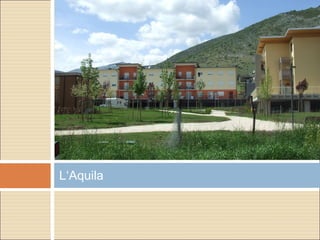
 C.A.S.E. project – new neighbourhoods outside
the city
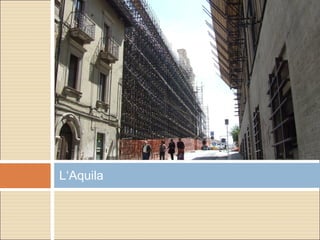
 The old centre is still closed zone, where people
socialise
 This lead to involvement of architects and urban
planners
 Noto, Gibellina, San Giuliano di Puglia
The reconstruction in l’Aquila after the
2009 earthquake and the participatism
 Comparison of the C.A.S.E. project with other
social housing
 Zeilenbau
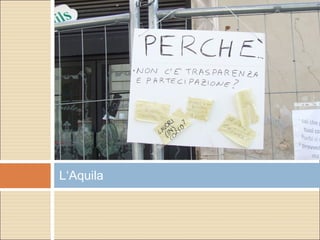
L‘Aquila
L‘Aquila
L‘Aquila
Reconstruction after the 2010 Haiti
earthquake and the participatism
 The Haiti earthquake shocked the world – the
impact was not one-to-many through traditional
media, but network
 Web 2.0
 Linkedin
 Haiti Rewired http://haitirewired.wired.com
 Plan Haiti with BIM strom
 Understanding Risk
 Facebook (farmville, Gingerbread housing photos)
Reconstruction after the 2010 Haiti
earthquake and the participatism
 Crowdsourcing
 Understanding Risk (also GEM)
 Haiti Rewired: confined masonry tool
 Confined Masonry Network - EERI
Participatism and the new
computer science techniques
 Public participation GIS: PGIS, PPGIS, P3DM
 Global Earthquake Model
 Ontology of disaster photography
Public Participation GIS
 Was born in 1996
 Inclusion of marginalised populations in
mapping, not necessarily GIS
 Craig et al (2002)
 NGOs shall communicate the interests of the
population through GIS
 PPGIS – among decision makers
 Makes visible the variants, even in 3D
 P3DM participatory 3D modelling – a model built
with the community which remains with the
community
New tendencies
 Inclusion of writers
 Does not suppose like Christopher Alexander that
every person can do it
Assesment of disaster risk and
Global Earthquake Model
 Involvement of the experts (scientific
community) in the elaboration of the model
and its components (global components,
regional programs, partners)
 The model is and will remain open source
 There are outreach meetings
 The calls for projects are reviewed by the
community
 http://www.globalquakemodel.org/
The ontology of disaster
photography
 Review of the use of ontologies in architecture
 Review of the use of catastrophe photography
 Previous research
 Application: Ontology of the digital databases
of photography of the impact of catastrophes
on architecture
Review of the use of ontologies in
architecture
 Pieter Pauwels, Ruben Verstraeten, Ronald
De Meyer and Jan Van Campenhout from the
University of Ghent investigated “Semantics-
Based Design: Can Ontologies Help in a
Preliminary Design Phase?” (Pauwels et al,
2009).
Review of the use of ontologies in
architecture
 A research group in Genève (personal
communication Gilles Falquet, 2009)
developed ontology for architectural styles. A
thesaurus is also a form of ontology, like the
one developed by English Heritage.
Review of the use of ontologies in
architecture
 Bjørn Sandaker from the Oslo School of
Architecture and Design is holding a key-note
lecture at the International Conference on
Structures and Architecture 2010 on “An
Ontology of the Structured Space”, which is
also a topic of teaching within the e-archidoct
doctoral online school.
Review of the use of ontologies in
architecture
 A current call as well of the Global Earthquake
Model foundation calls for risk ontology and
taxonomy projects in the built environment
subjected to earthquakes.
 World Housing Encyclopedia is partner in the
consortium which won this call
Review of the use of ontologies in
architecture
 In frame of the European Science Foundation
COST (European Cooperation in Science and
Technology) actions, already the second
action is running on an ontology based topic.
The first one was Transport and Urban
Development Action C21 “Towntology – Urban
Ontologies for an Improved Communication in
Urban Civil Engineering Projects” (end date:
June 2009).
Review of the use of ontologies in
architecture
 The Information and Communication
Technologies Call 6 (2010) of the European
Commission includes one on “Cultural
heritage, digital libraries and digital
preservation in FP7”, which, on its turn,
includes digital archives.
Review of the use of catastrophe
photography
 In the 20th
century the concept on catastrophe
photography changed, August Sander wrote in
September 1946 at the begin of his albums
that the photos of the destruction of Cologne
in World War II should be a warning of how
the beauty of a city can be destroyed.
Review of the use of catastrophe
photography
 It encourages us that catastrophe photography
is a topic still actual, even if not from its
architectural/artistic side. Today it is more
used to document damages.
 Examples of such databases
 Cambridge University Earthquake Damage
Database
 Karl V. Steinbrugge Slide and Photograph
Collection of the University of California at
Berkeley.
Review of the use of catastrophe
photography
 Obtaining 3D data from stereo images has
been recently performed by Randolph
Langenbach (independent researcher in
Oakland, USA) in the aftermath of the Haiti
earthquake from January 2010 using
Pictometry satellite images in order to identify
the damage on architecture heritage buildings
(Gingerbread district).
 Stereo images also in 19th
century photography
Previous research
 The archives of Collection of the Canadian
Centre for Architecture
 archives of also turn of the century
photography of the Tzigara-Samurcaş
collection (Brătuleanu, 2009)
 World Housing Encyclopedia
 3D Geoinformation Training School of COST
TU0801
 EGU sessions – urban areas, as the
topographical photography in the 19th
century
Previous research
 uses of pairs of images of the same damaged
buildings have been provided by groups from
the Universität Karlsruhe, Germany, in frame
of the Collaborative Research Centre SFB461
“Strong earthquakes”, subproject C7 “Novel
rescue technologies” in the aftermath of the
2001 Gujarat earthquake using the software
Photomodeller (Schweier et al, 2004).
Application: Ontology of the digital
databases of photography of the impact of
catastrophes on architecture
 Digital archives
 Inventory of archive material
 Ontology for photography archives
 Database of photographs to catastrophe ontology
 How to populate the database with characteristic
photographs
 Ex. How to link photographs from online archives
 Resources about photographers
 Ruins to be virtually reconstructed in 3D

Faro COST

  • 1.
  • 2.
    Overview  The historyof participation  Participation and post-disaster reconstruction
  • 3.
    The history ofparticipation
  • 4.
    FROM THE PARTICIPATIONMODESOF THE 1970S TO COMMUNICATIONSFORMS AT THE END OF THE 20TH CENTURY IN ARCHITECTURE AND URBANISM
  • 5.
    Construction of theconcepts  Communication  Information  Participation  Coordination  Cooperation
  • 6.
  • 7.
  • 8.
  • 9.
    The first generationof participatism
  • 10.
    The 1960s  Imageof planning  Critique of functionalism  Participative approaches  Case studies  Outgoing situation  Concept  Participative approach  Effects  Today
  • 11.
    A pattern language ChristopherAlexander “In a society which emphasizes teaching, children and students – and adults – become passive and unable to think or act for themselves. Creative, active individuals can only grow up in a society which emphasizes learning instead of teaching.” from “(18) Network of learning” in Alexander et al. (1977) INPUT X = Condition variables THEN Z = Answer space IF goal practice THUS behaviourY = Statement “Arrange these departments in space, according to the prescription of OFFICE CONNECTIONS (82) and BUILDING COMPLEX THROUGHFARE (101), and make the fronts of the services visible as a FAMILY OF ENTRANCES (102), wherever the services are in any way connected to the practical life of the community, mix them with ad-hoc groups created by the citizens or users NECKLACE OF COMMUNITY PROJECTS (45); arrange the inside space of the department according to FLEXIBLE OFFICE SPACE (146); and provide rooms, where people can team up in two’s and three’s – SMALL WORK GROUPS (148) .... “ from “(81) Small services without red tape” in Alexander et al. (1977) “... LOCAL TOWN HALL(44) calls for small centers of local government at the heart of every community. This pattern embellishes the local town hall and other public institutions like it – UNIVERSITY AS A MARKETPLACE (43) and HEALTH CENTER (47) – with a ground for community action.” from “(45) Necklace of community project” in Alexander et al. (1977) OUTPUT variables * * * Therefore: END IF Cybernetic model Example quotes “Arrange the work in every workgroup, industry, and office in such way that work and learning go forward hand in hand. Treat every piece of work as an opportunity for learning. To this end, organize work around a tradition of masters and apprentices: and support this form of social organization with a division of the workspace into spatial clusters – one for each master and his apprentices – where they can work and meet together.” from “(83) Master and apprentices” in Alexander et al.(1977) * * *
  • 12.
    14 Identifiable neighbourhood 15 Neighbourhood boundary 18 Network of learning 157 Home workshop 43 University as a marketplace 83 Masterand apprentices 37 House cluster 36 Degrees of publicness 45 Necklace of community project 41 Work community 80 Self-governing workshops and offices 148 Small work groups 81 Small services without red tape 152 Half-private office 183 Workspace enclosure 205 Structure Follows social spaces 212 Columns at the corners 206 Effective structure 207 Good materials 211 Thickening outer walls 217 Perimeter beams 218 Wall membranes 248 Soft tile and brick 249 Ornament
  • 13.
  • 14.
    The 1970s  Offerparticipation  More democracy  Autonomous Architecture
  • 15.
    SAR Method Ottokar Uhl:Wohnen morgen, Hollabrunn
  • 16.
    Ottokar Uhl: Wohnenmorgen, Hollabrunn
  • 17.
    SAR Method Ottokar Uhl:Wohnen morgen, Hollabrunn
  • 18.
    SAR Method Ottokar Uhl:Wohnen morgen, Hollabrunn
  • 19.
    Standort Größe des Bauvorhabens Planungsinstanz Planungsmethodik Primärstruktur Einbaupacket Folgeeinrichtungen Wohnungsausstattung Umbau ProfessionellePlaner Nutzer Planungsentscheidungen Planungsinstanzen Bauträger Umbau Erweiterung Elimination Bauträger (neu) Nutzer (gewechselt) Time (ranking scale) Sozialsystem (Nominalskala) Zeit (Intervalskala) para- professionelles professionelles (Laien) laic professionelles
  • 21.
  • 22.
  • 23.
  • 24.
    The second Generationof Participatism
  • 25.
    The 1980s  Strategicalplanning  Private-Public-Partnerships  Local partnerships
  • 26.
  • 27.
  • 28.
    B.R.O.T. Vienna, OttokarUhl Alternative dwelling forms: neighbourhood help
  • 29.
    B.R.O.T. Vienna, OttokarUhl Alternative dwelling forms: neighbourhood help
  • 30.
  • 31.
  • 32.
  • 33.
  • 34.
    Stabilisation and improvementof disadvantaged districts through cooperation nets  Bremen Osterholz-Tenever
  • 35.
  • 36.
    The 1990s  TheStadtforum  The new meaning of the free space
  • 37.
  • 38.
  • 39.
  • 40.
  • 41.
  • 42.
  • 43.
  • 44.
  • 45.
  • 46.
  • 47.
  • 48.
    New communication forms From offer to activation  Entstandardisation  From process to problem  From one-point-participation to communication strategy
  • 49.
  • 50.
  • 51.
  • 52.
    Integration of communicativestrategies Case study: IBA Emscher Park
  • 53.
  • 56.
  • 57.
  • 58.
  • 59.
  • 60.
  • 61.
  • 62.
  • 63.
  • 64.
  • 65.
  • 66.
  • 67.
    (Architekt) Denkmalpflege Bautechnik(Ingenieur) (Nutzer) Mieter Baukosten (Bauherr) Erhaltung des Originalzustandes Anpassung am heutigen Stand der Technik hohes Wohnwert Wirtschaftlichkeit Erhaltungs- arbeiten Wieder- aufbau- arbeiten completionErgänzungs- arbeiten
  • 70.
  • 71.
  • 72.
    World Housing Encyclopedia Cooperation in virtual space  Sharing information on vulnerable and earthquake resilient housing in the world  Standard format  Structural engineering issues  Architectural issues  Economic issues  Inhabitant issues  Not all aspects covered in these issues  http://www.world-housing.net/
  • 73.
    WHE database: decision treefor retrofit measures EE21C 27 August-1 September 2005 Skopje & Ohrid
  • 74.
    Criterion measurement spacesfor WHE criteria EE21C 27 August-1 September 2005 Skopje & Ohrid
  • 75.
    EE21C 27 August-1September 2005 Skopje & Ohrid
  • 76.
    ATC 40 (1996) “Seismic evaluation and retrofit of concrete structures“  Retrofit decision  retrofit strategies, retrofit systems and design constraints  Each chapter is written for a broader or narrower range of expected audience  building owners and agency representatives, architects and building officials as well as structural engineers and analysts
  • 77.
    ATC 40 (1996) Two decision tables  checklist of retrofit design considerations, comprising constrains, importance scores and limitations.  Strategy evaluation matrix
  • 78.
  • 79.
    i-rec review  Communityfor sharing information on participatory reconstruction  Turkey after 1999 earthquake  Bam, Iran, after 2003 earthquake  Gujarat, India after 2001 earthquake, comparison with Tamil Nadu after the 2004 tsunami  El Salvador after the 2001 earthquake  Outreach to England and Australia
  • 80.
    The reconstruction inl’Aquila after the 2009 earthquake and the participatism  First approaches in participatory disaster reconstruction: Turkey 1999  Reconstruction in l’Aquila 2009 earthquake – without participatism  C.A.S.E. project – new neighbourhoods outside the city  The old centre is still closed zone, where people socialise  This lead to involvement of architects and urban planners  Noto, Gibellina, San Giuliano di Puglia
  • 81.
    The reconstruction inl’Aquila after the 2009 earthquake and the participatism  Comparison of the C.A.S.E. project with other social housing  Zeilenbau
  • 82.
  • 83.
  • 84.
  • 85.
    Reconstruction after the2010 Haiti earthquake and the participatism  The Haiti earthquake shocked the world – the impact was not one-to-many through traditional media, but network  Web 2.0  Linkedin  Haiti Rewired http://haitirewired.wired.com  Plan Haiti with BIM strom  Understanding Risk  Facebook (farmville, Gingerbread housing photos)
  • 86.
    Reconstruction after the2010 Haiti earthquake and the participatism  Crowdsourcing  Understanding Risk (also GEM)  Haiti Rewired: confined masonry tool  Confined Masonry Network - EERI
  • 87.
    Participatism and thenew computer science techniques  Public participation GIS: PGIS, PPGIS, P3DM  Global Earthquake Model  Ontology of disaster photography
  • 88.
    Public Participation GIS Was born in 1996  Inclusion of marginalised populations in mapping, not necessarily GIS  Craig et al (2002)  NGOs shall communicate the interests of the population through GIS  PPGIS – among decision makers  Makes visible the variants, even in 3D  P3DM participatory 3D modelling – a model built with the community which remains with the community
  • 89.
    New tendencies  Inclusionof writers  Does not suppose like Christopher Alexander that every person can do it
  • 90.
    Assesment of disasterrisk and Global Earthquake Model  Involvement of the experts (scientific community) in the elaboration of the model and its components (global components, regional programs, partners)  The model is and will remain open source  There are outreach meetings  The calls for projects are reviewed by the community  http://www.globalquakemodel.org/
  • 91.
    The ontology ofdisaster photography  Review of the use of ontologies in architecture  Review of the use of catastrophe photography  Previous research  Application: Ontology of the digital databases of photography of the impact of catastrophes on architecture
  • 92.
    Review of theuse of ontologies in architecture  Pieter Pauwels, Ruben Verstraeten, Ronald De Meyer and Jan Van Campenhout from the University of Ghent investigated “Semantics- Based Design: Can Ontologies Help in a Preliminary Design Phase?” (Pauwels et al, 2009).
  • 93.
    Review of theuse of ontologies in architecture  A research group in Genève (personal communication Gilles Falquet, 2009) developed ontology for architectural styles. A thesaurus is also a form of ontology, like the one developed by English Heritage.
  • 94.
    Review of theuse of ontologies in architecture  Bjørn Sandaker from the Oslo School of Architecture and Design is holding a key-note lecture at the International Conference on Structures and Architecture 2010 on “An Ontology of the Structured Space”, which is also a topic of teaching within the e-archidoct doctoral online school.
  • 95.
    Review of theuse of ontologies in architecture  A current call as well of the Global Earthquake Model foundation calls for risk ontology and taxonomy projects in the built environment subjected to earthquakes.  World Housing Encyclopedia is partner in the consortium which won this call
  • 96.
    Review of theuse of ontologies in architecture  In frame of the European Science Foundation COST (European Cooperation in Science and Technology) actions, already the second action is running on an ontology based topic. The first one was Transport and Urban Development Action C21 “Towntology – Urban Ontologies for an Improved Communication in Urban Civil Engineering Projects” (end date: June 2009).
  • 97.
    Review of theuse of ontologies in architecture  The Information and Communication Technologies Call 6 (2010) of the European Commission includes one on “Cultural heritage, digital libraries and digital preservation in FP7”, which, on its turn, includes digital archives.
  • 98.
    Review of theuse of catastrophe photography  In the 20th century the concept on catastrophe photography changed, August Sander wrote in September 1946 at the begin of his albums that the photos of the destruction of Cologne in World War II should be a warning of how the beauty of a city can be destroyed.
  • 99.
    Review of theuse of catastrophe photography  It encourages us that catastrophe photography is a topic still actual, even if not from its architectural/artistic side. Today it is more used to document damages.  Examples of such databases  Cambridge University Earthquake Damage Database  Karl V. Steinbrugge Slide and Photograph Collection of the University of California at Berkeley.
  • 100.
    Review of theuse of catastrophe photography  Obtaining 3D data from stereo images has been recently performed by Randolph Langenbach (independent researcher in Oakland, USA) in the aftermath of the Haiti earthquake from January 2010 using Pictometry satellite images in order to identify the damage on architecture heritage buildings (Gingerbread district).  Stereo images also in 19th century photography
  • 101.
    Previous research  Thearchives of Collection of the Canadian Centre for Architecture  archives of also turn of the century photography of the Tzigara-Samurcaş collection (Brătuleanu, 2009)  World Housing Encyclopedia  3D Geoinformation Training School of COST TU0801  EGU sessions – urban areas, as the topographical photography in the 19th century
  • 102.
    Previous research  usesof pairs of images of the same damaged buildings have been provided by groups from the Universität Karlsruhe, Germany, in frame of the Collaborative Research Centre SFB461 “Strong earthquakes”, subproject C7 “Novel rescue technologies” in the aftermath of the 2001 Gujarat earthquake using the software Photomodeller (Schweier et al, 2004).
  • 103.
    Application: Ontology ofthe digital databases of photography of the impact of catastrophes on architecture  Digital archives  Inventory of archive material  Ontology for photography archives  Database of photographs to catastrophe ontology  How to populate the database with characteristic photographs  Ex. How to link photographs from online archives  Resources about photographers  Ruins to be virtually reconstructed in 3D