HISTORY IN POETRY
– THE 19TH CENTURY.
MULTILINGUAL
CORPUS AND
CONNECTION OF
ARCHIVE MATERIAL
Maria BOSTENARU DAN
Overview
 Family context of the manuscript in history
 The manuscript
 Digital work
 Discussion and conclusions
Family context of the manuscript
in history
Family context
 József Varga (1813-1894) – including 1848
 Research by János Fekete
 Redemptus
 Maria Theresia 1743 – Kiskunfélegyháza
 1526 Turks
 Ferenczszállás /Petofiszállás
 Dóczy commerciants
 Dóczy Pál – Ödön Lechner
 Town hall
 100 years
 Danube Swabians
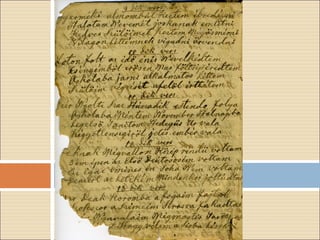
The manuscript
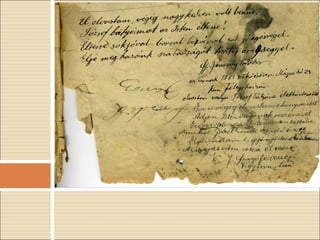
The manuscript (1)
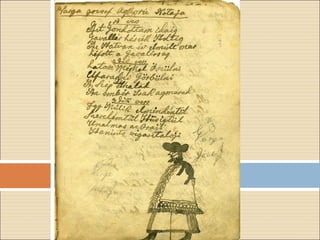
 Literary work of poetry (inst. of poetry)
 Autobiography
 Popular songs – incl. Kossuth nóták (inst. of music)
 Location of Petöfi
 Verses of autobiography longer
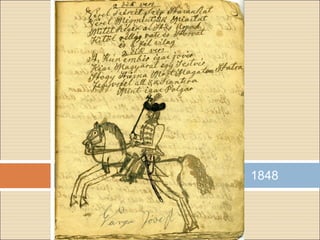
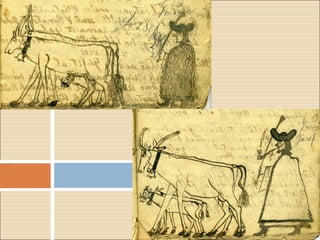
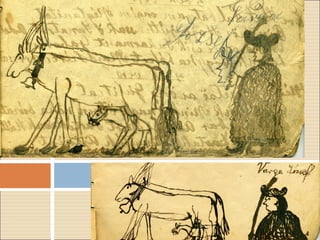
 Parts end with drawings (costumes, agriculture)
The manuscript (2)
 History work
 1848
 Cholera epidemic
 Division of Ferenczszállás (agrar orientation:
cereals > wine)
 Arrival of commerciants and end of feudal order
 redemption
 Kiskún Museum
 1870-1930 images
 Textual and visual material
 lecture
Parts
 1. Childhood,
 2. Poor youth,
 3. Life at the National Guard,
 4. Sheppard life,
 5. Life around 50 working the field,
 6. Widowship,
 7. Senile life
1848
Digital work
Digital work (1, 2)
 Scanning the manuscript
 Transcription in MS word
 Transcription in today‘s language – corpus
(regionalism)
 Creation of speech (youtube)
 Translation – corpus
 Printed book and e-book
Digital work (3)
 Connection to historical ressources
 Kiskunfélegyháza manual (archives concerning
the city – hardcopy)
 Reference to historic events or figures
 the battle of Világos,
 the history of Ferenczszállás and (Külsö) Galambos,
 the figures of Görgei and Laszlo Teleki
 Linking as alternative to footnotes
Digital work (4)
 Immaterial heritage for corpus
 Popular songs
 Drawings of costumes
 Agricultural habits
 Concepts
 Dedication to achieve a national state
 Belief in God
Digital work (5)
 Historical network connections
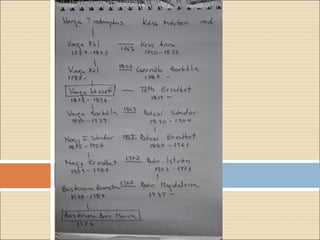
 Family tree
 Relationship to people and places in a graph
 Ödön Lechner
 Fights in 1848
Discussion and conclusions
Discussion
 Duty to publish – own affirmation (guest book)
 Copy of the manuscript – different paper
 Different dates of the manscript (age of 50 and
continued . 9th part)
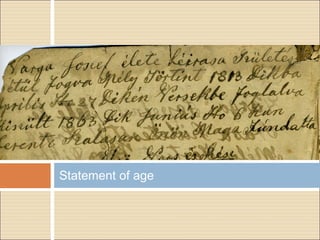
Statement of age
Conclusion
 Not architecture, but cultural heritage (cultural
landscape – immaterial heritage)
 Manuscript as such – material and subject of
conservation studies/analysis
 Digital publication – immaterial part
 2014 ICOMOS year of Commemoration
 Memory
 of the 19th century
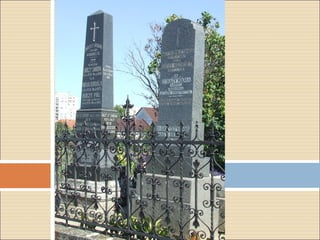
 The grave / cemeteries as landscape and as
commemoration
NeDiMAH
Thank you!

Bostenaru Sibiu 2014

  • 1.
    HISTORY IN POETRY –THE 19TH CENTURY. MULTILINGUAL CORPUS AND CONNECTION OF ARCHIVE MATERIAL Maria BOSTENARU DAN
  • 2.
    Overview  Family contextof the manuscript in history  The manuscript  Digital work  Discussion and conclusions
  • 3.
    Family context ofthe manuscript in history
  • 4.
    Family context  JózsefVarga (1813-1894) – including 1848  Research by János Fekete  Redemptus  Maria Theresia 1743 – Kiskunfélegyháza  1526 Turks  Ferenczszállás /Petofiszállás  Dóczy commerciants  Dóczy Pál – Ödön Lechner  Town hall  100 years  Danube Swabians
  • 7.
  • 8.
    The manuscript (1) Literary work of poetry (inst. of poetry)  Autobiography  Popular songs – incl. Kossuth nóták (inst. of music)  Location of Petöfi  Verses of autobiography longer  Parts end with drawings (costumes, agriculture)
  • 9.
    The manuscript (2) History work  1848  Cholera epidemic  Division of Ferenczszállás (agrar orientation: cereals > wine)  Arrival of commerciants and end of feudal order  redemption  Kiskún Museum  1870-1930 images  Textual and visual material  lecture
  • 10.
    Parts  1. Childhood, 2. Poor youth,  3. Life at the National Guard,  4. Sheppard life,  5. Life around 50 working the field,  6. Widowship,  7. Senile life
  • 13.
  • 15.
  • 16.
    Digital work (1,2)  Scanning the manuscript  Transcription in MS word  Transcription in today‘s language – corpus (regionalism)  Creation of speech (youtube)  Translation – corpus  Printed book and e-book
  • 17.
    Digital work (3) Connection to historical ressources  Kiskunfélegyháza manual (archives concerning the city – hardcopy)  Reference to historic events or figures  the battle of Világos,  the history of Ferenczszállás and (Külsö) Galambos,  the figures of Görgei and Laszlo Teleki  Linking as alternative to footnotes
  • 18.
    Digital work (4) Immaterial heritage for corpus  Popular songs  Drawings of costumes  Agricultural habits  Concepts  Dedication to achieve a national state  Belief in God
  • 19.
    Digital work (5) Historical network connections  Family tree  Relationship to people and places in a graph  Ödön Lechner  Fights in 1848
  • 20.
  • 21.
    Discussion  Duty topublish – own affirmation (guest book)  Copy of the manuscript – different paper  Different dates of the manscript (age of 50 and continued . 9th part)
  • 24.
  • 25.
    Conclusion  Not architecture,but cultural heritage (cultural landscape – immaterial heritage)  Manuscript as such – material and subject of conservation studies/analysis  Digital publication – immaterial part  2014 ICOMOS year of Commemoration  Memory  of the 19th century  The grave / cemeteries as landscape and as commemoration
  • 26.
  • 27.