KUVEMPU
UNIVERSITY
Sahyadri Science College, Shivamogga
Department of Biotechnology
Seminar Topic : HISTORY AND DEVELOPMENT OF BIOINFORMATICS
Guide: By:
Dr. Ramesh C K Madan Kumar C A
Associate Professor, I MSc, I Semester
Dept of Biotechnology Sahyadri Science
college
Sahyadri Science college Shivamogga
Shivamogga
CONTENTS
 Why should I study Bioinformatics?
 Introduction
 Scope
 History
 Development
 Applications
 Conclusion
 References
Why should I study
Bioinformatics?
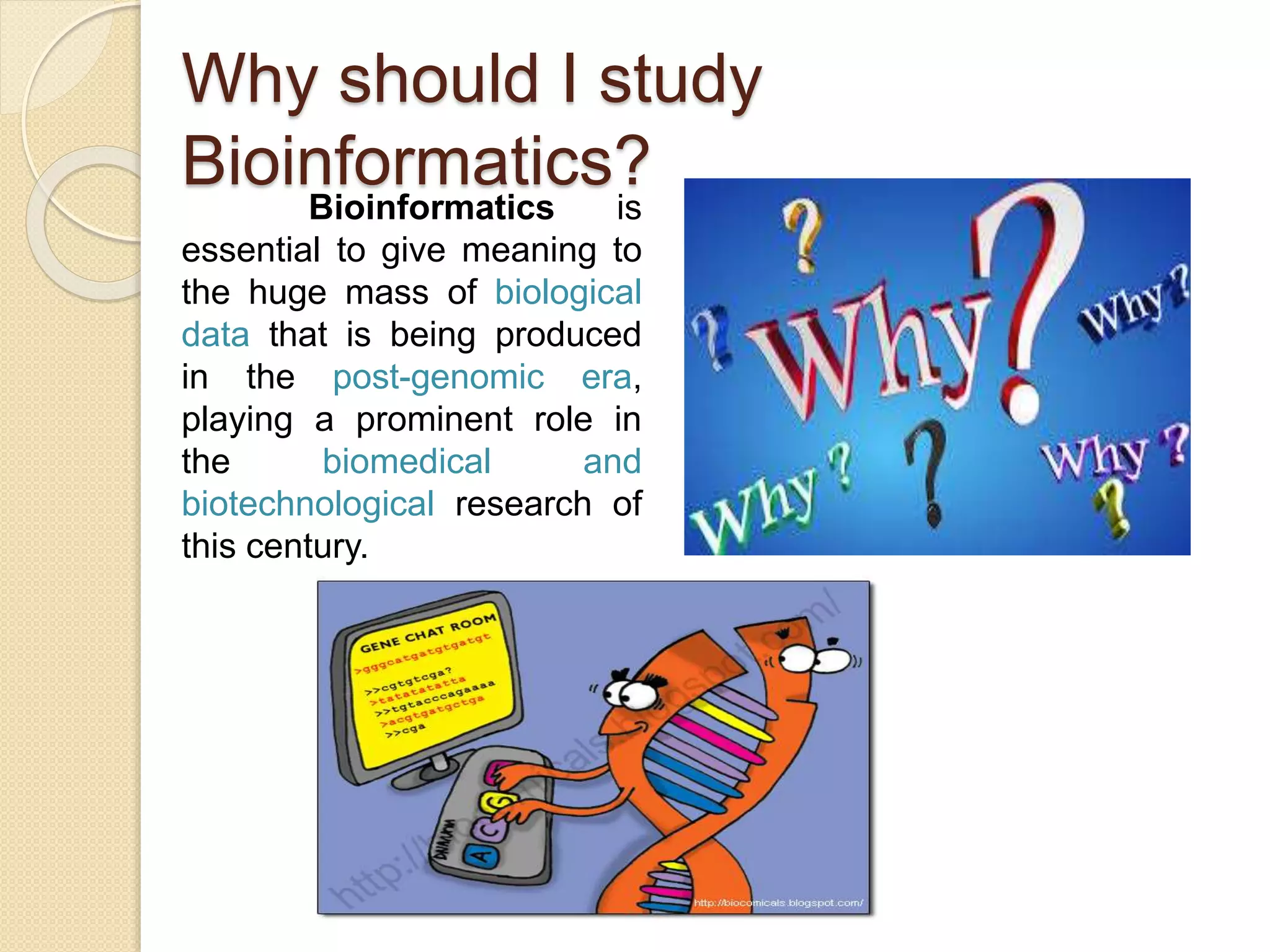
Bioinformatics is
essential to give meaning to
the huge mass of biological
data that is being produced
in the post-genomic era,
playing a prominent role in
the biomedical and
biotechnological research of
this century.
Introduction
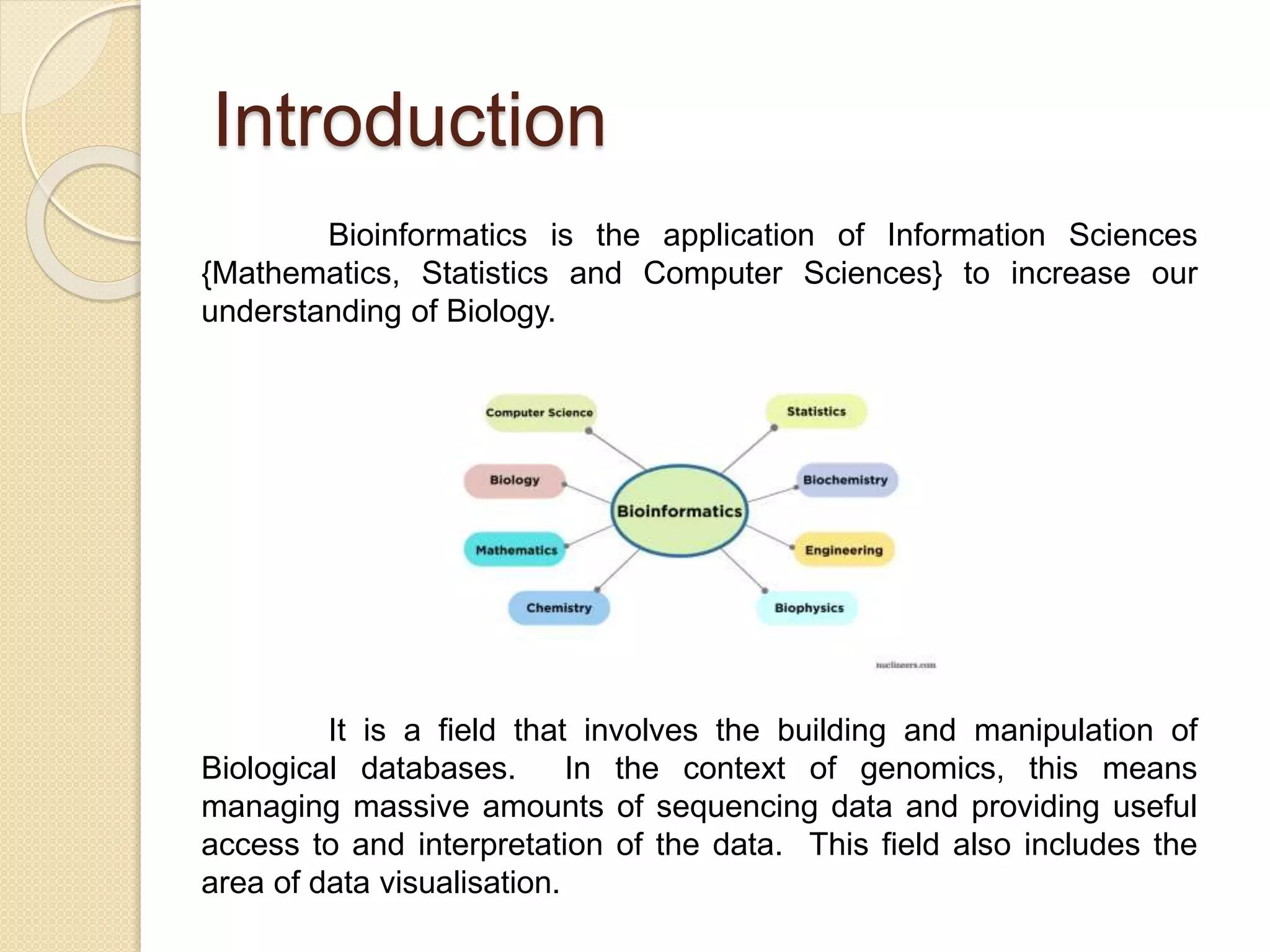
Bioinformatics is the application of Information Sciences
{Mathematics, Statistics and Computer Sciences} to increase our
understanding of Biology.
It is a field that involves the building and manipulation of
Biological databases. In the context of genomics, this means
managing massive amounts of sequencing data and providing useful
access to and interpretation of the data. This field also includes the
area of data visualisation.
Branches
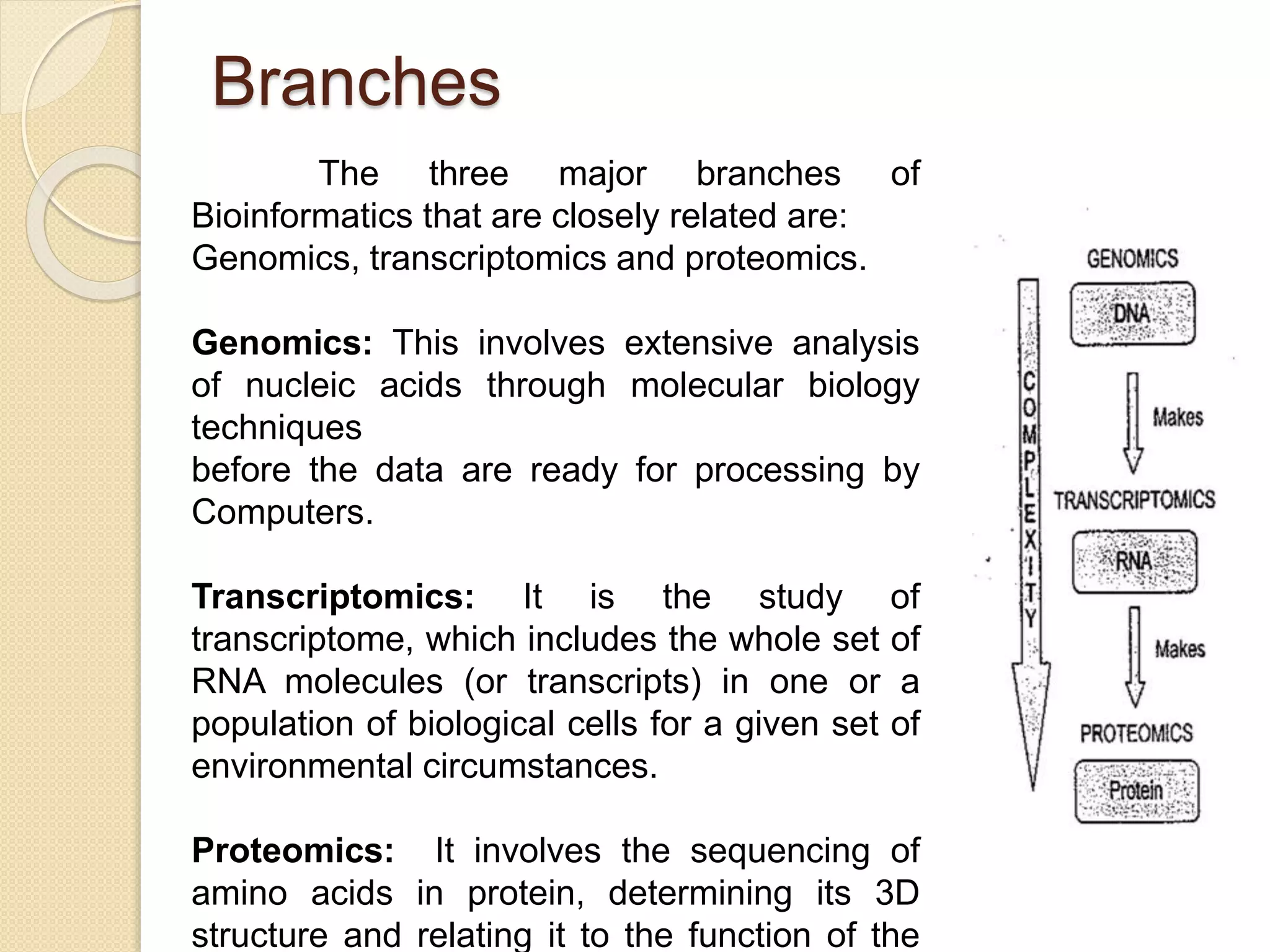
The three major branches of
Bioinformatics that are closely related are:
Genomics, transcriptomics and proteomics.
Genomics: This involves extensive analysis
of nucleic acids through molecular biology
techniques
before the data are ready for processing by
Computers.
Transcriptomics: It is the study of
transcriptome, which includes the whole set of
RNA molecules (or transcripts) in one or a
population of biological cells for a given set of
environmental circumstances.
Proteomics: It involves the sequencing of
amino acids in protein, determining its 3D
structure and relating it to the function of the
Scope
 Genome and sequence analysis.
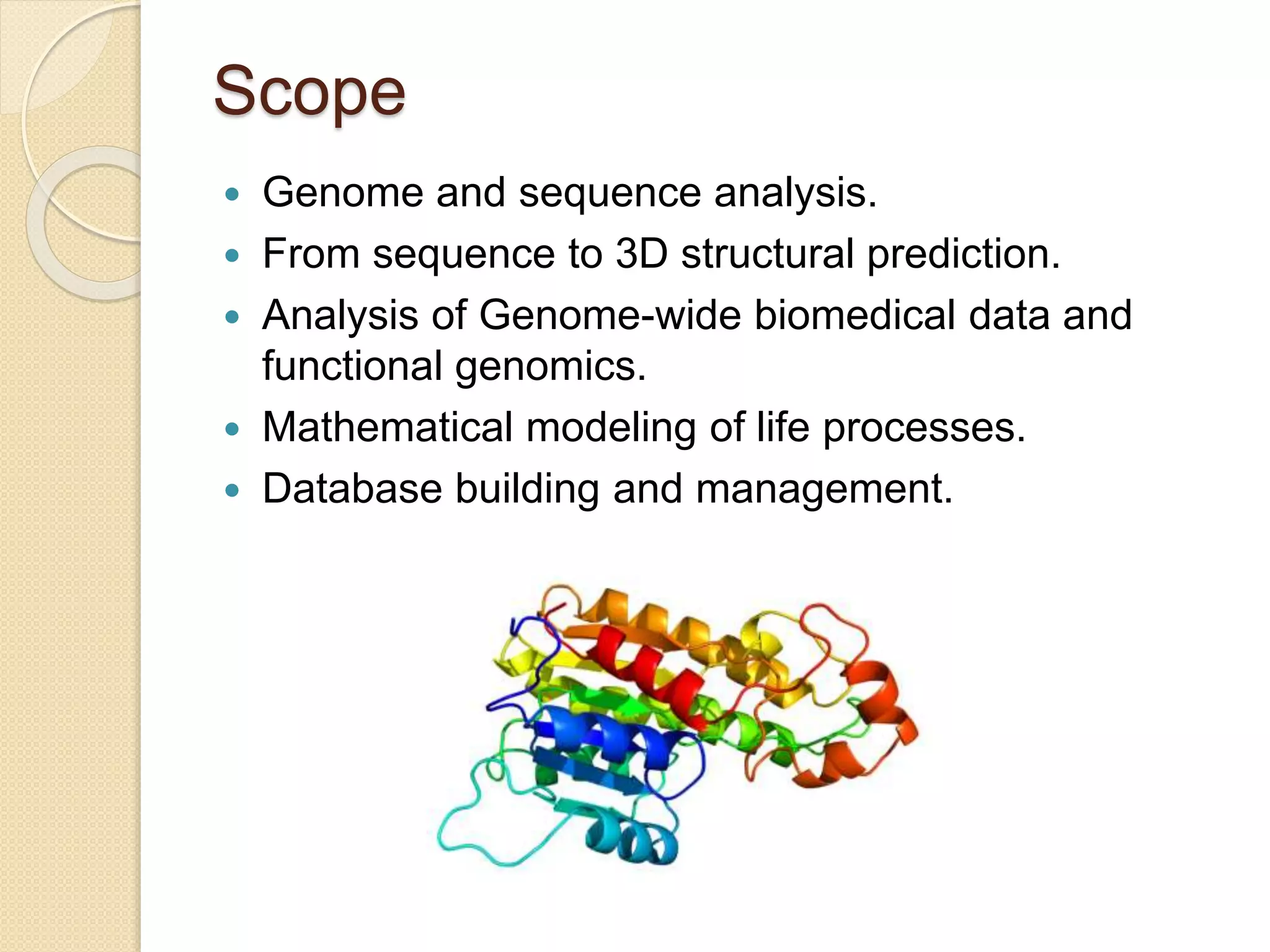
 From sequence to 3D structural prediction.
 Analysis of Genome-wide biomedical data and
functional genomics.
 Mathematical modeling of life processes.
 Database building and management.
History
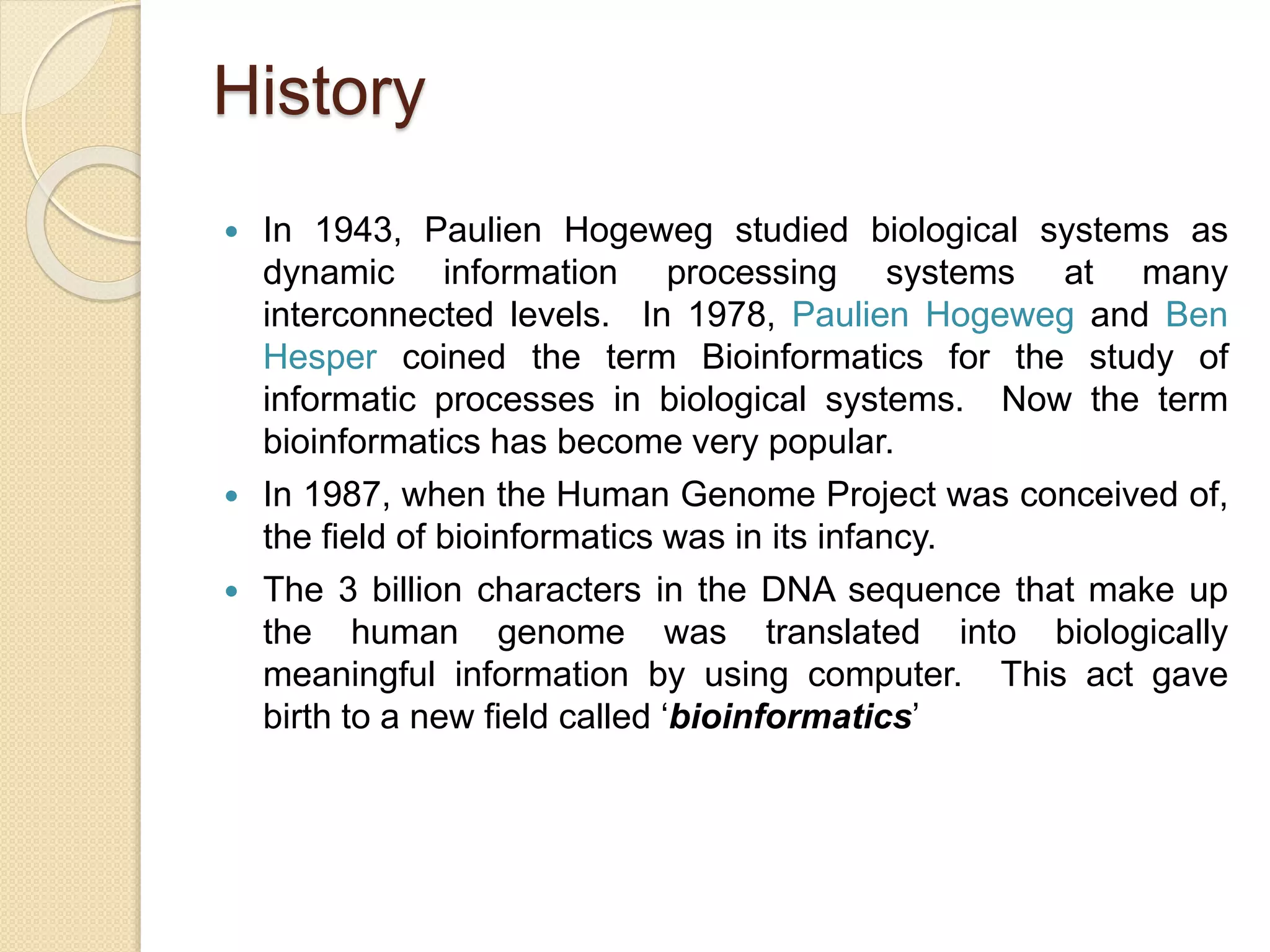
 In 1943, Paulien Hogeweg studied biological systems as
dynamic information processing systems at many
interconnected levels. In 1978, Paulien Hogeweg and Ben
Hesper coined the term Bioinformatics for the study of
informatic processes in biological systems. Now the term
bioinformatics has become very popular.
 In 1987, when the Human Genome Project was conceived of,
the field of bioinformatics was in its infancy.
 The 3 billion characters in the DNA sequence that make up
the human genome was translated into biologically
meaningful information by using computer. This act gave
birth to a new field called ‘bioinformatics’
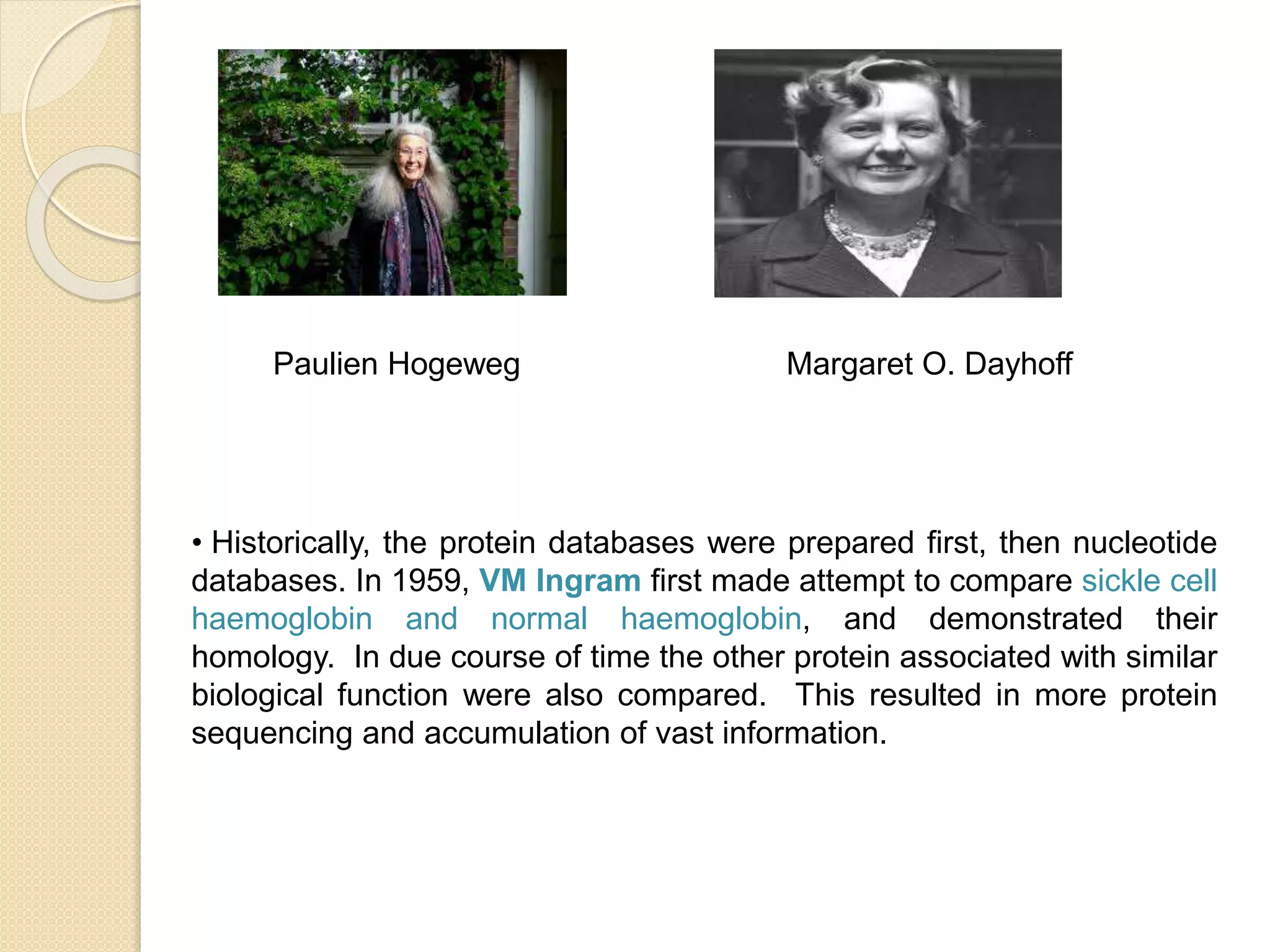
Paulien Hogeweg Margaret O. Dayhoff
• Historically, the protein databases were prepared first, then nucleotide
databases. In 1959, VM Ingram first made attempt to compare sickle cell
haemoglobin and normal haemoglobin, and demonstrated their
homology. In due course of time the other protein associated with similar
biological function were also compared. This resulted in more protein
sequencing and accumulation of vast information.
 In 1965, Dayhoff and co-workers collected all the protein sequences
known at that time and catalogued them as the Atlas of Protein
Sequence and Structure which was first published by the National
Biomedical Research Foundation. Later on collection of such
macromolecular sequences was published under the above title
from 1965-1978.
 The development of computer methods pioneered by Dayhoff and
her research group is applicable;
 (i) in comparing protein sequences
 (ii) detecting distantly related sequences and duplication within
sequences.
 (iii) deducing the evolutionary histories from alignment of protein
sequences.
 D J Lipman, who is the director of the National Center For
Biotechnology Information is the Scientist who spearheaded the
collaborative project that produced BLAST. His ongoing work in
developing better computational methods for molecular biology
attests to his inheritance of Dayhoff’s legacy.
 In 1980, the advent of the DNA Sequence database led to the next
phase in database sequence information through establishment of
data library by the European Molecular Biology Laboratory (EMBL).
 In 1984, the National Biomedical Research Foundation (NBRF)
established the Protein Information Resource (PIR).
 In 1988, the National Institute of Health (NIH), USA developed the
National Center for Biotechnology Information (NCBI) as a division
of the National Library of Medicine (NLM) to develop information
system in molecular biology.
 In 1988, the three partners (DDBJ, EMBL and GenBank) of the
International Nucleotide Sequence Database Collaboration had a
meeting and agreed to use a common format.
 All the databases have colloboration with each other. They regularly
exchange their data. Now sequence data are accumulating day by
day.
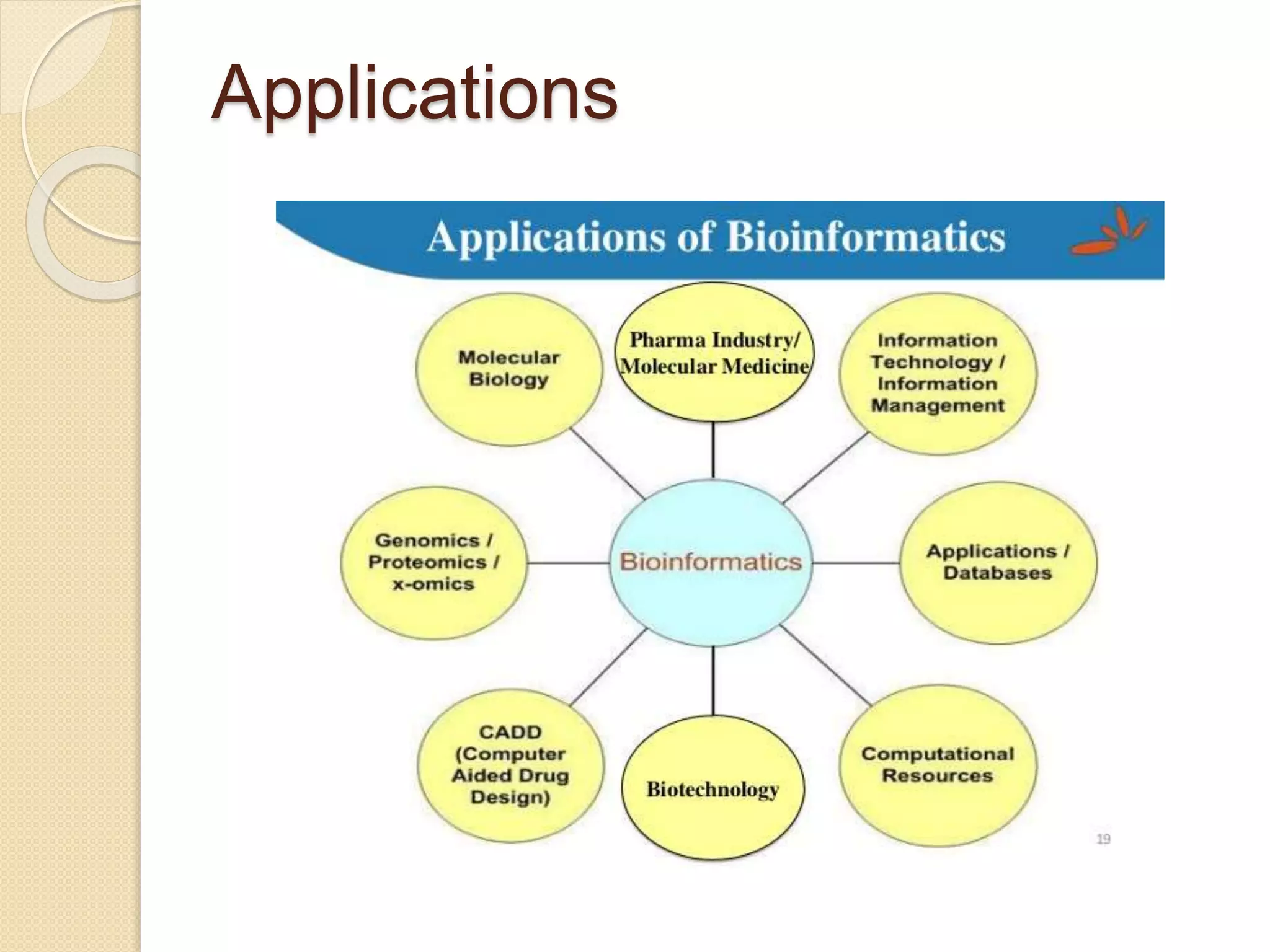
Applications
Conclusion
References
 David P Clark and Nanette J Pazdernic. 2013, Molecular Biology, 2nd
Edition. Academic Press is an Imprint of Elsevier, USA.
 Sushil Kumar Midda, T Usha and Prashanth Kumar H P, 2012,
Bioinformatics, College Book House Bangalore.
 Richard S Larson, 2006. Bioinformatics and Drug discovery. Human
Press Inc., New York.
 Dr. R C Dubey, 2014. Advanced Biotechnology. S Chand and
Company Limited, New Delhi.
 http://www.bio.itworld.com
 https://www.slideshare.net/biinoida/bioinformatics
History and devolopment of bioinfomatics.ppt (1)

History and devolopment of bioinfomatics.ppt (1)

  • 1.
    KUVEMPU UNIVERSITY Sahyadri Science College,Shivamogga Department of Biotechnology Seminar Topic : HISTORY AND DEVELOPMENT OF BIOINFORMATICS Guide: By: Dr. Ramesh C K Madan Kumar C A Associate Professor, I MSc, I Semester Dept of Biotechnology Sahyadri Science college Sahyadri Science college Shivamogga Shivamogga
  • 2.
    CONTENTS  Why shouldI study Bioinformatics?  Introduction  Scope  History  Development  Applications  Conclusion  References
  • 3.
    Why should Istudy Bioinformatics? Bioinformatics is essential to give meaning to the huge mass of biological data that is being produced in the post-genomic era, playing a prominent role in the biomedical and biotechnological research of this century.
  • 4.
    Introduction Bioinformatics is theapplication of Information Sciences {Mathematics, Statistics and Computer Sciences} to increase our understanding of Biology. It is a field that involves the building and manipulation of Biological databases. In the context of genomics, this means managing massive amounts of sequencing data and providing useful access to and interpretation of the data. This field also includes the area of data visualisation.
  • 5.
    Branches The three majorbranches of Bioinformatics that are closely related are: Genomics, transcriptomics and proteomics. Genomics: This involves extensive analysis of nucleic acids through molecular biology techniques before the data are ready for processing by Computers. Transcriptomics: It is the study of transcriptome, which includes the whole set of RNA molecules (or transcripts) in one or a population of biological cells for a given set of environmental circumstances. Proteomics: It involves the sequencing of amino acids in protein, determining its 3D structure and relating it to the function of the
  • 6.
    Scope  Genome andsequence analysis.  From sequence to 3D structural prediction.  Analysis of Genome-wide biomedical data and functional genomics.  Mathematical modeling of life processes.  Database building and management.
  • 7.
    History  In 1943,Paulien Hogeweg studied biological systems as dynamic information processing systems at many interconnected levels. In 1978, Paulien Hogeweg and Ben Hesper coined the term Bioinformatics for the study of informatic processes in biological systems. Now the term bioinformatics has become very popular.  In 1987, when the Human Genome Project was conceived of, the field of bioinformatics was in its infancy.  The 3 billion characters in the DNA sequence that make up the human genome was translated into biologically meaningful information by using computer. This act gave birth to a new field called ‘bioinformatics’
  • 8.
    Paulien Hogeweg MargaretO. Dayhoff • Historically, the protein databases were prepared first, then nucleotide databases. In 1959, VM Ingram first made attempt to compare sickle cell haemoglobin and normal haemoglobin, and demonstrated their homology. In due course of time the other protein associated with similar biological function were also compared. This resulted in more protein sequencing and accumulation of vast information.
  • 9.
     In 1965,Dayhoff and co-workers collected all the protein sequences known at that time and catalogued them as the Atlas of Protein Sequence and Structure which was first published by the National Biomedical Research Foundation. Later on collection of such macromolecular sequences was published under the above title from 1965-1978.  The development of computer methods pioneered by Dayhoff and her research group is applicable;  (i) in comparing protein sequences  (ii) detecting distantly related sequences and duplication within sequences.  (iii) deducing the evolutionary histories from alignment of protein sequences.  D J Lipman, who is the director of the National Center For Biotechnology Information is the Scientist who spearheaded the collaborative project that produced BLAST. His ongoing work in developing better computational methods for molecular biology attests to his inheritance of Dayhoff’s legacy.
  • 10.
     In 1980,the advent of the DNA Sequence database led to the next phase in database sequence information through establishment of data library by the European Molecular Biology Laboratory (EMBL).  In 1984, the National Biomedical Research Foundation (NBRF) established the Protein Information Resource (PIR).  In 1988, the National Institute of Health (NIH), USA developed the National Center for Biotechnology Information (NCBI) as a division of the National Library of Medicine (NLM) to develop information system in molecular biology.  In 1988, the three partners (DDBJ, EMBL and GenBank) of the International Nucleotide Sequence Database Collaboration had a meeting and agreed to use a common format.  All the databases have colloboration with each other. They regularly exchange their data. Now sequence data are accumulating day by day.
  • 11.
  • 12.
  • 13.
    References  David PClark and Nanette J Pazdernic. 2013, Molecular Biology, 2nd Edition. Academic Press is an Imprint of Elsevier, USA.  Sushil Kumar Midda, T Usha and Prashanth Kumar H P, 2012, Bioinformatics, College Book House Bangalore.  Richard S Larson, 2006. Bioinformatics and Drug discovery. Human Press Inc., New York.  Dr. R C Dubey, 2014. Advanced Biotechnology. S Chand and Company Limited, New Delhi.  http://www.bio.itworld.com  https://www.slideshare.net/biinoida/bioinformatics