Mohammad saleh Moallem
SHANDONG UNIVERSITY
默汉 201816230152
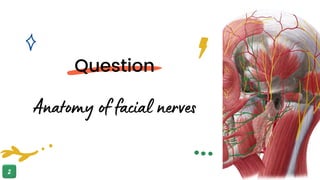
Question
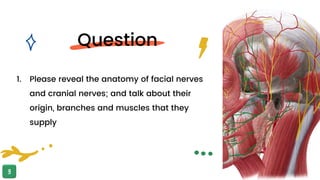
1. Please reveal the anatomy of facial nerves
and cranial nerves; and talk about their
origin, branches and muscles that they
supply
Question
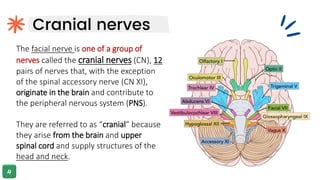
Cranial nerves
The facial nerve is one of a group of
nerves called the cranial nerves (CN), 12
pairs of nerves that, with the exception
of the spinal accessory nerve (CN XI),
originate in the brain and contribute to
the peripheral nervous system (PNS).
They are referred to as “cranial” because
they arise from the brain and upper
spinal cord and supply structures of the
head and neck.
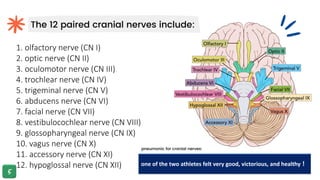
The 12 paired cranial nerves include:
1. olfactory nerve (CN I)
2. optic nerve (CN II)
3. oculomotor nerve (CN III)
4. trochlear nerve (CN IV)
5. trigeminal nerve (CN V)
6. abducens nerve (CN VI)
7. facial nerve (CN VII)
8. vestibulocochlear nerve (CN VIII)
9. glossopharyngeal nerve (CN IX)
10. vagus nerve (CN X)
11. accessory nerve (CN XI)
12. hypoglossal nerve (CN XII) one of the two athletes felt very good, victorious, and healthy !
pneumonic for cranial nerves:
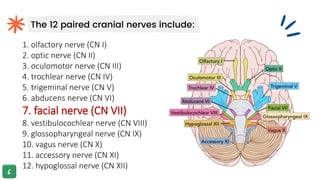
The 12 paired cranial nerves include:
1. olfactory nerve (CN I)
2. optic nerve (CN II)
3. oculomotor nerve (CN III)
4. trochlear nerve (CN IV)
5. trigeminal nerve (CN V)
6. abducens nerve (CN VI)
7. facial nerve (CN VII)
8. vestibulocochlear nerve (CN VIII)
9. glossopharyngeal nerve (CN IX)
10. vagus nerve (CN X)
11. accessory nerve (CN XI)
12. hypoglossal nerve (CN XII)
Facial nerve
Facial nerve The facial nerve contains many different types
of fibers, including general sensory (afferent)
fibers, special sensory fibers,
visceral/autonomic motor (efferent) fibers, and
somatic motor fibers.
So these are also the functions of facial nerve:
1. Somatic sensory
2. Special sensory
3. Branchial motor
4. Parasympathetic motor
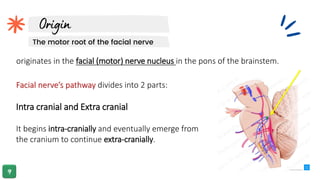
originates in the facial (motor) nerve nucleus in the pons of the brainstem.
The motor root of the facial nerve
Facial nerve’s pathway divides into 2 parts:
Intra cranial and Extra cranial
It begins intra-cranially and eventually emerge from
the cranium to continue extra-cranially.
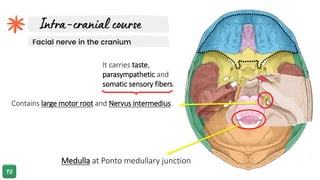
Contains large motor root and Nervus intermedius.
Facial nerve in the cranium
Medulla at Ponto medullary junction
It carries taste,
parasympathetic and
somatic sensory fibers.
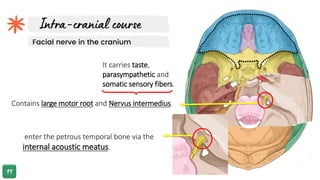
Contains large motor root and Nervus intermedius.
Facial nerve in the cranium
It carries taste,
parasympathetic and
somatic sensory fibers.
enter the petrous temporal bone via the
internal acoustic meatus.
Facial nerve in the cranium
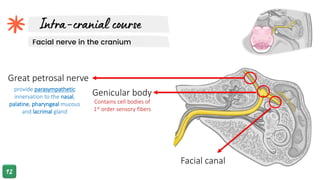
Facial canal
Genicular body
Contains cell bodies of
1st order sensory fibers
Great petrosal nerve
provide parasympathetic
innervation to the nasal,
palatine, pharyngeal mucous
and lacrimal gland
Facial nerve in the cranium
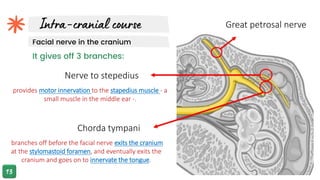
Chorda tympani
Nerve to stepedius
branches off before the facial nerve exits the cranium
at the stylomastoid foramen, and eventually exits the
cranium and goes on to innervate the tongue.
provides motor innervation to the stapedius muscle - a
small muscle in the middle ear -.
It gives off 3 branches:
Great petrosal nerve
Facial nerve in the cranium
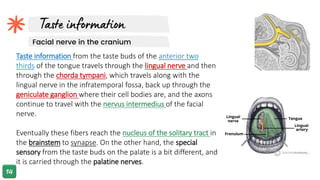
Taste information from the taste buds of the anterior two
thirds of the tongue travels through the lingual nerve and then
through the chorda tympani, which travels along with the
lingual nerve in the infratemporal fossa, back up through the
geniculate ganglion where their cell bodies are, and the axons
continue to travel with the nervus intermedius of the facial
nerve.
Eventually these fibers reach the nucleus of the solitary tract in
the brainstem to synapse. On the other hand, the special
sensory from the taste buds on the palate is a bit different, and
it is carried through the palatine nerves.
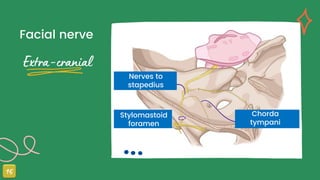
Facial nerve
Nerves to
stapedius
Stylomastoid
foramen
Chorda
tympani
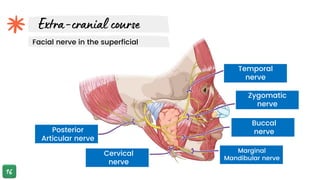
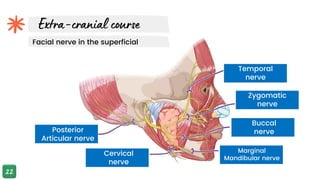
Facial nerve in the superficial
Temporal
nerve
Zygomatic
nerve
Posterior
Articular nerve
Cervical
nerve
Buccal
nerve
Marginal
Mandibular nerve
Facial nerve
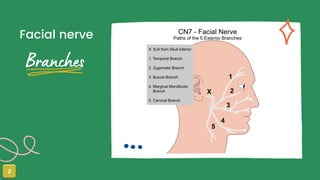
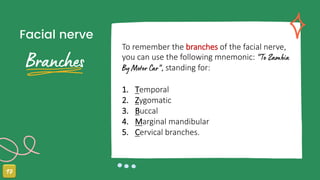
To remember the branches of the facial nerve,
you can use the following mnemonic:
standing for:
1. Temporal
2. Zygomatic
3. Buccal
4. Marginal mandibular
5. Cervical branches.
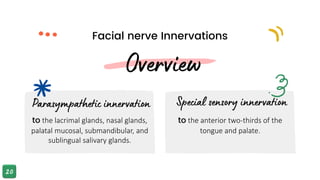
Facial nerve Innervations
to the lacrimal glands, nasal glands,
palatal mucosal, submandibular, and
sublingual salivary glands.
to the anterior two-thirds of the
tongue and palate.
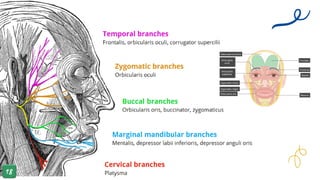
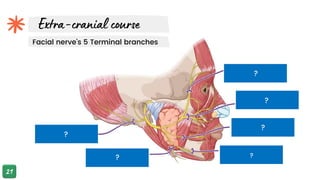
Facial nerve’s 5 Terminal branches
?
?
?
?
?
?
Facial nerve in the superficial
Temporal
nerve
Zygomatic
nerve
Posterior
Articular nerve
Cervical
nerve
Buccal
nerve
Marginal
Mandibular nerve
Mohammad saleh Moallem
SHANDONG UNIVERSITY
默汉 201816230152

Facial nerve

  • 1.
    Mohammad saleh Moallem SHANDONGUNIVERSITY 默汉 201816230152
  • 2.
  • 3.
    1. Please revealthe anatomy of facial nerves and cranial nerves; and talk about their origin, branches and muscles that they supply Question
  • 4.
    Cranial nerves The facialnerve is one of a group of nerves called the cranial nerves (CN), 12 pairs of nerves that, with the exception of the spinal accessory nerve (CN XI), originate in the brain and contribute to the peripheral nervous system (PNS). They are referred to as “cranial” because they arise from the brain and upper spinal cord and supply structures of the head and neck.
  • 5.
    The 12 pairedcranial nerves include: 1. olfactory nerve (CN I) 2. optic nerve (CN II) 3. oculomotor nerve (CN III) 4. trochlear nerve (CN IV) 5. trigeminal nerve (CN V) 6. abducens nerve (CN VI) 7. facial nerve (CN VII) 8. vestibulocochlear nerve (CN VIII) 9. glossopharyngeal nerve (CN IX) 10. vagus nerve (CN X) 11. accessory nerve (CN XI) 12. hypoglossal nerve (CN XII) one of the two athletes felt very good, victorious, and healthy ! pneumonic for cranial nerves:
  • 6.
    The 12 pairedcranial nerves include: 1. olfactory nerve (CN I) 2. optic nerve (CN II) 3. oculomotor nerve (CN III) 4. trochlear nerve (CN IV) 5. trigeminal nerve (CN V) 6. abducens nerve (CN VI) 7. facial nerve (CN VII) 8. vestibulocochlear nerve (CN VIII) 9. glossopharyngeal nerve (CN IX) 10. vagus nerve (CN X) 11. accessory nerve (CN XI) 12. hypoglossal nerve (CN XII)
  • 7.
  • 8.
    Facial nerve Thefacial nerve contains many different types of fibers, including general sensory (afferent) fibers, special sensory fibers, visceral/autonomic motor (efferent) fibers, and somatic motor fibers. So these are also the functions of facial nerve: 1. Somatic sensory 2. Special sensory 3. Branchial motor 4. Parasympathetic motor
  • 9.
    originates in thefacial (motor) nerve nucleus in the pons of the brainstem. The motor root of the facial nerve Facial nerve’s pathway divides into 2 parts: Intra cranial and Extra cranial It begins intra-cranially and eventually emerge from the cranium to continue extra-cranially.
  • 10.
    Contains large motorroot and Nervus intermedius. Facial nerve in the cranium Medulla at Ponto medullary junction It carries taste, parasympathetic and somatic sensory fibers.
  • 11.
    Contains large motorroot and Nervus intermedius. Facial nerve in the cranium It carries taste, parasympathetic and somatic sensory fibers. enter the petrous temporal bone via the internal acoustic meatus.
  • 12.
    Facial nerve inthe cranium Facial canal Genicular body Contains cell bodies of 1st order sensory fibers Great petrosal nerve provide parasympathetic innervation to the nasal, palatine, pharyngeal mucous and lacrimal gland
  • 13.
    Facial nerve inthe cranium Chorda tympani Nerve to stepedius branches off before the facial nerve exits the cranium at the stylomastoid foramen, and eventually exits the cranium and goes on to innervate the tongue. provides motor innervation to the stapedius muscle - a small muscle in the middle ear -. It gives off 3 branches: Great petrosal nerve
  • 14.
    Facial nerve inthe cranium Taste information from the taste buds of the anterior two thirds of the tongue travels through the lingual nerve and then through the chorda tympani, which travels along with the lingual nerve in the infratemporal fossa, back up through the geniculate ganglion where their cell bodies are, and the axons continue to travel with the nervus intermedius of the facial nerve. Eventually these fibers reach the nucleus of the solitary tract in the brainstem to synapse. On the other hand, the special sensory from the taste buds on the palate is a bit different, and it is carried through the palatine nerves.
  • 15.
  • 16.
    Facial nerve inthe superficial Temporal nerve Zygomatic nerve Posterior Articular nerve Cervical nerve Buccal nerve Marginal Mandibular nerve
  • 17.
    Facial nerve To rememberthe branches of the facial nerve, you can use the following mnemonic: standing for: 1. Temporal 2. Zygomatic 3. Buccal 4. Marginal mandibular 5. Cervical branches.
  • 20.
    Facial nerve Innervations tothe lacrimal glands, nasal glands, palatal mucosal, submandibular, and sublingual salivary glands. to the anterior two-thirds of the tongue and palate.
  • 21.
    Facial nerve’s 5Terminal branches ? ? ? ? ? ?
  • 22.
    Facial nerve inthe superficial Temporal nerve Zygomatic nerve Posterior Articular nerve Cervical nerve Buccal nerve Marginal Mandibular nerve
  • 23.
    Mohammad saleh Moallem SHANDONGUNIVERSITY 默汉 201816230152