LAPAROSCOPIC SURGERY
Mohammad saleh Moallem
Episode 3 questions:
What is laparoscopic surgery? (laparoscopic right adrenalectomy).
What kinds of operations can be performed using laparoscopic
surgery?
QUESTION
LAPAROSCOPIC SURGERY
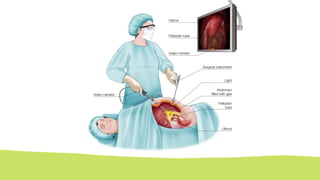
Laparoscopic surgery is a surgical technique in which short, narrow
tubes (trochars) are inserted into the abdomen through small (less
than one centimeter) incisions. Through these trochars, long, narrow
instruments are inserted. The surgeon uses these instruments to
manipulate, cut, and sew tissue.
Although patients tend to think of laparoscopic surgery as minor surgery,
it is major surgery with the potential for major complications – visceral
injury and bleeding, injury to the bowel, or injury to the bladder.
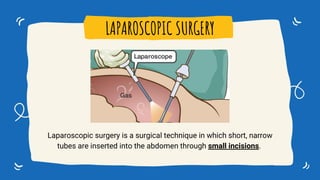
Laparoscopic surgery is a surgical technique in which short, narrow
tubes are inserted into the abdomen through small incisions.
LAPAROSCOPIC SURGERY
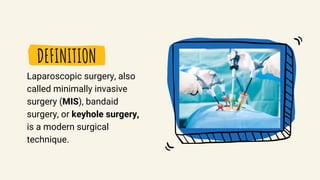
DEFINITION
Laparoscopic surgery, also
called minimally invasive
surgery (MIS), bandaid
surgery, or keyhole surgery,
is a modern surgical
technique.
VS
Laparoscopic
surgery
Exploratory
laparotomy
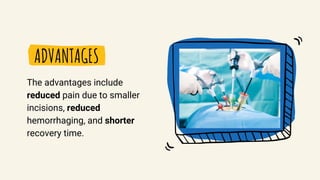
ADVANTAGES
The advantages include
reduced pain due to smaller
incisions, reduced
hemorrhaging, and shorter
recovery time.
TNE KEY ELEMENT
The key element is the use of
a laparoscope, a long fiber
optic cable system that
allows viewing of the affected
area by snaking the cable
from a more distant, but more
easily accessible location.
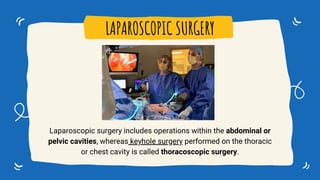
Laparoscopic surgery includes operations within the abdominal or
pelvic cavities, whereas keyhole surgery performed on the thoracic
or chest cavity is called thoracoscopic surgery.
LAPAROSCOPIC SURGERY
TYPES OF LAPAROSCOPES
a telescopic rod lens system, usually connected to a video
camera (single-chip or three-chip)
a digital laparoscope where a miniature digital video
camera is placed at the end of the laparoscope, eliminating
the rod lens system
1.
2.
There are two types of laparoscope:
Reduced hemorrhaging, which reduces the chance of needing a blood
transfusion.
Smaller incision, which reduces pain and shortens recovery time, as
well as resulting in less post-operative scarring.
Less pain, leading to less pain medication needed.
1.
2.
3.
ADVANTAGES
4.The use of regional anesthesia for laparoscopic surgery, as opposed to
general anesthesia required for many non-laparoscopic procedures, can
produce fewer complications and quicker recovery.
5. Although procedure times are usually slightly longer, hospital stay is less,
and often with a same day discharge which leads to a faster return to
everyday living.
6. Reduced exposure of internal organs to possible external contaminants
ADVANTAGES
Although laparoscopy in adults is widely accepted, its advantages in
children are questioned. Benefits of laparoscopy appear to recede with
younger age.
Efficacy of laparoscopy is inferior to open surgery in certain conditions
such as pyloromyotomy for infantile hypertrophic pyloric stenosis. Although
laparoscopic appendectomy has less wound problems than open surgery,
the former is associated with more intra-abdominal abscesses.
NOTE!
Laparoscopic surgery requires pneumoperitoneum for adequate
visualization and operative manipulation.
The surgeon has a limited range of motion at the surgical site, resulting
in a loss of dexterity.
Poor depth perception.
1.
2.
3.
DISADVANTAGES
Surgeons must use tools to interact with tissue rather than manipulate it
directly with their hands. This results in an inability to accurately judge how
much force is being applied to tissue as well as a risk of damaging tissue
by applying more force than necessary. This limitation also reduces tactile
sensation, making it more difficult for the surgeon to feel the tissue and
making delicate operations such as tying sutures more difficult.
DISADVANTAGES
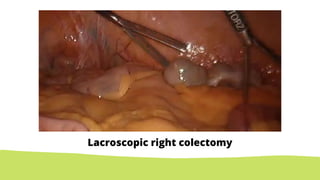
Lacroscopic right colectomy
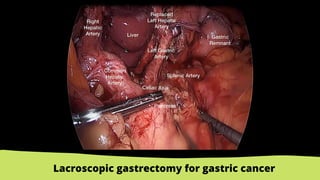
Lacroscopic gastrectomy for gastric cancer
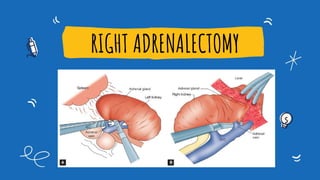
RIGHT ADRENALECTOMY
RIGHT ADRENALECTOMY
Since its first description in 1992, laparoscopic adrenalectomy
has become the gold standard for the surgical treatment of
most adrenal conditions. The benefits of a minimally invasive
approach to adrenal resection such as decreased hospital
stay, shorter recovery time and improved patient satisfaction
are widely accepted. However, as this procedure becomes
more widespread, critical steps of the operation must be
maintained to ensure expected outcomes and success. This
article reviews the surgical techniques for the laparoscopic
adrenalectomy.
RIGHT ADRENALECTOMY
The first laparoscopic adrenalectomy (LA), a minimally
invasive surgical approach has almost replaced the open
adrenalectomy in the management of small and medium-
sized adrenal lesions. The advantages of LA include
shorter hospital stays, decreased postoperative pain,
improved recovery times, and better cosmetic results.
Saleh
RIGHT ADRENALECTOMY
In addition, difficulty with open surgical exposure and the
small size of the adrenal gland make this organ
particularly amenable to a minimally invasive technique.
The anatomical location of the adrenal gland has led to a
number of laparoscopic approaches, including posterior
or lateral retroperitoneal, transthoracic, and lateral
transperitoneal. In this paper we review the varied surgical
techniques used for LA.
Saleh
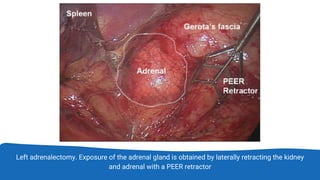
Left adrenalectomy. Exposure of the adrenal gland is obtained by laterally retracting the kidney
and adrenal with a PEER retractor
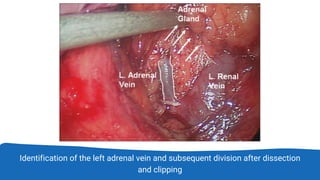
Identification of the left adrenal vein and subsequent division after dissection
and clipping
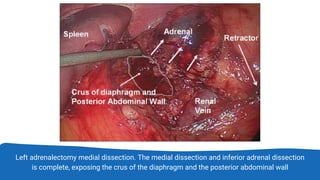
Left adrenalectomy medial dissection. The medial dissection and inferior adrenal dissection
is complete, exposing the crus of the diaphragm and the posterior abdominal wall
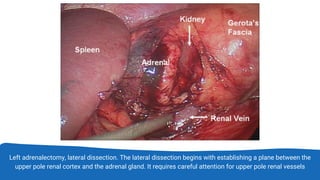
Left adrenalectomy, lateral dissection. The lateral dissection begins with establishing a plane between the
upper pole renal cortex and the adrenal gland. It requires careful attention for upper pole renal vessels
Adrenal bed after adrenalectomy. The adrenal gland with its surrounding
periadrenal and peri-renal fat, has been excised
THANK YOU!
Mohammad saleh Moallem
默汉201816230152
Saleh

Laparoscopic surgery and Right Adrenalectomy

  • 1.
  • 2.
    Episode 3 questions: Whatis laparoscopic surgery? (laparoscopic right adrenalectomy). What kinds of operations can be performed using laparoscopic surgery? QUESTION
  • 3.
    LAPAROSCOPIC SURGERY Laparoscopic surgeryis a surgical technique in which short, narrow tubes (trochars) are inserted into the abdomen through small (less than one centimeter) incisions. Through these trochars, long, narrow instruments are inserted. The surgeon uses these instruments to manipulate, cut, and sew tissue. Although patients tend to think of laparoscopic surgery as minor surgery, it is major surgery with the potential for major complications – visceral injury and bleeding, injury to the bowel, or injury to the bladder.
  • 4.
    Laparoscopic surgery isa surgical technique in which short, narrow tubes are inserted into the abdomen through small incisions. LAPAROSCOPIC SURGERY
  • 5.
    DEFINITION Laparoscopic surgery, also calledminimally invasive surgery (MIS), bandaid surgery, or keyhole surgery, is a modern surgical technique.
  • 6.
  • 7.
    ADVANTAGES The advantages include reducedpain due to smaller incisions, reduced hemorrhaging, and shorter recovery time.
  • 8.
    TNE KEY ELEMENT Thekey element is the use of a laparoscope, a long fiber optic cable system that allows viewing of the affected area by snaking the cable from a more distant, but more easily accessible location.
  • 9.
    Laparoscopic surgery includesoperations within the abdominal or pelvic cavities, whereas keyhole surgery performed on the thoracic or chest cavity is called thoracoscopic surgery. LAPAROSCOPIC SURGERY
  • 10.
    TYPES OF LAPAROSCOPES atelescopic rod lens system, usually connected to a video camera (single-chip or three-chip) a digital laparoscope where a miniature digital video camera is placed at the end of the laparoscope, eliminating the rod lens system 1. 2. There are two types of laparoscope:
  • 11.
    Reduced hemorrhaging, whichreduces the chance of needing a blood transfusion. Smaller incision, which reduces pain and shortens recovery time, as well as resulting in less post-operative scarring. Less pain, leading to less pain medication needed. 1. 2. 3. ADVANTAGES
  • 12.
    4.The use ofregional anesthesia for laparoscopic surgery, as opposed to general anesthesia required for many non-laparoscopic procedures, can produce fewer complications and quicker recovery. 5. Although procedure times are usually slightly longer, hospital stay is less, and often with a same day discharge which leads to a faster return to everyday living. 6. Reduced exposure of internal organs to possible external contaminants ADVANTAGES
  • 13.
    Although laparoscopy inadults is widely accepted, its advantages in children are questioned. Benefits of laparoscopy appear to recede with younger age. Efficacy of laparoscopy is inferior to open surgery in certain conditions such as pyloromyotomy for infantile hypertrophic pyloric stenosis. Although laparoscopic appendectomy has less wound problems than open surgery, the former is associated with more intra-abdominal abscesses. NOTE!
  • 14.
    Laparoscopic surgery requirespneumoperitoneum for adequate visualization and operative manipulation. The surgeon has a limited range of motion at the surgical site, resulting in a loss of dexterity. Poor depth perception. 1. 2. 3. DISADVANTAGES
  • 15.
    Surgeons must usetools to interact with tissue rather than manipulate it directly with their hands. This results in an inability to accurately judge how much force is being applied to tissue as well as a risk of damaging tissue by applying more force than necessary. This limitation also reduces tactile sensation, making it more difficult for the surgeon to feel the tissue and making delicate operations such as tying sutures more difficult. DISADVANTAGES
  • 18.
  • 19.
  • 20.
  • 21.
    RIGHT ADRENALECTOMY Since itsfirst description in 1992, laparoscopic adrenalectomy has become the gold standard for the surgical treatment of most adrenal conditions. The benefits of a minimally invasive approach to adrenal resection such as decreased hospital stay, shorter recovery time and improved patient satisfaction are widely accepted. However, as this procedure becomes more widespread, critical steps of the operation must be maintained to ensure expected outcomes and success. This article reviews the surgical techniques for the laparoscopic adrenalectomy.
  • 22.
    RIGHT ADRENALECTOMY The firstlaparoscopic adrenalectomy (LA), a minimally invasive surgical approach has almost replaced the open adrenalectomy in the management of small and medium- sized adrenal lesions. The advantages of LA include shorter hospital stays, decreased postoperative pain, improved recovery times, and better cosmetic results. Saleh
  • 23.
    RIGHT ADRENALECTOMY In addition,difficulty with open surgical exposure and the small size of the adrenal gland make this organ particularly amenable to a minimally invasive technique. The anatomical location of the adrenal gland has led to a number of laparoscopic approaches, including posterior or lateral retroperitoneal, transthoracic, and lateral transperitoneal. In this paper we review the varied surgical techniques used for LA. Saleh
  • 24.
    Left adrenalectomy. Exposureof the adrenal gland is obtained by laterally retracting the kidney and adrenal with a PEER retractor
  • 25.
    Identification of theleft adrenal vein and subsequent division after dissection and clipping
  • 26.
    Left adrenalectomy medialdissection. The medial dissection and inferior adrenal dissection is complete, exposing the crus of the diaphragm and the posterior abdominal wall
  • 27.
    Left adrenalectomy, lateraldissection. The lateral dissection begins with establishing a plane between the upper pole renal cortex and the adrenal gland. It requires careful attention for upper pole renal vessels
  • 28.
    Adrenal bed afteradrenalectomy. The adrenal gland with its surrounding periadrenal and peri-renal fat, has been excised
  • 29.
    THANK YOU! Mohammad salehMoallem 默汉201816230152 Saleh