Four-Point System for Fabric
Inspection
Overview of Fabric Quality Control in
the Textile Industry
Introduction
• • Fabric inspection is crucial in maintaining
quality in textile manufacturing.
• • Various systems exist to ensure fabric
quality, with the Four-Point System being
widely accepted.
• • This presentation provides an overview of
the Four-Point System.
What is the Four-Point System?
• • A standardized method for evaluating fabric
quality.
• • Assigns points to fabric defects based on
their size and severity.
• • Commonly used in the textile industry to
ensure consistent quality.
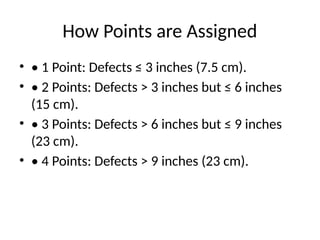
How Points are Assigned
• • 1 Point: Defects ≤ 3 inches (7.5 cm).
• • 2 Points: Defects > 3 inches but ≤ 6 inches
(15 cm).
• • 3 Points: Defects > 6 inches but ≤ 9 inches
(23 cm).
• • 4 Points: Defects > 9 inches (23 cm).
Scoring and Grading
• • Inspect each linear yard or meter of fabric.
• • Calculate total points based on defects
found.
• • Determine the overall quality grade per 100
square yards (or meters).
• • Lower points indicate better quality; higher
points suggest more defects.
Practical Application
• • The Four-Point System is applied during the
fabric inspection process.
• • Fabric rolls are inspected, and points are
assigned based on the severity and size of
defects.
• • Accept/reject decisions are made based on
the total points scored.
Benefits of the Four-Point System
• • Standardization: Provides a consistent
method for fabric quality evaluation.
• • Ease of Use: Simple and straightforward to
apply during inspections.
• • Industry Acceptance: Widely recognized and
used across the textile industry.
Conclusion
• • The Four-Point System is essential for
maintaining fabric quality in textile
manufacturing.
• • It provides a standardized, reliable method
for assessing fabric defects.
• • Using this system helps ensure consistent
quality and facilitates better decision-making.
Q&A
• • Questions and Discussions

Four_Point_System_Fabric_Inspection.pptx

  • 1.
    Four-Point System forFabric Inspection Overview of Fabric Quality Control in the Textile Industry
  • 2.
    Introduction • • Fabricinspection is crucial in maintaining quality in textile manufacturing. • • Various systems exist to ensure fabric quality, with the Four-Point System being widely accepted. • • This presentation provides an overview of the Four-Point System.
  • 3.
    What is theFour-Point System? • • A standardized method for evaluating fabric quality. • • Assigns points to fabric defects based on their size and severity. • • Commonly used in the textile industry to ensure consistent quality.
  • 4.
    How Points areAssigned • • 1 Point: Defects ≤ 3 inches (7.5 cm). • • 2 Points: Defects > 3 inches but ≤ 6 inches (15 cm). • • 3 Points: Defects > 6 inches but ≤ 9 inches (23 cm). • • 4 Points: Defects > 9 inches (23 cm).
  • 5.
    Scoring and Grading •• Inspect each linear yard or meter of fabric. • • Calculate total points based on defects found. • • Determine the overall quality grade per 100 square yards (or meters). • • Lower points indicate better quality; higher points suggest more defects.
  • 6.
    Practical Application • •The Four-Point System is applied during the fabric inspection process. • • Fabric rolls are inspected, and points are assigned based on the severity and size of defects. • • Accept/reject decisions are made based on the total points scored.
  • 7.
    Benefits of theFour-Point System • • Standardization: Provides a consistent method for fabric quality evaluation. • • Ease of Use: Simple and straightforward to apply during inspections. • • Industry Acceptance: Widely recognized and used across the textile industry.
  • 8.
    Conclusion • • TheFour-Point System is essential for maintaining fabric quality in textile manufacturing. • • It provides a standardized, reliable method for assessing fabric defects. • • Using this system helps ensure consistent quality and facilitates better decision-making.
  • 9.
    Q&A • • Questionsand Discussions