



Form over warm, tropical ocean
waters.
Sometimes called typhoons (Asia)
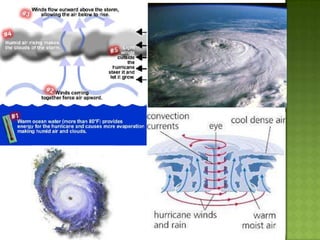
Formed when air flows over warm
water (over 80 degrees), picking up
large amounts of moisture and
energy.
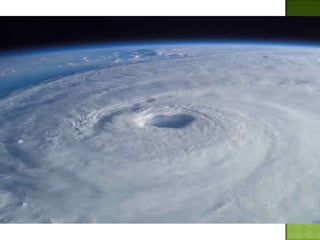
This flows into a low pressure core &
tightens to form the “eye” or center.
The more heat energy there is, the
stronger the winds become.
 Forms slowly over
days
 10-20 mile wide eye
 Can be up to 500
miles wide
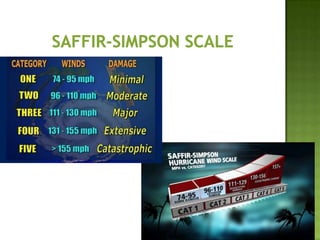
 Classified by wind
speed in the Saffir-
Simpson scale;
category 1-5
 Winds from 75-200
mph
 Winds move counter-
clockwise (northern
hemisphere)
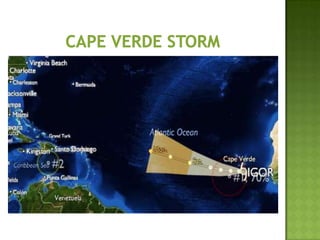
 Most storms start off
the coast of Africa and
move west (Cape Verde
storms)
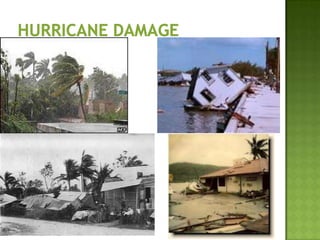
 Damage includes
flooding, wind
damage, & storm surge.
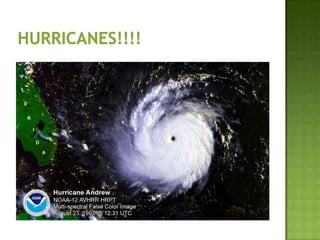
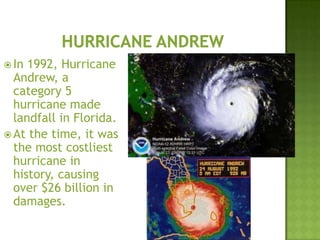
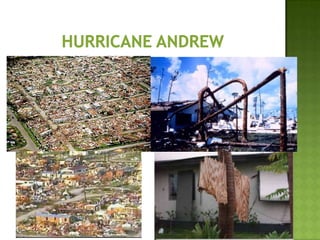
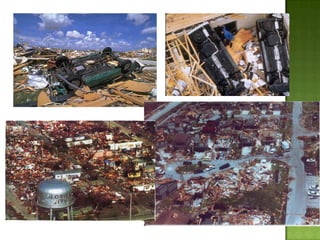
 In 1992, Hurricane
Andrew, a
category 5
hurricane made
landfall in Florida.
 At the time, it was
the most costliest
hurricane in
history, causing
over $26 billion in
damages.
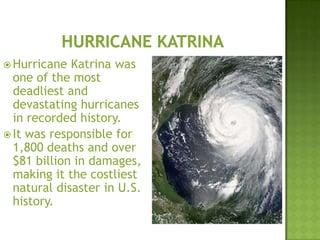
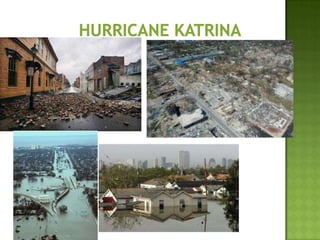
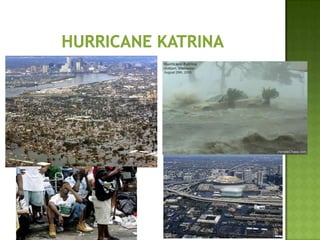
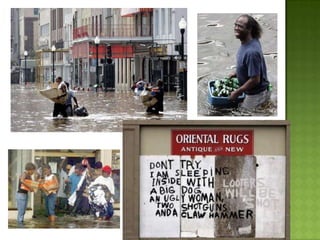
 Hurricane Katrina was
one of the most
deadliest and
devastating hurricanes
in recorded history.
 It was responsible for
1,800 deaths and over
$81 billion in damages,
making it the costliest
natural disaster in U.S.
history.
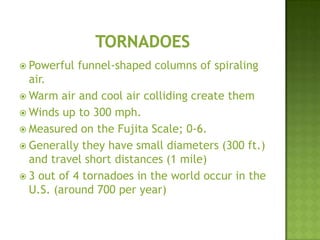
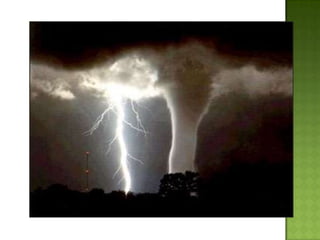
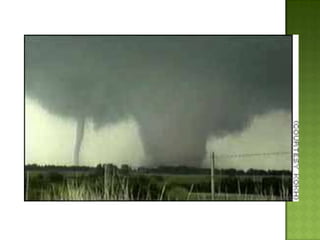
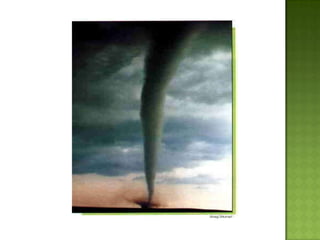
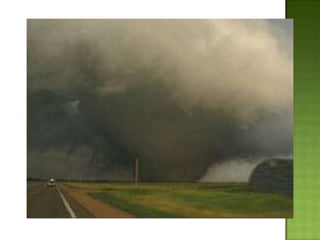
 Powerful funnel-shaped columns of spiraling
air.
 Warm air and cool air colliding create them
 Winds up to 300 mph.
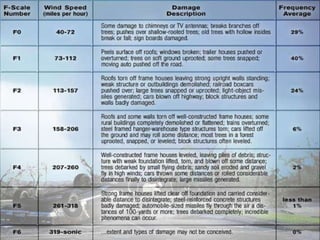
 Measured on the Fujita Scale; 0-6.
 Generally they have small diameters (300 ft.)
and travel short distances (1 mile)
 3 out of 4 tornadoes in the world occur in the
U.S. (around 700 per year)
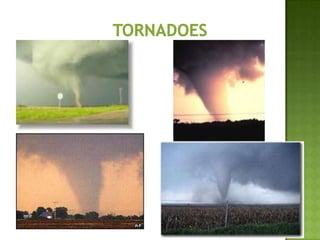
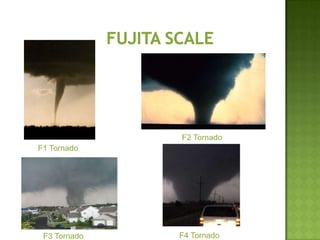
F1 Tornado
F2 Tornado
F3 Tornado F4 Tornado
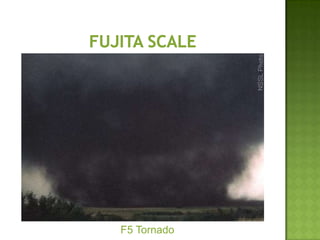
F5 Tornado
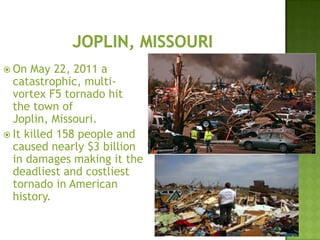
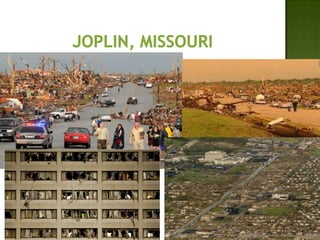
 On May 22, 2011 a
catastrophic, multi-
vortex F5 tornado hit
the town of
Joplin, Missouri.
 It killed 158 people and
caused nearly $3 billion
in damages making it the
deadliest and costliest
tornado in American
history.
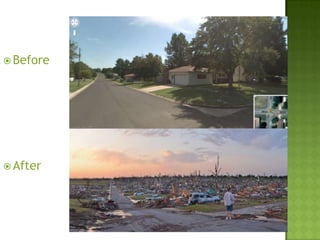
 Before
 After
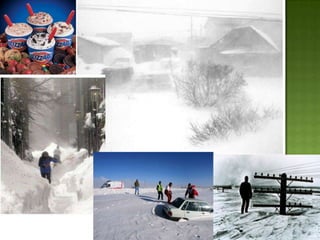
Blizzard - Heavy snowstorm w/
winds of more than 35 mph
creating reduced visibility.
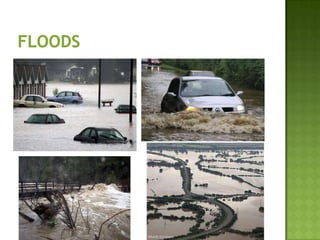
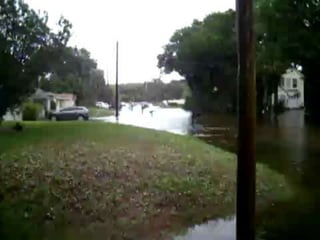
Floods - Water spreads out over
normally dry land
Droughts – A long period of time
w/o rain or minimal rainfall.
 - Droughts result in crop
failures, reduced levels of water in
storage.
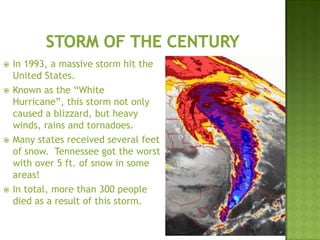
 In 1993, a massive storm hit the
United States.
 Known as the “White
Hurricane”, this storm not only
caused a blizzard, but heavy
winds, rains and tornadoes.
 Many states received several feet
of snow. Tennessee got the worst
with over 5 ft. of snow in some
areas!
 In total, more than 300 people
died as a result of this storm.
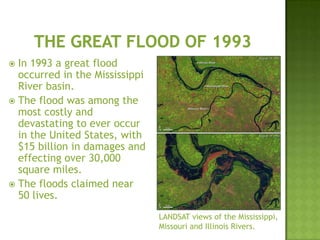
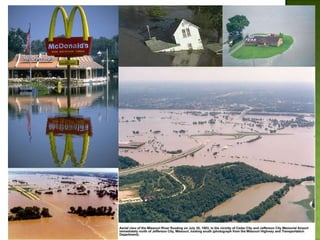
 In 1993 a great flood
occurred in the Mississippi
River basin.
 The flood was among the
most costly and
devastating to ever occur
in the United States, with
$15 billion in damages and
effecting over 30,000
square miles.
 The floods claimed near
50 lives.
LANDSAT views of the Mississippi,
Missouri and Illinois Rivers.
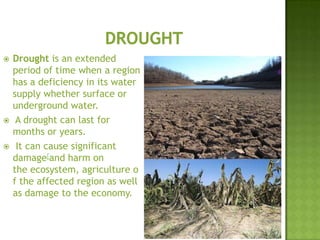
 Drought is an extended
period of time when a region
has a deficiency in its water
supply whether surface or
underground water.
 A drought can last for
months or years.
 It can cause significant
damage[and harm on
the ecosystem, agriculture o
f the affected region as well
as damage to the economy.
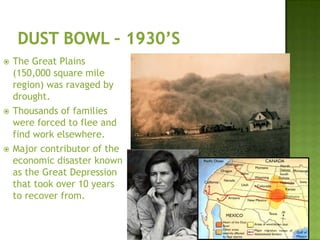
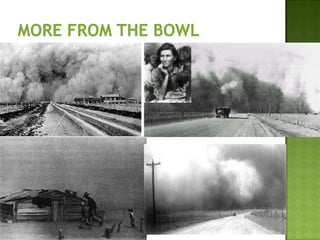
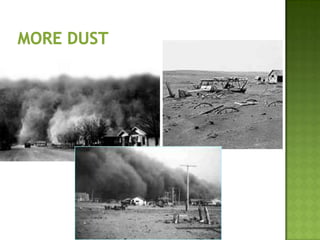
 The Great Plains
(150,000 square mile
region) was ravaged by
drought.
 Thousands of families
were forced to flee and
find work elsewhere.
 Major contributor of the
economic disaster known
as the Great Depression
that took over 10 years
to recover from.
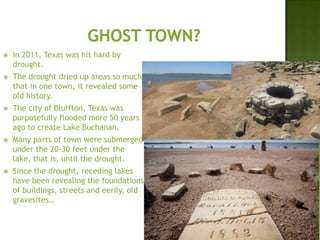
 In 2011, Texas was hit hard by
drought.
 The drought dried up areas so much
that in one town, it revealed some
old history.
 The city of Bluffton, Texas was
purposefully flooded more 50 years
ago to create Lake Buchanan.
 Many parts of town were submerged
under the 20-30 feet under the
lake, that is, until the drought.
 Since the drought, receding lakes
have been revealing the foundations
of buildings, streets and eerily, old
gravesites…

Extreme weather

  • 3.
    Form over warm,tropical ocean waters. Sometimes called typhoons (Asia) Formed when air flows over warm water (over 80 degrees), picking up large amounts of moisture and energy. This flows into a low pressure core & tightens to form the “eye” or center. The more heat energy there is, the stronger the winds become.
  • 5.
     Forms slowlyover days  10-20 mile wide eye  Can be up to 500 miles wide  Classified by wind speed in the Saffir- Simpson scale; category 1-5  Winds from 75-200 mph  Winds move counter- clockwise (northern hemisphere)  Most storms start off the coast of Africa and move west (Cape Verde storms)  Damage includes flooding, wind damage, & storm surge.
  • 10.
     In 1992,Hurricane Andrew, a category 5 hurricane made landfall in Florida.  At the time, it was the most costliest hurricane in history, causing over $26 billion in damages.
  • 13.
     Hurricane Katrinawas one of the most deadliest and devastating hurricanes in recorded history.  It was responsible for 1,800 deaths and over $81 billion in damages, making it the costliest natural disaster in U.S. history.
  • 18.
     Powerful funnel-shapedcolumns of spiraling air.  Warm air and cool air colliding create them  Winds up to 300 mph.  Measured on the Fujita Scale; 0-6.  Generally they have small diameters (300 ft.) and travel short distances (1 mile)  3 out of 4 tornadoes in the world occur in the U.S. (around 700 per year)
  • 20.
    F1 Tornado F2 Tornado F3Tornado F4 Tornado
  • 21.
  • 23.
     On May22, 2011 a catastrophic, multi- vortex F5 tornado hit the town of Joplin, Missouri.  It killed 158 people and caused nearly $3 billion in damages making it the deadliest and costliest tornado in American history.
  • 25.
  • 31.
    Blizzard - Heavysnowstorm w/ winds of more than 35 mph creating reduced visibility. Floods - Water spreads out over normally dry land Droughts – A long period of time w/o rain or minimal rainfall.  - Droughts result in crop failures, reduced levels of water in storage.
  • 34.
     In 1993,a massive storm hit the United States.  Known as the “White Hurricane”, this storm not only caused a blizzard, but heavy winds, rains and tornadoes.  Many states received several feet of snow. Tennessee got the worst with over 5 ft. of snow in some areas!  In total, more than 300 people died as a result of this storm.
  • 38.
     In 1993a great flood occurred in the Mississippi River basin.  The flood was among the most costly and devastating to ever occur in the United States, with $15 billion in damages and effecting over 30,000 square miles.  The floods claimed near 50 lives. LANDSAT views of the Mississippi, Missouri and Illinois Rivers.
  • 40.
     Drought isan extended period of time when a region has a deficiency in its water supply whether surface or underground water.  A drought can last for months or years.  It can cause significant damage[and harm on the ecosystem, agriculture o f the affected region as well as damage to the economy.
  • 41.
     The GreatPlains (150,000 square mile region) was ravaged by drought.  Thousands of families were forced to flee and find work elsewhere.  Major contributor of the economic disaster known as the Great Depression that took over 10 years to recover from.
  • 44.
     In 2011,Texas was hit hard by drought.  The drought dried up areas so much that in one town, it revealed some old history.  The city of Bluffton, Texas was purposefully flooded more 50 years ago to create Lake Buchanan.  Many parts of town were submerged under the 20-30 feet under the lake, that is, until the drought.  Since the drought, receding lakes have been revealing the foundations of buildings, streets and eerily, old gravesites…