NATURAL 
DISASTER
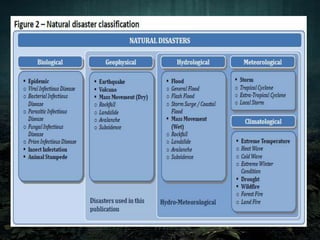
A natural disaster is an event with a natural, as 
opposed to human, cause that results in large-scale 
loss of life or damage to property. It could be related to 
weather, geology, biology or even factors outside the 
Earth. Examples are earthquakes, hurricanes, droughts 
and flooding.
LIST OF 
NATURAL 
DISASTERS IN 
ASIA
Hailstorm 
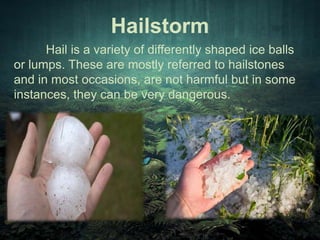
Hail is a variety of differently shaped ice balls 
or lumps. These are mostly referred to hailstones 
and in most occasions, are not harmful but in some 
instances, they can be very dangerous.
Hurricane 
Hurricanes can be described as giant, swirling storms. 
They are severe ‘tropical storms’ and are usually accompanied 
by treacherous thunderstorms. These monster storms can 
reach winds speeds up to 160 miles per hour. They can also 
unleash a whopping 2.4 trillion gallons of rain a day. 
Hurricanes occur in the Caribbean Sea, Eastern Pacific 
Ocean, Southern Atlantic Ocean and in the Gulf of Mexico.
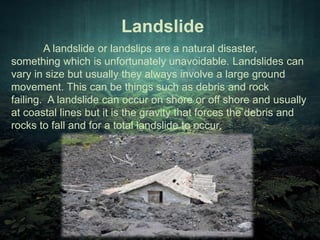
Landslide 
A landslide or landslips are a natural disaster, 
something which is unfortunately unavoidable. Landslides can 
vary in size but usually they always involve a large ground 
movement. This can be things such as debris and rock 
failing. A landslide can occur on shore or off shore and usually 
at coastal lines but it is the gravity that forces the debris and 
rocks to fall and for a total landslide to occur.
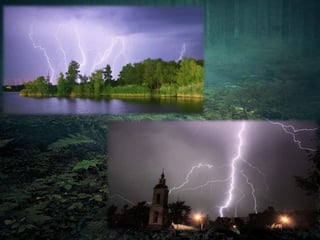
Thunderstorm 
Thunderstorms are some of the most frightening 
and powerful storms to hit the world. A thunderstorm 
can be known as a lightning storm, a thundershower or 
even an electrical storm. A thunderstorm is one of the 
most powerful storms to hit and it forms when the 
weather is turbulent.
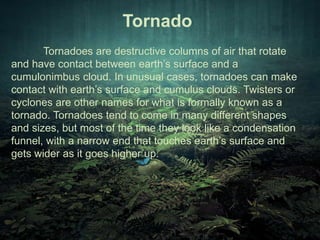
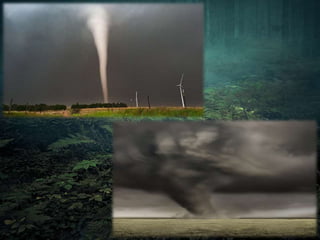
Tornado 
Tornadoes are destructive columns of air that rotate 
and have contact between earth’s surface and a 
cumulonimbus cloud. In unusual cases, tornadoes can make 
contact with earth’s surface and cumulus clouds. Twisters or 
cyclones are other names for what is formally known as a 
tornado. Tornadoes tend to come in many different shapes 
and sizes, but most of the time they look like a condensation 
funnel, with a narrow end that touches earth’s surface and 
gets wider as it goes higher up.
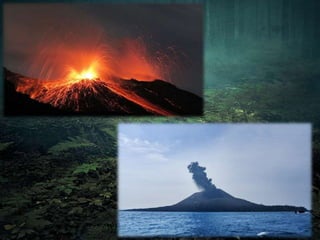
Volcanic Eruption 
A volcanic eruption is one of the most dangerous and 
magnificent natural disasters. When a volcano erupts, 
the volcano sends out ash clouds, lava and even 
volcanic bombs. There is a high risk of danger from 
slow moving lava; though, the lava might move slowly, it 
is very dangerous and can cause a lot of damage to 
property and human life.
Mount Mayon eruption
Drought 
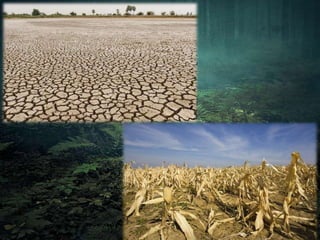
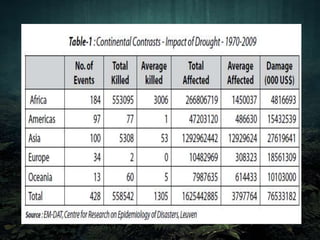
Droughts are one of the worst natural disasters to occur. A 
drought is a lengthy period of time, stretching months or even years in 
which time; land has a decrease in water supply. This can happen at any 
given time, even in winter time, however, for most droughts, they do occur 
during warmer or drier months. Droughts happen when surface or 
underground water is reduced greatly, and in particular, when rain doesn’t 
occur during long periods of time, it can do considerable damage.
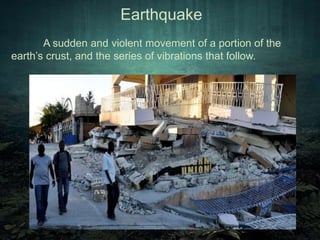
Earthquake 
A sudden and violent movement of a portion of the 
earth’s crust, and the series of vibrations that follow.
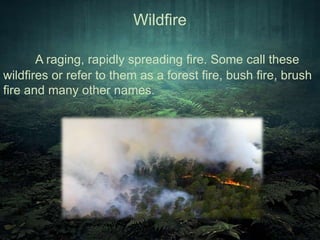
Wildfire 
A raging, rapidly spreading fire. Some call these 
wildfires or refer to them as a forest fire, bush fire, brush 
fire and many other names.
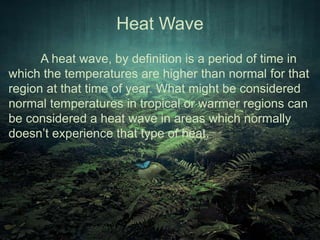
Heat Wave 
A heat wave, by definition is a period of time in 
which the temperatures are higher than normal for that 
region at that time of year. What might be considered 
normal temperatures in tropical or warmer regions can 
be considered a heat wave in areas which normally 
doesn’t experience that type of heat.
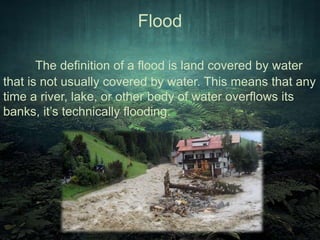
Flood 
The definition of a flood is land covered by water 
that is not usually covered by water. This means that any 
time a river, lake, or other body of water overflows its 
banks, it’s technically flooding.
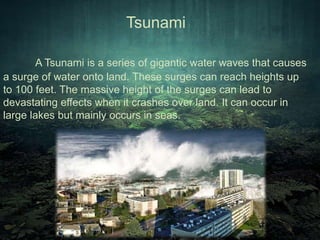
Tsunami 
A Tsunami is a series of gigantic water waves that causes 
a surge of water onto land. These surges can reach heights up 
to 100 feet. The massive height of the surges can lead to 
devastating effects when it crashes over land. It can occur in 
large lakes but mainly occurs in seas.
• In the event of natural and manmade disasters, 
a disaster response team is there to assist people with things like 
providing meals, clean-up, and rebuilding. 
• One of the most important ways to protect the value of your 
home is to be prepared in case of a major disaster such as a fire, 
flood, earthquake, tornado, or hurricane. 
• Develop political and individual behaviors in playing a 
significant role in recovery and prevention.

Natural disasters in Asia

  • 1.
  • 2.
    A natural disasteris an event with a natural, as opposed to human, cause that results in large-scale loss of life or damage to property. It could be related to weather, geology, biology or even factors outside the Earth. Examples are earthquakes, hurricanes, droughts and flooding.
  • 3.
    LIST OF NATURAL DISASTERS IN ASIA
  • 4.
    Hailstorm Hail isa variety of differently shaped ice balls or lumps. These are mostly referred to hailstones and in most occasions, are not harmful but in some instances, they can be very dangerous.
  • 6.
    Hurricane Hurricanes canbe described as giant, swirling storms. They are severe ‘tropical storms’ and are usually accompanied by treacherous thunderstorms. These monster storms can reach winds speeds up to 160 miles per hour. They can also unleash a whopping 2.4 trillion gallons of rain a day. Hurricanes occur in the Caribbean Sea, Eastern Pacific Ocean, Southern Atlantic Ocean and in the Gulf of Mexico.
  • 8.
    Landslide A landslideor landslips are a natural disaster, something which is unfortunately unavoidable. Landslides can vary in size but usually they always involve a large ground movement. This can be things such as debris and rock failing. A landslide can occur on shore or off shore and usually at coastal lines but it is the gravity that forces the debris and rocks to fall and for a total landslide to occur.
  • 10.
    Thunderstorm Thunderstorms aresome of the most frightening and powerful storms to hit the world. A thunderstorm can be known as a lightning storm, a thundershower or even an electrical storm. A thunderstorm is one of the most powerful storms to hit and it forms when the weather is turbulent.
  • 12.
    Tornado Tornadoes aredestructive columns of air that rotate and have contact between earth’s surface and a cumulonimbus cloud. In unusual cases, tornadoes can make contact with earth’s surface and cumulus clouds. Twisters or cyclones are other names for what is formally known as a tornado. Tornadoes tend to come in many different shapes and sizes, but most of the time they look like a condensation funnel, with a narrow end that touches earth’s surface and gets wider as it goes higher up.
  • 14.
    Volcanic Eruption Avolcanic eruption is one of the most dangerous and magnificent natural disasters. When a volcano erupts, the volcano sends out ash clouds, lava and even volcanic bombs. There is a high risk of danger from slow moving lava; though, the lava might move slowly, it is very dangerous and can cause a lot of damage to property and human life.
  • 16.
  • 17.
    Drought Droughts areone of the worst natural disasters to occur. A drought is a lengthy period of time, stretching months or even years in which time; land has a decrease in water supply. This can happen at any given time, even in winter time, however, for most droughts, they do occur during warmer or drier months. Droughts happen when surface or underground water is reduced greatly, and in particular, when rain doesn’t occur during long periods of time, it can do considerable damage.
  • 20.
    Earthquake A suddenand violent movement of a portion of the earth’s crust, and the series of vibrations that follow.
  • 22.
    Wildfire A raging,rapidly spreading fire. Some call these wildfires or refer to them as a forest fire, bush fire, brush fire and many other names.
  • 23.
    Heat Wave Aheat wave, by definition is a period of time in which the temperatures are higher than normal for that region at that time of year. What might be considered normal temperatures in tropical or warmer regions can be considered a heat wave in areas which normally doesn’t experience that type of heat.
  • 24.
    Flood The definitionof a flood is land covered by water that is not usually covered by water. This means that any time a river, lake, or other body of water overflows its banks, it’s technically flooding.
  • 25.
    Tsunami A Tsunamiis a series of gigantic water waves that causes a surge of water onto land. These surges can reach heights up to 100 feet. The massive height of the surges can lead to devastating effects when it crashes over land. It can occur in large lakes but mainly occurs in seas.
  • 37.
    • In theevent of natural and manmade disasters, a disaster response team is there to assist people with things like providing meals, clean-up, and rebuilding. • One of the most important ways to protect the value of your home is to be prepared in case of a major disaster such as a fire, flood, earthquake, tornado, or hurricane. • Develop political and individual behaviors in playing a significant role in recovery and prevention.