WRITTEN BY:
Alex Mitropoulos
George Soultojohn
Thanos Prokopakis
John Lebetlis
Vaggelis Nanos
Natural disasters are changes which are
so great they may cause damage to the
shape of the land or to the lives of people
and other living things.
Great changes happen deep inside the
Earth and on its surface. The changes on
the outer part of the Earth happen
because of different kinds of weather.
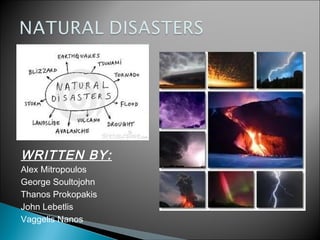
 Volcanic eruptions
 Earthquake

 Flood

 Avalanche

 Drought

 Forest fire

 Hurricane

 Lightning strike

 Tsunami
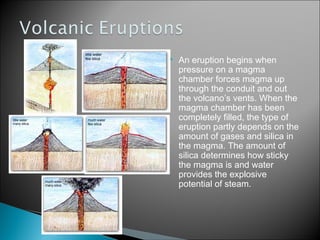
   An eruption begins when
    pressure on a magma
    chamber forces magma up
    through the conduit and out
    the volcano’s vents. When the
    magma chamber has been
    completely filled, the type of
    eruption partly depends on the
    amount of gases and silica in
    the magma. The amount of
    silica determines how sticky
    the magma is and water
    provides the explosive
    potential of steam.
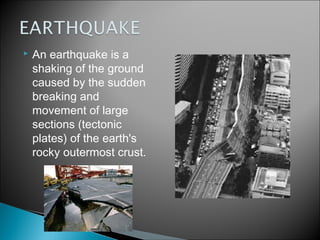
   An earthquake is a
    shaking of the ground
    caused by the sudden
    breaking and
    movement of large
    sections (tectonic
    plates) of the earth's
    rocky outermost crust.
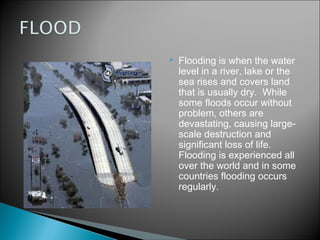
   Flooding is when the water
    level in a river, lake or the
    sea rises and covers land
    that is usually dry.  While
    some floods occur without
    problem, others are
    devastating, causing large-
    scale destruction and
    significant loss of life. 
    Flooding is experienced all
    over the world and in some
    countries flooding occurs
    regularly.
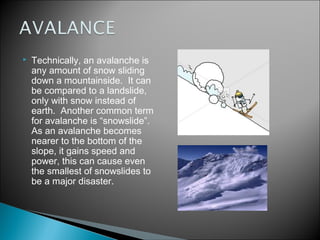
   Technically, an avalanche is
    any amount of snow sliding
    down a mountainside.  It can
    be compared to a landslide,
    only with snow instead of
    earth.  Another common term
    for avalanche is “snowslide”. 
    As an avalanche becomes
    nearer to the bottom of the
    slope, it gains speed and
    power, this can cause even
    the smallest of snowslides to
    be a major disaster.
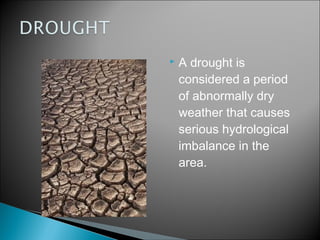
   A drought is
    considered a period
    of abnormally dry
    weather that causes
    serious hydrological
    imbalance in the
    area.
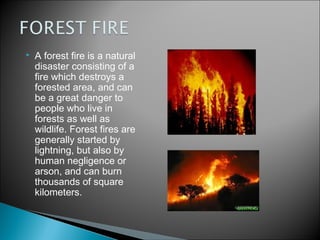
   A forest fire is a natural
    disaster consisting of a
    fire which destroys a
    forested area, and can
    be a great danger to
    people who live in
    forests as well as
    wildlife. Forest fires are
    generally started by
    lightning, but also by
    human negligence or
    arson, and can burn
    thousands of square
    kilometers.
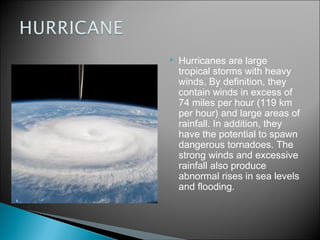
   Hurricanes are large
    tropical storms with heavy
    winds. By definition, they
    contain winds in excess of
    74 miles per hour (119 km
    per hour) and large areas of
    rainfall. In addition, they
    have the potential to spawn
    dangerous tornadoes. The
    strong winds and excessive
    rainfall also produce
    abnormal rises in sea levels
    and flooding.
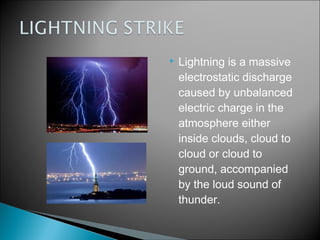
   Lightning is a massive
    electrostatic discharge
    caused by unbalanced
    electric charge in the
    atmosphere either
    inside clouds, cloud to
    cloud or cloud to
    ground, accompanied
    by the loud sound of
    thunder.
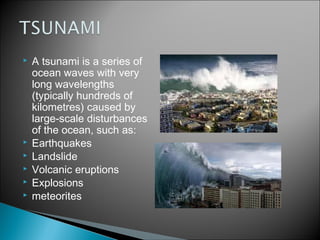
   A tsunami is a series of
    ocean waves with very
    long wavelengths
    (typically hundreds of
    kilometres) caused by
    large-scale disturbances
    of the ocean, such as:
   Earthquakes
   Landslide
   Volcanic eruptions
   Explosions
   meteorites
THE END
(THANK YOU FOR YOUR ATTENTION)

Natural disasters

  • 1.
    WRITTEN BY: Alex Mitropoulos GeorgeSoultojohn Thanos Prokopakis John Lebetlis Vaggelis Nanos
  • 2.
    Natural disasters arechanges which are so great they may cause damage to the shape of the land or to the lives of people and other living things. Great changes happen deep inside the Earth and on its surface. The changes on the outer part of the Earth happen because of different kinds of weather.
  • 3.
     Volcanic eruptions Earthquake  Flood  Avalanche  Drought  Forest fire  Hurricane  Lightning strike  Tsunami
  • 4.
    An eruption begins when pressure on a magma chamber forces magma up through the conduit and out the volcano’s vents. When the magma chamber has been completely filled, the type of eruption partly depends on the amount of gases and silica in the magma. The amount of silica determines how sticky the magma is and water provides the explosive potential of steam.
  • 5.
    An earthquake is a shaking of the ground caused by the sudden breaking and movement of large sections (tectonic plates) of the earth's rocky outermost crust.
  • 6.
    Flooding is when the water level in a river, lake or the sea rises and covers land that is usually dry.  While some floods occur without problem, others are devastating, causing large- scale destruction and significant loss of life.  Flooding is experienced all over the world and in some countries flooding occurs regularly.
  • 7.
    Technically, an avalanche is any amount of snow sliding down a mountainside.  It can be compared to a landslide, only with snow instead of earth.  Another common term for avalanche is “snowslide”.  As an avalanche becomes nearer to the bottom of the slope, it gains speed and power, this can cause even the smallest of snowslides to be a major disaster.
  • 8.
    A drought is considered a period of abnormally dry weather that causes serious hydrological imbalance in the area.
  • 9.
    A forest fire is a natural disaster consisting of a fire which destroys a forested area, and can be a great danger to people who live in forests as well as wildlife. Forest fires are generally started by lightning, but also by human negligence or arson, and can burn thousands of square kilometers.
  • 10.
    Hurricanes are large tropical storms with heavy winds. By definition, they contain winds in excess of 74 miles per hour (119 km per hour) and large areas of rainfall. In addition, they have the potential to spawn dangerous tornadoes. The strong winds and excessive rainfall also produce abnormal rises in sea levels and flooding.
  • 11.
    Lightning is a massive electrostatic discharge caused by unbalanced electric charge in the atmosphere either inside clouds, cloud to cloud or cloud to ground, accompanied by the loud sound of thunder.
  • 12.
    A tsunami is a series of ocean waves with very long wavelengths (typically hundreds of kilometres) caused by large-scale disturbances of the ocean, such as:  Earthquakes  Landslide  Volcanic eruptions  Explosions  meteorites
  • 13.
    THE END (THANK YOUFOR YOUR ATTENTION)