Adv. Geosci., 17, 5–11, 2008
www.adv-geosci.net/17/5/2008/                                                                          Advances in
© Author(s) 2008. This work is distributed under                                                       Geosciences
the Creative Commons Attribution 3.0 License.


Atmospheric circulation patterns associated with extreme
precipitation amounts in Greece
E. E. Houssos, C. J. Lolis, and A. Bartzokas
Laboratory of Meteorology, Department of Physics, University of Ioannina, 45110 Ioannina, Greece
Received: 31 December 2007 – Revised: 21 March 2008 – Accepted: 15 May 2008 – Published: 20 June 2008


Abstract. The main synoptic conditions associated with ex-       ditions favor extreme precipitation amounts mainly at one or
treme precipitation amounts in Greece are examined by using      two of the three stations while some others equally affect the
a multivariate statistical methodology comprising S-mode         three stations.
Factor Analysis and k-means Cluster Analysis. The follow-
ing data were used : i) daily precipitation amounts (mea-
sured at 06:00 UTC) for the meteorological stations of Hel-      1   Introduction
lenikon (Athens), Thessaloniki (northern Greece) and Ioan-
nina (western Greece) and ii) daily (18:00 UTC) 2.5×2.5          Over the past few years, extensive research has been carried
grid point values of 500 hPa geopotential height, mean sea-      out on extreme precipitation events (see e.g. Gellens, 2000;
level pressure and 1000–500 hPa thickness at 273 grid points     Kunkel, 2003; Xoplaki et al., 2004; Cislaghi et al., 2005;
over Europe (10 W to 40 E and 30 N to 60 N), for the period      Houssos et al., 2006). Research studies involving trends, ex-
1970–2002.                                                       tremes and variations of the precipitation regime over Eu-
   The dates corresponding to the upper 5% of the frequency      rope and the Mediterranean are of great significance, as pre-
distribution of precipitation are selected for each one of the   cipitation may cause serious problems for the everyday hu-
three stations. In total, 369 dates are used, some of them       man activities (e.g. transportations and communications) and
being common among the three stations. The correspond-           may be responsible for severe damages in urban as well as
ing 369×273 data matrices of 500 hPa geopotential height,        in rural areas. Extreme precipitation events have been stud-
mean sea-level pressure and 1000–500 hPa thickness are con-      ied by using several different methodologies. For example,
structed. The rows refer to the 369 extreme precipitation        the numerical modeling and statistical analysis are two main
cases and the columns refer to the 273 grid points. The          approaches that have been widely used (see e.g. Metaxas et
three matrices are unified into one 369×819 matrix. In order      al.,1993; Romero et al., 1998; Jansa et al., 2000, 2001; Kutiel
to reduce the dimensionality of the data set, S-mode Factor      et al., 2001; Kostopoulou and Jones, 2005; Tolika and Ma-
Analysis is applied to the unified matrix, revealing 7 factors    heras, 2005). In the present study, the extreme precipitation
accounting for 85% of the total variance. Finally, k-means       amounts measured at three meteorological stations in Greece
Cluster Analysis is applied to the factor scores matrix, clas-   and their relation with atmospheric circulation are examined,
sifying the 369 cases into 9 clusters.                           by using a multivariate statistical methodology scheme, in-
   For each one of the 9 clusters, the mean 18:00 UTC pat-       cluding Factor Analysis and Cluster Analysis.
terns of the above parameters are constructed and presented.
These patterns correspond to the main distinct atmospheric
                                                                 2   Data and methodology
circulation structures favoring extreme precipitation amounts
in Greece. Most of the patterns are characterized by en-         Daily precipitation amounts, measured at 06:00 UTC, at the
hanced cyclonic activity over or near the Greek area. The        meteorological stations of Hellenikon (Athens), Thessaloniki
differences among the 9 circulation structures refer mainly      (northern Greece) and Ioannina (western Greece) and daily
to the position and the intensity of the surface and the upper   (18:00 UTC) 2.5×2.5 grid point values of 500 hPa geopoten-
air synoptic systems involved. Some of the 9 synoptic con-       tial height, mean sea-level pressure and 1000–500 hPa thick-
                                                                 ness at 273 grid points over Europe and the Mediterranean
                                                                 region (10 W to 40 E and 30 N to 60 N), were analyzed for
                    Correspondence to: A. Bartzokas              the period 1970–2002. The precipitation data set was pro-
                    (abartzok@uoi.gr)                            vided by the Hellenic National Meteorological Service and

Published by Copernicus Publications on behalf of the European Geosciences Union.
6                                                                            E. E. Houssos et al.: Extreme precipitation in Greece


Table 1. The number of extreme precipitation cases and the corre-
sponding thresholds.

    Station            Cases   5% Threshold (mm)   Percentage
    Thessaloniki       110     20.0                29.8%
    Athens             84      24.7                22.7%
    Ioannina           151     34.2                40.9%
    Ath.-Ioan.         2                           0.6%
    Thes.-Ath.         9                           2.4%
    Thes.-Ioan.        11                          3.0%
    Thes.-Ath.-Ioan.   2                           0.6%
    Total              369                         100.0%


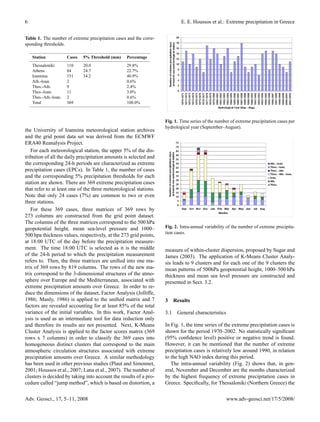
                                                                    Fig. 1. Time series of the number of extreme precipitation cases per
                                                                    hydrological year (September–August).
the University of Ioannina meteorological station archives
and the grid point data set was derived from the ECMWF
ERA40 Reanalysis Project.
   For each meteorological station, the upper 5% of the dis-
tribution of all the daily precipitation amounts is selected and
the corresponding 24-h periods are characterized as extreme
precipitation cases (EPCs). In Table 1, the number of cases
and the corresponding 5% precipitation thresholds for each
station are shown. There are 369 extreme precipitation cases
that refer to at least one of the three meteorological stations.
Note that only 24 cases (7%) are common to two or even
three stations.
   For these 369 cases, three matrices of 369 rows by
273 columns are constructed from the grid point dataset.
The columns of the three matrices correspond to the 500 hPa
geopotential height, mean sea-level pressure and 1000–              Fig. 2. Intra-annual variability of the number of extreme precipita-
                                                                    tion cases.
500 hpa thickness values, respectively, at the 273 grid points,
at 18:00 UTC of the day before the precipitation measure-
ment. The time 18:00 UTC is selected as it is the middle            measure of within-cluster dispersion, proposed by Sugar and
of the 24-h period to which the precipitation measurement           James (2003). The application of K-Means Cluster Analy-
refers to. Then, the three matrices are unified into one ma-         sis leads to 9 clusters and for each one of the 9 clusters the
trix of 369 rows by 819 columns. The rows of the new ma-            mean patterns of 500hPa geopotential height, 1000–500 hPa
trix correspond to the 3-dimensional structures of the atmo-        thickness and mean sea level pressure are constructed and
sphere over Europe and the Mediterranean, associated with           presented in Sect. 3.2.
extreme precipitation amounts over Greece. In order to re-
duce the dimensions of the dataset, Factor Analysis (Jolliffe,
1986; Manly, 1986) is applied to the unified matrix and 7            3     Results
factors are revealed accounting for at least 85% of the total
variance of the initial variables. In this work, Factor Anal-       3.1    General characteristics
ysis is used as an intermediate tool for data reduction only
and therefore its results are not presented. Next, K-Means          In Fig. 1, the time series of the extreme precipitation cases is
Cluster Analysis is applied to the factor scores matrix (369        shown for the period 1970–2002. No statistically significant
rows x 7 columns) in order to classify the 369 cases into           (95% confidence level) positive or negative trend is found.
homogeneous distinct clusters that correspond to the main           However, it can be mentioned that the number of extreme
atmospheric circulation structures associated with extreme          precipitation cases is relatively low around 1990, in relation
precipitation amounts over Greece. A similar methodology            to the high NAO index during this period.
has been used in other previous studies (Plaut and Simonnet,           The intra-annual variability (Fig. 2) shows that, in gen-
2001; Houssos et al., 2007; Lana et al., 2007). The number of       eral, November and December are the months characterized
clusters is decided by taking into account the results of a pro-    by the highest frequency of extreme precipitation cases in
cedure called “jump method”, which is based on distortion, a        Greece. Specifically, for Thessaloniki (Northern Greece) the

Adv. Geosci., 17, 5–11, 2008                                                                         www.adv-geosci.net/17/5/2008/
E. E. Houssos et al.: Extreme precipitation in Greece                                                                                  7


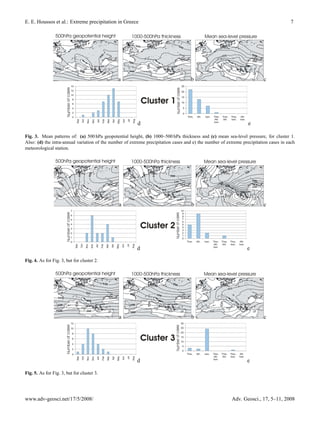
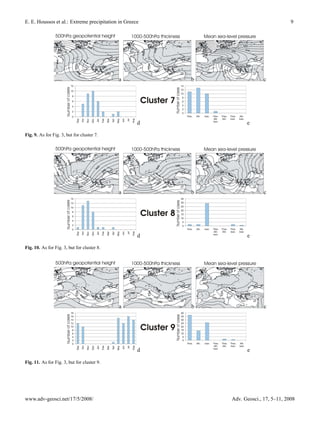
Fig. 3. Mean patterns of: (a) 500 hPa geopotential height, (b) 1000–500 hPa thickness and (c) mean sea-level pressure, for cluster 1.
Also: (d) the intra-annual variation of the number of extreme precipitation cases and e) the number of extreme precipitation cases in each
meteorological station.


Fig. 4. As for Fig. 3, but for cluster 2.


Fig. 5. As for Fig. 3, but for cluster 3.


www.adv-geosci.net/17/5/2008/                                                                            Adv. Geosci., 17, 5–11, 2008
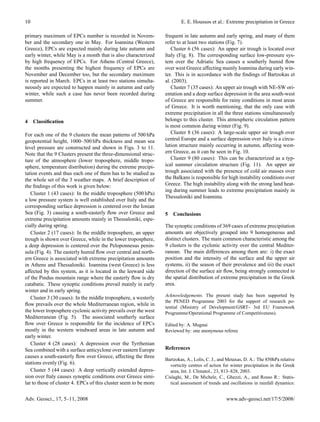
8                                           E. E. Houssos et al.: Extreme precipitation in Greece


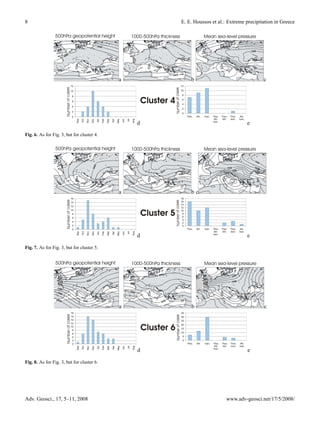
Fig. 6. As for Fig. 3, but for cluster 4.


Fig. 7. As for Fig. 3, but for cluster 5.


Fig. 8. As for Fig. 3, but for cluster 6.


Adv. Geosci., 17, 5–11, 2008                                     www.adv-geosci.net/17/5/2008/
E. E. Houssos et al.: Extreme precipitation in Greece                             9


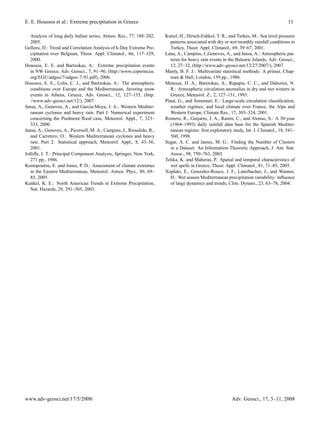
Fig. 9. As for Fig. 3, but for cluster 7.


Fig. 10. As for Fig. 3, but for cluster 8.


Fig. 11. As for Fig. 3, but for cluster 9.


www.adv-geosci.net/17/5/2008/                           Adv. Geosci., 17, 5–11, 2008
10                                                                        E. E. Houssos et al.: Extreme precipitation in Greece

primary maximum of EPCs number is recorded in Novem-              frequent in late autumn and early spring, and many of them
ber and the secondary one in May. For Ioannina (Western           refer to at least two stations (Fig. 7).
Greece), EPCs are expected mainly during late autumn and             Cluster 6 (56 cases): An upper air trough is located over
early winter, while May is a month that is also characterized     Italy (Fig. 8). The corresponding surface low-pressure sys-
by high frequency of EPCs. For Athens (Central Greece),           tem over the Adriatic Sea causes a southerly humid flow
the months presenting the highest frequency of EPCs are           over west Greece affecting mainly Ioannina during early win-
November and December too, but the secondary maximum              ter. This is in accordance with the findings of Bartzokas et
is reported in March. EPCs in at least two stations simulta-      al. (2003).
neously are expected to happen mainly in autumn and early            Cluster 7 (35 cases): An upper air trough with NE-SW ori-
winter, while such a case has never been recorded during          entation and a deep surface depression in the area south-west
summer.                                                           of Greece are responsible for rainy conditions in most areas
                                                                  of Greece. It is worth mentioning, that the only case with
                                                                  extreme precipitation in all the three stations simultaneously
4    Classification                                                belongs to this cluster. This atmospheric circulation pattern
                                                                  is most common during winter (Fig. 9).
For each one of the 9 clusters the mean patterns of 500 hPa          Cluster 8 (36 cases): A large-scale upper air trough over
geopotential height, 1000–500 hPa thickness and mean sea          central Europe and a surface depression over Italy is a circu-
level pressure are constructed and shown in Figs. 3 to 11.        lation structure mainly occurring in autumn, affecting west-
Note that the 9 Clusters present the three-dimensional struc-     ern Greece, as it can be seen in Fig. 10.
ture of the atmosphere (lower troposphere, middle tropo-             Cluster 9 (80 cases): This can be characterized as a typ-
sphere, temperature distribution) during the extreme precipi-     ical summer circulation structure (Fig. 11). An upper air
tation events and thus each one of them has to be studied as      trough associated with the presence of cold air masses over
the whole set of the 3 weather maps. A brief description of       the Balkans is responsible for high instability conditions over
the findings of this work is given below:                          Greece. The high instability along with the strong land heat-
                                                                  ing during summer leads to extreme precipitation mainly in
   Cluster 1 (43 cases): In the middle troposphere (500 hPa)
                                                                  Thessaloniki and Ioannina.
a low pressure system is well established over Italy and the
corresponding surface depression is centered over the Ionian
Sea (Fig. 3) causing a south-easterly flow over Greece and         5   Conclusions
extreme precipitation amounts mainly in Thessaloniki, espe-
cially during spring.                                             The synoptic conditions of 369 cases of extreme precipitation
   Cluster 2 (17 cases): In the middle troposphere, an upper      amounts are objectively grouped into 9 homogeneous and
trough is shown over Greece, while in the lower troposphere,      distinct clusters. The main common characteristic among the
a deep depression is centered over the Peloponnesus penin-        9 clusters is the cyclonic activity over the central Mediter-
sula (Fig. 4). The easterly humid flow over central and north-     ranean. The main differences among them are: i) the exact
ern Greece is associated with extreme precipitation amounts       position and the intensity of the surface and the upper air
in Athens and Thessaloniki. Ioannina (west Greece) is less        systems, ii) the season of their prevalence and iii) the exact
affected by this system, as it is located in the leeward side     direction of the surface air flow, being strongly connected to
of the Pindus mountain range where the easterly flow is dry        the spatial distribution of extreme precipitation in the Greek
catabatic. These synoptic conditions prevail mainly in early      area.
winter and in early spring.
                                                                  Acknowledgements. The present study has been supported by
   Cluster 3 (30 cases): In the middle troposphere, a westerly
                                                                  the PENED Programme 2003 for the support of research po-
flow prevails over the whole Mediterranean region, while in
                                                                  tential (Ministry of Development/GSRT– 3rd EU Framework
the lower troposphere cyclonic activity prevails over the west    Programme/Operational Programme of Competitiveness).
Mediterranean (Fig. 5). The associated southerly surface
flow over Greece is responsible for the incidence of EPCs          Edited by: A. Mugnai
mostly in the western windward areas in late autumn and           Reviewed by: one anonymous referee
early winter.
   Cluster 4 (28 cases): A depression over the Tyrrhenian
Sea combined with a surface anticyclone over eastern Europe       References
causes a south-easterly flow over Greece, affecting the three
                                                                  Bartzokas, A., Lolis, C. J., and Metaxas, D. A.: The 850hPa relative
stations evenly (Fig. 6).                                           vorticity centres of action for winter precipitation in the Greek
   Cluster 5 (44 cases): A deep vertically extended depres-         area, Int. J. Climatol., 23, 813–828, 2003.
sion over Italy causes synoptic conditions over Greece simi-      Cislaghi, M., De Michele, C., Ghezzi, A., and Rosso R.: Statis-
lar to those of cluster 4. EPCs of this cluster seem to be more     tical assessment of trends and oscillations in rainfall dynamics:


Adv. Geosci., 17, 5–11, 2008                                                                      www.adv-geosci.net/17/5/2008/
E. E. Houssos et al.: Extreme precipitation in Greece                                                                                     11

   Analysis of long daily Italian series, Atmos. Res., 77, 188–202,     Kutiel, H., Hirsch-Eshkol, T. R., and Turkes, M.: Sea level pressure
   2005.                                                                   patterns associated with dry or wet monthly rainfall conditions in
Gellens, D.: Trend and Correlation Analysis of k-Day Extreme Pre-          Turkey, Theor. Appl. Climatol., 69, 39–67, 2001.
   cipitation over Belgium, Theor. Appl. Climatol., 66, 117–129,        Lana, A., Campins, J.,Genoves, A., and Jansa, A.: Atmospheric pat-
   2000.                                                                   terns for heavy rain events in the Balearic Islands, Adv. Geosci.,
Houssos, E. E. and Bartzokas, A.: Extreme precipitation events             12, 27–32, (http://www.adv-geosci.net/12/27/2007/), 2007.
   in NW Greece, Adv. Geosci., 7, 91–96, (http://www.copernicus.        Manly, B. F. J.: Multivariate statistical methods: A primer, Chap-
   org/EGU/adgeo/7/adgeo-7-91.pdf), 2006.                                  man & Hall, London, 159 pp., 1986.
Houssos, E. E., Lolis, C. J., and Bartzokas, A.: The atmospheric        Metaxas, D. A., Bartzokas, A., Repapis, C. C., and Dalezios, N.
   conditions over Europe and the Mediterranean, favoring snow             R.: Atmospheric circulation anomalies in dry and wet winters in
   events in Athens, Greece, Adv. Geosci., 12, 127–135, (http:             Greece, Meteorol. Z., 2, 127–131, 1993.
   //www.adv-geosci.net/12/), 2007.                                     Plaut, G., and Simonnet, E.: Large-scale circulation classification,
Jansa, A., Genoves, A., and Garcia-Moya, J. A.: Western Mediter-           weather regimes, and local climate over France, the Alps and
   ranean cyclones and heavy rain. Part I: Numerical experiment            Western Europe, Climate Res., 17, 303–324, 2001.
   concerning the Piedmont flood case, Meteorol. Appl., 7, 323–          Romero, R., Guijarro, J. A., Ramis, C., and Alonso, S.: A 30-year
   333, 2000.                                                              (1964–1993) daily rainfall data base for the Spanish Mediter-
Jansa, A., Genoves, A., Picornell, M. A., Campins, J., Riosalido, R.,      ranean regions: first exploratory study, Int. J. Climatol., 18, 541–
   and Carretero, O.: Western Mediterranean cyclones and heavy             560, 1998.
   rain. Part 2: Statistical approach, Meteorol. Appl., 8, 43–56,       Sugar, A. C. and James, M. G.: Finding the Number of Clusters
   2001.                                                                   in a Dataset: An Information-Theoretic Approach, J. Am. Stat.
Jolliffe, I. T.: Principal Component Analysis, Springer, New York,         Assoc., 98, 750–763, 2003.
   271 pp., 1986.                                                       Tolika, K. and Maheras, P.: Spatial and temporal characteristics of
Kostopoulou, E. and Jones, P. D.: Assessment of climate extremes           wet spells in Greece, Theor. Appl. Climatol., 81, 71–85, 2005.
   in the Eastern Mediterranean, Meteorol. Atmos. Phys., 89, 69–        Xoplaki, E., Gonzalez-Rouco, J. F., Luterbacher, J., and Wanner,
   85, 2005.                                                               H.: Wet season Mediterranean precipitation variability: influence
Kunkel, K. E.: North American Trends in Extreme Precipitation,             of large dynamics and trends, Clim. Dynam., 23, 63–78, 2004.
   Nat. Hazards, 29, 291–305, 2003.


www.adv-geosci.net/17/5/2008/                                                                               Adv. Geosci., 17, 5–11, 2008

Extreme Precipitation in Greece

  • 1.
    Adv. Geosci., 17,5–11, 2008 www.adv-geosci.net/17/5/2008/ Advances in © Author(s) 2008. This work is distributed under Geosciences the Creative Commons Attribution 3.0 License. Atmospheric circulation patterns associated with extreme precipitation amounts in Greece E. E. Houssos, C. J. Lolis, and A. Bartzokas Laboratory of Meteorology, Department of Physics, University of Ioannina, 45110 Ioannina, Greece Received: 31 December 2007 – Revised: 21 March 2008 – Accepted: 15 May 2008 – Published: 20 June 2008 Abstract. The main synoptic conditions associated with ex- ditions favor extreme precipitation amounts mainly at one or treme precipitation amounts in Greece are examined by using two of the three stations while some others equally affect the a multivariate statistical methodology comprising S-mode three stations. Factor Analysis and k-means Cluster Analysis. The follow- ing data were used : i) daily precipitation amounts (mea- sured at 06:00 UTC) for the meteorological stations of Hel- 1 Introduction lenikon (Athens), Thessaloniki (northern Greece) and Ioan- nina (western Greece) and ii) daily (18:00 UTC) 2.5×2.5 Over the past few years, extensive research has been carried grid point values of 500 hPa geopotential height, mean sea- out on extreme precipitation events (see e.g. Gellens, 2000; level pressure and 1000–500 hPa thickness at 273 grid points Kunkel, 2003; Xoplaki et al., 2004; Cislaghi et al., 2005; over Europe (10 W to 40 E and 30 N to 60 N), for the period Houssos et al., 2006). Research studies involving trends, ex- 1970–2002. tremes and variations of the precipitation regime over Eu- The dates corresponding to the upper 5% of the frequency rope and the Mediterranean are of great significance, as pre- distribution of precipitation are selected for each one of the cipitation may cause serious problems for the everyday hu- three stations. In total, 369 dates are used, some of them man activities (e.g. transportations and communications) and being common among the three stations. The correspond- may be responsible for severe damages in urban as well as ing 369×273 data matrices of 500 hPa geopotential height, in rural areas. Extreme precipitation events have been stud- mean sea-level pressure and 1000–500 hPa thickness are con- ied by using several different methodologies. For example, structed. The rows refer to the 369 extreme precipitation the numerical modeling and statistical analysis are two main cases and the columns refer to the 273 grid points. The approaches that have been widely used (see e.g. Metaxas et three matrices are unified into one 369×819 matrix. In order al.,1993; Romero et al., 1998; Jansa et al., 2000, 2001; Kutiel to reduce the dimensionality of the data set, S-mode Factor et al., 2001; Kostopoulou and Jones, 2005; Tolika and Ma- Analysis is applied to the unified matrix, revealing 7 factors heras, 2005). In the present study, the extreme precipitation accounting for 85% of the total variance. Finally, k-means amounts measured at three meteorological stations in Greece Cluster Analysis is applied to the factor scores matrix, clas- and their relation with atmospheric circulation are examined, sifying the 369 cases into 9 clusters. by using a multivariate statistical methodology scheme, in- For each one of the 9 clusters, the mean 18:00 UTC pat- cluding Factor Analysis and Cluster Analysis. terns of the above parameters are constructed and presented. These patterns correspond to the main distinct atmospheric 2 Data and methodology circulation structures favoring extreme precipitation amounts in Greece. Most of the patterns are characterized by en- Daily precipitation amounts, measured at 06:00 UTC, at the hanced cyclonic activity over or near the Greek area. The meteorological stations of Hellenikon (Athens), Thessaloniki differences among the 9 circulation structures refer mainly (northern Greece) and Ioannina (western Greece) and daily to the position and the intensity of the surface and the upper (18:00 UTC) 2.5×2.5 grid point values of 500 hPa geopoten- air synoptic systems involved. Some of the 9 synoptic con- tial height, mean sea-level pressure and 1000–500 hPa thick- ness at 273 grid points over Europe and the Mediterranean region (10 W to 40 E and 30 N to 60 N), were analyzed for Correspondence to: A. Bartzokas the period 1970–2002. The precipitation data set was pro- (abartzok@uoi.gr) vided by the Hellenic National Meteorological Service and Published by Copernicus Publications on behalf of the European Geosciences Union.
  • 2.
    6 E. E. Houssos et al.: Extreme precipitation in Greece Table 1. The number of extreme precipitation cases and the corre- sponding thresholds. Station Cases 5% Threshold (mm) Percentage Thessaloniki 110 20.0 29.8% Athens 84 24.7 22.7% Ioannina 151 34.2 40.9% Ath.-Ioan. 2 0.6% Thes.-Ath. 9 2.4% Thes.-Ioan. 11 3.0% Thes.-Ath.-Ioan. 2 0.6% Total 369 100.0% Fig. 1. Time series of the number of extreme precipitation cases per hydrological year (September–August). the University of Ioannina meteorological station archives and the grid point data set was derived from the ECMWF ERA40 Reanalysis Project. For each meteorological station, the upper 5% of the dis- tribution of all the daily precipitation amounts is selected and the corresponding 24-h periods are characterized as extreme precipitation cases (EPCs). In Table 1, the number of cases and the corresponding 5% precipitation thresholds for each station are shown. There are 369 extreme precipitation cases that refer to at least one of the three meteorological stations. Note that only 24 cases (7%) are common to two or even three stations. For these 369 cases, three matrices of 369 rows by 273 columns are constructed from the grid point dataset. The columns of the three matrices correspond to the 500 hPa geopotential height, mean sea-level pressure and 1000– Fig. 2. Intra-annual variability of the number of extreme precipita- tion cases. 500 hpa thickness values, respectively, at the 273 grid points, at 18:00 UTC of the day before the precipitation measure- ment. The time 18:00 UTC is selected as it is the middle measure of within-cluster dispersion, proposed by Sugar and of the 24-h period to which the precipitation measurement James (2003). The application of K-Means Cluster Analy- refers to. Then, the three matrices are unified into one ma- sis leads to 9 clusters and for each one of the 9 clusters the trix of 369 rows by 819 columns. The rows of the new ma- mean patterns of 500hPa geopotential height, 1000–500 hPa trix correspond to the 3-dimensional structures of the atmo- thickness and mean sea level pressure are constructed and sphere over Europe and the Mediterranean, associated with presented in Sect. 3.2. extreme precipitation amounts over Greece. In order to re- duce the dimensions of the dataset, Factor Analysis (Jolliffe, 1986; Manly, 1986) is applied to the unified matrix and 7 3 Results factors are revealed accounting for at least 85% of the total variance of the initial variables. In this work, Factor Anal- 3.1 General characteristics ysis is used as an intermediate tool for data reduction only and therefore its results are not presented. Next, K-Means In Fig. 1, the time series of the extreme precipitation cases is Cluster Analysis is applied to the factor scores matrix (369 shown for the period 1970–2002. No statistically significant rows x 7 columns) in order to classify the 369 cases into (95% confidence level) positive or negative trend is found. homogeneous distinct clusters that correspond to the main However, it can be mentioned that the number of extreme atmospheric circulation structures associated with extreme precipitation cases is relatively low around 1990, in relation precipitation amounts over Greece. A similar methodology to the high NAO index during this period. has been used in other previous studies (Plaut and Simonnet, The intra-annual variability (Fig. 2) shows that, in gen- 2001; Houssos et al., 2007; Lana et al., 2007). The number of eral, November and December are the months characterized clusters is decided by taking into account the results of a pro- by the highest frequency of extreme precipitation cases in cedure called “jump method”, which is based on distortion, a Greece. Specifically, for Thessaloniki (Northern Greece) the Adv. Geosci., 17, 5–11, 2008 www.adv-geosci.net/17/5/2008/
  • 3.
    E. E. Houssoset al.: Extreme precipitation in Greece 7 Fig. 3. Mean patterns of: (a) 500 hPa geopotential height, (b) 1000–500 hPa thickness and (c) mean sea-level pressure, for cluster 1. Also: (d) the intra-annual variation of the number of extreme precipitation cases and e) the number of extreme precipitation cases in each meteorological station. Fig. 4. As for Fig. 3, but for cluster 2. Fig. 5. As for Fig. 3, but for cluster 3. www.adv-geosci.net/17/5/2008/ Adv. Geosci., 17, 5–11, 2008
  • 4.
    8 E. E. Houssos et al.: Extreme precipitation in Greece Fig. 6. As for Fig. 3, but for cluster 4. Fig. 7. As for Fig. 3, but for cluster 5. Fig. 8. As for Fig. 3, but for cluster 6. Adv. Geosci., 17, 5–11, 2008 www.adv-geosci.net/17/5/2008/
  • 5.
    E. E. Houssoset al.: Extreme precipitation in Greece 9 Fig. 9. As for Fig. 3, but for cluster 7. Fig. 10. As for Fig. 3, but for cluster 8. Fig. 11. As for Fig. 3, but for cluster 9. www.adv-geosci.net/17/5/2008/ Adv. Geosci., 17, 5–11, 2008
  • 6.
    10 E. E. Houssos et al.: Extreme precipitation in Greece primary maximum of EPCs number is recorded in Novem- frequent in late autumn and early spring, and many of them ber and the secondary one in May. For Ioannina (Western refer to at least two stations (Fig. 7). Greece), EPCs are expected mainly during late autumn and Cluster 6 (56 cases): An upper air trough is located over early winter, while May is a month that is also characterized Italy (Fig. 8). The corresponding surface low-pressure sys- by high frequency of EPCs. For Athens (Central Greece), tem over the Adriatic Sea causes a southerly humid flow the months presenting the highest frequency of EPCs are over west Greece affecting mainly Ioannina during early win- November and December too, but the secondary maximum ter. This is in accordance with the findings of Bartzokas et is reported in March. EPCs in at least two stations simulta- al. (2003). neously are expected to happen mainly in autumn and early Cluster 7 (35 cases): An upper air trough with NE-SW ori- winter, while such a case has never been recorded during entation and a deep surface depression in the area south-west summer. of Greece are responsible for rainy conditions in most areas of Greece. It is worth mentioning, that the only case with extreme precipitation in all the three stations simultaneously 4 Classification belongs to this cluster. This atmospheric circulation pattern is most common during winter (Fig. 9). For each one of the 9 clusters the mean patterns of 500 hPa Cluster 8 (36 cases): A large-scale upper air trough over geopotential height, 1000–500 hPa thickness and mean sea central Europe and a surface depression over Italy is a circu- level pressure are constructed and shown in Figs. 3 to 11. lation structure mainly occurring in autumn, affecting west- Note that the 9 Clusters present the three-dimensional struc- ern Greece, as it can be seen in Fig. 10. ture of the atmosphere (lower troposphere, middle tropo- Cluster 9 (80 cases): This can be characterized as a typ- sphere, temperature distribution) during the extreme precipi- ical summer circulation structure (Fig. 11). An upper air tation events and thus each one of them has to be studied as trough associated with the presence of cold air masses over the whole set of the 3 weather maps. A brief description of the Balkans is responsible for high instability conditions over the findings of this work is given below: Greece. The high instability along with the strong land heat- ing during summer leads to extreme precipitation mainly in Cluster 1 (43 cases): In the middle troposphere (500 hPa) Thessaloniki and Ioannina. a low pressure system is well established over Italy and the corresponding surface depression is centered over the Ionian Sea (Fig. 3) causing a south-easterly flow over Greece and 5 Conclusions extreme precipitation amounts mainly in Thessaloniki, espe- cially during spring. The synoptic conditions of 369 cases of extreme precipitation Cluster 2 (17 cases): In the middle troposphere, an upper amounts are objectively grouped into 9 homogeneous and trough is shown over Greece, while in the lower troposphere, distinct clusters. The main common characteristic among the a deep depression is centered over the Peloponnesus penin- 9 clusters is the cyclonic activity over the central Mediter- sula (Fig. 4). The easterly humid flow over central and north- ranean. The main differences among them are: i) the exact ern Greece is associated with extreme precipitation amounts position and the intensity of the surface and the upper air in Athens and Thessaloniki. Ioannina (west Greece) is less systems, ii) the season of their prevalence and iii) the exact affected by this system, as it is located in the leeward side direction of the surface air flow, being strongly connected to of the Pindus mountain range where the easterly flow is dry the spatial distribution of extreme precipitation in the Greek catabatic. These synoptic conditions prevail mainly in early area. winter and in early spring. Acknowledgements. The present study has been supported by Cluster 3 (30 cases): In the middle troposphere, a westerly the PENED Programme 2003 for the support of research po- flow prevails over the whole Mediterranean region, while in tential (Ministry of Development/GSRT– 3rd EU Framework the lower troposphere cyclonic activity prevails over the west Programme/Operational Programme of Competitiveness). Mediterranean (Fig. 5). The associated southerly surface flow over Greece is responsible for the incidence of EPCs Edited by: A. Mugnai mostly in the western windward areas in late autumn and Reviewed by: one anonymous referee early winter. Cluster 4 (28 cases): A depression over the Tyrrhenian Sea combined with a surface anticyclone over eastern Europe References causes a south-easterly flow over Greece, affecting the three Bartzokas, A., Lolis, C. J., and Metaxas, D. A.: The 850hPa relative stations evenly (Fig. 6). vorticity centres of action for winter precipitation in the Greek Cluster 5 (44 cases): A deep vertically extended depres- area, Int. J. Climatol., 23, 813–828, 2003. sion over Italy causes synoptic conditions over Greece simi- Cislaghi, M., De Michele, C., Ghezzi, A., and Rosso R.: Statis- lar to those of cluster 4. EPCs of this cluster seem to be more tical assessment of trends and oscillations in rainfall dynamics: Adv. Geosci., 17, 5–11, 2008 www.adv-geosci.net/17/5/2008/
  • 7.
    E. E. Houssoset al.: Extreme precipitation in Greece 11 Analysis of long daily Italian series, Atmos. Res., 77, 188–202, Kutiel, H., Hirsch-Eshkol, T. R., and Turkes, M.: Sea level pressure 2005. patterns associated with dry or wet monthly rainfall conditions in Gellens, D.: Trend and Correlation Analysis of k-Day Extreme Pre- Turkey, Theor. Appl. Climatol., 69, 39–67, 2001. cipitation over Belgium, Theor. Appl. Climatol., 66, 117–129, Lana, A., Campins, J.,Genoves, A., and Jansa, A.: Atmospheric pat- 2000. terns for heavy rain events in the Balearic Islands, Adv. Geosci., Houssos, E. E. and Bartzokas, A.: Extreme precipitation events 12, 27–32, (http://www.adv-geosci.net/12/27/2007/), 2007. in NW Greece, Adv. Geosci., 7, 91–96, (http://www.copernicus. Manly, B. F. J.: Multivariate statistical methods: A primer, Chap- org/EGU/adgeo/7/adgeo-7-91.pdf), 2006. man & Hall, London, 159 pp., 1986. Houssos, E. E., Lolis, C. J., and Bartzokas, A.: The atmospheric Metaxas, D. A., Bartzokas, A., Repapis, C. C., and Dalezios, N. conditions over Europe and the Mediterranean, favoring snow R.: Atmospheric circulation anomalies in dry and wet winters in events in Athens, Greece, Adv. Geosci., 12, 127–135, (http: Greece, Meteorol. Z., 2, 127–131, 1993. //www.adv-geosci.net/12/), 2007. Plaut, G., and Simonnet, E.: Large-scale circulation classification, Jansa, A., Genoves, A., and Garcia-Moya, J. A.: Western Mediter- weather regimes, and local climate over France, the Alps and ranean cyclones and heavy rain. Part I: Numerical experiment Western Europe, Climate Res., 17, 303–324, 2001. concerning the Piedmont flood case, Meteorol. Appl., 7, 323– Romero, R., Guijarro, J. A., Ramis, C., and Alonso, S.: A 30-year 333, 2000. (1964–1993) daily rainfall data base for the Spanish Mediter- Jansa, A., Genoves, A., Picornell, M. A., Campins, J., Riosalido, R., ranean regions: first exploratory study, Int. J. Climatol., 18, 541– and Carretero, O.: Western Mediterranean cyclones and heavy 560, 1998. rain. Part 2: Statistical approach, Meteorol. Appl., 8, 43–56, Sugar, A. C. and James, M. G.: Finding the Number of Clusters 2001. in a Dataset: An Information-Theoretic Approach, J. Am. Stat. Jolliffe, I. T.: Principal Component Analysis, Springer, New York, Assoc., 98, 750–763, 2003. 271 pp., 1986. Tolika, K. and Maheras, P.: Spatial and temporal characteristics of Kostopoulou, E. and Jones, P. D.: Assessment of climate extremes wet spells in Greece, Theor. Appl. Climatol., 81, 71–85, 2005. in the Eastern Mediterranean, Meteorol. Atmos. Phys., 89, 69– Xoplaki, E., Gonzalez-Rouco, J. F., Luterbacher, J., and Wanner, 85, 2005. H.: Wet season Mediterranean precipitation variability: influence Kunkel, K. E.: North American Trends in Extreme Precipitation, of large dynamics and trends, Clim. Dynam., 23, 63–78, 2004. Nat. Hazards, 29, 291–305, 2003. www.adv-geosci.net/17/5/2008/ Adv. Geosci., 17, 5–11, 2008