Presented By
RajneeShrestha
Lecturesof Bheri Nursing collage
DEFINITION
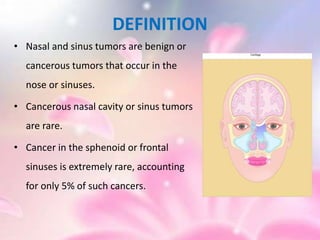
• Nasal and sinus tumors are benign or
cancerous tumors that occur in the
nose or sinuses.
• Cancerous nasal cavity or sinus tumors
are rare.
• Cancer in the sphenoid or frontal
sinuses is extremely rare, accounting
for only 5% of such cancers.
CAUSES/RISK FACTORS
• Men more common
• Age: 50s and 60s
• Smoking and tobacco smoke
• Exposure to dust from wood, leather or textiles, inhaling
vapors from glue, formaldehyde, solvents, nickel,
chromium, rubbing alcohol and radium etc.
TYPES
• Squamous cell carcinoma: most common about 70% of such
cancers occurs in the respiratory tract.
• Adenocarcinoma: about 10-20% occurs in the sinus lining.
• Lymphoma: about 5% of such cancers are caused by cells in
the immune or lymphatic system.
• Melanomas: about 3% arise from cells in the sinus lining that
contain pigment and are very aggressive.
SYMPTOMS
• Persistent nasal congestion, especially on one side.
• Pain in the forehead, cheek, nose or around eyes and ear.
• Post nasal drip at the back of the throat
• Double or blurred vision
• Loss of sense of smell or taste
• Pain or numbness in the face or teeth
• A growth in the face, nose, palate or neck
• Runny eyes
• Difficulty opening the mouth
• Recurrent ear infections
• Difficulty hearing
DIAGNOSIS
• Medical history: a detailed history of the patient is taken first
through which it is determined when the symptoms started and
the intensity of the symptoms.
• Physical examination of head and neck
• MRI and CT: may be done to further confirm the diagnosis of
Nasal Tumor.
• A positron emission tomography (PET) scan
• Biopsy
TREATMENT
• Surgery
• Radiation therapy
• Chemotherapy
• Can be removed by endoscopic is tumor is small
• If tumor has spread into cheek, eye, brain, nerves
then an open surgical approach is often required
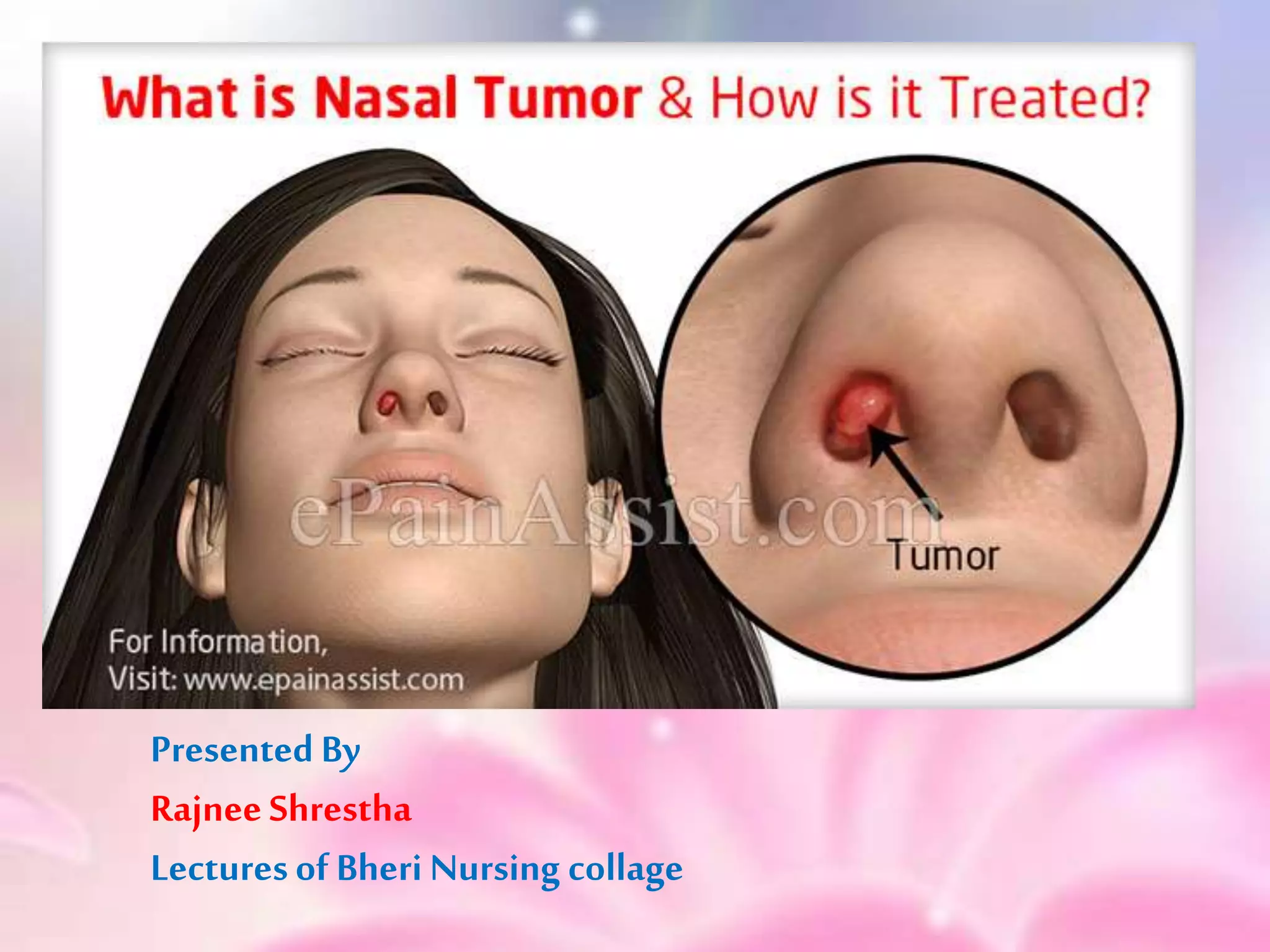
Nasal tumors
Nasal tumors

Nasal tumors

  • 1.
  • 2.
    DEFINITION • Nasal andsinus tumors are benign or cancerous tumors that occur in the nose or sinuses. • Cancerous nasal cavity or sinus tumors are rare. • Cancer in the sphenoid or frontal sinuses is extremely rare, accounting for only 5% of such cancers.
  • 3.
    CAUSES/RISK FACTORS • Menmore common • Age: 50s and 60s • Smoking and tobacco smoke • Exposure to dust from wood, leather or textiles, inhaling vapors from glue, formaldehyde, solvents, nickel, chromium, rubbing alcohol and radium etc.
  • 4.
    TYPES • Squamous cellcarcinoma: most common about 70% of such cancers occurs in the respiratory tract. • Adenocarcinoma: about 10-20% occurs in the sinus lining. • Lymphoma: about 5% of such cancers are caused by cells in the immune or lymphatic system. • Melanomas: about 3% arise from cells in the sinus lining that contain pigment and are very aggressive.
  • 5.
    SYMPTOMS • Persistent nasalcongestion, especially on one side. • Pain in the forehead, cheek, nose or around eyes and ear. • Post nasal drip at the back of the throat • Double or blurred vision • Loss of sense of smell or taste • Pain or numbness in the face or teeth • A growth in the face, nose, palate or neck • Runny eyes • Difficulty opening the mouth • Recurrent ear infections • Difficulty hearing
  • 6.
    DIAGNOSIS • Medical history:a detailed history of the patient is taken first through which it is determined when the symptoms started and the intensity of the symptoms. • Physical examination of head and neck • MRI and CT: may be done to further confirm the diagnosis of Nasal Tumor. • A positron emission tomography (PET) scan • Biopsy
  • 7.
    TREATMENT • Surgery • Radiationtherapy • Chemotherapy • Can be removed by endoscopic is tumor is small • If tumor has spread into cheek, eye, brain, nerves then an open surgical approach is often required