Extension Teaching Methods and
their classification
Introduction
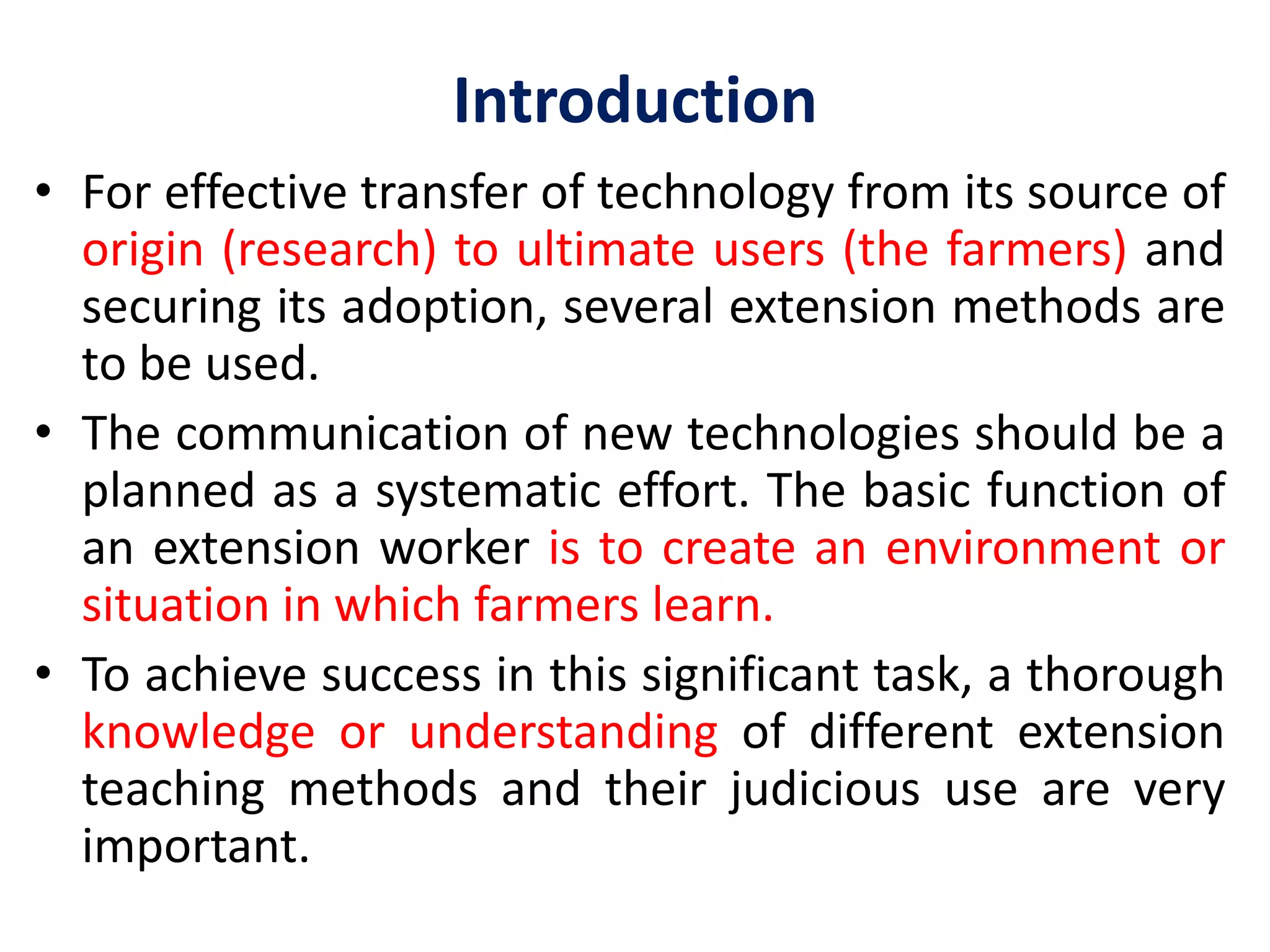
• For effective transfer of technology from its source of
origin (research) to ultimate users (the farmers) and
securing its adoption, several extension methods are
to be used.
• The communication of new technologies should be a
planned as a systematic effort. The basic function of
an extension worker is to create an environment or
situation in which farmers learn.
• To achieve success in this significant task, a thorough
knowledge or understanding of different extension
teaching methods and their judicious use are very
important.
Extension Teaching Methods
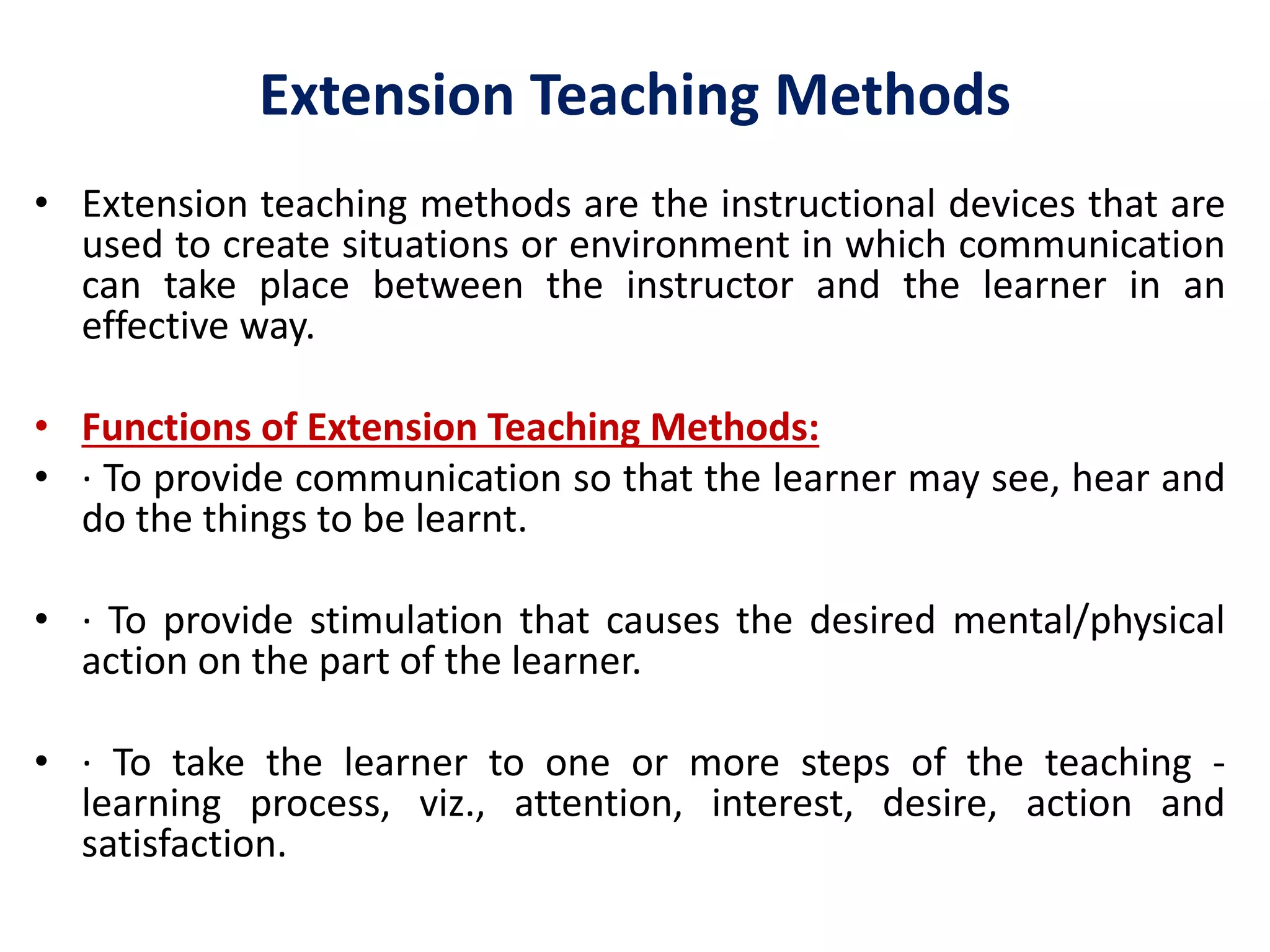
• Extension teaching methods are the instructional devices that are
used to create situations or environment in which communication
can take place between the instructor and the learner in an
effective way.
• Functions of Extension Teaching Methods:
• · To provide communication so that the learner may see, hear and
do the things to be learnt.
• · To provide stimulation that causes the desired mental/physical
action on the part of the learner.
• · To take the learner to one or more steps of the teaching -
learning process, viz., attention, interest, desire, action and
satisfaction.
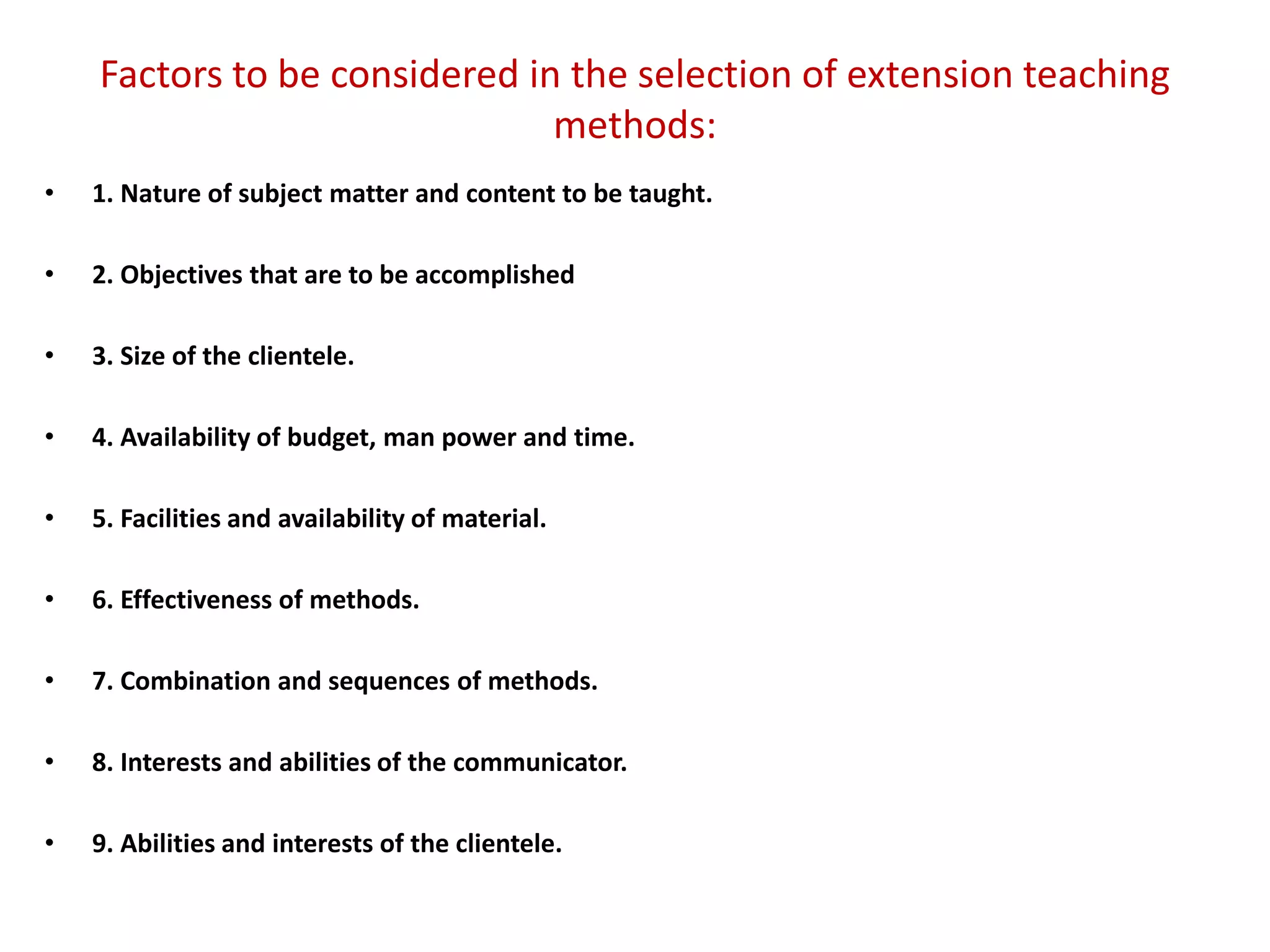
Factors to be considered in the selection of extension teaching
methods:
• 1. Nature of subject matter and content to be taught.
• 2. Objectives that are to be accomplished
• 3. Size of the clientele.
• 4. Availability of budget, man power and time.
• 5. Facilities and availability of material.
• 6. Effectiveness of methods.
• 7. Combination and sequences of methods.
• 8. Interests and abilities of the communicator.
• 9. Abilities and interests of the clientele.
Classification of Extension Teaching Methods
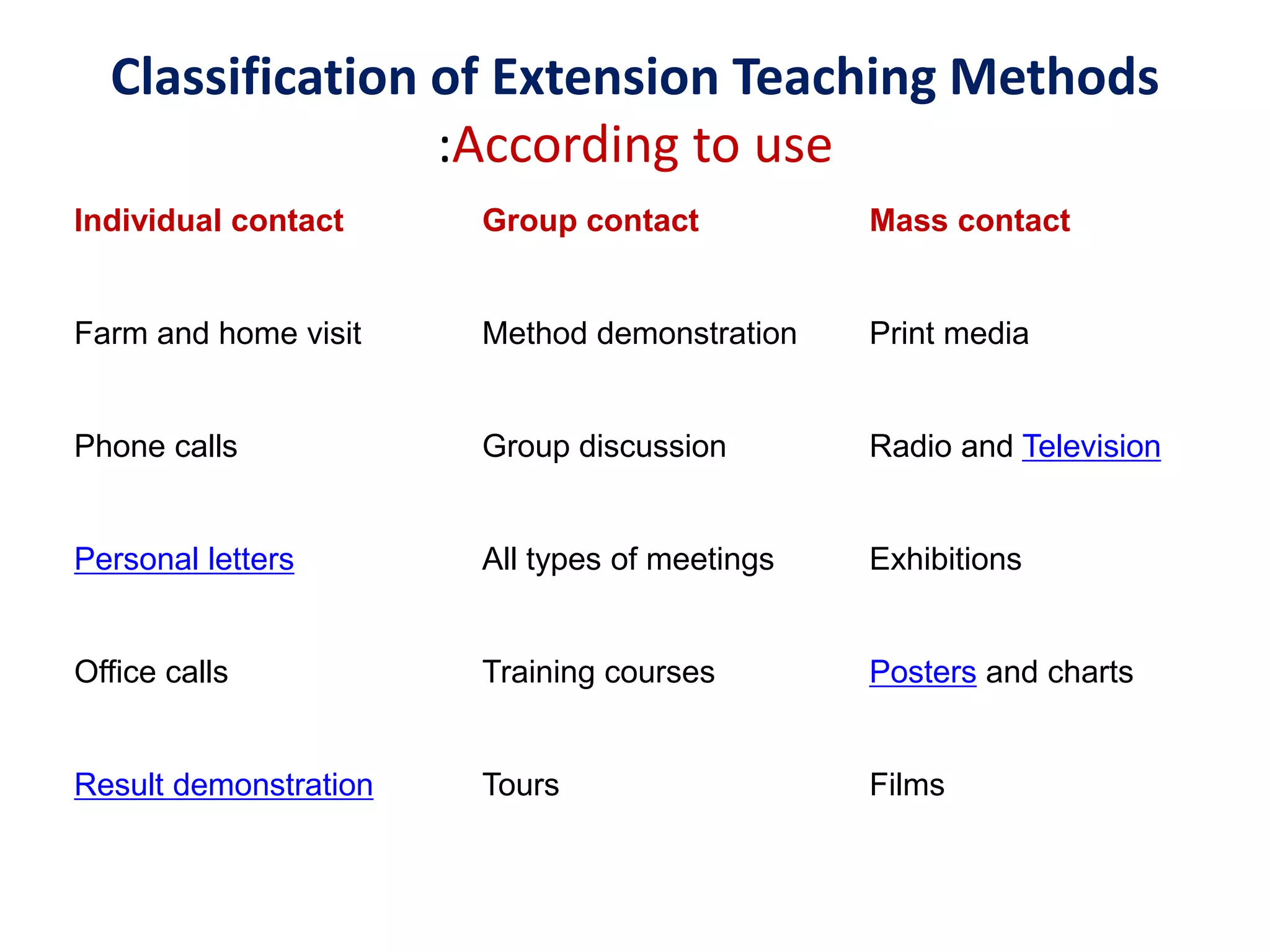
:According to use
Individual contact Group contact Mass contact
Farm and home visit Method demonstration Print media
Phone calls Group discussion Radio and Television
Personal letters All types of meetings Exhibitions
Office calls Training courses Posters and charts
Result demonstration Tours Films
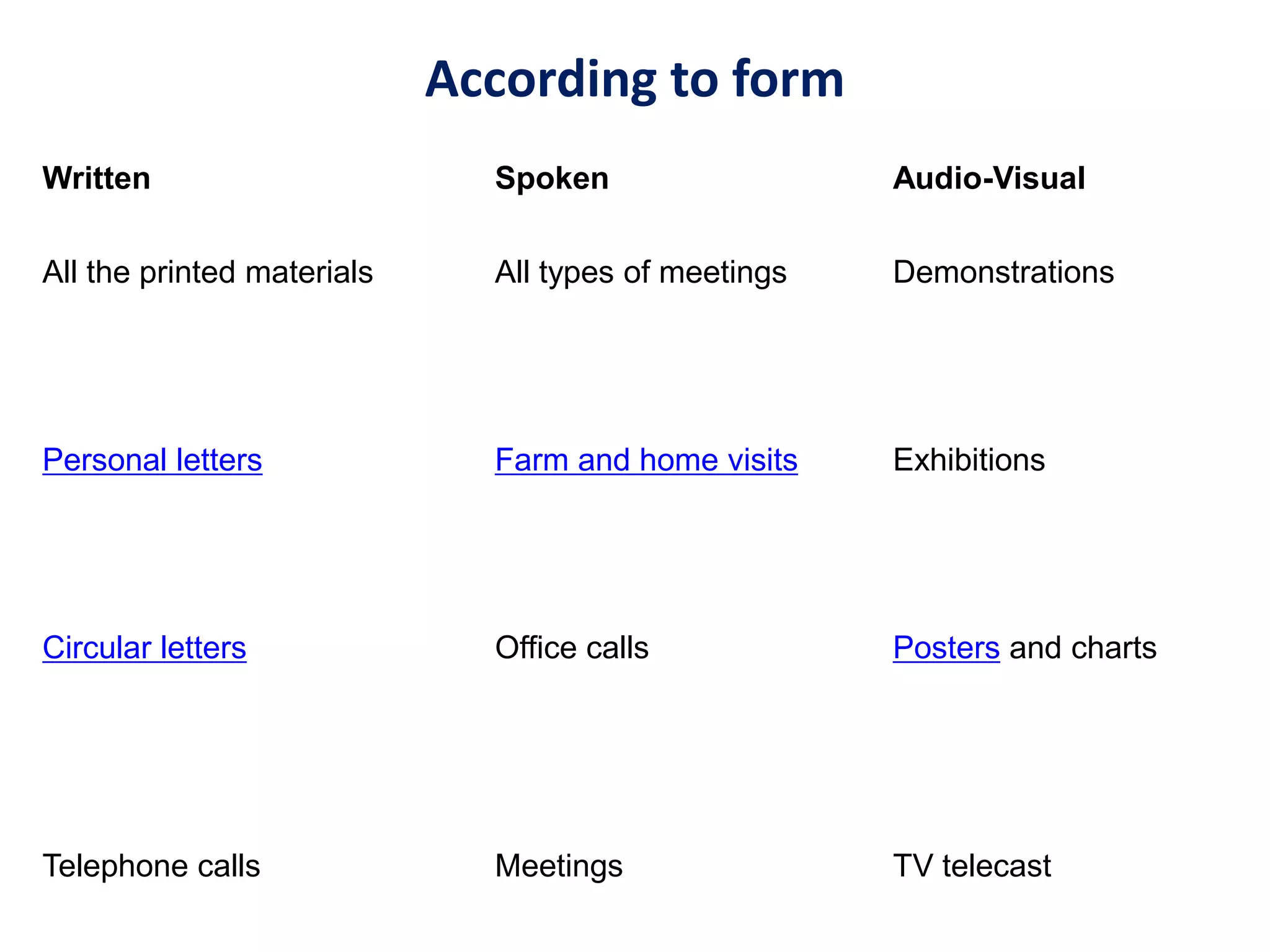
According to form
Written Spoken Audio-Visual
All the printed materials All types of meetings Demonstrations
Personal letters Farm and home visits Exhibitions
Circular letters Office calls Posters and charts
Telephone calls Meetings TV telecast
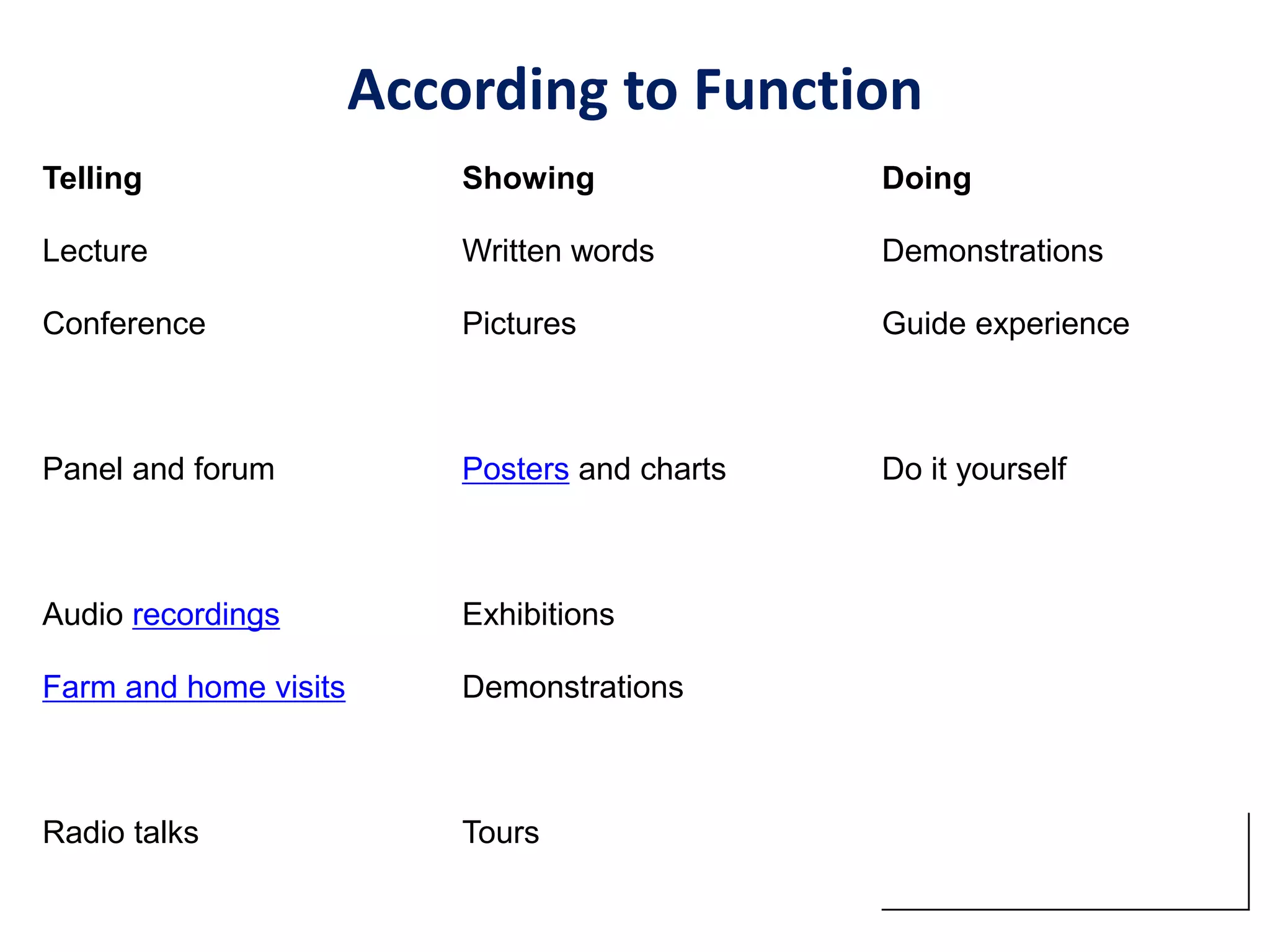
According to Function
Telling Showing Doing
Lecture Written words Demonstrations
Conference Pictures Guide experience
Panel and forum Posters and charts Do it yourself
Audio recordings Exhibitions
Farm and home visits Demonstrations
Radio talks Tours
Individual contact method
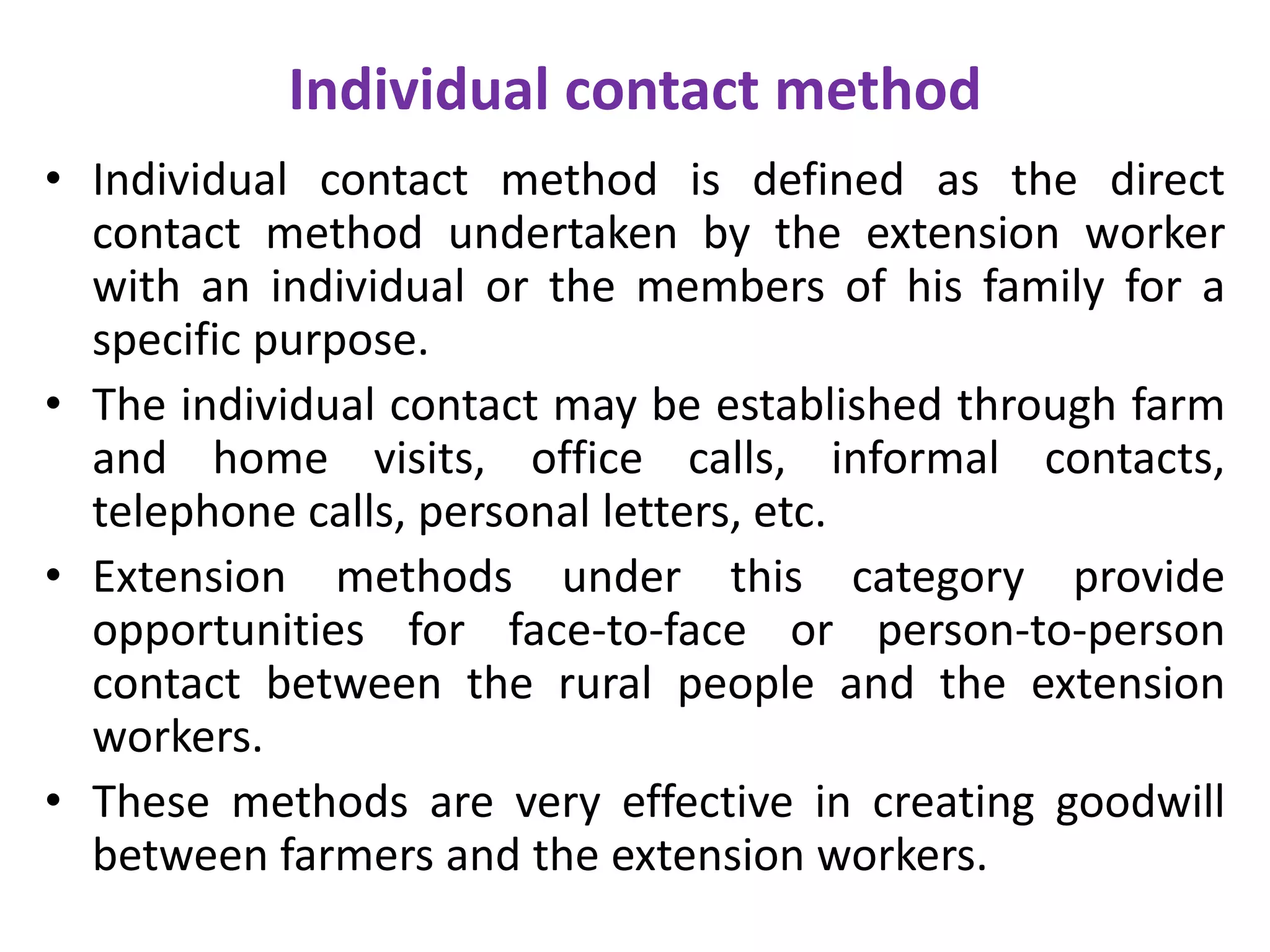
• Individual contact method is defined as the direct
contact method undertaken by the extension worker
with an individual or the members of his family for a
specific purpose.
• The individual contact may be established through farm
and home visits, office calls, informal contacts,
telephone calls, personal letters, etc.
• Extension methods under this category provide
opportunities for face-to-face or person-to-person
contact between the rural people and the extension
workers.
• These methods are very effective in creating goodwill
between farmers and the extension workers.
• Merits
• The extension worker can get the first hand
information on the problems of the
stakeholders.
• He develops the good will with the farmers.
• He develops the confidence when his ideas are
accepted by the farmers.
• The interest of the people in extension services
is created.
• Percentage of adoption is high.
• Visits are source of material for news stories.
• Demerits
• It consumes much of time of extension
worker.
• Limited contact of farmers.
• Time of visits may not be opportunistic to the
farmers.
• Tendency to visit the same farm again and
again may be created.
• It is a costly method.

EXTENCTION TEACHING METHODS AND CLASSIFICATION

  • 1.
    Extension Teaching Methodsand their classification
  • 2.
    Introduction • For effectivetransfer of technology from its source of origin (research) to ultimate users (the farmers) and securing its adoption, several extension methods are to be used. • The communication of new technologies should be a planned as a systematic effort. The basic function of an extension worker is to create an environment or situation in which farmers learn. • To achieve success in this significant task, a thorough knowledge or understanding of different extension teaching methods and their judicious use are very important.
  • 3.
    Extension Teaching Methods •Extension teaching methods are the instructional devices that are used to create situations or environment in which communication can take place between the instructor and the learner in an effective way. • Functions of Extension Teaching Methods: • · To provide communication so that the learner may see, hear and do the things to be learnt. • · To provide stimulation that causes the desired mental/physical action on the part of the learner. • · To take the learner to one or more steps of the teaching - learning process, viz., attention, interest, desire, action and satisfaction.
  • 4.
    Factors to beconsidered in the selection of extension teaching methods: • 1. Nature of subject matter and content to be taught. • 2. Objectives that are to be accomplished • 3. Size of the clientele. • 4. Availability of budget, man power and time. • 5. Facilities and availability of material. • 6. Effectiveness of methods. • 7. Combination and sequences of methods. • 8. Interests and abilities of the communicator. • 9. Abilities and interests of the clientele.
  • 5.
    Classification of ExtensionTeaching Methods :According to use Individual contact Group contact Mass contact Farm and home visit Method demonstration Print media Phone calls Group discussion Radio and Television Personal letters All types of meetings Exhibitions Office calls Training courses Posters and charts Result demonstration Tours Films
  • 6.
    According to form WrittenSpoken Audio-Visual All the printed materials All types of meetings Demonstrations Personal letters Farm and home visits Exhibitions Circular letters Office calls Posters and charts Telephone calls Meetings TV telecast
  • 7.
    According to Function TellingShowing Doing Lecture Written words Demonstrations Conference Pictures Guide experience Panel and forum Posters and charts Do it yourself Audio recordings Exhibitions Farm and home visits Demonstrations Radio talks Tours
  • 8.
    Individual contact method •Individual contact method is defined as the direct contact method undertaken by the extension worker with an individual or the members of his family for a specific purpose. • The individual contact may be established through farm and home visits, office calls, informal contacts, telephone calls, personal letters, etc. • Extension methods under this category provide opportunities for face-to-face or person-to-person contact between the rural people and the extension workers. • These methods are very effective in creating goodwill between farmers and the extension workers.
  • 9.
    • Merits • Theextension worker can get the first hand information on the problems of the stakeholders. • He develops the good will with the farmers. • He develops the confidence when his ideas are accepted by the farmers. • The interest of the people in extension services is created. • Percentage of adoption is high. • Visits are source of material for news stories.
  • 10.
    • Demerits • Itconsumes much of time of extension worker. • Limited contact of farmers. • Time of visits may not be opportunistic to the farmers. • Tendency to visit the same farm again and again may be created. • It is a costly method.