Expression tree
Nagajothi N
1 M.Sc., IT
1
Objectives
 What is expression tree
 What are expressions in data structures?
 What kind of expression tree
 What type of data structure is tree?
 Construction of expression tree
 Traversal of expression tree
 Algebraic expression tree
 Boolean expression tree
2
What is expression tree
 A binary expression tree is a specific kind of a
binary tree used to represent expressions. ..
 These trees can represent expressions that
contain both unary and binary operators
 Each node of a binary tree, and hence of a binary
expression tree, has zero, one, or two children.
3
What are expressions in data structures?
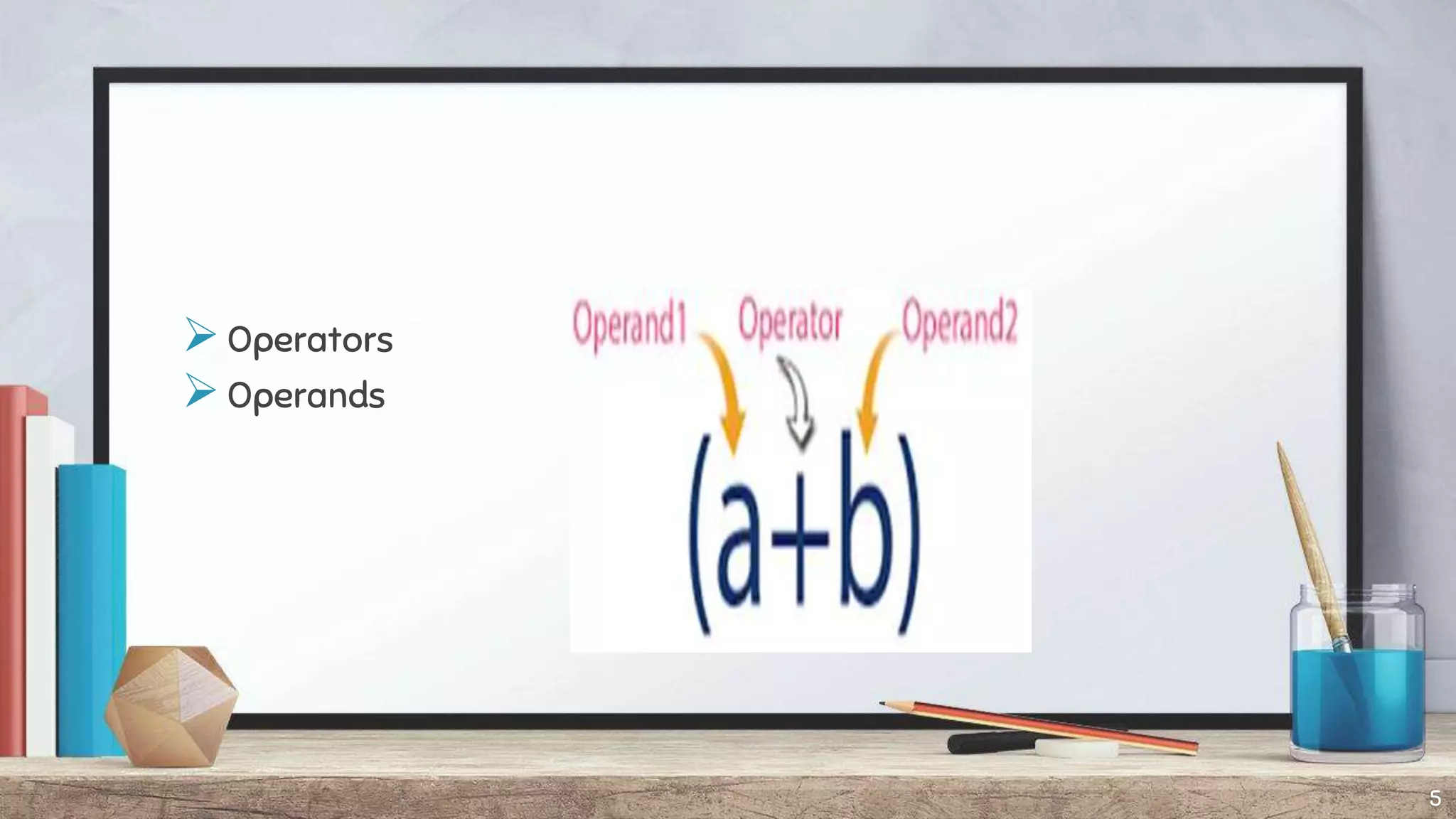
 An expression is a collection of operators and
operands that represents a specific value.
 operator is a symbol which performs a
particular task like arithmetic operation or
logical operation or conditional operation etc.,
 Operands are the values on which the
operators can perform the task
4
Operators
Operands
5
There are three kinds of expressions
 An arithmetic expression evaluates to a single
arithmetic value.(x, x 2, xy, or 3xy 2,)
 A character expression evaluates to a single
value of type character.
 A logical or relational expression evaluates to a
single logical value(TRUE or FALSE)
6
What type of data structure is tree?
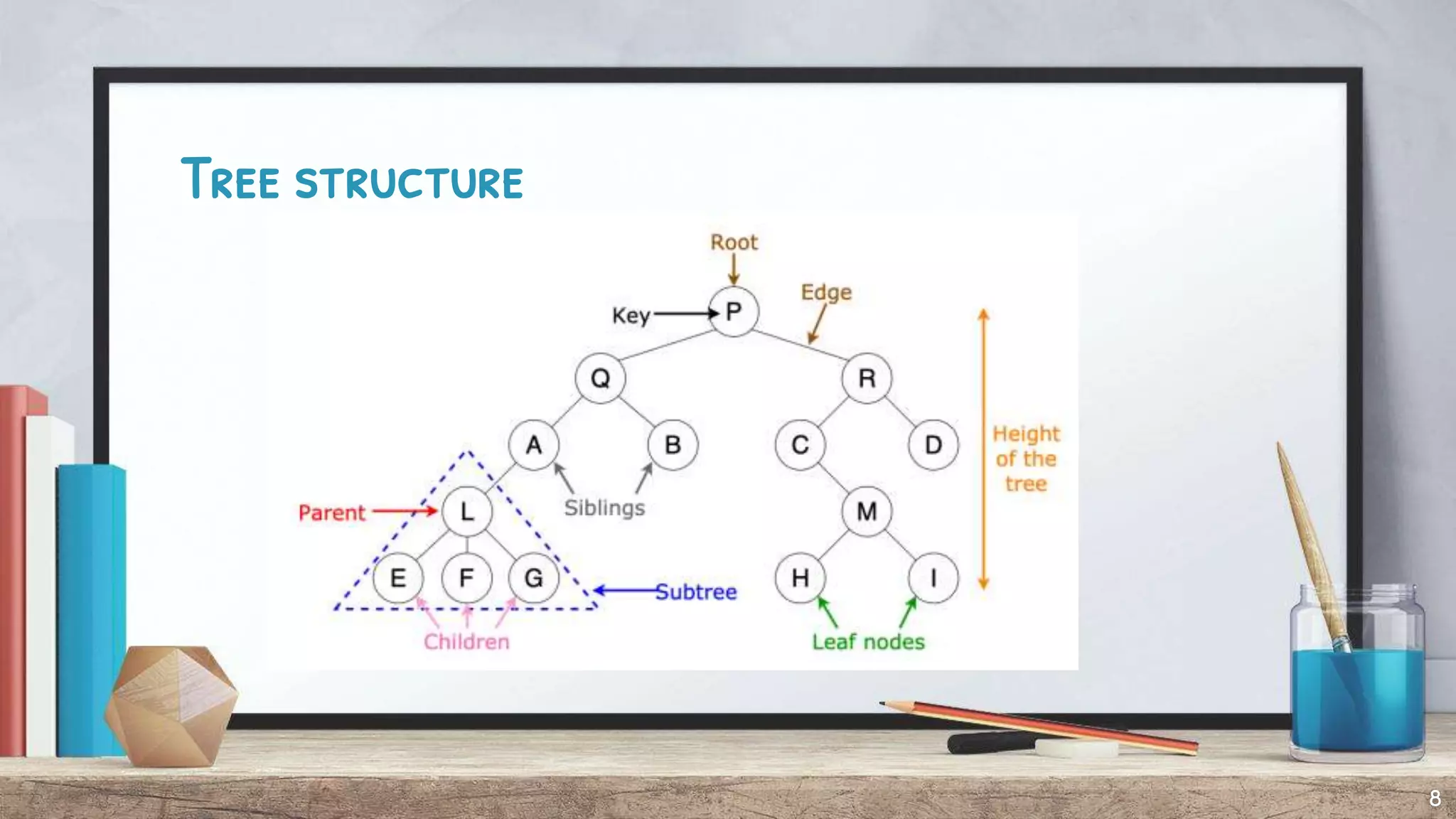
 A tree is a hierarchical data structure which can
represent relationships between different
nodes
7
Tree structure
8
Construction of expression tree
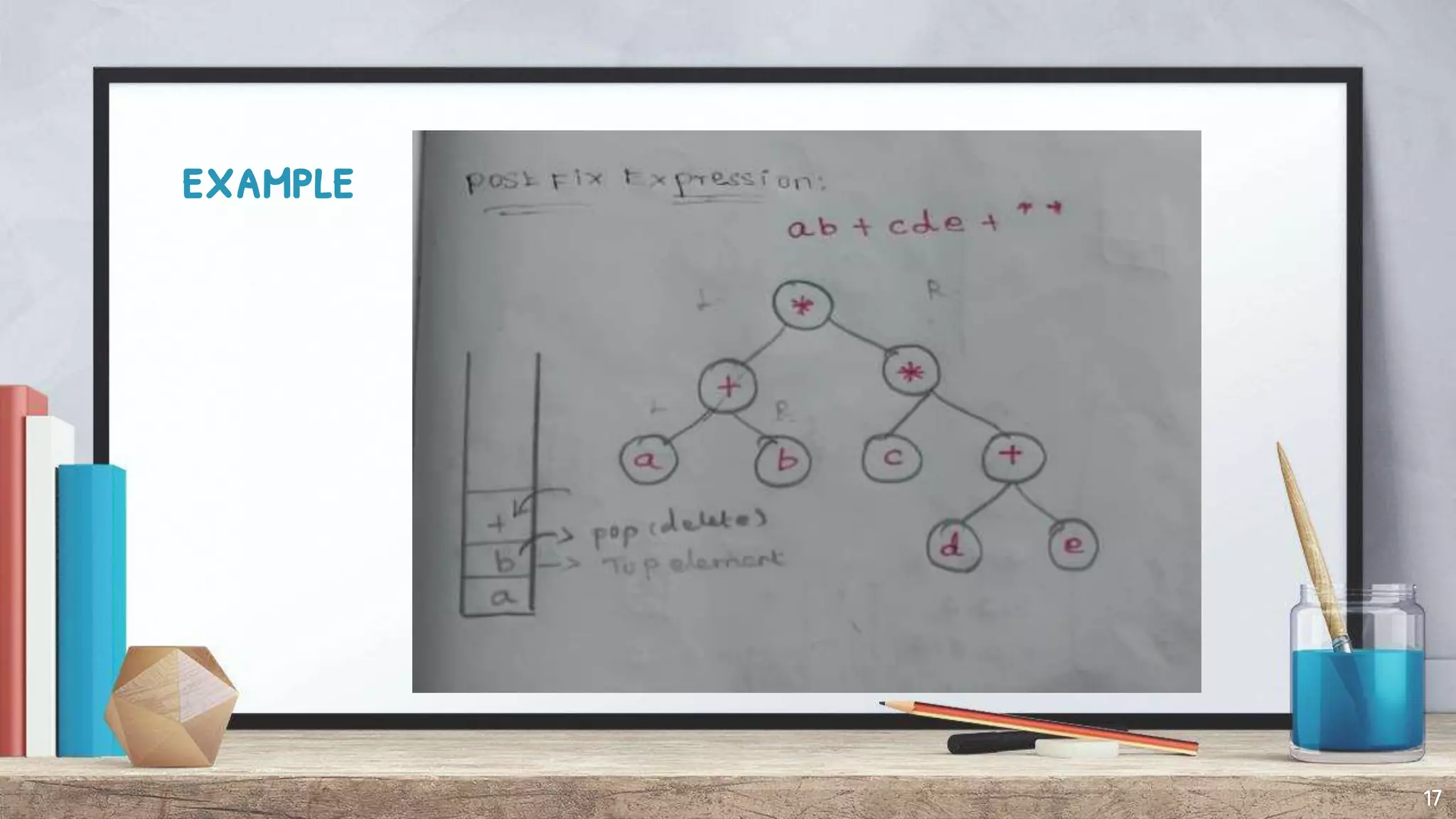
 Now For constructing an expression tree
we use a stack.
 If a character is an operator pop two values
from the stack make them its child and push
the current node again
9
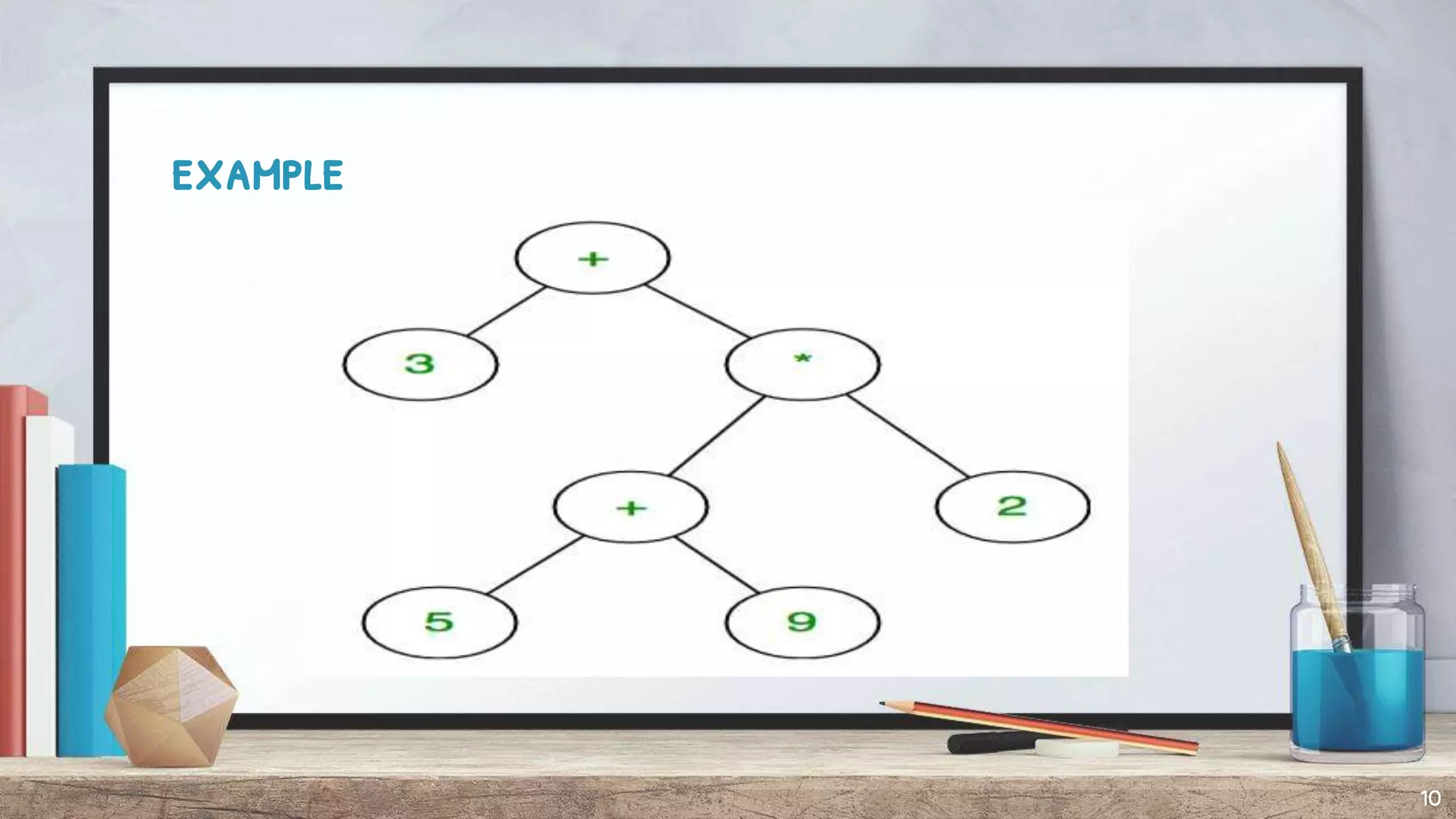
example
10
Algebraic expression
 Algebraic expression trees represent
expressions that contain numbers,variables,
and unary and binary operators.
 Some of the common operators are ×
(multiplication), ÷ (division), + (addition), −
(subtraction), ^ (exponentiation), and -
(negation)
11
Boolean expressions
 Boolean expressions use true and false as
constant values, and the operators
include (AND), (OR), (NOT).
12
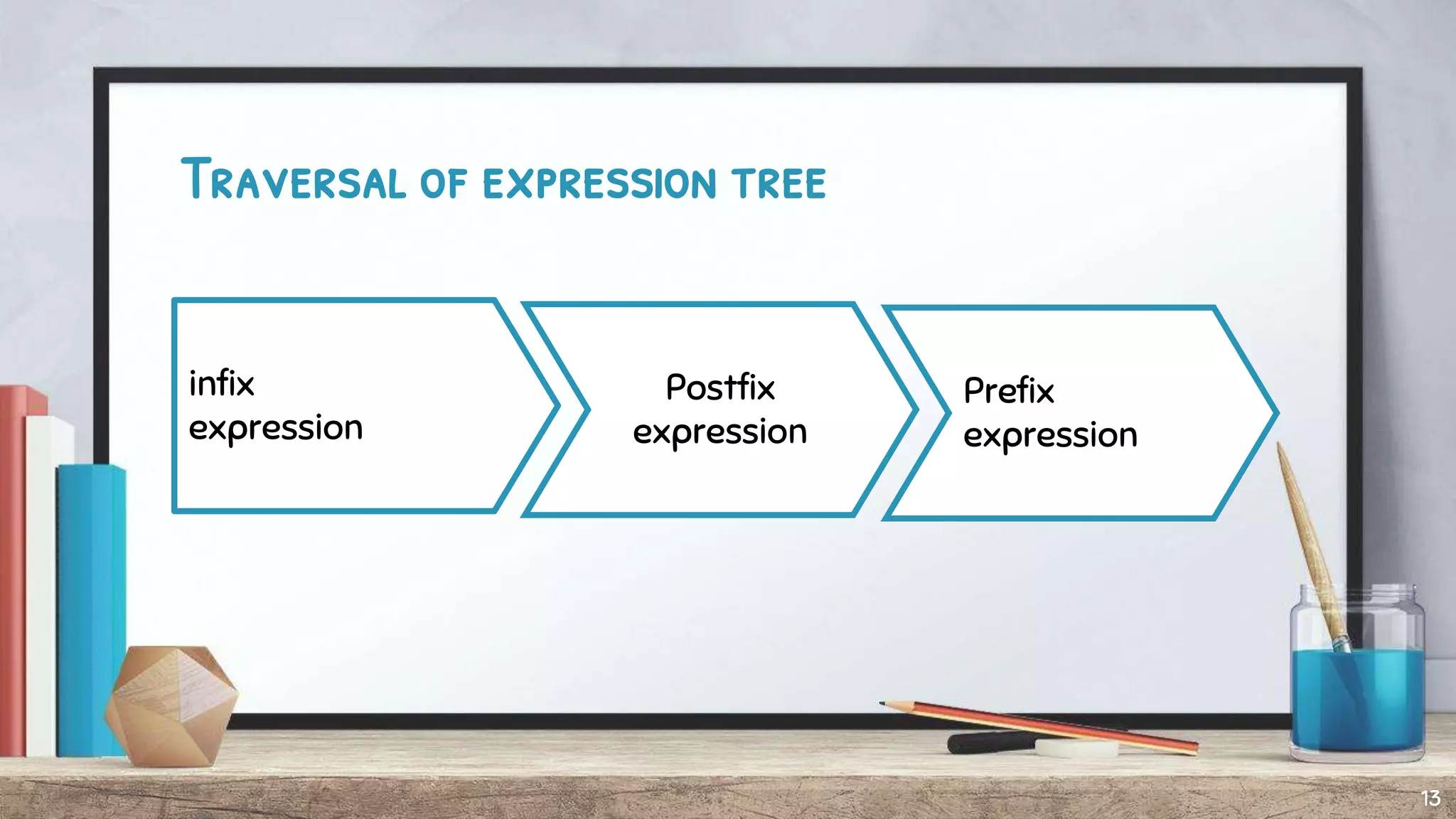
Traversal of expression tree
infix
expression
Postfix
expression
Prefix
expression
13
infix expression
 X + Y. Operators are written in-between their
operands
 An expression such as A * ( B + C ) / D is usually
taken to mean something like: "First add B and
C together, then multiply the result by A, then
divide by D to give the final answer."
14
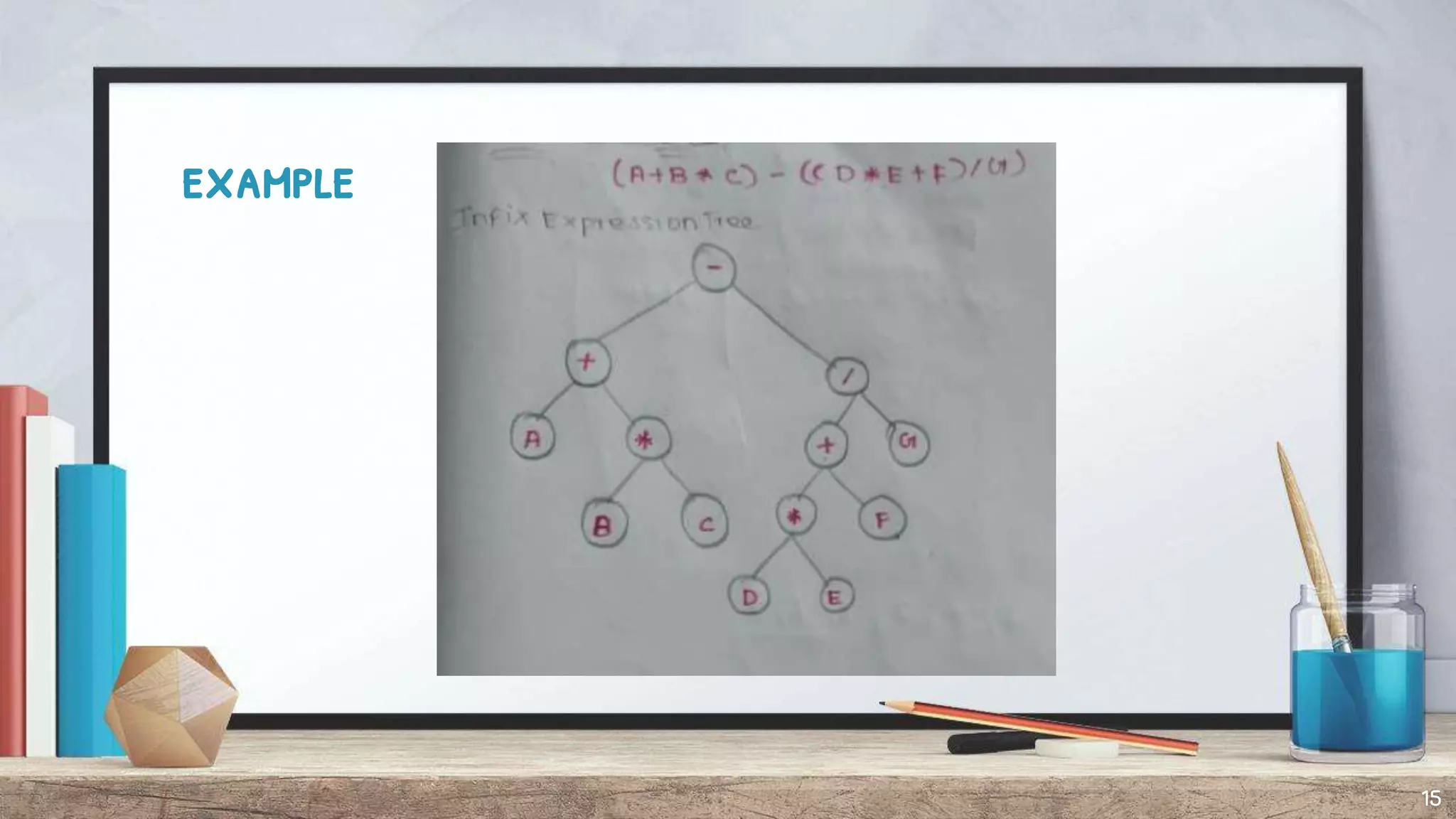
example
15
Postfix expression
 X Y + Operators are written after their
operands. The infix expression given above is
equivalent to A B C + * D /
16
example
17
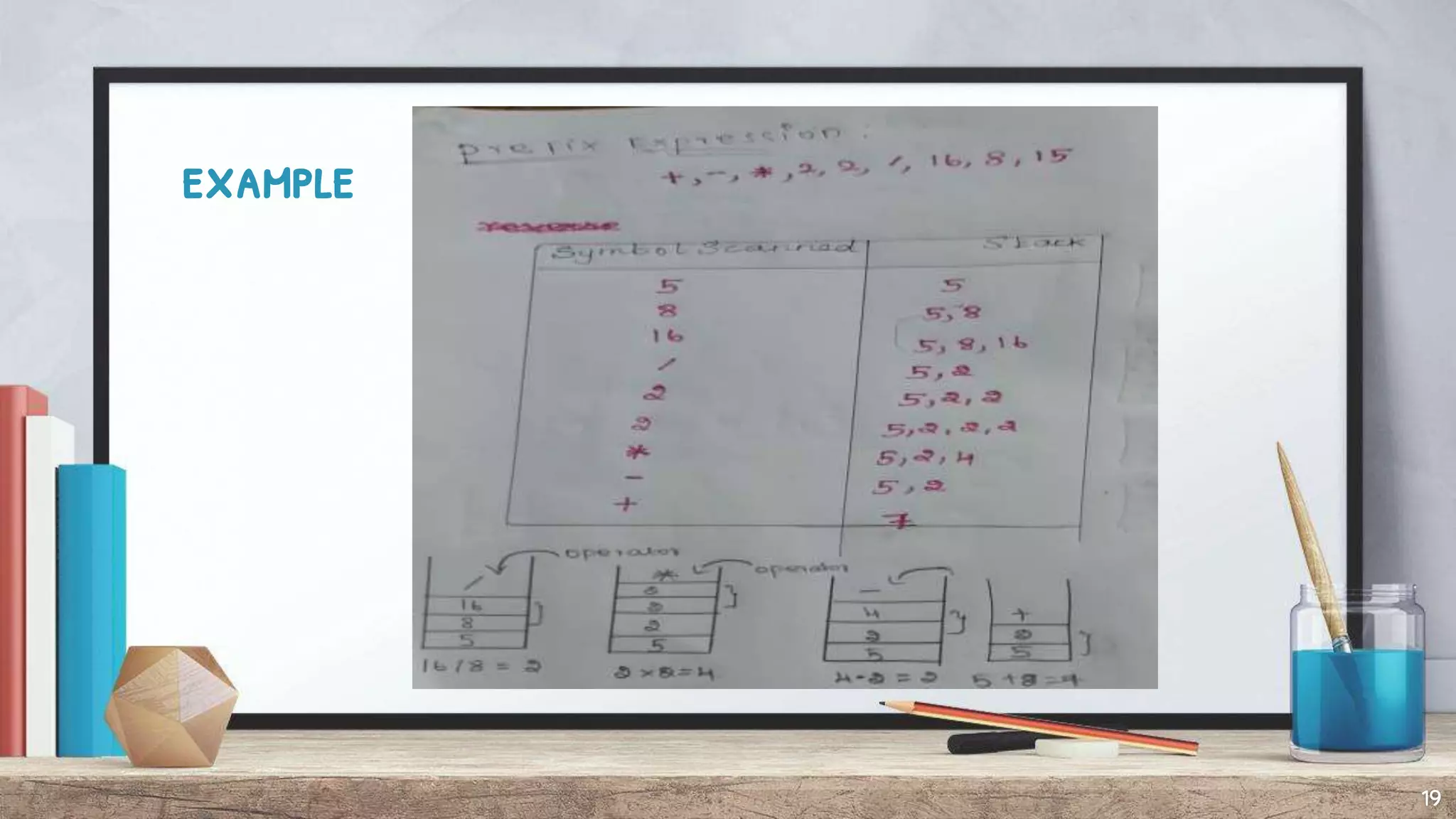
Prefix expression
 + X Y Operators are written before their
operands. The expressions given above are
equivalent to / * A + B C D
18
example
19
Thankyou !
20

Expression tree

  • 1.
  • 2.
    Objectives  What isexpression tree  What are expressions in data structures?  What kind of expression tree  What type of data structure is tree?  Construction of expression tree  Traversal of expression tree  Algebraic expression tree  Boolean expression tree 2
  • 3.
    What is expressiontree  A binary expression tree is a specific kind of a binary tree used to represent expressions. ..  These trees can represent expressions that contain both unary and binary operators  Each node of a binary tree, and hence of a binary expression tree, has zero, one, or two children. 3
  • 4.
    What are expressionsin data structures?  An expression is a collection of operators and operands that represents a specific value.  operator is a symbol which performs a particular task like arithmetic operation or logical operation or conditional operation etc.,  Operands are the values on which the operators can perform the task 4
  • 5.
  • 6.
    There are threekinds of expressions  An arithmetic expression evaluates to a single arithmetic value.(x, x 2, xy, or 3xy 2,)  A character expression evaluates to a single value of type character.  A logical or relational expression evaluates to a single logical value(TRUE or FALSE) 6
  • 7.
    What type ofdata structure is tree?  A tree is a hierarchical data structure which can represent relationships between different nodes 7
  • 8.
  • 9.
    Construction of expressiontree  Now For constructing an expression tree we use a stack.  If a character is an operator pop two values from the stack make them its child and push the current node again 9
  • 10.
  • 11.
    Algebraic expression  Algebraicexpression trees represent expressions that contain numbers,variables, and unary and binary operators.  Some of the common operators are × (multiplication), ÷ (division), + (addition), − (subtraction), ^ (exponentiation), and - (negation) 11
  • 12.
    Boolean expressions  Booleanexpressions use true and false as constant values, and the operators include (AND), (OR), (NOT). 12
  • 13.
    Traversal of expressiontree infix expression Postfix expression Prefix expression 13
  • 14.
    infix expression  X+ Y. Operators are written in-between their operands  An expression such as A * ( B + C ) / D is usually taken to mean something like: "First add B and C together, then multiply the result by A, then divide by D to give the final answer." 14
  • 15.
  • 16.
    Postfix expression  XY + Operators are written after their operands. The infix expression given above is equivalent to A B C + * D / 16
  • 17.
  • 18.
    Prefix expression  +X Y Operators are written before their operands. The expressions given above are equivalent to / * A + B C D 18
  • 19.
  • 20.