Downloaded 337 times


The document provides an educational overview of exponents, defining key terms such as base, exponent, and exponential value, and outlining laws of exponents including product, quotient, and power laws. It emphasizes the importance of understanding how to manipulate exponents in mathematical expressions, highlighting specific cases for each law. Additionally, it includes examples and references for further learning.
Nazish Jamali introduces the topic of exponents in this presentation.
Students will learn to define and identify bases, exponents, laws of exponents including product, quotient, and power law.
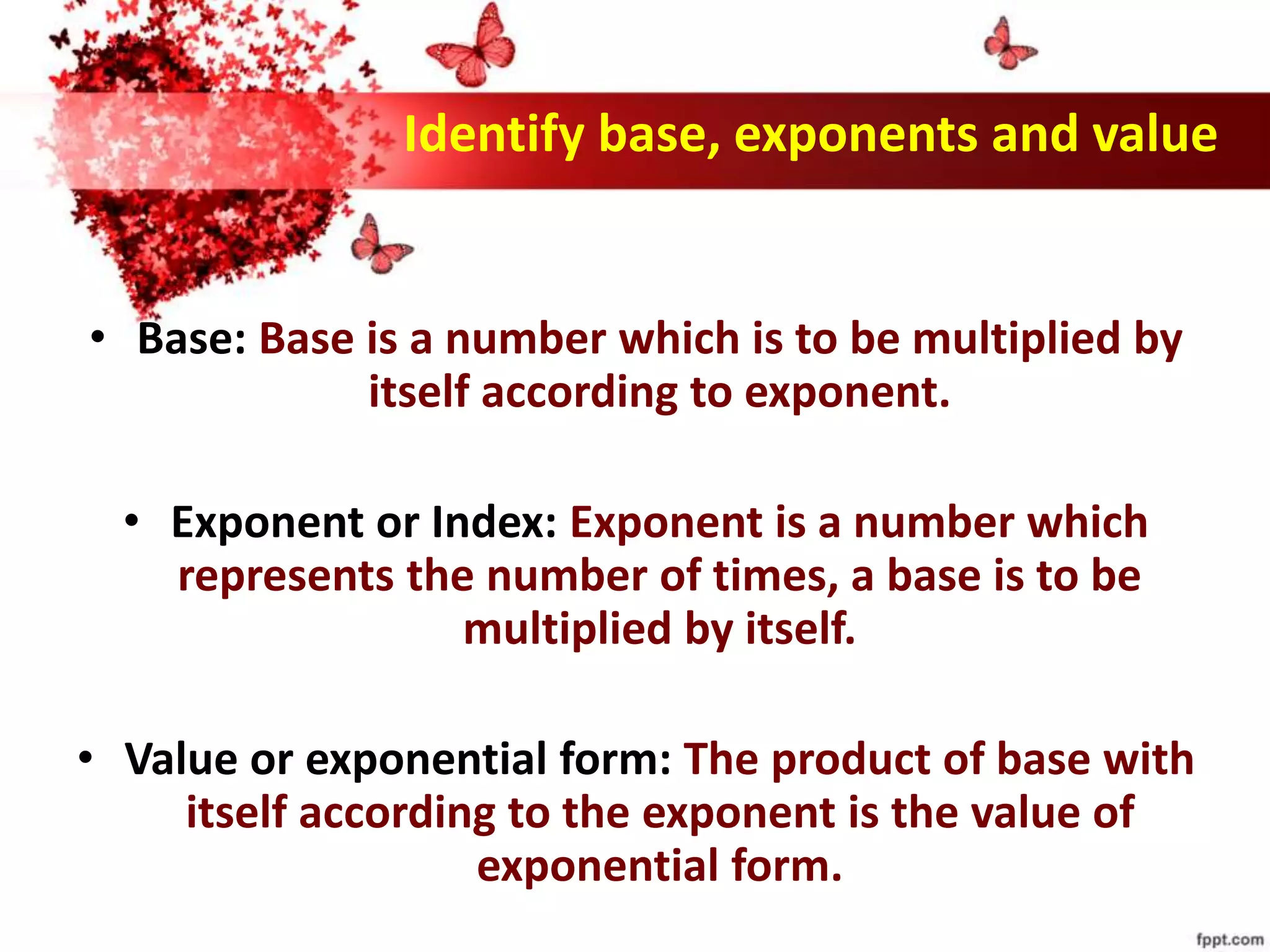
Definitions of base, exponent, and value are provided, explaining their roles in exponential expressions.
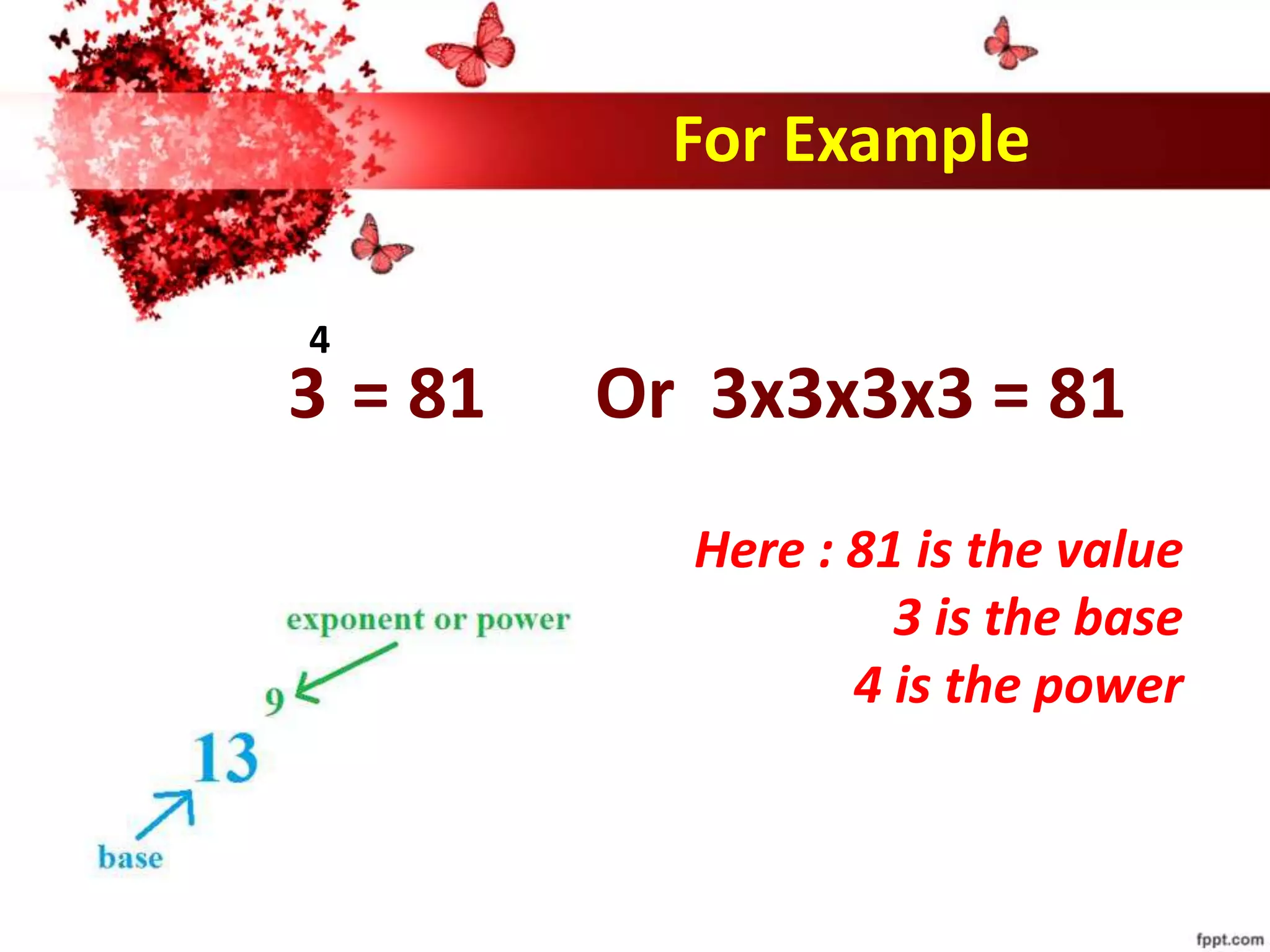
Illustrates an example of an exponent with base 3, exponent 4, yielding a value of 81.
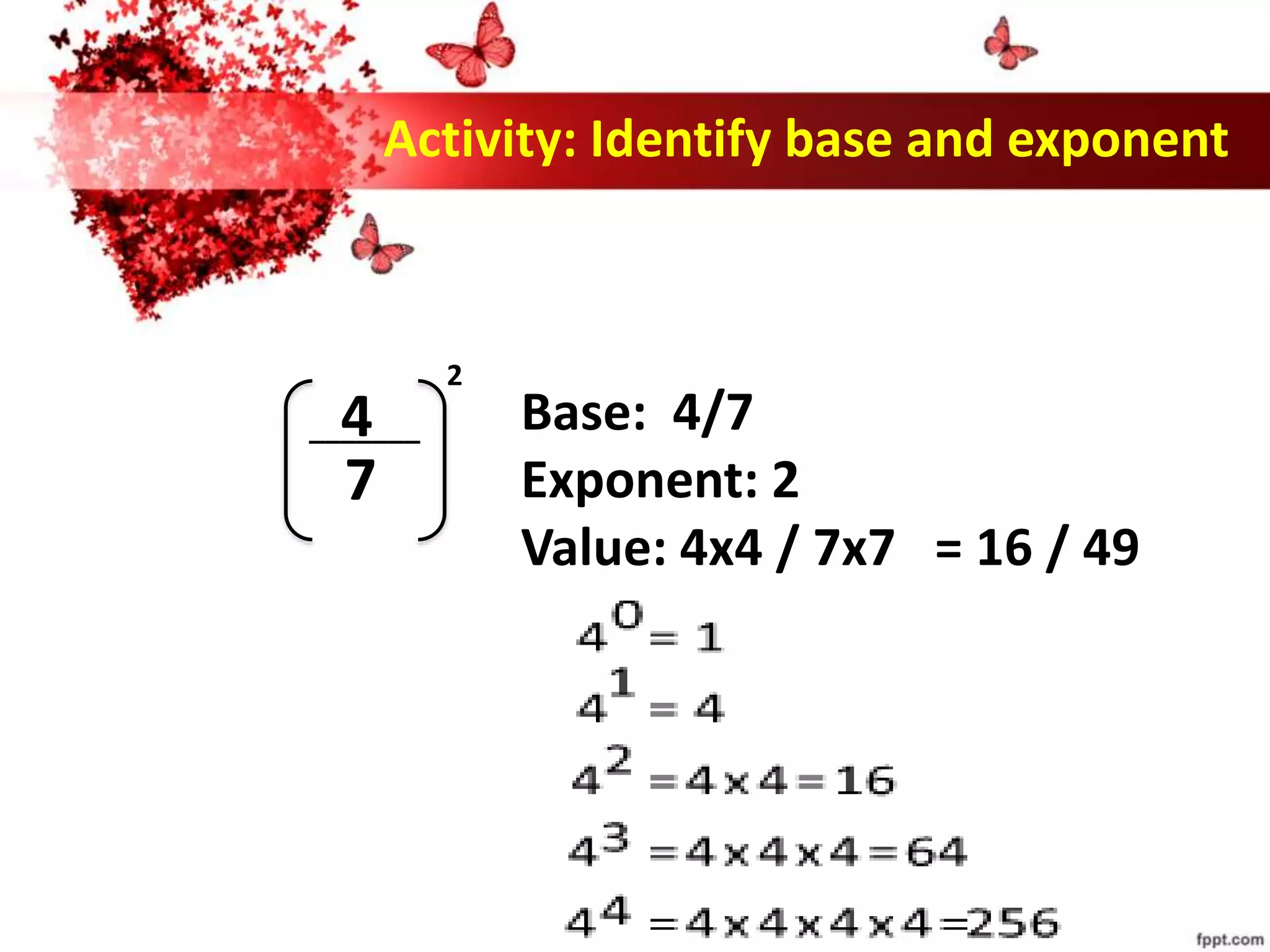
An activity asks students to identify the base, exponent, and calculate the value from given exponential expression.
Introduction to a video that explains the laws governing exponents.
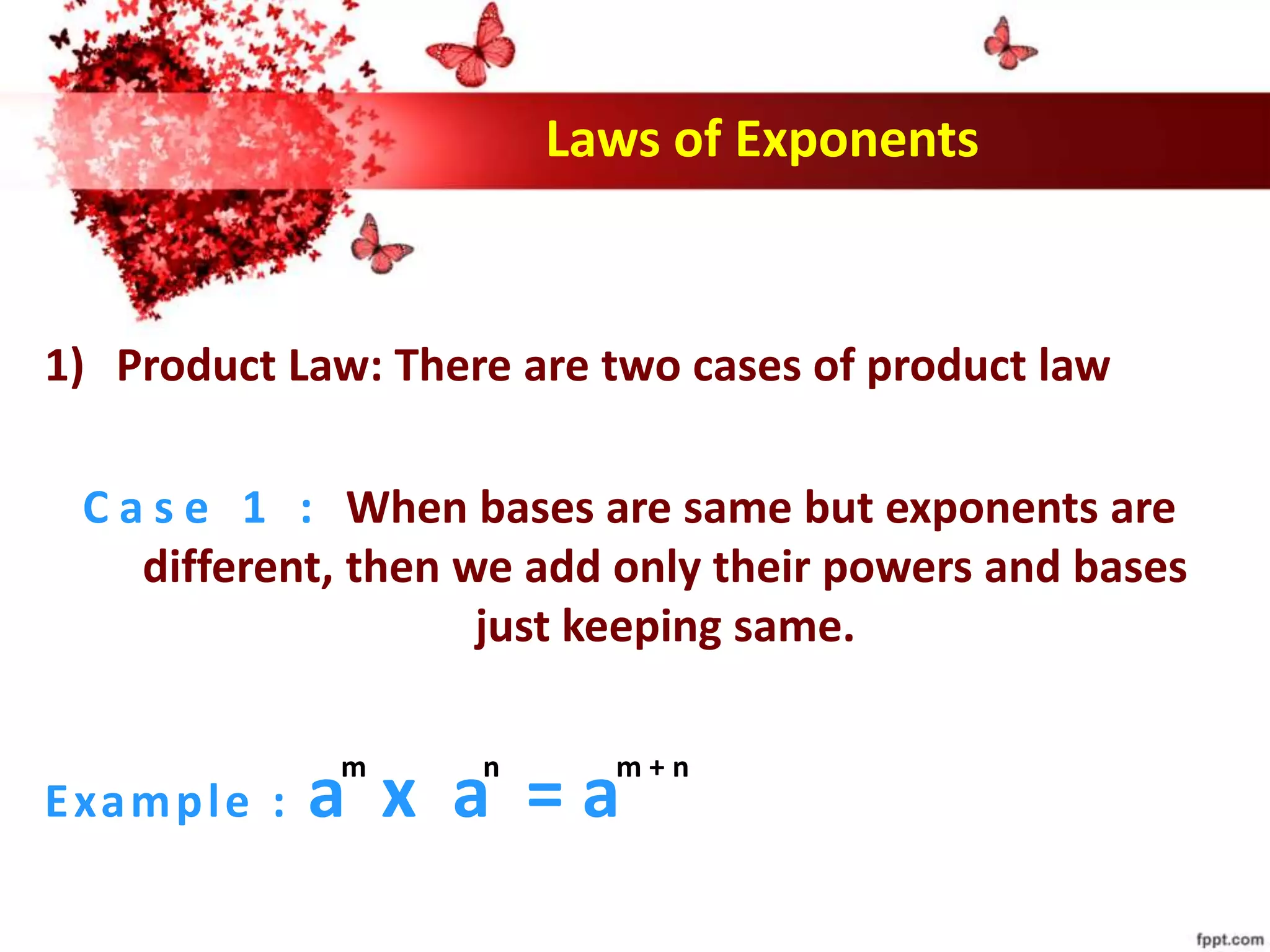
Explains the first case of Product Law, dealing with same bases but different exponents.
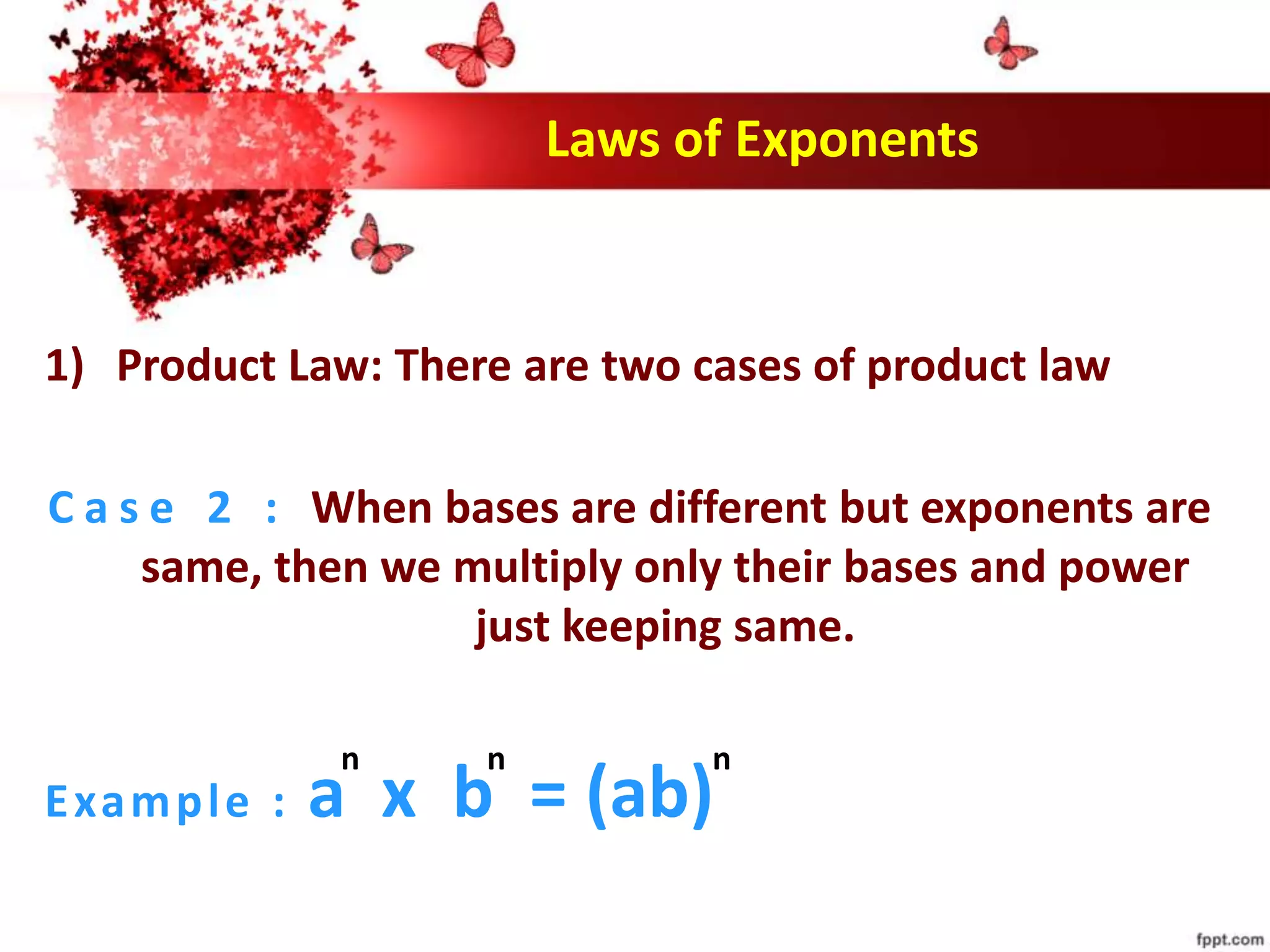
Discusses the second case of Product Law, focusing on different bases with same exponent.
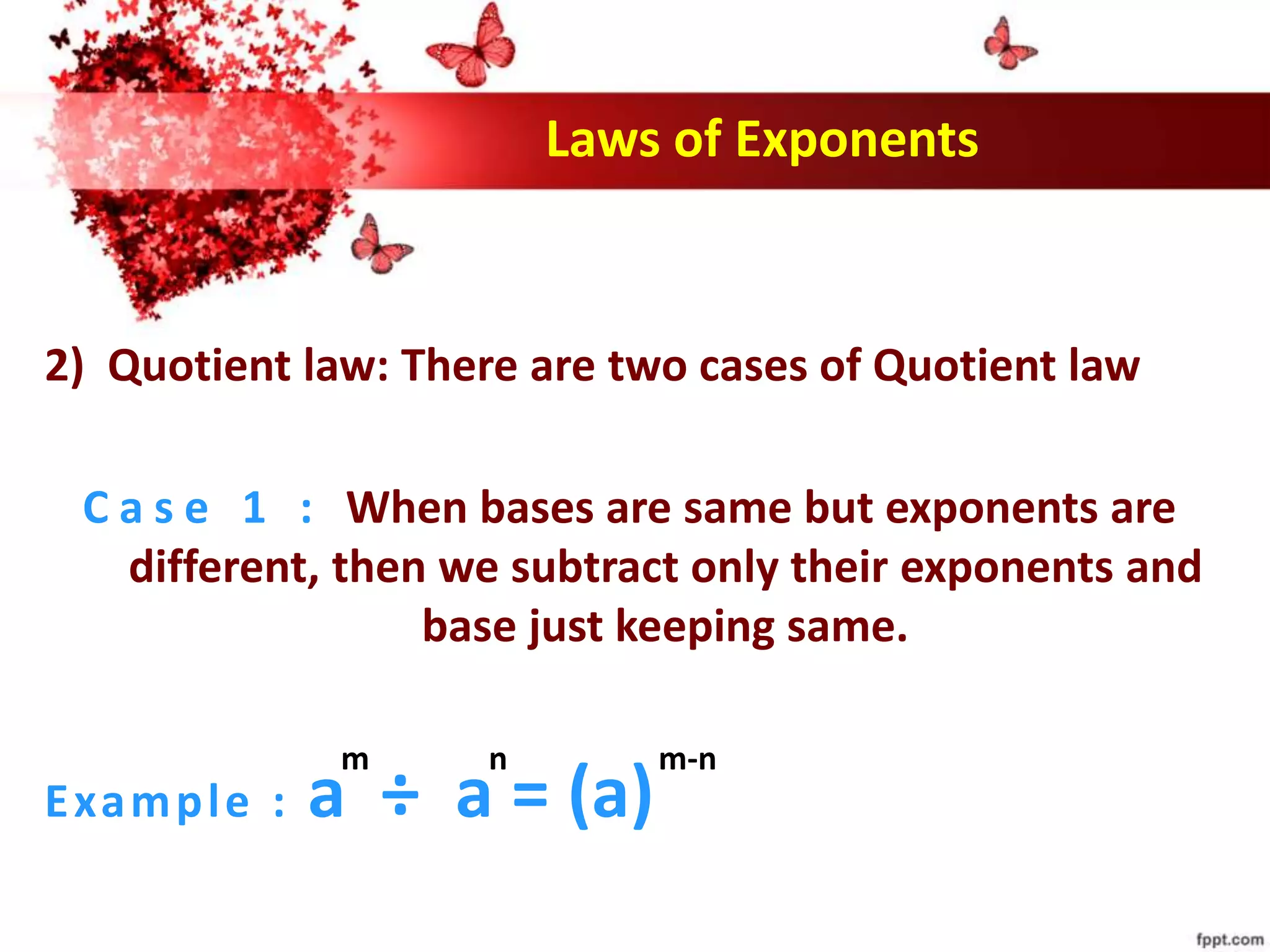
Describes the first case of Quotient Law, dealing with same bases but different exponents.
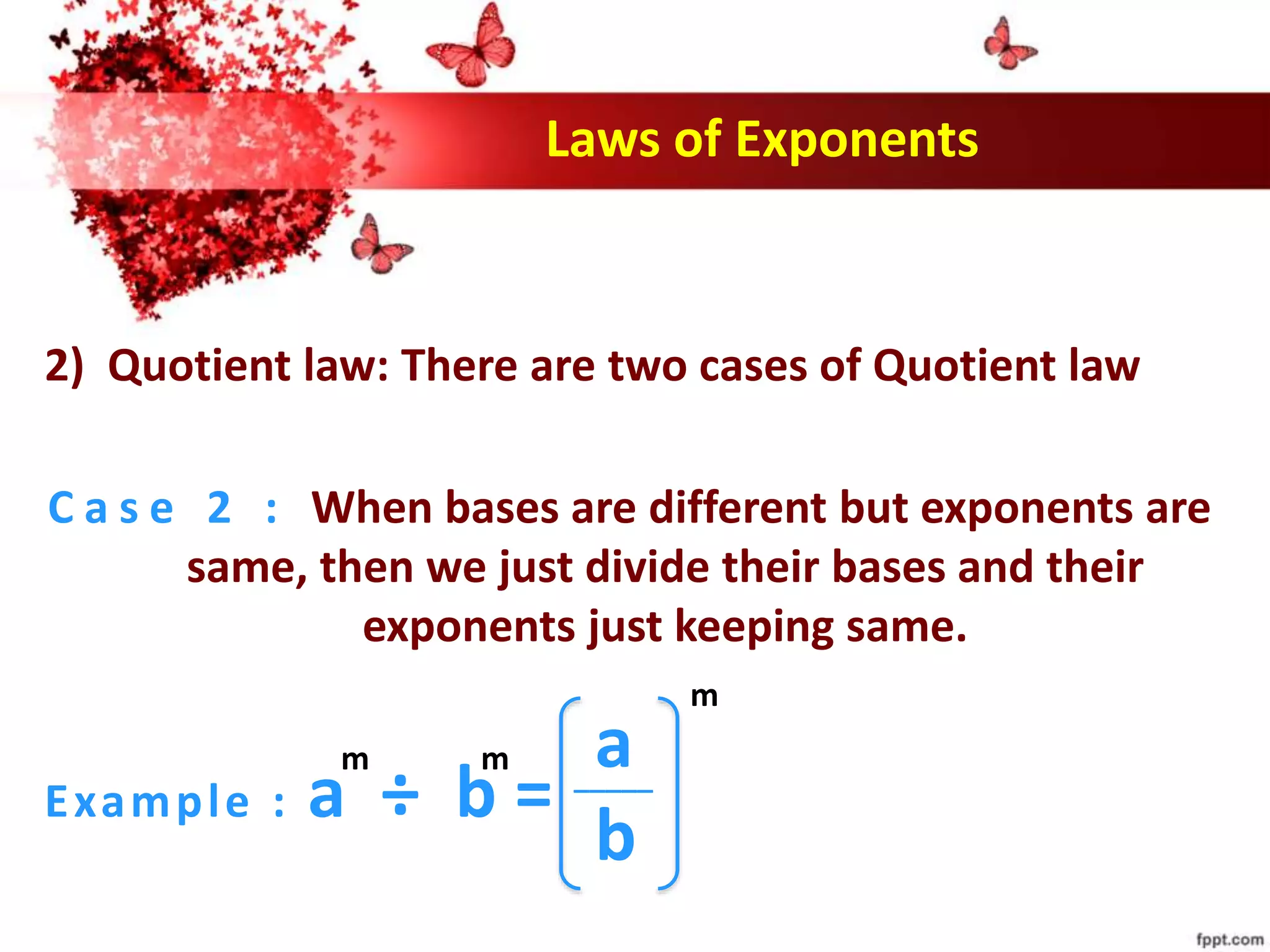
Explains the second case of Quotient Law regarding different bases with same exponent.
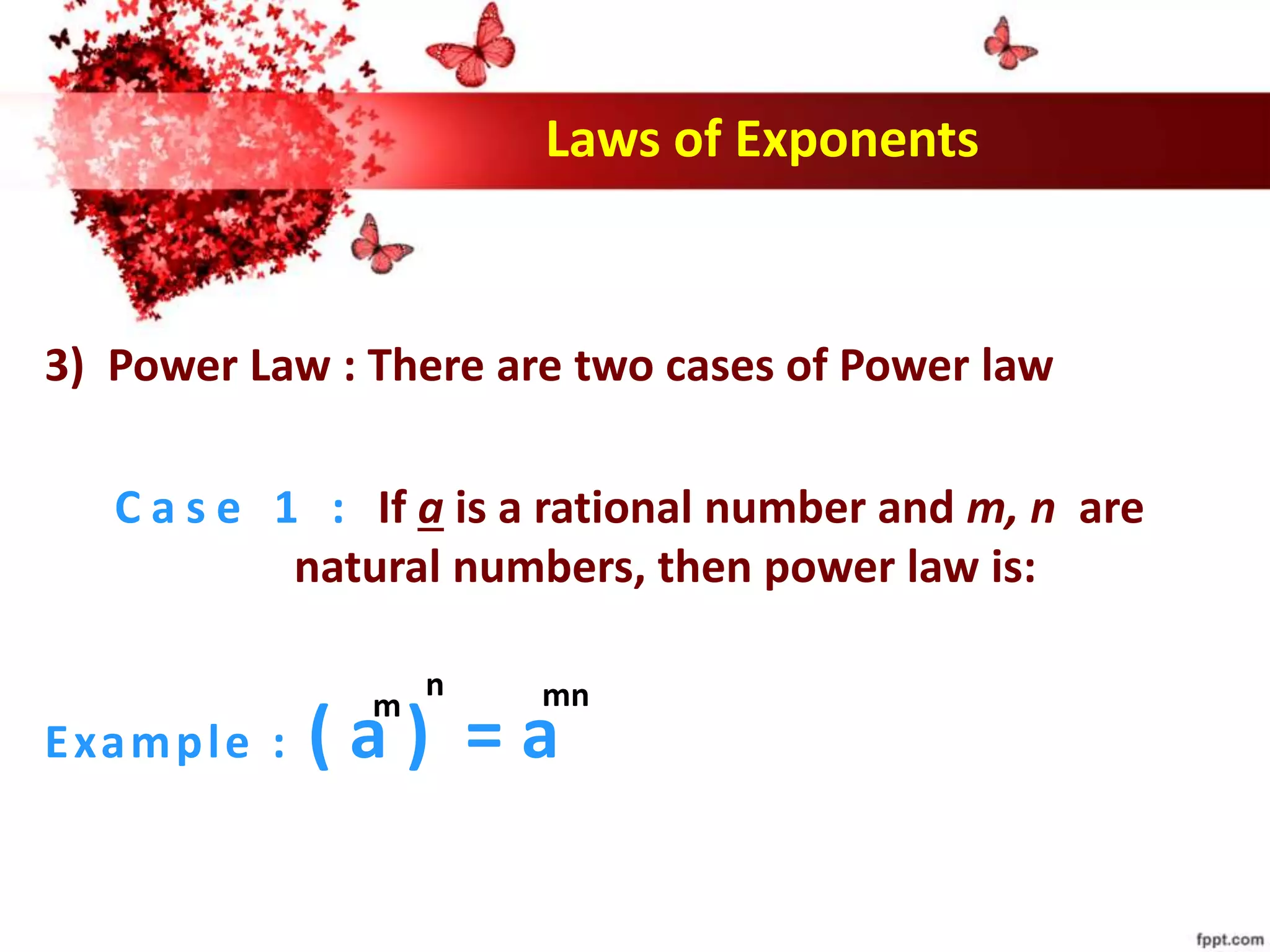
Introduces Power Law and presents its first case involving a rational number and natural numbers.
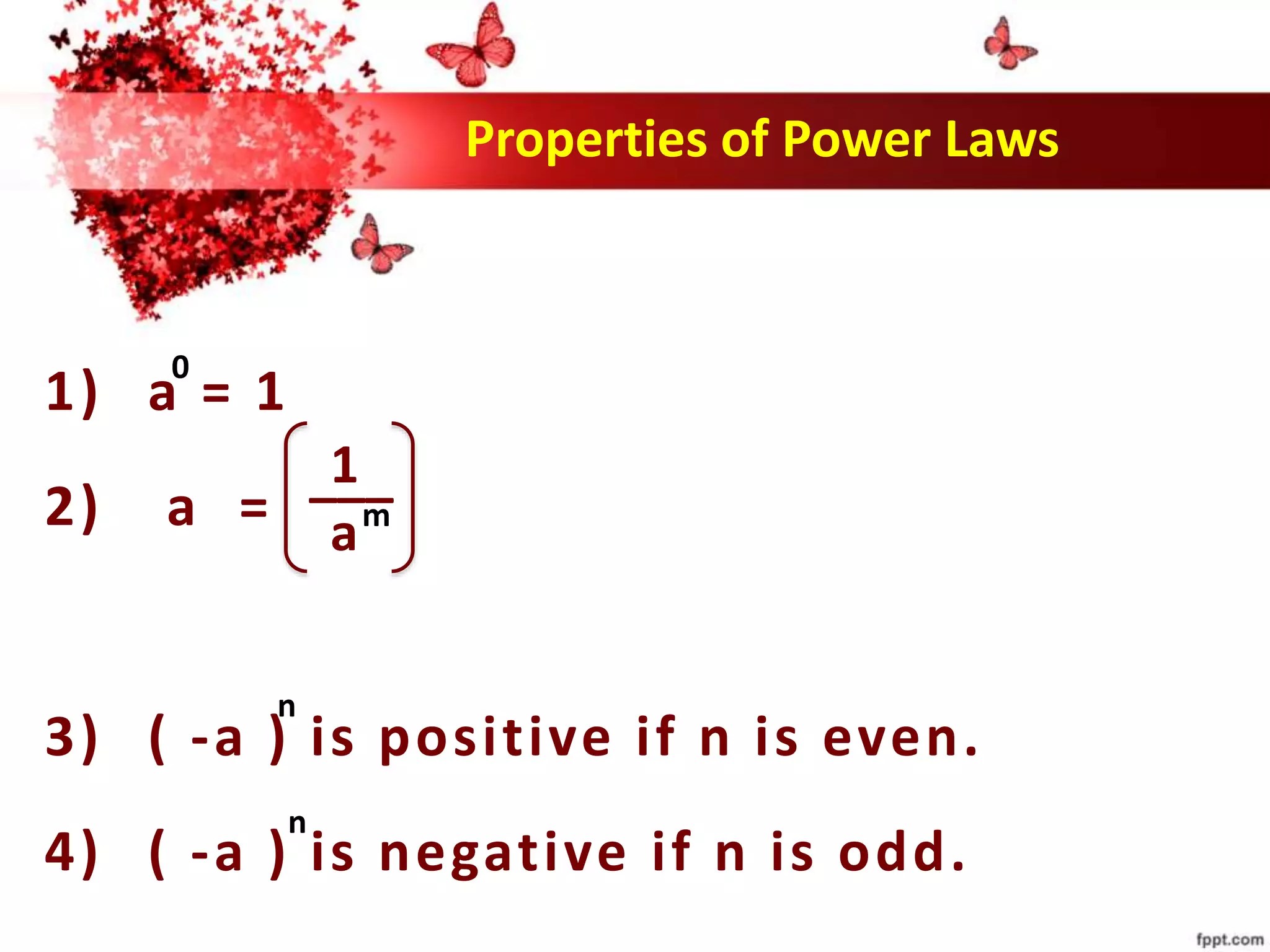
Lists properties of power laws, including behavior of bases under different conditions.
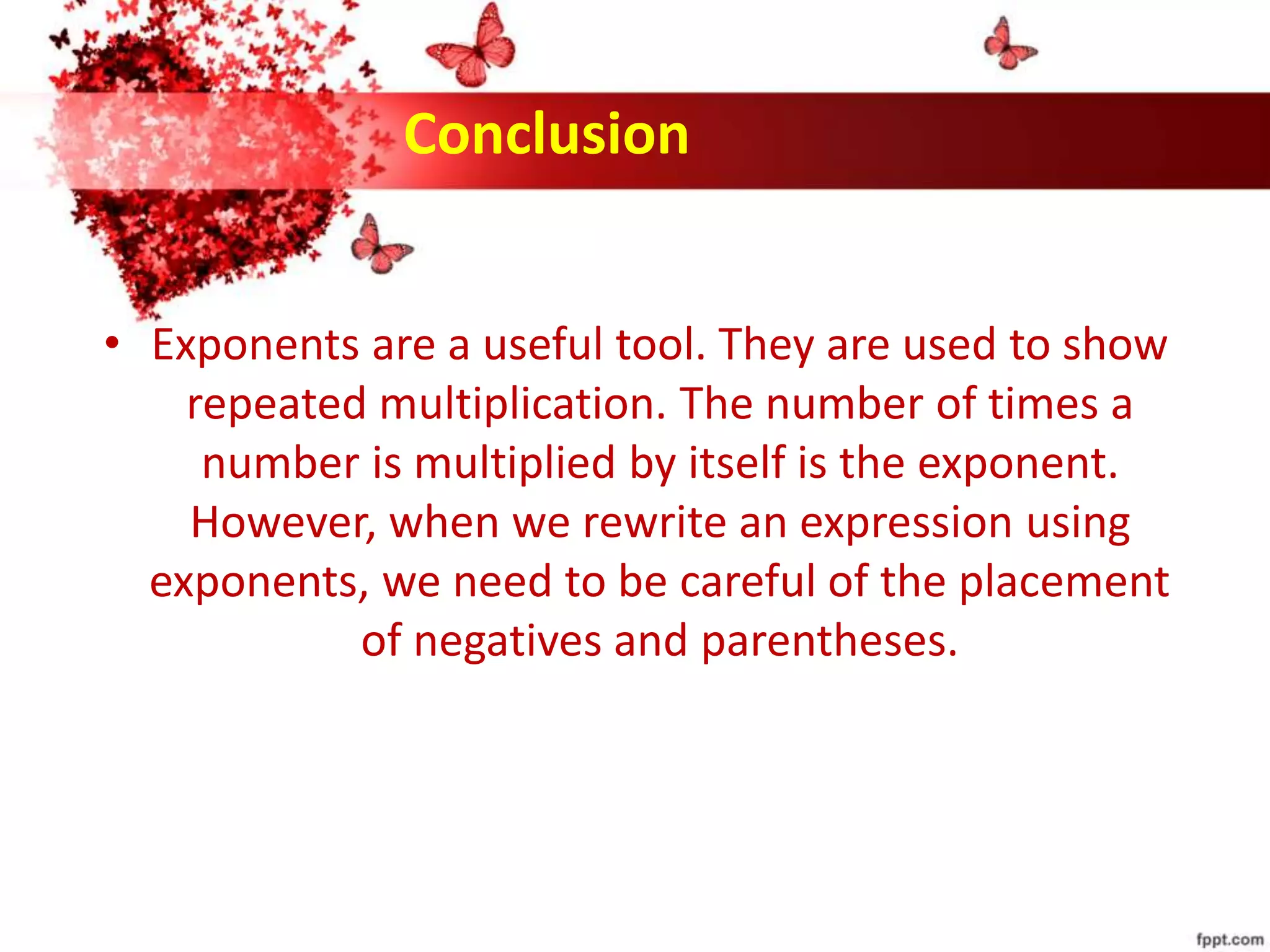
Summarizes the usefulness of exponents in showing repeated multiplication and cautions on negative placements.
Provides references, including a book and online resources for further reading on exponents.


![Grade 8 Probability Cambridge [PPT]](https://cdn.slidesharecdn.com/ss_thumbnails/g8unit15probability-201206023054-thumbnail.jpg?width=640&height=640&fit=bounds)


