By Ryan Scott
 What is an ‘Expert system’?
 Examples of expert systems
 Advantages and disadvantages of
expert systems
Shell

 What is an ‘Expert system’?

User interface
 An expert system is a piece of problem solving software
 It differs from other problem solving software in the method it uses
to solve the problem
 They generally use a set of rules particular to the field they are based
on to reason, and eventually solve, the problems given to them

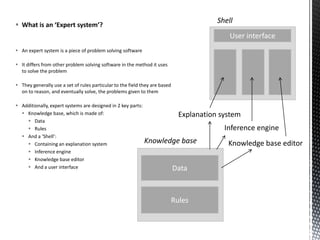
 Additionally, expert systems are designed in 2 key parts:
 Knowledge base, which is made of:
Explanation
 Data
 Rules
 And a ‘Shell’:
Knowledge base
 Containing an explanation system
 Inference engine
 Knowledge base editor
 And a user interface
Data

Rules

system
Inference engine
Knowledge base editor
 Medical diagnosis
 Doctors would use the expert system by
inputting the symptoms the patient
has, and the system will check it’s
knowledge base to see what symptoms
match certain illnesses. These will then be
displayed to the doctor as possible
illnesses.

 Animal and plant identification
 The user answers questions presented by
the system to narrow it’s possible results.
Such question would be:
 “Is it most active during the day?”
 Eventually, the user will receive results
based on both their input and the
system’s knowledge base.
 Advantages
 Reduces time taken to solve
common issues
 Has collaborative knowledge of
experts, so it is more accurate
than a single experts opinion
 Can predict future problems the
current one could cause

 Disadvantages
 Require a lot of resources to set
up:
 Experts
 Time
 Money
 Has to be kept up to date or it is
redundant
 Staff may need training

Expert systems

  • 1.
  • 2.
     What isan ‘Expert system’?  Examples of expert systems  Advantages and disadvantages of expert systems
  • 3.
    Shell  What isan ‘Expert system’? User interface  An expert system is a piece of problem solving software  It differs from other problem solving software in the method it uses to solve the problem  They generally use a set of rules particular to the field they are based on to reason, and eventually solve, the problems given to them  Additionally, expert systems are designed in 2 key parts:  Knowledge base, which is made of: Explanation  Data  Rules  And a ‘Shell’: Knowledge base  Containing an explanation system  Inference engine  Knowledge base editor  And a user interface Data Rules system Inference engine Knowledge base editor
  • 4.
     Medical diagnosis Doctors would use the expert system by inputting the symptoms the patient has, and the system will check it’s knowledge base to see what symptoms match certain illnesses. These will then be displayed to the doctor as possible illnesses.  Animal and plant identification  The user answers questions presented by the system to narrow it’s possible results. Such question would be:  “Is it most active during the day?”  Eventually, the user will receive results based on both their input and the system’s knowledge base.
  • 5.
     Advantages  Reducestime taken to solve common issues  Has collaborative knowledge of experts, so it is more accurate than a single experts opinion  Can predict future problems the current one could cause  Disadvantages  Require a lot of resources to set up:  Experts  Time  Money  Has to be kept up to date or it is redundant  Staff may need training