MYCIN
An Expert
System

NIDHI SINGH
12MTCST016
OUTLINE
 HISTORY
 MYCIN : The Problem
 System Components
 Expert System Structure
 STAGES: in Diagnosis and Treatment

 MYCIN Architecture
 Explanation
 Summary
HISTORY
 MYCIN was developed at Stanford

University in the mid 1970s.
 Project spans a decade

Research started in 1972.

Original Implementation
completed in 1976.

Research continued into the
1980s.

MYCIN : The Problem
 Roberts & Visconti [1972]:

 Only 13% of patients are treated.
 66% are being irrational treatment.

21% are being questionable treatment.
• Irrationality means, for example :

 Using a contraindicated combination.
 Using the wrong agent for a specific
organism.
 Not taking the required cultures.
Design Parameter
 Program must be competent and easy

to use.
 Must handle a large changing body of
knowledge.
 Interact with human users.
 Must take time into account.
 Work with incomplete and uncertain
information.
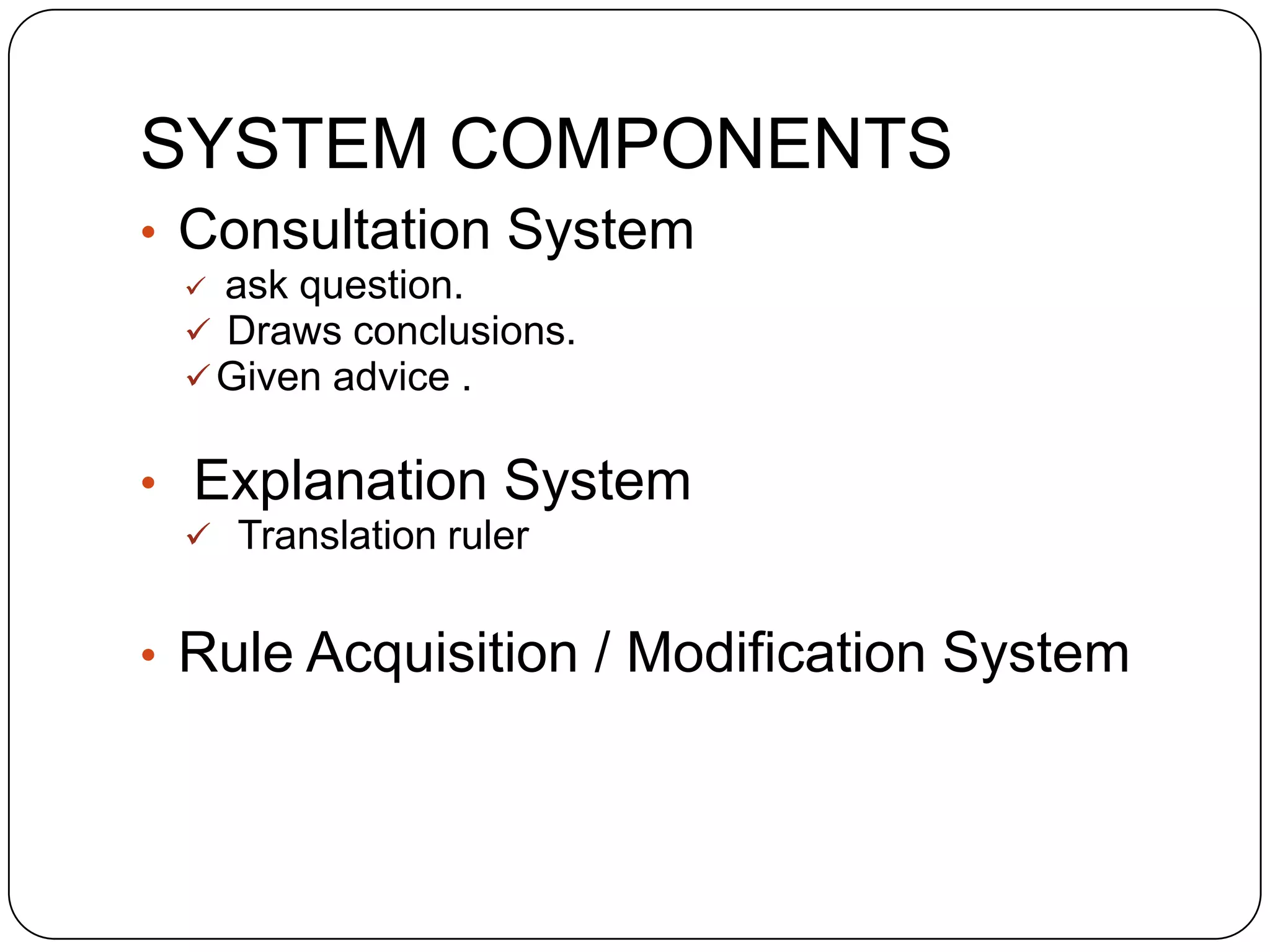
SYSTEM COMPONENTS
• Consultation System
ask question.
 Draws conclusions.
 Given advice .


• Explanation System
 Translation ruler

• Rule Acquisition / Modification System
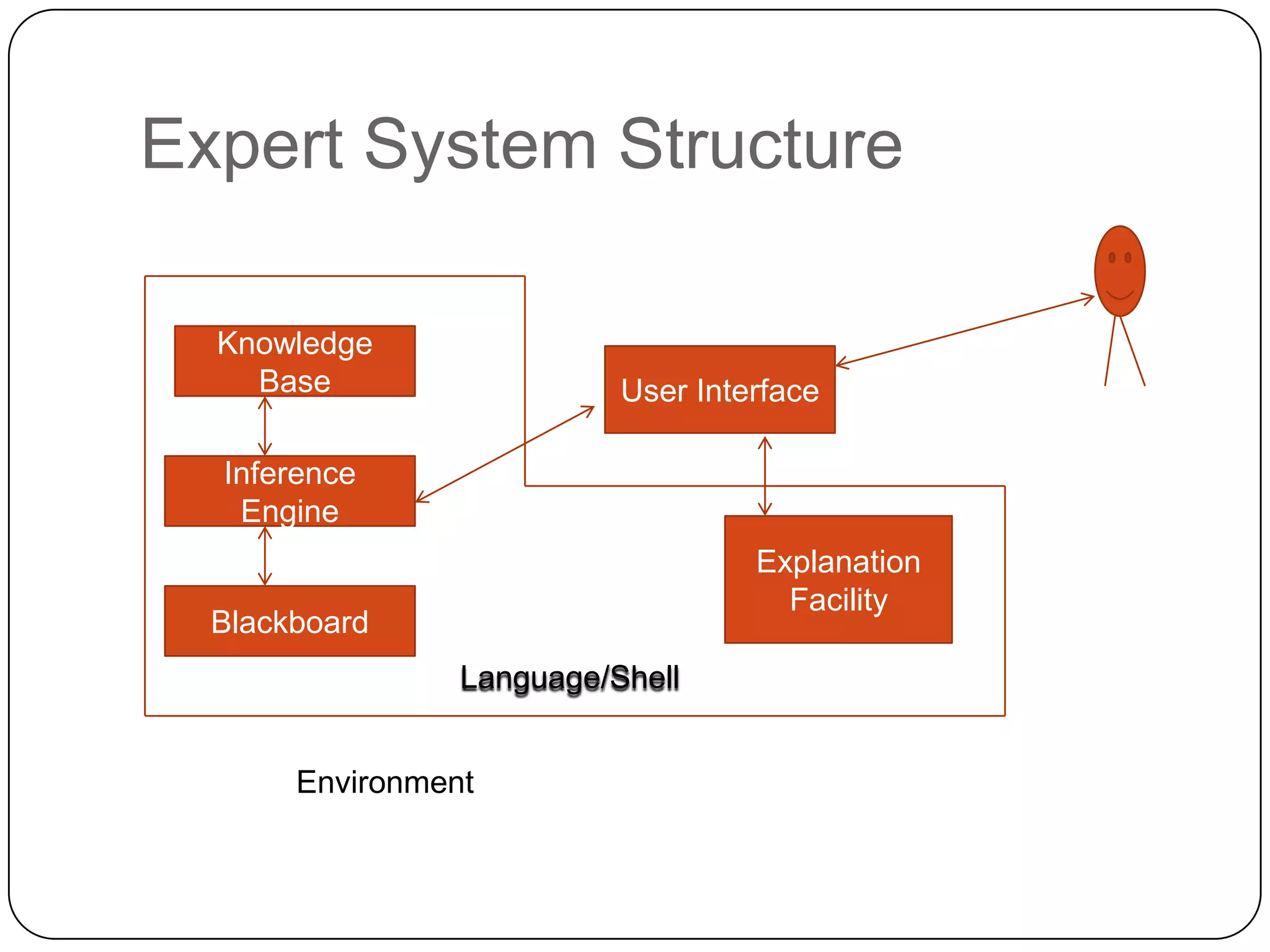
Expert System Structure
Knowledge
Base

User Interface

Inference
Engine
Explanation
Facility

Blackboard
Language/Shell
Environment
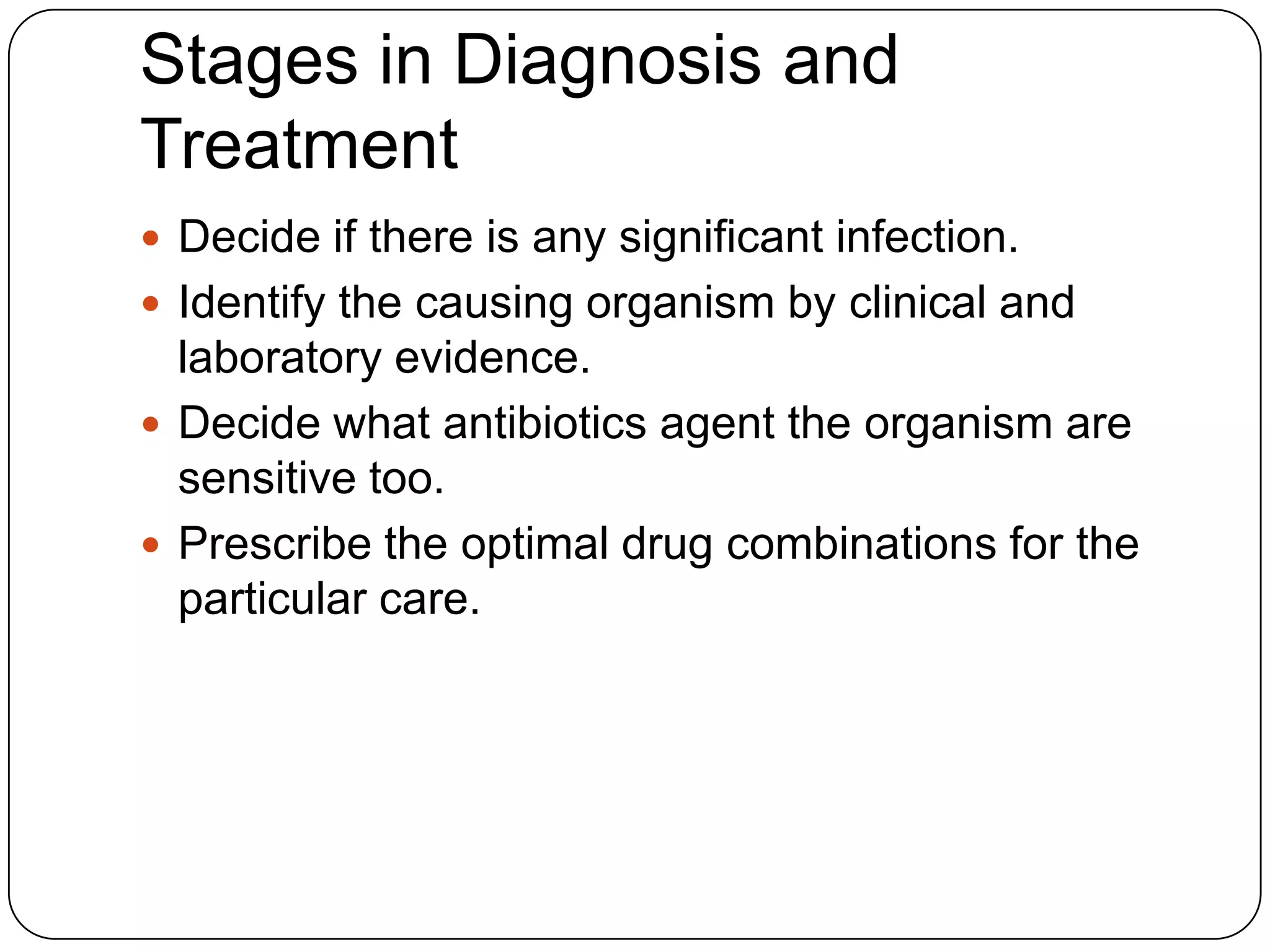
Stages in Diagnosis and
Treatment
 Decide if there is any significant infection.
 Identify the causing organism by clinical and

laboratory evidence.
 Decide what antibiotics agent the organism are
sensitive too.
 Prescribe the optimal drug combinations for the
particular care.
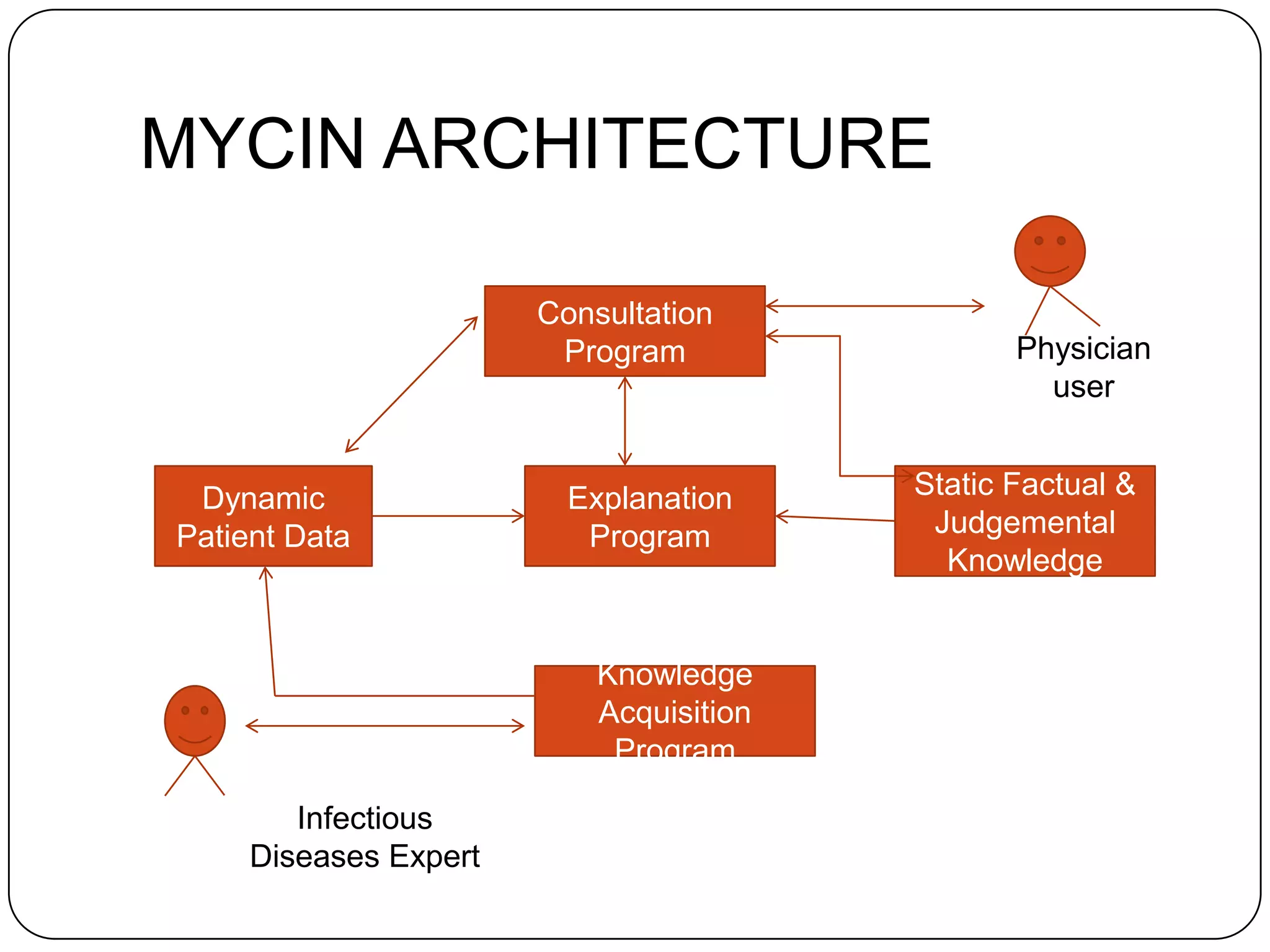
MYCIN ARCHITECTURE
Consultation
Program

Dynamic
Patient Data

Explanation
Program

Knowledge
Acquisition
Program
Infectious
Diseases Expert

Physician
user
Static Factual &
Judgemental
Knowledge
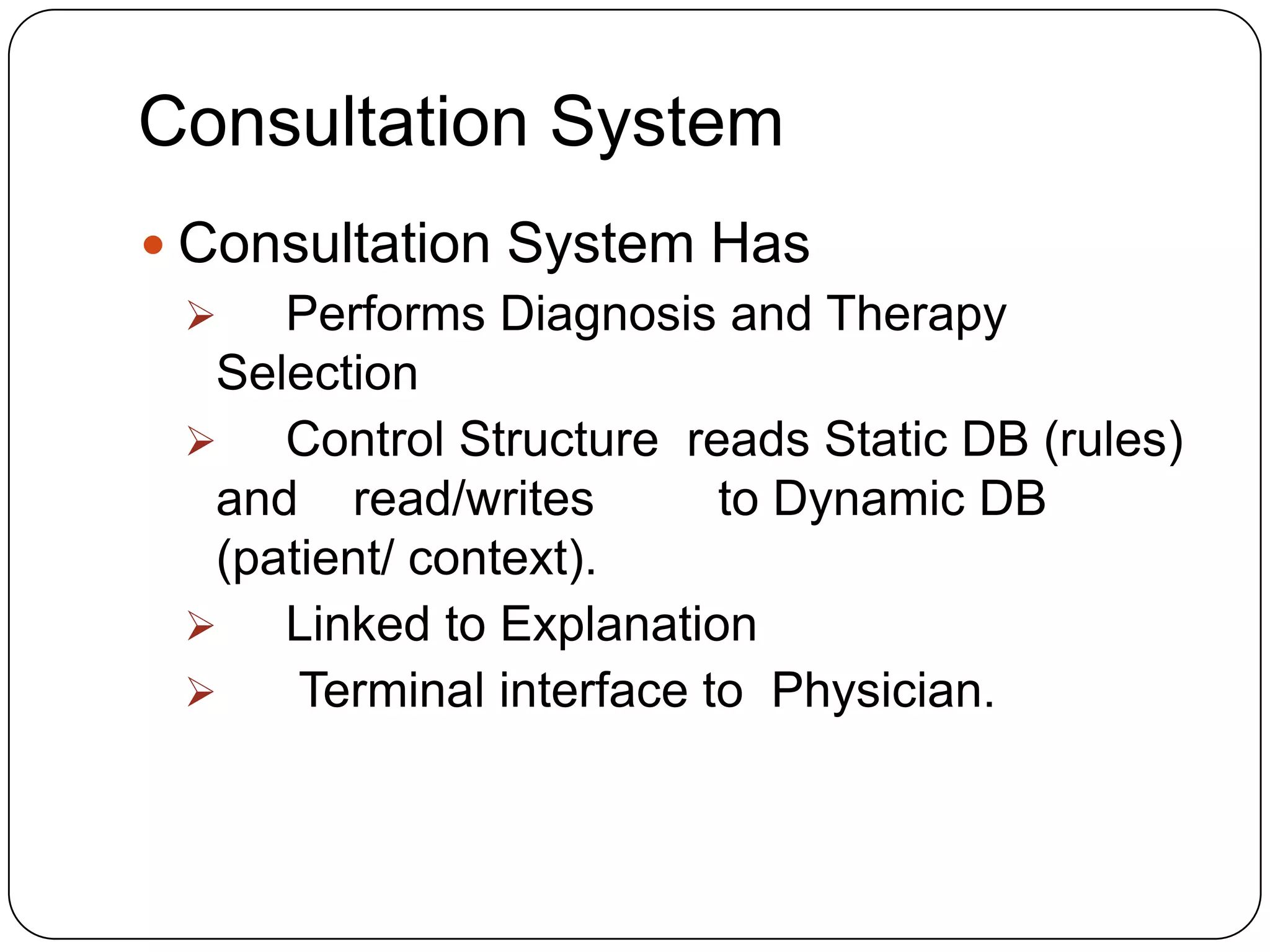
Consultation System
 Consultation System Has

Performs Diagnosis and Therapy
Selection

Control Structure reads Static DB (rules)
and read/writes
to Dynamic DB
(patient/ context).

Linked to Explanation

Terminal interface to Physician.
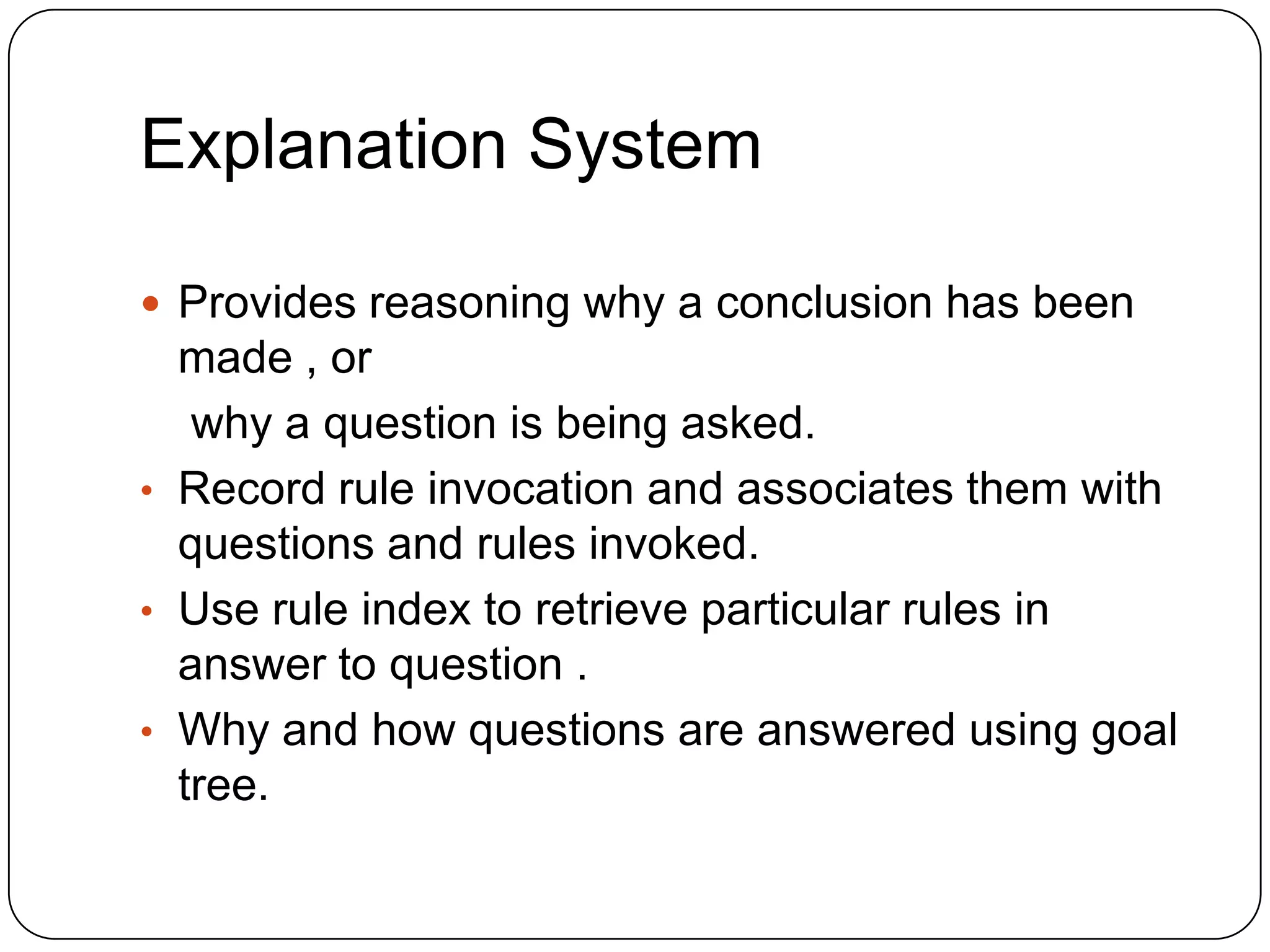
Explanation System
 Provides reasoning why a conclusion has been

made , or
why a question is being asked.
• Record rule invocation and associates them with
questions and rules invoked.
• Use rule index to retrieve particular rules in
answer to question .
• Why and how questions are answered using goal
tree.
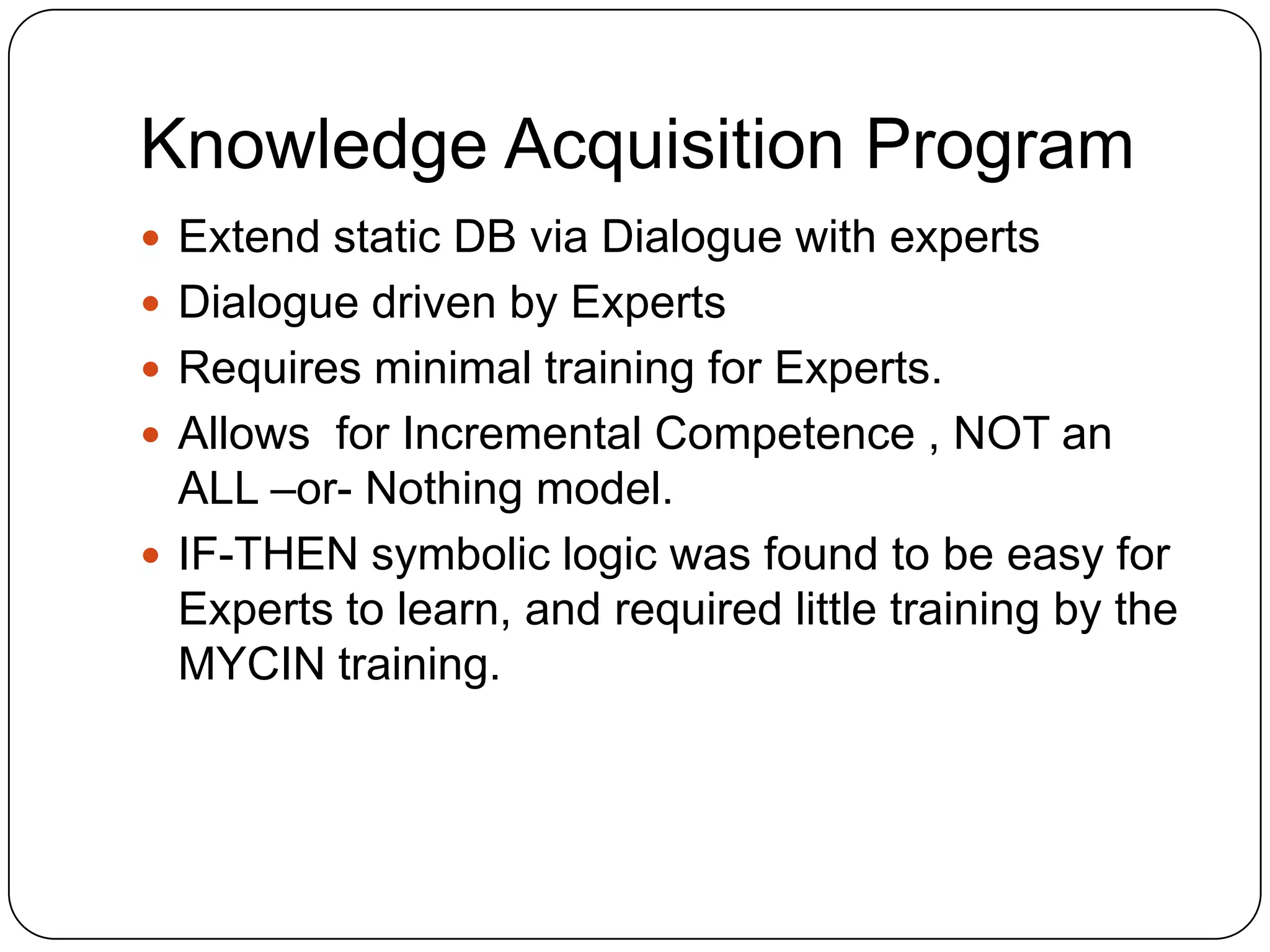
Knowledge Acquisition Program
 Extend static DB via Dialogue with experts
 Dialogue driven by Experts
 Requires minimal training for Experts.
 Allows for Incremental Competence , NOT an

ALL –or- Nothing model.
 IF-THEN symbolic logic was found to be easy for
Experts to learn, and required little training by the
MYCIN training.
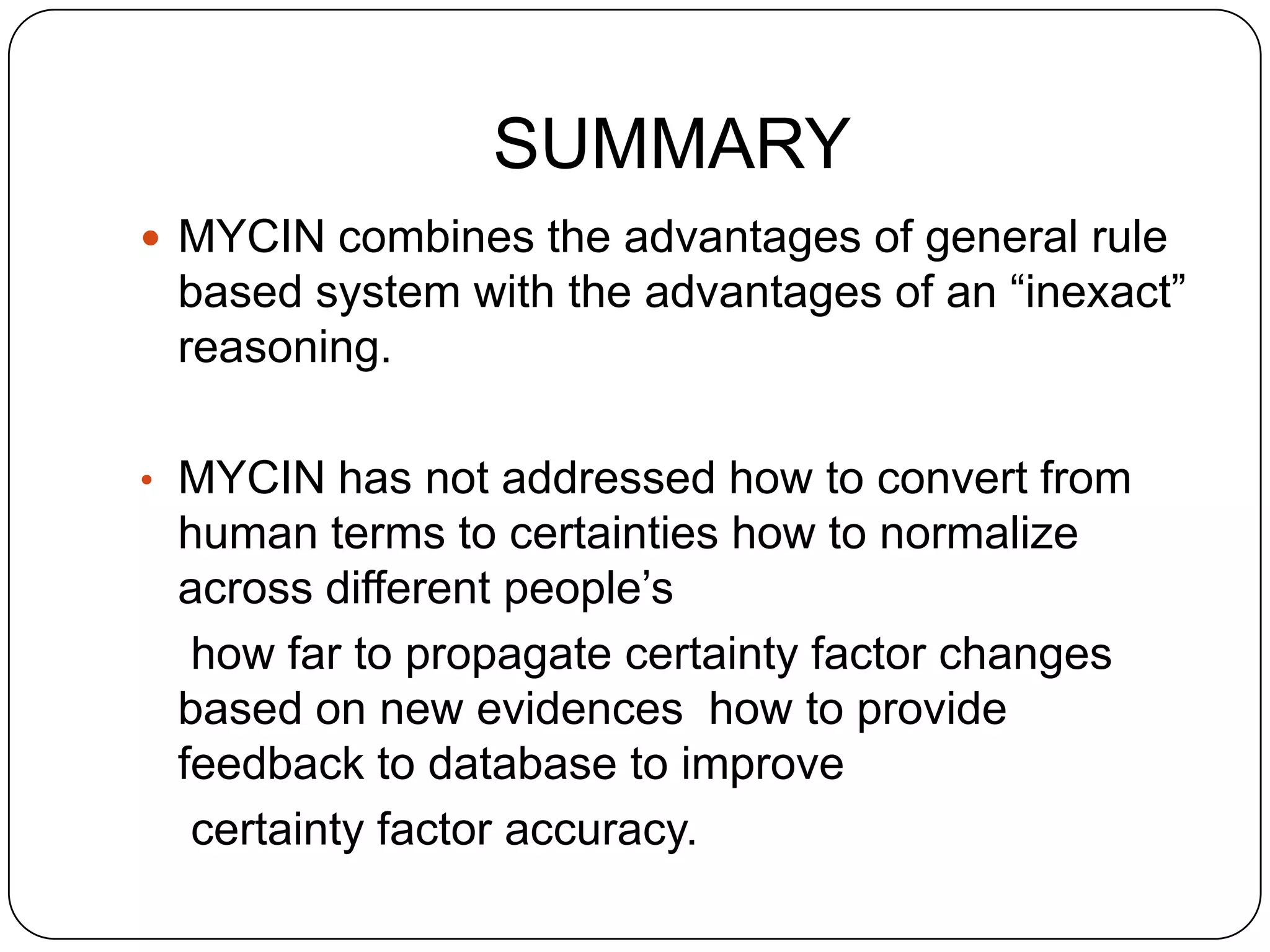
SUMMARY
 MYCIN combines the advantages of general rule

based system with the advantages of an “inexact”
reasoning.
• MYCIN has not addressed how to convert from

human terms to certainties how to normalize
across different people’s
how far to propagate certainty factor changes
based on new evidences how to provide
feedback to database to improve
certainty factor accuracy.
THANK YOU

Mycin 016

  • 1.
  • 2.
    OUTLINE  HISTORY  MYCIN: The Problem  System Components  Expert System Structure  STAGES: in Diagnosis and Treatment  MYCIN Architecture  Explanation  Summary
  • 3.
    HISTORY  MYCIN wasdeveloped at Stanford University in the mid 1970s.  Project spans a decade Research started in 1972.  Original Implementation completed in 1976.  Research continued into the 1980s. 
  • 4.
    MYCIN : TheProblem  Roberts & Visconti [1972]:  Only 13% of patients are treated.  66% are being irrational treatment. 21% are being questionable treatment. • Irrationality means, for example :  Using a contraindicated combination.  Using the wrong agent for a specific organism.  Not taking the required cultures.
  • 5.
    Design Parameter  Programmust be competent and easy to use.  Must handle a large changing body of knowledge.  Interact with human users.  Must take time into account.  Work with incomplete and uncertain information.
  • 6.
    SYSTEM COMPONENTS • ConsultationSystem ask question.  Draws conclusions.  Given advice .  • Explanation System  Translation ruler • Rule Acquisition / Modification System
  • 7.
    Expert System Structure Knowledge Base UserInterface Inference Engine Explanation Facility Blackboard Language/Shell Environment
  • 8.
    Stages in Diagnosisand Treatment  Decide if there is any significant infection.  Identify the causing organism by clinical and laboratory evidence.  Decide what antibiotics agent the organism are sensitive too.  Prescribe the optimal drug combinations for the particular care.
  • 9.
  • 10.
    Consultation System  ConsultationSystem Has  Performs Diagnosis and Therapy Selection  Control Structure reads Static DB (rules) and read/writes to Dynamic DB (patient/ context).  Linked to Explanation  Terminal interface to Physician.
  • 11.
    Explanation System  Providesreasoning why a conclusion has been made , or why a question is being asked. • Record rule invocation and associates them with questions and rules invoked. • Use rule index to retrieve particular rules in answer to question . • Why and how questions are answered using goal tree.
  • 12.
    Knowledge Acquisition Program Extend static DB via Dialogue with experts  Dialogue driven by Experts  Requires minimal training for Experts.  Allows for Incremental Competence , NOT an ALL –or- Nothing model.  IF-THEN symbolic logic was found to be easy for Experts to learn, and required little training by the MYCIN training.
  • 13.
    SUMMARY  MYCIN combinesthe advantages of general rule based system with the advantages of an “inexact” reasoning. • MYCIN has not addressed how to convert from human terms to certainties how to normalize across different people’s how far to propagate certainty factor changes based on new evidences how to provide feedback to database to improve certainty factor accuracy.
  • 14.