Downloaded 33 times


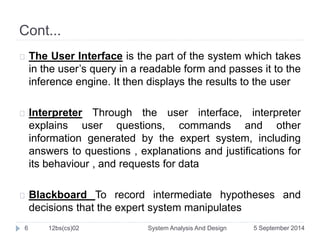


The document discusses expert systems, which are computer programs that use knowledge and reasoning to solve complex problems. It describes the basic components of an expert system as the knowledge base, inference engine, and user interface. The knowledge base contains facts and rules, the inference engine draws conclusions from the knowledge base, and the user interface allows for interaction. Expert systems offer benefits like availability, consistency, and cost-effectiveness compared to human experts, but also have limitations such as limited domains and difficulty maintaining knowledge. Examples of applications include diagnostic tools, medical diagnosis systems, help desks, and making financial decisions.


