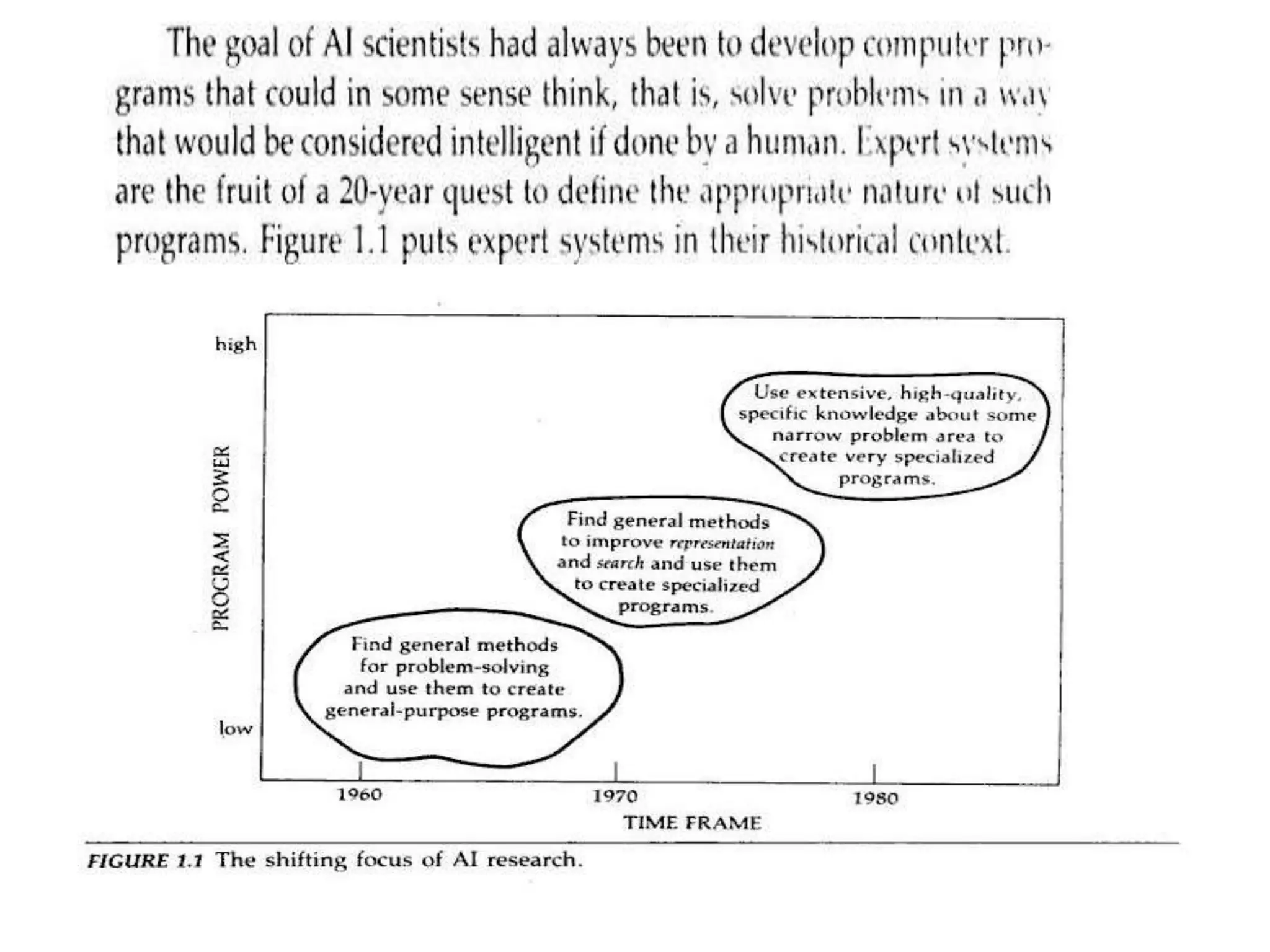
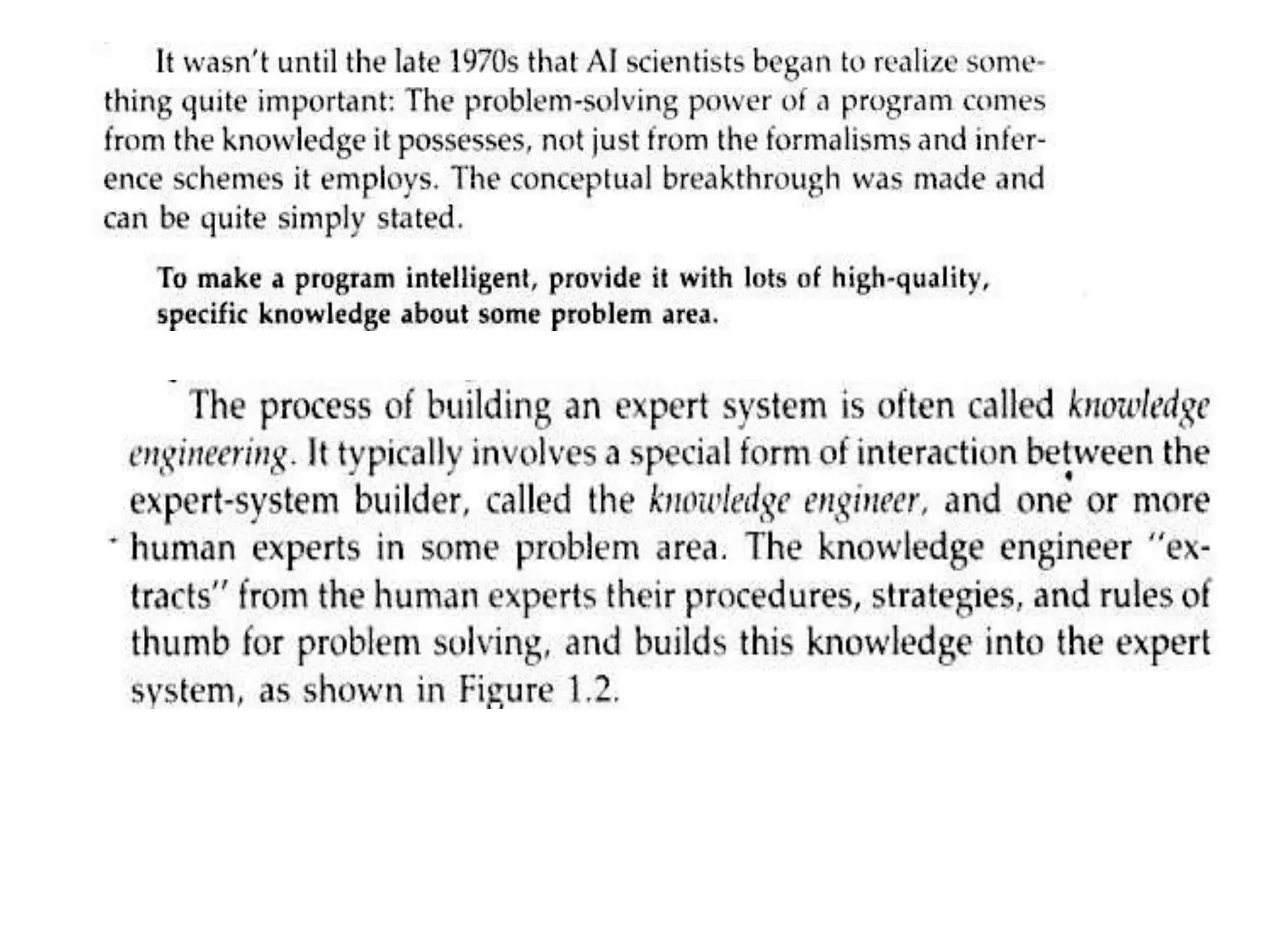
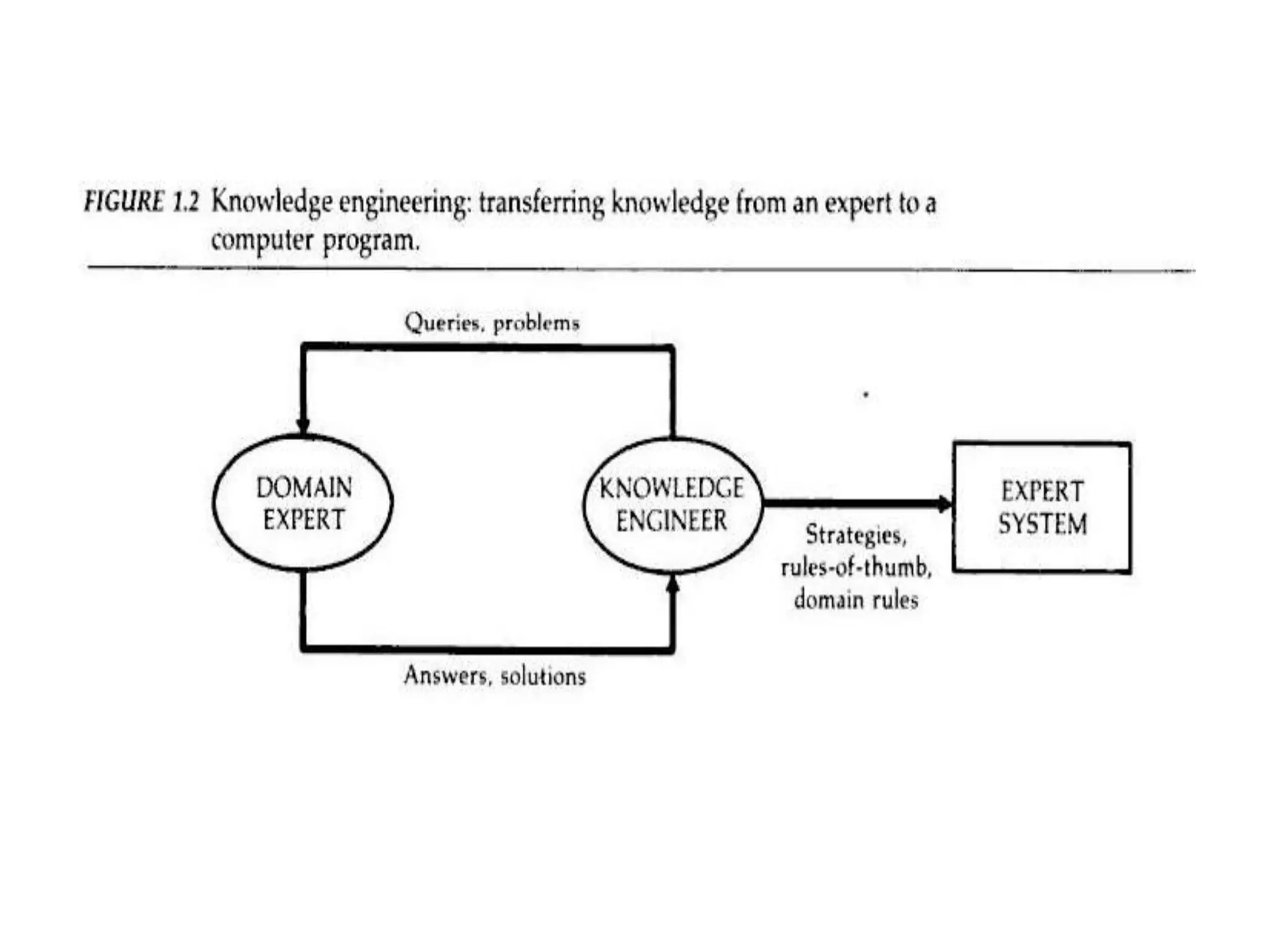
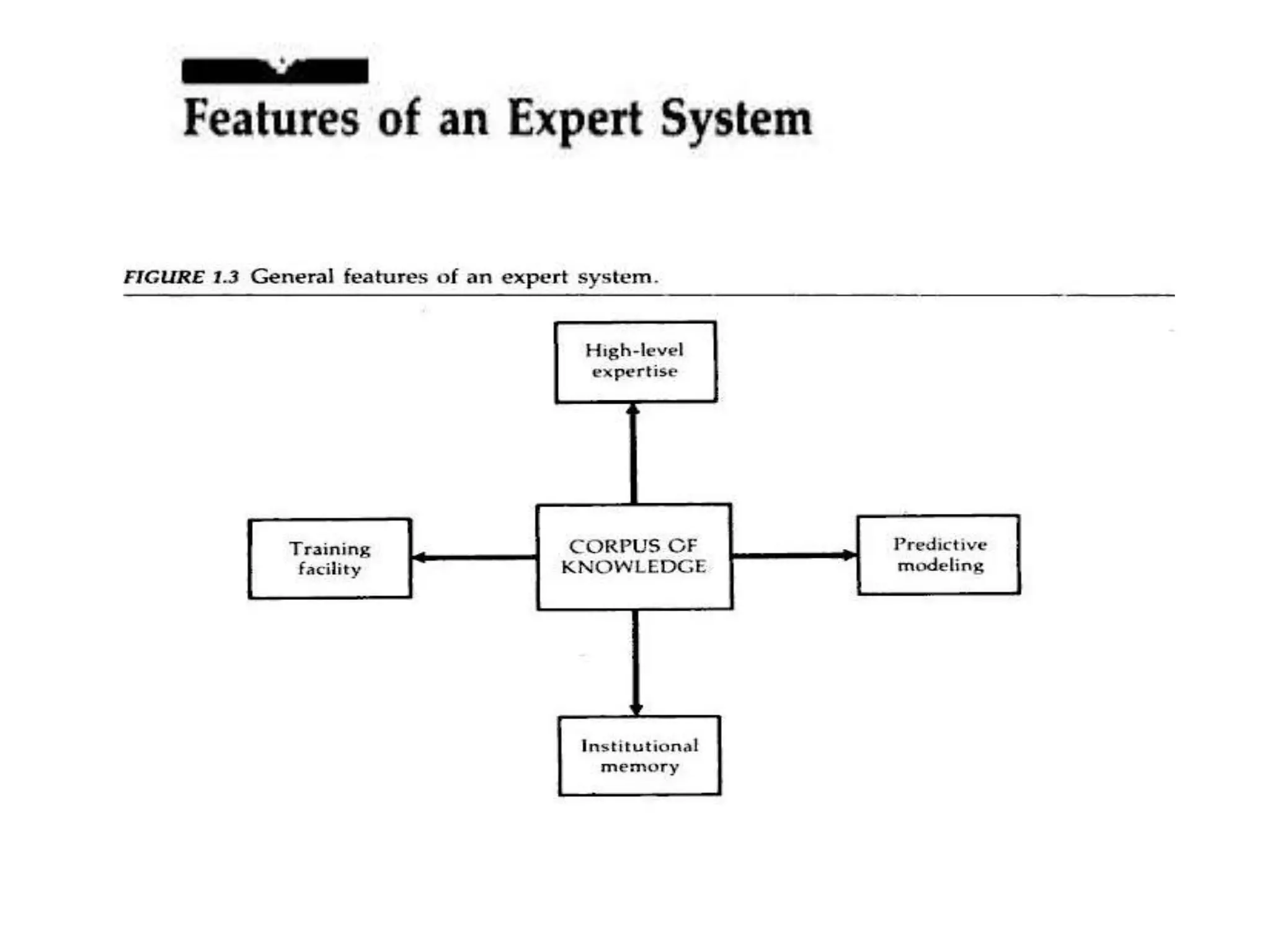
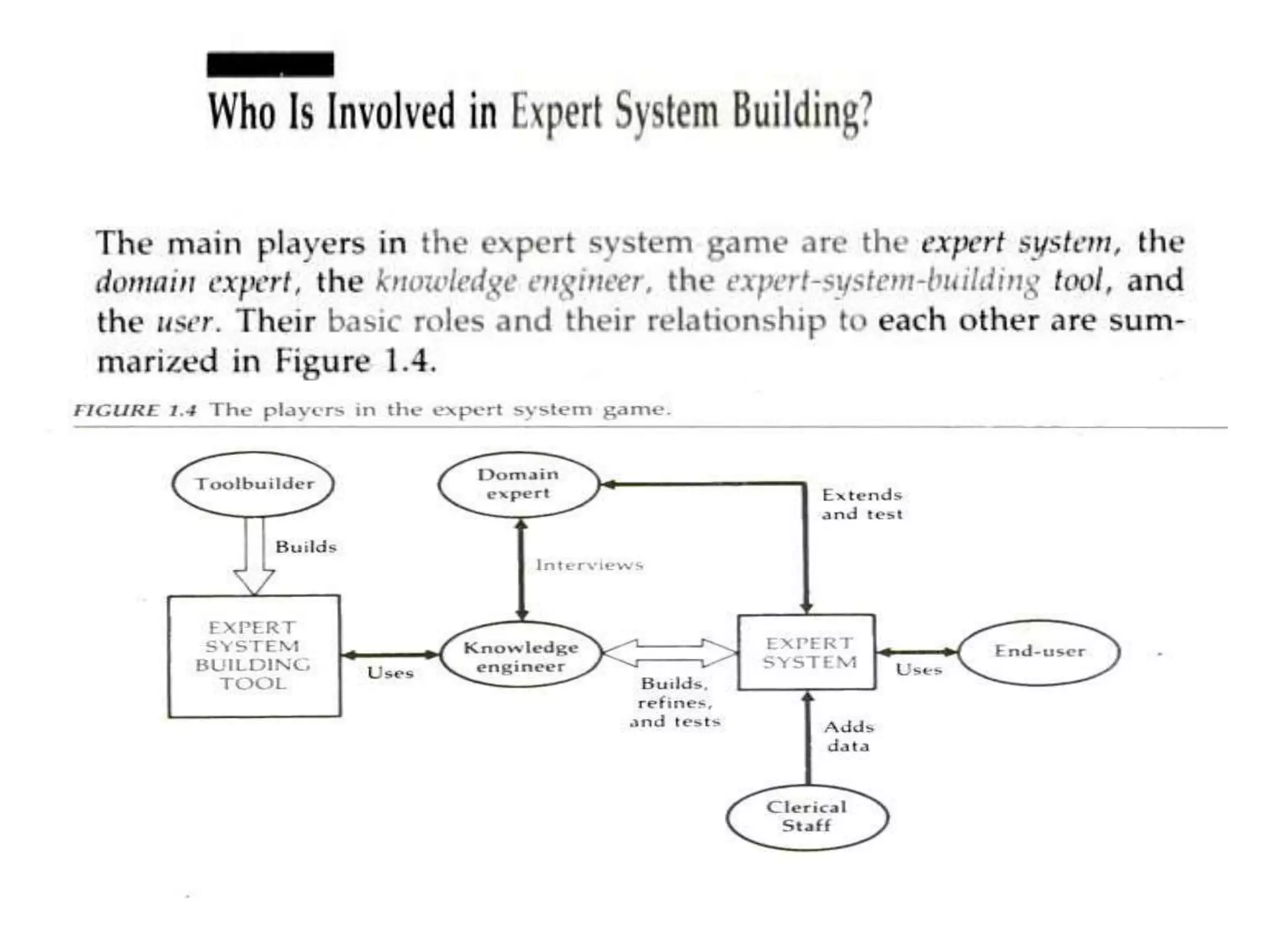
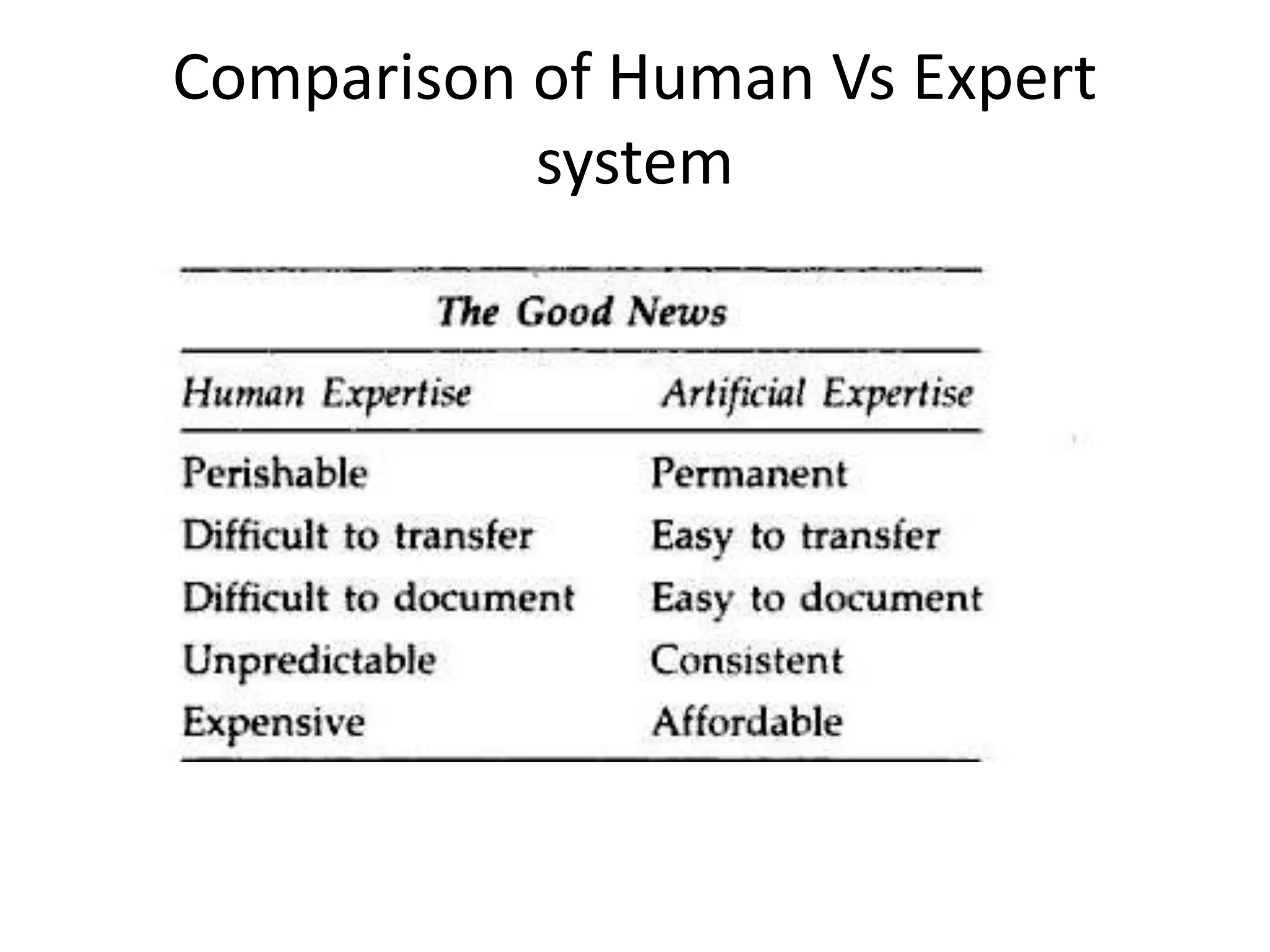
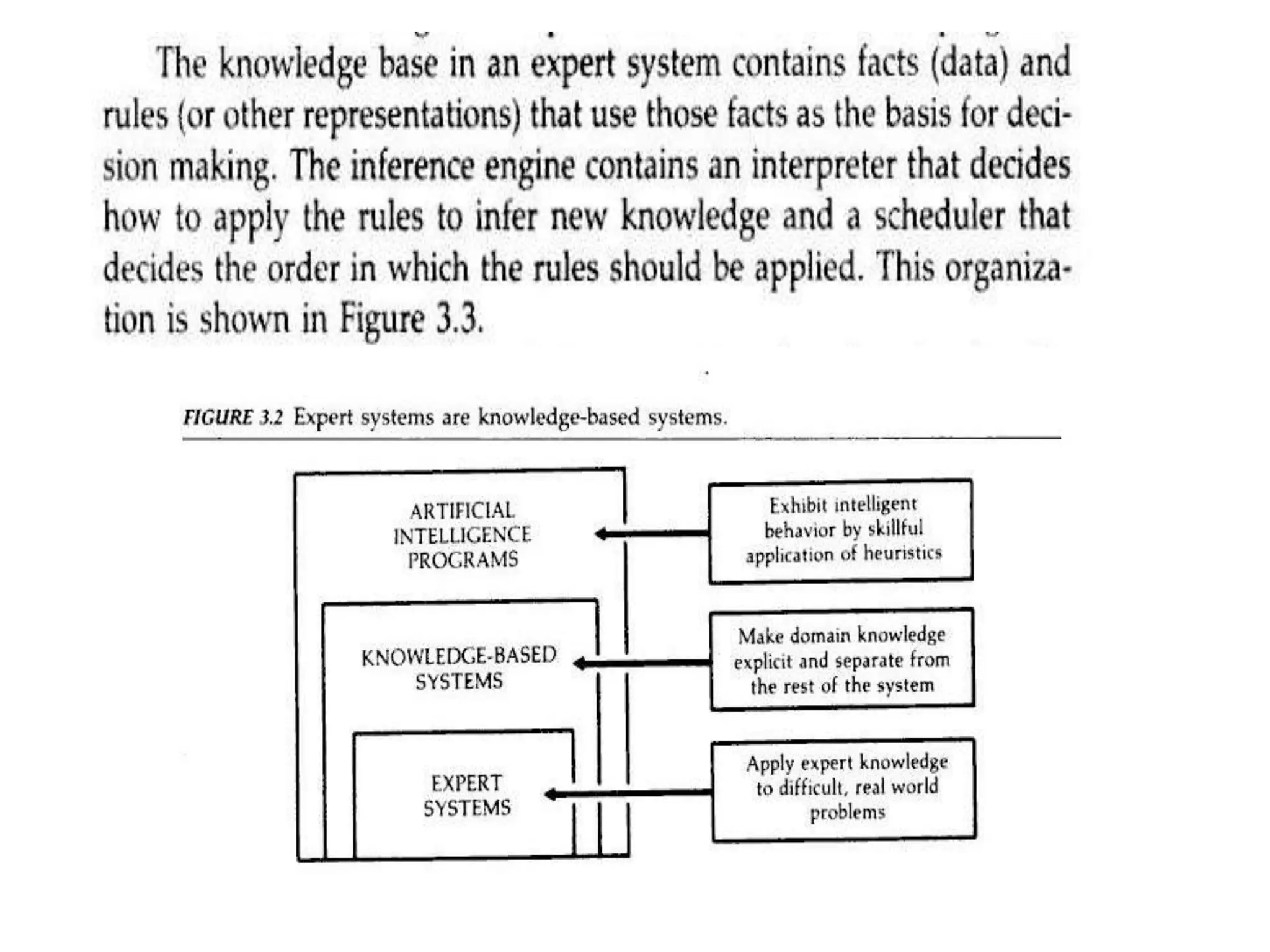
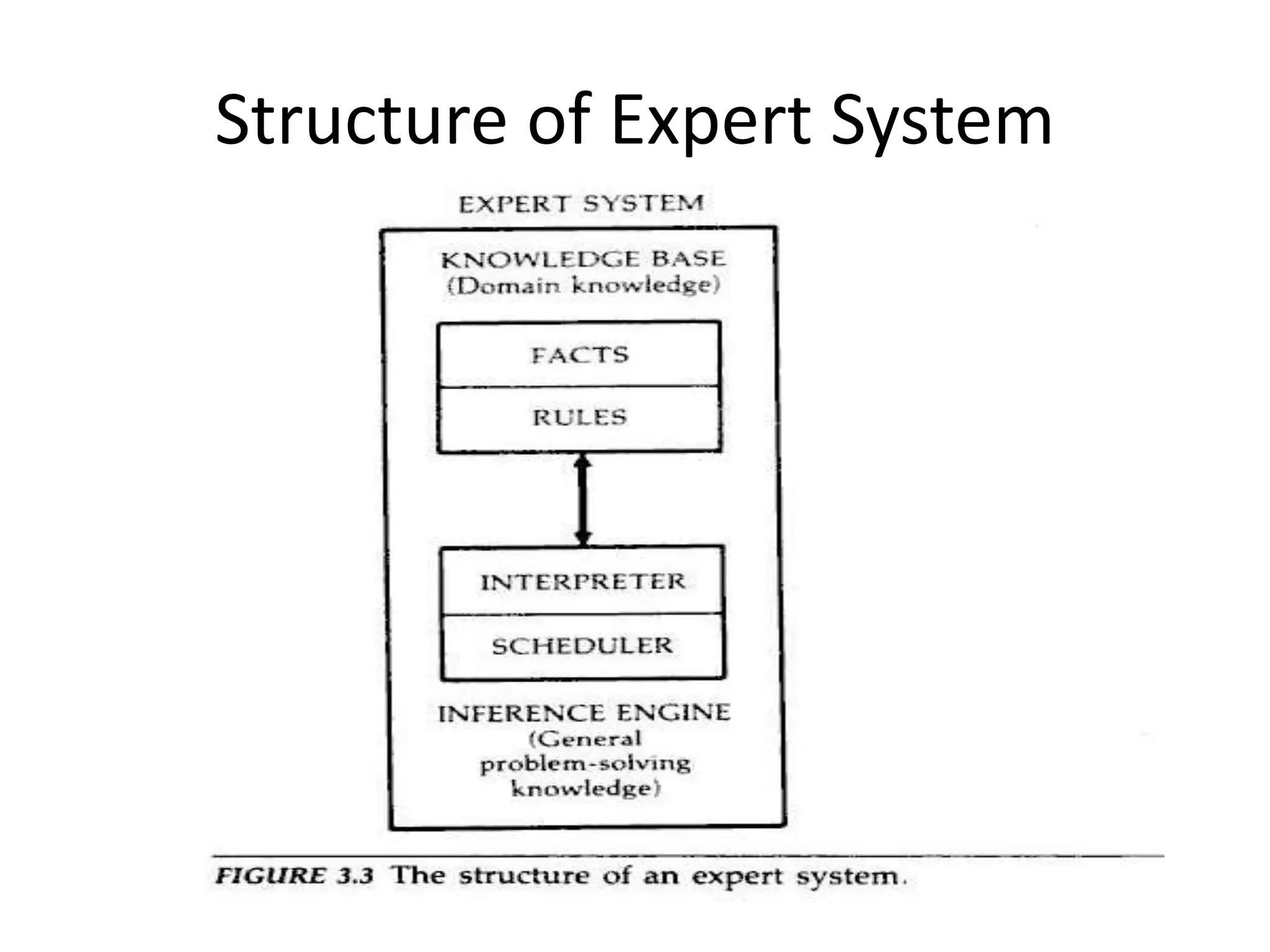
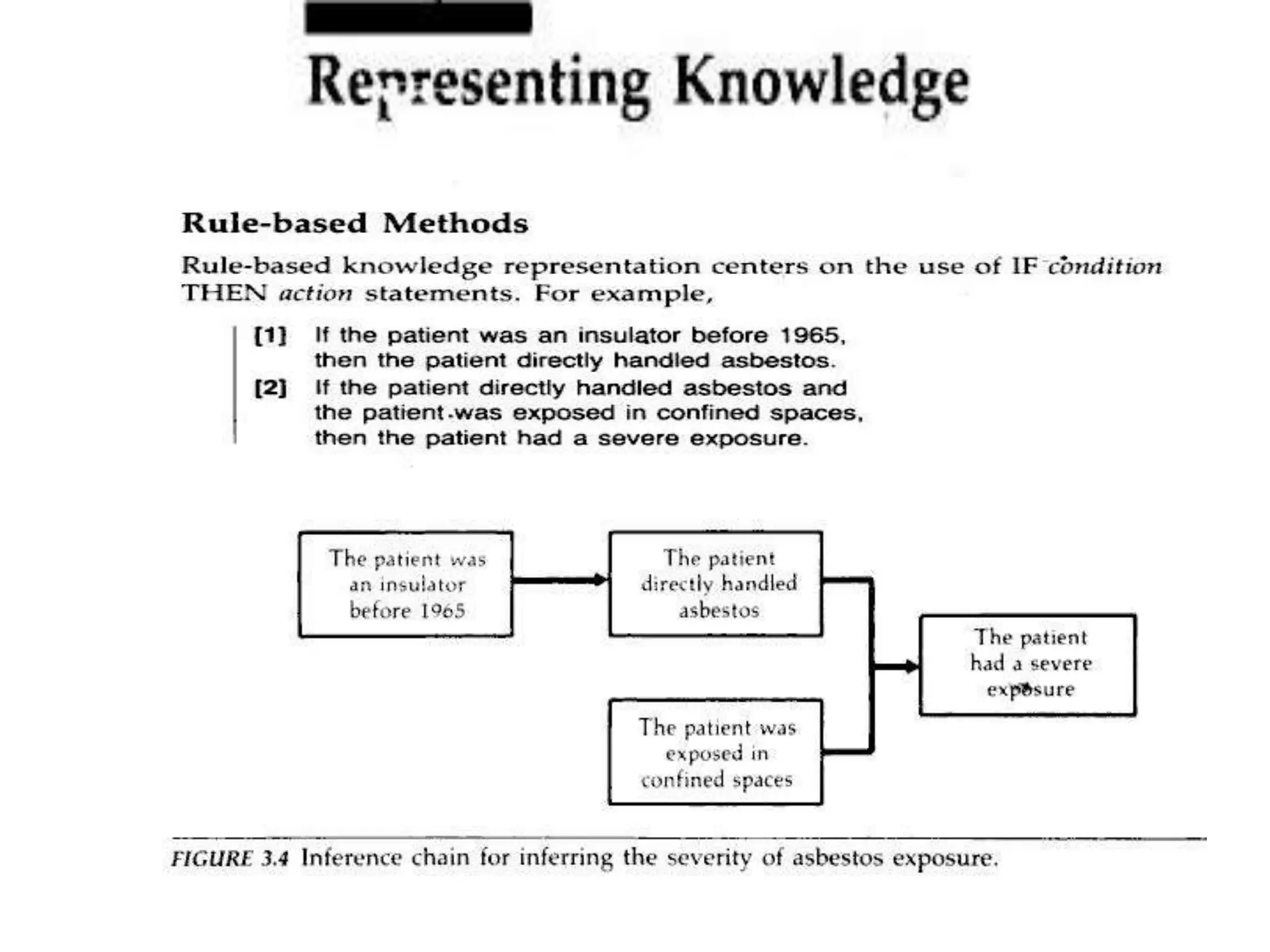
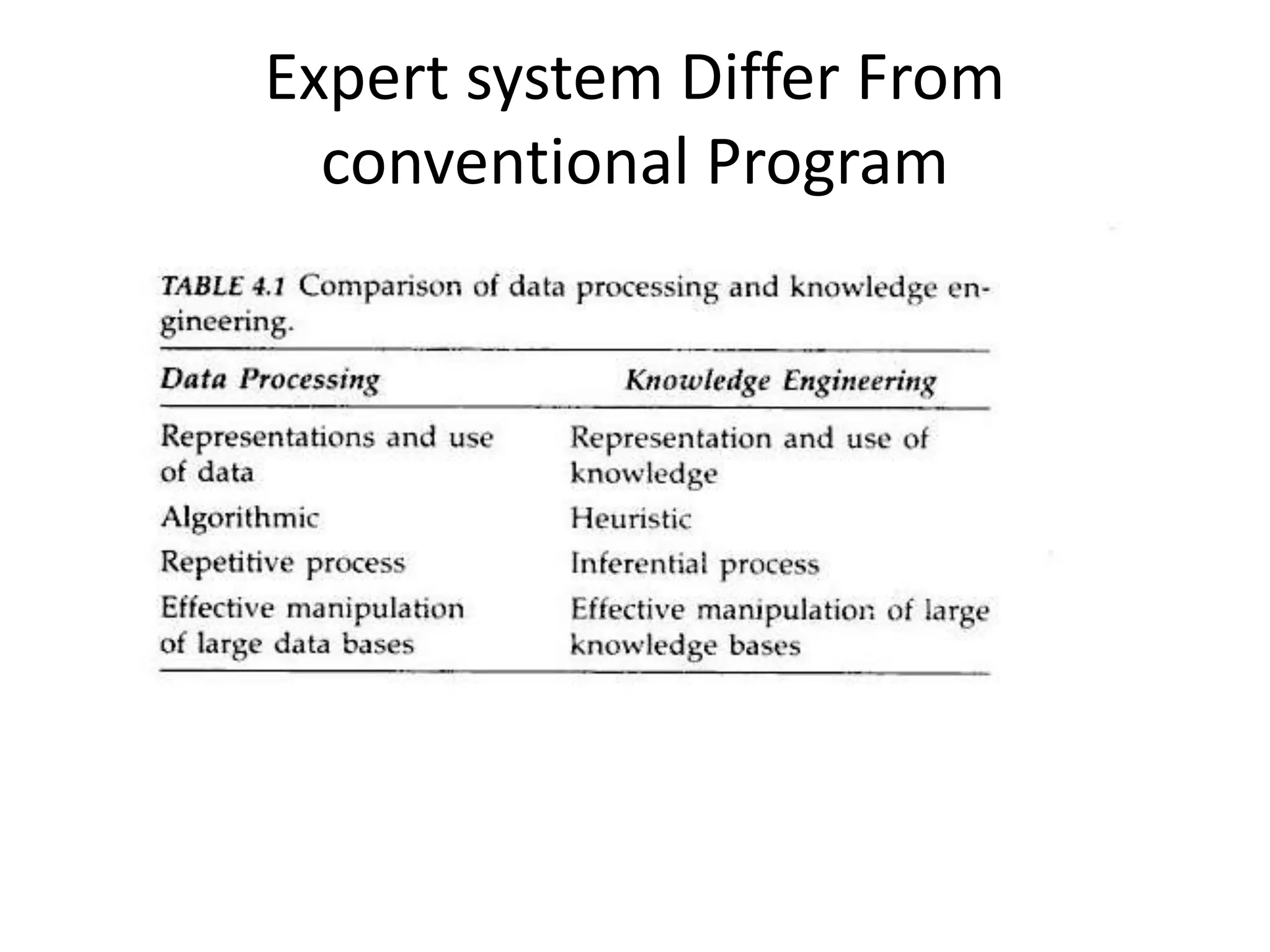
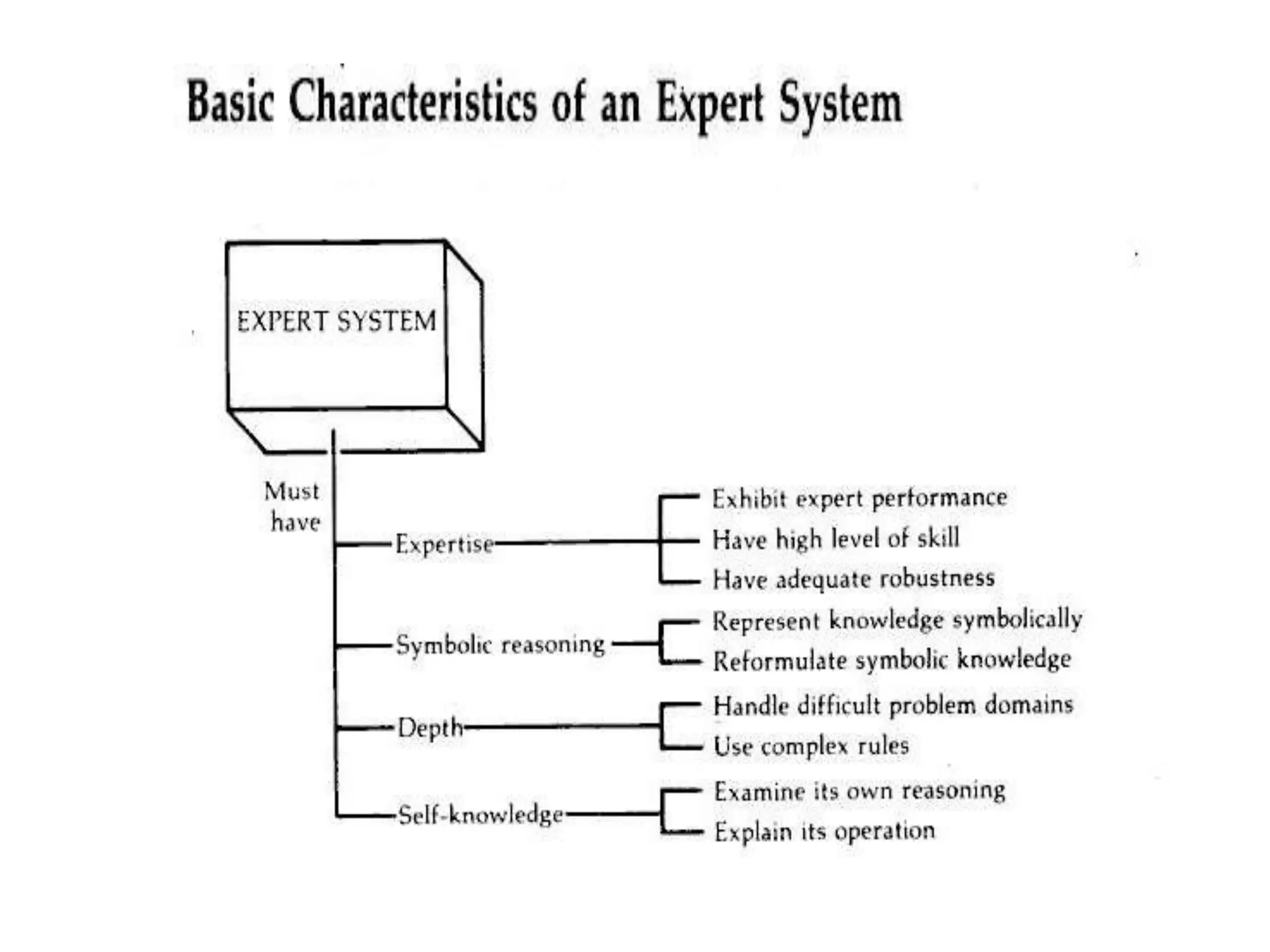
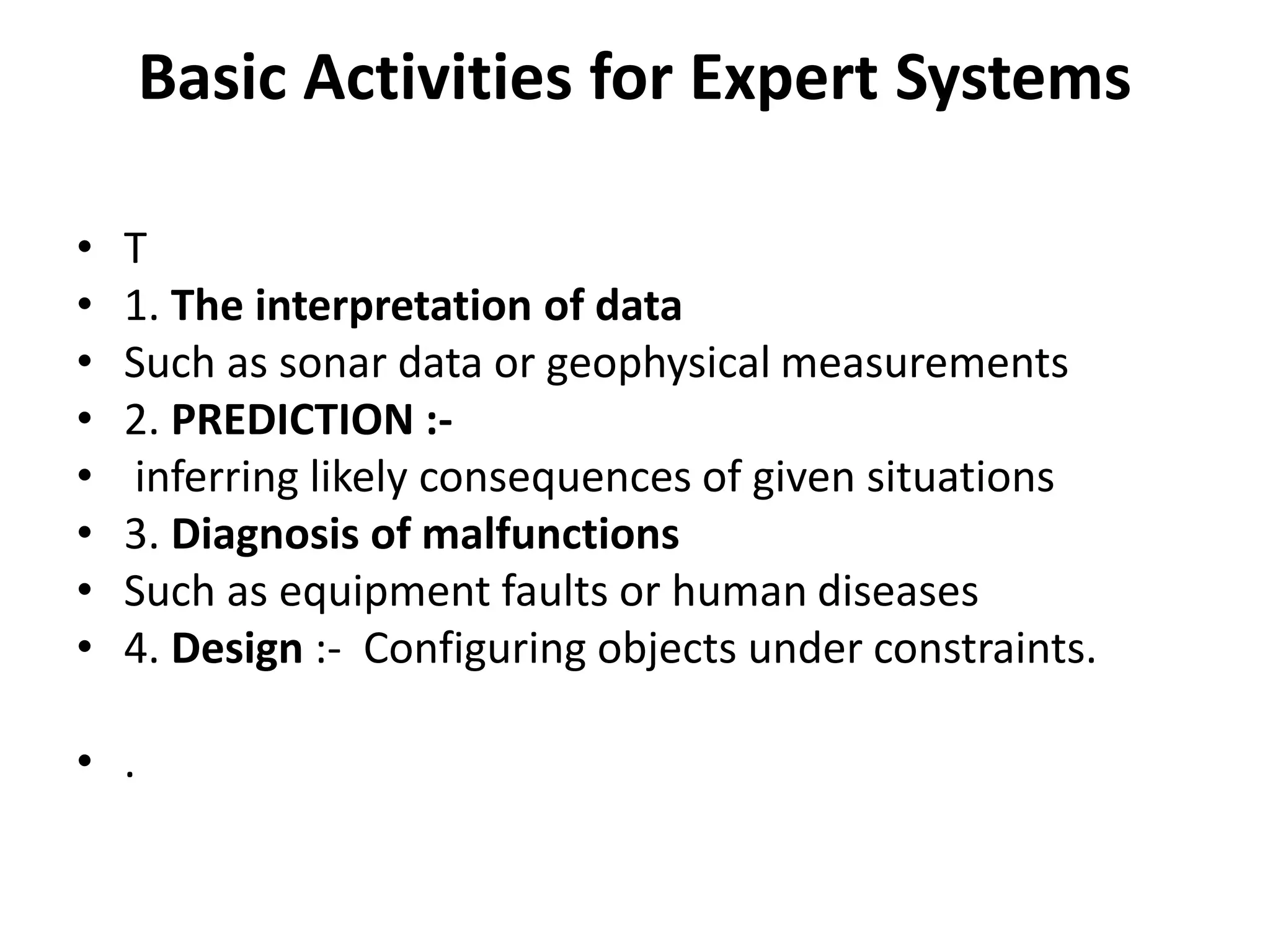
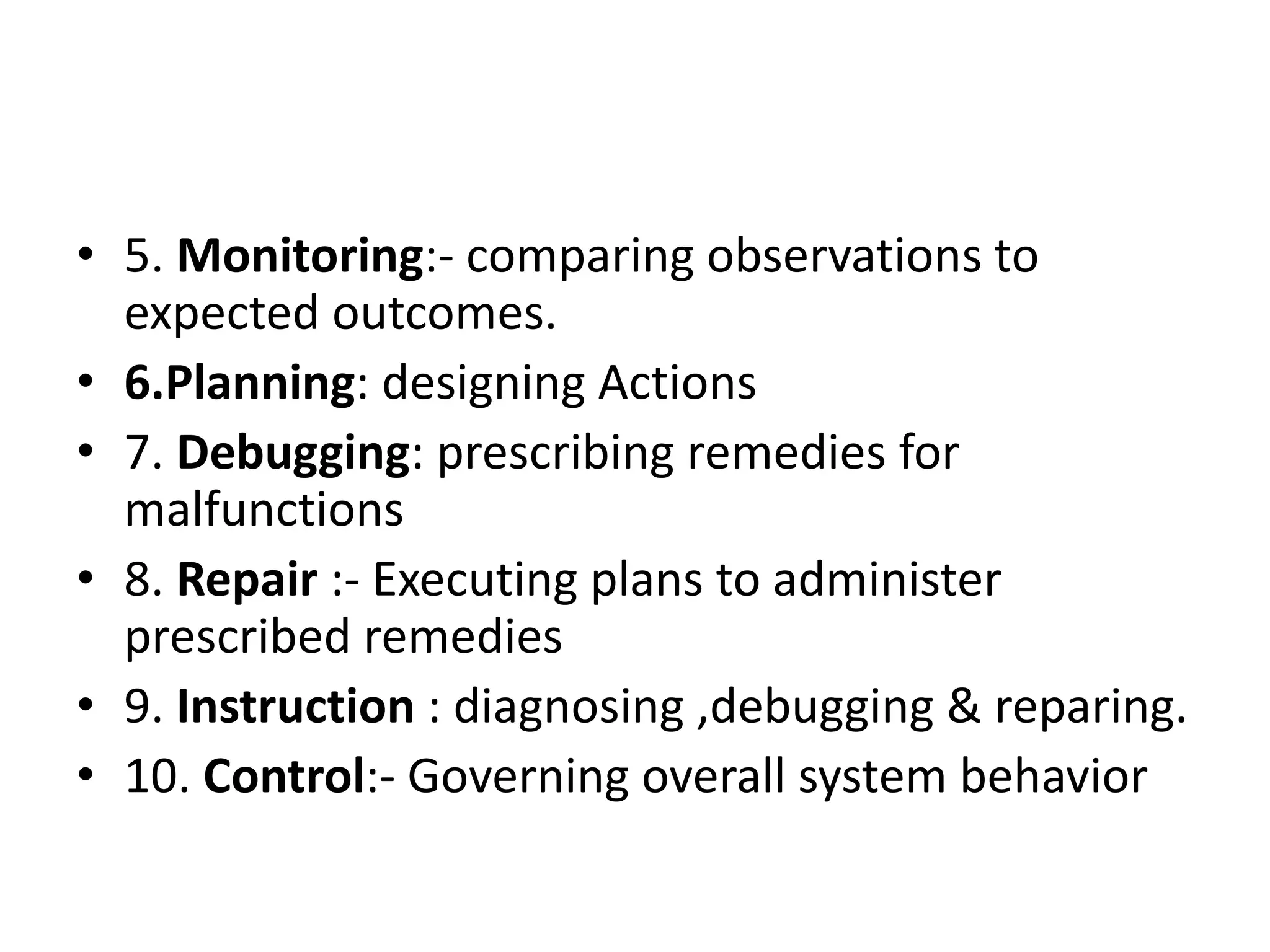
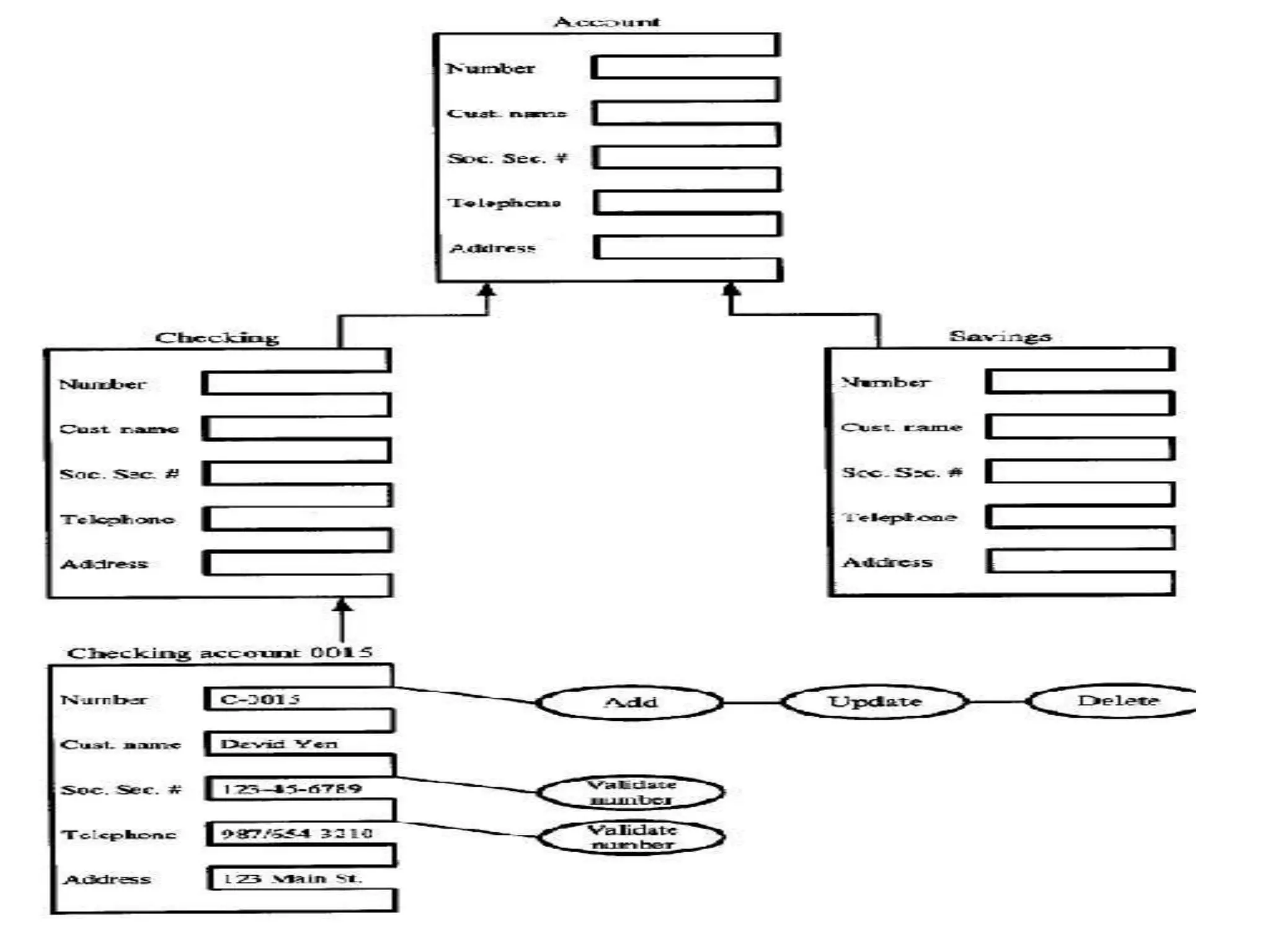
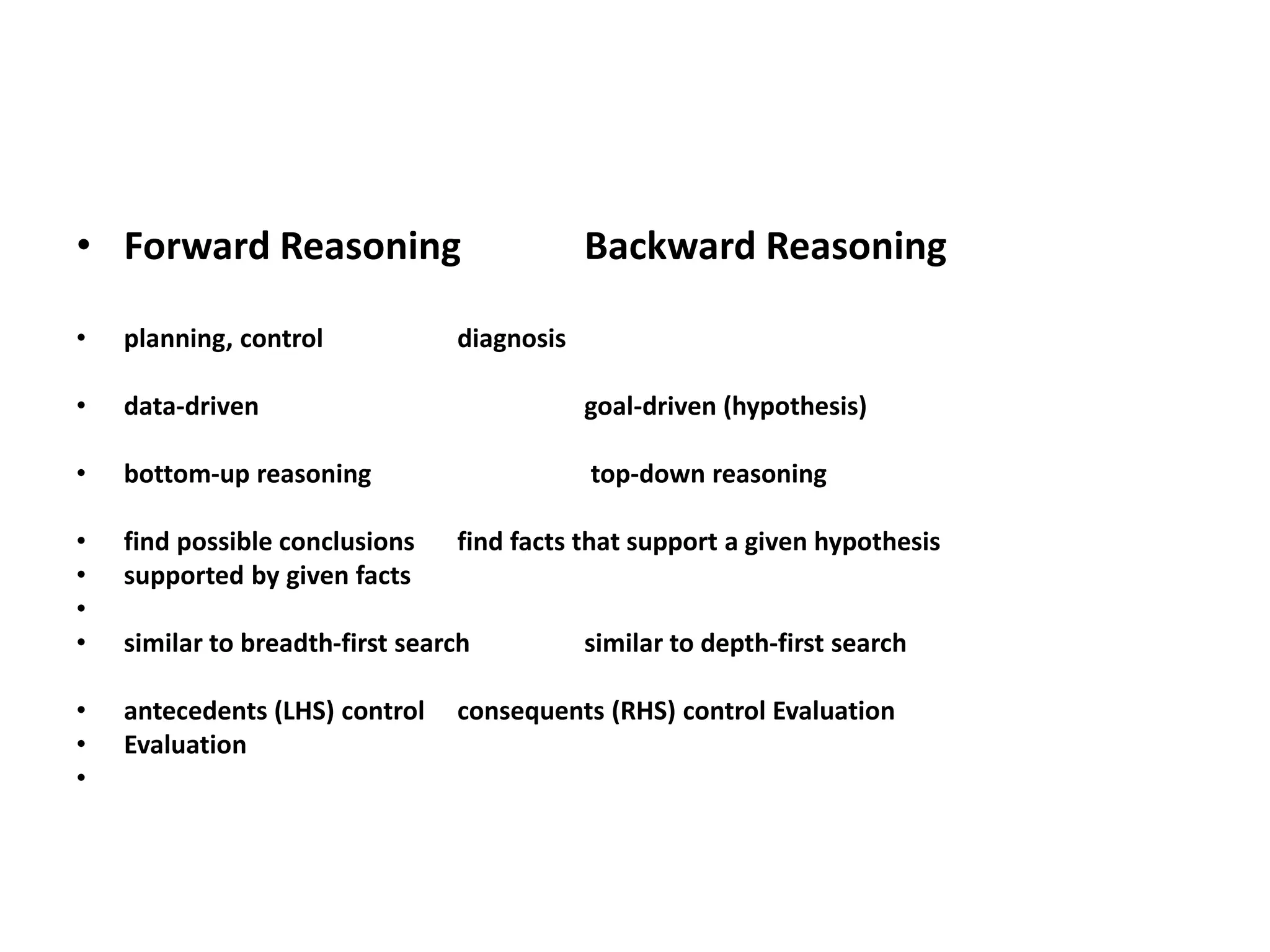
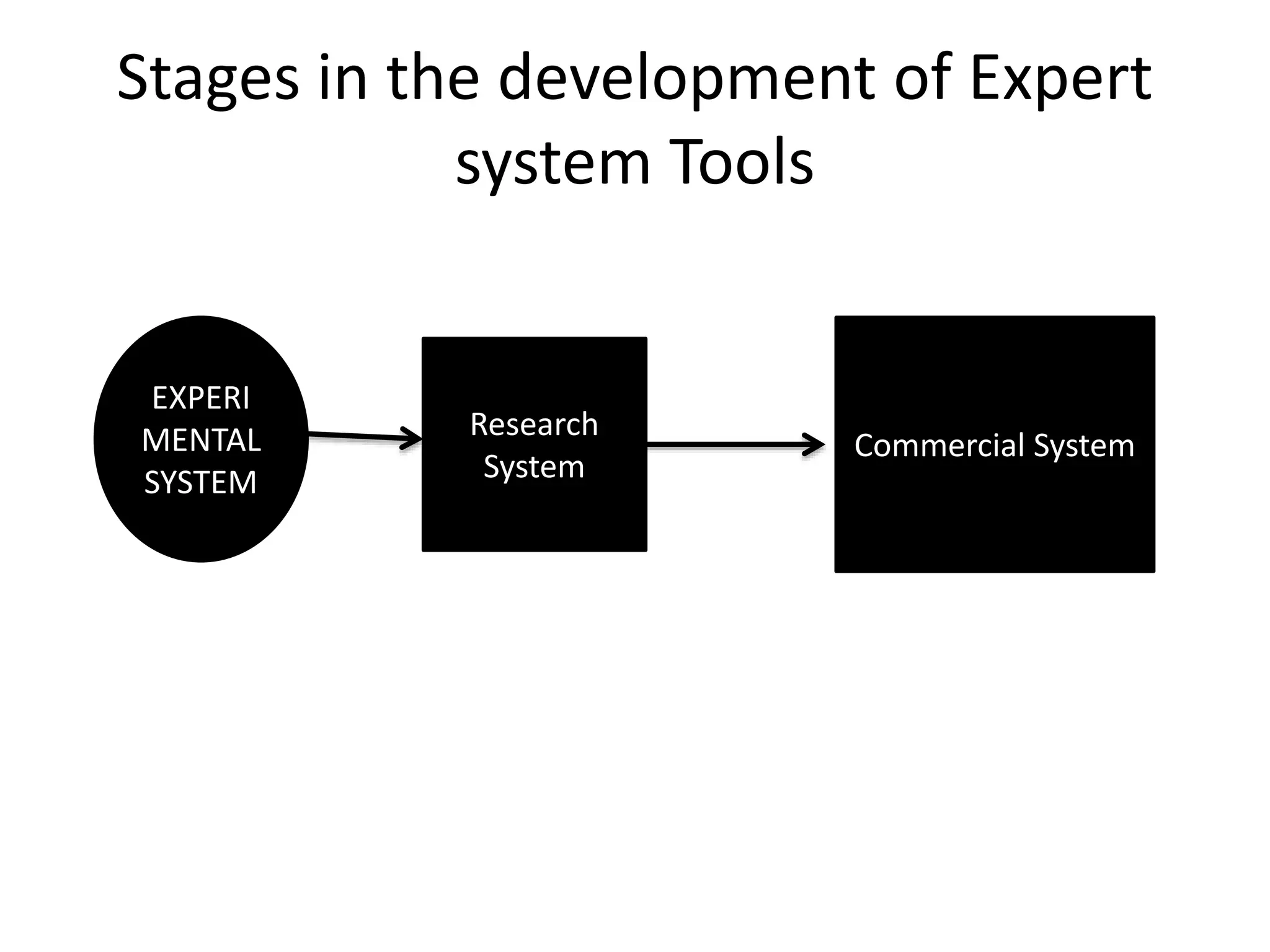
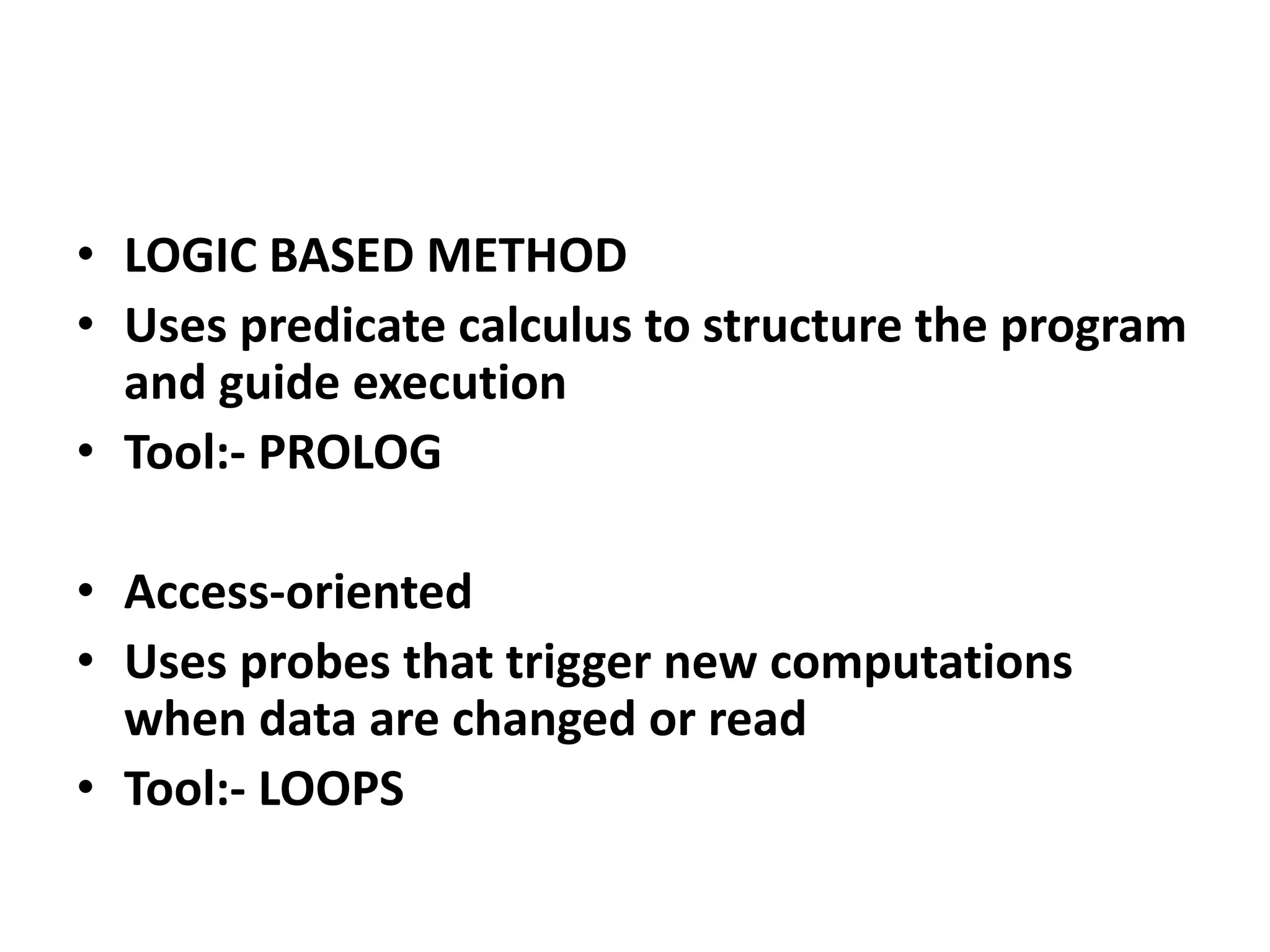
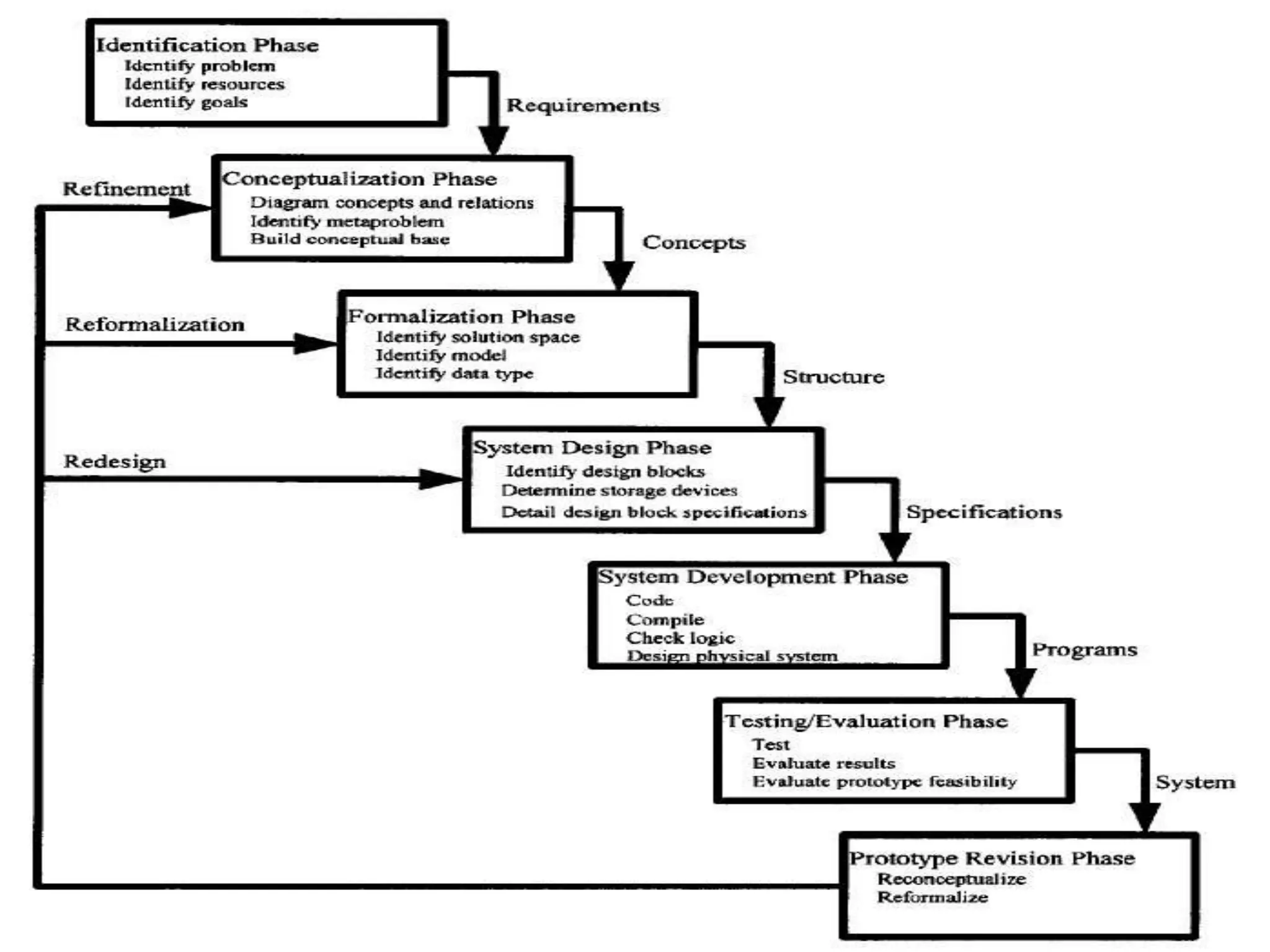
The document discusses the basic activities and features of expert systems, including interpretation of data, prediction, diagnosis, design, monitoring, planning, debugging, repair, instruction, and control. It also describes knowledge representation techniques like semantic nets, frames, slots, and forward and backward reasoning. The stages of expert system development include identification, conceptualization, formalization, system design, development, testing and evaluation, and revision. Common programming methods are rule-based, frame-based, procedure-oriented, object-oriented, and logic-based. Expert system building tools include shells that provide basic components like a knowledge base and reasoning engine.