Project Logframe 
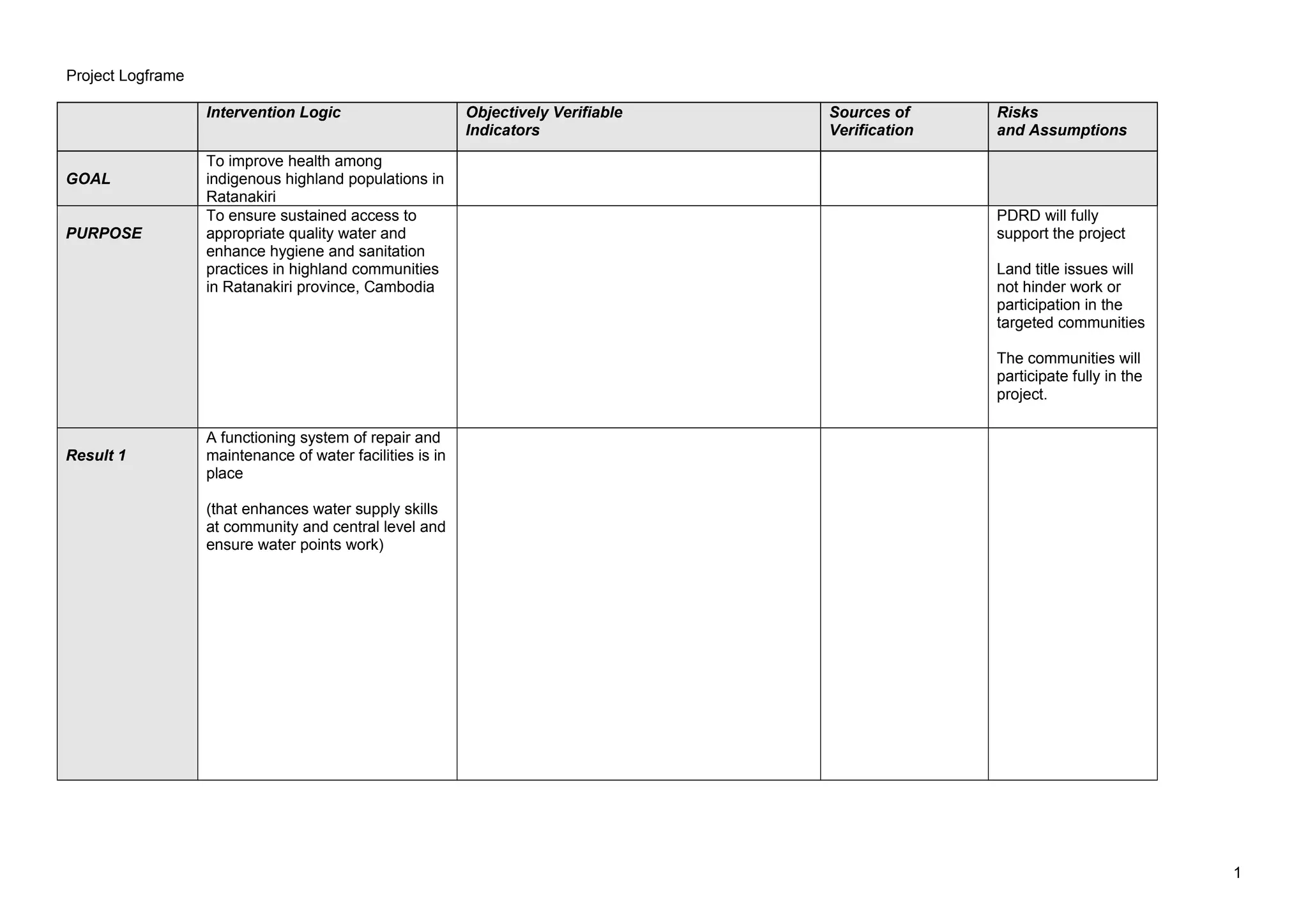
Intervention Logic Objectively Verifiable 
Indicators 
Sources of 
Verification 
Risks 
and Assumptions 
GOAL 
To improve health among 
indigenous highland populations in 
Ratanakiri 
PURPOSE 
To ensure sustained access to 
appropriate quality water and 
enhance hygiene and sanitation 
practices in highland communities 
in Ratanakiri province, Cambodia 
PDRD will fully 
support the project 
Land title issues will 
not hinder work or 
participation in the 
targeted communities 
The communities will 
participate fully in the 
project. 
Result 1 
A functioning system of repair and 
maintenance of water facilities is in 
place 
(that enhances water supply skills 
at community and central level and 
ensure water points work) 
1
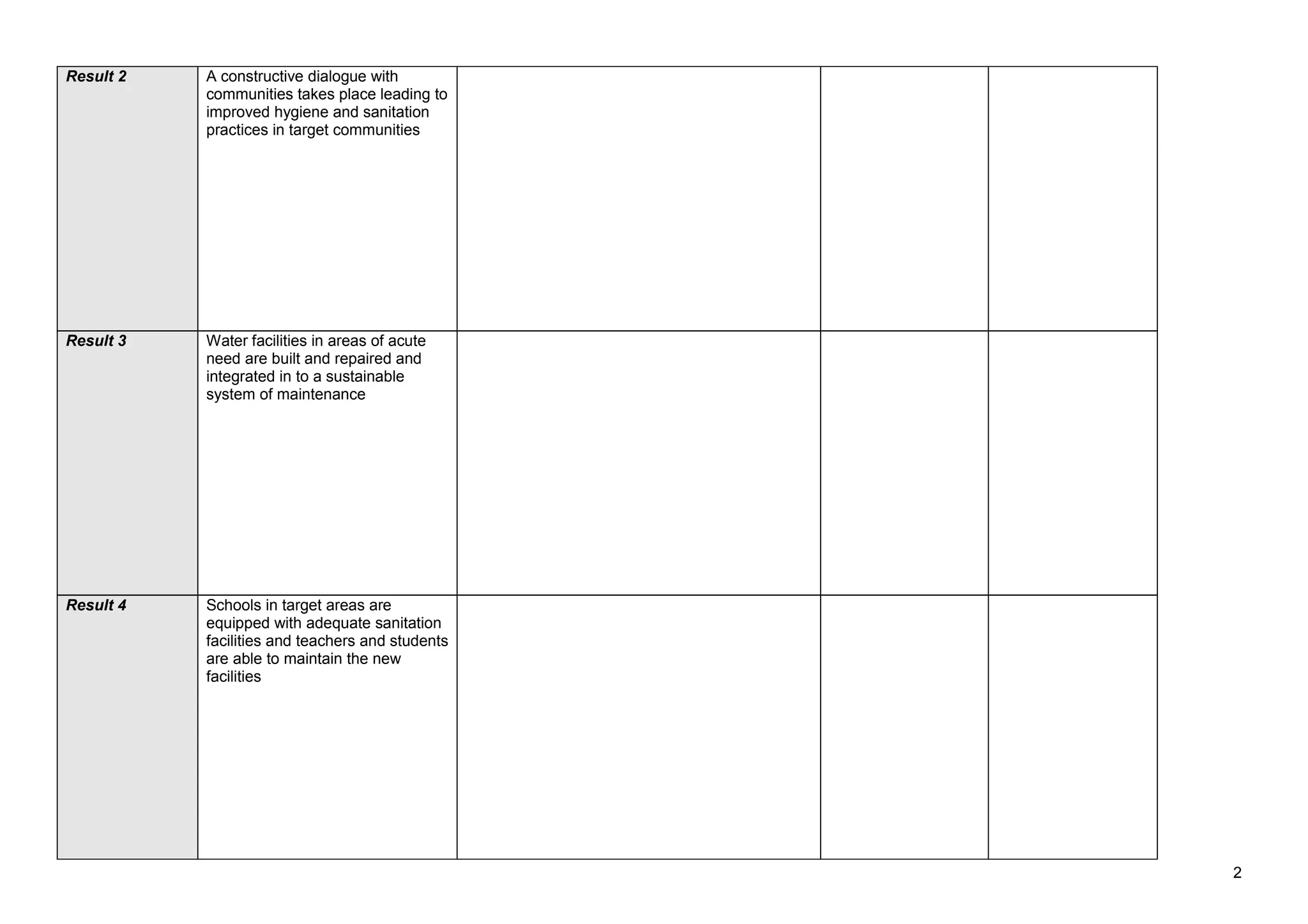
Result 2 A constructive dialogue with 
communities takes place leading to 
improved hygiene and sanitation 
practices in target communities 
Result 3 Water facilities in areas of acute 
need are built and repaired and 
integrated in to a sustainable 
system of maintenance 
Result 4 Schools in target areas are 
equipped with adequate sanitation 
facilities and teachers and students 
are able to maintain the new 
facilities 
2
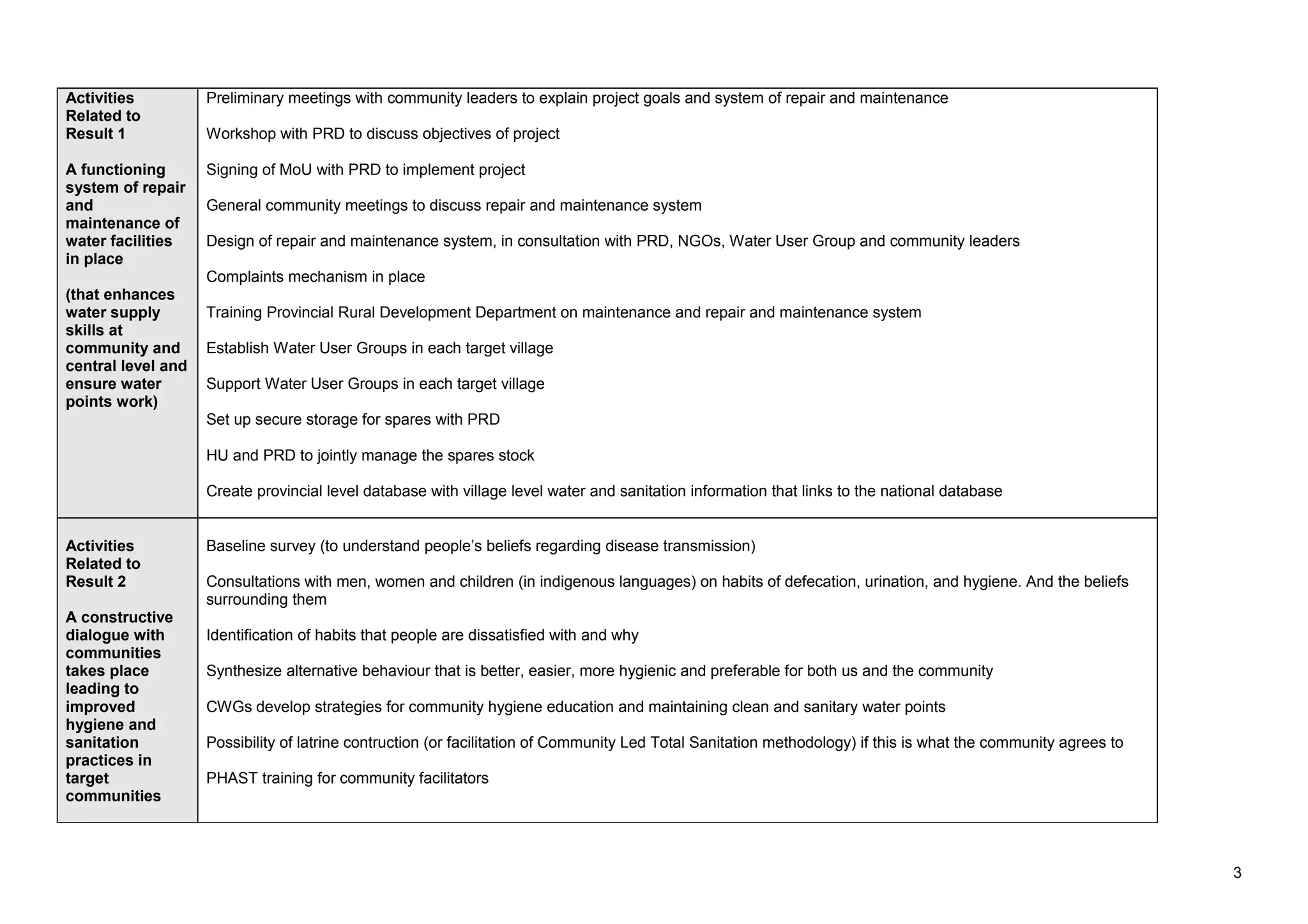
Activities 
Related to 
Result 1 
A functioning 
system of repair 
and 
maintenance of 
water facilities 
in place 
(that enhances 
water supply 
skills at 
community and 
central level and 
ensure water 
points work) 
Preliminary meetings with community leaders to explain project goals and system of repair and maintenance 
Workshop with PRD to discuss objectives of project 
Signing of MoU with PRD to implement project 
General community meetings to discuss repair and maintenance system 
Design of repair and maintenance system, in consultation with PRD, NGOs, Water User Group and community leaders 
Complaints mechanism in place 
Training Provincial Rural Development Department on maintenance and repair and maintenance system 
Establish Water User Groups in each target village 
Support Water User Groups in each target village 
Set up secure storage for spares with PRD 
HU and PRD to jointly manage the spares stock 
Create provincial level database with village level water and sanitation information that links to the national database 
Activities 
Related to 
Result 2 
A constructive 
dialogue with 
communities 
takes place 
leading to 
improved 
hygiene and 
sanitation 
practices in 
target 
communities 
Baseline survey (to understand people’s beliefs regarding disease transmission) 
Consultations with men, women and children (in indigenous languages) on habits of defecation, urination, and hygiene. And the beliefs 
surrounding them 
Identification of habits that people are dissatisfied with and why 
Synthesize alternative behaviour that is better, easier, more hygienic and preferable for both us and the community 
CWGs develop strategies for community hygiene education and maintaining clean and sanitary water points 
Possibility of latrine contruction (or facilitation of Community Led Total Sanitation methodology) if this is what the community agrees to 
PHAST training for community facilitators 
3
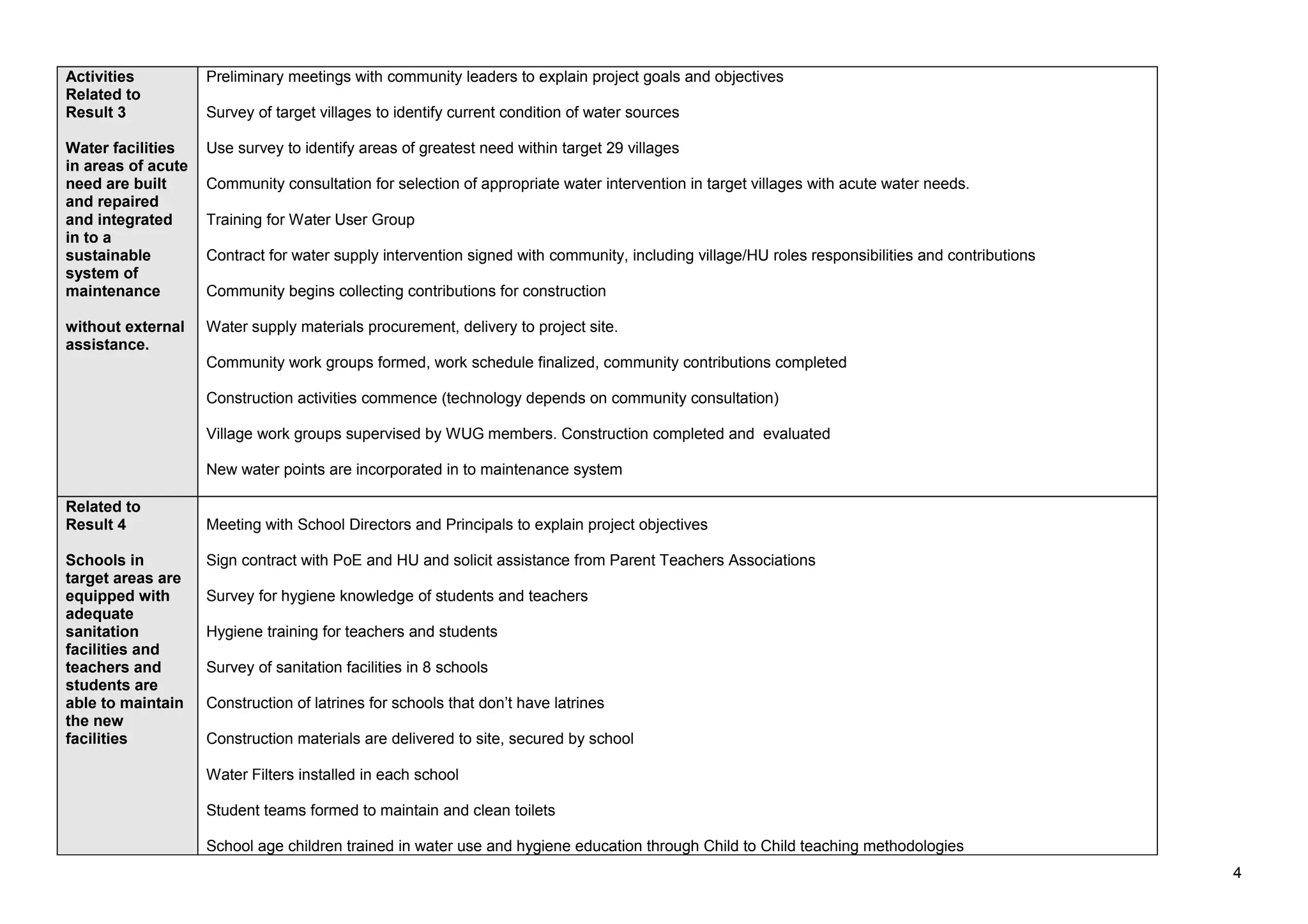
Activities 
Related to 
Result 3 
Water facilities 
in areas of acute 
need are built 
and repaired 
and integrated 
in to a 
sustainable 
system of 
maintenance 
without external 
assistance. 
Preliminary meetings with community leaders to explain project goals and objectives 
Survey of target villages to identify current condition of water sources 
Use survey to identify areas of greatest need within target 29 villages 
Community consultation for selection of appropriate water intervention in target villages with acute water needs. 
Training for Water User Group 
Contract for water supply intervention signed with community, including village/HU roles responsibilities and contributions 
Community begins collecting contributions for construction 
Water supply materials procurement, delivery to project site. 
Community work groups formed, work schedule finalized, community contributions completed 
Construction activities commence (technology depends on community consultation) 
Village work groups supervised by WUG members. Construction completed and evaluated 
New water points are incorporated in to maintenance system 
Related to 
Result 4 
Schools in 
target areas are 
equipped with 
adequate 
sanitation 
facilities and 
teachers and 
students are 
able to maintain 
the new 
facilities 
Meeting with School Directors and Principals to explain project objectives 
Sign contract with PoE and HU and solicit assistance from Parent Teachers Associations 
Survey for hygiene knowledge of students and teachers 
Hygiene training for teachers and students 
Survey of sanitation facilities in 8 schools 
Construction of latrines for schools that don’t have latrines 
Construction materials are delivered to site, secured by school 
Water Filters installed in each school 
Student teams formed to maintain and clean toilets 
School age children trained in water use and hygiene education through Child to Child teaching methodologies 
4

Exercise: Watsan logframe with blanks

  • 1.
    Project Logframe InterventionLogic Objectively Verifiable Indicators Sources of Verification Risks and Assumptions GOAL To improve health among indigenous highland populations in Ratanakiri PURPOSE To ensure sustained access to appropriate quality water and enhance hygiene and sanitation practices in highland communities in Ratanakiri province, Cambodia PDRD will fully support the project Land title issues will not hinder work or participation in the targeted communities The communities will participate fully in the project. Result 1 A functioning system of repair and maintenance of water facilities is in place (that enhances water supply skills at community and central level and ensure water points work) 1
  • 2.
    Result 2 Aconstructive dialogue with communities takes place leading to improved hygiene and sanitation practices in target communities Result 3 Water facilities in areas of acute need are built and repaired and integrated in to a sustainable system of maintenance Result 4 Schools in target areas are equipped with adequate sanitation facilities and teachers and students are able to maintain the new facilities 2
  • 3.
    Activities Related to Result 1 A functioning system of repair and maintenance of water facilities in place (that enhances water supply skills at community and central level and ensure water points work) Preliminary meetings with community leaders to explain project goals and system of repair and maintenance Workshop with PRD to discuss objectives of project Signing of MoU with PRD to implement project General community meetings to discuss repair and maintenance system Design of repair and maintenance system, in consultation with PRD, NGOs, Water User Group and community leaders Complaints mechanism in place Training Provincial Rural Development Department on maintenance and repair and maintenance system Establish Water User Groups in each target village Support Water User Groups in each target village Set up secure storage for spares with PRD HU and PRD to jointly manage the spares stock Create provincial level database with village level water and sanitation information that links to the national database Activities Related to Result 2 A constructive dialogue with communities takes place leading to improved hygiene and sanitation practices in target communities Baseline survey (to understand people’s beliefs regarding disease transmission) Consultations with men, women and children (in indigenous languages) on habits of defecation, urination, and hygiene. And the beliefs surrounding them Identification of habits that people are dissatisfied with and why Synthesize alternative behaviour that is better, easier, more hygienic and preferable for both us and the community CWGs develop strategies for community hygiene education and maintaining clean and sanitary water points Possibility of latrine contruction (or facilitation of Community Led Total Sanitation methodology) if this is what the community agrees to PHAST training for community facilitators 3
  • 4.
    Activities Related to Result 3 Water facilities in areas of acute need are built and repaired and integrated in to a sustainable system of maintenance without external assistance. Preliminary meetings with community leaders to explain project goals and objectives Survey of target villages to identify current condition of water sources Use survey to identify areas of greatest need within target 29 villages Community consultation for selection of appropriate water intervention in target villages with acute water needs. Training for Water User Group Contract for water supply intervention signed with community, including village/HU roles responsibilities and contributions Community begins collecting contributions for construction Water supply materials procurement, delivery to project site. Community work groups formed, work schedule finalized, community contributions completed Construction activities commence (technology depends on community consultation) Village work groups supervised by WUG members. Construction completed and evaluated New water points are incorporated in to maintenance system Related to Result 4 Schools in target areas are equipped with adequate sanitation facilities and teachers and students are able to maintain the new facilities Meeting with School Directors and Principals to explain project objectives Sign contract with PoE and HU and solicit assistance from Parent Teachers Associations Survey for hygiene knowledge of students and teachers Hygiene training for teachers and students Survey of sanitation facilities in 8 schools Construction of latrines for schools that don’t have latrines Construction materials are delivered to site, secured by school Water Filters installed in each school Student teams formed to maintain and clean toilets School age children trained in water use and hygiene education through Child to Child teaching methodologies 4