EXCIPIEN
TS BY- KRTIKA RAI
Introduction
• The European Pharmacopoeia gave definition of an
excipient: “An excipient is any component, other than the
active substance(s), present in a medicinal product or
used in the manufacture of the product. The intended
function of an excipient is to act as the carrier (vehicle or
basis) of the active substance(s) and to contribute to
product attributes such as stability, biopharmaceutical
profile, appearance and patient acceptability and to the
ease with which the product can be manufactured.
Usually, more than one excipient is used in the
formulation of a medicinal product.”
Purposes served by excipients:
• Provide bulk to the formulation.
• Facilitate drug absorption or solubility & other
pharmacokinetic considerations.
• Aid in handling of “API” during manufacturing .
• Provide stability and prevent from denaturation .
• Depending upon route of administration and type of
dosage form different excipients are used.
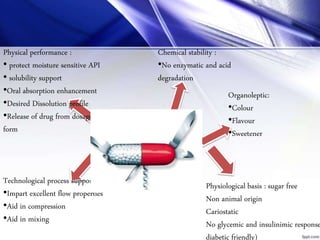
Physical performance :
• protect moisture sensitive API
• solubility support
•Oral absorption enhancement
•Desired Dissolution profile
•Release of drug from dosage
form
Chemical stability :
•No enzymatic and acid
degradation
Technological process support
•Impart excellent flow properties
•Aid in compression
•Aid in mixing
Physiological basis : sugar free
Non animal origin
Cariostatic
No glycemic and insulinimic response
diabetic friendly)
Organoleptic:
•Colour
•Flavour
•Sweetener
Classification-
Excipients can be classified on the basis of their origin, use in dosage form,
and functions they perform as follows
1. Excipient based on their origin5
• Animal source: - Lactose, Gelatin, Stearic acid, Bees wax, Honey, Musk,
Lanolin etc.
• Vegetable source: - Starch, Peppermint, Turmeric, Guar gum, Arginates,
Acacia etc.
• Mineral source: - Calcium phosphate, Silica, Talc, Calamine, Asbestos,
Kaolin, Paraffin, etc.
• Synthetic: - Boric acid, Saccharin, Lactic acid, Polyethylene glycols,
Polysorbates, Povidone etc.
2. Classification of excipients based on their functions
• Excipients are classified on the basis of the functions they perform such as:-
• Various excipients used in solid dosage forms perform various functions like:-
• Binders, diluents, lubricants, disintegrating agent’s plasticizers etc, e.g.: when 5%
starch is used in formulation it acts as a binder for tablet formulations where as
when it is used in dry form it can perform the function of a disintegrant.
• Excipients that are used in liquid dosage forms are:- Solvents co- solvents, buffers
anti-microbial agents
• emulsifying agents sweetening agents, flavors, etc Some excipients have
therapeutic values which are classified as under:-
• Anesthetics 10:- chloroform, etc
• Laxatives: - bentonite, psyllium, xanthan gum11, guar- gum etc.
• Ph modifiers: - citric acid.
• Astringent: - cinnamon, alum, zinc sulphate.
• Carminative: - cinnamon13, dill water, anise water.
• Nutrient sources: - agar12, lactose, etc.
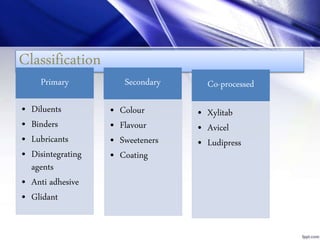
Classification
Primary
• Diluents
• Binders
• Lubricants
• Disintegrating
agents
• Anti adhesive
• Glidant
Secondary
• Colour
• Flavour
• Sweeteners
• Coating
Co-processed
• Xylitab
• Avicel
• Ludipress
Excipients for Routes of administraion
• Diluents: Diluents are fillers used to make up the volume of tablet if tablet
is inadequate to produce the volume. Diluents used as disintegrants in
dispersible and orally disintegrating tablet.
• Example: Lactose, Spray dried lactose, Micro crystalline cellulose (Avicel
101 and 102), Pvpk30 (Pearlitol SD200 and 25C), Sorbitol, Dibasic calcium
phosphate dehydrate, Calcium sulphate dehydrate etc.
• Binders: Binders are used as binding agent in tablets; it provides cohesive
strength to powdered materials. Binders are added in both dry and wet
form to form granules.
• Example: Gelatin, glucose, Lactose, cellulose derivatives-Methyl cellulose,
Ethyl cellulose, Hydroxy propylmethyl cellulose,Hydroxy propyl cellulose,
starch, Poly vinyl pyrrolidone (Povidone), Sodium alginate,
Carboxymethylcellulose, Acacia etc.
• Lubricants: Used to reduce the friction between die wall and tablet, prevent
adhesion of tablet to dies and punches. Helps in easy ejection of tablets from die
cavity. Classified in to 2 types.
• Example: Insoluble- Stearic acid, Magnesium stearate, Calcium stearate, Talc,
Paraffin.
Soluble- Sodium lauryl sulphate, Sodium benzoate, PEG 400, 600,8000 etc.
• Glidants: Helps in free flowing of granules from hopper to die cavity. Minimize
friction between particles.
Example: Colloidal Silicon dioxide (Aerosil), Cornstarch, Talc etc.
• Anti-adherents: These are added to prevent adhesion of tablet material to
punches and dies.
Example: Talc
• Anti-adherent: Prevent sticking of tablet to dies and punches.
• Superdisintegrants: When they come in contact with water in oral cavity/GIT break
down in to small particles.
• Example: Croscarmellose sodium (Ac-di-sol),Crospovidone (Polyplasdone), and
Sodium starch glycollate, Starch etc.
Superdisintegrants
• 1. Modified starches (Sodium starch glycolate, NF)
• Description: Sodium carboxy methyl starch; the carboxy methyl groups induces
hydrophilicity and cross-linking reduces solubility.
• Trade name: Explotab®(Edward Mendell Co.), Primojel® Generichem Corp.), Tablo®
(Blanver, Brazil)
• 2. Modified cellulose (Croscarmellose, NF)
• Description: Sodium carboxymethyl cellulose which has been cross-linked to
render the material insoluble.
• Trade name: AcDiSol® (FMC Corp.), Nymcel ZSX® (Nyma, Netherlands), Primellose®
(Avebe, Netherlands)
• 3. Cross-linked poly-vinyl pyrrolidone (Crospovidone, NF)
• Description: Cross-linked poly vinyl pyrrolidone; cross-linking render the material
insoluble in water.
• Trade name: Crospovidone M® (BASF Corp.), Kollidon CL® (BASF Corp.)
• 4. Excipient profiles
• PVP K30
• Synonyms: E1201; Kollidon; Plasdone; poly [1-(2-oxo-1-pyrrolidinyl)ethylene];
polyvidone; polyvinylpyrrolidone; PVP; 1-vinyl-2-pyrrolidinone polymer.
Oral Route Of Administration
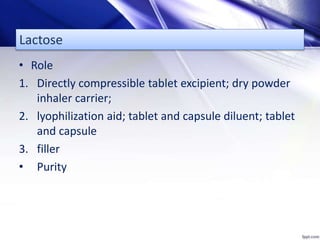
Lactose
• Role
1. Directly compressible tablet excipient; dry powder
inhaler carrier;
2. lyophilization aid; tablet and capsule diluent; tablet
and capsule
3. filler
• Purity
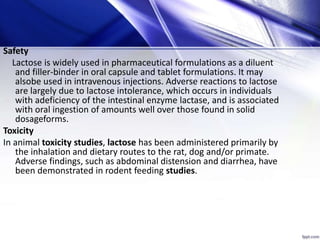
Safety
Lactose is widely used in pharmaceutical formulations as a diluent
and filler-binder in oral capsule and tablet formulations. It may
alsobe used in intravenous injections. Adverse reactions to lactose
are largely due to lactose intolerance, which occurs in individuals
with adeficiency of the intestinal enzyme lactase, and is associated
with oral ingestion of amounts well over those found in solid
dosageforms.
Toxicity
In animal toxicity studies, lactose has been administered primarily by
the inhalation and dietary routes to the rat, dog and/or primate.
Adverse findings, such as abdominal distension and diarrhea, have
been demonstrated in rodent feeding studies.
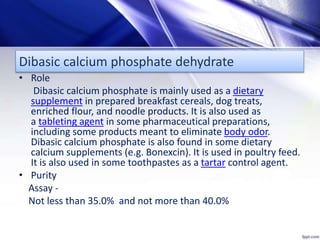
Dibasic calcium phosphate dehydrate
• Role
Dibasic calcium phosphate is mainly used as a dietary
supplement in prepared breakfast cereals, dog treats,
enriched flour, and noodle products. It is also used as
a tableting agent in some pharmaceutical preparations,
including some products meant to eliminate body odor.
Dibasic calcium phosphate is also found in some dietary
calcium supplements (e.g. Bonexcin). It is used in poultry feed.
It is also used in some toothpastes as a tartar control agent.
• Purity
Assay -
Not less than 35.0% and not more than 40.0%
Safety
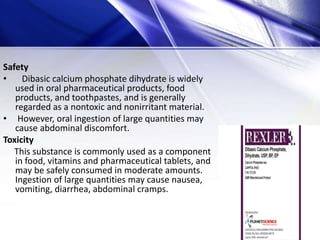
• Dibasic calcium phosphate dihydrate is widely
used in oral pharmaceutical products, food
products, and toothpastes, and is generally
regarded as a nontoxic and nonirritant material.
• However, oral ingestion of large quantities may
cause abdominal discomfort.
Toxicity
This substance is commonly used as a component
in food, vitamins and pharmaceutical tablets, and
may be safely consumed in moderate amounts.
Ingestion of large quantities may cause nausea,
vomiting, diarrhea, abdominal cramps.
Calcium Sulfate
• Str.formula : CaSO4
SAFETY:
• Calcium sulfate dihydrate is used as an excipient in oral capsule and tablet formulations.
• It is generally regarded as nontoxic. However, ingestion of a sufficiently large quantity can
result in obstruction of the upper intestinal tract after absorption of moisture.
• Hypercalcemia cannot be induced even after the ingestion of massive oral doses
• .Calcium salts are soluble in bronchial fluid. Pure salts do not induce pneumoconiosis.
TOXICITY:
• Calcium sulfate may react violently, at high temperatures, with phosphorus and aluminum
powder; it can react violently with diazomethane.Dyeing.
• Workers could be exposed to calcium sulfate, dihydrate via dust inhalation and dermal
routes during manufacturing or processing.
Purity: > 90 %
USES:
• The different uses of calcium sulfate, dihydrate are: Portland-cement
retarder;
• tile and plaster;
• polishing powders
• paints,
• dyeing
Liquid Dosage Form
Sorbitol:
• Sorbitol is D-glucitol. Four crystalline polymorphs and one amorphous
form of sorbitol. Sorbitol is available in a wide range of grades and
polymorphic forms, such as granules, flakes, or pellets. Sorbitol has a
pleasant, cooling, sweet taste and has approximately 50–60% of the
sweetness of sucrose.
• Structural Formula: C6H14O6
• Safety: Sorbitol is widely used in a number of pharmaceutical products
and occurs naturally in many edible fruits and berries. It is absorbed more
slowly from the gastrointestinal tract than sucrose and is metabolized in
the liver to fructose and glucose. The Food and Drug Administration (FDA)
reports that sorbitol seems to be safe overall. Animal studies show no risk
in mice, rats, or monkeys.
Toxicity:
• sorbitol is not the same as glucose, it can still raise your
blood glucose level — which is especially important to
know if you have diabetes or another blood sugar
disorder.
• Diarrhea is a common response to high doses of
sorbitol.
• The following serious effects are : Bleeding from the
rectum,Constant urge to defecate,Black tarry stools
Purity >= 96%
Sodium alginate
• Sodium alginate is used in a variety of oral and topical pharmaceutical
formulations.
• In tablet formulations, sodiumalginate may be used as both a binder and
disintegrant;
• it has beenused as a diluent in capsule formulations.
• Sodium alginate hasalso been used in the preparation of sustained-
release oral formulations since it can delay the dissolution of a drug from
tablets, capsules,and aqueous suspensions.
PURITY: Not less than 90% and not more than 106%
SAFETY:
• It is generally regarded as a nontoxic and nonirritant material, although
excessive oral consumption may be harmful.
• Inhalation of alginate dust may be irritant and has been associated with
industrial-related asthma in workers involved in alginate production.
• However, it appears that the cases of asthma were linked to exposure to
seaweed dust rather than pure alginate dust..
TOXICITY:
• No irritant effect has been reported in humans, but occasional skin sensitization
has apparently occurred.
• Slight laxative effects have resulted in humans and experimental animals from
repeated large oral doses of alginic acid and its sodium
• Other effects reported in rat and/or mouse feeding studies with sodium
alginate at high dose levels include kidney damage, proliferation of the bladder
lining, indications of slight liver injury, decreased blood cholesterol and
increased intestinal weight. salt.
• Other effects reported in rat and/or mouse feeding studies with sodium
alginate at high dose levels include kidney damage, proliferation of the bladder
lining, indications of slight liver injury, decreased blood cholesterol and
increased intestinal weight.
USES:
• Recently, sodium alginate has been used for the aqueous microencapsulation of
drugs.
• It has also been used in the formation of Nanoparticles.
Parentral Route Of Administration
Propylene Glycol:
• Propylene glycol has become widely used as a solvent, extractant, and
preservative in a variety of parenteral and nonparenteral pharmaceutical
formulations. It is a better general solvent than glycerin and dissolves a
wide variety of materials, such as corticosteroids, phenols, sulfa drugs,
barbiturates, vitamins (A and D), most alkaloids, and many local anesthetics.
As an antiseptic it is similar to ethanol,
• Toxicity: Propylene glycol is used as a vehicle in oral and parenteral
preparations and has been associated with adverse effects including
seizures. Neonates may be especially susceptible to adverse effects and the
total amount administered from all medications should be limited if
possible. Some injections contain large amounts of propylene glycol and
this should be considered if the preparation is to be administered orally.
Propylene glycol is rapidly absorbed from the gastrointestinal tract; there is
also evidence that it is absorbed topically when applied to damaged skin
Parenteral administration may cause pain or irritation when
propylene glycol is used in high concentration. Other adverse
reactions reported, though generally isolated, include: ototoxicity
cardiovascular effects; seizures; and hyperosmolarity and lactic
acidosis, both of which occur most frequently in patients with renal
impairment.
• SAFETY:
Propylene glycol is used in a wide variety of pharmaceutical
formulations and is generally regarded as a relatively nontoxic
material It is also used extensively in foods and cosmetics. Probably
as a consequence of its metabolism and excretion, propylene glycol
is less toxic than other glycols On the basis of metabolic and
toxicological data, the WHO has set an acceptable daily intake of
propylene glycol at up to 25 mg/kg body-weight. Formulations
containing 35% propylene glycol can cause hemolysis in humans.
CITRIC ACID
• Citric acid (as either the monohydrate or anhydrous material) is widely used in
pharmaceutical formulations.
• Citric acid mono-hydrate is used in the preparation of effervescent granules;
anhydrous citric acid is widely used in the preparation of effervescent tablets.
• Citric acid has also been shown to improve the stability of spray-dried insulin
powder in inhalation formulations. In food products, citric acid is used as a flavor
enhancer for its tart, acidic taste.
• Citric acid monohydrate is used as a sequestering agent and antioxidant synergist;
. It is also a component of anticoagulant citrate solutions. Therapeutically,
preparations containing citric acid have been used to dissolve renal calculi.
Safety:
• Citric acid is found naturally in the body, mainly in the bones, and is commonly
consumed as part of a normal diet.
• Orally ingested citric acid is absorbed and is generally regarded as a nontoxic
material when used as an excipient.
TOXICITY:
•Although a weak acid, exposure to pure citric acid can cause adverse effects.
•Inhalation may cause cough, shortness of breath, or sore throat.
•Over-ingestion may cause abdominal pain and sore throat.
•Exposure of concentrated solutions to skin and eyes can cause redness and pain.
•Long-term or repeated consumption may cause erosion of tooth enamel.
PURITY:
Assay (anhydrous basis)- 99.5–100.5%
Cyclodextrins
• Cyclodextrins are crystalline, nonhygroscopic, cyclic oligosaccharides derived from
starch. Among the most commonly used forms are a-, b-, and g-cyclodextrin, which
have respectively 6, 7, and 8 glucose units
Use
• Cyclodextrins may be used to form inclusion complexes with a variety of drug
molecules, resulting primarily in improvements to dissolution and bioavailability
owing to enhanced solubility and improved chemical and physical stability.
• Cyclodextrin inclusion complexes have also been used to mask the unpleasant
taste of active materials and to convert a liquid substance into a solid material.
• b-Cyclodextrin is the most commonly used cyclodextrin, although it is the least
soluble. It is the least expensive cyclodextrin; is commercially available from a
number of sources; and is able to form inclusion complexes with a number of
molecules of pharmaceutical interest. However, b-cyclodextrin is nephrotoxic and
should not be used in parenteral formulations.
• b-Cyclodextrin is primarily used in tablet and capsule formulations.
Safety
• Cyclodextrins are starch derivatives and are mainly used in oral and parenteral pharmaceutical formulations.
They are also used in topical and ophthalmic formulations.
• Cyclodextrins are also used in cosmetics and food products, and are generally regarded as essentially nontoxic
and nonirritant materials.
• However, when administered parenterally, b-cyclodextrin is not metabolized but accumulates in the kidneys as
insoluble cholesterol complexes, resulting in severe nephrotoxicity.
• Cyclodextrin administered orally is metabolized by microflora in the colon, forming the metabolites
maltodextrin, maltose, and glucose; these are themselves further metabolized before being finally excreted as
carbon dioxide and water. Although a study published in 1957 suggested that orally administered cyclodextrins
were highly toxic, more recent animal toxicity studies in rats and dogs have shown this not to be the case, and
cyclodextrins are now approved for use in food products and orally administered pharmaceuticals in a number
of countries.
• Cyclodextrins are not irritant to the skin and eyes, or upon inhalation. There is also no evidence to suggest
that cyclodextrins are mutagenic or teratogenic.
Assay (anhydrous basis)
98.0–102.0%
Opthalmic Route Of
Administration
Benzalkonium Chloride
• Benzalkonium chloride is a quaternary ammonium compound used in pharmaceutical formulations
as an antimicrobial preservative in applications similar to other cationic surfactants, such as
cetrimide.
Use
• Applications similar to other cationic surfactants, such as cetrimide. In ophthalmic preparations
• Benzalkonium chloride is one of the most widely used preservatives, at a concentration of 0.01–
0.02% w/v.
• Often it is used in combination with other preservatives or excipients, particularly 0.1% w/v
disodium edetate, to enhance its antimicrobial activity against strains of Pseudomonas.
• In nasal, and otic formulations a concentration of 0.002–0.02% w/v is used, sometimes in
combination with 0.002–0.005% w/v thimerosal. Benzalkonium chloride 0.01% w/v is also
employed as a preservative in small-volume parenteral products.
• Benzalkonium chloride was also shown to enhance the topical penetration of lorazepam
• Benzalkonium chloride is additionally used as a preservative in cosmetics
Safety
• Benzalkonium chloride is usually nonirritating, nonsensitizing, and is well tolerated in the dilutions
normally employed on the skin and mucous membranes.
• Benzalkonium chloride has been associated with adverse effects when used in some pharmaceutical
formulations.
• Ototoxicity can occur when benzalkonium chloride is applied to the ear and prolonged contact with
the skin can occasionally cause irritation and hypersensitivity.
• Benzalkonium chloride is also known to cause bronchoconstriction in some asthmatics when used in
nebulizer solutions.
• Toxicity experiments with rabbits have shown benzalkonium chloride to be harmful to the eye in
concentrations higher than that normally used as a preservative. However, the human eye appears
to be less affected than the rabbit eye and many ophthalmic products have been formulated with
benzalkonium chloride 0.01% w/v as the preservative.
• Benzalkonium chloride is not suitable for use as a preservative in solutions used for storing and
washing hydrophilic soft contact lenses, as the benzalkonium chloride can bind to the lenses and
may later produce ocular toxicity when the lenses are worn.
• Solutions stronger than 0.03% w/v concentration entering the eye require prompt medical
attention. Local irritation of the throat, esophagus, stomach, and intestine can occur following
contact with strong solutions (>0.1% w/v).
• The fatal oral dose of benzalkonium chloride in humans is estimated to be 1–3 g. Adverse effects
following oral ingestion include vomiting, collapse, and coma. Toxic doses lead to paralysis of the
respiratory muscles, dyspnea, and cyanosis.
Toxcity
•Benzalkonium chloride is a human skin and severe eye irritant. It is a suspected respiratory
toxicant, immunotoxicant, gastrointestinal toxicant and neurotoxicant
•Benzalkonium chloride formulations for consumer use are dilute solutions. Concentrated
solutions are toxic to humans, causing corrosion/irritation to the skin and mucosa, and death if
taken internally in sufficient volumes. 0.1% is the maximum concentration of benzalkonium
chloride that does not produce primary irritation on intact skin or act as a sensitizer.
•Poisoning by benzalkonium chloride is recognised in the literature.A 2014 case study detailing
the fatal ingestion of up to 8.1 oz (240ml) of 10% benzalkonium chloride in a 78-year-old male
also includes a summary of the currently published case reports of benzalkonium chloride
ingestion.
• While the majority of cases were caused by confusion about the contents of containers, one
case cites incorrect pharmacy dilution of benzalkonium chloride as the cause of poisoning of
two infants.
•Benzalkonium chloride poisoning of domestic pets has been recognised as a result of direct
contact with surfaces cleaned with disinfectants utilising benzalkonium chloride as an active
ingredient.
As many as 20 people were killed in Japan, by a nurse injecting this.
Methylcellulose
• Methylcellulose is a long-chain substituted cellulose in which approximately 27–32% of the
hydroxyl groups are in the form of the methyl ether
Functional Category
• Coating agent;
• emulsifying agent
• suspending agent
• tablet and capsule disintegrant
• tablet binder
• viscosity-increasing agent.
Use
• Methylcellulose is widely used in oral and topical pharmaceutical formulations
• In tablet formulations, low- or medium-viscosity grades of methylcellulose are used as binding
agents, the methylcellulose being added either as a dry powder or in solution.
• Highviscosity grades of methylcellulose may also be incorporated in tablet formulations as a
disintegrant.
• Low-viscosity grades of methylcellulose are used to emulsify olive, peanut, and
mineral oils. They are also used as suspending or thickening agents for orally
administered liquids, methylcellulose commonly being used in place of sugar-
based syrups or other suspension bases.
• Methylcellulose delays the settling of suspensions and increases the contact time
of drugs, such as antacids, in the stomach. High-viscosity grades of methylcellulose
are used to thicken topically applied products such as creams and gels.
• In ophthalmic preparations, a 0.5–1.0% w/v solution of a highly substituted, high-
viscosity grade of methylcellulose has been used as a vehicle for eye drops.
• However, hypromellose-based formulations are now preferred for ophthalmic
preparations. Methylcellulose is also used in injectable formulations.
Therapeutically, methylcellulose is used as a bulk laxative; it has also been used to
aid appetite control in the management of obesity, but there is little evidence
supporting its efficacy.
Safety
• Methylcellulose is widely used in a variety of oral and topical pharmaceutical formulations. It is also extensively
used in cosmetics and food products, and is generally regarded as a nontoxic, nonallergenic, and nonirritant
material.
• Following oral consumption, methylcellulose is not digested or absorbed and is therefore a noncaloric
material.
• Ingestion of excessive amounts of methylcellulose may temporarily increase flatulence and gastrointestinal
distension. In the normal individual, oral consumption of large amounts of methylcellulose has a laxative action
and medium- or high-viscosity grades are therefore used as bulk laxatives.
• Esophageal obstruction may occur if methylcellulose is swallowed with an insufficient quantity of liquid.
Consumption of large quantities of methylcellulose may additionally interfere with the normal absorption of
some minerals.
• However, this and the other adverse effects discussed above relate mainly to the use of methylcellulose as a
bulk laxative and are not significant factors when methylcellulose is used as an excipient in oral preparations.
• Methylcellulose is not commonly used in parenteral products, although it has been used in intra-articular and
intramuscular injections. Studies in rats have suggested that parenterally administered methylcellulose may
cause glomerulonephritis and hypertension.
• Methylcellulose is considered to be toxic by the intraperitoneal route of administration. The WHO has not
specified an acceptable daily intake of methylcellulose since the level of use in foods was not considered to be
a hazard to health.(14) LD50 (mouse, IP): 275 g/k

EXCIPIENTS

  • 1.
  • 2.
    Introduction • The EuropeanPharmacopoeia gave definition of an excipient: “An excipient is any component, other than the active substance(s), present in a medicinal product or used in the manufacture of the product. The intended function of an excipient is to act as the carrier (vehicle or basis) of the active substance(s) and to contribute to product attributes such as stability, biopharmaceutical profile, appearance and patient acceptability and to the ease with which the product can be manufactured. Usually, more than one excipient is used in the formulation of a medicinal product.”
  • 3.
    Purposes served byexcipients: • Provide bulk to the formulation. • Facilitate drug absorption or solubility & other pharmacokinetic considerations. • Aid in handling of “API” during manufacturing . • Provide stability and prevent from denaturation . • Depending upon route of administration and type of dosage form different excipients are used.
  • 4.
    Physical performance : •protect moisture sensitive API • solubility support •Oral absorption enhancement •Desired Dissolution profile •Release of drug from dosage form Chemical stability : •No enzymatic and acid degradation Technological process support •Impart excellent flow properties •Aid in compression •Aid in mixing Physiological basis : sugar free Non animal origin Cariostatic No glycemic and insulinimic response diabetic friendly) Organoleptic: •Colour •Flavour •Sweetener
  • 5.
    Classification- Excipients can beclassified on the basis of their origin, use in dosage form, and functions they perform as follows 1. Excipient based on their origin5 • Animal source: - Lactose, Gelatin, Stearic acid, Bees wax, Honey, Musk, Lanolin etc. • Vegetable source: - Starch, Peppermint, Turmeric, Guar gum, Arginates, Acacia etc. • Mineral source: - Calcium phosphate, Silica, Talc, Calamine, Asbestos, Kaolin, Paraffin, etc. • Synthetic: - Boric acid, Saccharin, Lactic acid, Polyethylene glycols, Polysorbates, Povidone etc.
  • 6.
    2. Classification ofexcipients based on their functions • Excipients are classified on the basis of the functions they perform such as:- • Various excipients used in solid dosage forms perform various functions like:- • Binders, diluents, lubricants, disintegrating agent’s plasticizers etc, e.g.: when 5% starch is used in formulation it acts as a binder for tablet formulations where as when it is used in dry form it can perform the function of a disintegrant. • Excipients that are used in liquid dosage forms are:- Solvents co- solvents, buffers anti-microbial agents • emulsifying agents sweetening agents, flavors, etc Some excipients have therapeutic values which are classified as under:- • Anesthetics 10:- chloroform, etc • Laxatives: - bentonite, psyllium, xanthan gum11, guar- gum etc. • Ph modifiers: - citric acid. • Astringent: - cinnamon, alum, zinc sulphate. • Carminative: - cinnamon13, dill water, anise water. • Nutrient sources: - agar12, lactose, etc.
  • 7.
    Classification Primary • Diluents • Binders •Lubricants • Disintegrating agents • Anti adhesive • Glidant Secondary • Colour • Flavour • Sweeteners • Coating Co-processed • Xylitab • Avicel • Ludipress
  • 8.
    Excipients for Routesof administraion • Diluents: Diluents are fillers used to make up the volume of tablet if tablet is inadequate to produce the volume. Diluents used as disintegrants in dispersible and orally disintegrating tablet. • Example: Lactose, Spray dried lactose, Micro crystalline cellulose (Avicel 101 and 102), Pvpk30 (Pearlitol SD200 and 25C), Sorbitol, Dibasic calcium phosphate dehydrate, Calcium sulphate dehydrate etc. • Binders: Binders are used as binding agent in tablets; it provides cohesive strength to powdered materials. Binders are added in both dry and wet form to form granules. • Example: Gelatin, glucose, Lactose, cellulose derivatives-Methyl cellulose, Ethyl cellulose, Hydroxy propylmethyl cellulose,Hydroxy propyl cellulose, starch, Poly vinyl pyrrolidone (Povidone), Sodium alginate, Carboxymethylcellulose, Acacia etc.
  • 9.
    • Lubricants: Usedto reduce the friction between die wall and tablet, prevent adhesion of tablet to dies and punches. Helps in easy ejection of tablets from die cavity. Classified in to 2 types. • Example: Insoluble- Stearic acid, Magnesium stearate, Calcium stearate, Talc, Paraffin. Soluble- Sodium lauryl sulphate, Sodium benzoate, PEG 400, 600,8000 etc. • Glidants: Helps in free flowing of granules from hopper to die cavity. Minimize friction between particles. Example: Colloidal Silicon dioxide (Aerosil), Cornstarch, Talc etc. • Anti-adherents: These are added to prevent adhesion of tablet material to punches and dies. Example: Talc • Anti-adherent: Prevent sticking of tablet to dies and punches. • Superdisintegrants: When they come in contact with water in oral cavity/GIT break down in to small particles. • Example: Croscarmellose sodium (Ac-di-sol),Crospovidone (Polyplasdone), and Sodium starch glycollate, Starch etc.
  • 10.
    Superdisintegrants • 1. Modifiedstarches (Sodium starch glycolate, NF) • Description: Sodium carboxy methyl starch; the carboxy methyl groups induces hydrophilicity and cross-linking reduces solubility. • Trade name: Explotab®(Edward Mendell Co.), Primojel® Generichem Corp.), Tablo® (Blanver, Brazil) • 2. Modified cellulose (Croscarmellose, NF) • Description: Sodium carboxymethyl cellulose which has been cross-linked to render the material insoluble. • Trade name: AcDiSol® (FMC Corp.), Nymcel ZSX® (Nyma, Netherlands), Primellose® (Avebe, Netherlands) • 3. Cross-linked poly-vinyl pyrrolidone (Crospovidone, NF) • Description: Cross-linked poly vinyl pyrrolidone; cross-linking render the material insoluble in water. • Trade name: Crospovidone M® (BASF Corp.), Kollidon CL® (BASF Corp.) • 4. Excipient profiles • PVP K30 • Synonyms: E1201; Kollidon; Plasdone; poly [1-(2-oxo-1-pyrrolidinyl)ethylene]; polyvidone; polyvinylpyrrolidone; PVP; 1-vinyl-2-pyrrolidinone polymer.
  • 11.
    Oral Route OfAdministration
  • 12.
    Lactose • Role 1. Directlycompressible tablet excipient; dry powder inhaler carrier; 2. lyophilization aid; tablet and capsule diluent; tablet and capsule 3. filler • Purity
  • 13.
    Safety Lactose is widelyused in pharmaceutical formulations as a diluent and filler-binder in oral capsule and tablet formulations. It may alsobe used in intravenous injections. Adverse reactions to lactose are largely due to lactose intolerance, which occurs in individuals with adeficiency of the intestinal enzyme lactase, and is associated with oral ingestion of amounts well over those found in solid dosageforms. Toxicity In animal toxicity studies, lactose has been administered primarily by the inhalation and dietary routes to the rat, dog and/or primate. Adverse findings, such as abdominal distension and diarrhea, have been demonstrated in rodent feeding studies.
  • 14.
    Dibasic calcium phosphatedehydrate • Role Dibasic calcium phosphate is mainly used as a dietary supplement in prepared breakfast cereals, dog treats, enriched flour, and noodle products. It is also used as a tableting agent in some pharmaceutical preparations, including some products meant to eliminate body odor. Dibasic calcium phosphate is also found in some dietary calcium supplements (e.g. Bonexcin). It is used in poultry feed. It is also used in some toothpastes as a tartar control agent. • Purity Assay - Not less than 35.0% and not more than 40.0%
  • 15.
    Safety • Dibasic calciumphosphate dihydrate is widely used in oral pharmaceutical products, food products, and toothpastes, and is generally regarded as a nontoxic and nonirritant material. • However, oral ingestion of large quantities may cause abdominal discomfort. Toxicity This substance is commonly used as a component in food, vitamins and pharmaceutical tablets, and may be safely consumed in moderate amounts. Ingestion of large quantities may cause nausea, vomiting, diarrhea, abdominal cramps.
  • 16.
    Calcium Sulfate • Str.formula: CaSO4 SAFETY: • Calcium sulfate dihydrate is used as an excipient in oral capsule and tablet formulations. • It is generally regarded as nontoxic. However, ingestion of a sufficiently large quantity can result in obstruction of the upper intestinal tract after absorption of moisture. • Hypercalcemia cannot be induced even after the ingestion of massive oral doses • .Calcium salts are soluble in bronchial fluid. Pure salts do not induce pneumoconiosis. TOXICITY: • Calcium sulfate may react violently, at high temperatures, with phosphorus and aluminum powder; it can react violently with diazomethane.Dyeing. • Workers could be exposed to calcium sulfate, dihydrate via dust inhalation and dermal routes during manufacturing or processing.
  • 17.
    Purity: > 90% USES: • The different uses of calcium sulfate, dihydrate are: Portland-cement retarder; • tile and plaster; • polishing powders • paints, • dyeing
  • 18.
  • 19.
    Sorbitol: • Sorbitol isD-glucitol. Four crystalline polymorphs and one amorphous form of sorbitol. Sorbitol is available in a wide range of grades and polymorphic forms, such as granules, flakes, or pellets. Sorbitol has a pleasant, cooling, sweet taste and has approximately 50–60% of the sweetness of sucrose. • Structural Formula: C6H14O6 • Safety: Sorbitol is widely used in a number of pharmaceutical products and occurs naturally in many edible fruits and berries. It is absorbed more slowly from the gastrointestinal tract than sucrose and is metabolized in the liver to fructose and glucose. The Food and Drug Administration (FDA) reports that sorbitol seems to be safe overall. Animal studies show no risk in mice, rats, or monkeys.
  • 20.
    Toxicity: • sorbitol isnot the same as glucose, it can still raise your blood glucose level — which is especially important to know if you have diabetes or another blood sugar disorder. • Diarrhea is a common response to high doses of sorbitol. • The following serious effects are : Bleeding from the rectum,Constant urge to defecate,Black tarry stools Purity >= 96%
  • 21.
    Sodium alginate • Sodiumalginate is used in a variety of oral and topical pharmaceutical formulations. • In tablet formulations, sodiumalginate may be used as both a binder and disintegrant; • it has beenused as a diluent in capsule formulations. • Sodium alginate hasalso been used in the preparation of sustained- release oral formulations since it can delay the dissolution of a drug from tablets, capsules,and aqueous suspensions. PURITY: Not less than 90% and not more than 106% SAFETY: • It is generally regarded as a nontoxic and nonirritant material, although excessive oral consumption may be harmful. • Inhalation of alginate dust may be irritant and has been associated with industrial-related asthma in workers involved in alginate production. • However, it appears that the cases of asthma were linked to exposure to seaweed dust rather than pure alginate dust..
  • 22.
    TOXICITY: • No irritanteffect has been reported in humans, but occasional skin sensitization has apparently occurred. • Slight laxative effects have resulted in humans and experimental animals from repeated large oral doses of alginic acid and its sodium • Other effects reported in rat and/or mouse feeding studies with sodium alginate at high dose levels include kidney damage, proliferation of the bladder lining, indications of slight liver injury, decreased blood cholesterol and increased intestinal weight. salt. • Other effects reported in rat and/or mouse feeding studies with sodium alginate at high dose levels include kidney damage, proliferation of the bladder lining, indications of slight liver injury, decreased blood cholesterol and increased intestinal weight. USES: • Recently, sodium alginate has been used for the aqueous microencapsulation of drugs. • It has also been used in the formation of Nanoparticles.
  • 23.
    Parentral Route OfAdministration
  • 24.
    Propylene Glycol: • Propyleneglycol has become widely used as a solvent, extractant, and preservative in a variety of parenteral and nonparenteral pharmaceutical formulations. It is a better general solvent than glycerin and dissolves a wide variety of materials, such as corticosteroids, phenols, sulfa drugs, barbiturates, vitamins (A and D), most alkaloids, and many local anesthetics. As an antiseptic it is similar to ethanol, • Toxicity: Propylene glycol is used as a vehicle in oral and parenteral preparations and has been associated with adverse effects including seizures. Neonates may be especially susceptible to adverse effects and the total amount administered from all medications should be limited if possible. Some injections contain large amounts of propylene glycol and this should be considered if the preparation is to be administered orally. Propylene glycol is rapidly absorbed from the gastrointestinal tract; there is also evidence that it is absorbed topically when applied to damaged skin
  • 25.
    Parenteral administration maycause pain or irritation when propylene glycol is used in high concentration. Other adverse reactions reported, though generally isolated, include: ototoxicity cardiovascular effects; seizures; and hyperosmolarity and lactic acidosis, both of which occur most frequently in patients with renal impairment. • SAFETY: Propylene glycol is used in a wide variety of pharmaceutical formulations and is generally regarded as a relatively nontoxic material It is also used extensively in foods and cosmetics. Probably as a consequence of its metabolism and excretion, propylene glycol is less toxic than other glycols On the basis of metabolic and toxicological data, the WHO has set an acceptable daily intake of propylene glycol at up to 25 mg/kg body-weight. Formulations containing 35% propylene glycol can cause hemolysis in humans.
  • 26.
    CITRIC ACID • Citricacid (as either the monohydrate or anhydrous material) is widely used in pharmaceutical formulations. • Citric acid mono-hydrate is used in the preparation of effervescent granules; anhydrous citric acid is widely used in the preparation of effervescent tablets. • Citric acid has also been shown to improve the stability of spray-dried insulin powder in inhalation formulations. In food products, citric acid is used as a flavor enhancer for its tart, acidic taste. • Citric acid monohydrate is used as a sequestering agent and antioxidant synergist; . It is also a component of anticoagulant citrate solutions. Therapeutically, preparations containing citric acid have been used to dissolve renal calculi. Safety: • Citric acid is found naturally in the body, mainly in the bones, and is commonly consumed as part of a normal diet. • Orally ingested citric acid is absorbed and is generally regarded as a nontoxic material when used as an excipient.
  • 27.
    TOXICITY: •Although a weakacid, exposure to pure citric acid can cause adverse effects. •Inhalation may cause cough, shortness of breath, or sore throat. •Over-ingestion may cause abdominal pain and sore throat. •Exposure of concentrated solutions to skin and eyes can cause redness and pain. •Long-term or repeated consumption may cause erosion of tooth enamel. PURITY: Assay (anhydrous basis)- 99.5–100.5%
  • 28.
    Cyclodextrins • Cyclodextrins arecrystalline, nonhygroscopic, cyclic oligosaccharides derived from starch. Among the most commonly used forms are a-, b-, and g-cyclodextrin, which have respectively 6, 7, and 8 glucose units Use • Cyclodextrins may be used to form inclusion complexes with a variety of drug molecules, resulting primarily in improvements to dissolution and bioavailability owing to enhanced solubility and improved chemical and physical stability. • Cyclodextrin inclusion complexes have also been used to mask the unpleasant taste of active materials and to convert a liquid substance into a solid material. • b-Cyclodextrin is the most commonly used cyclodextrin, although it is the least soluble. It is the least expensive cyclodextrin; is commercially available from a number of sources; and is able to form inclusion complexes with a number of molecules of pharmaceutical interest. However, b-cyclodextrin is nephrotoxic and should not be used in parenteral formulations. • b-Cyclodextrin is primarily used in tablet and capsule formulations.
  • 29.
    Safety • Cyclodextrins arestarch derivatives and are mainly used in oral and parenteral pharmaceutical formulations. They are also used in topical and ophthalmic formulations. • Cyclodextrins are also used in cosmetics and food products, and are generally regarded as essentially nontoxic and nonirritant materials. • However, when administered parenterally, b-cyclodextrin is not metabolized but accumulates in the kidneys as insoluble cholesterol complexes, resulting in severe nephrotoxicity. • Cyclodextrin administered orally is metabolized by microflora in the colon, forming the metabolites maltodextrin, maltose, and glucose; these are themselves further metabolized before being finally excreted as carbon dioxide and water. Although a study published in 1957 suggested that orally administered cyclodextrins were highly toxic, more recent animal toxicity studies in rats and dogs have shown this not to be the case, and cyclodextrins are now approved for use in food products and orally administered pharmaceuticals in a number of countries. • Cyclodextrins are not irritant to the skin and eyes, or upon inhalation. There is also no evidence to suggest that cyclodextrins are mutagenic or teratogenic. Assay (anhydrous basis) 98.0–102.0%
  • 30.
  • 31.
    Benzalkonium Chloride • Benzalkoniumchloride is a quaternary ammonium compound used in pharmaceutical formulations as an antimicrobial preservative in applications similar to other cationic surfactants, such as cetrimide. Use • Applications similar to other cationic surfactants, such as cetrimide. In ophthalmic preparations • Benzalkonium chloride is one of the most widely used preservatives, at a concentration of 0.01– 0.02% w/v. • Often it is used in combination with other preservatives or excipients, particularly 0.1% w/v disodium edetate, to enhance its antimicrobial activity against strains of Pseudomonas. • In nasal, and otic formulations a concentration of 0.002–0.02% w/v is used, sometimes in combination with 0.002–0.005% w/v thimerosal. Benzalkonium chloride 0.01% w/v is also employed as a preservative in small-volume parenteral products. • Benzalkonium chloride was also shown to enhance the topical penetration of lorazepam • Benzalkonium chloride is additionally used as a preservative in cosmetics
  • 32.
    Safety • Benzalkonium chlorideis usually nonirritating, nonsensitizing, and is well tolerated in the dilutions normally employed on the skin and mucous membranes. • Benzalkonium chloride has been associated with adverse effects when used in some pharmaceutical formulations. • Ototoxicity can occur when benzalkonium chloride is applied to the ear and prolonged contact with the skin can occasionally cause irritation and hypersensitivity. • Benzalkonium chloride is also known to cause bronchoconstriction in some asthmatics when used in nebulizer solutions. • Toxicity experiments with rabbits have shown benzalkonium chloride to be harmful to the eye in concentrations higher than that normally used as a preservative. However, the human eye appears to be less affected than the rabbit eye and many ophthalmic products have been formulated with benzalkonium chloride 0.01% w/v as the preservative. • Benzalkonium chloride is not suitable for use as a preservative in solutions used for storing and washing hydrophilic soft contact lenses, as the benzalkonium chloride can bind to the lenses and may later produce ocular toxicity when the lenses are worn. • Solutions stronger than 0.03% w/v concentration entering the eye require prompt medical attention. Local irritation of the throat, esophagus, stomach, and intestine can occur following contact with strong solutions (>0.1% w/v). • The fatal oral dose of benzalkonium chloride in humans is estimated to be 1–3 g. Adverse effects following oral ingestion include vomiting, collapse, and coma. Toxic doses lead to paralysis of the respiratory muscles, dyspnea, and cyanosis.
  • 33.
    Toxcity •Benzalkonium chloride isa human skin and severe eye irritant. It is a suspected respiratory toxicant, immunotoxicant, gastrointestinal toxicant and neurotoxicant •Benzalkonium chloride formulations for consumer use are dilute solutions. Concentrated solutions are toxic to humans, causing corrosion/irritation to the skin and mucosa, and death if taken internally in sufficient volumes. 0.1% is the maximum concentration of benzalkonium chloride that does not produce primary irritation on intact skin or act as a sensitizer. •Poisoning by benzalkonium chloride is recognised in the literature.A 2014 case study detailing the fatal ingestion of up to 8.1 oz (240ml) of 10% benzalkonium chloride in a 78-year-old male also includes a summary of the currently published case reports of benzalkonium chloride ingestion. • While the majority of cases were caused by confusion about the contents of containers, one case cites incorrect pharmacy dilution of benzalkonium chloride as the cause of poisoning of two infants. •Benzalkonium chloride poisoning of domestic pets has been recognised as a result of direct contact with surfaces cleaned with disinfectants utilising benzalkonium chloride as an active ingredient. As many as 20 people were killed in Japan, by a nurse injecting this.
  • 34.
    Methylcellulose • Methylcellulose isa long-chain substituted cellulose in which approximately 27–32% of the hydroxyl groups are in the form of the methyl ether Functional Category • Coating agent; • emulsifying agent • suspending agent • tablet and capsule disintegrant • tablet binder • viscosity-increasing agent. Use • Methylcellulose is widely used in oral and topical pharmaceutical formulations • In tablet formulations, low- or medium-viscosity grades of methylcellulose are used as binding agents, the methylcellulose being added either as a dry powder or in solution. • Highviscosity grades of methylcellulose may also be incorporated in tablet formulations as a disintegrant.
  • 35.
    • Low-viscosity gradesof methylcellulose are used to emulsify olive, peanut, and mineral oils. They are also used as suspending or thickening agents for orally administered liquids, methylcellulose commonly being used in place of sugar- based syrups or other suspension bases. • Methylcellulose delays the settling of suspensions and increases the contact time of drugs, such as antacids, in the stomach. High-viscosity grades of methylcellulose are used to thicken topically applied products such as creams and gels. • In ophthalmic preparations, a 0.5–1.0% w/v solution of a highly substituted, high- viscosity grade of methylcellulose has been used as a vehicle for eye drops. • However, hypromellose-based formulations are now preferred for ophthalmic preparations. Methylcellulose is also used in injectable formulations. Therapeutically, methylcellulose is used as a bulk laxative; it has also been used to aid appetite control in the management of obesity, but there is little evidence supporting its efficacy.
  • 36.
    Safety • Methylcellulose iswidely used in a variety of oral and topical pharmaceutical formulations. It is also extensively used in cosmetics and food products, and is generally regarded as a nontoxic, nonallergenic, and nonirritant material. • Following oral consumption, methylcellulose is not digested or absorbed and is therefore a noncaloric material. • Ingestion of excessive amounts of methylcellulose may temporarily increase flatulence and gastrointestinal distension. In the normal individual, oral consumption of large amounts of methylcellulose has a laxative action and medium- or high-viscosity grades are therefore used as bulk laxatives. • Esophageal obstruction may occur if methylcellulose is swallowed with an insufficient quantity of liquid. Consumption of large quantities of methylcellulose may additionally interfere with the normal absorption of some minerals. • However, this and the other adverse effects discussed above relate mainly to the use of methylcellulose as a bulk laxative and are not significant factors when methylcellulose is used as an excipient in oral preparations. • Methylcellulose is not commonly used in parenteral products, although it has been used in intra-articular and intramuscular injections. Studies in rats have suggested that parenterally administered methylcellulose may cause glomerulonephritis and hypertension. • Methylcellulose is considered to be toxic by the intraperitoneal route of administration. The WHO has not specified an acceptable daily intake of methylcellulose since the level of use in foods was not considered to be a hazard to health.(14) LD50 (mouse, IP): 275 g/k

Editor's Notes

  • #5 or providing essential manufacturing technology functions (binders, glidants, lubricants may be added), ii) For enhancing patient acceptance (flavors, colourants may be added), iii) For providing aid in product identification (colourants may be added), iv) For Optimizing or modifying drug release (disintegrants, hydrophilic polymers, wetting agents, biodegradable polymers may be added), v) For enhancing stability (antioxidant, UV absorbers may be added)