Excel 2010
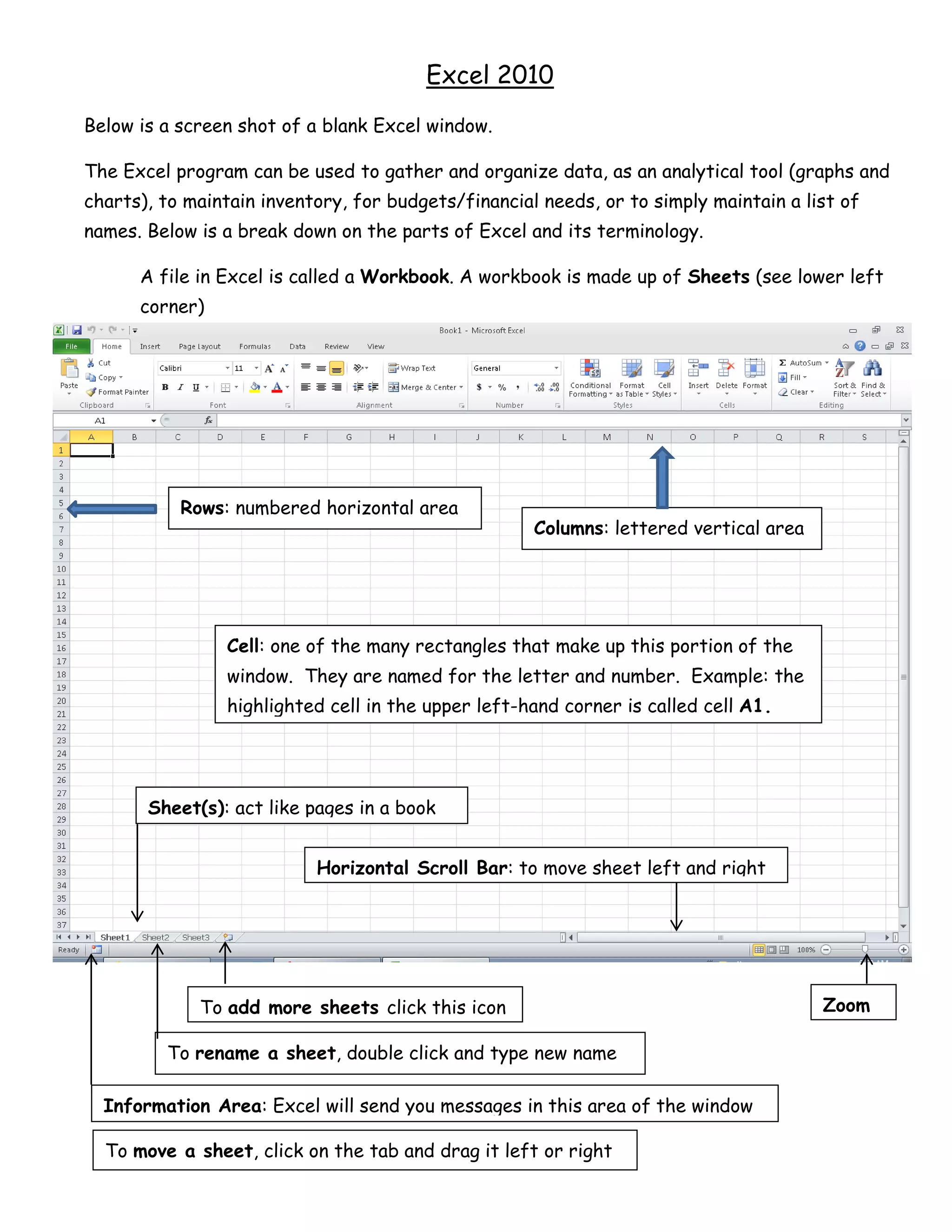
Below is a screen shot of a blank Excel window.

The Excel program can be used to gather and organize data, as an analytical tool (graphs and
charts), to maintain inventory, for budgets/financial needs, or to simply maintain a list of
names. Below is a break down on the parts of Excel and its terminology.

      A file in Excel is called a Workbook. A workbook is made up of Sheets (see lower left
      corner)


           Rows: numbered horizontal area
                                                     Columns: lettered vertical area


                Cell: one of the many rectangles that make up this portion of the
                window. They are named for the letter and number. Example: the
                highlighted cell in the upper left-hand corner is called cell A1.


       Sheet(s): act like pages in a book


                           Horizontal Scroll Bar: to move sheet left and right


             To add more sheets click this icon                                        Zoom

         To rename a sheet, double click and type new name

  Information Area: Excel will send you messages in this area of the window

  To move a sheet, click on the tab and drag it left or right
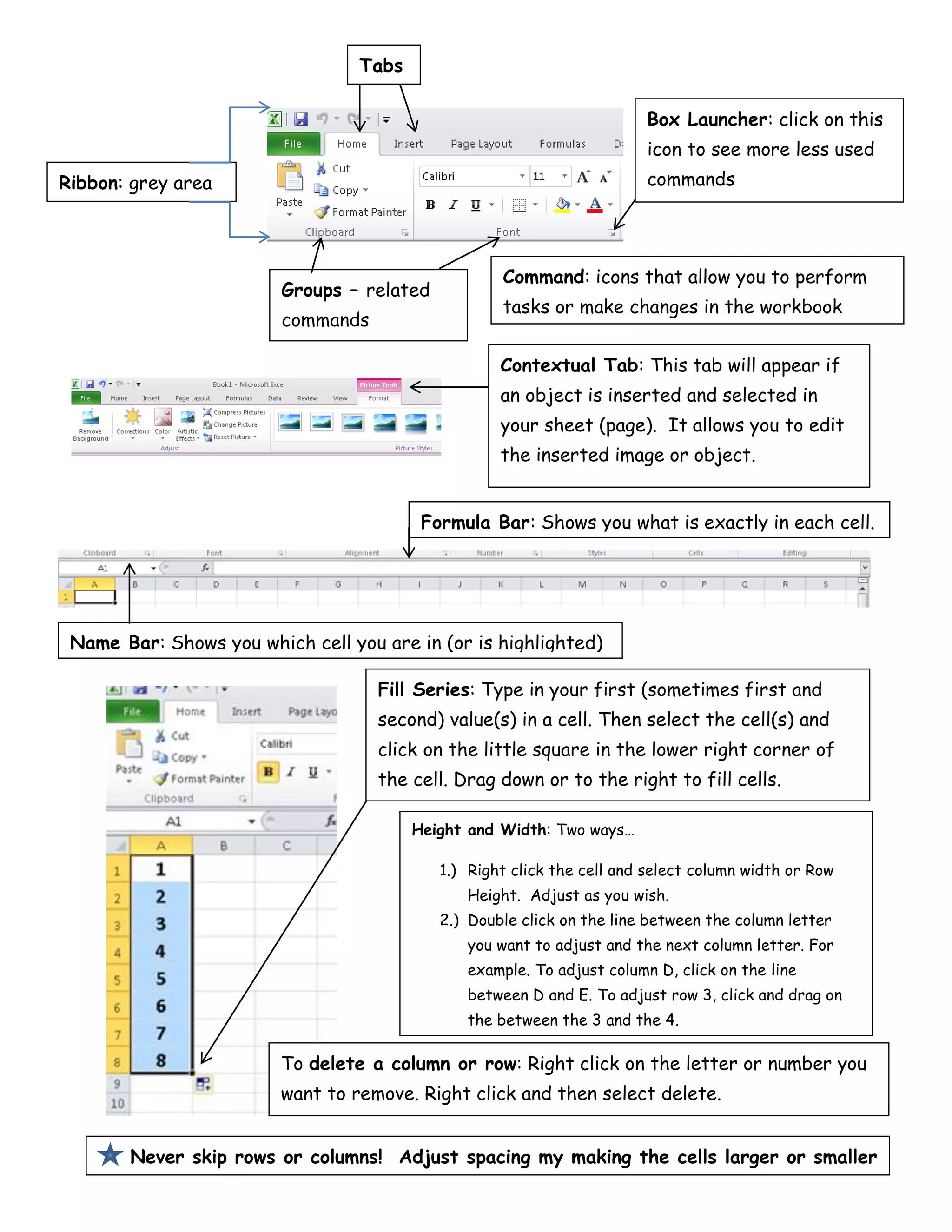
Tabs

                                                                        Box Launcher: click on this
                                                                        icon to see more less used
Ribbon: grey area                                                       commands


                                                    Command: icons that allow you to perform
                         Groups – related
                                                    tasks or make changes in the workbook
                         commands

                                                    Contextual Tab: This tab will appear if
                                                    an object is inserted and selected in
                                                    your sheet (page). It allows you to edit
                                                    the inserted image or object.


                                          Formula Bar: Shows you what is exactly in each cell.


 Name Bar: Shows you which cell you are in (or is highlighted)

                                    Fill Series: Type in your first (sometimes first and
                                    second) value(s) in a cell. Then select the cell(s) and
                                    click on the little square in the lower right corner of
                                    the cell. Drag down or to the right to fill cells.

                                         Height and Width: Two ways…

                                            1.) Right click the cell and select column width or Row
                                               Height. Adjust as you wish.
                                            2.) Double click on the line between the column letter
                                               you want to adjust and the next column letter. For
                                               example. To adjust column D, click on the line
                                               between D and E. To adjust row 3, click and drag on
                                               the between the 3 and the 4.

                         To delete a column or row: Right click on the letter or number you
                         want to remove. Right click and then select delete.


       Never skip rows or columns! Adjust spacing my making the cells larger or smaller
To Create a Graph using your Excel Data


To create a graph you must remember what needs to be included to properly display your
data in a way that can be read and analyzed.

Remember to think about TAILS and DRY MIX


      T- Title            D- Dependent Variable             M- Manipulated (Ind) Variable
      A- Axis             R- Responding variable            I-Independent variable
      I- Intervals        Y- Y Axis                         X- X Axis
      L- Labels
      S- Scale


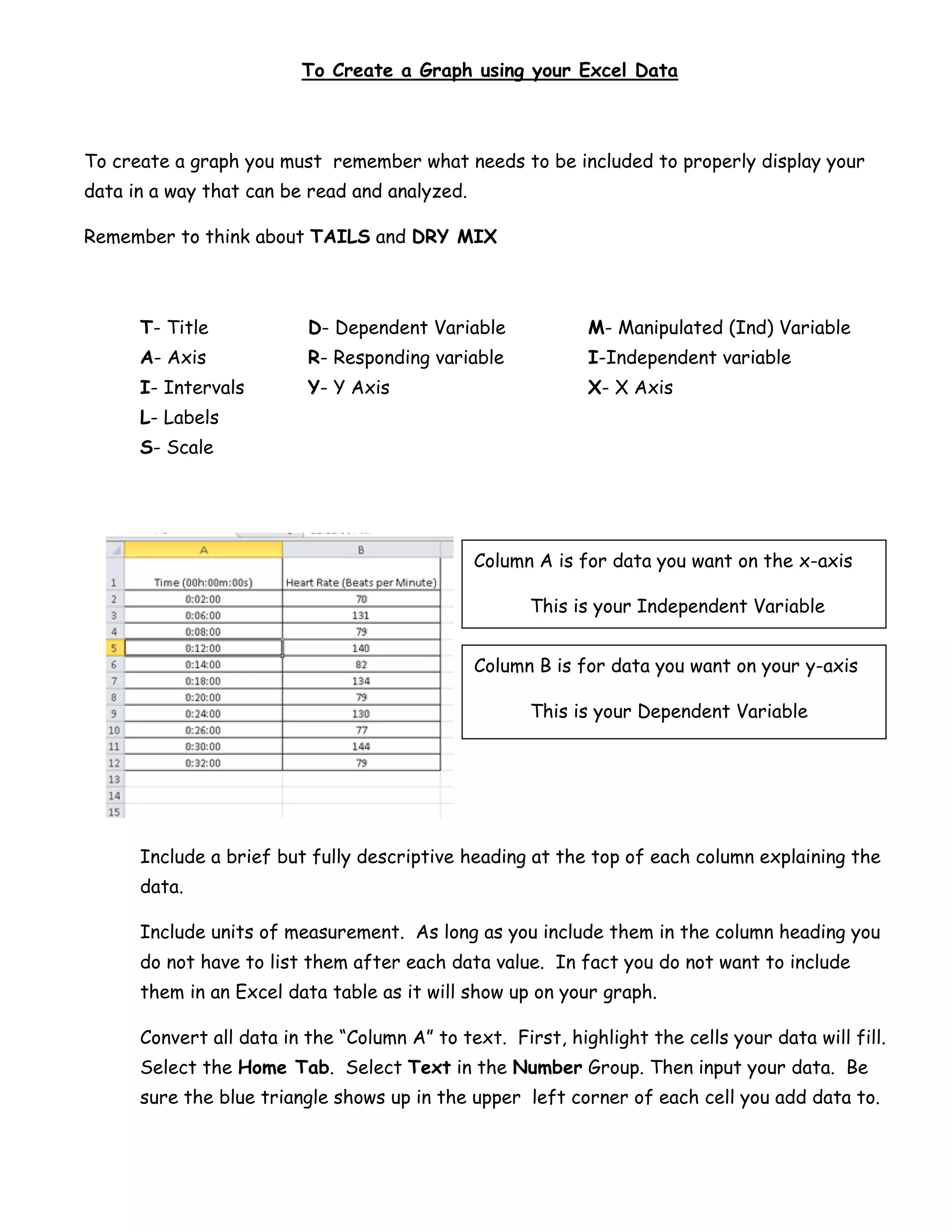
                                               Column A is for data you want on the x-axis

                                                     This is your Independent Variable


                                               Column B is for data you want on your y-axis

                                                     This is your Dependent Variable


      Include a brief but fully descriptive heading at the top of each column explaining the
      data.

      Include units of measurement. As long as you include them in the column heading you
      do not have to list them after each data value. In fact you do not want to include
      them in an Excel data table as it will show up on your graph.

      Convert all data in the “Column A” to text. First, highlight the cells your data will fill.
      Select the Home Tab. Select Text in the Number Group. Then input your data. Be
      sure the blue triangle shows up in the upper left corner of each cell you add data to.
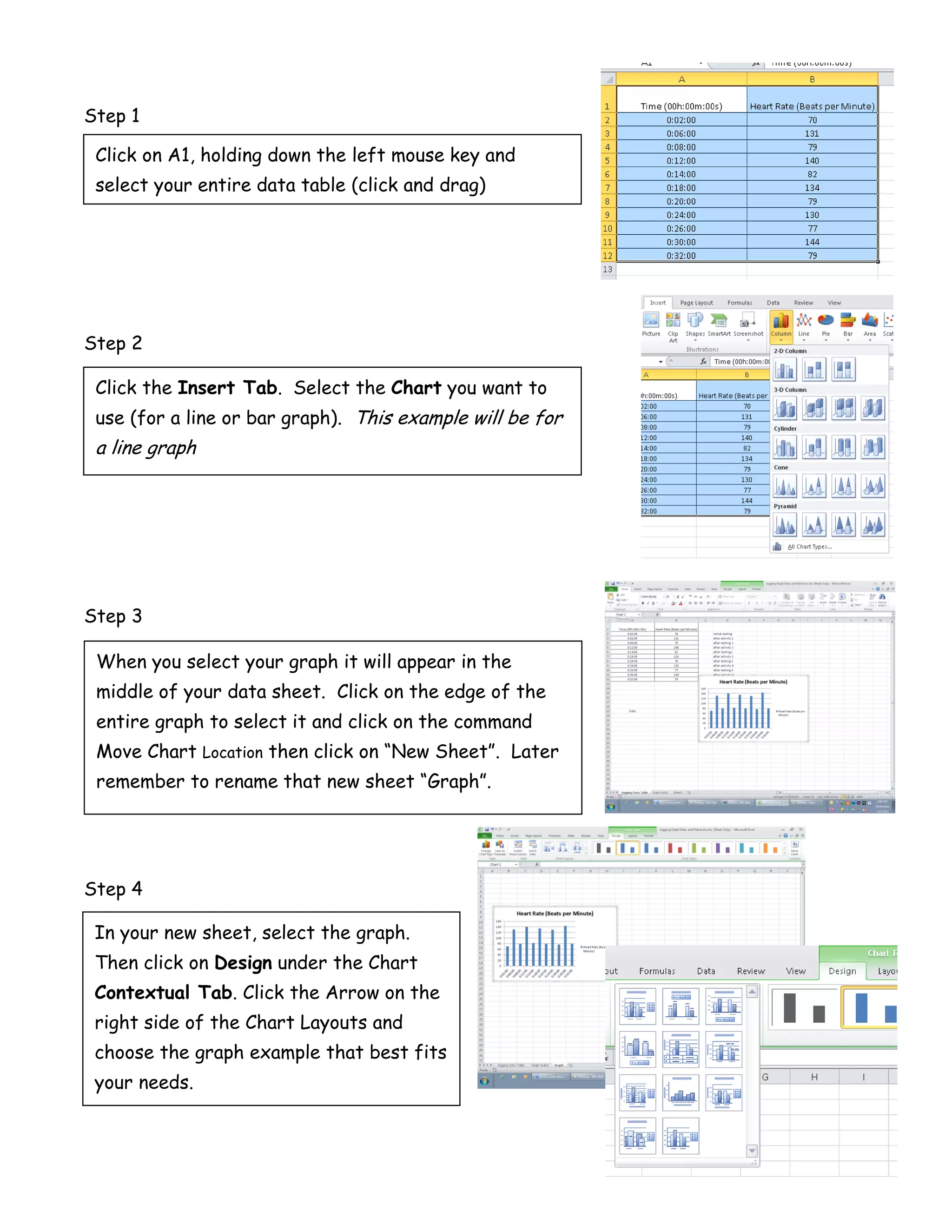
Step 1

 Click on A1, holding down the left mouse key and
 select your entire data table (click and drag)


Step 2

 Click the Insert Tab. Select the Chart you want to
 use (for a line or bar graph). This example will be for
 a line graph


Step 3

 When you select your graph it will appear in the
 middle of your data sheet. Click on the edge of the
 entire graph to select it and click on the command
 Move Chart Location then click on “New Sheet”. Later
 remember to rename that new sheet “Graph”.


Step 4

 In your new sheet, select the graph.
 Then click on Design under the Chart
 Contextual Tab. Click the Arrow on the
 right side of the Chart Layouts and
 choose the graph example that best fits
 your needs.
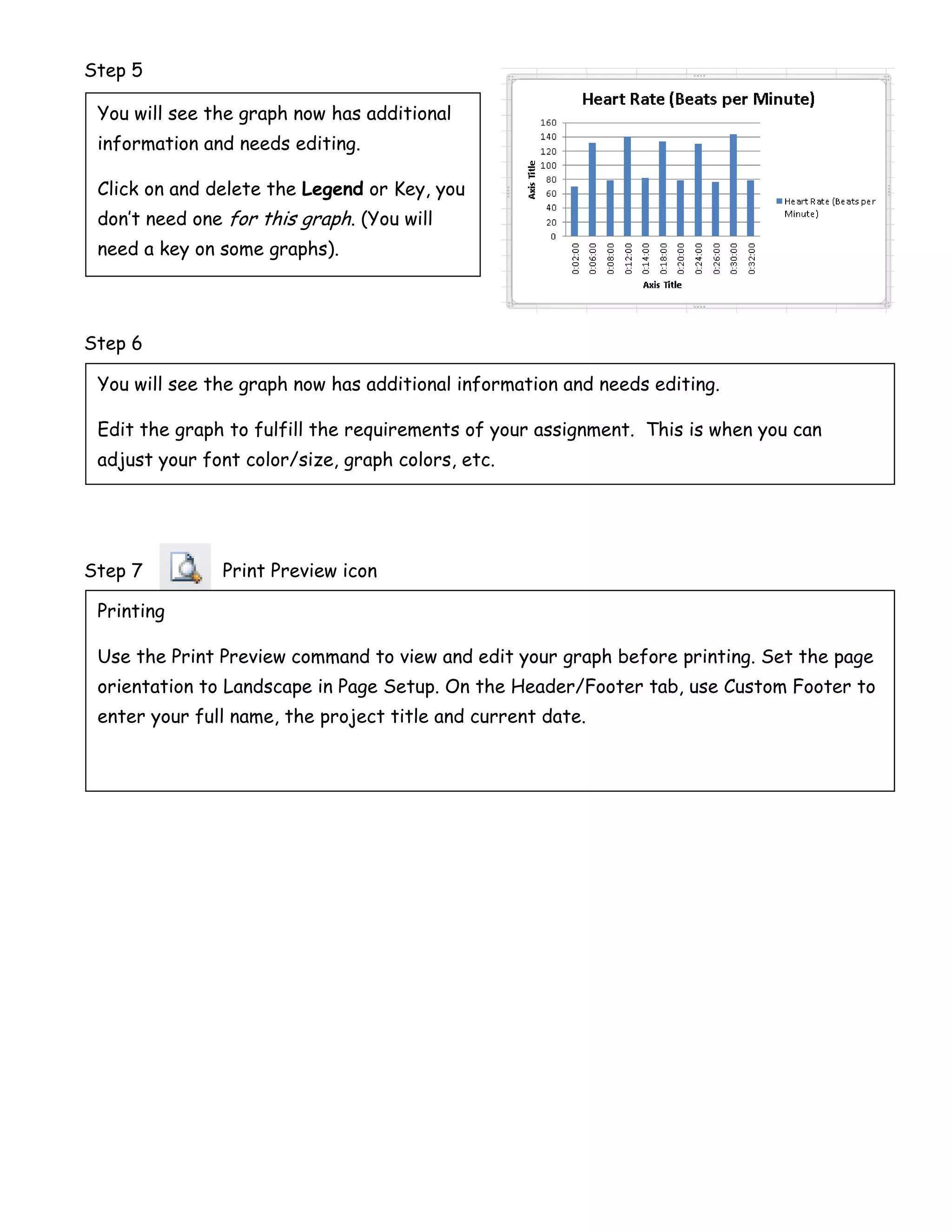
Step 5

 You will see the graph now has additional
 information and needs editing.

 Click on and delete the Legend or Key, you
 don’t need one for this graph. (You will
 need a key on some graphs).


Step 6

 You will see the graph now has additional information and needs editing.

 Edit the graph to fulfill the requirements of your assignment. This is when you can
 adjust your font color/size, graph colors, etc.


Step 7         Print Preview icon

 Printing

 Use the Print Preview command to view and edit your graph before printing. Set the page
 orientation to Landscape in Page Setup. On the Header/Footer tab, use Custom Footer to
 enter your full name, the project title and current date.

Excel screen shot info 2

  • 1.
    Excel 2010 Below isa screen shot of a blank Excel window. The Excel program can be used to gather and organize data, as an analytical tool (graphs and charts), to maintain inventory, for budgets/financial needs, or to simply maintain a list of names. Below is a break down on the parts of Excel and its terminology. A file in Excel is called a Workbook. A workbook is made up of Sheets (see lower left corner) Rows: numbered horizontal area Columns: lettered vertical area Cell: one of the many rectangles that make up this portion of the window. They are named for the letter and number. Example: the highlighted cell in the upper left-hand corner is called cell A1. Sheet(s): act like pages in a book Horizontal Scroll Bar: to move sheet left and right To add more sheets click this icon Zoom To rename a sheet, double click and type new name Information Area: Excel will send you messages in this area of the window To move a sheet, click on the tab and drag it left or right
  • 2.
    Tabs Box Launcher: click on this icon to see more less used Ribbon: grey area commands Command: icons that allow you to perform Groups – related tasks or make changes in the workbook commands Contextual Tab: This tab will appear if an object is inserted and selected in your sheet (page). It allows you to edit the inserted image or object. Formula Bar: Shows you what is exactly in each cell. Name Bar: Shows you which cell you are in (or is highlighted) Fill Series: Type in your first (sometimes first and second) value(s) in a cell. Then select the cell(s) and click on the little square in the lower right corner of the cell. Drag down or to the right to fill cells. Height and Width: Two ways… 1.) Right click the cell and select column width or Row Height. Adjust as you wish. 2.) Double click on the line between the column letter you want to adjust and the next column letter. For example. To adjust column D, click on the line between D and E. To adjust row 3, click and drag on the between the 3 and the 4. To delete a column or row: Right click on the letter or number you want to remove. Right click and then select delete. Never skip rows or columns! Adjust spacing my making the cells larger or smaller
  • 3.
    To Create aGraph using your Excel Data To create a graph you must remember what needs to be included to properly display your data in a way that can be read and analyzed. Remember to think about TAILS and DRY MIX T- Title D- Dependent Variable M- Manipulated (Ind) Variable A- Axis R- Responding variable I-Independent variable I- Intervals Y- Y Axis X- X Axis L- Labels S- Scale Column A is for data you want on the x-axis This is your Independent Variable Column B is for data you want on your y-axis This is your Dependent Variable Include a brief but fully descriptive heading at the top of each column explaining the data. Include units of measurement. As long as you include them in the column heading you do not have to list them after each data value. In fact you do not want to include them in an Excel data table as it will show up on your graph. Convert all data in the “Column A” to text. First, highlight the cells your data will fill. Select the Home Tab. Select Text in the Number Group. Then input your data. Be sure the blue triangle shows up in the upper left corner of each cell you add data to.
  • 4.
    Step 1 Clickon A1, holding down the left mouse key and select your entire data table (click and drag) Step 2 Click the Insert Tab. Select the Chart you want to use (for a line or bar graph). This example will be for a line graph Step 3 When you select your graph it will appear in the middle of your data sheet. Click on the edge of the entire graph to select it and click on the command Move Chart Location then click on “New Sheet”. Later remember to rename that new sheet “Graph”. Step 4 In your new sheet, select the graph. Then click on Design under the Chart Contextual Tab. Click the Arrow on the right side of the Chart Layouts and choose the graph example that best fits your needs.
  • 5.
    Step 5 Youwill see the graph now has additional information and needs editing. Click on and delete the Legend or Key, you don’t need one for this graph. (You will need a key on some graphs). Step 6 You will see the graph now has additional information and needs editing. Edit the graph to fulfill the requirements of your assignment. This is when you can adjust your font color/size, graph colors, etc. Step 7 Print Preview icon Printing Use the Print Preview command to view and edit your graph before printing. Set the page orientation to Landscape in Page Setup. On the Header/Footer tab, use Custom Footer to enter your full name, the project title and current date.