Trends in Business Process Management

The Era of Evidence-Based
Business Process Management
Marlon Dumas
University of Tartu, Estonia
In collaboration with Wil van der Aalst,
Marcello La Rosa and Fabrizio Maggi

Charleston, SC, USA
5-6 March 2014

LEAD the Way
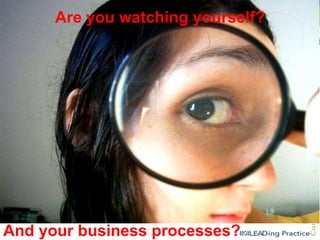
Are you watching yourself?

And your business processes?
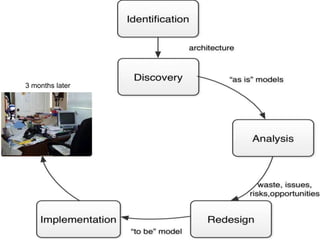
3 months later
Back to basics…

1.

Any process is better than no process

2.

A good process is better than a bad process

3.

Even a good process can be improved

4.

Any good process eventually becomes a bad process
–

…unless continuously cared for

Michael Hammer
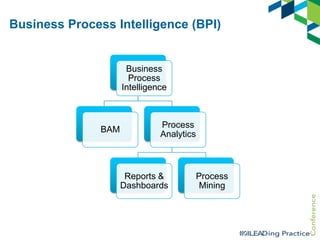
Business Process Intelligence (BPI)

Business
Process
Intelligence

BAM

Process
Analytics

Reports &
Dashboards

Process
Mining
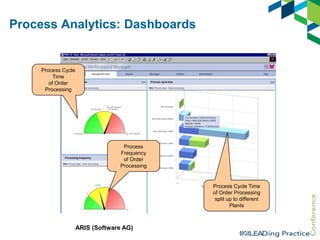
Process Analytics: Dashboards

Process Cycle
Time
of Order
Processing

Process
Frequency
of Order
Processing

Process Cycle Time
of Order Processing
split up to different
Plants

ARIS (Software AG)
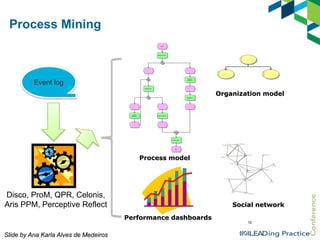
Process Mining
Sta rt

Re gis te r or de r

Pre pa re
s hipme nt

Event log
(Re )s e nd bill

Organization model
Ship goods

Conta ct
cus t ome r

Re ce ive paym e nt

Archive orde r

End

Process model

Disco, ProM, QPR, Celonis,
Aris PPM, Perceptive Reflect

Social network
Performance dashboards
10

Slide by Ana Karla Alves de Medeiros
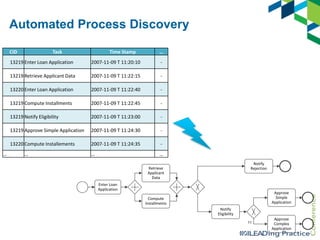
Automated Process Discovery
CID

Task

Time Stamp

…

13219 Enter Loan Application

-

13219 Retrieve Applicant Data

2007-11-09 T 11:22:15

-

13220 Enter Loan Application

2007-11-09 T 11:22:40

-

13219 Compute Installments

2007-11-09 T 11:22:45

-

13219 Notify Eligibility

2007-11-09 T 11:23:00

-

13219 Approve Simple Application

2007-11-09 T 11:24:30

-

13220 Compute Installements
…

2007-11-09 T 11:20:10

2007-11-09 T 11:24:35

-

…

…

…

Notify
Rejection

Retrieve
Applicant
Data
Enter Loan
Application

Approve
Simple
Application

Compute
Installments
Notify
Eligibility
11

Approve
Complex
Application
Process Mining: Value Proposition

Understand your processes as they are
• Not as you imagine them

Back your hypotheses with evidence
• Not only with intuitions and beliefs

Quantify the impact of redesign options
• Before and after
Process Mining: Where is it used?
 Insurance
–Suncorp Australia

 Health
–AMC Hospital, The Netherlands
–São Sebastião Hospital, Portugal
–Chania Hospital, Greece

–EHR Workflow Inc., USA

 Transport
–ANA Airports, Portugal

 Electronics
–Phillips, The Netherlands

 Government, banking, construction … You next?
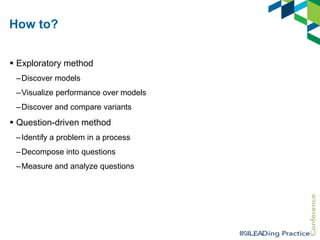
How to?
 Exploratory method
–Discover models
–Visualize performance over models
–Discover and compare variants

 Question-driven method
–Identify a problem in a process

–Decompose into questions
–Measure and analyze questions
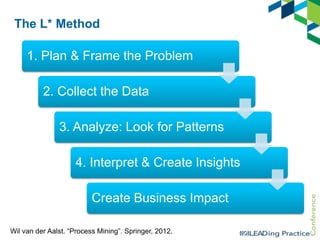
The L* Method

1. Plan & Frame the Problem

2. Collect the Data
3. Analyze: Look for Patterns
4. Interpret & Create Insights
Create Business Impact
Wil van der Aalst. “Process Mining”. Springer, 2012.
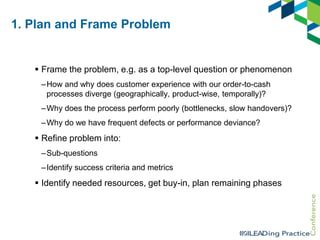
1. Plan and Frame Problem

 Frame the problem, e.g. as a top-level question or phenomenon
–How and why does customer experience with our order-to-cash
processes diverge (geographically, product-wise, temporally)?
–Why does the process perform poorly (bottlenecks, slow handovers)?

–Why do we have frequent defects or performance deviance?

 Refine problem into:
–Sub-questions
–Identify success criteria and metrics

 Identify needed resources, get buy-in, plan remaining phases
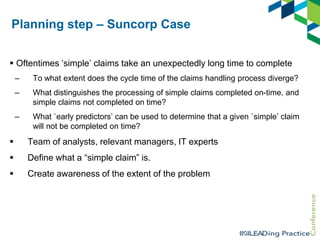
Planning step – Suncorp Case
 Oftentimes „simple‟ claims take an unexpectedly long time to complete
–

To what extent does the cycle time of the claims handling process diverge?

–

What distinguishes the processing of simple claims completed on-time, and
simple claims not completed on time?

–

What `early predictors‟ can be used to determine that a given `simple‟ claim
will not be completed on time?



Team of analysts, relevant managers, IT experts



Define what a “simple claim” is.



Create awareness of the extent of the problem
2. Collect the data
 Find relevant data sources
–Information systems, SAP, Oracle (Celonis), BPM Systems
–Identify process-related entities and their identifiers and map entities to
relevant processes in the process architecture

 Extract traces
–Collect records associated to process entities (perhaps from multiple sources)
–Group records by process identifier to produce “traces”
–Export traces into standard format (XES)

 Clean
–Filter irrelevant events
–Combine equivalent events
–Filter out traces of infrequent variants if not relevant
3. Analyze – Find Patterns

 Discover the real process from the logs
 Calculate process metrics
–Cycle times, waiting times, error rates

 Explore frequent paths

 Identify and explore ``deviance‟‟
 Discover “types of cases”
–Classify e.g. by performance
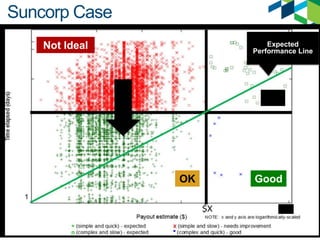
Suncorp Case
Not Ideal

Expected
Performance Line

OK

OK

Good
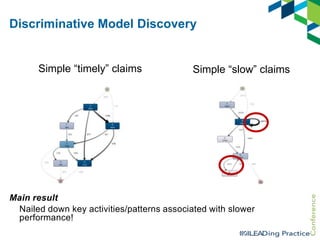
Discriminative Model Discovery

Simple “timely” claims

Simple “slow” claims

Main result
Nailed down key activities/patterns associated with slower
performance!
WHAT’S THE CATCH?
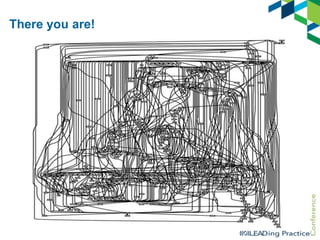
There you are!
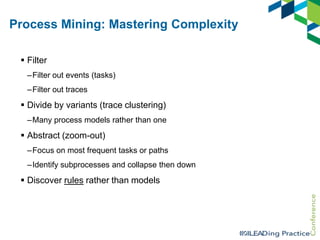
Process Mining: Mastering Complexity
 Filter
–Filter out events (tasks)
–Filter out traces

 Divide by variants (trace clustering)
–Many process models rather than one

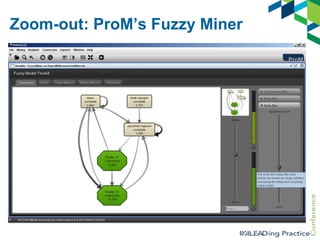
 Abstract (zoom-out)
–Focus on most frequent tasks or paths
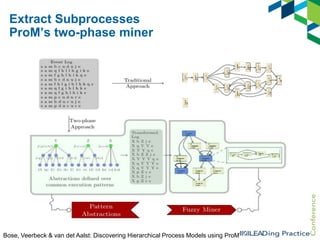
–Identify subprocesses and collapse then down

 Discover rules rather than models
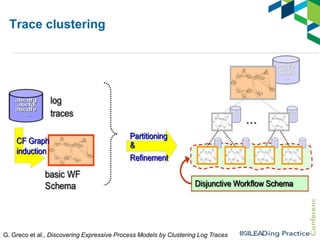
Trace clustering

G. Greco et al., Discovering Expressive Process Models by Clustering Log Traces
Zoom-out: ProM’s Fuzzy Miner
Extract Subprocesses
ProM’s two-phase miner

Bose, Veerbeck & van det Aalst: Discovering Hierarchical Process Models using ProM
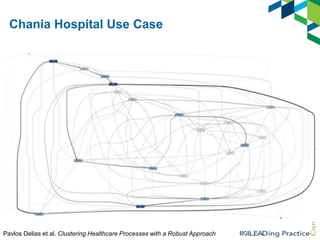
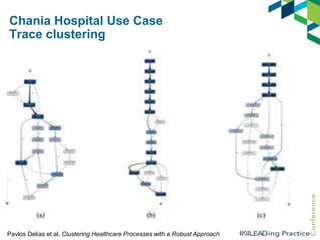
Chania Hospital Use Case

Pavlos Delias et al. Clustering Healthcare Processes with a Robust Approach
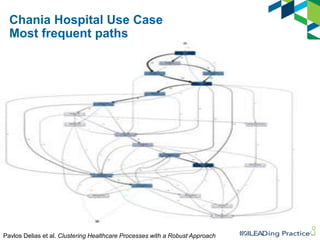
Chania Hospital Use Case
Most frequent paths

Pavlos Delias et al. Clustering Healthcare Processes with a Robust Approach
Chania Hospital Use Case
Trace clustering

Pavlos Delias et al. Clustering Healthcare Processes with a Robust Approach
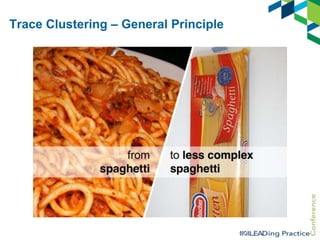
Trace Clustering – General Principle
Do we really want models…
Or do we want understanding?

www.interactiveinsightsgroup.com
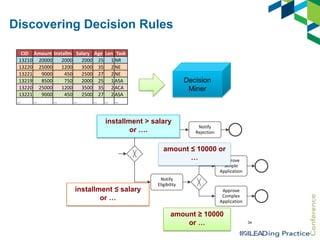
Discovering Business Rules

Decision rules
• Why does something happen at a given point in time?

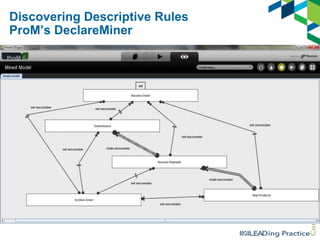
Descriptive (temporal) rules
• When and why does something happen?

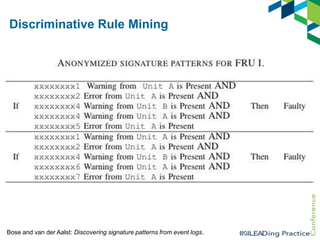
Discriminative rules
• When and why does something wrong happen?
Discovering Decision Rules
CID Amount Installm Salary Age Len Task
13210 20000
2000
2000 25 1 NR
13220 25000
1200
3500 35 2 NE
13221
9000
450
2500 27 2 NE
13219
8500
750
2000 25 1 ASA
13220 25000
1200
3500 35 2 ACA
13221
9000
450
2500 27 2 ASA
…
…
…
…
… … …

Decision
Miner

installment > salary
or ….

Notify
Rejection

amount ≤ 10000 or
…
Approve
Simple
Application

installment ≤ salary
or …

Notify
Eligibility
Approve
Complex
Application

amount ≥ 10000
or …

34
Discovering Descriptive Rules
ProM’s DeclareMiner
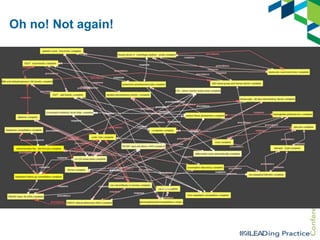
Oh no! Not again!
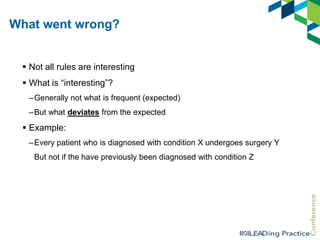
What went wrong?
 Not all rules are interesting
 What is “interesting”?
–Generally not what is frequent (expected)
–But what deviates from the expected

 Example:
–Every patient who is diagnosed with condition X undergoes surgery Y
But not if the have previously been diagnosed with condition Z
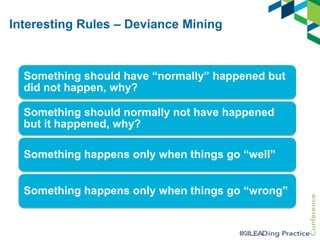
Interesting Rules – Deviance Mining

Something should have “normally” happened but
did not happen, why?
Something should normally not have happened
but it happened, why?
Something happens only when things go “well”
Something happens only when things go “wrong”
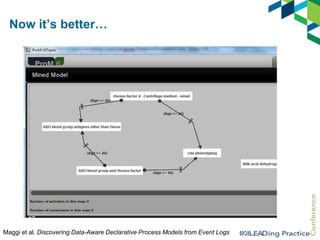
Now it’s better…

Maggi et al. Discovering Data-Aware Declarative Process Models from Event Logs
Discriminative Rule Mining

Bose and van der Aalst: Discovering signature patterns from event logs.
Take-Home Messages
 BPM is moving from intuitionistic to evidence-based
–Like marketing in the past two decades

 Convergence of BPM & BI  Business Process Intelligence
 Increasing number of successful case studies
 Maturing landscape of process mining tools and methods
 Next steps:
–More sophisticated tool support, e.g. automated deviance identification

–Predictive monitoring: detect deviance at runtime
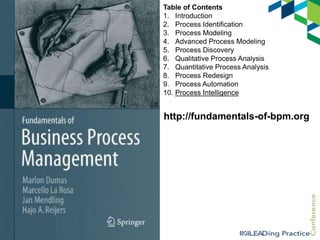
Table of Contents
1. Introduction
2. Process Identification
3. Process Modeling
4. Advanced Process Modeling
5. Process Discovery
6. Qualitative Process Analysis
7. Quantitative Process Analysis
8. Process Redesign
9. Process Automation
10. Process Intelligence

http://fundamentals-of-bpm.org
Want to know more?
 Task force on process mining (case studies, events, etc.)
–http://www.win.tue.nl/ieeetfpm/

 Process mining portal and ProM toolset
–http://processmining.org

 Process Mining LinkedIn group
–http://www.linkedin.com/groups/Process-Mining-1915049

 BPM‟2014 Conference, Israel, 8-11 Sept. 2014
–http://bpm2014.haifa.ac.il/
Questions?

Marlon Dumas
University of Tartu
E-Mail: marlon.dumas@ut.ee
For more information:
www.fundamentals-of-bpm.org
45

Evidence-Based Business Process Management

  • 1.
    Trends in BusinessProcess Management The Era of Evidence-Based Business Process Management Marlon Dumas University of Tartu, Estonia In collaboration with Wil van der Aalst, Marcello La Rosa and Fabrizio Maggi Charleston, SC, USA 5-6 March 2014 LEAD the Way
  • 4.
    Are you watchingyourself? And your business processes?
  • 5.
  • 6.
    Back to basics… 1. Anyprocess is better than no process 2. A good process is better than a bad process 3. Even a good process can be improved 4. Any good process eventually becomes a bad process – …unless continuously cared for Michael Hammer
  • 8.
    Business Process Intelligence(BPI) Business Process Intelligence BAM Process Analytics Reports & Dashboards Process Mining
  • 9.
    Process Analytics: Dashboards ProcessCycle Time of Order Processing Process Frequency of Order Processing Process Cycle Time of Order Processing split up to different Plants ARIS (Software AG)
  • 10.
    Process Mining Sta rt Regis te r or de r Pre pa re s hipme nt Event log (Re )s e nd bill Organization model Ship goods Conta ct cus t ome r Re ce ive paym e nt Archive orde r End Process model Disco, ProM, QPR, Celonis, Aris PPM, Perceptive Reflect Social network Performance dashboards 10 Slide by Ana Karla Alves de Medeiros
  • 11.
    Automated Process Discovery CID Task TimeStamp … 13219 Enter Loan Application - 13219 Retrieve Applicant Data 2007-11-09 T 11:22:15 - 13220 Enter Loan Application 2007-11-09 T 11:22:40 - 13219 Compute Installments 2007-11-09 T 11:22:45 - 13219 Notify Eligibility 2007-11-09 T 11:23:00 - 13219 Approve Simple Application 2007-11-09 T 11:24:30 - 13220 Compute Installements … 2007-11-09 T 11:20:10 2007-11-09 T 11:24:35 - … … … Notify Rejection Retrieve Applicant Data Enter Loan Application Approve Simple Application Compute Installments Notify Eligibility 11 Approve Complex Application
  • 12.
    Process Mining: ValueProposition Understand your processes as they are • Not as you imagine them Back your hypotheses with evidence • Not only with intuitions and beliefs Quantify the impact of redesign options • Before and after
  • 13.
    Process Mining: Whereis it used?  Insurance –Suncorp Australia  Health –AMC Hospital, The Netherlands –São Sebastião Hospital, Portugal –Chania Hospital, Greece –EHR Workflow Inc., USA  Transport –ANA Airports, Portugal  Electronics –Phillips, The Netherlands  Government, banking, construction … You next?
  • 14.
    How to?  Exploratorymethod –Discover models –Visualize performance over models –Discover and compare variants  Question-driven method –Identify a problem in a process –Decompose into questions –Measure and analyze questions
  • 15.
    The L* Method 1.Plan & Frame the Problem 2. Collect the Data 3. Analyze: Look for Patterns 4. Interpret & Create Insights Create Business Impact Wil van der Aalst. “Process Mining”. Springer, 2012.
  • 16.
    1. Plan andFrame Problem  Frame the problem, e.g. as a top-level question or phenomenon –How and why does customer experience with our order-to-cash processes diverge (geographically, product-wise, temporally)? –Why does the process perform poorly (bottlenecks, slow handovers)? –Why do we have frequent defects or performance deviance?  Refine problem into: –Sub-questions –Identify success criteria and metrics  Identify needed resources, get buy-in, plan remaining phases
  • 17.
    Planning step –Suncorp Case  Oftentimes „simple‟ claims take an unexpectedly long time to complete – To what extent does the cycle time of the claims handling process diverge? – What distinguishes the processing of simple claims completed on-time, and simple claims not completed on time? – What `early predictors‟ can be used to determine that a given `simple‟ claim will not be completed on time?  Team of analysts, relevant managers, IT experts  Define what a “simple claim” is.  Create awareness of the extent of the problem
  • 18.
    2. Collect thedata  Find relevant data sources –Information systems, SAP, Oracle (Celonis), BPM Systems –Identify process-related entities and their identifiers and map entities to relevant processes in the process architecture  Extract traces –Collect records associated to process entities (perhaps from multiple sources) –Group records by process identifier to produce “traces” –Export traces into standard format (XES)  Clean –Filter irrelevant events –Combine equivalent events –Filter out traces of infrequent variants if not relevant
  • 19.
    3. Analyze –Find Patterns  Discover the real process from the logs  Calculate process metrics –Cycle times, waiting times, error rates  Explore frequent paths  Identify and explore ``deviance‟‟  Discover “types of cases” –Classify e.g. by performance
  • 20.
  • 21.
    Discriminative Model Discovery Simple“timely” claims Simple “slow” claims Main result Nailed down key activities/patterns associated with slower performance!
  • 22.
  • 23.
  • 24.
    Process Mining: MasteringComplexity  Filter –Filter out events (tasks) –Filter out traces  Divide by variants (trace clustering) –Many process models rather than one  Abstract (zoom-out) –Focus on most frequent tasks or paths –Identify subprocesses and collapse then down  Discover rules rather than models
  • 25.
    Trace clustering G. Grecoet al., Discovering Expressive Process Models by Clustering Log Traces
  • 26.
  • 27.
    Extract Subprocesses ProM’s two-phaseminer Bose, Veerbeck & van det Aalst: Discovering Hierarchical Process Models using ProM
  • 28.
    Chania Hospital UseCase Pavlos Delias et al. Clustering Healthcare Processes with a Robust Approach
  • 29.
    Chania Hospital UseCase Most frequent paths Pavlos Delias et al. Clustering Healthcare Processes with a Robust Approach
  • 30.
    Chania Hospital UseCase Trace clustering Pavlos Delias et al. Clustering Healthcare Processes with a Robust Approach
  • 31.
    Trace Clustering –General Principle
  • 32.
    Do we reallywant models… Or do we want understanding? www.interactiveinsightsgroup.com
  • 33.
    Discovering Business Rules Decisionrules • Why does something happen at a given point in time? Descriptive (temporal) rules • When and why does something happen? Discriminative rules • When and why does something wrong happen?
  • 34.
    Discovering Decision Rules CIDAmount Installm Salary Age Len Task 13210 20000 2000 2000 25 1 NR 13220 25000 1200 3500 35 2 NE 13221 9000 450 2500 27 2 NE 13219 8500 750 2000 25 1 ASA 13220 25000 1200 3500 35 2 ACA 13221 9000 450 2500 27 2 ASA … … … … … … … Decision Miner installment > salary or …. Notify Rejection amount ≤ 10000 or … Approve Simple Application installment ≤ salary or … Notify Eligibility Approve Complex Application amount ≥ 10000 or … 34
  • 35.
  • 36.
    Oh no! Notagain!
  • 37.
    What went wrong? Not all rules are interesting  What is “interesting”? –Generally not what is frequent (expected) –But what deviates from the expected  Example: –Every patient who is diagnosed with condition X undergoes surgery Y But not if the have previously been diagnosed with condition Z
  • 38.
    Interesting Rules –Deviance Mining Something should have “normally” happened but did not happen, why? Something should normally not have happened but it happened, why? Something happens only when things go “well” Something happens only when things go “wrong”
  • 39.
    Now it’s better… Maggiet al. Discovering Data-Aware Declarative Process Models from Event Logs
  • 40.
    Discriminative Rule Mining Boseand van der Aalst: Discovering signature patterns from event logs.
  • 41.
    Take-Home Messages  BPMis moving from intuitionistic to evidence-based –Like marketing in the past two decades  Convergence of BPM & BI  Business Process Intelligence  Increasing number of successful case studies  Maturing landscape of process mining tools and methods  Next steps: –More sophisticated tool support, e.g. automated deviance identification –Predictive monitoring: detect deviance at runtime
  • 42.
    Table of Contents 1.Introduction 2. Process Identification 3. Process Modeling 4. Advanced Process Modeling 5. Process Discovery 6. Qualitative Process Analysis 7. Quantitative Process Analysis 8. Process Redesign 9. Process Automation 10. Process Intelligence http://fundamentals-of-bpm.org
  • 43.
    Want to knowmore?  Task force on process mining (case studies, events, etc.) –http://www.win.tue.nl/ieeetfpm/  Process mining portal and ProM toolset –http://processmining.org  Process Mining LinkedIn group –http://www.linkedin.com/groups/Process-Mining-1915049  BPM‟2014 Conference, Israel, 8-11 Sept. 2014 –http://bpm2014.haifa.ac.il/
  • 44.
    Questions? Marlon Dumas University ofTartu E-Mail: marlon.dumas@ut.ee For more information: www.fundamentals-of-bpm.org
  • 45.

Editor's Notes

  • #33 Discovering rules that describe not what happens but why it happens