QUESTION 1
AMY DAVIES
In what ways does your media product
use, develop or challenge forms and
conventions of real media products?
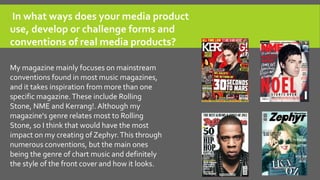
My magazine mainly focuses on mainstream
conventions found in most music magazines,
and it takes inspiration from more than one
specific magazine.These include Rolling
Stone, NME and Kerrang!. Although my
magazine's genre relates most to Rolling
Stone, so I think that would have the most
impact on my creating of Zephyr.This through
numerous conventions, but the main ones
being the genre of chart music and definitely
the style of the front cover and how it looks.
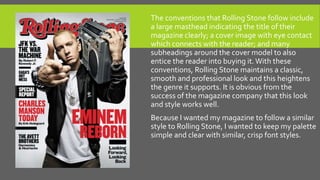
The conventions that Rolling Stone follow include
a large masthead indicating the title of their
magazine clearly; a cover image with eye contact
which connects with the reader; and many
subheadings around the cover model to also
entice the reader into buying it. With these
conventions, Rolling Stone maintains a classic,
smooth and professional look and this heightens
the genre it supports. It is obvious from the
success of the magazine company that this look
and style works well.
Because I wanted my magazine to follow a similar
style to Rolling Stone, I wanted to keep my palette
simple and clear with similar, crisp font styles.
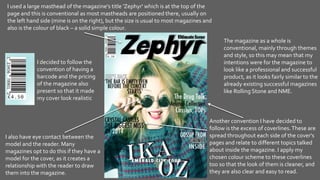
I used a large masthead of the magazine's title 'Zephyr' which is at the top of the
page and this is conventional as most mastheads are positioned there, usually on
the left hand side (mine is on the right), but the size is usual to most magazines and
also is the colour of black – a solid simple colour.
I also have eye contact between the
model and the reader. Many
magazines opt to do this if they have a
model for the cover, as it creates a
relationship with the reader to draw
them into the magazine.
Another convention I have decided to
follow is the excess of coverlines.These are
spread throughout each side of the cover's
pages and relate to different topics talked
about inside the magazine. I apply my
chosen colour scheme to these coverlines
too so that the look of them is cleaner, and
they are also clear and easy to read.
The magazine as a whole is
conventional, mainly through themes
and style, so this may mean that my
intentions were for the magazine to
look like a professional and successful
product, as it looks fairly similar to the
already existing successful magazines
like Rolling Stone and NME.
I decided to follow the
convention of having a
barcode and the pricing
of the magazine also
present so that it made
my cover look realistic
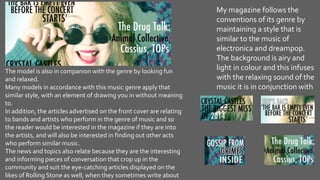
My magazine follows the
conventions of its genre by
maintaining a style that is
similar to the music of
electronica and dreampop.
The background is airy and
light in colour and this infuses
with the relaxing sound of the
music it is in conjunction with
The model is also in companion with the genre by looking fun
and relaxed.
Many models in accordance with this music genre apply that
similar style, with an element of drawing you in without meaning
to.
In addition, the articles advertised on the front cover are relating
to bands and artists who perform in the genre of music and so
the reader would be interested in the magazine if they are into
the artists, and will also be interested in finding out other acts
who perform similar music.
The news and topics also relate because they are the interesting
and informing pieces of conversation that crop up in the
community and suit the eye-catching articles displayed on the
likes of Rolling Stone as well, when they sometimes write about
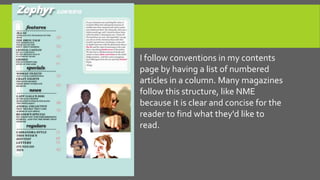
I follow conventions in my contents
page by having a list of numbered
articles in a column. Many magazines
follow this structure, like NME
because it is clear and concise for the
reader to find what they'd like to
read.
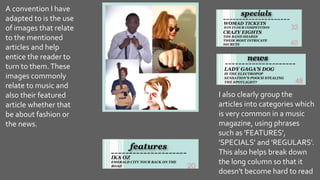
A convention I have
adapted to is the use
of images that relate
to the mentioned
articles and help
entice the reader to
turn to them.These
images commonly
relate to music and
also their featured
article whether that
be about fashion or
the news.
I also clearly group the
articles into categories which
is very common in a music
magazine, using phrases
such as 'FEATURES',
'SPECIALS' and 'REGULARS'.
This also helps break down
the long column so that it
doesn't become hard to read
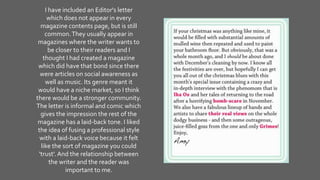
I have included an Editor's letter
which does not appear in every
magazine contents page, but is still
common.They usually appear in
magazines where the writer wants to
be closer to their readers and I
thought I had created a magazine
which did have that bond since there
were articles on social awareness as
well as music. Its genre meant it
would have a niche market, so I think
there would be a stronger community.
The letter is informal and comic which
gives the impression the rest of the
magazine has a laid-back tone. I liked
the idea of fusing a professional style
with a laid-back voice because it felt
like the sort of magazine you could
'trust'.And the relationship between
the writer and the reader was
important to me.
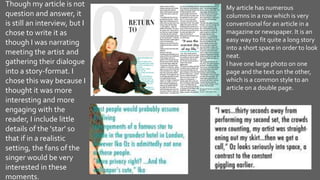
My article has numerous
columns in a row which is very
conventional for an article in a
magazine or newspaper. It is an
easy way to fit quite a long story
into a short space in order to look
neat.
I have one large photo on one
page and the text on the other,
which is a common style to an
article on a double page.
Though my article is not
question and answer, it
is still an interview, but I
chose to write it as
though I was narrating
meeting the artist and
gathering their dialogue
into a story-format. I
chose this way because I
thought it was more
interesting and more
engaging with the
reader, I include little
details of the 'star' so
that if in a realistic
setting, the fans of the
singer would be very
interested in these
moments.
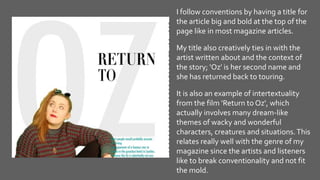
I follow conventions by having a title for
the article big and bold at the top of the
page like in most magazine articles.
My title also creatively ties in with the
artist written about and the context of
the story; 'Oz' is her second name and
she has returned back to touring.
It is also an example of intertextuality
from the film 'Return to Oz', which
actually involves many dream-like
themes of wacky and wonderful
characters, creatures and situations.This
relates really well with the genre of my
magazine since the artists and listeners
like to break conventionality and not fit
the mold.

Evaluation Question 1

  • 1.
  • 2.
    In what waysdoes your media product use, develop or challenge forms and conventions of real media products? My magazine mainly focuses on mainstream conventions found in most music magazines, and it takes inspiration from more than one specific magazine.These include Rolling Stone, NME and Kerrang!. Although my magazine's genre relates most to Rolling Stone, so I think that would have the most impact on my creating of Zephyr.This through numerous conventions, but the main ones being the genre of chart music and definitely the style of the front cover and how it looks.
  • 3.
    The conventions thatRolling Stone follow include a large masthead indicating the title of their magazine clearly; a cover image with eye contact which connects with the reader; and many subheadings around the cover model to also entice the reader into buying it. With these conventions, Rolling Stone maintains a classic, smooth and professional look and this heightens the genre it supports. It is obvious from the success of the magazine company that this look and style works well. Because I wanted my magazine to follow a similar style to Rolling Stone, I wanted to keep my palette simple and clear with similar, crisp font styles.
  • 4.
    I used alarge masthead of the magazine's title 'Zephyr' which is at the top of the page and this is conventional as most mastheads are positioned there, usually on the left hand side (mine is on the right), but the size is usual to most magazines and also is the colour of black – a solid simple colour. I also have eye contact between the model and the reader. Many magazines opt to do this if they have a model for the cover, as it creates a relationship with the reader to draw them into the magazine. Another convention I have decided to follow is the excess of coverlines.These are spread throughout each side of the cover's pages and relate to different topics talked about inside the magazine. I apply my chosen colour scheme to these coverlines too so that the look of them is cleaner, and they are also clear and easy to read. The magazine as a whole is conventional, mainly through themes and style, so this may mean that my intentions were for the magazine to look like a professional and successful product, as it looks fairly similar to the already existing successful magazines like Rolling Stone and NME. I decided to follow the convention of having a barcode and the pricing of the magazine also present so that it made my cover look realistic
  • 5.
    My magazine followsthe conventions of its genre by maintaining a style that is similar to the music of electronica and dreampop. The background is airy and light in colour and this infuses with the relaxing sound of the music it is in conjunction with The model is also in companion with the genre by looking fun and relaxed. Many models in accordance with this music genre apply that similar style, with an element of drawing you in without meaning to. In addition, the articles advertised on the front cover are relating to bands and artists who perform in the genre of music and so the reader would be interested in the magazine if they are into the artists, and will also be interested in finding out other acts who perform similar music. The news and topics also relate because they are the interesting and informing pieces of conversation that crop up in the community and suit the eye-catching articles displayed on the likes of Rolling Stone as well, when they sometimes write about
  • 6.
    I follow conventionsin my contents page by having a list of numbered articles in a column. Many magazines follow this structure, like NME because it is clear and concise for the reader to find what they'd like to read.
  • 7.
    A convention Ihave adapted to is the use of images that relate to the mentioned articles and help entice the reader to turn to them.These images commonly relate to music and also their featured article whether that be about fashion or the news. I also clearly group the articles into categories which is very common in a music magazine, using phrases such as 'FEATURES', 'SPECIALS' and 'REGULARS'. This also helps break down the long column so that it doesn't become hard to read
  • 8.
    I have includedan Editor's letter which does not appear in every magazine contents page, but is still common.They usually appear in magazines where the writer wants to be closer to their readers and I thought I had created a magazine which did have that bond since there were articles on social awareness as well as music. Its genre meant it would have a niche market, so I think there would be a stronger community. The letter is informal and comic which gives the impression the rest of the magazine has a laid-back tone. I liked the idea of fusing a professional style with a laid-back voice because it felt like the sort of magazine you could 'trust'.And the relationship between the writer and the reader was important to me.
  • 9.
    My article hasnumerous columns in a row which is very conventional for an article in a magazine or newspaper. It is an easy way to fit quite a long story into a short space in order to look neat. I have one large photo on one page and the text on the other, which is a common style to an article on a double page. Though my article is not question and answer, it is still an interview, but I chose to write it as though I was narrating meeting the artist and gathering their dialogue into a story-format. I chose this way because I thought it was more interesting and more engaging with the reader, I include little details of the 'star' so that if in a realistic setting, the fans of the singer would be very interested in these moments.
  • 10.
    I follow conventionsby having a title for the article big and bold at the top of the page like in most magazine articles. My title also creatively ties in with the artist written about and the context of the story; 'Oz' is her second name and she has returned back to touring. It is also an example of intertextuality from the film 'Return to Oz', which actually involves many dream-like themes of wacky and wonderful characters, creatures and situations.This relates really well with the genre of my magazine since the artists and listeners like to break conventionality and not fit the mold.