Evaluation Question 3:
What have you learnt
from your audience
feedback?
Emily Birks
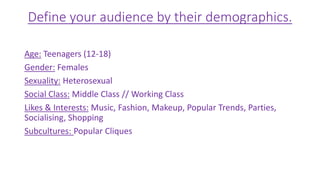
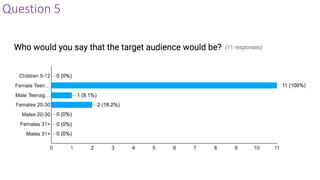
Define your audience by their demographics.
Age: Teenagers (12-18)
Gender: Females
Sexuality: Heterosexual
Social Class: Middle Class // Working Class
Likes & Interests: Music, Fashion, Makeup, Popular Trends, Parties,
Socialising, Shopping
Subcultures: Popular Cliques
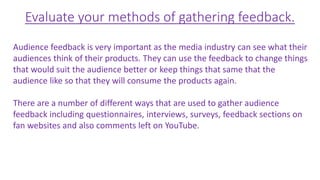
Evaluate your methods of gathering feedback.
Audience feedback is very important as the media industry can see what their
audiences think of their products. They can use the feedback to change things
that would suit the audience better or keep things that same that the
audience like so that they will consume the products again.
There are a number of different ways that are used to gather audience
feedback including questionnaires, interviews, surveys, feedback sections on
fan websites and also comments left on YouTube.
Audience feedback that you’ve collected at different
stages of the production.Music Video Feedback
Digipak Feedback
Website Feedback
http://emilybirksadvancedportfolio.blogspot.co.uk/2015/1
2/rough-cut-music-video-
feedback.html?zx=9cea2317fdd59ac2
http://emilybirksadvancedportf
olio.blogspot.co.uk/2015/12/ro
ugh-cut-digipak-feedback.html
http://emilybirksadvancedportfolio.blogspot.co.uk/2015/12/r
ough-cut-website-digipak.html
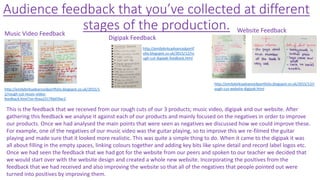
This is the feedback that we received from our rough cuts of our 3 products; music video, digipak and our website. After
gathering this feedback we analyse it against each of our products and mainly focused on the negatives in order to improve
our products. Once we had analysed the main points that were seen as negatives we discussed how we could improve these.
For example, one of the negatives of our music video was the guitar playing, so to improve this we re-filmed the guitar
playing and made sure that it looked more realistic. This was quite a simple thing to do. When it came to the digipak it was
all about filling in the empty spaces, linking colours together and adding key bits like spine detail and record label logos etc.
Once we had seen the feedback that we had got for the website from our peers and spoken to our teacher we decided that
we would start over with the website design and created a whole new website. Incorporating the positives from the
feedback that we had received and also improving the website so that all of the negatives that people pointed out were
turned into positives by improving them.
Final feedback – How have your final products been
received? What improvements could you make?
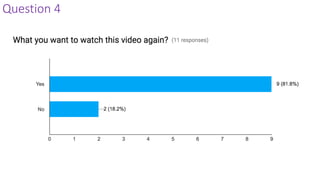
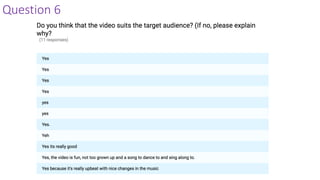
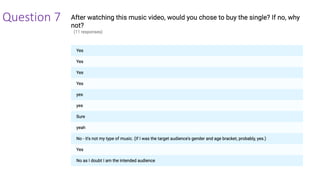
I created a questionnaire on Google Forms and asked a range of people to
complete it. In this questionnaire there was questions about each three of
the products and each person gave an opinion on what they did and didn’t
like about each product and what they thought could be improved to make
the products better.
Questions and answers to follow on the next slides.
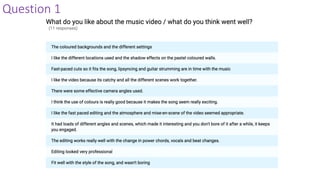
Question 1
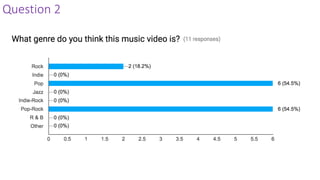
Question 2
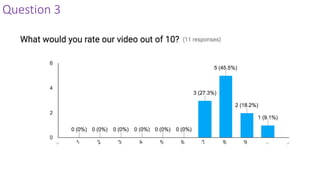
Question 3
Question 4
Question 5
Question 6
Question 7
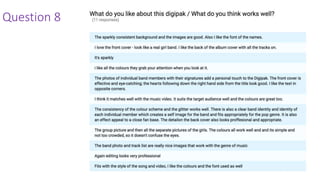
Question 8
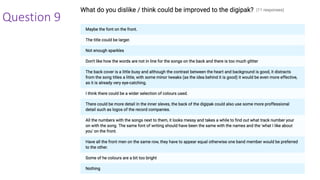
Question 9
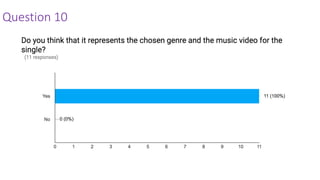
Question 10
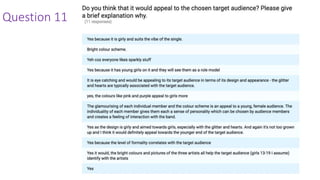
Question 11
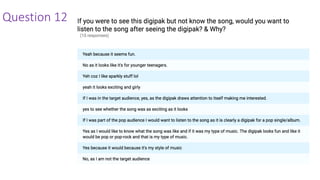
Question 12
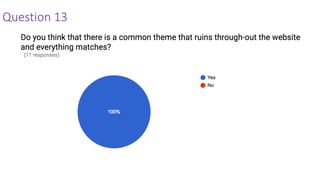
Question 13
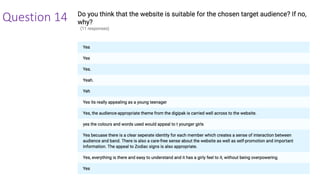
Question 14
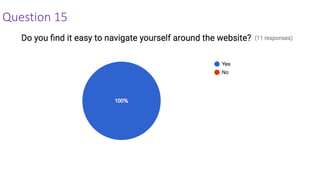
Question 15
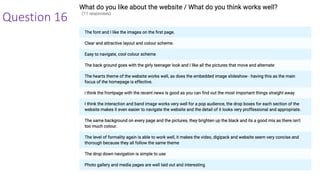
Question 16
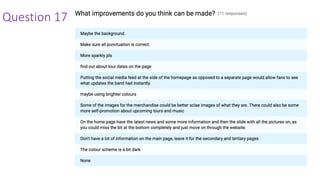
Question 17
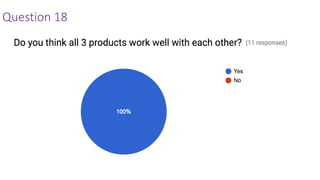
Question 18
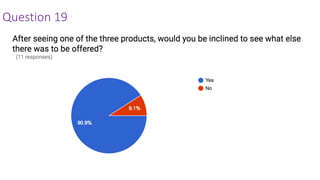
Question 19
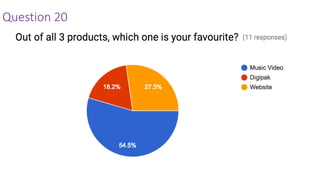
Question 20

Evaluation q 3

  • 1.
    Evaluation Question 3: Whathave you learnt from your audience feedback? Emily Birks
  • 2.
    Define your audienceby their demographics. Age: Teenagers (12-18) Gender: Females Sexuality: Heterosexual Social Class: Middle Class // Working Class Likes & Interests: Music, Fashion, Makeup, Popular Trends, Parties, Socialising, Shopping Subcultures: Popular Cliques
  • 3.
    Evaluate your methodsof gathering feedback. Audience feedback is very important as the media industry can see what their audiences think of their products. They can use the feedback to change things that would suit the audience better or keep things that same that the audience like so that they will consume the products again. There are a number of different ways that are used to gather audience feedback including questionnaires, interviews, surveys, feedback sections on fan websites and also comments left on YouTube.
  • 4.
    Audience feedback thatyou’ve collected at different stages of the production.Music Video Feedback Digipak Feedback Website Feedback http://emilybirksadvancedportfolio.blogspot.co.uk/2015/1 2/rough-cut-music-video- feedback.html?zx=9cea2317fdd59ac2 http://emilybirksadvancedportf olio.blogspot.co.uk/2015/12/ro ugh-cut-digipak-feedback.html http://emilybirksadvancedportfolio.blogspot.co.uk/2015/12/r ough-cut-website-digipak.html This is the feedback that we received from our rough cuts of our 3 products; music video, digipak and our website. After gathering this feedback we analyse it against each of our products and mainly focused on the negatives in order to improve our products. Once we had analysed the main points that were seen as negatives we discussed how we could improve these. For example, one of the negatives of our music video was the guitar playing, so to improve this we re-filmed the guitar playing and made sure that it looked more realistic. This was quite a simple thing to do. When it came to the digipak it was all about filling in the empty spaces, linking colours together and adding key bits like spine detail and record label logos etc. Once we had seen the feedback that we had got for the website from our peers and spoken to our teacher we decided that we would start over with the website design and created a whole new website. Incorporating the positives from the feedback that we had received and also improving the website so that all of the negatives that people pointed out were turned into positives by improving them.
  • 5.
    Final feedback –How have your final products been received? What improvements could you make? I created a questionnaire on Google Forms and asked a range of people to complete it. In this questionnaire there was questions about each three of the products and each person gave an opinion on what they did and didn’t like about each product and what they thought could be improved to make the products better. Questions and answers to follow on the next slides.
  • 6.
  • 7.
  • 8.
  • 9.
  • 10.
  • 11.
  • 12.
  • 13.
  • 14.
  • 15.
  • 16.
  • 17.
  • 18.
  • 19.
  • 20.
  • 21.
  • 22.
  • 23.
  • 24.
  • 25.