Stephanie Herfel
Librarian
Newburgh Campus Library
Be an investigator!
Purpose
 Why was the website created?
 .edu and .gov sites are reliable
 .com generally exist to sell you something
 .org sites are okay as long as the purpose is not to

convince that an opinion is fact
 Who is the intended audience?
 Is there a lot of advertising on the page = Be critical!
Authority







Is the author’s name easy to find?
Is the author an expert on the topic?
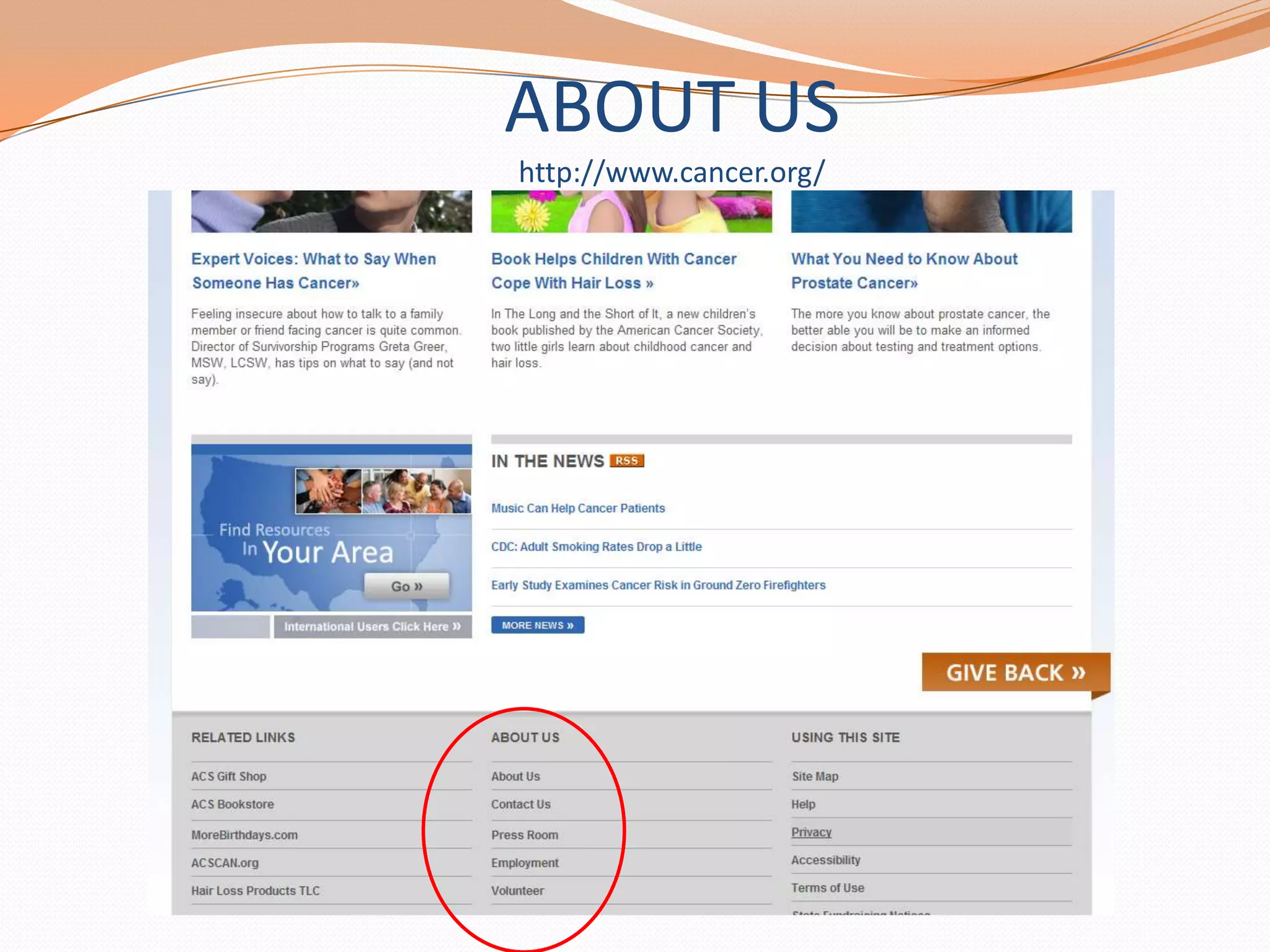
Is an About Us page included?
Does the website have a contact page?
.gov, .edu, or .org site?
Are sources cited?
ABOUT US
http://www.cancer.org/
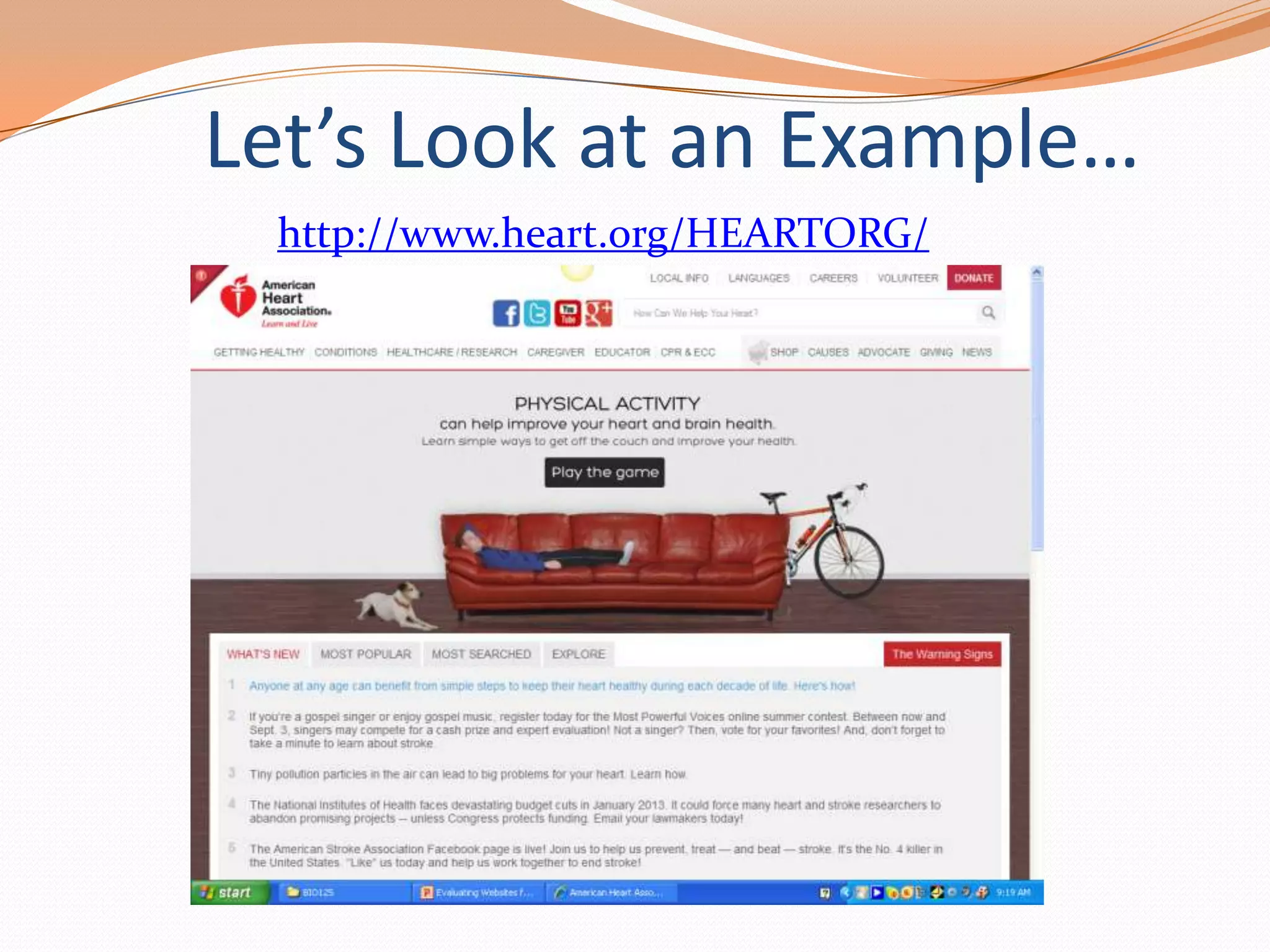
Let’s Look at an Example…
http://www.heart.org/HEARTORG/
Objectivity
 Why was the webpage created?

 Fact or an opinion?
 Look out for bias
 Bias = an opinion formed without evidence,

facts, or knowledge.
Currency (When?)
 When was the webpage written?
 When was the page last updated?
 Medical and technology- dates are important
 Literature and history topics- dates are less important
Coverage
 Is there enough information for

your purpose?
 Is the information provided
appropriate for college research?
 Can the same information be found
from a more credible source?
(book, encyclopedia, or journal article)
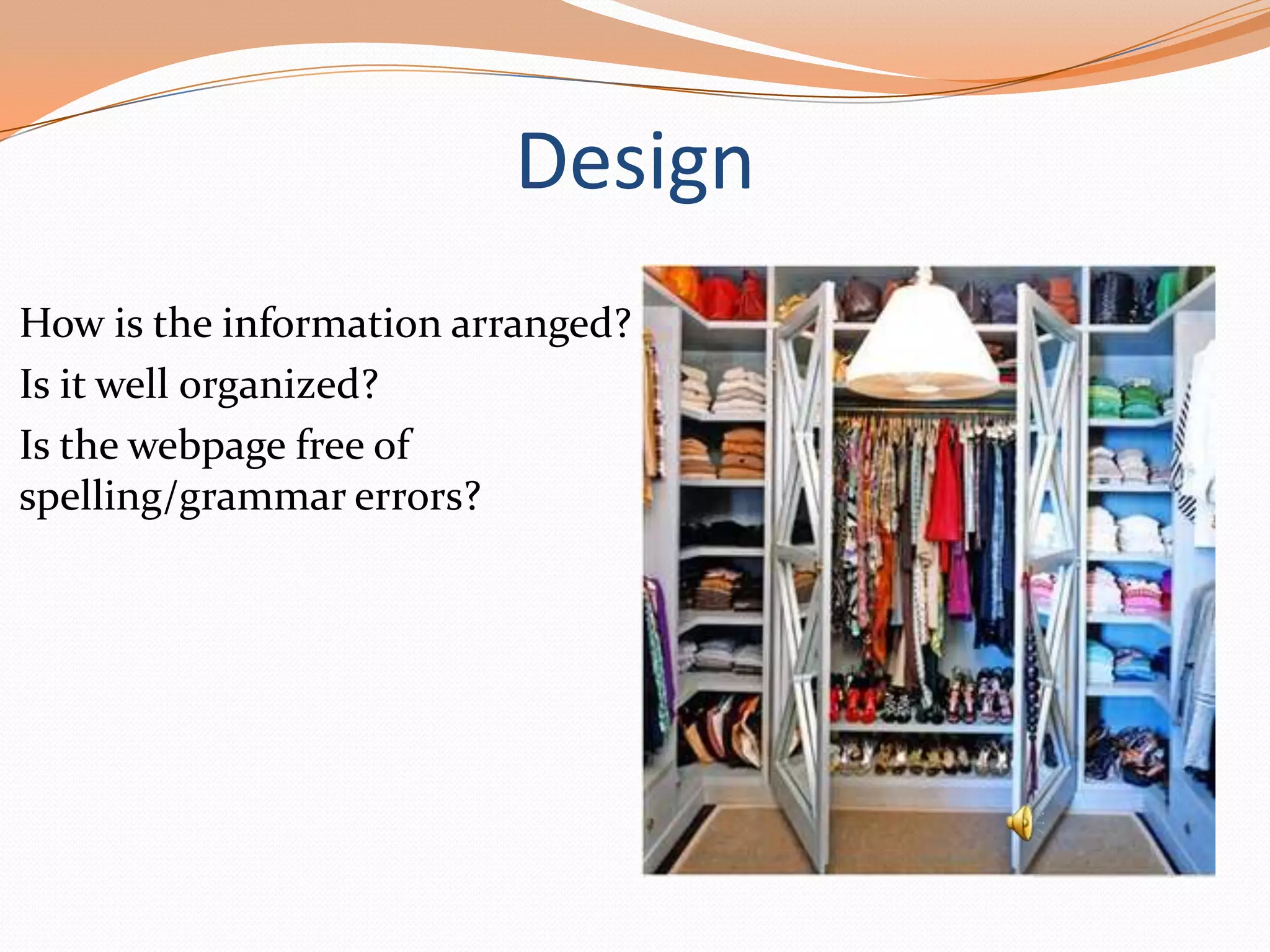
Design

 How is the information arranged?

 Is it well organized?

 Is the webpage free of

spelling/grammar errors?
A reliable website has:
 Purpose. If your page was created to educate or help others and…
 Authority. If your page lists the author credentials and its domain is preferred
(.edu, .gov, .org, or .net) and…
 Objectivity. If your page provides accurate information with limited
advertising and it is objective in presenting the information, and . . .
 Currency. If your page is current and updated regularly (as stated on the page)
and the links (if any) are also up-to-date, and . . .
 Coverage. If your page has enough information to suit your purpose, and …

 Design If the information is well organized and free of errors then . . .

IT HAS CREDIBILITY = A RELIABLE SOURCE OF INFORMATION!
Searching Tip
To search within a specific top-level
website domain like .org, .edu, .gov,
type your topic/search term and then
add “site:.gov” or “site:.edu” after your topic.
Examples: global warming site:.gov
dietary supplements site:.edu
Work Cited
Kapoun, Jim. "Teaching undergrads WEB evaluation: A
guide for library instruction." C&RL News
(July/August 1998): 522-523.

Evaluating Websites Revised

  • 1.
  • 2.
  • 3.
    Purpose  Why wasthe website created?  .edu and .gov sites are reliable  .com generally exist to sell you something  .org sites are okay as long as the purpose is not to convince that an opinion is fact  Who is the intended audience?  Is there a lot of advertising on the page = Be critical!
  • 4.
    Authority       Is the author’sname easy to find? Is the author an expert on the topic? Is an About Us page included? Does the website have a contact page? .gov, .edu, or .org site? Are sources cited?
  • 5.
  • 6.
    Let’s Look atan Example… http://www.heart.org/HEARTORG/
  • 7.
    Objectivity  Why wasthe webpage created?  Fact or an opinion?  Look out for bias  Bias = an opinion formed without evidence, facts, or knowledge.
  • 9.
    Currency (When?)  Whenwas the webpage written?  When was the page last updated?  Medical and technology- dates are important  Literature and history topics- dates are less important
  • 10.
    Coverage  Is thereenough information for your purpose?  Is the information provided appropriate for college research?  Can the same information be found from a more credible source? (book, encyclopedia, or journal article)
  • 11.
    Design  How isthe information arranged?  Is it well organized?  Is the webpage free of spelling/grammar errors?
  • 12.
    A reliable websitehas:  Purpose. If your page was created to educate or help others and…  Authority. If your page lists the author credentials and its domain is preferred (.edu, .gov, .org, or .net) and…  Objectivity. If your page provides accurate information with limited advertising and it is objective in presenting the information, and . . .  Currency. If your page is current and updated regularly (as stated on the page) and the links (if any) are also up-to-date, and . . .  Coverage. If your page has enough information to suit your purpose, and …  Design If the information is well organized and free of errors then . . . IT HAS CREDIBILITY = A RELIABLE SOURCE OF INFORMATION!
  • 13.
    Searching Tip To searchwithin a specific top-level website domain like .org, .edu, .gov, type your topic/search term and then add “site:.gov” or “site:.edu” after your topic. Examples: global warming site:.gov dietary supplements site:.edu
  • 14.
    Work Cited Kapoun, Jim."Teaching undergrads WEB evaluation: A guide for library instruction." C&RL News (July/August 1998): 522-523.