
redibility
eliability
uthority
urpose
oint of view
CRAP
Test
 How recent is this information?
 How recently has it been revised?
 Is it current enough for your topic?
CURRENCY
 Based on your knowledge, does the information seem
accurate?
 Can facts, statistics, or other information be verified
through other sources?
 Do there appear to be errors on the page (spelling,
grammar, facts)?
 Did the author bother to document his or her sources
and use reliable, credible sources?
 Do the links work?
RELIABILITY
 Who is the author?
 What are his or her credentials? Education? Experience?
Affiliation?
 Does the author’s experience really qualify him or her as an
expert?
 Does he or she offer first-hand credibility? (For instance, a
Vietnam veteran or a witness to Woodstock?)
 Who actually published this page?
 Is this a personal page or is it part of the site belonging to a
major institution? (Clues pointing to a personal page: ~ tilde,
%, users, members)
 Is the page hosted by a free server like AOL, Tripod,
Geocities?
AUTHORITY
But what if I can’t
find any
author information?
Words and phrases to look for:
 About us, Who Am I, FAQs, For More,
Company Information, Profiles, Our Staff,
Home
E-mail the author
 If you have no information other than an e-mail
link, write a polite e-mail asking for more
information.
Look for Credibility
Clues!
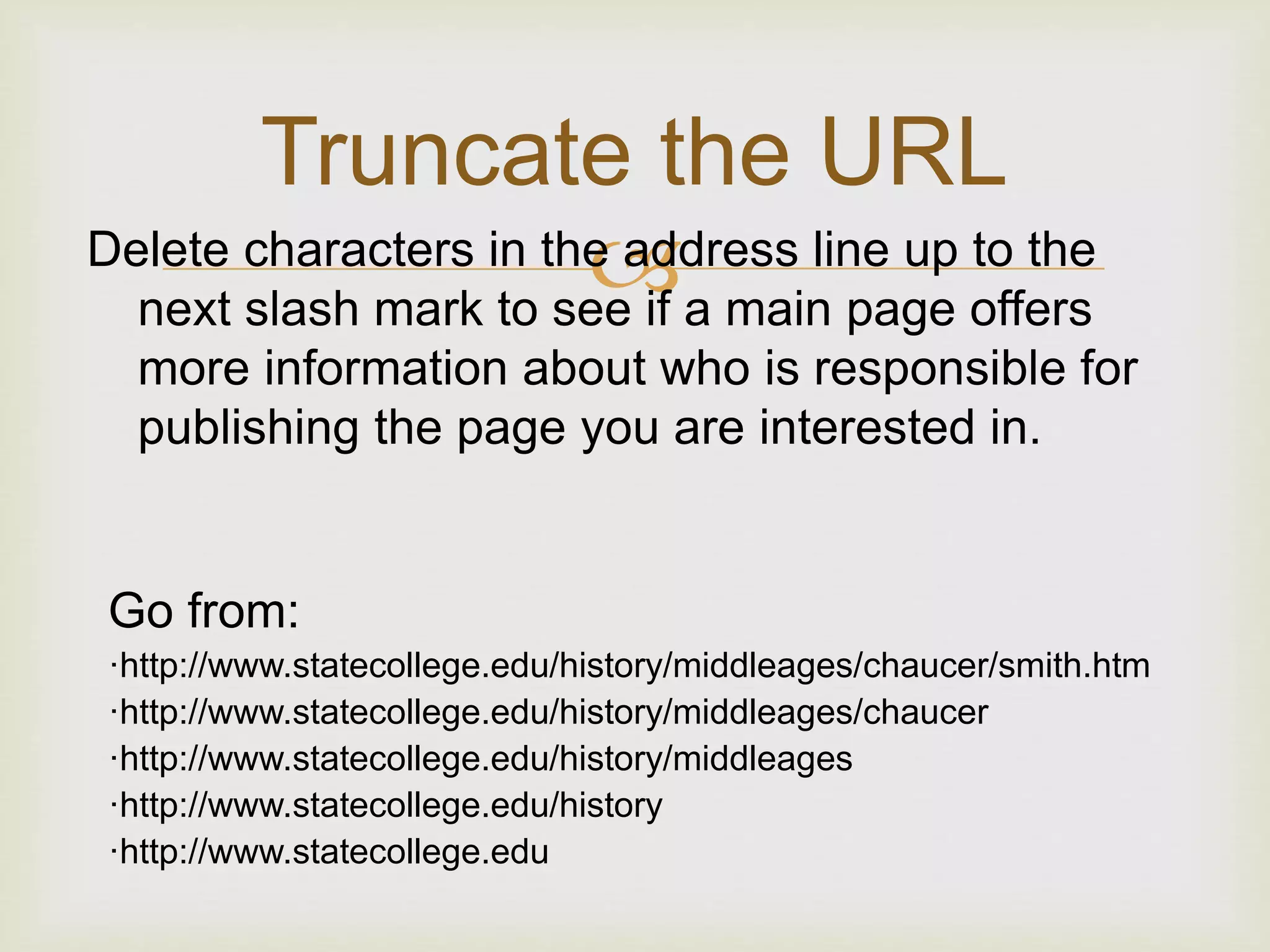
Delete characters in the address line up to the
next slash mark to see if a main page offers
more information about who is responsible for
publishing the page you are interested in.
Truncate the URL
Go from:
·http://www.statecollege.edu/history/middleages/chaucer/smith.htm
·http://www.statecollege.edu/history/middleages/chaucer
·http://www.statecollege.edu/history/middleages
·http://www.statecollege.edu/history
·http://www.statecollege.edu

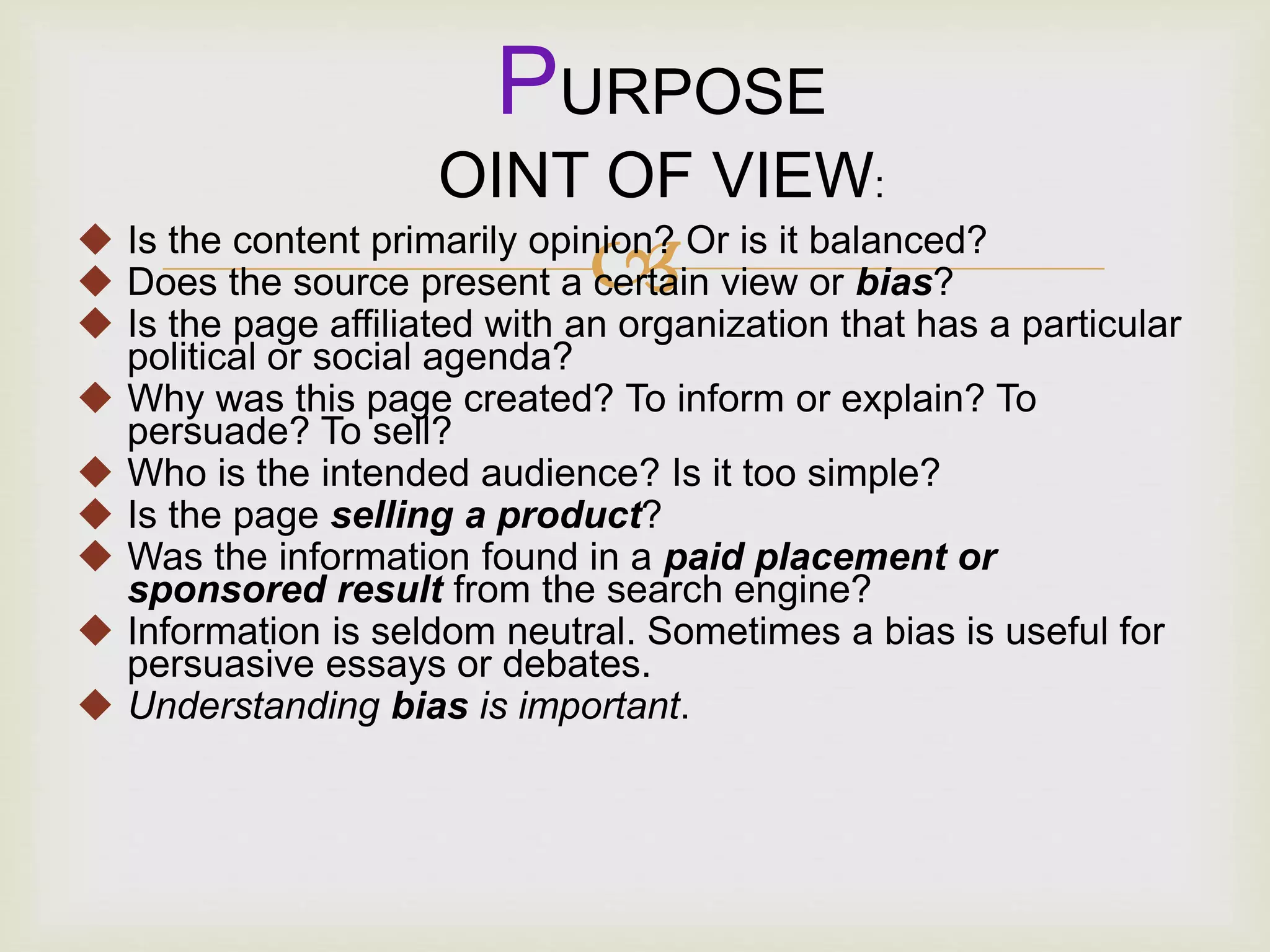
 Is the content primarily opinion? Or is it balanced?
 Does the source present a certain view or bias?
 Is the page affiliated with an organization that has a particular
political or social agenda?
 Why was this page created? To inform or explain? To
persuade? To sell?
 Who is the intended audience? Is it too simple?
 Is the page selling a product?
 Was the information found in a paid placement or
sponsored result from the search engine?
 Information is seldom neutral. Sometimes a bias is useful for
persuasive essays or debates.
 Understanding bias is important.
PURPOSE
OINT OF VIEW:

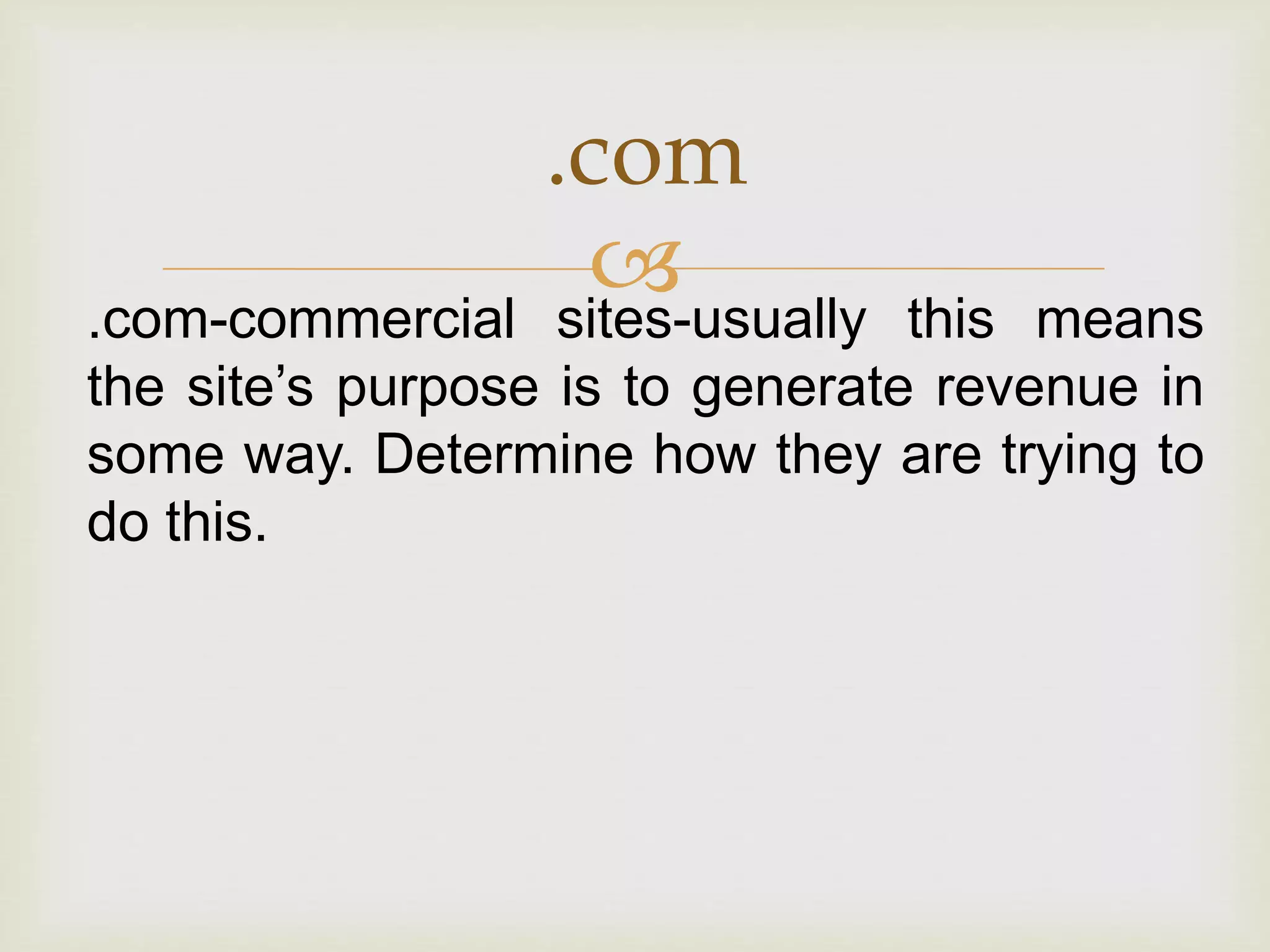
.com
.com-commercial sites-usually this means
the site’s purpose is to generate revenue in
some way. Determine how they are trying to
do this.

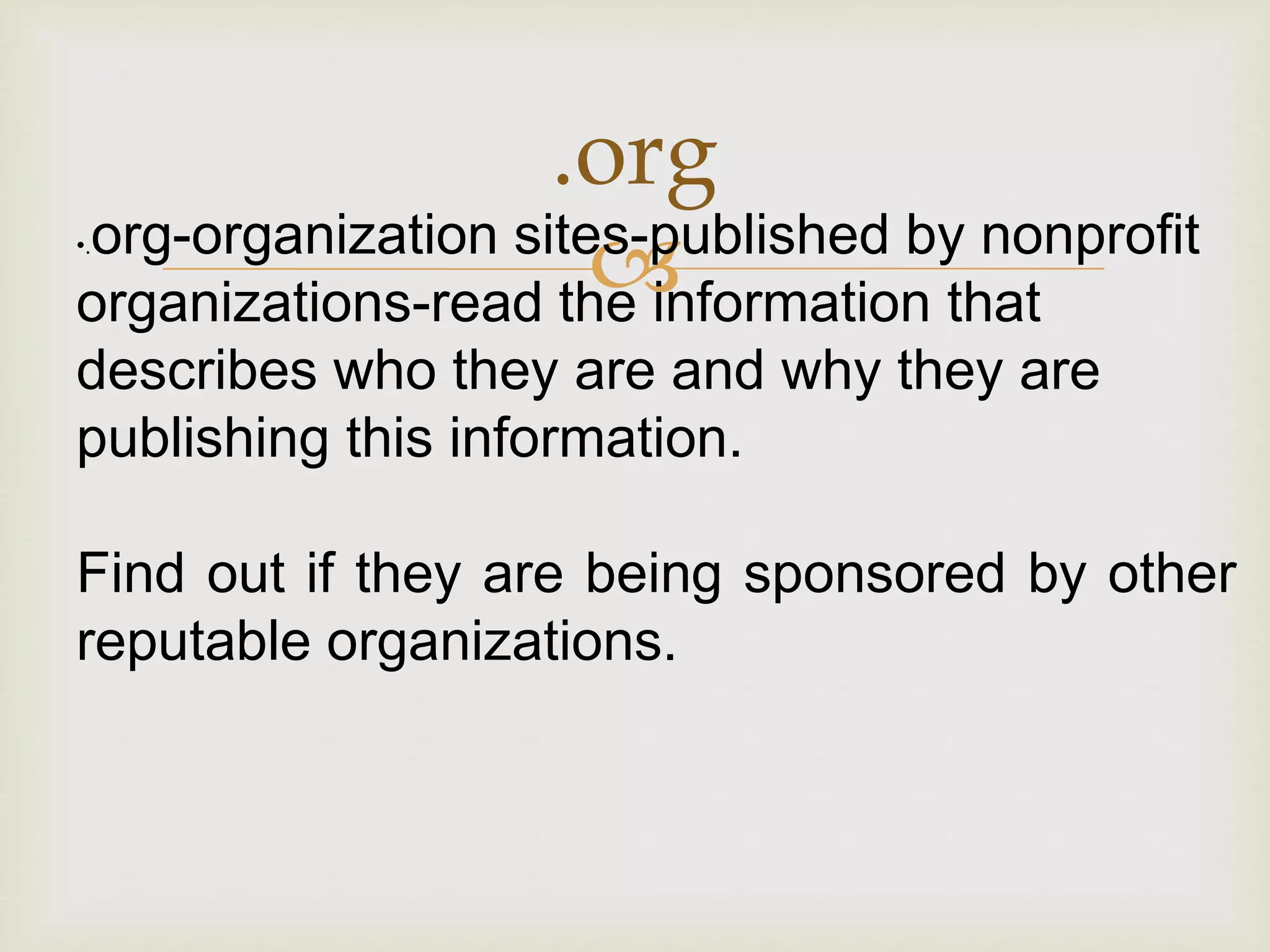
.org
•.org-organization sites-published by nonprofit
organizations-read the information that
describes who they are and why they are
publishing this information.
Find out if they are being sponsored by other
reputable organizations.

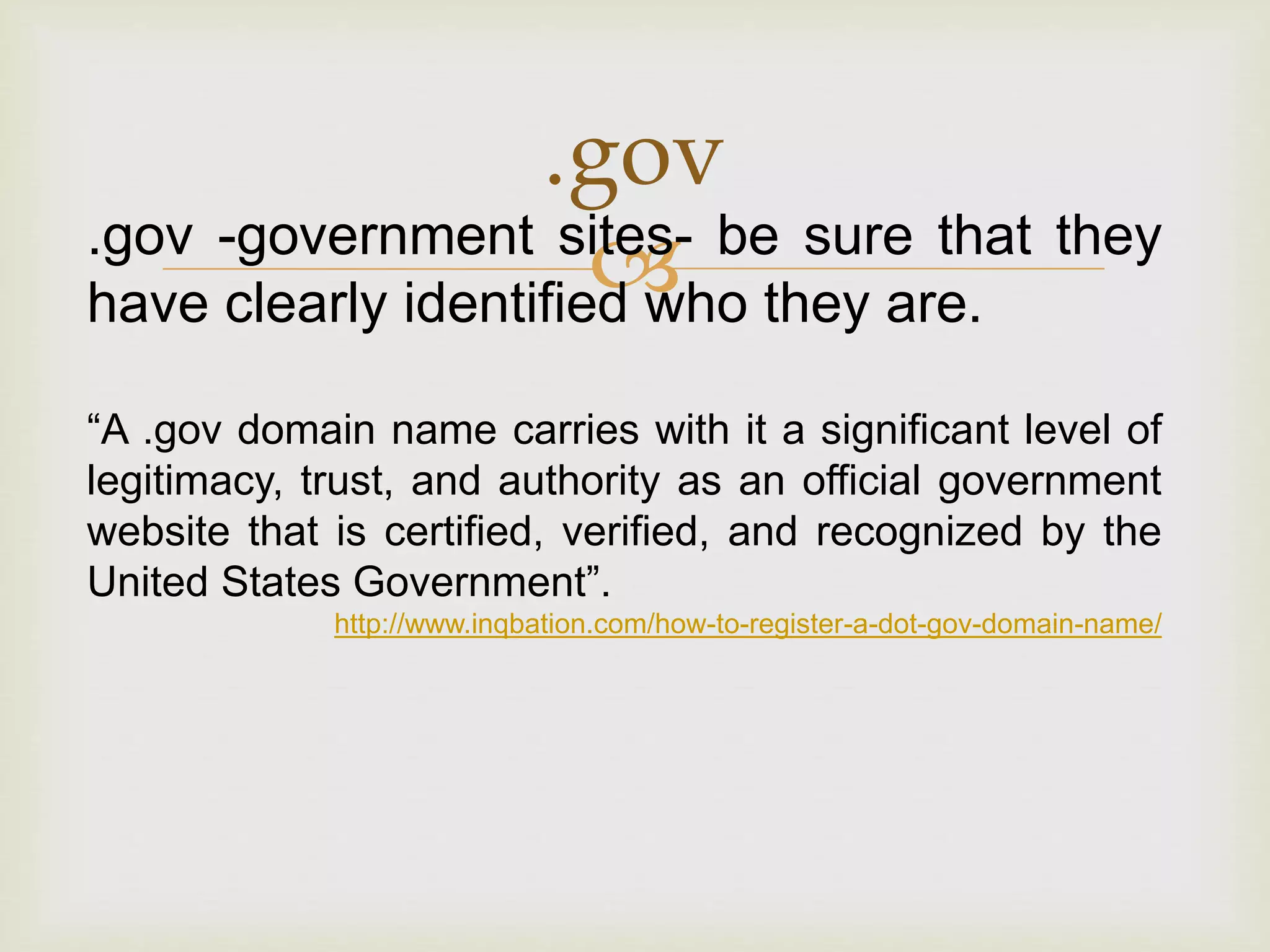
.gov
.gov -government sites- be sure that they
have clearly identified who they are.
“A .gov domain name carries with it a significant level of
legitimacy, trust, and authority as an official government
website that is certified, verified, and recognized by the
United States Government”.
http://www.inqbation.com/how-to-register-a-dot-gov-domain-name/

.edu
.edu-educational sites-be sure that they
have clearly identified who they are. An
educational – edu website can be written by
any student with space on their college’s
server. It does not mean the site is
automatically reliable.

.net
.net- network infrastructure- read the
information that describes who they are and
why they are publishing this information.

CRAP Test for website credibility

  • 2.
  • 3.
     How recentis this information?  How recently has it been revised?  Is it current enough for your topic? CURRENCY
  • 4.
     Based onyour knowledge, does the information seem accurate?  Can facts, statistics, or other information be verified through other sources?  Do there appear to be errors on the page (spelling, grammar, facts)?  Did the author bother to document his or her sources and use reliable, credible sources?  Do the links work? RELIABILITY
  • 5.
     Who isthe author?  What are his or her credentials? Education? Experience? Affiliation?  Does the author’s experience really qualify him or her as an expert?  Does he or she offer first-hand credibility? (For instance, a Vietnam veteran or a witness to Woodstock?)  Who actually published this page?  Is this a personal page or is it part of the site belonging to a major institution? (Clues pointing to a personal page: ~ tilde, %, users, members)  Is the page hosted by a free server like AOL, Tripod, Geocities? AUTHORITY
  • 6.
    But what ifI can’t find any author information?
  • 7.
    Words and phrasesto look for:  About us, Who Am I, FAQs, For More, Company Information, Profiles, Our Staff, Home E-mail the author  If you have no information other than an e-mail link, write a polite e-mail asking for more information. Look for Credibility Clues!
  • 8.
    Delete characters inthe address line up to the next slash mark to see if a main page offers more information about who is responsible for publishing the page you are interested in. Truncate the URL Go from: ·http://www.statecollege.edu/history/middleages/chaucer/smith.htm ·http://www.statecollege.edu/history/middleages/chaucer ·http://www.statecollege.edu/history/middleages ·http://www.statecollege.edu/history ·http://www.statecollege.edu
  • 9.
  • 10.
     Is thecontent primarily opinion? Or is it balanced?  Does the source present a certain view or bias?  Is the page affiliated with an organization that has a particular political or social agenda?  Why was this page created? To inform or explain? To persuade? To sell?  Who is the intended audience? Is it too simple?  Is the page selling a product?  Was the information found in a paid placement or sponsored result from the search engine?  Information is seldom neutral. Sometimes a bias is useful for persuasive essays or debates.  Understanding bias is important. PURPOSE OINT OF VIEW:
  • 11.
     .com .com-commercial sites-usually thismeans the site’s purpose is to generate revenue in some way. Determine how they are trying to do this.
  • 12.
     .org •.org-organization sites-published bynonprofit organizations-read the information that describes who they are and why they are publishing this information. Find out if they are being sponsored by other reputable organizations.
  • 13.
     .gov .gov -government sites-be sure that they have clearly identified who they are. “A .gov domain name carries with it a significant level of legitimacy, trust, and authority as an official government website that is certified, verified, and recognized by the United States Government”. http://www.inqbation.com/how-to-register-a-dot-gov-domain-name/
  • 14.
     .edu .edu-educational sites-be surethat they have clearly identified who they are. An educational – edu website can be written by any student with space on their college’s server. It does not mean the site is automatically reliable.
  • 15.
     .net .net- network infrastructure-read the information that describes who they are and why they are publishing this information.