Evaluating Internet Sites
School Name
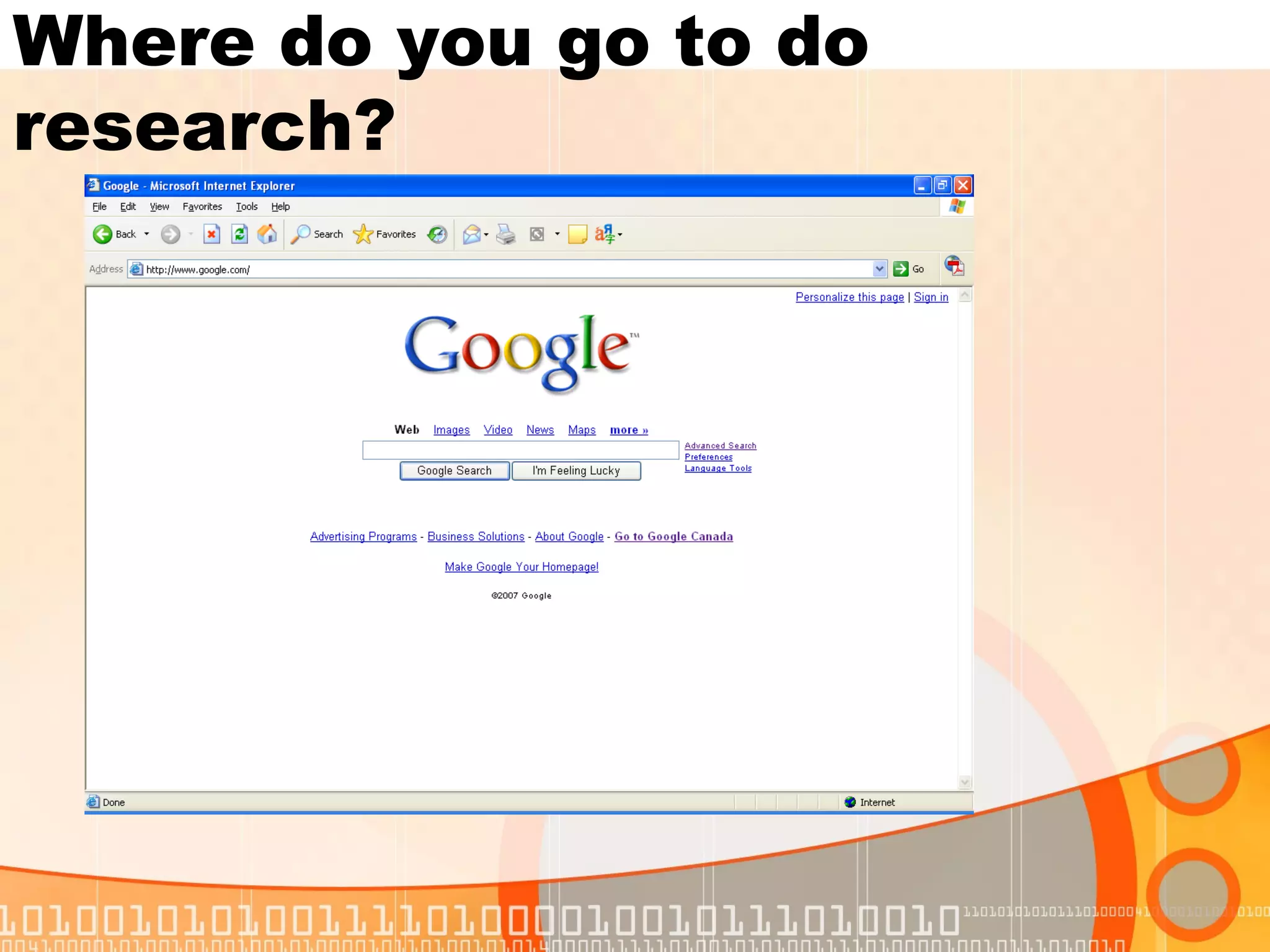
Where do you go to do
research?
Research Project

          • You have been asked to
            research Martin Luther
            King and type his name in
            Google – one of the first
            results is:

          www.martinlutherking.org
          • Is it a good source?
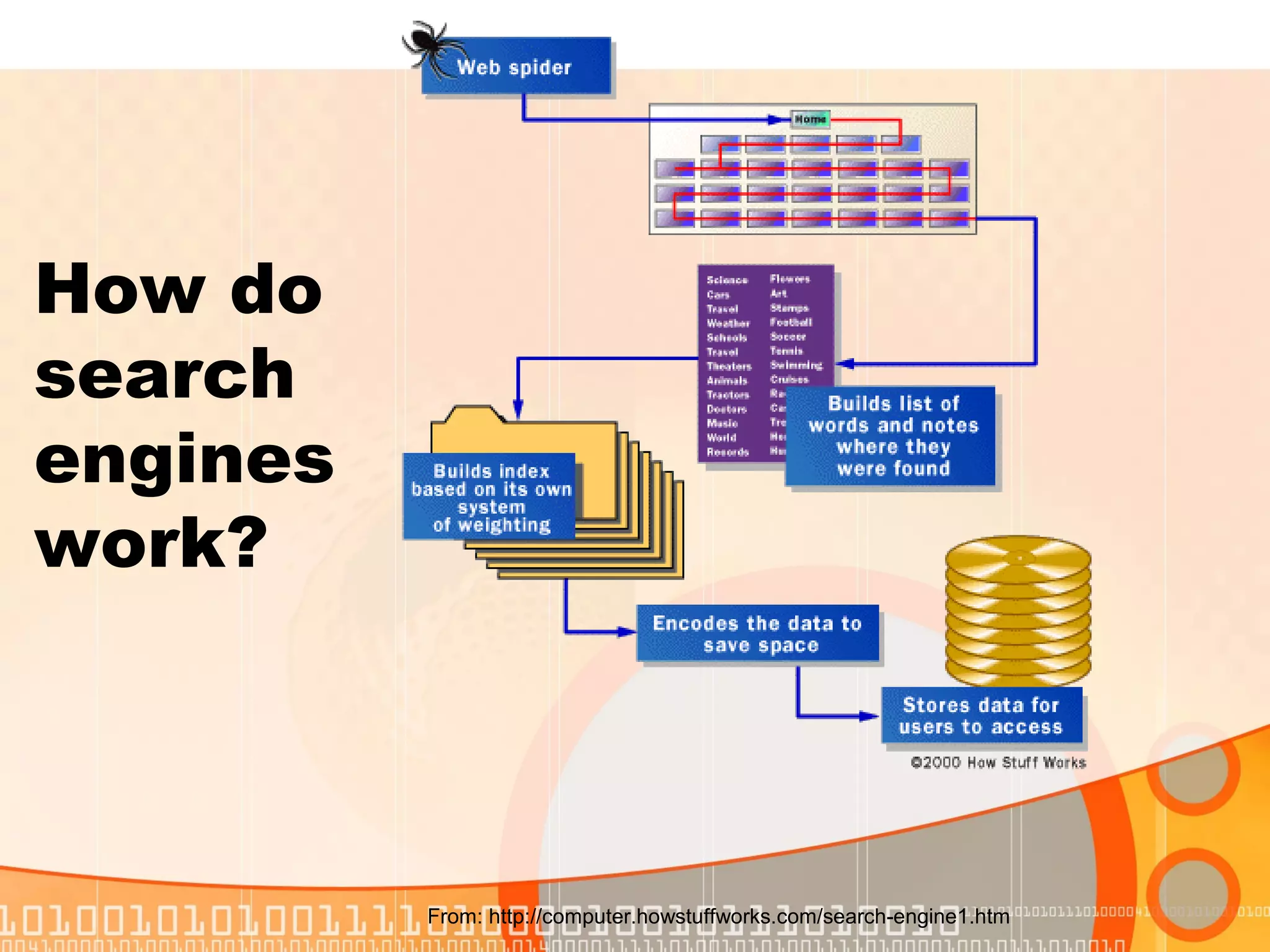
How do
search
engines
work?


          From: http://computer.howstuffworks.com/search-engine1.htm
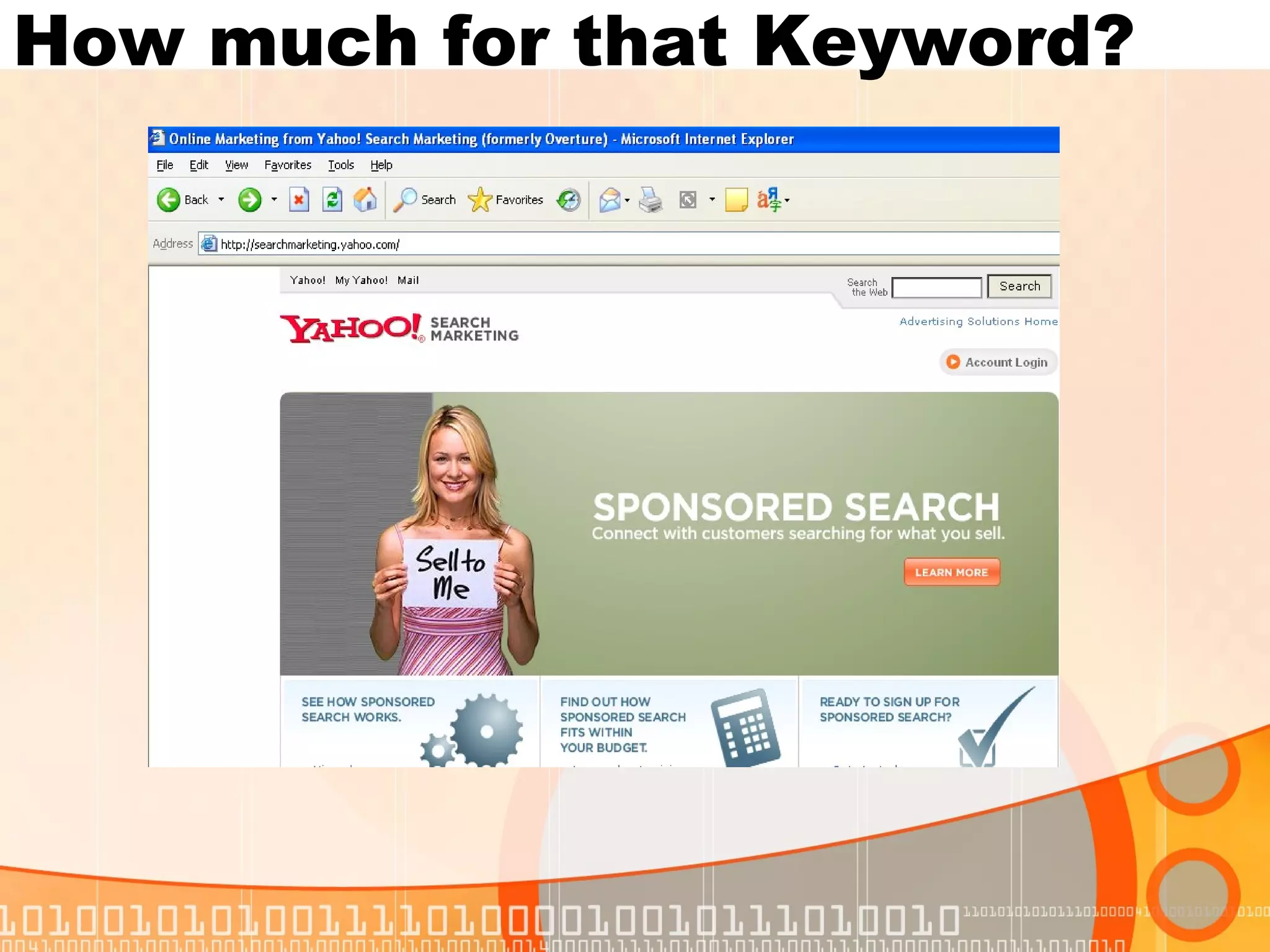
How much for that Keyword?


     • Video - Bidding on keywords
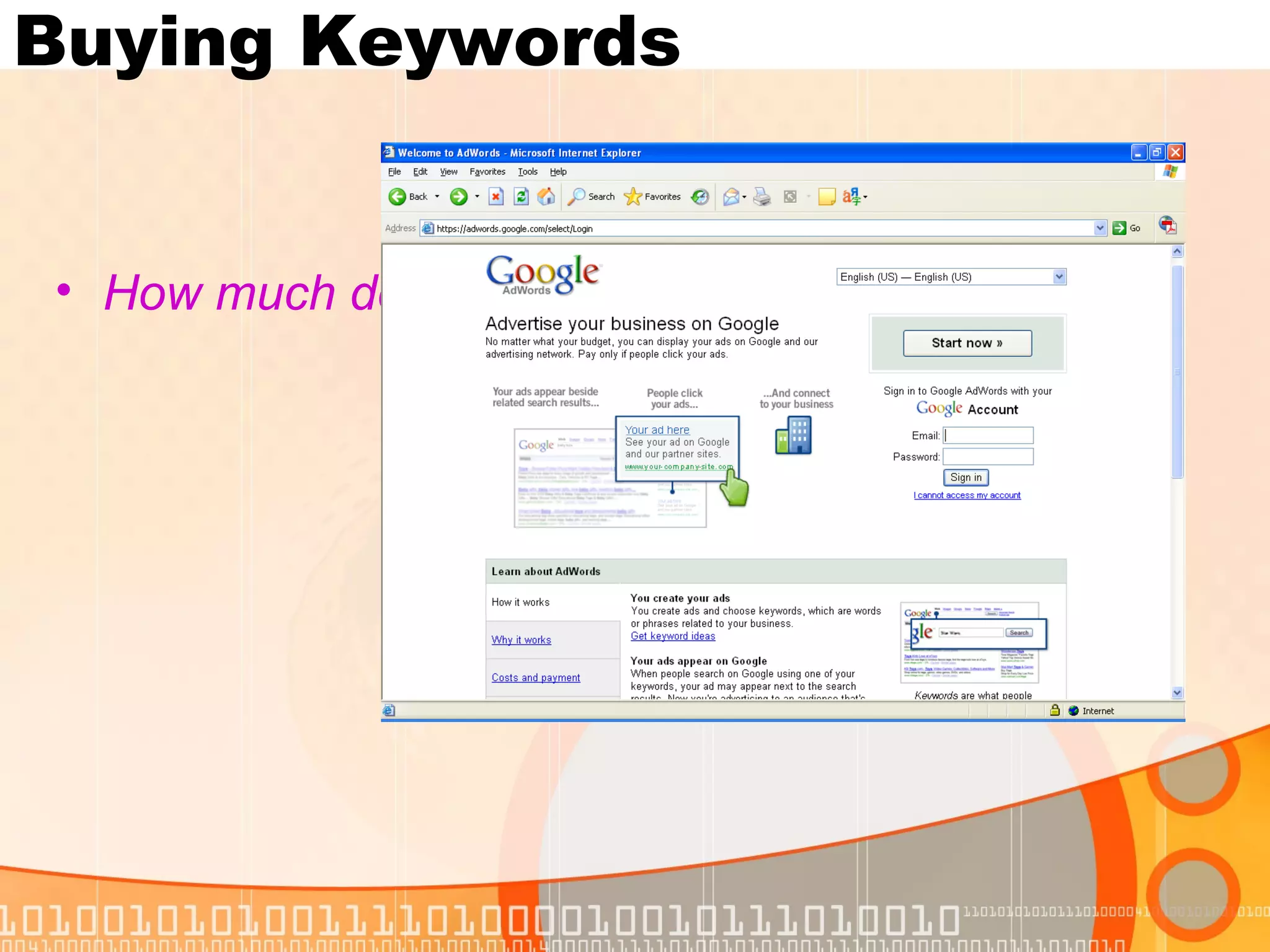
Buying Keywords


• How much does a keyword cost?
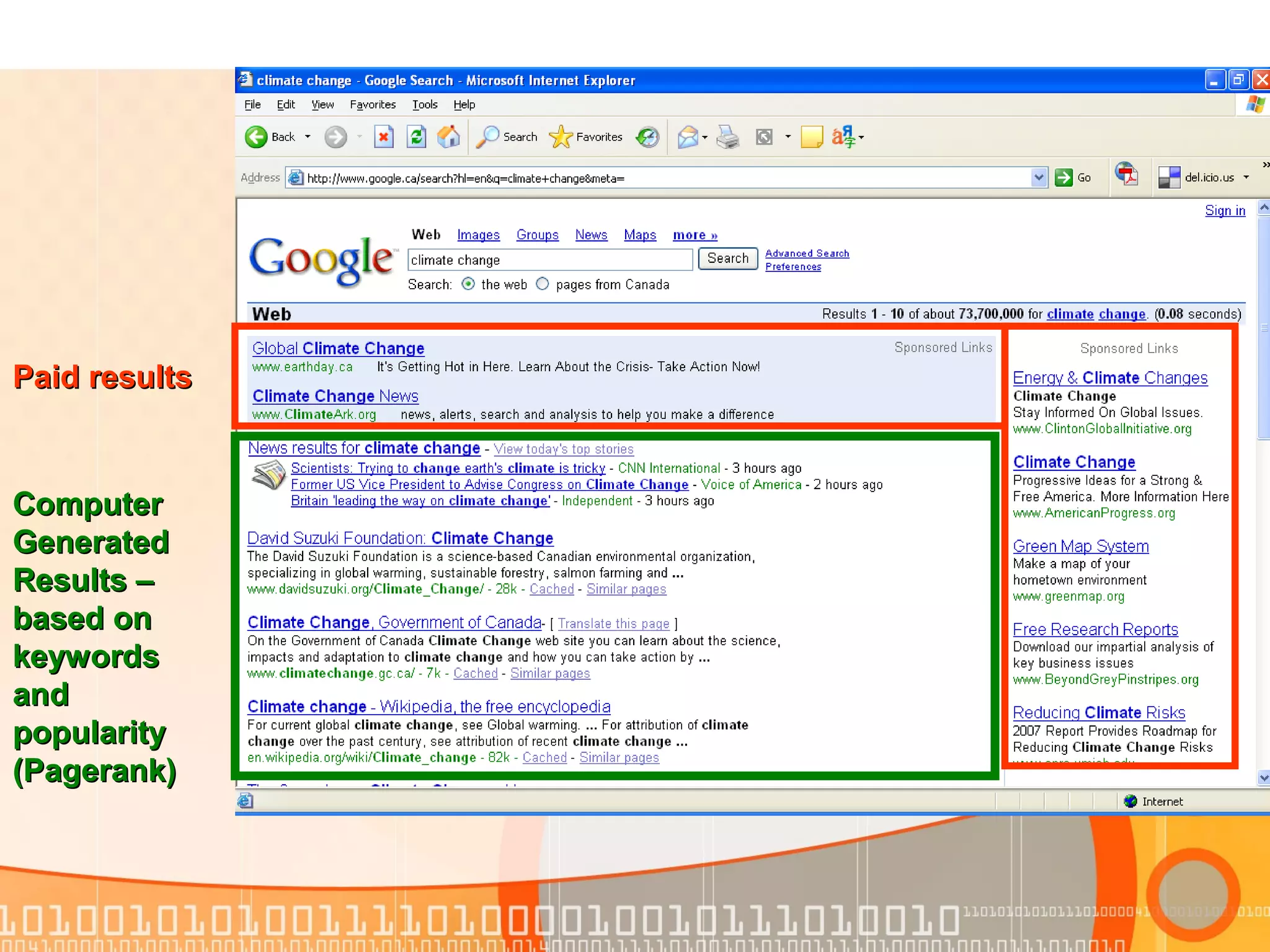
Paid results


Computer
Generated
Results –
based on
keywords
and
popularity
(Pagerank)
Evaluating a website

Check for
  • Authority
  • Objectivity/Bias
  • Content and
    Accuracy
  • Currency
Check for Authority
             • Who is the author of the
               site?
             • What is the authority or
               expertise of the individual or
               group?
                • What else comes up when you
                  type the author’s name into a
                  search engine?
                • Does the source have a
                  political or business agenda?
Objectivity/Bias
 • Check for any indication of bias
 • Look at the domain address:
 .edu educational site ~       personal web
                               page
 .gov   government      .uk   British site
        site
 .org   organization or .ca   Canadian site
        advocacy
        group
 .com commercial site
Objectivity/Bias
 • What is the purpose of the site?
   • Does the source have a political or
     business agenda?
 • Is there an organization sponsoring
   the site?
   • sponsored by a political, business or
     advocacy group? If so, what can you
     find out about that group?
Objectivity/Bias

• Who is the
  intended
  audience?
• Is the
  information
  free from
  advertising?
Content and Accuracy

• Is the
  information well
  researched and
  useful for you?
Content and Accuracy

 • Can the information be verified
   using another source?
 • Is there documentation to indicate
   the sources of the information
   • Does the site provide a list of
     sources or a Works Cited page?
   • Can you locate any of the source
     material? How reliable is this
     material?
Content and Accuracy

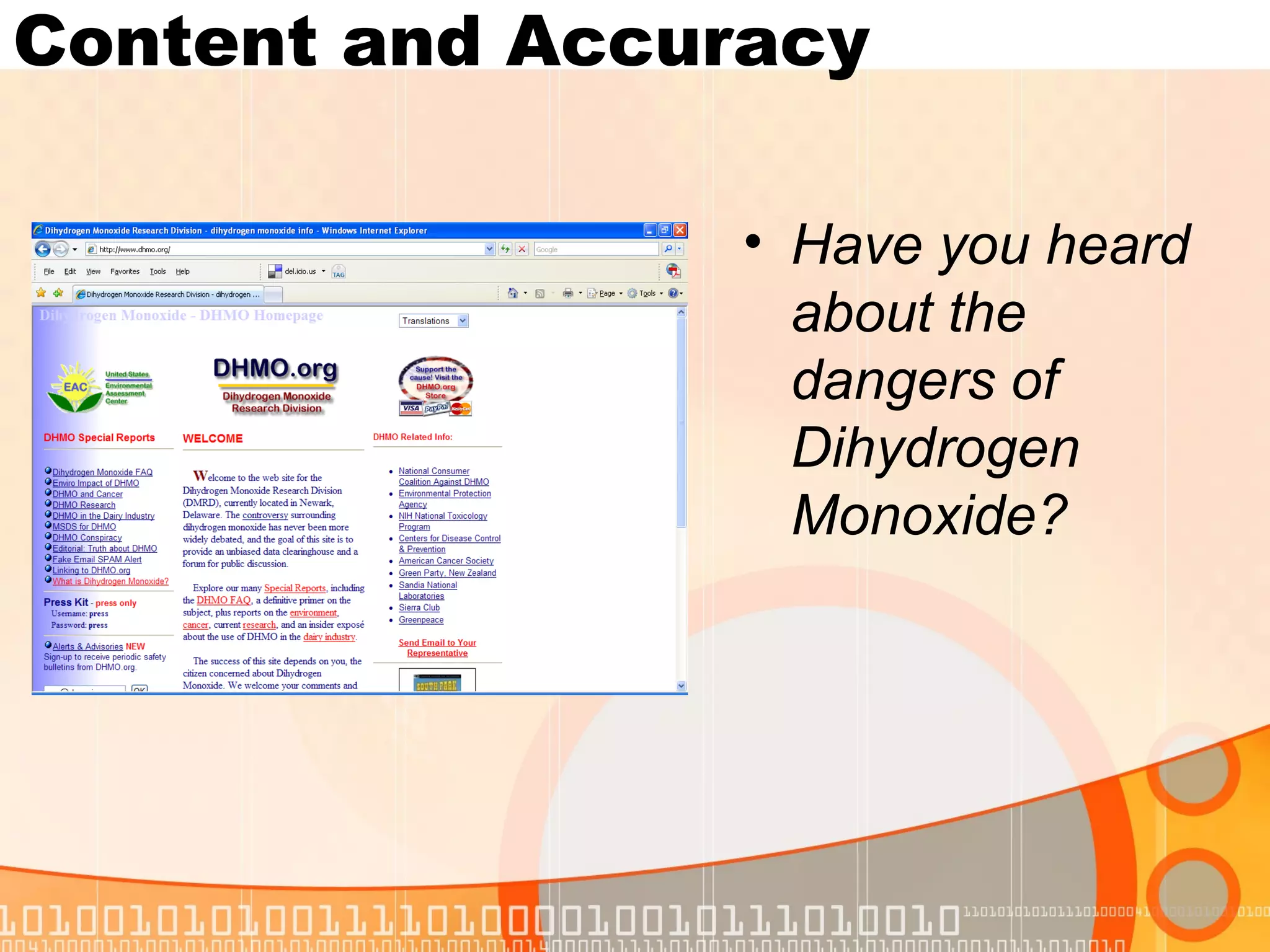
                 • Have you heard
                   about the
                   dangers of
                   Dihydrogen
                   Monoxide?
Content and Accuracy

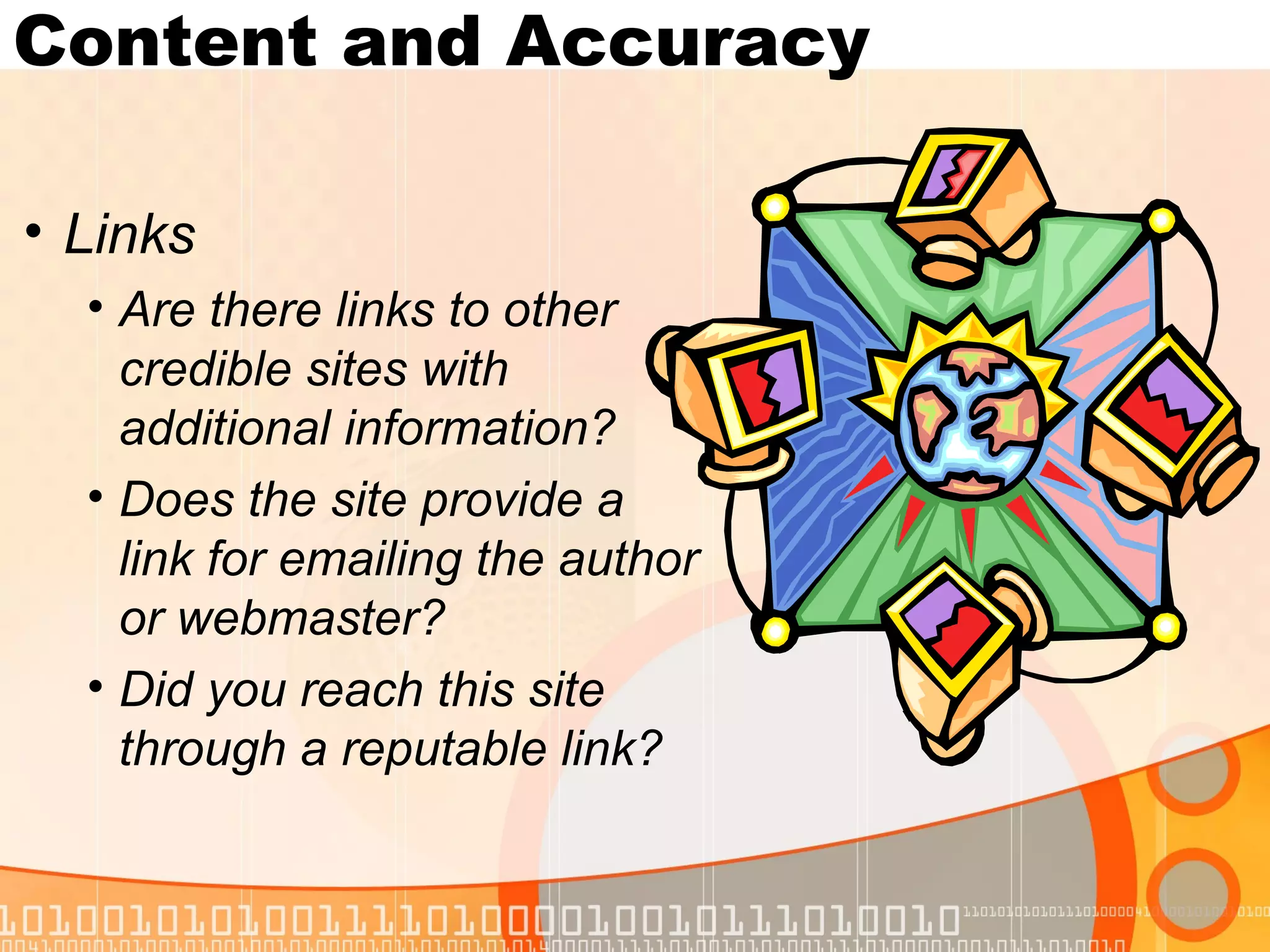
• Links
  • Are there links to other
    credible sites with
    additional information?
  • Does the site provide a
    link for emailing the author
    or webmaster?
  • Did you reach this site
    through a reputable link?
Research


 • You found this site on famous
   explorers for your history project
 • Is it a good source?


 www.allaboutexplorers.com
Research

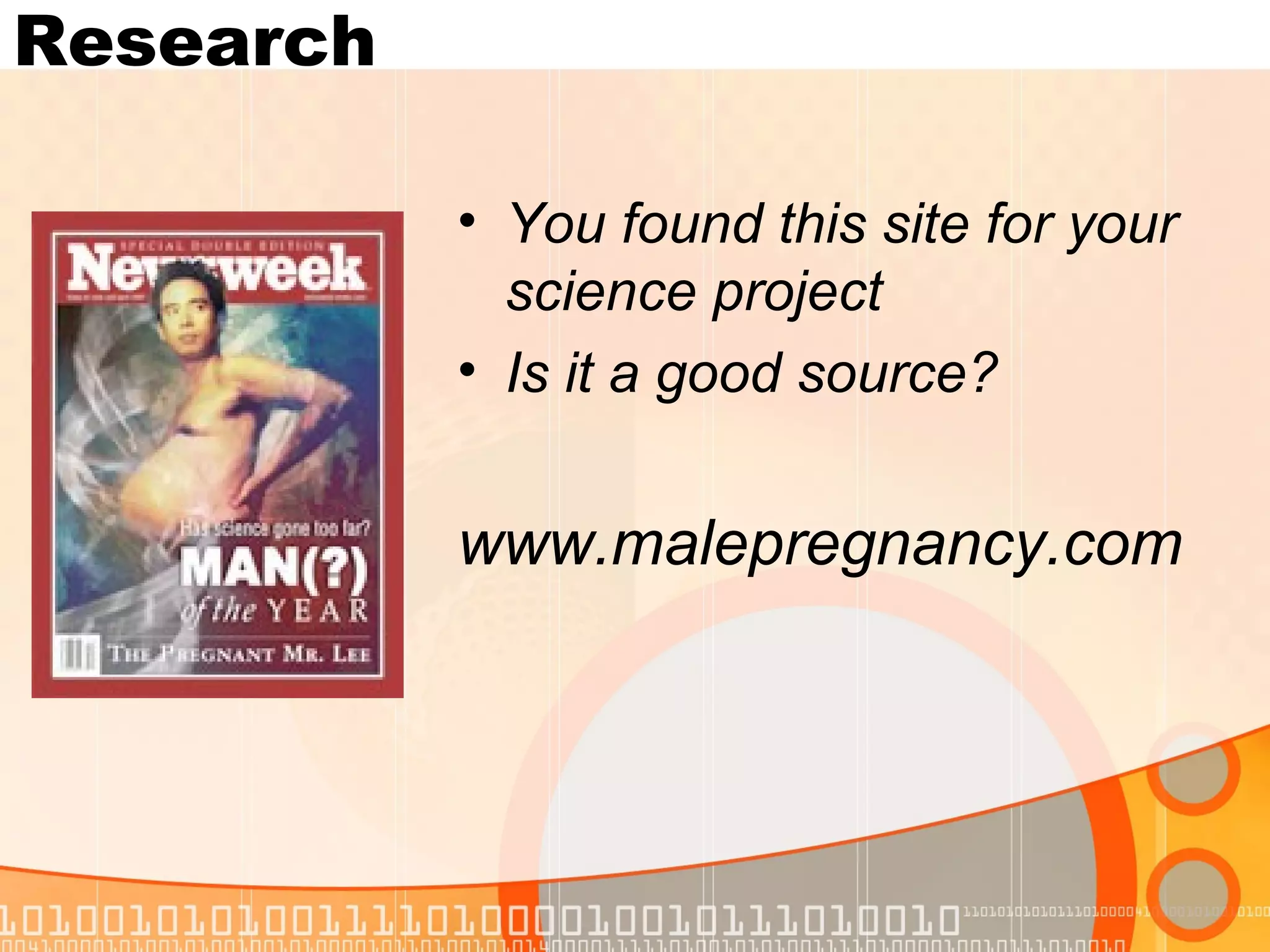
           • You found this site for your
             science project
           • Is it a good source?


           www.malepregnancy.com
Currency
           • Does the site clearly
             state a date of creation
             or a date for the most
             recent update?
           • Does the information
             cover recent changes or
             advances in the field or
             topic you are
             researching?
Summary
                              Some examples of authoritative
Any website you use must be   sites…
  evaluated- check for:
  •   Authority
  •   Objectivity/Bias
  •   Content and Accuracy
  •   Currency
Use authoritative sources
 (example – online
 encyclopedias and
 databases) whenever
 possible)

Evaluating internet sites with info on how search engines work

  • 1.
  • 2.
    Where do yougo to do research?
  • 3.
    Research Project • You have been asked to research Martin Luther King and type his name in Google – one of the first results is: www.martinlutherking.org • Is it a good source?
  • 4.
    How do search engines work? From: http://computer.howstuffworks.com/search-engine1.htm
  • 5.
    How much forthat Keyword? • Video - Bidding on keywords
  • 6.
    Buying Keywords • Howmuch does a keyword cost?
  • 7.
    Paid results Computer Generated Results – basedon keywords and popularity (Pagerank)
  • 8.
    Evaluating a website Checkfor • Authority • Objectivity/Bias • Content and Accuracy • Currency
  • 9.
    Check for Authority • Who is the author of the site? • What is the authority or expertise of the individual or group? • What else comes up when you type the author’s name into a search engine? • Does the source have a political or business agenda?
  • 10.
    Objectivity/Bias • Checkfor any indication of bias • Look at the domain address: .edu educational site ~ personal web page .gov government .uk British site site .org organization or .ca Canadian site advocacy group .com commercial site
  • 11.
    Objectivity/Bias • Whatis the purpose of the site? • Does the source have a political or business agenda? • Is there an organization sponsoring the site? • sponsored by a political, business or advocacy group? If so, what can you find out about that group?
  • 12.
    Objectivity/Bias • Who isthe intended audience? • Is the information free from advertising?
  • 13.
    Content and Accuracy •Is the information well researched and useful for you?
  • 14.
    Content and Accuracy • Can the information be verified using another source? • Is there documentation to indicate the sources of the information • Does the site provide a list of sources or a Works Cited page? • Can you locate any of the source material? How reliable is this material?
  • 15.
    Content and Accuracy • Have you heard about the dangers of Dihydrogen Monoxide?
  • 16.
    Content and Accuracy •Links • Are there links to other credible sites with additional information? • Does the site provide a link for emailing the author or webmaster? • Did you reach this site through a reputable link?
  • 17.
    Research • Youfound this site on famous explorers for your history project • Is it a good source? www.allaboutexplorers.com
  • 18.
    Research • You found this site for your science project • Is it a good source? www.malepregnancy.com
  • 19.
    Currency • Does the site clearly state a date of creation or a date for the most recent update? • Does the information cover recent changes or advances in the field or topic you are researching?
  • 20.
    Summary Some examples of authoritative Any website you use must be sites… evaluated- check for: • Authority • Objectivity/Bias • Content and Accuracy • Currency Use authoritative sources (example – online encyclopedias and databases) whenever possible)

Editor's Notes

  • #4 Go into google and do a search for martin luther king – martinlutherking.org will be one of the first sites to come up – click on “The Truth About King” – view some of the facts that are here – obvious bias – at the bottom of the home page click on “hosted by Strormfront” ask how such a site could appear at the top of google listings – then go to next slide and discuss how a search engine works Note – you may have to have your site administrator unblock www.martinlutherking.org and www.stormfront.org – check prior to the presentation
  • #5 Starting with heavily used servers and popular pages a software program called a “spider” crawls the web. It will follow the links of the pages on each site. Have built in method to detect spamming To make for more useful results, most search engines store more than just the word and URL. An engine might store the number of times that the word appears on a page. The engine might assign a weight to each entry, with increasing values assigned to words as they appear near the top of the document, in sub-headings, in links, in the meta tags or in the title of the page. Location and frequency method is also used – where it appears in the page (near the beginning is better) and how often it appears Also contain advertising… Pages are also ranked based on how popular they are – ie how many other pages link to that site – google calls this “pagerank”
  • #8 no one has evaluated these results so you must!!!!
  • #11 .org, .com, .uk, .ca can be registered by anyone -