Rethinking Classroom
               Assessment With
               Purpose in Mind

                     Lorna M. Earl, Ph.D.
 3219 Yonge St. Suite # 240 Toronto ON M4N 3S1
                  aporia@attglobal.net
tel 4 1 6 . 6 8 6 . 2 2 7 9 fax 4 1 6 . 6 8 6 . 4 1 6 2
Rethinking Classroom
Assessment With Purpose in Mind


     Assessment   for Learning
     Assessment   as Learning

     Assessment   of Learning


           2006
           Western and Northern Canadian
           Protocol for Collaboration in Education

           www.wncp.ca, classroom assessment
What is AfL?

 In your own words, describe AfL.
 – Write it on the sticky note on your table and
   stick it in the front of your packet.
Overview
 Why Rethink Classroom Assessment?
 Assessment, Learning and Motivation
 Purposes of Classroom Assessment
 Making the Change
 Getting There
Why Change Classroom
Assessment?

 – Societal Changes
 – Classroom Assessment, Learning and
   Motivation?
 – Using Classroom Assessment for
   Differentiated Learning?
History of Assessment


 Plato
 Trade Guilds
 Industrial Revolution and Legislated
 Universal Education
 High Quality Education for All
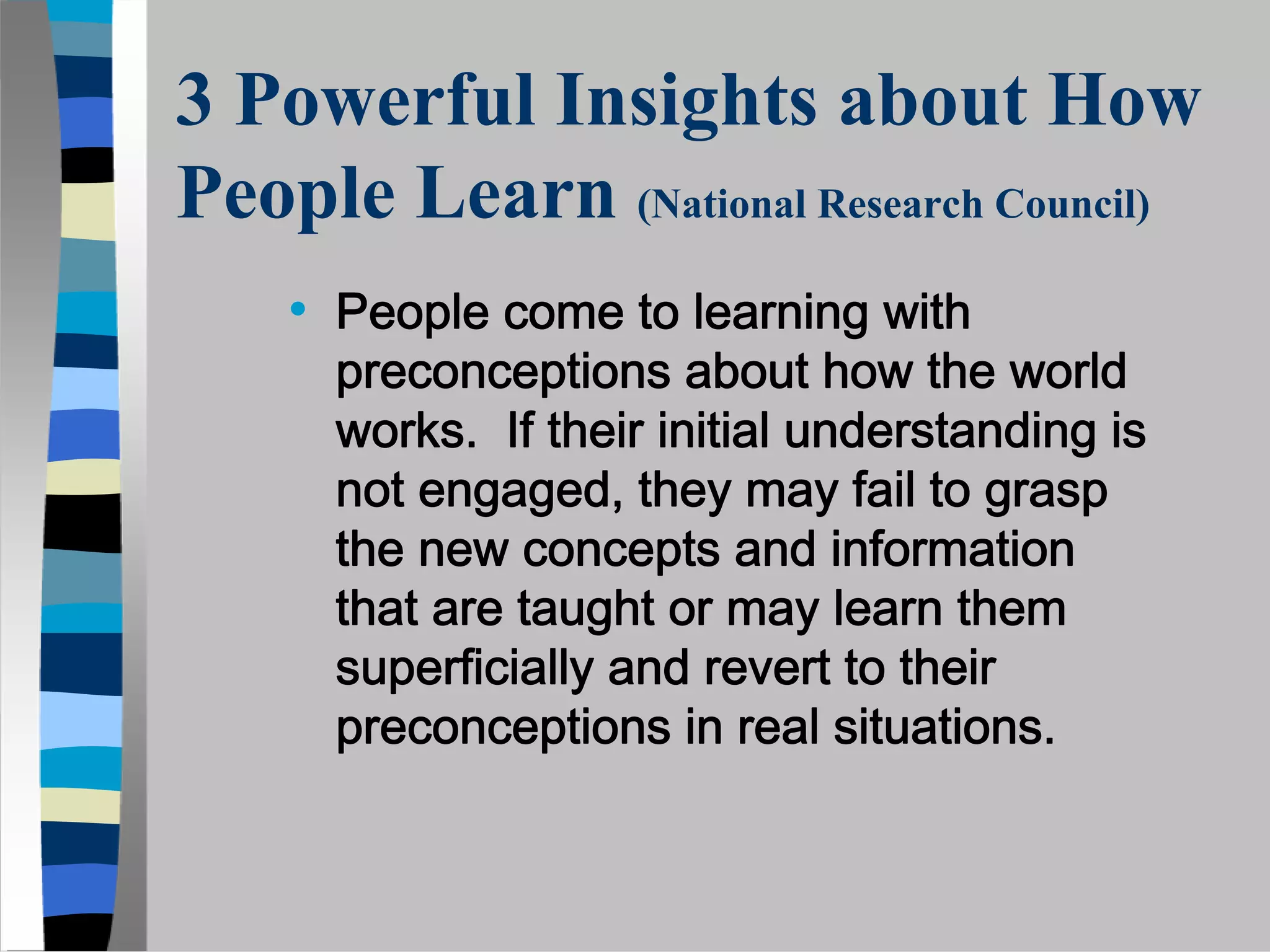
3 Powerful Insights about How
People Learn (National Research Council)
    • People come to learning with
      preconceptions about how the world
      works. If their initial understanding is
      not engaged, they may fail to grasp
      the new concepts and information
      that are taught or may learn them
      superficially and revert to their
      preconceptions in real situations.
Assessment, Learning and
Motivation
 Jojo Story
3 Powerful Insights about How
People Learn (National Research Council)
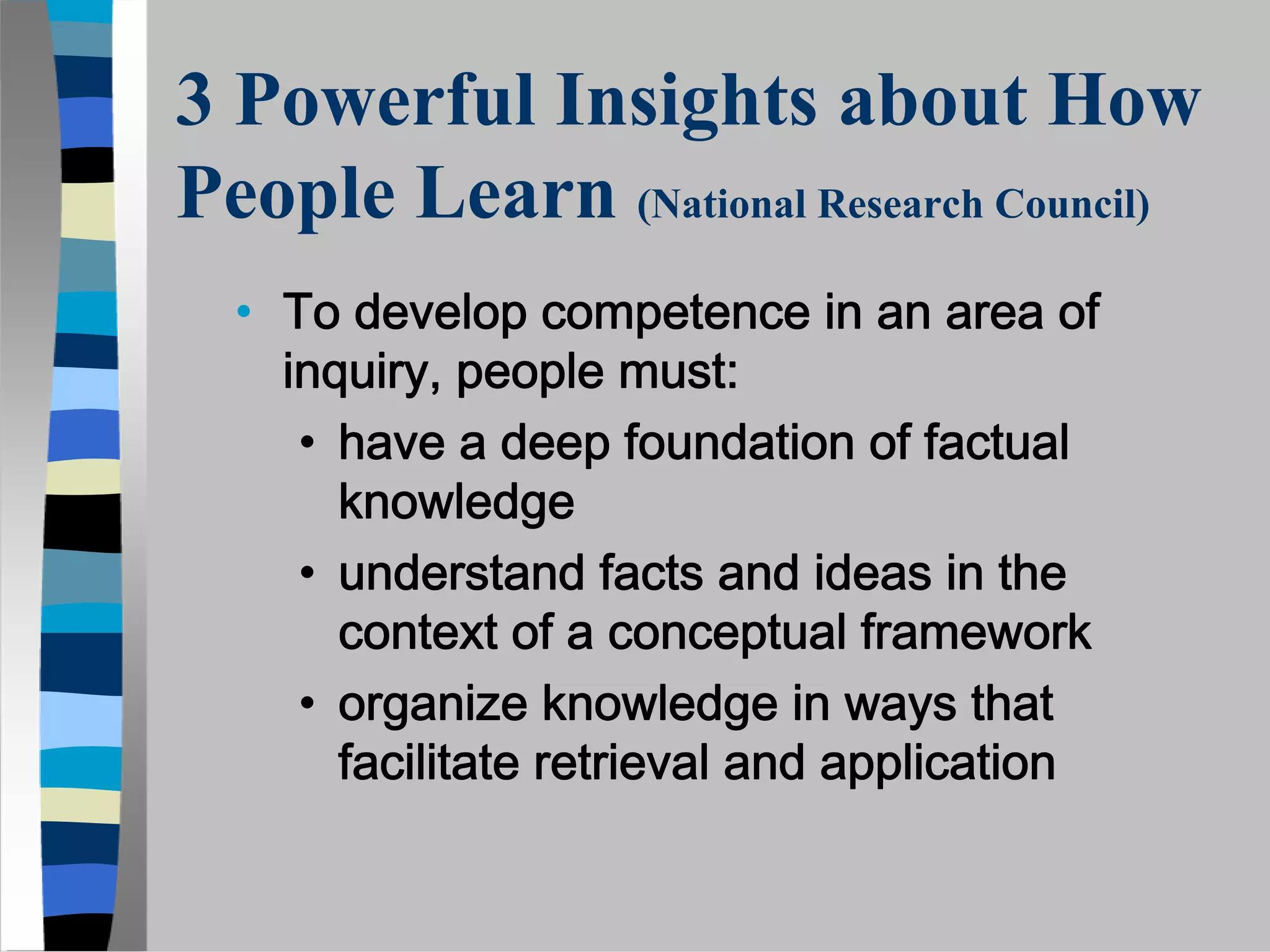
  • To develop competence in an area of
    inquiry, people must:
     • have a deep foundation of factual
       knowledge
     • understand facts and ideas in the
       context of a conceptual framework
     • organize knowledge in ways that
       facilitate retrieval and application
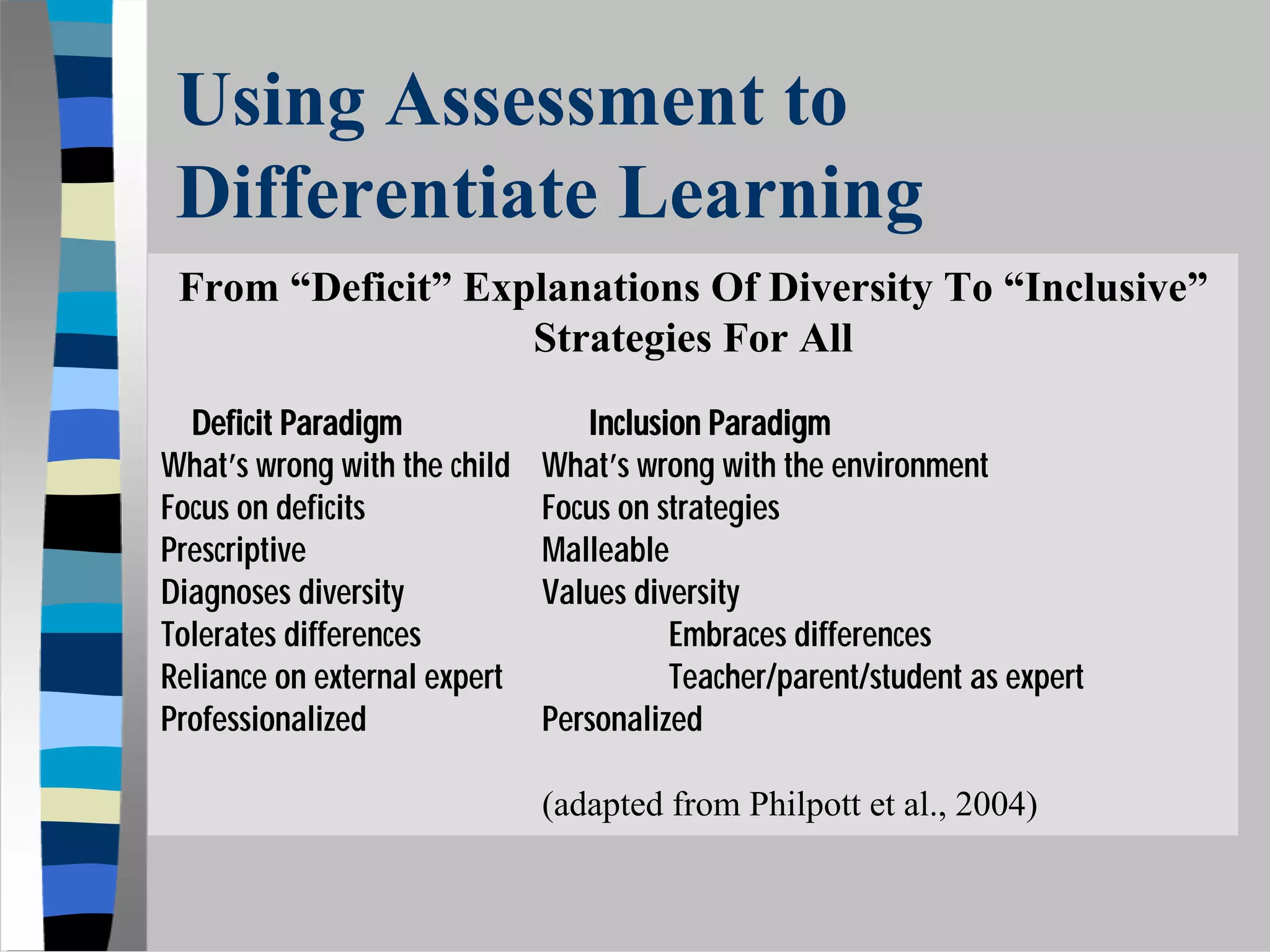
Using Assessment to
 Differentiate Learning
 From “Deficit” Explanations Of Diversity To “Inclusive”
                   Strategies For All
  Deficit Paradigm               Inclusion Paradigm
What’s wrong with the child   What’s wrong with the environment
Focus on deficits             Focus on strategies
Prescriptive                  Malleable
Diagnoses diversity           Values diversity
Tolerates differences                   Embraces differences
Reliance on external expert             Teacher/parent/student as expert
Professionalized              Personalized

                              (adapted from Philpott et al., 2004)
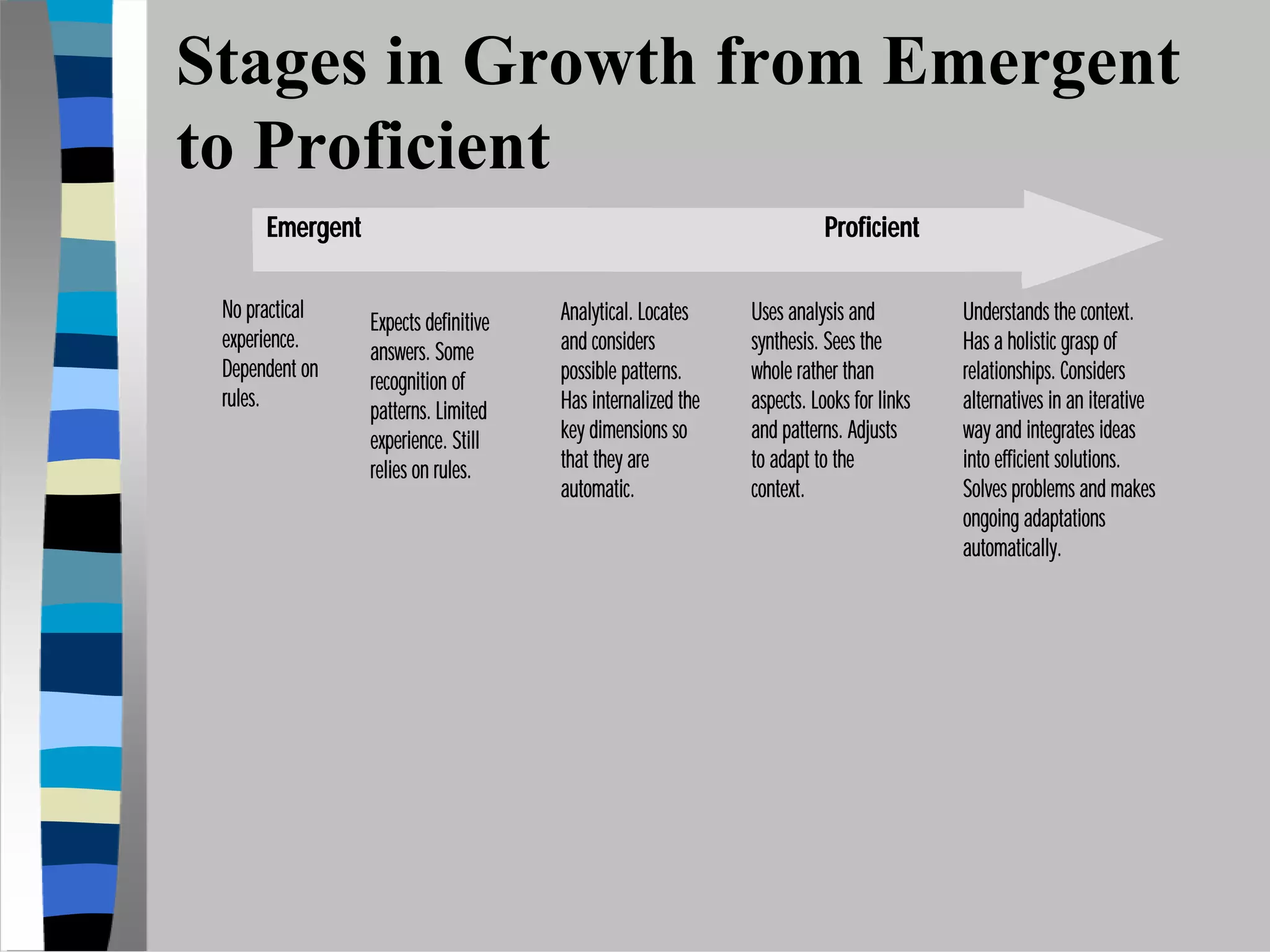
Stages in Growth from Emergent
to Proficient
      Emergent                                                          Proficient

 No practical                         Analytical. Locates    Uses analysis and          Understands the context.
                 Expects definitive
 experience.                          and considers          synthesis. Sees the        Has a holistic grasp of
                 answers. Some
 Dependent on                         possible patterns.     whole rather than          relationships. Considers
                 recognition of
 rules.                               Has internalized the   aspects. Looks for links   alternatives in an iterative
                 patterns. Limited
                 experience. Still    key dimensions so      and patterns. Adjusts      way and integrates ideas
                 relies on rules.     that they are          to adapt to the            into efficient solutions.
                                      automatic.             context.                   Solves problems and makes
                                                                                        ongoing adaptations
                                                                                        automatically.
3 Powerful Insights about How
People Learn (National Research Council)

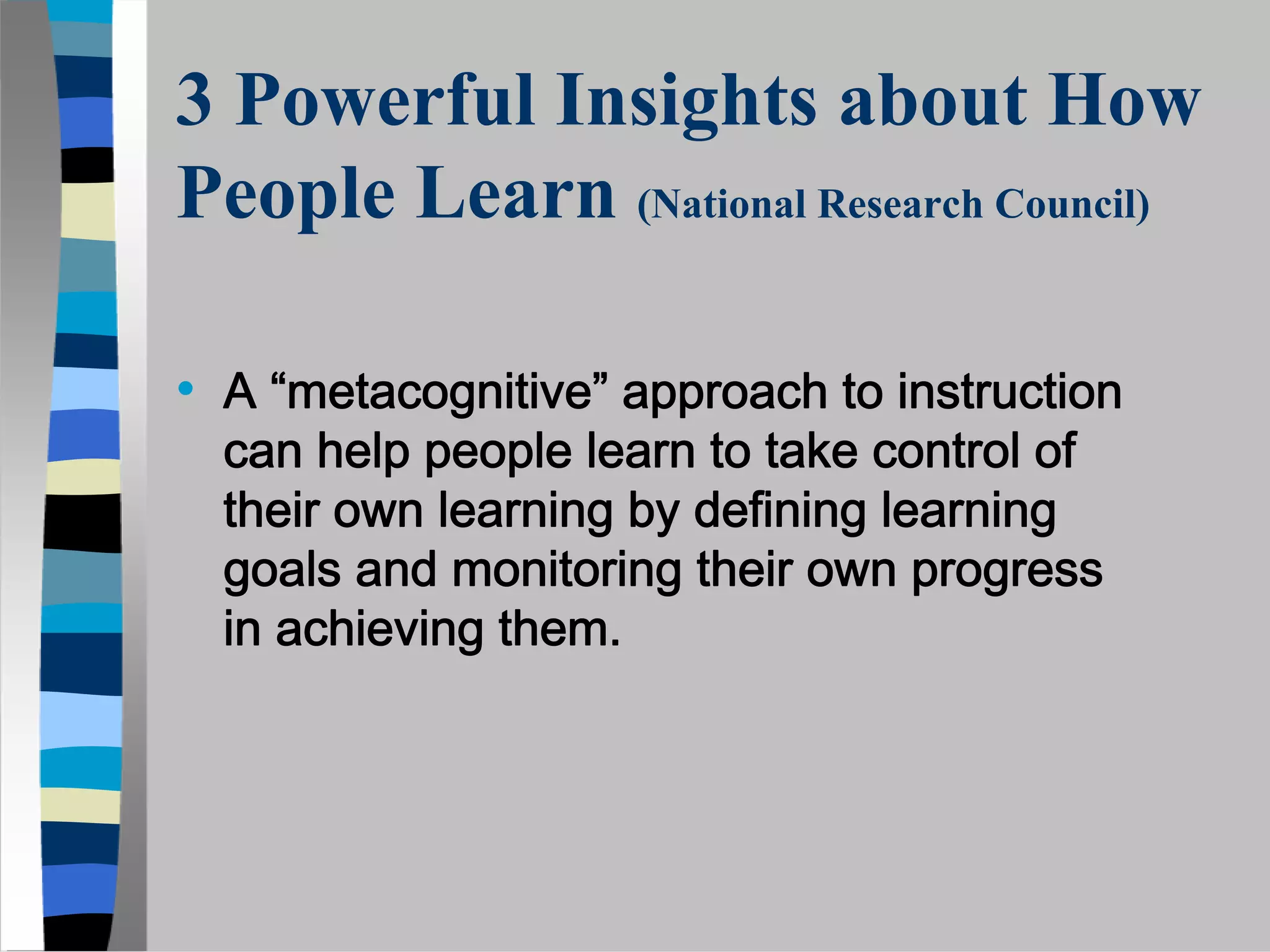
• A “metacognitive” approach to instruction
  can help people learn to take control of
  their own learning by defining learning
  goals and monitoring their own progress
  in achieving them.
BREAK
Purposes of Classroom
Assessment

 Assessment for learning
 Assessment as learning
 Assessment of learning
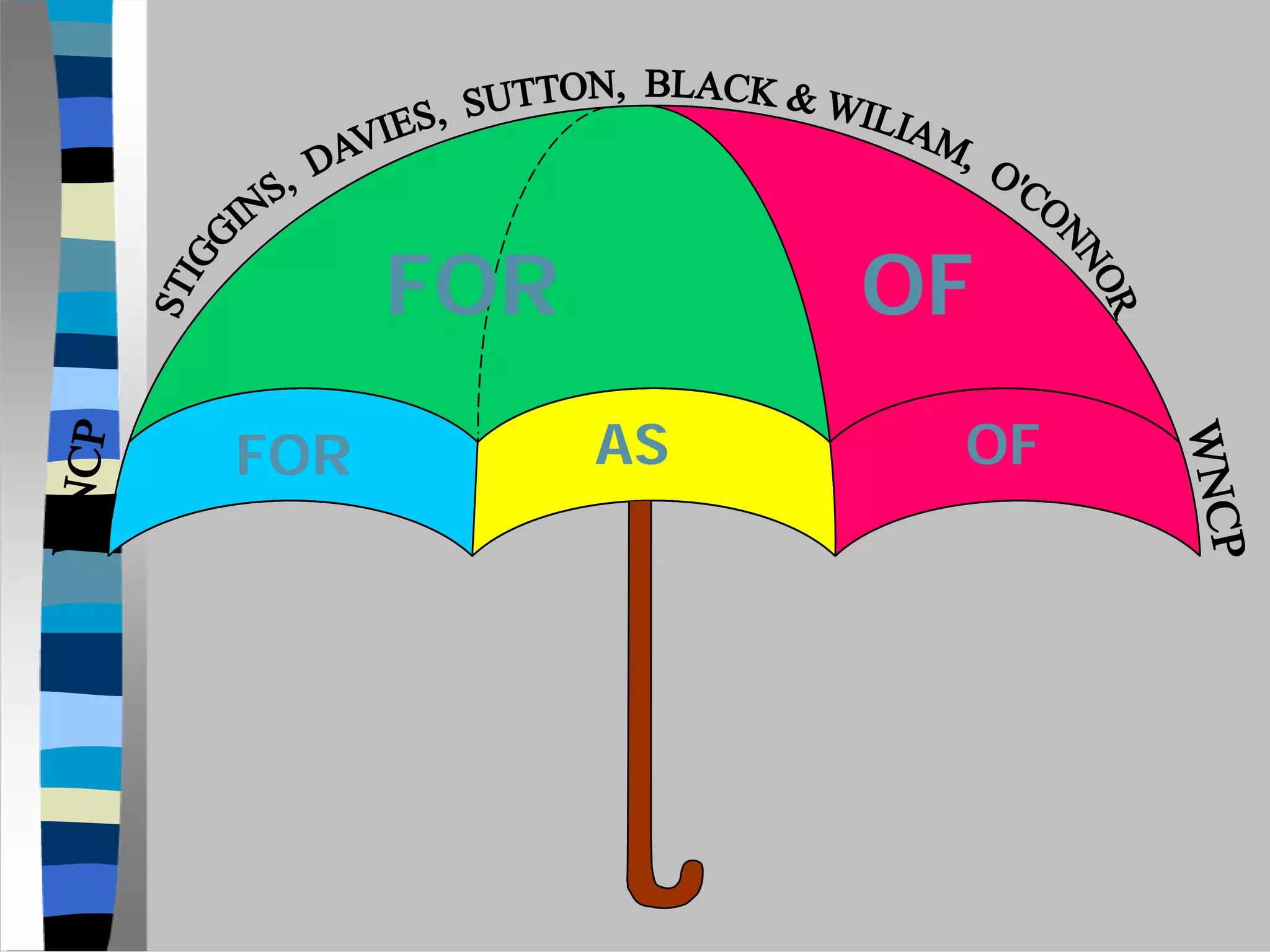
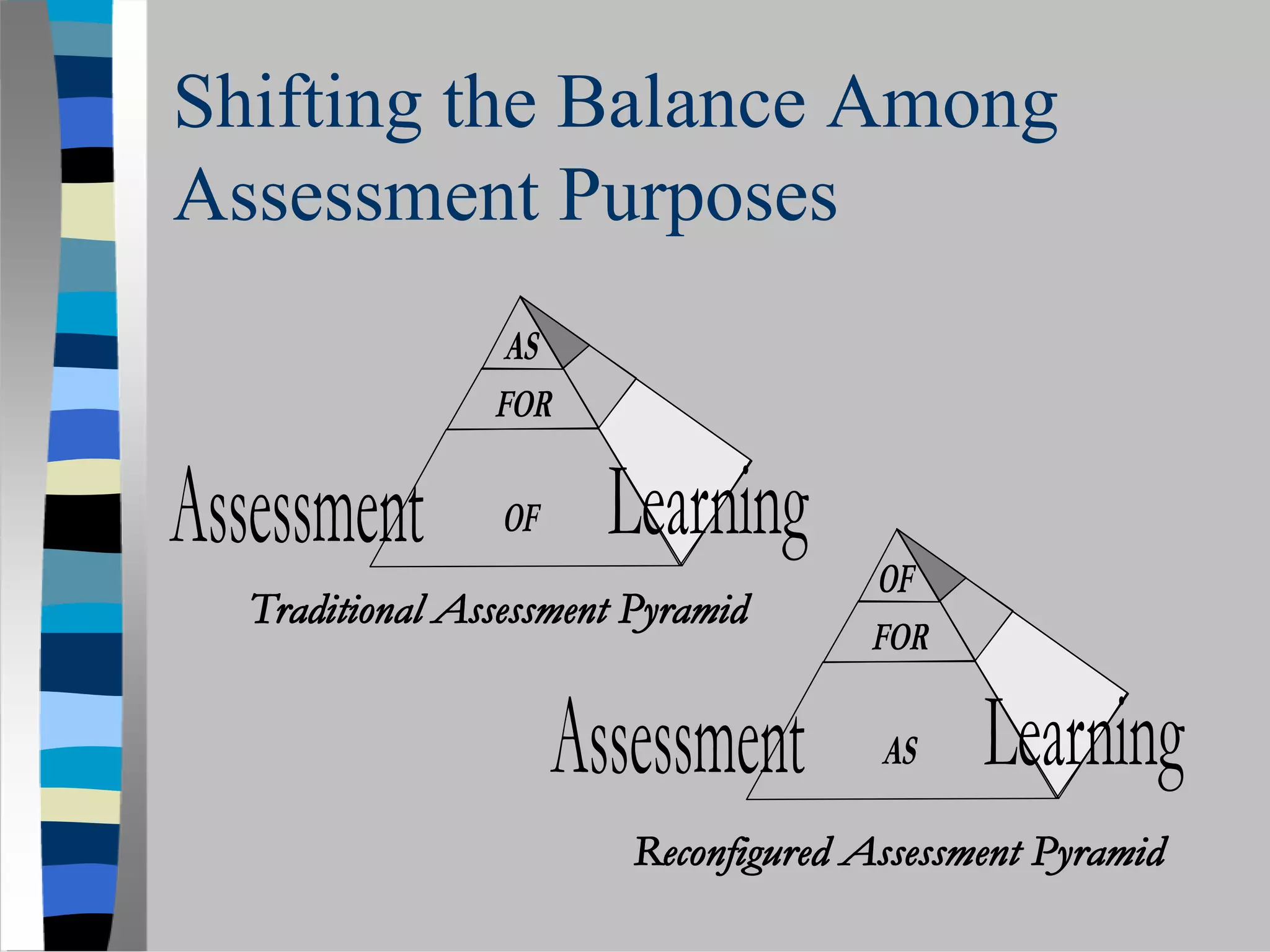
 Balance and Tensions in Assessment
 Purposes
FOR        OF
FOR         AS    OF
Assessment For Learning
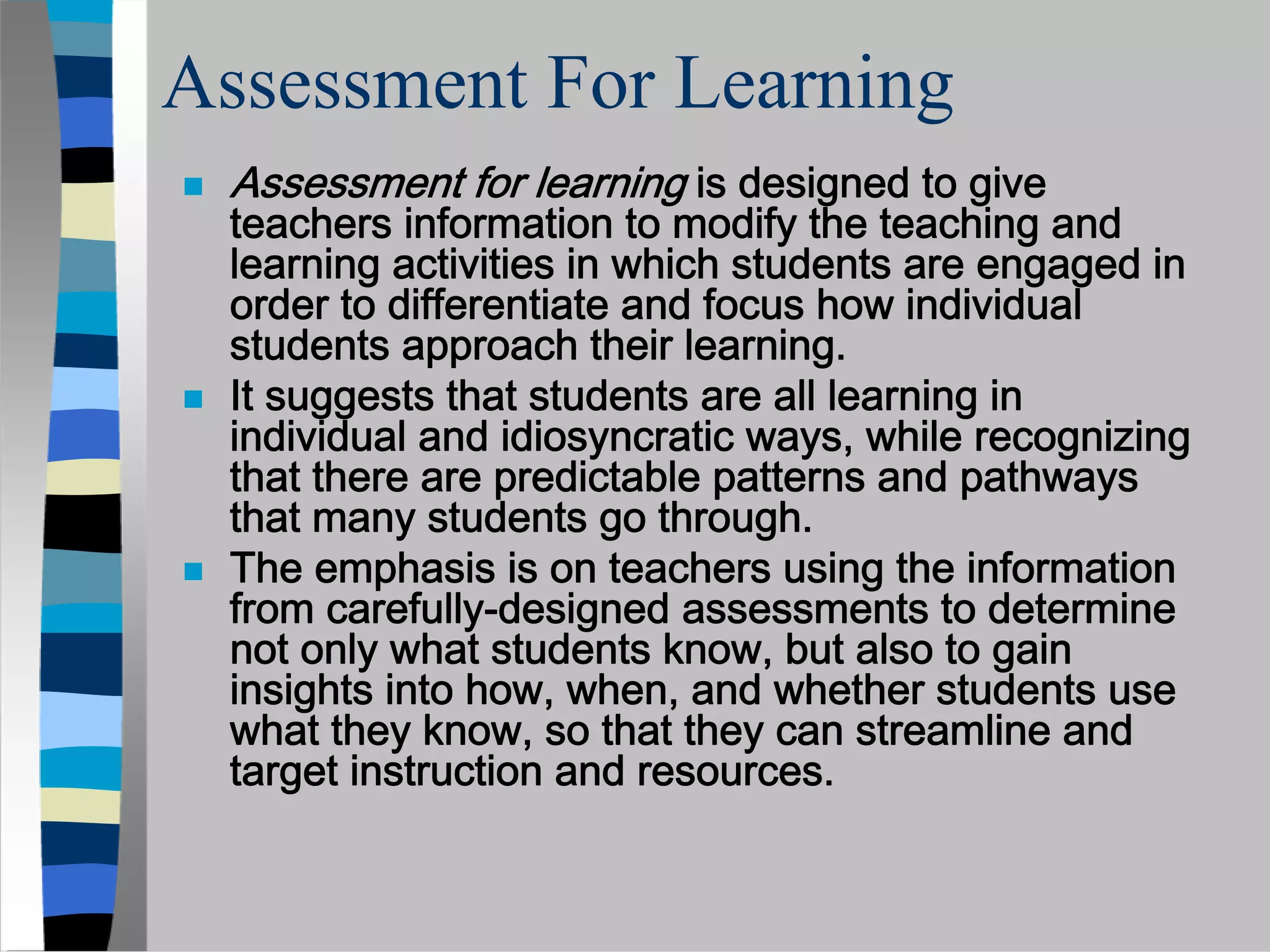
 Assessment for learning is designed to give
 teachers information to modify the teaching and
 learning activities in which students are engaged in
 order to differentiate and focus how individual
 students approach their learning.
 It suggests that students are all learning in
 individual and idiosyncratic ways, while recognizing
 that there are predictable patterns and pathways
 that many students go through.
 The emphasis is on teachers using the information
 from carefully-designed assessments to determine
 not only what students know, but also to gain
 insights into how, when, and whether students use
 what they know, so that they can streamline and
 target instruction and resources.
Assessment As Learning
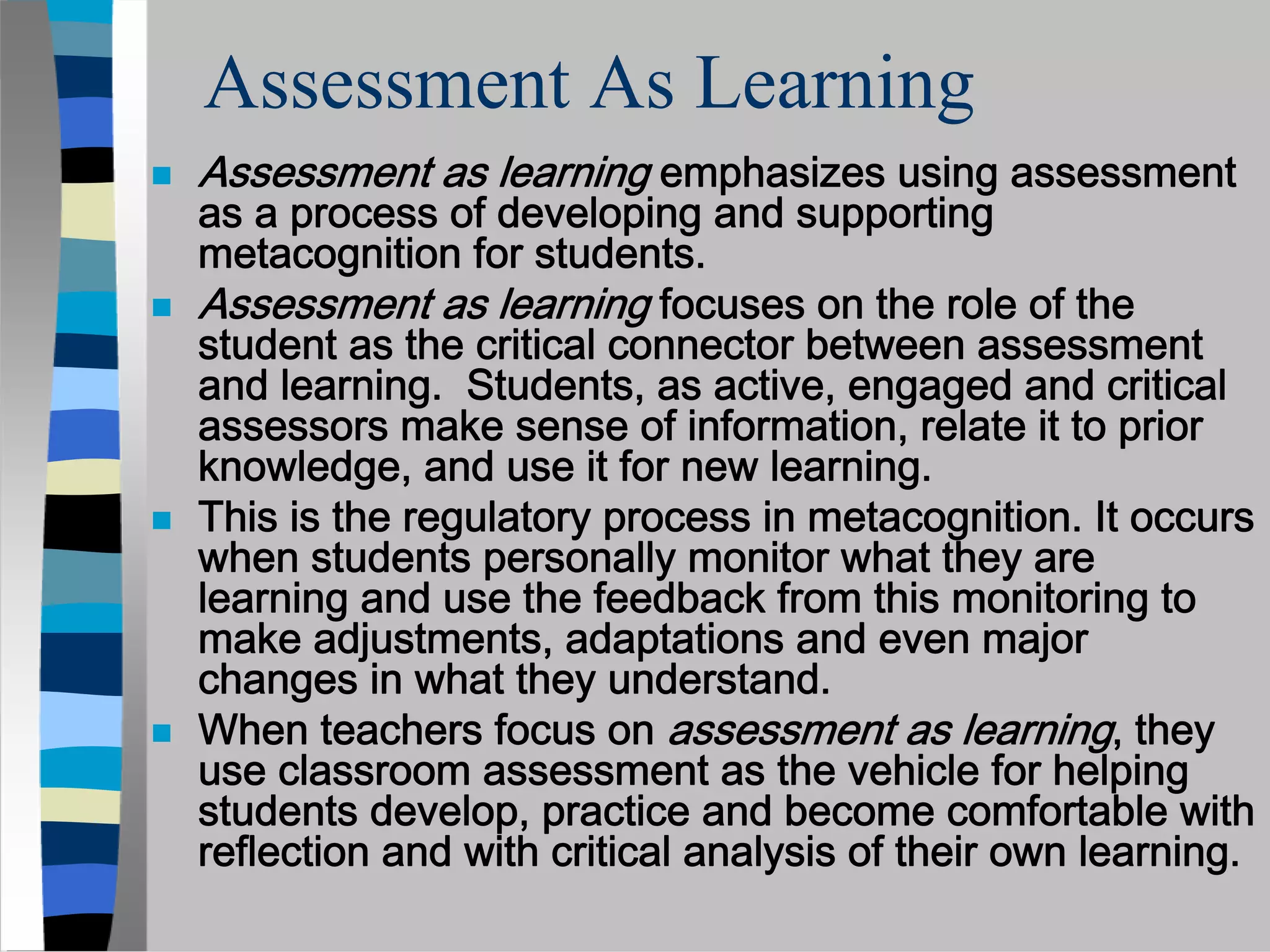
Assessment as learning emphasizes using assessment
as a process of developing and supporting
metacognition for students.
Assessment as learning focuses on the role of the
student as the critical connector between assessment
and learning. Students, as active, engaged and critical
assessors make sense of information, relate it to prior
knowledge, and use it for new learning.
This is the regulatory process in metacognition. It occurs
when students personally monitor what they are
learning and use the feedback from this monitoring to
make adjustments, adaptations and even major
changes in what they understand.
When teachers focus on assessment as learning, they
use classroom assessment as the vehicle for helping
students develop, practice and become comfortable with
reflection and with critical analysis of their own learning.
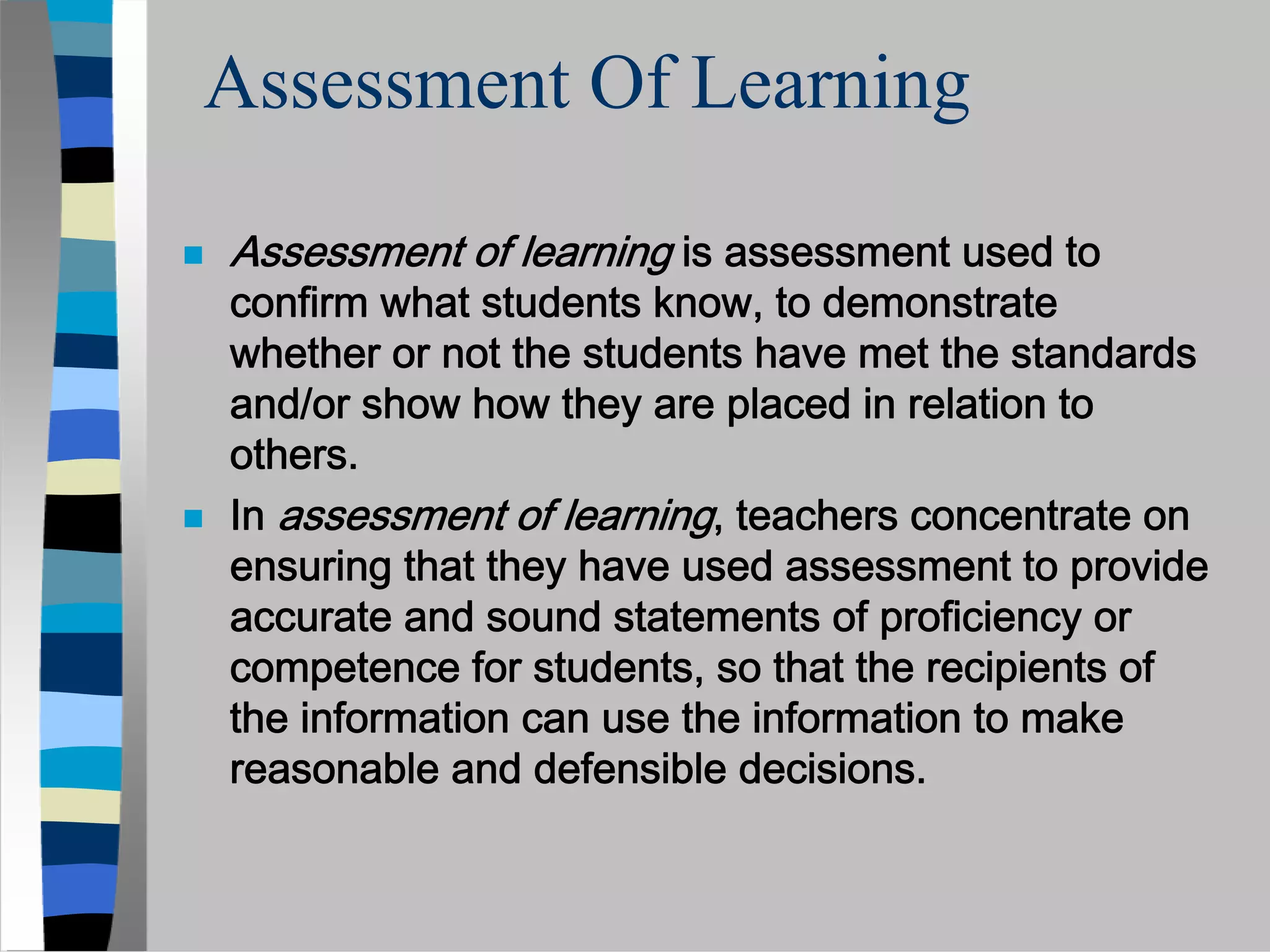
Assessment Of Learning

Assessment of learning is assessment used to
confirm what students know, to demonstrate
whether or not the students have met the standards
and/or show how they are placed in relation to
others.
In assessment of learning, teachers concentrate on
ensuring that they have used assessment to provide
accurate and sound statements of proficiency or
competence for students, so that the recipients of
the information can use the information to make
reasonable and defensible decisions.
Shifting the Balance Among
Assessment Purposes
Task – What are the properties of
AfL
 Think of the last good lesson you gave
 or observed
 List the properties of that lesson that
 make you think it had good AfL
 practice?
 In your groups share your properties
 List shared properties on the chart
 paper
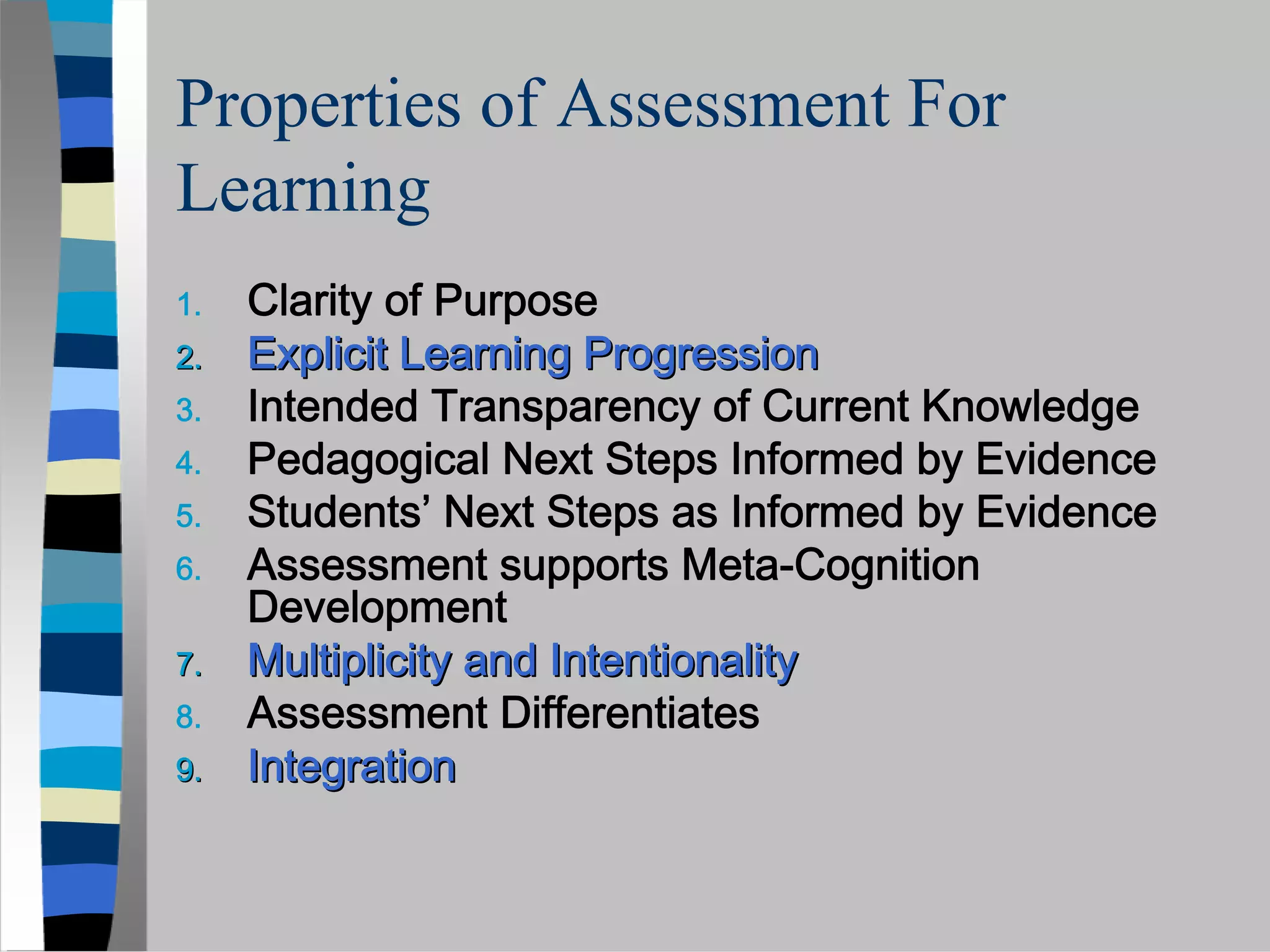
Properties of Assessment For
Learning
1.   Clarity of Purpose
2.   Explicit Learning Progression
3.   Intended Transparency of Current Knowledge
4.   Pedagogical Next Steps Informed by Evidence
5.   Students’ Next Steps as Informed by Evidence
6.   Assessment supports Meta-Cognition
     Development
7.   Multiplicity and Intentionality
8.   Assessment Differentiates
9.   Integration
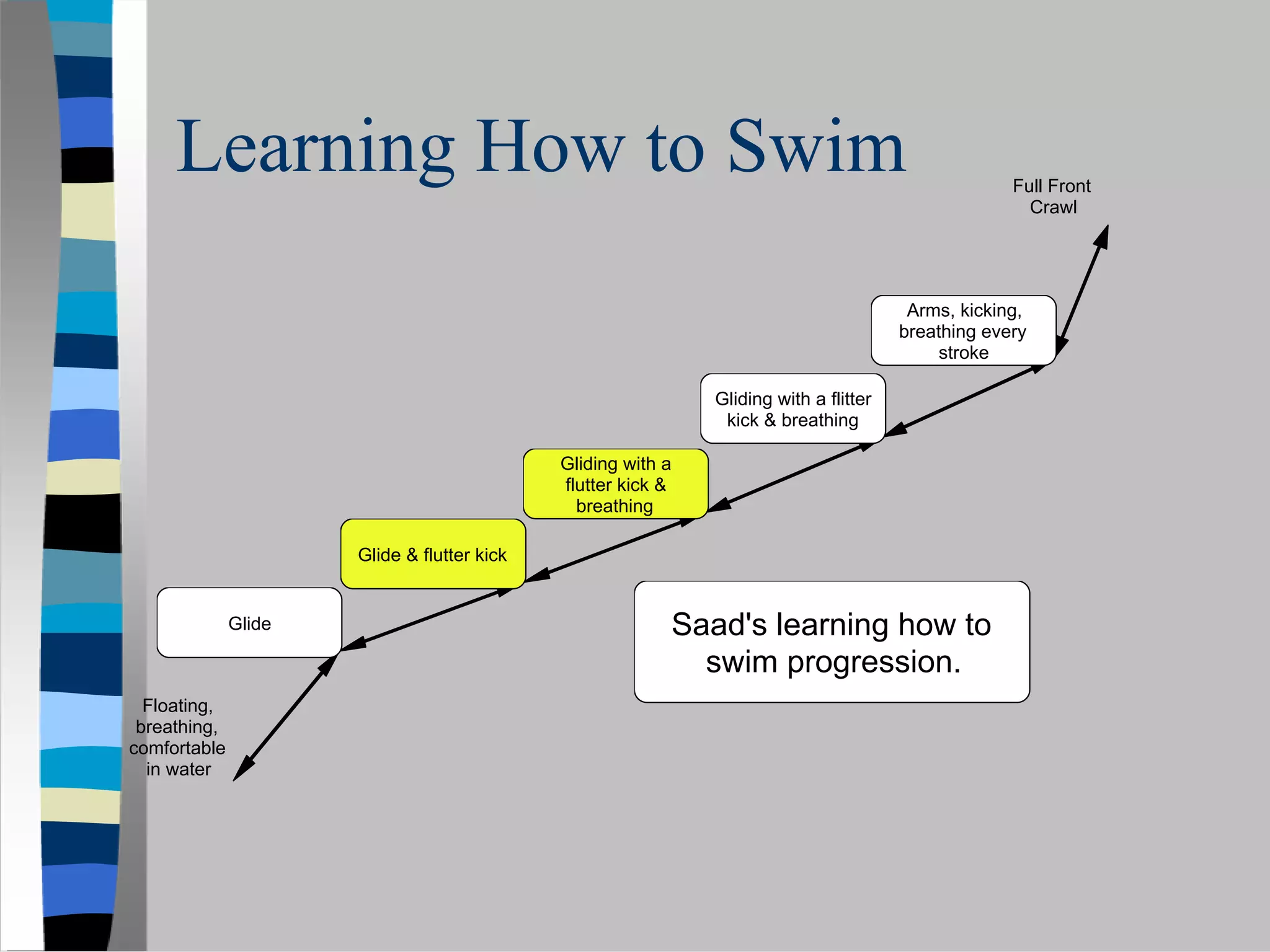
Learning How to Swim                                                                           Full Front
                                                                                                      Crawl


                                                                                        Arms, kicking,
                                                                                       breathing every
                                                                                            stroke

                                                              Gliding with a flitter
                                                               kick & breathing

                                             Gliding with a
                                             flutter kick &
                                               breathing

                      Glide & flutter kick


              Glide                                       Saad's learning how to
                                                            swim progression.
  Floating,
 breathing,
comfortable
  in water
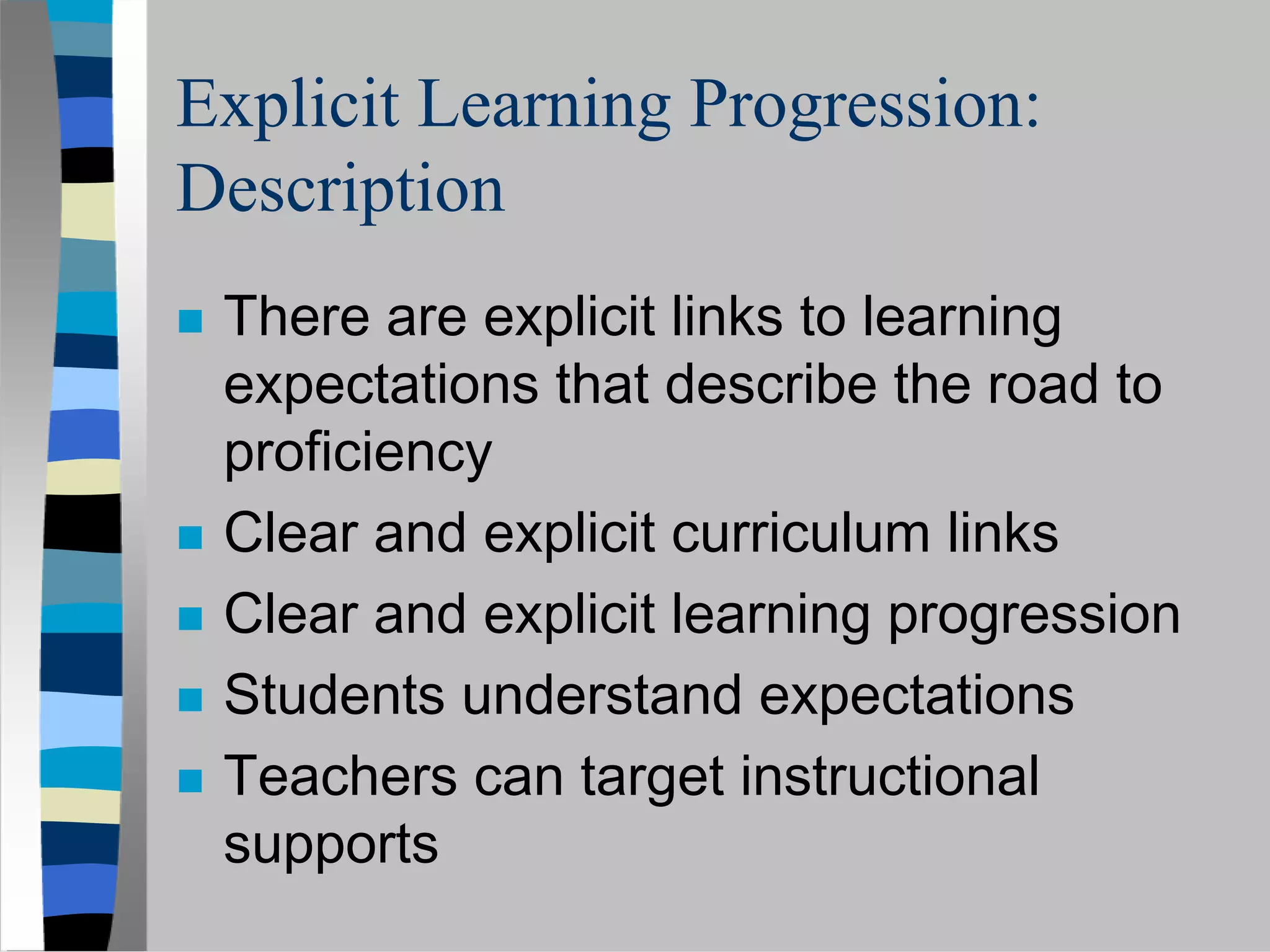
Explicit Learning Progression:
Description
 There are explicit links to learning
 expectations that describe the road to
 proficiency
 Clear and explicit curriculum links
 Clear and explicit learning progression
 Students understand expectations
 Teachers can target instructional
 supports
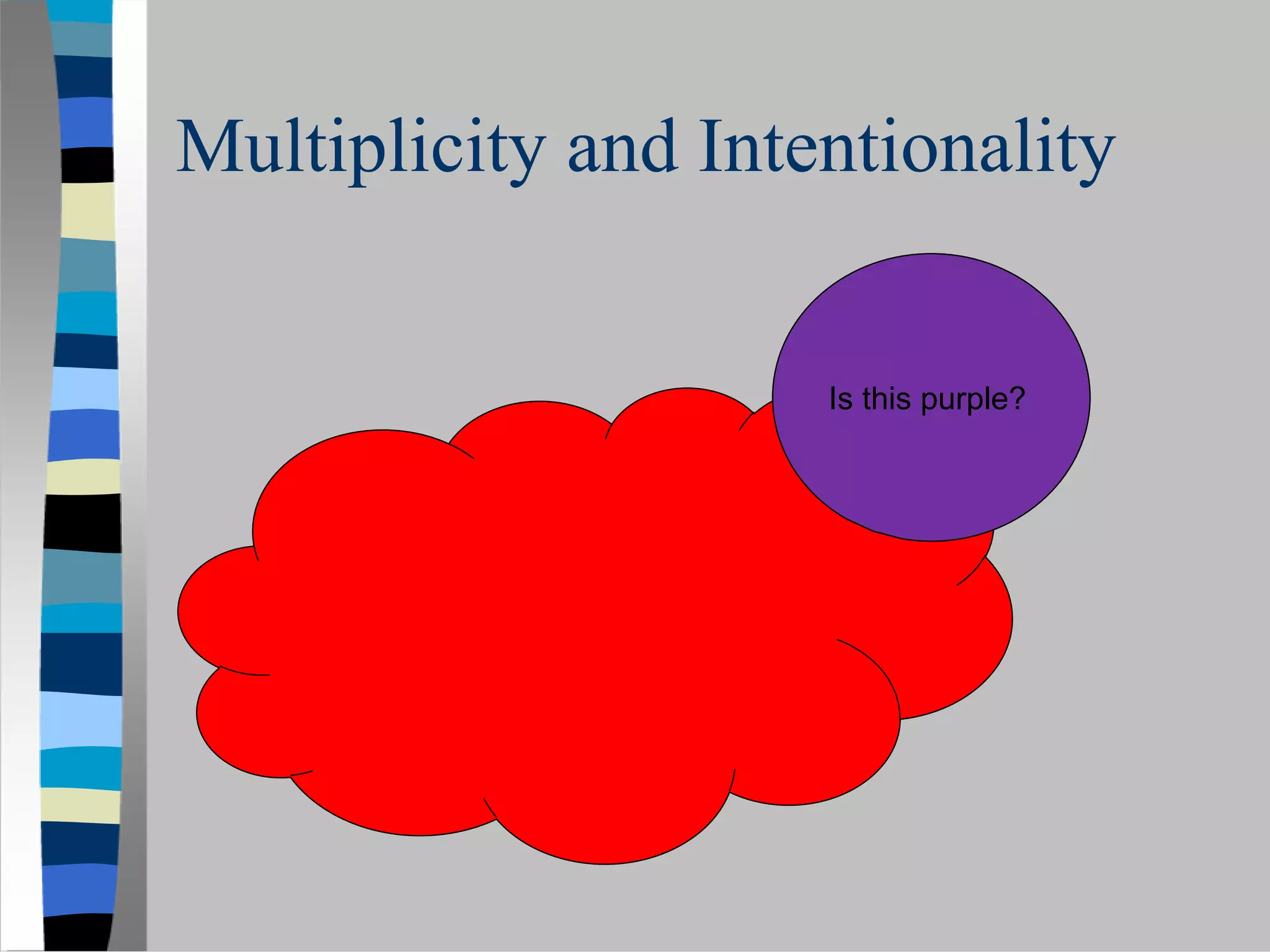
Multiplicity and Intentionality


                     Is this purple?
Multiplicity and Intentionality

 Assessment for Learning activities are
 intentional and planned
 Students’ learning is made transparent
  AfL draws on multiple forms of
 evidence
Integration

 Assessment for learning is an integrated
 process rather than an isolated event
 Assessment is seamless with teaching
 and learning
 The properties are tightly correlated
 Integration is hard to see
Task - The Assessment Story


 Guided Reading
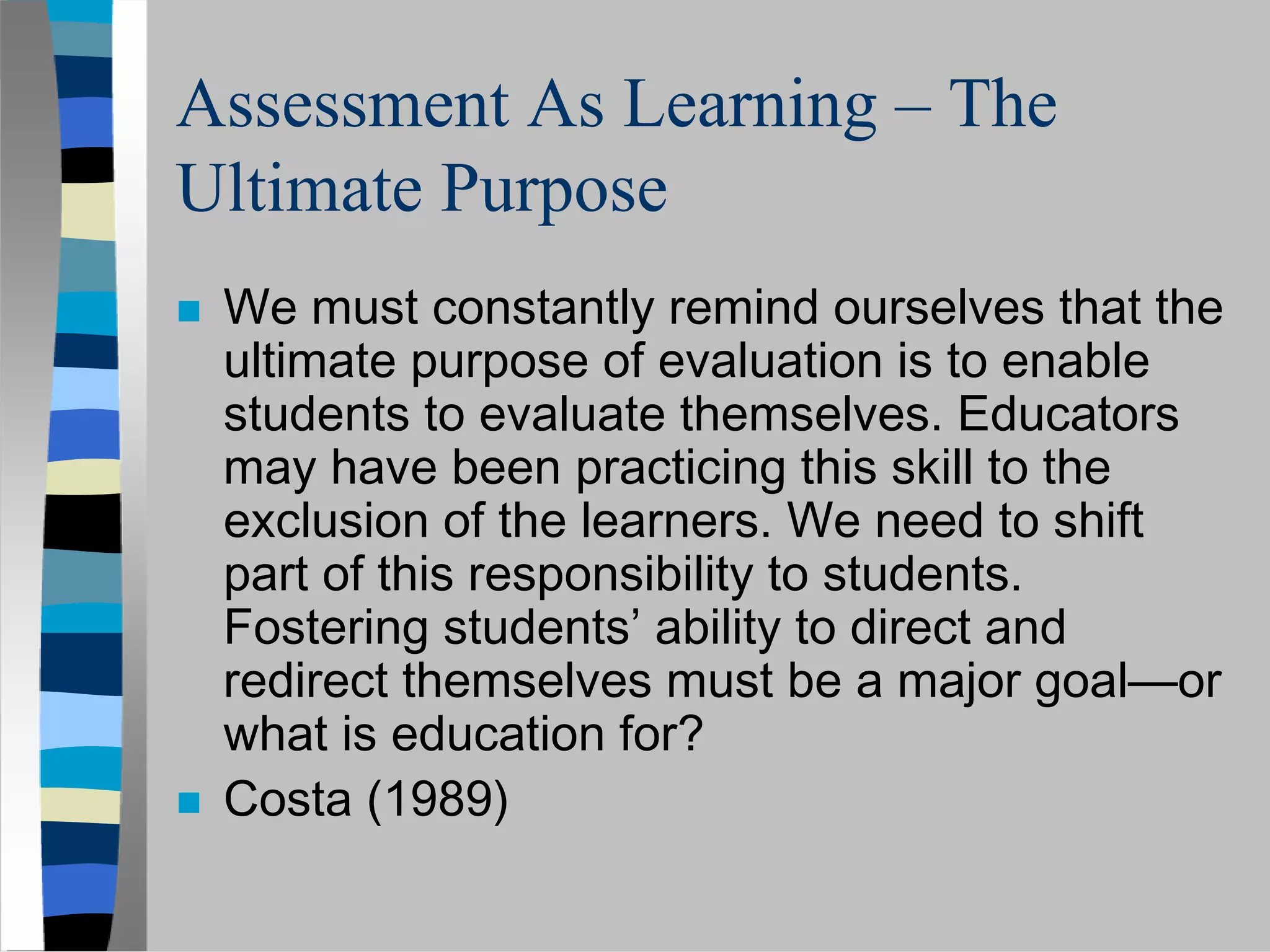
Assessment As Learning – The
Ultimate Purpose
 We must constantly remind ourselves that the
 ultimate purpose of evaluation is to enable
 students to evaluate themselves. Educators
 may have been practicing this skill to the
 exclusion of the learners. We need to shift
 part of this responsibility to students.
 Fostering students’ ability to direct and
 redirect themselves must be a major goal—or
 what is education for?
 Costa (1989)
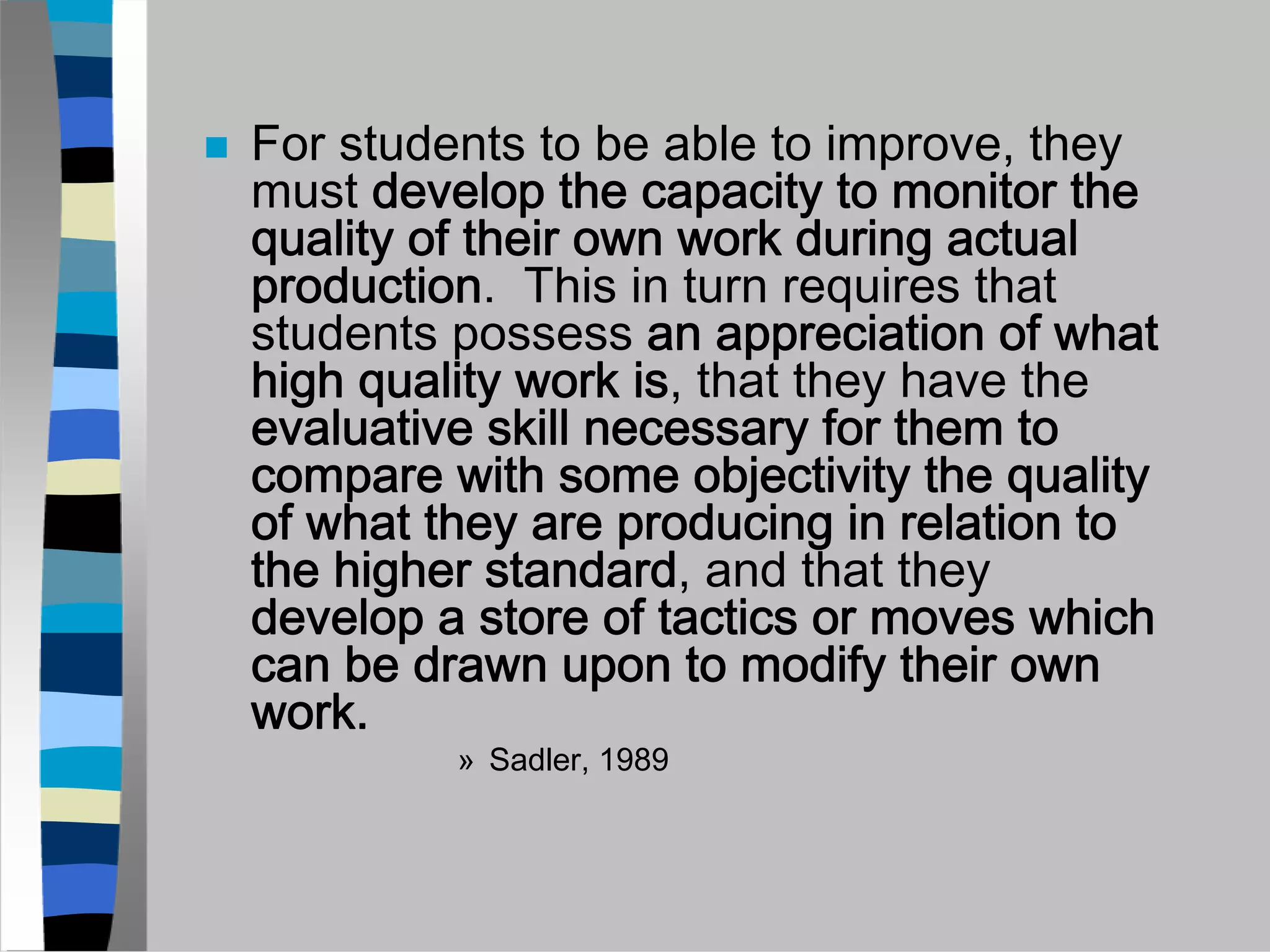
For students to be able to improve, they
must develop the capacity to monitor the
quality of their own work during actual
production. This in turn requires that
students possess an appreciation of what
high quality work is, that they have the
evaluative skill necessary for them to
compare with some objectivity the quality
of what they are producing in relation to
the higher standard, and that they
develop a store of tactics or moves which
can be drawn upon to modify their own
work.
         » Sadler, 1989
Task – Assessment For Learning
Guidelines
 Individually, complete the Assessment
 for Learning Guidelines Task Sheet

 Discuss the guidelines and your
 examples in your group
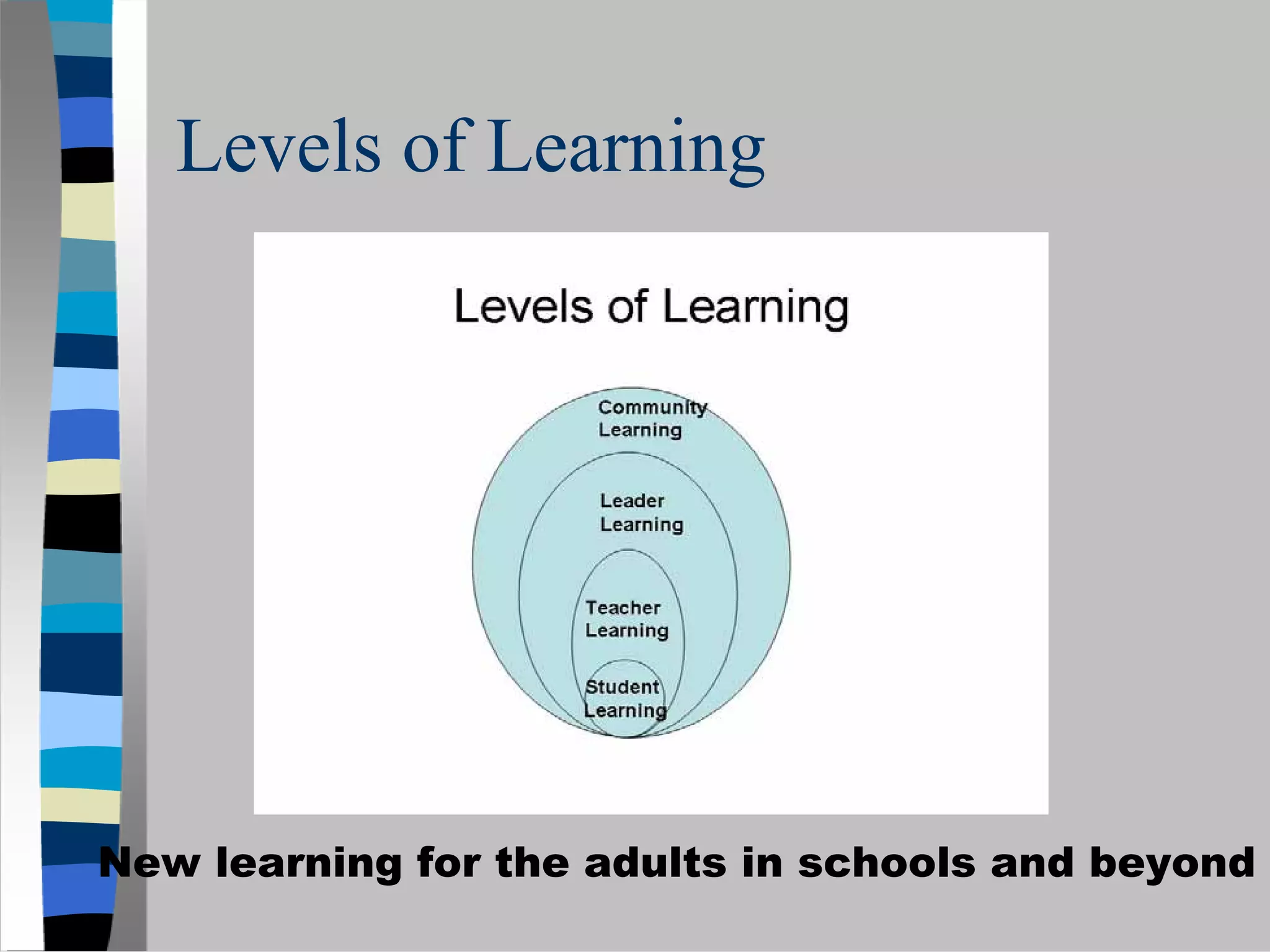
Levels of Learning


New learning for the adults in schools and beyond
Learning Imperatives for You


 In groups:
 – What Do We Need to Learn?
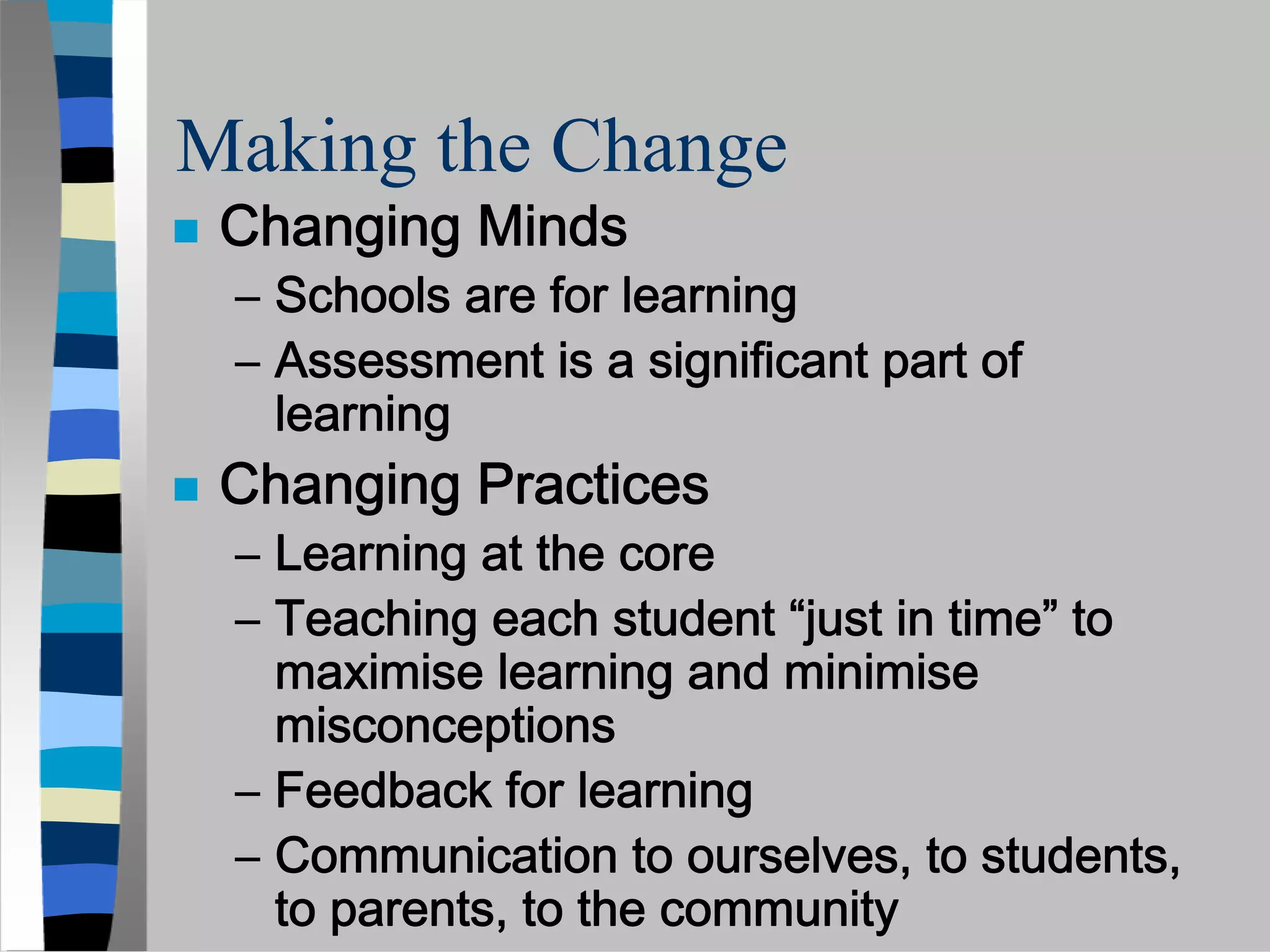
Making the Change
 Changing Minds
 – Schools are for learning
 – Assessment is a significant part of
   learning
 Changing Practices
 – Learning at the core
 – Teaching each student “just in time” to
   maximise learning and minimise
   misconceptions
 – Feedback for learning
 – Communication to ourselves, to students,
   to parents, to the community
Getting There
 Think About What You Believe To Be True
 Learn About Learning
 Know Your Subject
 Be An Expert Teacher
 Work Together
 Be Gentle With Yourself; But, Don't Give up
 Self-monitoring and Self-Development For
 You Too
 Get The Support You Need
 Put it All Together
If you make a change and it feels
comfortable, you haven’t made a
change.
        » Lee Trevino
Never doubt that a small group of
thoughtful and committed citizens can
change the world. In fact, it has never
happened any other way.

        » Margaret Mead

Lorna Earl Rethinking Classroom Assessment With Purpose In Mind

  • 1.
    Rethinking Classroom Assessment With Purpose in Mind Lorna M. Earl, Ph.D. 3219 Yonge St. Suite # 240 Toronto ON M4N 3S1 aporia@attglobal.net tel 4 1 6 . 6 8 6 . 2 2 7 9 fax 4 1 6 . 6 8 6 . 4 1 6 2
  • 2.
    Rethinking Classroom Assessment WithPurpose in Mind Assessment for Learning Assessment as Learning Assessment of Learning 2006 Western and Northern Canadian Protocol for Collaboration in Education www.wncp.ca, classroom assessment
  • 3.
    What is AfL? In your own words, describe AfL. – Write it on the sticky note on your table and stick it in the front of your packet.
  • 4.
    Overview Why RethinkClassroom Assessment? Assessment, Learning and Motivation Purposes of Classroom Assessment Making the Change Getting There
  • 5.
    Why Change Classroom Assessment? – Societal Changes – Classroom Assessment, Learning and Motivation? – Using Classroom Assessment for Differentiated Learning?
  • 6.
    History of Assessment Plato Trade Guilds Industrial Revolution and Legislated Universal Education High Quality Education for All
  • 7.
    3 Powerful Insightsabout How People Learn (National Research Council) • People come to learning with preconceptions about how the world works. If their initial understanding is not engaged, they may fail to grasp the new concepts and information that are taught or may learn them superficially and revert to their preconceptions in real situations.
  • 8.
  • 9.
    3 Powerful Insightsabout How People Learn (National Research Council) • To develop competence in an area of inquiry, people must: • have a deep foundation of factual knowledge • understand facts and ideas in the context of a conceptual framework • organize knowledge in ways that facilitate retrieval and application
  • 10.
    Using Assessment to Differentiate Learning From “Deficit” Explanations Of Diversity To “Inclusive” Strategies For All Deficit Paradigm Inclusion Paradigm What’s wrong with the child What’s wrong with the environment Focus on deficits Focus on strategies Prescriptive Malleable Diagnoses diversity Values diversity Tolerates differences Embraces differences Reliance on external expert Teacher/parent/student as expert Professionalized Personalized (adapted from Philpott et al., 2004)
  • 11.
    Stages in Growthfrom Emergent to Proficient Emergent Proficient No practical Analytical. Locates Uses analysis and Understands the context. Expects definitive experience. and considers synthesis. Sees the Has a holistic grasp of answers. Some Dependent on possible patterns. whole rather than relationships. Considers recognition of rules. Has internalized the aspects. Looks for links alternatives in an iterative patterns. Limited experience. Still key dimensions so and patterns. Adjusts way and integrates ideas relies on rules. that they are to adapt to the into efficient solutions. automatic. context. Solves problems and makes ongoing adaptations automatically.
  • 12.
    3 Powerful Insightsabout How People Learn (National Research Council) • A “metacognitive” approach to instruction can help people learn to take control of their own learning by defining learning goals and monitoring their own progress in achieving them.
  • 13.
  • 14.
    Purposes of Classroom Assessment Assessment for learning Assessment as learning Assessment of learning Balance and Tensions in Assessment Purposes
  • 15.
    FOR OF FOR AS OF
  • 16.
    Assessment For Learning Assessment for learning is designed to give teachers information to modify the teaching and learning activities in which students are engaged in order to differentiate and focus how individual students approach their learning. It suggests that students are all learning in individual and idiosyncratic ways, while recognizing that there are predictable patterns and pathways that many students go through. The emphasis is on teachers using the information from carefully-designed assessments to determine not only what students know, but also to gain insights into how, when, and whether students use what they know, so that they can streamline and target instruction and resources.
  • 17.
    Assessment As Learning Assessmentas learning emphasizes using assessment as a process of developing and supporting metacognition for students. Assessment as learning focuses on the role of the student as the critical connector between assessment and learning. Students, as active, engaged and critical assessors make sense of information, relate it to prior knowledge, and use it for new learning. This is the regulatory process in metacognition. It occurs when students personally monitor what they are learning and use the feedback from this monitoring to make adjustments, adaptations and even major changes in what they understand. When teachers focus on assessment as learning, they use classroom assessment as the vehicle for helping students develop, practice and become comfortable with reflection and with critical analysis of their own learning.
  • 18.
    Assessment Of Learning Assessmentof learning is assessment used to confirm what students know, to demonstrate whether or not the students have met the standards and/or show how they are placed in relation to others. In assessment of learning, teachers concentrate on ensuring that they have used assessment to provide accurate and sound statements of proficiency or competence for students, so that the recipients of the information can use the information to make reasonable and defensible decisions.
  • 19.
    Shifting the BalanceAmong Assessment Purposes
  • 20.
    Task – Whatare the properties of AfL Think of the last good lesson you gave or observed List the properties of that lesson that make you think it had good AfL practice? In your groups share your properties List shared properties on the chart paper
  • 21.
    Properties of AssessmentFor Learning 1. Clarity of Purpose 2. Explicit Learning Progression 3. Intended Transparency of Current Knowledge 4. Pedagogical Next Steps Informed by Evidence 5. Students’ Next Steps as Informed by Evidence 6. Assessment supports Meta-Cognition Development 7. Multiplicity and Intentionality 8. Assessment Differentiates 9. Integration
  • 22.
    Learning How toSwim Full Front Crawl Arms, kicking, breathing every stroke Gliding with a flitter kick & breathing Gliding with a flutter kick & breathing Glide & flutter kick Glide Saad's learning how to swim progression. Floating, breathing, comfortable in water
  • 23.
    Explicit Learning Progression: Description There are explicit links to learning expectations that describe the road to proficiency Clear and explicit curriculum links Clear and explicit learning progression Students understand expectations Teachers can target instructional supports
  • 24.
  • 25.
    Multiplicity and Intentionality Assessment for Learning activities are intentional and planned Students’ learning is made transparent AfL draws on multiple forms of evidence
  • 26.
    Integration Assessment forlearning is an integrated process rather than an isolated event Assessment is seamless with teaching and learning The properties are tightly correlated Integration is hard to see
  • 27.
    Task - TheAssessment Story Guided Reading
  • 28.
    Assessment As Learning– The Ultimate Purpose We must constantly remind ourselves that the ultimate purpose of evaluation is to enable students to evaluate themselves. Educators may have been practicing this skill to the exclusion of the learners. We need to shift part of this responsibility to students. Fostering students’ ability to direct and redirect themselves must be a major goal—or what is education for? Costa (1989)
  • 29.
    For students tobe able to improve, they must develop the capacity to monitor the quality of their own work during actual production. This in turn requires that students possess an appreciation of what high quality work is, that they have the evaluative skill necessary for them to compare with some objectivity the quality of what they are producing in relation to the higher standard, and that they develop a store of tactics or moves which can be drawn upon to modify their own work. » Sadler, 1989
  • 30.
    Task – AssessmentFor Learning Guidelines Individually, complete the Assessment for Learning Guidelines Task Sheet Discuss the guidelines and your examples in your group
  • 31.
    Levels of Learning Newlearning for the adults in schools and beyond
  • 32.
    Learning Imperatives forYou In groups: – What Do We Need to Learn?
  • 33.
    Making the Change Changing Minds – Schools are for learning – Assessment is a significant part of learning Changing Practices – Learning at the core – Teaching each student “just in time” to maximise learning and minimise misconceptions – Feedback for learning – Communication to ourselves, to students, to parents, to the community
  • 34.
    Getting There ThinkAbout What You Believe To Be True Learn About Learning Know Your Subject Be An Expert Teacher Work Together Be Gentle With Yourself; But, Don't Give up Self-monitoring and Self-Development For You Too Get The Support You Need Put it All Together
  • 35.
    If you makea change and it feels comfortable, you haven’t made a change. » Lee Trevino
  • 36.
    Never doubt thata small group of thoughtful and committed citizens can change the world. In fact, it has never happened any other way. » Margaret Mead