Summary of Learning@School 2010 Conference
Trish Plowright
"An e-Portfolio is a learner-driven
collection of digital objects demonstrating
 experiences, achievements and evidence
 of learning. e-Portfolios provide learners
  with a structured way of recording their
 learning experiences... and can include a
  range of digital evidence such as audio,
      video, photographs and blogs."
                               Dr Helen Barrett, 2009
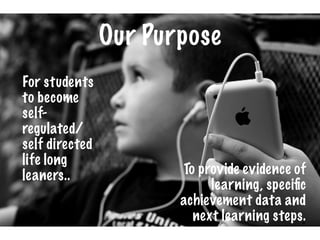
Our Purpose
For students
to become
self-
regulated/
self directed
life long
leaners..              To provide evidence of
                            learning, specific
                       achievement data and
                         next learning steps.
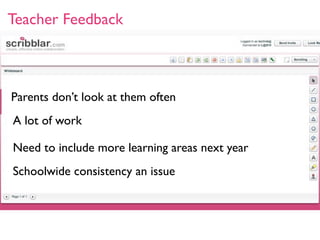
Teacher Feedback


Parents don’t look at them often
A lot of work

Need to include more learning areas next year
Schoolwide consistency an issue
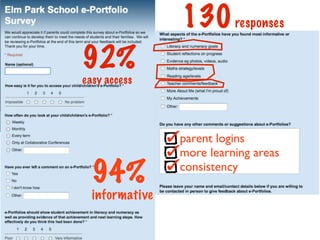
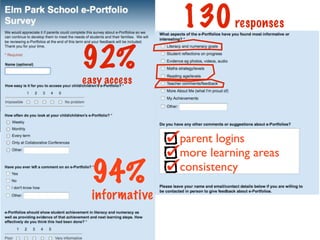
130 responses
92%
easy access


                parent logins
                more learning areas

  94%           consistency

  informative
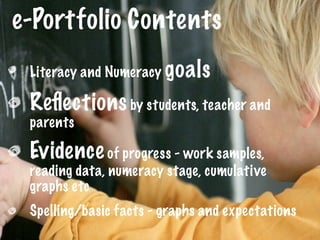
e-Portfolio Contents
 Literacy and Numeracy goals

 Reflections by students, teacher and
 parents

 Evidence of progress - work samples,
 reading data, numeracy stage, cumulative
 graphs etc
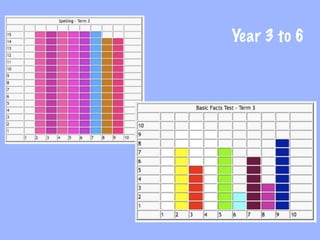
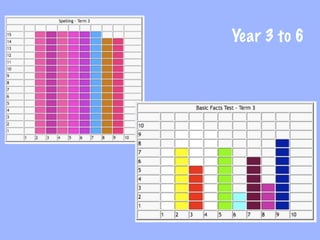
 Spelling/basic facts - graphs and expectations
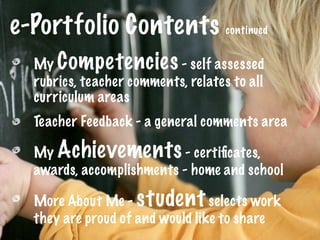
e-Portfolio Contents continued
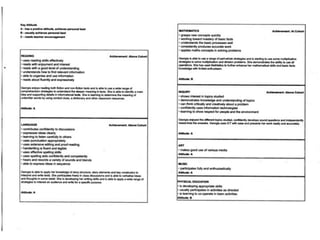
  My Competencies - self assessed
  rubrics, teacher comments, relates to all
  curriculum areas
  Teacher Feedback - a general comments area

  My Achievements - certificates,
  awards, accomplishments - home and school

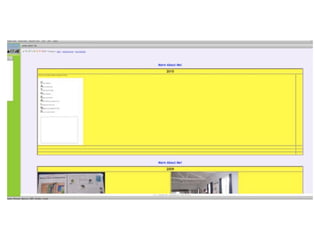
  More About Me - student selects work
  they are proud of and would like to share
Year 3 to 6
Where to next ?
Summary

Trial before schoolwide implementation

Focus on pedagogy - include parents!

Frequent, small doses of skills based workshops
(“just in time”), small groups

In-class support required in early stages

Review annually - staff, parents, students
Inquiry Learning @ EPS 2010
Alicia Howard
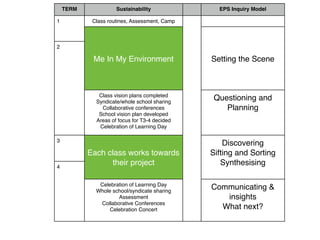
TERM             Sustainability              EPS Inquiry Model

1           Class routines, Assessment, Camp


2

            Me In My Environment               Setting the Scene


              Class vision plans completed
             Syndicate/whole school sharing
                                                Questioning and
               Collaborative conferences           Planning
              School vision plan developed
             Areas of focus for T3-4 decided
              Celebration of Learning Day

3
                                                   Discovering
           Each class works towards            Sifting and Sorting
4
                 their project                    Synthesising

              Celebration of Learning Day
             Whole school/syndicate sharing
                                               Communicating &
                     Assessment                   insights
              Collaborative Conferences
                  Celebration Concert            What next?
e-Portfolios @ EPS 2010
Linda Richards
130 responses
92%
easy access


                parent logins
                more learning areas

  94%           consistency

  informative
Year 3 to 6
Action Research @ EPS 2010
Alicia Howard and Linda Richards

EPS Overview

  • 1.
    Summary of Learning@School2010 Conference Trish Plowright
  • 2.
    "An e-Portfolio isa learner-driven collection of digital objects demonstrating experiences, achievements and evidence of learning. e-Portfolios provide learners with a structured way of recording their learning experiences... and can include a range of digital evidence such as audio, video, photographs and blogs." Dr Helen Barrett, 2009
  • 4.
    Our Purpose For students tobecome self- regulated/ self directed life long leaners.. To provide evidence of learning, specific achievement data and next learning steps.
  • 5.
    Teacher Feedback Parents don’tlook at them often A lot of work Need to include more learning areas next year Schoolwide consistency an issue
  • 6.
    130 responses 92% easy access parent logins more learning areas 94% consistency informative
  • 7.
    e-Portfolio Contents Literacyand Numeracy goals Reflections by students, teacher and parents Evidence of progress - work samples, reading data, numeracy stage, cumulative graphs etc Spelling/basic facts - graphs and expectations
  • 8.
    e-Portfolio Contents continued My Competencies - self assessed rubrics, teacher comments, relates to all curriculum areas Teacher Feedback - a general comments area My Achievements - certificates, awards, accomplishments - home and school More About Me - student selects work they are proud of and would like to share
  • 11.
  • 12.
  • 14.
    Summary Trial before schoolwideimplementation Focus on pedagogy - include parents! Frequent, small doses of skills based workshops (“just in time”), small groups In-class support required in early stages Review annually - staff, parents, students
  • 15.
    Inquiry Learning @EPS 2010 Alicia Howard
  • 19.
    TERM Sustainability EPS Inquiry Model 1 Class routines, Assessment, Camp 2 Me In My Environment Setting the Scene Class vision plans completed Syndicate/whole school sharing Questioning and Collaborative conferences Planning School vision plan developed Areas of focus for T3-4 decided Celebration of Learning Day 3 Discovering Each class works towards Sifting and Sorting 4 their project Synthesising Celebration of Learning Day Whole school/syndicate sharing Communicating & Assessment insights Collaborative Conferences Celebration Concert What next?
  • 22.
    e-Portfolios @ EPS2010 Linda Richards
  • 23.
    130 responses 92% easy access parent logins more learning areas 94% consistency informative
  • 28.
  • 30.
    Action Research @EPS 2010 Alicia Howard and Linda Richards

Editor's Notes

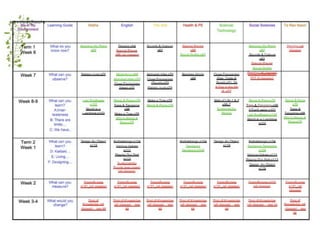
  • #2 U6 contributing school, East Auckland. Decile 6, ~40 ethnicities, roll 570-630. 3rd year as lead school in eastnet ict-pd cluster. 1st year AtoL contract. Overview of presentation - timeline, playtime, ask questions anytime
  • #5 more formative assessment focussed, aligns with NZC, 3-D, focus not on technology but on the learning
  • #6 Staff meeting at end of 2009, using scribblar teachers worked in groups to brainstorm the good, the bad and the ugly about e-Portfolios at EPS. They came up with many of the same things that management and ICT Lead Teachers had also identified.
  • #7 Online survey, details in newsletter, link on school website, handed out at collaborative conferences, computers available at collaborative conferences.
  • #8 2010 expectations
  • #9 Key competencies are included from 2010 - this will allow us to bring in all curriculum learning areas within the context of key competencies (concept rather than content based learning)
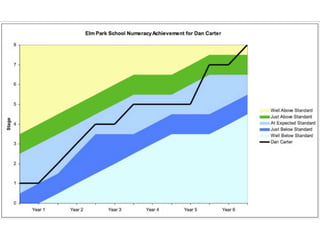
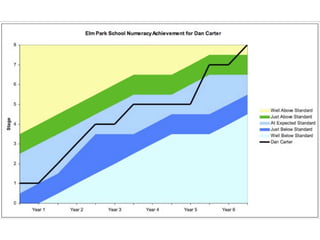
  • #10 This year the Y2’s to 6 will be doing lit and the whole school will be doing numeracy graph to show the progression of student learning over the year at the mom the teachers will have to take screen shots and inset into chn eport. this graphs aligns with the National Standards.
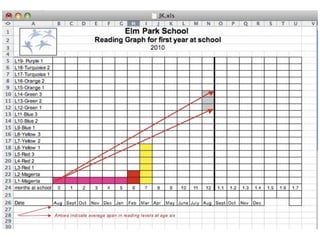
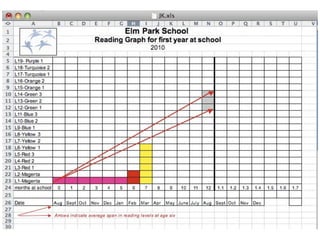
  • #11 In year 1 the reading results are recorded on a monthly basis until the end of the students first year at school. This graph is easy to read for the parents and easy to keep updated for the teachers. Teachers take a screen shot and insert it into the student’s e-portfolio.
  • #12 spelling and basic facts graphs have been implemented throughout all year 3 - 6 classes this year as a result of feedback from parents.
  • #13 Key competencies (to include all learning areas), parent education, parent logins, interoperability to avoid double entry, consistency (esp comments), collaborative conference up-skilling, increase student ownership, assess to learn contract, sustainability (ICT lead teacher release, hardware)
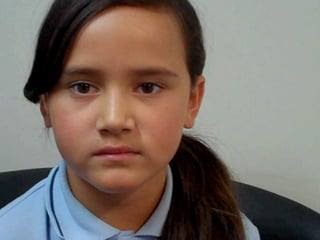
  • #14 Ivana Y3
  • #15 Pedagogy - formative assessment, learning intentions, success criteria, reflective writing, teacher feedback/feedforward, John Hattie! Workshops - definitely NOT whole staff!
  • #17 In 2008 the whole school were invited to design an Inquiry model for the whole school to use. This design became our Whole School Inquiry approach.
  • #18 At the end of 2009 each syndicate team within our school met with the Auckland Regional Council Enviro School’s facilitator, Cate Jessop to plan a school wide Inquiry unit based on Sustainability.
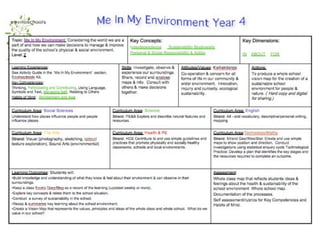
  • #19 This is the Year 4 planning format. The activities in Green are ones that the Y4 team are doing the black activities are ones that we can do if we choose and the Red Activities are whole school activities. All teams throughout the school are using the same format for their inquiry planning.
  • #20 This is how our Sustainability unit fits in with our EPS Inquiry Model. During Term 1 for the last 4 weeks of term and for the first couple of weeks in Term 2 we are setting the scene for unit. Providing the hook, building the children’s excitement levels up. We then move into the questioning and planning part of our unit, where each class is mapping out a vision for the school. All of therm 3 and some of term 4 classes are going to be working on their visions and implementing them into our school this is the Discovering, Sifting and Sorting, Synthesising part of our plan. At the end of Term 4 when we will be celebrating our success and asking What next.
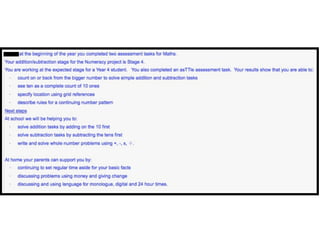
  • #27 Online survey, details in newsletter, link on school website, handed out at collaborative conferences, computers available at collaborative conferences for parents to fill in survey. the survey provided the school with feedback to refine the students e-ports.
  • #28 This year the Y2’s to 6 will be doing lit and the whole school will be doing numeracy graph to show the progression of student learning over the year at the mom the teachers will have to take screen shots and inset into chn eport. this graphs aligns with the National Standards.
  • #29 In year 1 the reading results are recorded on a monthly basis until the end of the students first year at school. This graph is easy to read for the parents and easy to keep updated for the teachers. Teachers take a screen shot and insert it into the student’s e-portfolio.
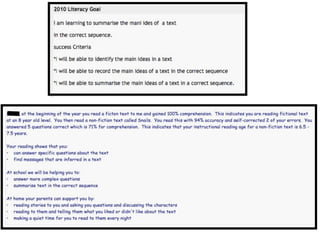
  • #30 All students have a literacy goal, whether it is written with the teacher or by the student independently. Teacher comments are in line with the National Standards examples that were sent out to all schools and parents who received them in their letter boxes. The literacy comment from teacher says where the student is at, what they can do, what the next learning steps are, and how they can be supported at home.
  • #31 The same is for the numeracy goal and when the goal is achieved a new goal is set.
  • #32 spelling and basic facts graphs have been implemented throughout all year 3 - 6 classes this year as a result of feedback from parents.
  • #33 Archiving - building on form year to year
  • #34 This year 3 teachers are undertaking Action Research this year focus is on How can we incorporate e-Learning tools into a Literacy program. We will be sharing the results at the cluster share at then end of the year.